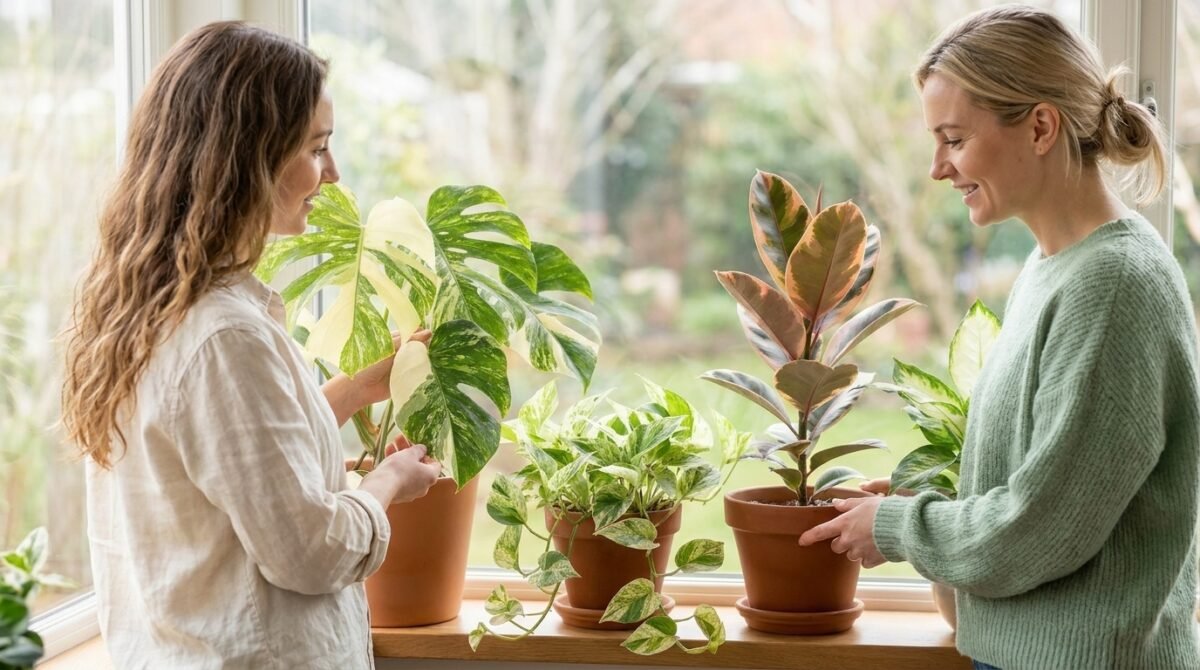
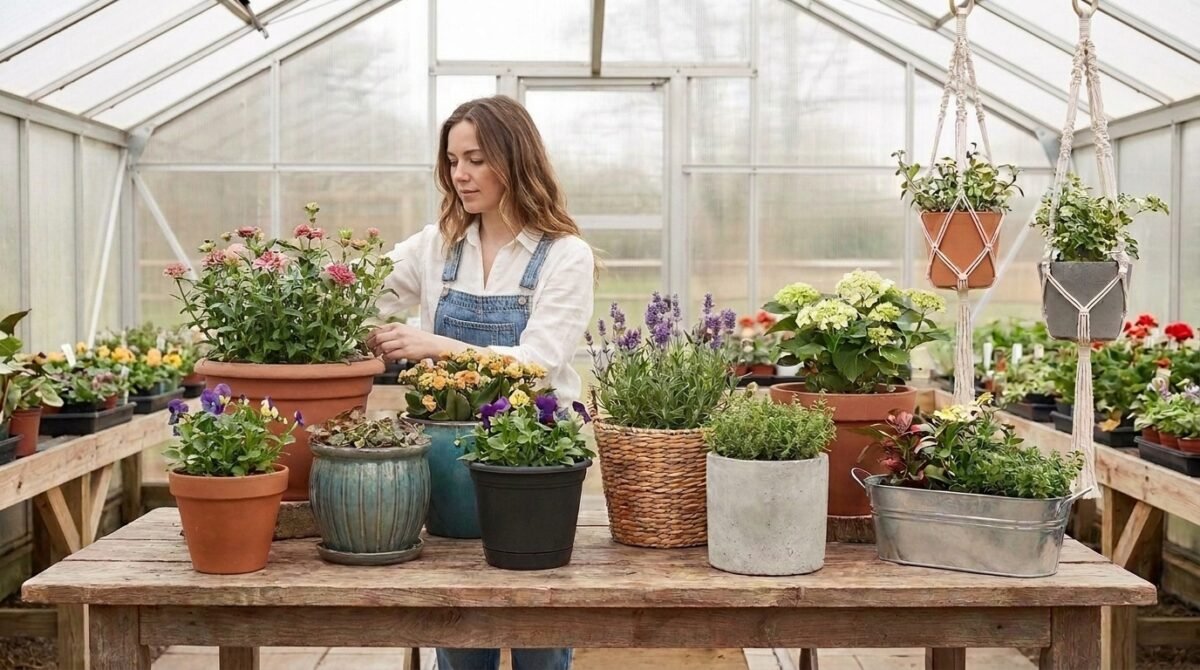
Pot Sizes for Plants: The Complete 2026 Sizing Guide
Standard pot sizes in inches, gallons and liters, plus sizing charts for houseplants, vegetables, herbs, flowers and fruit trees
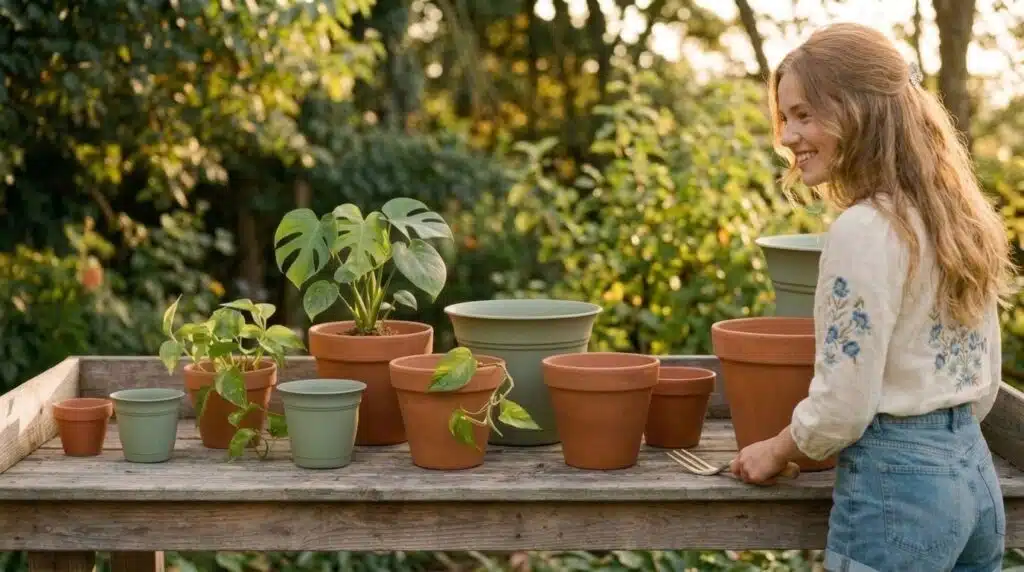
Choosing the right pot size is one of the most important steps in keeping a plant healthy, yet it is one of the most commonly guessed-at decisions in gardening. Go too small and roots crowd, growth stalls, and the soil dries out within a day. Go too big and the extra soil holds onto water long after the roots have taken what they need, which is one of the fastest routes to root rot. This guide breaks pot sizes for plants down into a single reference chart, plant-specific tables for houseplants, vegetables, herbs, flowers, and fruit trees, and a simple step-up rule so you can size a pot correctly the first time, whether you are working in inches, gallons, or liters.
Understanding Pot Size Labels
Pot sizes for plants are confusing mainly because nurseries and retailers measure them three different ways, and they do not always agree with each other on the same shelf.
| Measurement | What It Means | Example |
|---|---|---|
| Diameter (inches/cm) | Width across the top of the pot | A "6-inch pot" is 6" across the top opening |
| Volume (gallons/liters) | Total soil capacity | A 10-inch pot holds roughly 2.5-3 gallons of soil |
| Trade Gallon | Nursery label, not a true gallon; commonly about 0.7 US gallons (varies by maker) | A "1-gallon" nursery pot is actually about 6.5-7" across |
A "1-gallon" nursery pot does not actually hold a full US gallon. This is called a trade gallon, and it is commonly cited as about 0.7 US gallons, although the exact volume varies by manufacturer. The common 6.5" diameter x 6.25" depth "one gallon" pot sold at most garden centers holds about 0.66 gallons of potting soil in practice. If you need a precise soil volume, measure the pot yourself rather than trusting the label alone, or run the numbers through a soil volume for pots tool. UK gardeners can find general container-growing advice from the Royal Horticultural Society (RHS).

Standard Pot Size Reference Chart
By diameter (inches) to gallons and liters
This chart converts pot diameter to approximate US gallons, liters, dry soil volume and the common nursery label, with typical uses for each size. Volumes are rounded averages: real pots vary with depth and taper, so two "12-inch" pots from different makers can hold noticeably different amounts of soil. If you would rather skip the math, run your own dimensions through a pot size calculator or a gallon pot size finder for an instant conversion.
| Pot Diameter | Approx. U.S. Gallons | Approx. Liters | Dry Soil (cu. ft.) | Common Label | Best For |
|---|---|---|---|---|---|
| 4" | 0.125 gal | 0.5 L | 0.02 ft3 | Pint / #0.5 | Seedlings, tiny succulents |
| 5-6" | 0.25-0.5 gal | 1-2 L | 0.03-0.07 ft3 | Quart / #0.5-#1 | Herbs, small houseplants |
| 6-7" | 0.75 gal | 3 L | 0.10 ft3 | #1 | Small houseplants |
| 7-8" | 1 gal | 4 L | 0.13 ft3 | #1 | Medium houseplants, small perennials |
| 8.5" | 2 gal | 7.5 L | 0.26 ft3 | #2 | Medium houseplants |
| 10" | 3 gal | 11 L | 0.40 ft3 | #3 | Shrubs, herbs, leafy greens |
| 11" | 4 gal | 15 L | 0.53 ft3 | #4 | Compact shrubs |
| 12" | 5 gal | 19 L | 0.66 ft3 | #5 | Medium shrubs, patio tomatoes |
| 13" | 6 gal | 22.5 L | 0.80 ft3 | #6 | Larger perennials |
| 14" | 7 gal | 26.5 L | 0.94 ft3 | #7 | Large shrubs, small trees |
| 16" | 10 gal | 38 L | 1.34 ft3 | #10 | Trees, statement planters |
| 18" | 15 gal | 57 L | 2.00 ft3 | #15 | Large shrubs, small trees |
| 20" | 20 gal | 75.5 L | 2.67 ft3 | #20 | Oversized statement planters |
| 24" | 25 gal | 94.6 L | 3.34 ft3 | #25 | Landscape specimens |
| 30" | 30 gal | 113.5 L | 4.01 ft3 | #30 | Extra-large trees |
Working in centimeters or liters instead of inches and gallons? The conversion holds the same shape: a 15cm pot is roughly the 6-inch row above, and a 45cm pot lands close to the 18-inch row. Prefer working entirely in metric? Our pot liter calculator converts any pot straight to liters directly.

Pot Size by Plant Type
Houseplant Pot Sizes
Most houseplant pot size questions come down to the same handful of popular species. The table below gives typical pot diameters for common houseplants at a mature, established size.
| Plant Type | Pot Diameter | Notes |
|---|---|---|
| Spider Plant | 6-10" | Repot annually; produces pups when pot-bound |
| Snake Plant | 6-10" | Prefers a snug pot; slow grower |
| Pothos | 6-10" | Tolerates a tight pot; repot every 2-3 years |
| Monstera | 8-14" | Fast grower; size up 2-4" every 2-3 years |
| Monstera 'Thai Constellation' | 8-14" | Grows more slowly than standard Monstera; size up 2" at a time |
| Philodendron 'Birkin' | 6-10" | Compact grower; size up 1-2" when root-bound |
| Philodendron 'Brazil' | 6-10" | Resilient and fast-growing |
| Alocasia 'Silver Dragon' | 6-8" | Prefers a snug, fast-draining pot; avoid overpotting |
| Maranta (Prayer Plant) | 6-8" | Shallow roots; a wide, shallow pot works well |
| Ficus (Rubber Plant) | 10-14" | Size up 2" every 1-2 years while actively growing |
| Anthurium | 6-10" | Likes a snug pot with a chunky, airy mix |
| Aglaonema 'Silver Bay' | 6-10" | Slow grower; repot every 2-3 years |
| Bella Palm | 8-12" | Tolerates a snug pot; repot only when roots crowd |
| Rex Begonia | 6-8" | Shallow roots; prefers a wide, shallow pot |
| Orchid | 4-6" | Use a special orchid pot with extra drainage |
| Peace Lily | 8-12" | Repot every 2 years; use a deep pot |
| Fiddle Leaf Fig | 8-12" | Prefers a snug pot; repot only when root-bound |
| Aloe Vera | 6-10" | Let roots fill the pot before sizing up |
| Money Tree | 8-12" | Needs good drainage; repot every 2-3 years |
| Jade Plant | 6-8" | Prefers a shallow, heavy pot; slow grower |
| ZZ Plant | 6-10" | Thrives in a cramped pot; very slow grower |
| Calathea | 6-8" | Prefers a shallow pot; repot annually |
| Dracaena | 8-12" | Use a deep pot; repot every 2-3 years |
| Small houseplants (under 6" tall) | 4-6" | Seedlings and small succulents |
| Medium houseplants (6-12" tall) | 6-10" | Most common houseplants fall here |
| Large houseplants (over 12" tall) | 12-16"+ | Floor plants and statement pieces |
For a wider list of low-maintenance options sized to this chart, see our best indoor plants guide, or if your space runs dim, our low light indoor plants roundup. Already grow a Monstera deliciosa? Our dedicated Monstera deliciosa care guide covers its full sizing timeline plant by plant.

Vegetable Pot Sizes
Container vegetables need noticeably more room than most first-time growers expect. The chart below lists minimum soil volume, minimum depth and a comfortable pot diameter for common patio and balcony vegetables.
| Plant Type | Minimum Volume | Minimum Depth | Best Diameter | Notes |
|---|---|---|---|---|
| Leafy Greens (lettuce, spinach) | 3-5 gal | 8-10" | 10-12" | A 12" window box also works well |
| Herbs (basil, parsley, chives) | 1-3 gal | 8-10" | 6-10" | Sized per plant |
| Bush Beans | 3-4 gal (10-15 L) | 10-12" | 12" | Sized per plant |
| Peppers, Chillies | 4-5 gal (15-20 L) | 10-12" | 16" | Sized per plant |
| Jalapeno | 5-8 gal | 10-12" | 16" | Smaller variety; one plant |
| Cucumber | 10-15 gal | 12-14" | 18-20" | Needs a trellis; one plant |
| Zucchini | 10-15 gal | 14-16" | 18-20" | One plant; large leaves need room |
| Eggplant | 8-10 gal | 12-14" | 16-18" | One plant per 10-gallon pot |
| Broccoli | 8-10 gal | 12-14" | 16-18" | One plant per 10-gallon pot |
| Cherry Tomatoes | 5-10 gal | 12-14" | 16-18" | Smaller variety; one plant |
| Roma Tomatoes | 12-15 gal | 14-16" | 18-20" | Determinate; one plant |
| Indeterminate Tomatoes | 15-20 gal | 16-18" | 20-24" | Needs a larger pot for support |
| Potatoes | 13-20 gal (50-75 L) | 16-18" | 18-20" | Sized per 3 tubers |
| Strawberries | 1-2 gal | 8-10" | 10" | 2-3 plants fit a 10" pot |
| Blueberries | 15-20 gal | 16-18" | 20-24" | Needs acidic soil and a large pot |
| Raspberries | 10-15 gal | 14-16" | 18-20" | Needs support; one plant |
Growing a specific tomato variety? Our Black Krim tomato growing guide walks through container sizing for that variety in more depth, and our garden harvest projection calculator can help you plan yields once the containers are sized correctly.

Herb Pot Sizes
Herbs are some of the most forgiving container plants, but a few, like mint, need their own pot for a reason.
| Herb | Recommended Pot Size | Pot Diameter | Notes |
|---|---|---|---|
| Basil | 1-3 gal | 8-12" | Needs room for its root system; fine with several plants sharing a pot |
| Mint | 2-4 gal | 10-14" | Invasive roots; use a wide pot or grow it alone |
| Cilantro | 1-2 gal | 8-10" | Fast-growing; needs consistent moisture |
| Rosemary | 2-3 gal | 8-12" | Deep, well-draining pot; drought-tolerant once established |
| Oregano | 1-2 gal | 6-10" | Prefers a shallow, well-draining pot |
| Thyme | 0.5-1 gal | 6-8" | Shallow, wide pot; prefers drier conditions |
| Parsley | 1-2 gal | 8-10" | Taproot needs depth; use a deep pot |
| Lavender | 2-3 gal | 8-12" | Deep, well-draining pot; drought-tolerant |
| Sage | 2-3 gal | 8-12" | Deep pot; prefers drier conditions |
| Chives | 0.5-1 gal | 6-8" | Shallow pot; clumping growth habit |
| Dill | 2-3 gal | 10-12" | Deep pot; taproot needs room |
For a full growing walkthrough beyond pot size alone, see our dedicated rosemary plant care guide.

Flower Pot Sizes
Flowering annuals and perennials vary widely in pot size, mostly based on how large and how fast each one grows.
| Flower | Recommended Pot Size | Pot Diameter | Notes |
|---|---|---|---|
| Roses | 5-10 gal | 14-18" | Deep pot; needs consistent moisture |
| Dahlias | 5-10 gal | 14-18" | Deep pot; needs staking as it grows |
| Hibiscus | 12-16 gal | 18-20" | Deep pot; fast-growing |
| Hydrangea | 12-16 gal | 18-20" | Large pot; consistent moisture |
| Clematis | 8-12 gal | 16-18" | Deep pot; needs a support structure |
| Bougainvillea | 10-15 gal | 18-20" | Prefers a slightly tight pot; drought-tolerant |
| Plumeria | 10-15 gal | 18-20" | Deep pot; drought-tolerant |
| Marigold | 1-2 gal | 6-8" | Small pot; fast-growing |
| Geranium | 1-2 gal | 6-8" | Shallow, wide pot; prefers drier soil |
| Zinnia | 1-2 gal | 6-8" | Small pot; fast-growing |
| Petunia | 1-2 gal | 6-8" | Works in hanging baskets or standard pots |
Want flowers that fill in around them without stealing the spotlight? Our Lantana growing guide covers container sizing for one of the most heat-tolerant bedding options around.

Fruit Tree Pot Sizes
Container fruit trees need the most room of anything on this page, and most need repotting only every few years.
| Fruit Tree | Minimum Pot Size | Best Pot Size | Notes |
|---|---|---|---|
| Lemon Tree (Dwarf) | 15-20 gal | 20-24" | Requires a large pot; repot every 3-5 years |
| Meyer Lemon Tree | 15-20 gal | 20-24" | Requires a large pot; repot every 3-5 years |
| Fig Tree | 15-25 gal | 20-24" | Deep pot; well-draining soil |
| Blueberry Bush | 15-20 gal | 20-24" | Needs acidic soil and a large pot |
| Raspberry Bush | 10-15 gal | 18-20" | Needs support; one plant |
| Dwarf Apple | 15-20 gal | 20-24" | Requires a large pot; needs cross-pollination |
| Dwarf Citrus | 15-20 gal | 20-24" | Requires a large pot with good drainage |
| Olive Tree | 15-20 gal | 20-24" | Deep pot; drought-tolerant |
| Avocado | 25-30+ gal | 24-30" | Very large pot; deep root system |
| Pomegranate | 15-20 gal | 20-24" | Deep pot; drought-tolerant |
Planning a full edible container garden around trees like these? Our fruit garden grow calculator helps you plan spacing and yield alongside pot size. Before choosing a container fruit tree, it is also worth checking your USDA plant hardiness zone, since a tree that needs winter protection in a pot may need a different sizing and overwintering strategy than the same species planted in the ground.

Choosing the Right Pot Size: Key Takeaways
- ✓Match the pot to the root system
Deep-rooted and taprooted plants (tomatoes, parsley, dill) need depth; shallow-rooted plants (lettuce, succulents, many herbs) do better in wide, shallow pots.
- ✓Drainage holes are essential
Any pot size can cause root rot if water cannot escape. Use pots with drainage holes, or keep a nursery pot with holes inside a decorative cover pot.
- ✓Too small slows growth
Crowded roots dry out quickly, need more frequent watering and can limit flowering and fruiting.
- ✓Too big stays wet
Soil that roots cannot reach stays wet for days, which starves roots of oxygen and raises the risk of root rot.
- ✓Material changes watering
Terracotta is porous and dries out faster; plastic and glazed ceramic hold moisture longer.
- ✓Fast growers need more room
Vigorous plants can go up 2-4 inches at a time; slow growers should go up only 1-2 inches.
- ✓Check the plant-specific tables
Vegetables, herbs, flowers and fruit trees have very different root needs, so use the row for your plant instead of one size for everything.
- ✓Repot one size at a time
When roots circle the pot or grow out of the drainage holes, move up one step rather than jumping to a much larger container.

How to Choose the Right Pot Size
The Golden Rule: Size Up Gradually
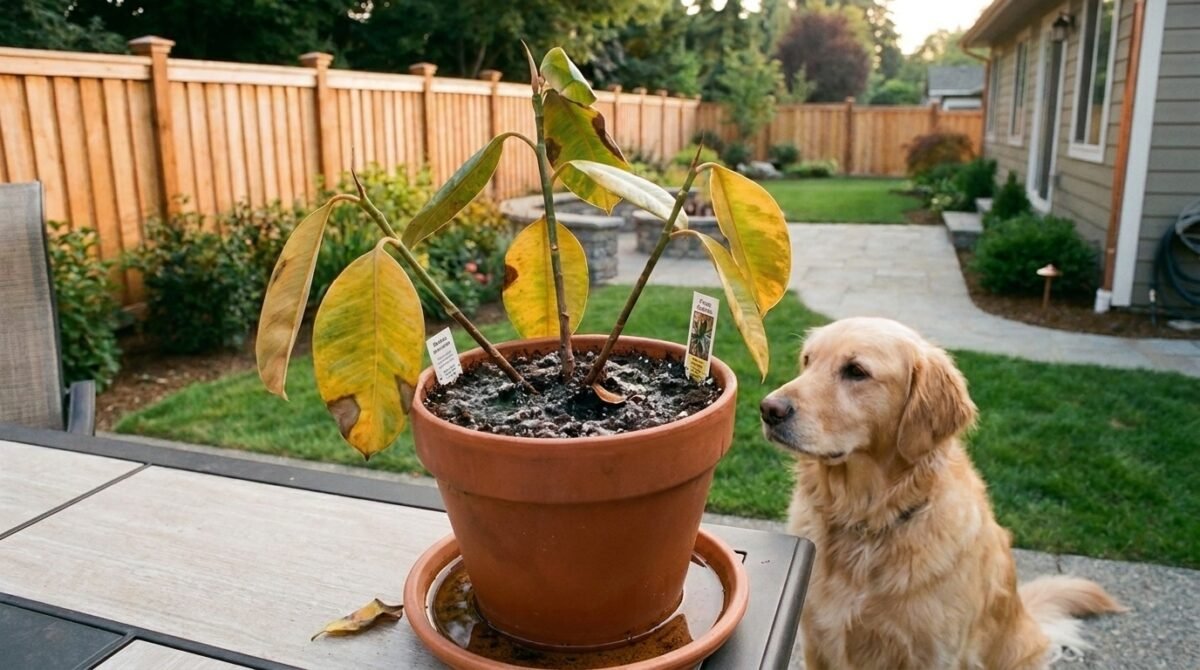
The most common pot-sizing mistake is moving a small plant into a pot that is much too large. The extra soil holds water that the roots cannot reach yet, and that constantly wet soil is what leads to root rot. When you repot, match the size increase to how fast the plant is growing rather than guessing.
| Plant Size | Recommended Pot Increase |
|---|---|
| Small houseplants | 1-2 inches larger in diameter |
| Medium-to-large plants | 2-4 inches larger in diameter |
| Fast-growing plants | Up to 4 inches larger (about two nursery sizes) to avoid repotting every year |
| Slow growers | Stick to 1-2 inches larger |
Root-bound signs: when roots circle inside the pot, push through the drainage holes, or the soil dries out unusually fast, it is time to move up one pot size.
Match Pot Depth to Root Type
| Root Type | Pot Shape | Examples |
|---|---|---|
| Taproots | Deep pots | Carrots, parsley, dill |
| Shallow roots | Wide, shallow pots | Lettuce, thyme, succulents |
| Large, vigorous fruiting plants | Large, deep pots | Tomatoes, cucumbers, potatoes |
What Happens When You Choose the Wrong Pot Size
Pot too big
- Soil stays wet for too long, which encourages root rot
- Roots cannot access all of the moisture, leading to anaerobic conditions around the root ball
- Wasted soil, space, and money on a container the plant will not fill for years
Pot too small
- The plant becomes root-bound and growth slows or stalls
- Slow or visibly stunted growth compared to the same plant in the right-sized pot
- The plant wilts quickly after watering and dries out again within 24 hours
Step-Up Rule
| Current Pot | Move Up To |
|---|---|
| 4" | 5" or 6" |
| 6" | 8" |
| 8" | 10" |
| 10" | 12" |
| 12" | 14" |
| 14" | 16" |

Overpotting and Underpotting: Which Mistake Is Worse?
“Bigger is always better” is one of the most common assumptions in container gardening, and it is not true. Problems from overpotting usually show up weeks after the repot, once the extra soil volume has kept the root zone wet far longer than the plant is used to. Root rot from a pot that is too big is one of the most preventable, and most common, causes of a houseplant’s decline.
Underpotting has a shorter fuse but is easier to reverse: a root-bound plant slows down, wilts faster between waterings, and can eventually crack a plastic pot from the inside, but a straightforward repot into the next size up usually solves it within a season.
As a rule of thumb, it is safer to underpot slightly and repot again in a year than to overpot and risk root rot you may not notice until the damage is done. The one common exception is plants that genuinely prefer being snug, like orchids, snake plants, and spider plants; for those, staying a size smaller than you might expect is the correct call, not a compromise.

Materials, Drainage, and Practical Setup
Pot size decisions are inseparable from drainage and material choice. A plant in the technically correct pot size can still struggle without drainage holes, since standing water at the bottom of a container causes the same root rot risk as an oversized pot, regardless of how well the diameter was chosen. For more background on container drainage and watering, Oklahoma State University Extension publishes free container gardening fact sheets.
Material affects the practical sizing decision too. Terracotta is porous and loses moisture through its walls, which means a terracotta pot can often run a size larger than the equivalent plastic pot without the same overwatering risk. Plastic and glazed ceramic hold moisture longer, so sizing a little more conservatively pays off there.
It is also common practice to keep a plant in its original nursery pot, sized correctly for the roots, and slide that nursery pot inside a larger decorative cachepot for display. The nursery pot controls root health, while the decorative pot is purely cosmetic and does not need to match the sizing rules in this guide as closely, as long as it has its own drainage or a drainage tray underneath.
Once you have the pot picked out, matching the soil volume to it matters just as much as the diameter. A soil calculator for pots or a pot volume calculator removes the guesswork, and if you are potting up an orchid specifically, our orchid potting mix calculator accounts for its unique bark-based mix. Getting the soil type and a well-draining soil mix right matters just as much as the container itself. A drainage tray under indoor pots is a small purchase that prevents most of the water problems in this section. For succulents specifically, pair the smaller pot sizes above with a succulent and cactus soil mix rather than standard potting soil, since regular mixes hold too much water for their roots.

Outdoor and Specialty Container Sizing
Outdoor and patio containers follow the same sizing logic as indoor pots, just at a larger scale, and with a few format-specific wrinkles worth knowing before you buy. The diameter-to-gallon chart above applies to patio planters too.
- Hanging baskets: a 10-12″ basket suits most trailing annuals; go larger only if you are combining several plants in one basket, since hanging weight becomes a real limiting factor.
- Window box planters: a standard window box holds roughly the same volume as a 10-14″ round pot per linear foot, so use the herb and leafy green rows above as your planting-density guide.
- Raised beds vs. pots: a raised bed offers far more root run and buffers soil temperature better than any container, but a pot wins on mobility and on controlling soil quality precisely. If you are still deciding between the two, our soil calculator for raised garden beds can help you estimate how much soil a bed would need.
- Self-watering pots: the reservoir adds a few inches of internal height and reduces the usable soil depth slightly, so size up by roughly one nursery size (for example, a 10″ self-watering pot behaves closer to an 8-9″ standard pot for root space).
- Bonsai: bonsai pot sizing follows the opposite philosophy from everything above; the pot is chosen to intentionally restrict root growth and keep the tree miniature, so none of the step-up rules in this guide apply there. Everywhere else on this page, size up as the plant matures rather than planting for its full-grown size on day one.

Safety Guidelines: Pots, Soil, and Pets
A few safety basics matter as much as sizing once a plant is potted and living in your home or on your patio.
- Older or imported glazed pots can contain lead glazes; if you cannot confirm a glazed pot is food-safe, use it for ornamental plants rather than edibles.
- Always use a saucer or drainage tray under indoor pots to protect flooring and furniture from water damage, especially with the larger, heavier sizes in this guide.
- Many popular houseplants, including several in the table above, are toxic to cats and dogs if chewed; check any new plant against the ASPCA Toxic and Non-Toxic Plant List before placing it where pets can reach it.
- Wash hands after handling potting soil, particularly bagged mixes, since it can carry bacteria and mold spores.
- Large fruit trees and statement planters (18″ and up) are heavy once filled with wet soil; use a plant caddy with locking wheels rather than lifting them by the rim.
For a full species-by-species reference before you bring a new plant home, see our poisonous plants finder, and if pets or curious wildlife are a regular concern in the garden, our animal-resistant plants finder can help you choose safer species from the start.

Pot Size FAQs
Getting Pot Size Right the First Time
Pot size is not a one-time decision; it is a relationship between a plant’s current root system and the container around it, and that relationship changes as the plant grows. Use the reference chart above to translate between inches, gallons, and liters, use the plant-specific tables to start each species off correctly, and use the step-up rule every time you repot instead of guessing. Do that consistently and root-bound plants, root rot, and surprise repotting emergencies become far less common in your garden.

Authoritative Sources
- Royal Horticultural Society (RHS) – authoritative UK gardening guidance
- USDA Plant Hardiness Zone Map – US hardiness zones for overwintering container plants
- ASPCA Toxic and Non-Toxic Plant List – pet safety reference
- Oklahoma State University Extension – container gardening fact sheets