7+ Most Popular Types Of Flower Pots 2026 | Sizes And Shapes
Walk into any garden center and you’ll see it happen almost every time: someone standing in front of a wall of pots, plant in hand, looking a little lost. Terracotta or plastic? Round or square? Does size even matter that much?
It does. The pot you choose affects how often you’ll water, how well roots grow, whether your plant sits happy for years or struggles from day one. And with so many materials, plant shapes, and new styles on shelves right now, picking “just a pot” has gotten more complicated than it used to be.
This guide walks through the most popular flower pot types for 2026, how to size them correctly, and the small details — drainage, cleaning, prepping, even what to do when mushrooms show up in plant soil uninvited — that make the difference between a pot that works and one that quietly kills your plant. By the end, you’ll know exactly what to look for the next time you’re standing in that aisle.
What Exactly Is a Flower Pot?
A flower pot is simply a container built to hold soil and support plant growth — but “simply” undersells how much variety exists within that definition. A flower pot can be a $3 plastic nursery pot or a hand-thrown ceramic piece that costs as much as the plant inside it.
What separates a good flower pot from a bad one isn’t price. It’s whether the container matches the plant’s roots, the climate it lives in, and how much attention you’re realistically going to give it. A pot is a plant’s entire world — get the size, material, and drainage right, and everything else about care gets easier.
If you’re still deciding between a decorative container and something more utilitarian, our pot sizes guide breaks down standard sizing before you shop.
7+ Most Popular Types Of Flower Pots
Here’s where most buying decisions actually happen — at the material level. Each type below behaves differently with water, weight, temperature, and time.
1. Terracotta and Clay Pots
Terracotta is the classic. Its porous walls let air and moisture pass through the clay itself, which helps prevent soggy soil and root rot — a big reason plant parents with a tendency to overwater lean on it.
The trade-off: that same porosity means terracotta dries out faster, so plants may need more frequent watering, especially outdoors in summer heat. Fragile rosemary plants and sun-loving herbs thrive in clay as long as moisture levels stay balanced. Clay pots are also breakable, and they can crack in freezing weather if left outside over winter.
Growing in Karachi’s summer heat, where temperatures regularly climb past 45°C, I’ve found unglazed terracotta under 8 inches can dry out within a single day even after a thorough morning watering. Grouping smaller clay pots together or moving them into afternoon shade cuts that evaporation noticeably without giving up the material’s rot-prevention benefits.
Best for: succulents, cacti, herbs, and anyone who tends to overwater.

2. Ceramic and Glazed Pots
Glazed ceramic pots bring color and polish that raw terracotta can’t. The glaze seals the clay, so these pots hold moisture longer than unglazed terracotta — good news for thirstier plants, but it also means drainage matters even more since the walls can’t help wick away excess water.
Ceramic pots are heavier and pricier, which makes them a better fit for statement pieces near an entryway than for a dozen seedlings on a windowsill. They pair beautifully with lush white bird of paradise care setups or dramatic indoor foliage.
Best for: tropical houseplants, statement entryway displays, and plants that prefer consistently moist soil.
3. Plastic Flower Pots
Plastic is the workhorse of the potting world — lightweight, inexpensive, and available in almost any color or shape imaginable. It retains moisture well, which is helpful for plants that don’t love drying out, and it won’t crack from a light bump the way ceramic or clay will.
The downside is heat: dark plastic pots left in direct sun can get warm enough to stress roots. Look for lighter colors if the pot will sit in full sun most of the day, especially when growing hardy lantana plants on open patios.
Best for: budget gardening, hanging baskets, balcony and patio setups, beginners.
4. Fiberglass Flower Pots
Fiberglass pots mimic the look of stone, metal, or concrete at a fraction of the weight, which makes them popular for large outdoor arrangements, rooftop gardens, and commercial landscaping where hauling heavy concrete simply isn’t practical.
They resist cracking in freezing temperatures better than clay or ceramic and hold up well to UV exposure over multiple seasons.
Best for: large outdoor plantings, patios, and anywhere weight is a concern.
5. Concrete and Cement Planters
Concrete planters are the heavyweights — literally. Their mass makes them nearly impossible to tip over, which is exactly why they show up so often around building entrances, along driveways, and in windy rooftop gardens.
They insulate roots from extreme temperature swings better than thinner materials, but that weight is permanent once filled with soil, so plan placement carefully before planting.
Best for: trees, shrubs, and permanent outdoor plantings in high-traffic or windy areas.
6. Fabric and Cotton Planters
Fabric pots — often made from breathable cotton or felt-like synthetic blends — have grown in popularity thanks to their “air pruning” effect. When roots reach the fabric wall, exposure to air stops them from circling the pot the way they would in solid plastic, encouraging a healthier, more branched root system.
They’re also collapsible for storage and lightweight for moving, though they dry out faster than solid-walled pots and need more frequent watering.
Best for: vegetable gardening, root vegetables, and gardeners short on storage space.
7. Ornate, Decorative, and Novelty Pots
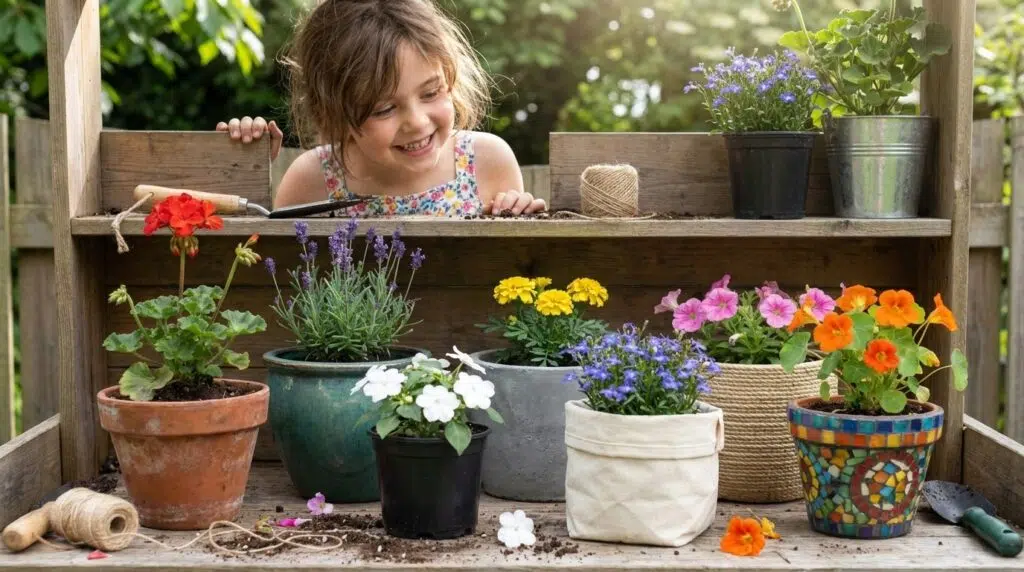
This category covers everything from hand-painted ceramic to mosaic-tiled containers to seasonal designs — think Halloween-painted pots, nutcracker-themed planters, or a mosaic pot made from broken tile scraps. These are chosen for personality as much as function, often layered over a plain plastic nursery pot doing the actual growing work inside.
Best for: gifting, seasonal décor, porches, and anyone who wants their plant collection to double as a design statement.
Bonus Shapes Worth Knowing: Cylinder, Buried, and Pocket Pots
A few shape-based styles deserve a mention too, since “type of pot” isn’t only about material:
- Cylinder garden pots — tall, narrow silhouettes that suit deep-rooted plants and modern outdoor design
- Buried pots — sunk into garden beds to control invasive roots (mint is the classic example) while still looking like an in-ground planting
- Pocket pots — flat, wall-mounted fabric or plastic pockets built for vertical gardens and small-space growing

Flower Pot Types at a Glance
| Pot Type | Weight | Water Retention | Best Climate | Typical Lifespan |
|---|---|---|---|---|
| Terracotta / Clay | Medium | Low (porous) | Warm, dry | 5–10 years |
| Ceramic / Glazed | Heavy | High | Mild, stable | 10+ years |
| Plastic | Light | High | Any | 5–15 years |
| Fiberglass | Light–Medium | Medium | Any, including freezing | 10–20 years |
| Concrete / Cement | Very Heavy | Medium | Any, including harsh winters | 20+ years |
| Fabric / Cotton | Very Light | Low | Warm, needs monitoring | 2–5 years |
| Decorative / Novelty | Varies | Varies | Depends on base material | Varies |
How to Choose the Right Flower Pot Size
Getting the size right matters more than most people expect. A pot that’s too small restricts roots and dries out fast; one that’s too big holds excess moisture around roots that can’t use it all, which invites rot.
A simple rule of thumb: choose a pot roughly 2 inches larger in diameter than the plant’s current root ball for most houseplants, sizing up gradually as the plant grows rather than jumping straight to something huge.
For anything beyond a rough estimate, our pot size calculator and gallon pot size finder can match a plant’s needs to an exact size in seconds.
How to Measure a Flower Pot
Pot dimensions get measured a specific way, and mixing this up is a common source of confusion when shopping online:
- Diameter — measured across the top opening, rim to rim
- Height — measured from the base to the top rim
- Volume — usually listed in gallons or liters, describing how much soil the pot holds
If a listing only gives you a diameter and you need the full picture, our pot volume calculator and planter volume tool convert dimensions into usable soil volume instantly.
Standard Pot Size Reference
| Pot Diameter | Approx. Volume | Good For |
|---|---|---|
| 4–6 inches | 0.5–1 gallon | Seedlings, small herbs, succulents |
| 8–10 inches | 2–3 gallons | Houseplants, annual flowers |
| 12–14 inches | 5–7 gallons | Small shrubs, tomatoes, dwarf trees |
| 16–20 inches | 10–15 gallons | Large shrubs, patio trees |
| 24+ inches | 20+ gallons | Mature trees, statement plantings |
| Pot Sizes (inches) | Pot Equivalent (U.S. Gallons)* | Suitable Plants | Soil Needed (cu. ft.) | Est. Weight (lbs)* |
|---|---|---|---|---|
| 4" pot | 0.125 gallon | Nursery plants / Seedlings | 0.01 ft³ | 0.137 lbs |
| 5-6" pot | 0.25 gallon | Small succulents / 1 Annual | 0.03 ft³ | 0.27 lbs |
| 7-8" pot | 1 gallon | Larger succulents / 2 Annuals / Ornamental Grass | 0.13 ft³ | 1.1 lbs |
| 10" pot | 3 gallon | Small herbs such as Chives / Up to 3 annuals | 0.40 ft³ | 3.3 lbs |
| 12" pot | 5 gallon | Lettuce / Spinach / Strawberries | 0.66 ft³ | 5.5 lbs |
| 14" pot | 7 gallon | Larger herbs such as Rosemary | 0.94 ft³ | 7.7 lbs |
| 16" pot | 10 gallon | Small shrubs / Small fruits such as Raspberry | 1.33 ft³ | 11 lbs |
| 18" pot | 15 gallon | Vegetables such as tomato plants / Mix of annuals | 2.00 ft³ | 16.5 lbs |
| 24" pot | 25 gallon | Evergreen shrubs / Dwarf trees | 3.34 ft³ | 27.5 lbs |
| 30" pot | 30 gallon | Larger plants / Small trees | 4.01 ft³ | 30 lbs |
| 32" pot | 35 gallon | Large shrubs & trees: Palm trees, Boxwood | 4.68 ft³ | 35.5 lbs |
| 36" pot | 40 gallon | Larger trees: Orchard fruit trees such as Apple | 5.00 ft³ | 37 lbs |
| 44" pot | 45 gallon | Fully grown trees: Pine, Spruce, Hawthorn | 5.53 ft³ | 41 lbs |
Do Flower Pots Need Drainage Holes?
Short answer: yes, almost always. Drainage holes let excess water escape after watering instead of pooling around the roots. Without them, roots sit in trapped water, oxygen gets pushed out of the soil, and root rot can set in — often before you notice anything wrong above the soil line.
If you’ve fallen for a decorative pot with no holes, you have options:
- Drill holes yourself if the material allows it (plastic and some ceramics can be drilled carefully)
- Use it as a cachepot — a decorative outer shell — and keep the plant in its original nursery pot inside
- Add a thick layer of gravel at the base in addition to proper drainage, not as a substitute for it (this is a common myth — a gravel layer without a hole still traps water, it just moves where the puddle sits)
For plants especially sensitive to soggy roots, pairing the right pot with well-draining soil makes a bigger difference than either fix alone.

| Pot Size (inches) | Volume (Gallons)* | Soil Needed (cu. ft.) | Est. Weight (lbs)* | Drainage Hole Recommendation | Suitable Plants |
|---|---|---|---|---|---|
| 4" pot | 0.125 gal | 0.01 ft³ | 0.137 lbs | 1 hole (1/4" to 3/8" diameter) | Nursery plants / Seedlings |
| 5-6" pot | 0.25 gal | 0.03 ft³ | 0.27 lbs | 1 to 2 holes (3/8" diameter) | Small succulents / 1 Annual |
| 7-8" pot | 1 gal | 0.13 ft³ | 1.1 lbs | 2 to 3 holes (1/2" diameter) | Larger succulents / 2 Annuals / Ornamental Grass |
| 10" pot | 3 gal | 0.40 ft³ | 3.3 lbs | 3 to 4 holes (1/2" diameter) | Small herbs such as Chives / Up to 3 annuals |
| 12" pot | 5 gal | 0.66 ft³ | 5.5 lbs | 4 to 5 holes (1/2" to 3/4" diameter) | Lettuce / Spinach / Strawberries |
| 14" pot | 7 gal | 0.94 ft³ | 7.7 lbs | 4 to 6 holes (3/4" diameter) | Larger herbs such as Rosemary |
| 16" pot | 10 gal | 1.33 ft³ | 11 lbs | 5 to 6 holes (3/4" diameter) | Small shrubs / Small fruits such as Raspberry |
| 18" pot | 15 gal | 2.00 ft³ | 16.5 lbs | 6 to 8 holes (3/4" to 1" diameter) | Vegetables such as tomato plants / Mix of annuals |
| 24" pot | 25 gal | 3.34 ft³ | 27.5 lbs | 8 to 10 holes (1" diameter) | Evergreen shrubs / Dwarf trees |
| 30" pot | 30 gal | 4.01 ft³ | 30 lbs | 10 to 12 holes (1" diameter) | Larger plants / Small trees |
| 32" pot | 35 gal | 4.68 ft³ | 35.5 lbs | 12+ holes (1" to 1.25" diameter) | Large shrubs & trees: Palm trees, Boxwood |
| 36" pot | 40 gal | 5.00 ft³ | 37 lbs | 12 to 15 holes (1.25" diameter) | Larger trees: Orchard fruit trees such as Apple |
| 44" pot | 45 gal | 5.53 ft³ | 41 lbs | 15+ holes (1.25" to 1.5" diameter) | Fully grown trees: Pine, Spruce, Hawthorn |
Prepare Flower Pots for Planting
New pot or reused one, a few minutes of prep now saves headaches later.
For a brand-new pot:
- Rinse to remove manufacturing dust or clay residue
- Check that drainage holes are open and unobstructed
- Add a coffee filter or mesh screen over the hole to keep soil from washing out without blocking drainage
For a reused pot:
- Clean thoroughly (see the cleaning section below) to remove old soil, salt buildup, and any lingering pests or fungal spores
- Inspect for cracks, especially in terracotta, which can widen once filled with wet soil
- Refresh with new potting mix rather than reusing old, compacted soil
Choosing the right soil type from our soil type guide at this stage sets the plant up far better than trying to fix drainage or nutrition problems after the fact.
How to Plant Flowers in a Pot: Step by Step

- Choose the right pot size for the plant’s current root ball, sizing up if it’ll grow quickly
- Add a drainage layer — a few pieces of broken pottery or mesh over the hole, not a thick gravel bed
- Fill partway with potting mix, leaving enough room for the root ball plus an inch of space below the rim
- Position the plant at the same depth it sat in its original container — planting too deep can cause stem rot
- Backfill around the roots, pressing gently to remove large air pockets without compacting the soil hard
- Water thoroughly until it runs from the drainage holes, which settles the soil around the roots
- Place in appropriate light for that specific plant’s needs
If seeds rather than an established plant are going in, spacing changes the math slightly — jump to the seeds section below.
How Many Flower Seeds Per Pot?
This depends entirely on the flower and the pot size, but a workable general guideline:
- Small pots (4–6 inches): 2–3 seeds, thinned to the strongest single seedling
- Medium pots (8–10 inches): 4–6 seeds, thinned to 2–3 seedlings
- Large pots (12+ inches): follow the seed packet’s in-ground spacing guidance, since a big pot behaves like a small garden bed
Overcrowding is the most common seed-starting mistake — too many seedlings in one pot compete for light, water, and nutrients, and everyone loses. Our plant spacing calculator can help translate in-ground spacing recommendations to container sizing.
How to Clean Flower Pots (Terracotta, Clay, Ceramic, and Plastic)
Reusing pots season after season is both budget-friendly and sustainable, but old pots can carry fungal spores, pest eggs, and mineral salt buildup that affects a new plant.
Cleaning terracotta and clay pots:
- Soak in warm water for 15–20 minutes to loosen mineral deposits
- Scrub with a stiff brush and a mix of water and white vinegar to dissolve the white, chalky salt crust common on unglazed clay
- Rinse thoroughly and air dry completely before reuse
Cleaning plastic and glazed ceramic pots:
- Wash with warm, soapy water and a scrub brush
- For pots that held a diseased plant, disinfect with a diluted bleach solution (about 1 part bleach to 9 parts water), then rinse well
- Dry fully before adding fresh soil
Skipping the disinfecting step is one reason the same fungal or pest problem seems to “come back” year after year in the same container.
Grower Pot vs. Nursery Pot: What’s the Difference?
These terms get used almost interchangeably, but there’s a subtle distinction worth knowing if you’re buying plants in bulk or from a wholesale nursery:
- Grower pots are the thin, often flimsier plastic containers used specifically during the growing and shipping phase, designed to be temporary
- Nursery pots is the broader, more commonly used term for any standard plastic pot a plant is sold in at a garden center, whether or not it’s headed for a permanent container
In practice, most home gardeners use “nursery pot” for both. The real takeaway: whichever term is on the tag, that container is almost never meant to be the plant’s forever home — plan to repot into something more suited to the space, using our pot size calculator to land on the right next size.
Are Plastic Flower Pots Recyclable?
It’s more complicated than tossing them in the curbside bin. Many plastic nursery pots are made from polypropylene (often stamped with a #5 recycling code), but a lot of curbside recycling programs don’t accept plant pots specifically, even when they accept the plastic type in other forms — the black pigment commonly used in nursery pots can interfere with the optical sorting equipment recycling facilities use.
Before assuming a pot is recyclable curbside, check the EPA’s recycling guidance or your local municipal program’s accepted items list. Many garden centers also run their own pot take-back programs specifically because curbside recycling often falls short here.
Reusing pots for years, donating extras to community gardens, or repurposing cracked ones as drainage material in the bottom of larger containers are all solid alternatives to the bin.
How to Paint and Decorate Flower Pots

Painting a pot is one of the easiest ways to make a plain container feel custom, but the material changes the approach:
- Terracotta and clay: Seal with a clay sealant first, since raw terracotta absorbs paint unevenly; acrylic craft paint works well once sealed
- Plastic: Use a paint formulated for plastic or a spray primer designed for plastic surfaces first, or paint won’t adhere properly and will chip quickly
- Ceramic: Ceramic-specific paint or a general-purpose acrylic with a clear sealant top coat holds up best
- Concrete and cement: Concrete stain or masonry paint bonds better than standard craft paint
After painting, always finish with a clear waterproof sealant, especially for anything living outdoors — it’s the step most DIY pots skip, and it’s the reason painted designs fade or peel within a season.
Making a Mosaic Flower Pot
Mosaic pots are a favorite weekend project. The basic process: clean and dry the pot, apply tile adhesive in small sections, press broken tile or glass pieces into place, let it cure, then apply grout between the pieces and wipe clean before it fully hardens. A plain terracotta or concrete base works best since the surface holds adhesive more reliably than glazed ceramic.
Aging Terracotta Pots for a Rustic Look
To get that weathered, antique look without waiting years:
- Paint a thin layer of plain yogurt or buttermilk onto the pot to encourage natural moss and algae growth in humid climates
- Alternatively, use a light wash of diluted acrylic paint in green or white, then wipe most of it away before it dries, leaving pigment settled into the pot’s texture
How to Arrange Flower Pots in the Garden
A collection of pots reads as intentional design rather than clutter when you follow a few basic principles:
- Vary height by grouping pots of different sizes together — odd numbers (three or five) tend to look more natural than pairs
- Anchor with one large statement pot and build smaller pots around it rather than using several pots of similar size
- Group by light and water needs, not just looks, so the arrangement stays healthy as well as attractive
- Leave breathing room between pots for air circulation, which also helps prevent fungal issues in humid weather
If you’re planning a full outdoor layout, pairing this with our drought-resistant garden calculator can help balance watering needs across a mixed container arrangement.
Common Flower Pot Problems (and How to Fix Them)

Why Are Mushrooms Growing in My Flower Pot?
Mushrooms in potting soil are usually a sign of decomposing organic matter (like mulch or bark in the potting mix) combined with consistently damp conditions — not a sign your plant is in danger. They’re generally harmless to the plant itself. Removing them by hand and easing up on watering frequency usually resolves it. For a deeper look at fungal growth in soil, our mushrooms in lawn guide covers the same underlying causes in more detail.
Why Are There Worms in My Flower Pots?
Small worms are typically beneficial — they aerate soil and break down organic matter. The concern is usually only when large numbers appear alongside root damage, which can point to a different pest entirely, like fungus gnat larvae, rather than earthworms. Check our animal resistant plants finder and pest guides if outdoor critters start invading your containers.
Why Do Chipmunks and Animals Dig in Flower Pots?
Loose, freshly turned soil is an easy target for chipmunks and squirrels burying food or exploring for grubs. A layer of decorative rock or mesh over the soil surface, or choosing naturally animal-resistant plants, reduces the appeal.
Why Is My Flower Pot Cracked?
Cracks usually trace back to one of three causes: freeze-thaw cycles in porous materials like terracotta, a pot that’s outgrown by expanding roots, or physical impact. Once cracked, a pot rarely improves — repurpose it as garden décor, a drainage layer for a larger pot, or a rustic broken-pot succulent garden rather than continuing to plant directly into it.
Do flower pots really need drainage holes, or can I get by without them?
Almost every plant benefits from drainage holes. Without them, excess water has nowhere to go, and root rot becomes a real risk even with careful watering.
What’s the best flower pot material for beginners?
Plastic is the most forgiving starting point — lightweight, affordable, and retains moisture well enough to reduce the risk of underwatering while you’re still learning a plant’s rhythm.
Can I paint a plastic flower pot?
Yes, as long as you use a paint or primer designed to adhere to plastic and finish with a waterproof sealant so it holds up outdoors.
How do I know if a flower pot is too big for my plant?
If the soil stays wet for several days after watering with no plant actively drawing moisture out, the pot is likely oversized for the current root system.
Are terracotta pots better than plastic pots?
Neither is universally “better” — terracotta suits plants and gardeners prone to overwatering, while plastic suits plants that prefer consistent moisture and gardeners who want a lighter, more affordable option.
Can broken flower pots be reused?
Yes. Broken pieces work well as drainage material in the bottom of larger containers, and a cracked pot can become a rustic planter itself if the crack doesn’t affect its ability to hold soil.
Safety Guidelines
Flower pots are about as low-risk as gardening gear gets, but a few of the materials and projects covered in this guide are worth handling with a bit more care.
- Glazed ceramic pots and edible plants: Not every glaze is food-safe. Vintage, imported, or unlabeled glazed ceramic pots can contain lead or cadmium that leaches into soil over time, especially with acidic fertilizers. Stick to pots labeled food-safe or lead-free for herbs, vegetables, and other edibles, or use a plastic liner as a barrier.
- Bleach disinfecting solution: When disinfecting reused pots with a diluted bleach solution, work in a ventilated area, never mix bleach with ammonia or other cleaners, and rinse pots thoroughly before soil or plants go back in.
- Sealants and spray primers: Clay sealant, plastic primer, and waterproof topcoats used in painting projects should be applied outdoors or in a well-ventilated space, away from kids and pets until fully cured.
- Heavy concrete and ceramic planters: A large filled concrete or ceramic pot can weigh 30–40+ lbs and poses a real tip-over and crush risk to small children if it’s climbed on or bumped. Set heavy planters on stable, level ground, away from high-traffic play areas.
- Mosaic and broken-pot projects: Broken tile, glass, and pottery edges are sharp. Wear gloves when handling shards, and sweep up small fragments promptly, especially anywhere kids or pets go barefoot.
- Drilling drainage holes: Secure the pot before drilling (a clamp or a helper works well), wear eye protection, and drill slowly to avoid cracking brittle materials like terracotta or ceramic.
When in doubt about a pot’s food-safety for edibles, treat it as decorative only and keep edible plants in a container you know is safe.
Final Thoughts
The “right” flower pot isn’t really about finding the single best option — it’s about matching a container to the plant, the space, and how much upkeep you’re honestly willing to give it. A terracotta pot that dries out fast is perfect for a succulent and a poor fit for a thirsty fern. A heavy concrete planter that shrugs off winter wind is overkill for a windowsill herb garden.
Start with the plant’s actual needs, size the pot correctly using a proper measurement rather than a guess, and get drainage right from day one. Everything else — the color, the material, the mosaic tiles or hand-painted design — is where you get to have fun with it.
Once your pots are sorted, our soil calculator for pots and indoor plant care calculator make the next steps — filling and maintaining them — just as straightforward. Check out our best indoor plants guide or explore moody houseplants for beginners to find your next green companion.