White Bird of Paradise (Strelitzia nicolai) Care Guide
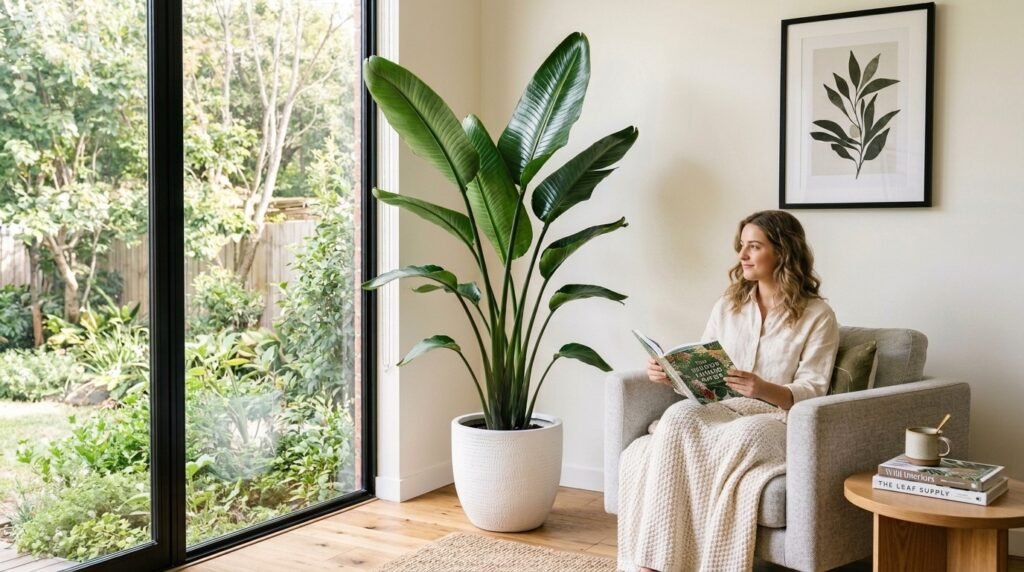
If you’ve ever walked into a hotel lobby or a design magazine’s idea of a living room and thought, what is that huge, glossy, paddle-leafed plant in the corner? you’ve met the white bird of paradise. It’s one of the easiest ways to make a room feel finished and a little bit tropical, and it’s far more forgiving to grow than its dramatic size suggests.
This guide covers everything from light and watering to repotting a plant that’s outgrown its space, plus the honest answer on whether it’s safe around pets. If you’re comparing it against other statement houseplants, our split-leaf philodendron guide and Monstera deliciosa care guide cover two other popular large-leaf options worth knowing about.

What Is a White Bird of Paradise, Exactly?
Strelitzia nicolai, commonly called the white bird of paradise, giant bird of paradise, or wild banana, is a large tropical evergreen perennial native to coastal forests and dunes in South Africa, Mozambique, Botswana, and Zimbabwe. It belongs to the Strelitziaceae family, the same family as the traveler’s palm, which explains why the two are so often confused for each other.
In the wild and in landscaping, it’s a genuine tree, reaching 15 to 30 feet tall according to the University of Florida IFAS Extension. Indoors in a container, growth stays far more modest, typically landing somewhere between 6 and 10 feet over several years, which is still plenty dramatic for most living rooms.
Despite the name, this isn’t the plant with the famous orange-and-blue bird-shaped flower most people picture when they hear “bird of paradise.” That’s a different, smaller species (Strelitzia reginae), which we’ll compare directly further down.

White Bird of Paradise Size, Height, and Growth Rate
💡 Indoor Growth Note: If your indoor plant seems to be growing painfully slowly, that's often completely normal rather than a sign of a problem, especially through fall and winter when growth naturally slows down with shorter days.

White Bird of Paradise Light Requirements
White bird of paradise wants bright, indirect light indoors, ideally near a south or west-facing window. Outdoors, UF/IFAS notes it grows well in full sun to light shade, though morning sun with afternoon shade tends to keep leaves looking their best in hot climates without scorching.
Too little light is the most common reason an indoor plant stalls out or leans dramatically toward the nearest window. If your space is genuinely low-light, this probably isn’t the right plant, and our guide to low-light indoor plants covers better-suited alternatives instead of forcing this one into a dim corner.

Watering Precision Over Routine: White Bird of Paradise
Water when the top half of the soil has dried out, rather than on a fixed weekly schedule. In most homes, that lands somewhere around once a week in spring and summer, stretching to every 10-14 days in fall and winter as growth slows.
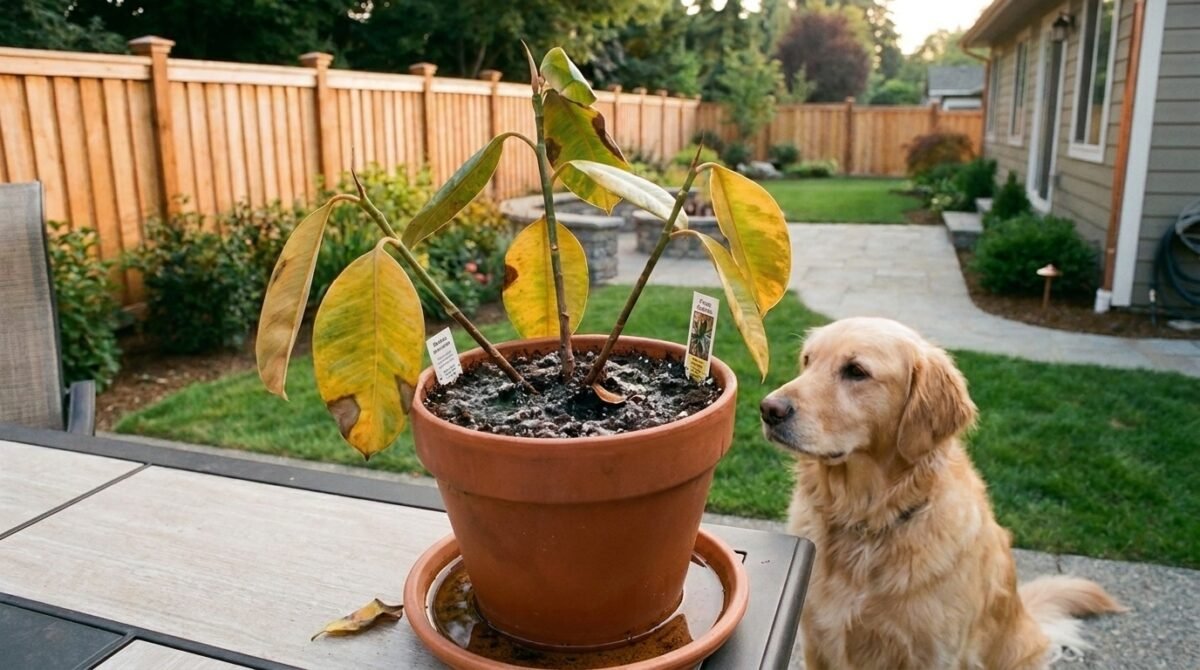
Overwatering is a far more common problem than under watering with this plant. Consistently soggy soil is the leading cause of root rot, so err on the side of a little dry between watering rather than keeping the soil constantly moist.

Best Soil Mix for White Bird of Paradise
A loose, well-drained mix is non-negotiable for a plant this size and thirst level. A solid DIY blend is roughly:
- Two parts quality potting soil or peat-free loam-based compost
- One-part perlite or coarse sand for drainage
- A handful of orchid bark or coarse compost to keep the mix from compacting over time
Our soil type guide breaks down the properties of different soil components if you want to build your own mix rather than buying a pre-made tropical plant blend.

Fertilizer Schedule for White Bird of Paradise
Feed with a balanced liquid fertilizer every 4 to 6 weeks during spring and summer, when the plant is actively pushing new leaves. Cut back to once every 8 weeks or stop entirely over fall and winter, since fertilizing a dormant or slow-growing plant does more harm than good.
Our fertilizer selector can help you match a formula to this plant’s needs if you’re not sure which product on the shelf actually applies.
As a coastal tropical native, this plant appreciates humidity above the average dry indoor home, ideally 40% or higher. It will tolerate typical household humidity just fine, but crispy leaf edges in winter are often a humidity issue rather than a watering one, especially in homes with dry forced-air heating.

Managing Atmospheric Moisture and Circulation
🌡️ Troubleshooting Tip: Keep track of room conditions with a digital hygrometer. If leaf tips begin turning crisp even though the soil stays moist, focus on raising the surrounding air humidity rather than pouring in extra water.

How to Prune a White Bird of Paradise for Shape?
- Remove fully brown or dead leaves at the base of the stem, cutting cleanly rather than tearing
- Trim ragged or wind-torn leaf tips with clean scissors rather than removing the whole leaf, if most of it is still healthy
- Avoid cutting healthy green leaves just to control height, since this plant doesn’t respond well to aggressive topping the way some houseplants do
- Rotate the pot occasionally so growth doesn’t lean permanently toward the light source
This is genuinely a low-maintenance plant when it comes to pruning. UF/IFAS specifically notes it needs little pruning to develop a strong structure, so resist the urge to over-trim.

How to Repot a Large White Bird of Paradise?
- Repot every 2 to 3 years, or when roots are visibly circling the pot or emerging from drainage holes
- Size up gradually, one pot size at a time, rather than jumping several sizes at once
- Spring is the best season, giving the plant a full growing season to recover before slower winter months
- For a mature plant in a large container, it often takes two people, this thing gets genuinely heavy once it’s a few feet tall
Not sure what container size actually makes sense for your plant’s current size? Our gallon pot size finder and pot size calculator translate vague size labels into real dimensions, so you’re not guessing between a 10-gallon and 15-gallon container.

Propagating White Bird of Paradise
Division (Easier, Faster)
Mature plants naturally form clumps with multiple stalks. Once a clump is large enough, you can separate a stalk with its own root section during repotting and pot it up independently. This is by far the more reliable method for home growers.
From Seed (Slower, More Patience Required)
Growing from seed works but takes real patience, germination can take several weeks to a few months, and a seed-grown plant needs years before it reaches a meaningful size. Soak seeds for 24-48 hours before sowing to soften the hard seed coat, and keep the growing medium warm and consistently moist until germination.

Common Problems and How to Fix Them
🌸 Why Isn't My White Bird of Paradise Flowering? Indoor plants often don't flower at all, or take many years to reach flowering maturity, since blooming typically requires more light intensity and a larger, more established plant than most indoor conditions provide. It's grown almost entirely for its foliage indoors, so treat flowering as a rare bonus, not an expectation.

White vs. Orange Bird of Paradise, and vs. Banana Tree
(S. nicolai)
(S. reginae)
(Musa spp.)
🍌 Botanical Note: The banana-tree confusion makes sense visually—both have large paddle-shaped leaves—but they're different genera entirely. A true banana plant grows much faster and, given the right variety and climate, actually fruits, which Strelitzia nicolai never does in a meaningful way.

Cold Tolerance, USDA Zones, and Outdoor Growing
White bird of paradise is hardy in USDA zones 9b through 11, per UF/IFAS Extension, and can tolerate brief periods down to around 28°F with only minor leaf burn before rebounding. Outside that range, it needs to come indoors or into a greenhouse before the first real frost.
Landscaping and Planting Distance
Because mature plants can spread 6 to 10 feet wide in clumping form, give it real room, at least 6 feet from structures, walkways, and other large plants. It’s a popular choice for entranceways and poolside planting specifically because its bold, architectural form holds up well as a solo statement piece rather than needing to be surrounded by other plants.

Buying a White Bird of Paradise: Price, Size, and Pot Material
🪴 Best Pot Material: Terracotta is a strong choice for this plant specifically, since its porous walls help excess moisture evaporate, working in your favor against overwatering and root rot risks. Heavy ceramic or terracotta also helps anchor a top-heavy, mature plant that could otherwise tip a lightweight plastic pot.

Is White Bird of Paradise Toxic to Pets?
Yes. The ASPCA lists Strelitzia species as toxic to dogs, cats, and horses, with the fruit and seeds carrying the highest concentration of the irritant compounds. The good news is that the ASPCA classifies the effect as a mild gastrointestinal irritant, not a severe or organ-damaging toxin: expect mild nausea, vomiting, or drowsiness if a curious pet takes a bite, rather than anything life-threatening in typical cases.
Still, keep it out of reach of pets that like to chew on houseplants, and call your vet or the ASPCA Animal Poison Control Center if you know or suspect a pet has eaten a meaningful amount, especially the seeds.

One More Thing While You’re Setting Up That Corner
A plant this size often ends up near a window, a hallway, or an entryway, exactly the kind of spot where it’s worth glancing up and confirming there’s a working smoke alarm nearby too. According to NFPA research, a working smoke alarm cuts your risk of dying in a home fire by roughly 60%, yet nearly three out of five home fire deaths still happen in homes with no working alarm.
Our smoke detector calculator can tell you how many alarms your home actually needs and where to place them, a quick check while you’re already rearranging furniture for your new statement plant.
Frequently Asked Questions
Essential care guidance, troubleshooting, and answers for White Bird of Paradise (Strelitzia nicolai)