Water in a Crawl Space After Heavy Rain: 12 Causes & What to Do
You went down to check on something after a storm, and there it was: a shine on the dirt, a puddle by the support post, that damp, earthy smell hitting you before you even got the flashlight on. If you’ve ever stood at the top of the crawl space hatch wondering whether you’re looking at a minor puddle or the start of a much bigger headache, you’re not alone. This is one of the most common — and most misunderstood — problems homeowners run into.
The good news: water in a crawl space after heavy rain is common, and in most cases it’s fixable once you know what’s actually causing it. The bad news: “common” doesn’t mean “harmless.” Left alone, that water can quietly rot your floor joists, warp your subfloor, and fill your home with musty air for years before anyone notices.
This guide walks through everything — why it happens, what it damages, and exactly how to stop it for good. We’ll cover more than 10 distinct issues that show up after heavy rain, plus the fixes that actually work.
Is Water in a Crawl Space After Heavy Rain Normal?
Here’s the honest answer: a little dampness after a serious storm isn’t shocking, especially in older homes without a proper vapor barrier or drainage system. But “not shocking” isn’t the same as “fine to ignore.”
Standing water, puddles that don’t dry out within a day or two, or water that shows up every single time it rains — that’s not normal. That’s a sign your crawl space has a drainage, grading, or moisture-control problem that needs to be addressed before it becomes structural.
A useful rule of thumb: if the ground under your house looks damp but not pooled, and it dries out within 24–48 hours, you’re probably dealing with routine humidity. If you can see or hear standing water, or your crawl space smells musty even on dry days, don’t wait it out — that’s the point where it’s worth calling in a foundation or waterproofing pro to check for a drainage or grading fix before it turns into rot or structural damage.

What Causes Water in a Crawl Space? 10+ Common Culprits
This is the heart of the problem — and the reason “just wait for it to dry out” is rarely good advice. Water doesn’t show up under your house for one single reason; it’s usually a combination of a few. Here are the most common causes, in roughly the order plumbers and foundation specialists see them.
- Poor Grading Around the Foundation: If the soil around your house slopes toward the foundation instead of away from it, every heavy rain sends water straight downhill and into your crawl space. This is, by a wide margin, the number one cause inspectors find.
- Clogged or Missing Gutters: Gutters that are full of leaves and debris overflow right at the foundation line, soaking the soil exactly where you don’t want it soaked.
- Short or Disconnected Downspouts: Even good gutters fail if the downspout dumps water two feet from the house instead of carrying it well away. This is one of the cheapest problems to fix and one of the most overlooked.
- Groundwater and a High Water Table: In some regions, the water table rises during rainy seasons and pushes moisture up through the soil and into the crawl space — even without any surface flooding. If you notice water seeping up from the ground but no leak is visible anywhere, this is often the reason.
- Hydrostatic Pressure: When soil becomes fully saturated, it creates pressure that pushes water sideways through foundation walls and upward through the crawl space floor. This is the same force that causes a crack in a basement wall to weep water during storms.
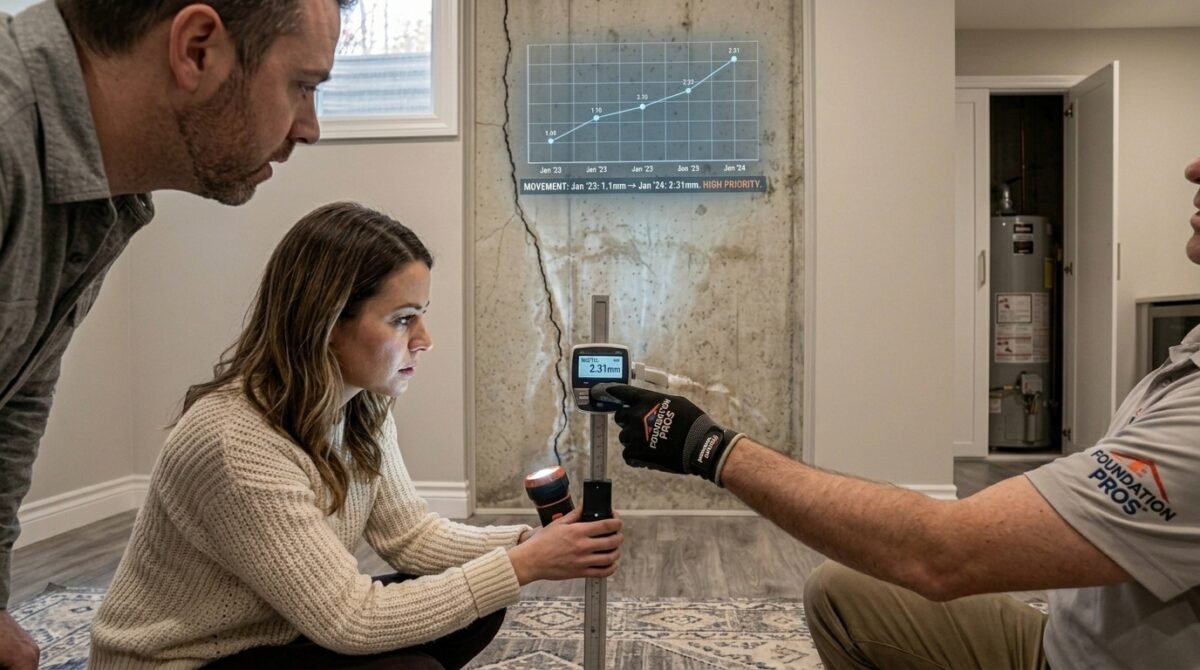
- Foundation Cracks and Gaps: Cracks in the foundation walls or footings give water a direct path inside. Even hairline foundation cracks can let in a surprising amount of water during a downpour.
- Plumbing Leaks Under the House: Not all “rain water” is actually rain water. A slow leak in crawl space plumbing can mimic storm-related flooding, especially if it worsens right after heavy rain due to pipe movement or pressure changes.
- No Vapor Barrier (or a Damaged One): Bare dirt floors act like a sponge, pulling moisture up from the ground constantly. A missing or torn vapor barrier means the soil’s moisture has nowhere to go but into your crawl space air.
- Poor Soil Drainage: Heavy clay soils hold water far longer than sandy, well-draining soil. If your home sits on dense clay, understanding your soil type explains a lot about why water lingers so long after rain.
- Surface Water Runoff From Landscaping: Flower beds, mulch mounds, or hardscaping built up against the foundation can direct rainwater runoff straight toward — or under — your home.
- Sump Pump Failure or Absence: If you already have a sump pump and it fails (or you never had one installed), any water that does get in has nowhere to go except to sit and soak into your wood framing.
- Window Wells and Low Vents: Crawl space vents or window wells positioned below grade collect rainwater and channel it directly inside during a storm.
Table 1: Common Causes of Crawl Space Water & Their Warning Signs
| Cause | What You'll Notice | Easy to Fix? |
|---|---|---|
| Poor grading | Water pools near foundation, then indoors | Yes — regrading is DIY-friendly |
| Clogged gutters | Overflow streaks on siding | Yes — cleaning/maintenance |
| Short downspouts | Erosion right at the foundation | Yes — extend downspouts |
| High water table | Water seeps up with no visible leak | No — needs drainage system |
| Hydrostatic pressure | Water pushes through walls/floor | No — needs waterproofing |
| Foundation cracks | Visible cracks, active seepage | Moderate — sealing or professional repair |
| Plumbing leaks | Water appears even without rain | Moderate — plumber needed |
| Missing vapor barrier | Constant dampness, musty smell | Yes — barrier installation |
| Poor soil drainage | Water lingers for days | No — drainage system needed |
| Landscaping runoff | Wet soil hugging the foundation | Yes — regrade or reroute |
Water Under House Foundation: What the Signs Really Mean
Water under a house foundation doesn’t always show up as a visible puddle. Sometimes it’s subtler — and those subtle signs are exactly what get missed until the damage is already done.
- Musty odor inside the house, especially near floor vents
- Warped or cupping hardwood floors on the ground level
- Sticking doors and windows from humidity-swollen wood
- Visible mold on floor joists or subfloor when viewed from below
- Higher-than-normal indoor humidity, even with AC running
- Insects like termites or carpenter ants attracted to damp wood — check for a termite mud tube along foundation walls as a red flag
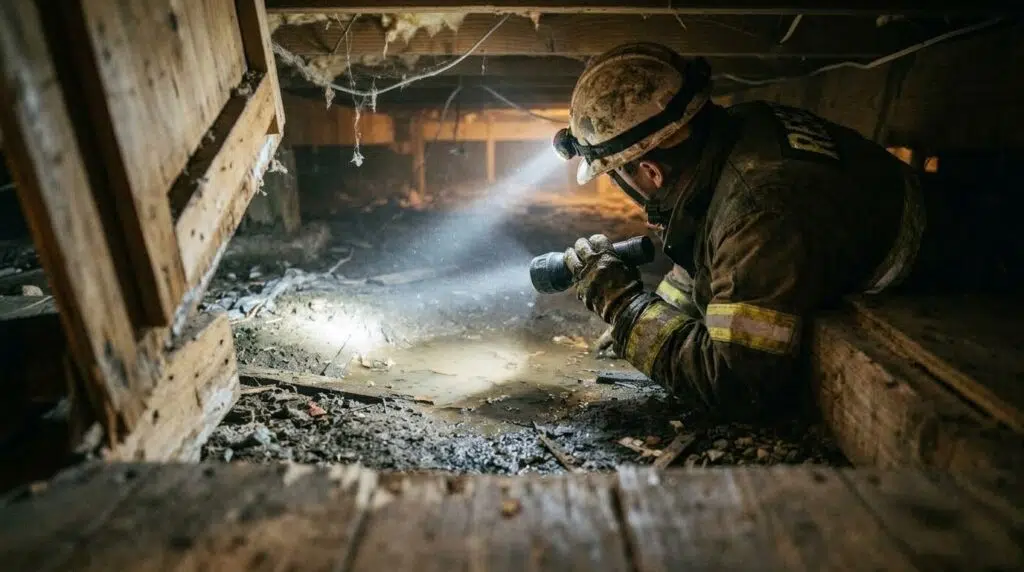
If you’re noticing several of these at once, it’s worth getting under the house with a flashlight — or calling in a professional — before the next storm rolls through.

Water in Crawl Space After Heavy Rain: What to Do Right Now
If you’ve just discovered standing water after a storm, don’t panic — but don’t wait either. Here’s the order of operations that actually helps:
- Identify the source: Is it coming in from one wall, pooling in the center, or seeping up evenly across the floor? The pattern tells you a lot.
- Remove standing water: A wet/dry shop vacuum works for small amounts; a submersible pump is worth renting for anything deeper than an inch or two.
- Increase airflow: Open crawl space vents (if you have them) and run fans to speed up drying and reduce mold risk.
- Check your vapor barrier: If it’s torn, shifted, or missing, moisture will keep coming back even after you dry things out.
- Inspect the wood: Look for soft spots, discoloration, or a spongy feel — early signs of wet rot.
- Document everything: Photos matter if you ever need to file an insurance claim or get repair quotes.

Crawl Space Wet Rot: Causes, Signs, Treatment & Prevention
Wet rot is what happens when wood stays damp long enough for fungi to start breaking it down from the inside. Unlike dry rot, wet rot needs a continuous moisture source — which makes crawl spaces one of its favorite places to grow.
Signs of Wet Rot
- Dark, discolored patches on joists or subfloor
- Wood that feels soft, spongy, or crumbles under light pressure
- A strong, damp, fungal smell
- Visible fungal growth (often black, brown, or white and stringy)
How to Treat Crawl Space Wet Rot
- Remove the moisture source first — treating rot without fixing the leak just means it comes back.
- Cut out and replace any structurally compromised wood.
- Treat the surrounding healthy wood with a borate-based fungicide to stop the spread.
- Improve ventilation or install a dehumidifier to keep humidity below 55%.
How to Prevent Crawl Space Wet Rot
- Install (or repair) a vapor barrier
- Fix drainage and grading issues before they reach the wood
- Keep gutters clean and downspouts extended
- Consider full encapsulation in chronically damp climates
Table 2: Wet Rot vs. Dry Rot at a Glance
| Feature | Wet Rot | Dry Rot |
|---|---|---|
| Moisture needed | Continuous, high moisture | Can spread with less ongoing moisture |
| Appearance | Dark, soft, spongy wood | Dry, crumbly, cuboidal cracking |
| Common location | Crawl spaces, basements | Anywhere with past water damage |
| Spread rate | Contained to wet area | Can spread further through structure |
| Fix priority | Stop water source, then treat | Remove and treat immediately |

Crawl Space Water Damage: Signs, Repairs & Prevention
Water damage in a crawl space rarely announces itself loudly — it creeps. By the time you notice sagging floors upstairs, the damage below has usually been building for months or years.
Common Signs of Crawl Space Water Damage
- Sagging or bouncy floors
- Cracked drywall near floor level
- Rusted metal fasteners or support jacks
- Visible mold on insulation batts
- Wet, sagging, or fallen fiberglass insulation
Repair Steps
- Remove and replace any waterlogged insulation — wet insulation loses its R-value and becomes a mold magnet.
- Sister damaged joists with new lumber rather than relying on patched repairs alone.
- Treat mold-affected surfaces with an appropriate biocide after the moisture source is controlled.
- Reinstall a proper vapor barrier and consider a dehumidifier for ongoing protection.
Repair costs vary widely depending on severity, but catching the problem at the “damp and musty” stage is dramatically cheaper than waiting until you’re replacing structural joists.
Standing Water in a Crawl Space: Why It's More Serious Than It Looks
Standing water isn’t just an inconvenience — it’s an accelerant for almost every other problem on this list. The longer water sits, the more time it has to:
- Soak into wood and start rot
- Raise humidity levels throughout the house
- Attract pests like termites, mosquitoes, and rodents
- Create ideal breeding conditions for mold spores that travel into living spaces through floor vents
If you’re dealing with standing water after every heavy rain, that’s a strong signal you need a permanent drainage solution — not just a wet/dry vacuum on standby.
Crawl Space Drainage: French Drains, Drain Tile & Sump Pumps
Once you’ve dealt with the immediate water, the real fix is making sure it doesn’t come back. That’s where a proper drainage system earns its cost.
French Drains
A French drain is a trench filled with gravel and a perforated pipe that redirects water away from your foundation before it can pool. Installed correctly along the perimeter of a crawl space, it intercepts water before it becomes a problem.
Drain Tile
Drain tile is essentially an interior version of the same idea — a perforated pipe installed along the interior footing of the crawl space, channeling water to a collection point (usually a sump pump basin) instead of letting it spread across the floor.
Sump Pumps
A sump pump sits in a pit at the lowest point of the crawl space and automatically pumps out collected water before it can rise. Pairing a sump pump with drain tile is one of the most reliable combinations for chronically wet crawl spaces.
Table 3: Drainage Solution Comparison
| Solution | Best For | Approx. Cost Range | DIY Friendly? |
|---|---|---|---|
| French drain (exterior) | Surface water & grading issues | $$–$$$ | Partial (labor-intensive) |
| Drain tile (interior) | Groundwater seeping through floor | $$$ | No — professional install recommended |
| Sump pump | Any crawl space with recurring water | $$–$$$ | Partial (pump install can be DIY) |
| Combined system | Chronic or severe flooding | $$$$ | No |

Crawl Space Waterproofing & Encapsulation
Drainage handles water that’s already moving. Waterproofing and encapsulation go a step further, sealing the space against moisture altogether.
What Waterproofing Involves
- Sealing foundation cracks with epoxy or polyurethane injection
- Applying waterproof coatings to interior foundation walls
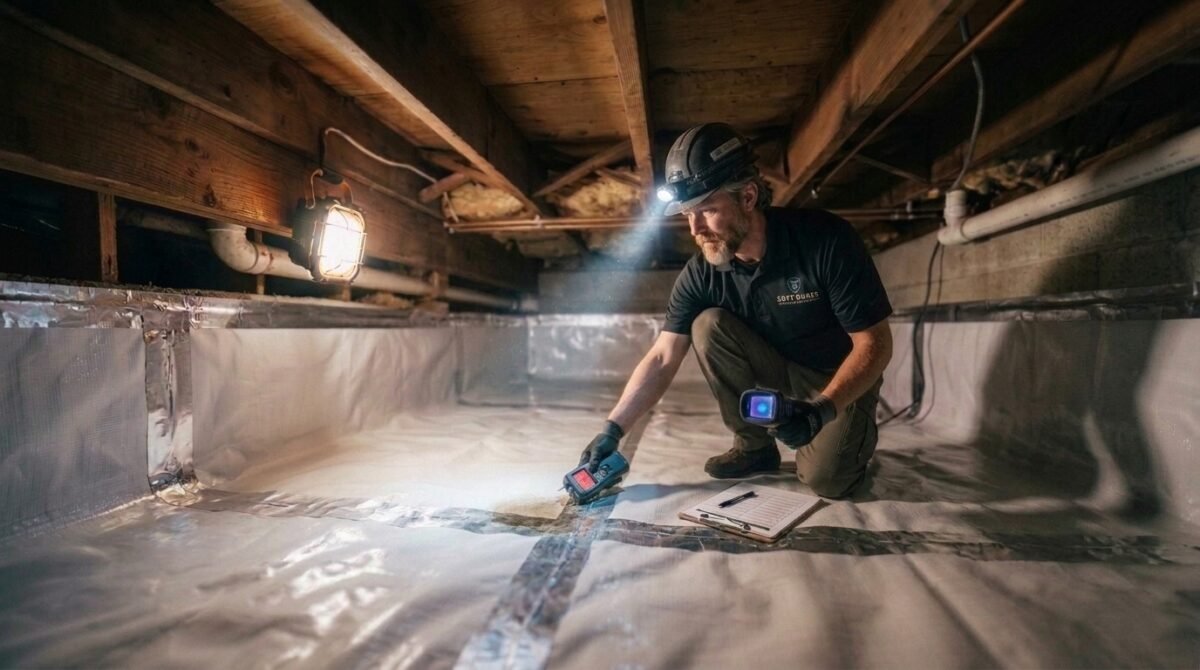
- Installing a heavy-duty vapor barrier across the entire floor and up the walls
What Full Encapsulation Adds
Encapsulation takes waterproofing further by sealing the crawl space almost entirely — vents are closed, seams are taped, and a dehumidifier maintains humidity year-round. It’s a bigger investment, but for homes in humid climates or with a history of chronic moisture, it often pays for itself in avoided repairs.

Crawl Space Condensation & Dampness: The Quiet Moisture Problem
Not all crawl space moisture comes from rain. Condensation happens when warm, humid air meets a cooler surface — like exposed ductwork, plumbing pipes, or the underside of the subfloor — and turns into water droplets.
This is especially common in the summer when humid outdoor air enters through open vents and meets the cooler crawl space environment. Over time, it looks and behaves almost exactly like a rain-related leak, which is why so many people misdiagnose it.
Fixes for Condensation:
- Seal and insulate exposed ductwork
- Close or seal crawl space vents (especially in humid climates)
- Run a dedicated crawl space dehumidifier
- Insulate exposed cold-water pipes

Crawlspace Plumbing: Leaks, Tankless Water Heaters & Pipe Insulation
Plumbing issues deserve their own spotlight because they’re often mistaken for rain-related flooding.
Water Leak Under House
A slow supply line leak or a failing drain joint can drip for weeks before anyone notices — especially in a crawl space that’s rarely inspected. If water shows up even on dry weeks, plumbing is the first thing to rule out.
Tankless Water Heaters in a Crawl Space
Tankless units are increasingly common in crawl spaces because they save floor space, but they need proper venting, drainage, and freeze protection. A poorly installed unit can leak condensate or fail entirely during a hard freeze, adding to moisture problems.
Insulating Water Pipes in a Crawl Space
Insulating exposed pipes does two jobs at once: it prevents freezing in winter and reduces condensation dripping in summer. Foam pipe sleeves are the simplest fix and one of the best value-for-effort upgrades you can make in a crawl space.

How to Get Rid of Groundwater Under a House
When the problem isn’t a leak or bad grading but a genuinely high water table, the fix looks a little different:
- Install interior drain tile connected to a sump pump — this is the most reliable long-term solution.
- Regrade the exterior so surface water doesn’t add to an already saturated water table.
- Extend downspouts at least 6–10 feet from the foundation.
- Consider a battery-backup sump pump so groundwater control doesn’t fail during a power outage — which, ironically, often happens during the same storms that cause flooding.
- Evaluate full encapsulation if groundwater intrusion is a recurring, seasonal issue rather than a one-time event.

Prevention Checklist: Stop Crawl Space Water Before It Starts
- Clean gutters at least twice a year
- Extend all downspouts well away from the foundation
- Regrade soil so it slopes away from the house
- Inspect and repair the vapor barrier annually
- Seal visible foundation cracks promptly
- Insulate exposed plumbing
- Run a dehumidifier during humid months
- Schedule a professional crawl space inspection every 1–2 years

When Does Crawl Space Water Require a Professional?
DIY fixes handle a lot of the smaller issues — gutter cleaning, downspout extensions, minor regrading. But call in a professional when you see:
- Structural sagging or bouncy floors
- Visible foundation cracks wider than a hairline
- Recurring standing water despite drainage attempts
- Extensive mold or wet rot covering multiple joists
- Suspected groundwater intrusion rather than surface water
A qualified foundation or waterproofing specialist can pinpoint whether you’re dealing with grading, groundwater, or a structural issue — and design a system sized correctly for your specific soil and climate.

Frequently Asked Questions

Final Thoughts
Water under your house after a heavy rain is one of those problems that’s easy to put off — until it isn’t. The encouraging part is that almost every cause on this list has a proven fix, from something as simple as extending a downspout to something as thorough as full encapsulation. The key is figuring out which of these issues is actually happening in your crawl space, rather than guessing.
Start with the basics: check your gutters, your grading, and your vapor barrier. If the problem persists after that, it’s worth bringing in someone who can look at drainage, groundwater, and your foundation as a whole system rather than a single fix. Your floors — and your future self — will thank you.
Explore more guides on our prime home and garden blogs.