Pot Size Guide: Materials, Measurements & The Right Size For Every Plant
Ever bought a plant, guessed at a pot, and watched it either drown in too much soil or outgrow its home in a month? You’re not alone. Pot size confusion is one of the most common (and most avoidable) mistakes new plant owners make — and honestly, a lot of experienced growers still get it wrong too.
This pot size guide breaks down everything: what nursery sizing numbers actually mean, how gallons convert to inches, and exactly what size pot your spider plant, tomato, or fiddle leaf fig actually needs. No guesswork, no overpaying for pots two sizes too big.
What Does “Pot Size” Actually Mean?
Here’s where most confusion starts: pot size isn’t one single number. It’s really a combination of measurements working together:
- Pot diameter — the width across the top opening, usually what people mean by “size” in casual conversation. Some manufacturers also list base width, which matters for stability with tall, top-heavy plants.
- Pot height — how tall the container is, which matters especially for plants with deep roots like tomatoes and fig trees, versus shallow roots like succulents and herbs.
- Pot volume — the actual soil capacity, usually expressed in gallons, quarts, or liters depending on where you’re shopping
- Trade gallon — a nursery sizing convention that doesn’t always match a literal gallon of liquid; a “trade gallon” pot often holds slightly less than an actual gallon
Knowing how to measure pot size correctly means measuring the inside diameter and height, not the outer rim, since decorative lips and thick walls can throw off the real usable space. If you’re planning a bed rather than a single container, our soil calculator for raised garden beds handles the volume math the same way, just at a bigger scale.

Standard Nursery Pot Sizes & Volume Reference
🏷️ Industry Standardizing: These trade sizes follow conventions laid out in the American Standard for Nursery Stock (ANSI Z60.1), which the horticulture industry uses to keep container labeling consistent between growers and retailers. The University of Florida's overview of the standard is a genuinely useful reference if you want to understand exactly how nursery sizing terminology is defined.
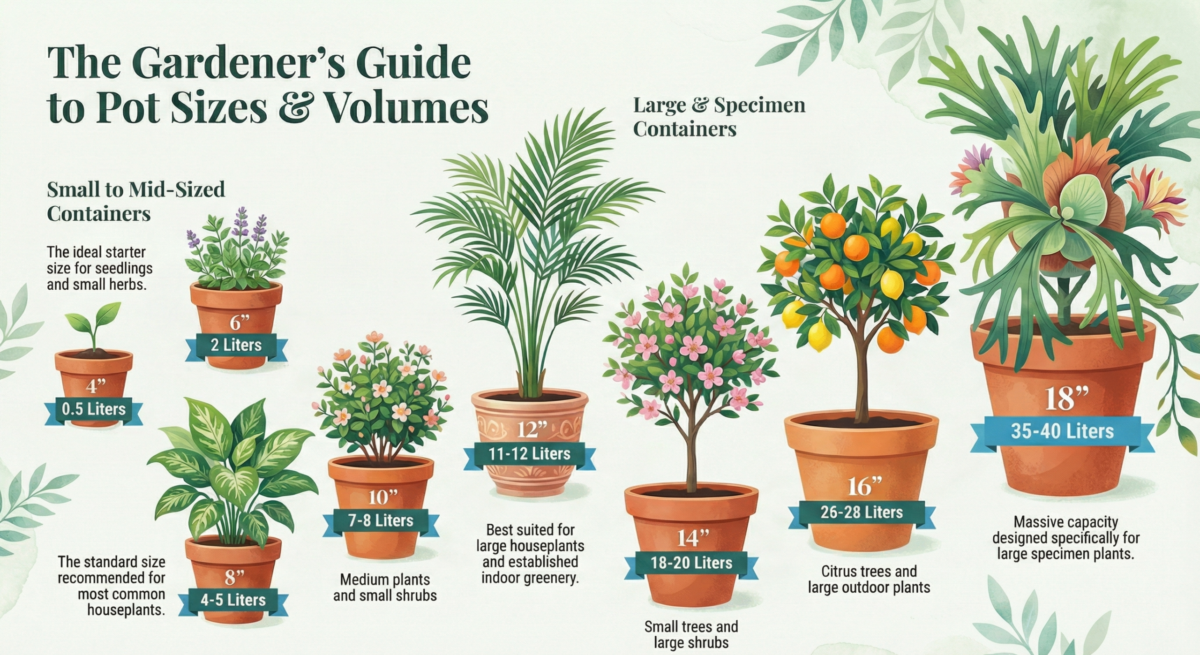
🪴 Everyday Retail Sizing: For everyday retail shopping, you'll also see pots labeled purely by top diameter rather than gallons — 6 inch flower pots and 7 inch flower pots for small to mid-size houseplants, 8 inch planting pots and 10 inch plastic flower pots for maturing plants, and 11 inch, 13 inch, and 20 inch pots for larger specimens like small trees or mature ferns. An indoor planter around 24 inches is typically reserved for substantial floor plants like a mature fiddle leaf fig or majesty palm. Our gallon pot size finder converts between the two instantly, and the pot volume calculator tells you exactly how much soil a given pot actually holds.

Pot Sizes for Popular Houseplants
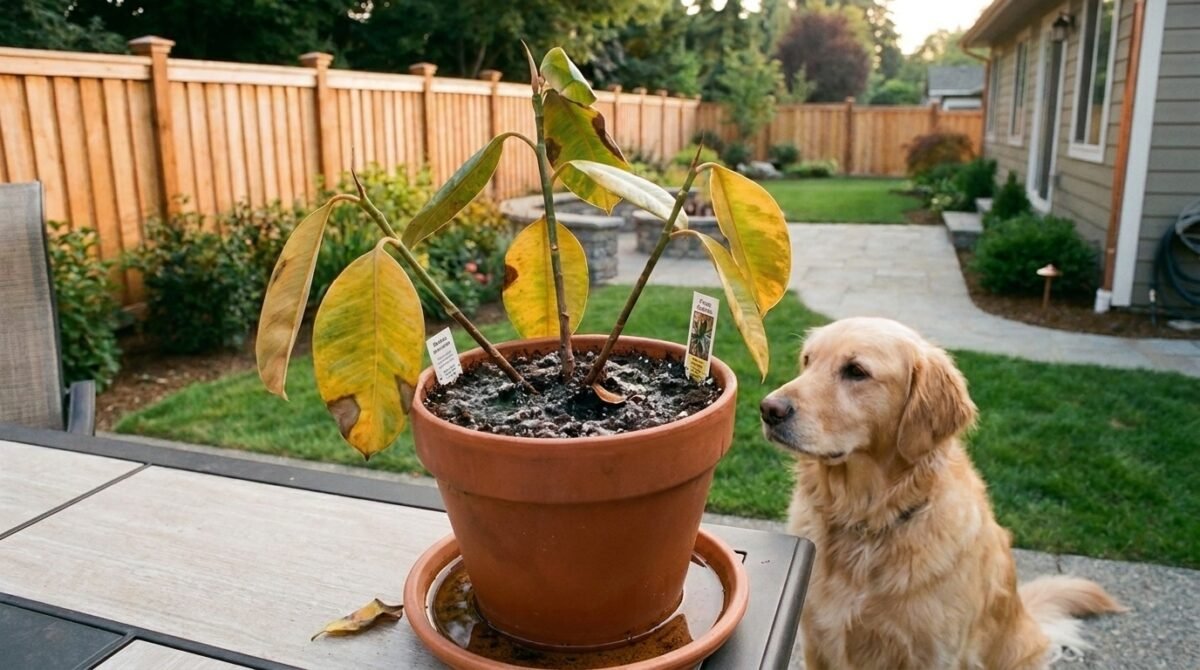
⚠️ Sizing Warning: Avoid sizing up too big, too soon to prevent excess moisture retention and root rot.
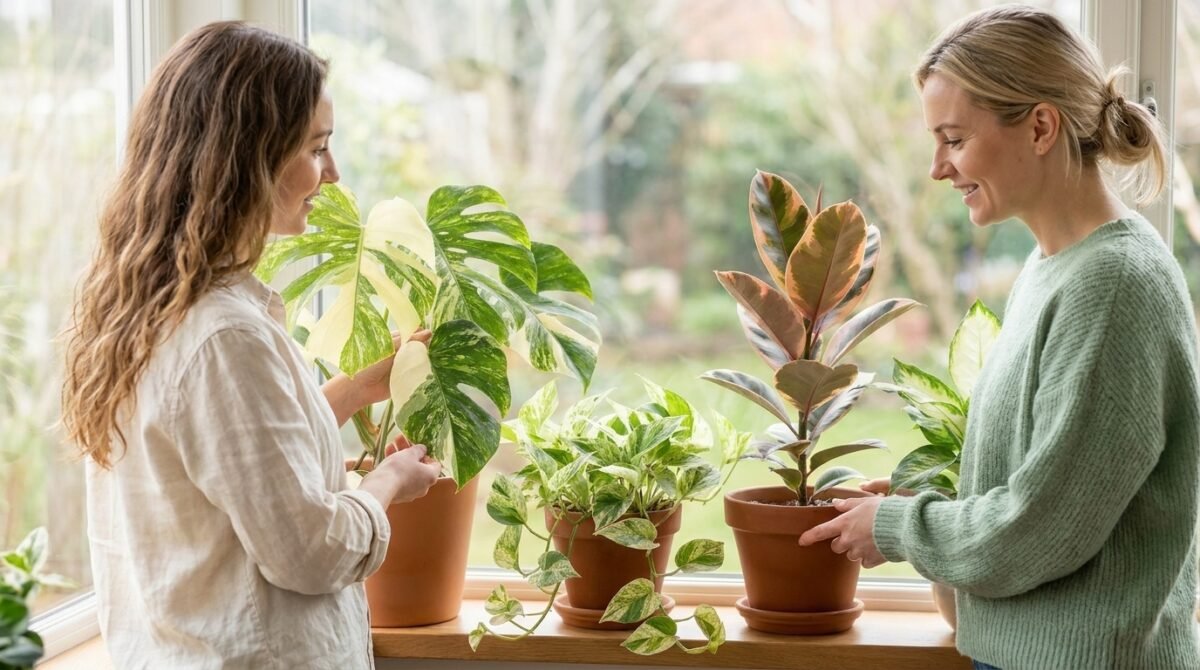
🌿 Monstera Sizing Tip: Monstera plants genuinely like being slightly snug—a pot placed too far ahead of the current root system tends to slow growth rather than speed it up. If you are growing a full split-leaf, our size and type guide breaks down container scaling, and our Monstera deliciosa care guide covers species-specific repotting timing.
🌱 Other Common Varieties: Prayer plant and bromeliad both thrive in shallow 6–8 inch pots due to shallow root structures. Ponytail palm prefers a snug pot relative to its swollen base to prevent moisture buildup. Corn plant (dracaena) and Christmas cactus suit 8–10 inch pots when mature. Venus flytrap is an exception: it requires a small, deep pot with sphagnum moss rather than standard nutrient-rich potting mix.
🪴 Repotting Details & Soil Mixes: Fiddle leaf figs perform best in containers with exceptional drainage and only slightly more room than the current root ball. For both fiddle leaf fig and peace lily care, select a well-draining, slightly acidic potting mix over dense soil to avoid common root issues. For orchids, standard mixes do not apply—our orchid potting mix calculator estimates the precise chunky bark mix needed to maintain root aeration.

Pot Sizes for Vegetables and Fruit
⚠️ Sizing Warning: An undersized container is the single biggest reason container crops underperform compared to in-ground plantings.
🍅 Tomato Container Tip: If you're specifically wondering about the best pot size for tomatoes, bigger is almost always better within reason—tomato roots are aggressive, and a cramped pot limits both fruit size and total yield.
🌱 Variety Care Guides: Our guide to growing Black Krim tomatoes and growing acorn squash both go deeper into variety-specific container needs if you're planning a full container vegetable garden this season.

Pot Sizes for Flowers and Ornamental Plants
A quick reference for common ornamentals rounds things out nicely:
- Hydrangea and hibiscus — 15–20 gallon pots for mature shrubs
- Bougainvillea and clematis — 10–15 gallon pots, both being vigorous climbers that appreciate root room
- Elephant ear — 15–20 gallon pot, since this plant produces an enormous amount of top growth relative to a modest root system
- Bonsai — deliberately shallow, undersized pots by design; this is the one category where a smaller-than-expected pot is intentional
- Marigold, geranium, zinnia — 6–10 inch pots work well for most annual bedding varieties
If you’re growing an elephant ear (Alocasia) or a white bird of paradise, both need noticeably more root room than their leaf size might suggest — top-heavy growth on an undersized pot is a common reason these dramatic plants tip over.

Choosing the Right Pot Material
Material affects far more than looks — it changes how often you’ll need to water:
- Plastic pots retain moisture longest and are lightweight, making them a practical choice for most houseplants and vegetables.
- Terracotta and clay pots are porous, which means they dry out faster — genuinely useful for succulents and plants prone to root rot, but higher maintenance for thirsty plants.
- Fabric pots offer excellent aeration and naturally prevent roots from circling, which is why many vegetable growers prefer them for tomatoes and peppers.
- Ceramic pots (often without drainage holes) look great but require careful watering or a plastic nursery pot nested inside to avoid waterlogging.
- Self-watering pots are ideal for consistent-moisture plants or for anyone prone to forgetting to water, since they draw from a reservoir as needed.
Beyond material, container format matters too. Plant propagation pots and seedling pots are typically small, lightweight, and sometimes made from biodegradable material so cuttings can be transplanted pot and all. Small plastic planters and rectangular plant pots are practical for windowsill herb rows, since the shape uses ledge space more efficiently than round pots. If you want something more decorative, a white ceramic planter or indoor planter with stand can dress up a plain nursery pot without needing to repot the plant at all — just nest the plastic grower’s pot inside. For outdoor use, outdoor planter materials like fiberglass, concrete, and glazed ceramic hold up far better through freeze-thaw cycles than untreated terracotta, which can crack in cold climates. Deep nursery pots are worth seeking out specifically for taprooted plants like okra or young fruit trees, since standard nursery pots are sometimes shallower than the root system actually needs.

Signs Your Plant Needs a Larger Pot (And How to Repot It)
Repotting at the right time matters just as much as choosing the right size in the first place. Watch for:
- Roots growing out of the drainage holes — the clearest sign a plant is outgrowing its container
- Water running straight through without the soil absorbing it, meaning roots have replaced most of the usable soil volume
- Slowed growth despite a full growing season and consistent care
- A plant that dries out unusually fast, since a dense root mass leaves less soil to hold moisture
Once you’ve confirmed it’s time, how to repot a plant comes down to a simple sequence: water the plant a day beforehand so the root ball holds together, gently squeeze or tap the sides of the old pot to loosen it, ease the plant out by the base rather than pulling on the stem, loosen any circling roots by hand, then set it in the new pot at the same soil depth it was growing at before, filling in fresh mix around the sides.
How to repot a big plant follows the same steps but benefits from a second pair of hands — tip the pot on its side rather than lifting straight up, and consider sliding a piece of cardboard or plastic sheeting underneath to drag the root ball out instead of hoisting it. Repotting pothos specifically is about as low-risk as houseplant repotting gets, since this plant tolerates root disturbance well and rarely sulks afterward the way a fiddle leaf fig might.
According to Clemson’s Home & Garden Information Center, most actively growing houseplants benefit from repotting every one to two years, sized up gradually rather than jumping several sizes at once — a good general rule for repotting and upsizing strategies across almost any houseplant. Should you water plants after repotting? Yes — a thorough watering right after repotting helps settle soil around the roots and removes air pockets that can dry out fine root hairs. For root-bound plants specifically, gently loosening circling roots before repotting (rather than leaving them coiled) helps them grow outward into the new soil instead of continuing to spiral.
If you’re not sure how much soil a repot will actually require, our soil volume for pots and planter volume calculators take the guesswork out of buying potting mix in the right quantity.

A Quick Word on Home Safety While You’re Repotting
Big repotting projects often mean bags of soil, tools, and pots stacked up in a garage, porch, or spare room for a while — a good reminder to do a quick safety sweep of the space at the same time. It’s an easy moment to check that walkways are clear and that any electrical tools you’re using near damp soil are in good condition.
While you’re doing seasonal home projects like this, it’s worth checking something even more important: working smoke alarms cut the risk of dying in a home fire by roughly 60%, according to National Fire Protection Association research, yet a meaningful share of homes still have alarms that are missing, expired, or running on dead batteries. Our smoke detector calculator tells you exactly how many you need and where — worth five minutes the same weekend you’re repotting.
FAQs: Pot Sizes And Planting
Guidelines for container sizing, repotting techniques, seed propagation, and plant placement

Final Thoughts
Getting pot size right isn’t complicated once you know what to actually look for — the right diameter, the right depth, and material that matches how forgetful or attentive a waterer you are. Whether you’re potting up a windowsill herb garden or sizing containers for a full patio vegetable setup, matching the pot to the plant (not just the room you have available) is what actually determines how well everything grows.
Start with the chart above, check your plant’s roots before assuming it needs a bigger home, and adjust from there. A well-matched pot does more for plant health than almost any fertilizer or feeding schedule ever will.