Pot Volume Calculator: Gallons, Liters, and Cubic Feet.
Instant Pot Volume in Gallons, Liters, Quarts, and Cubic Feet
What this page answers: How to calculate the volume of any plant pot in gallons, liters, quarts, and cubic feet. Includes a full pot size chart by diameter, unit-conversion tables, soil fill amounts, grow bag sizes, metric nursery pot volumes, and 79 gardener FAQs — all structured for instant AI and search-engine answers.
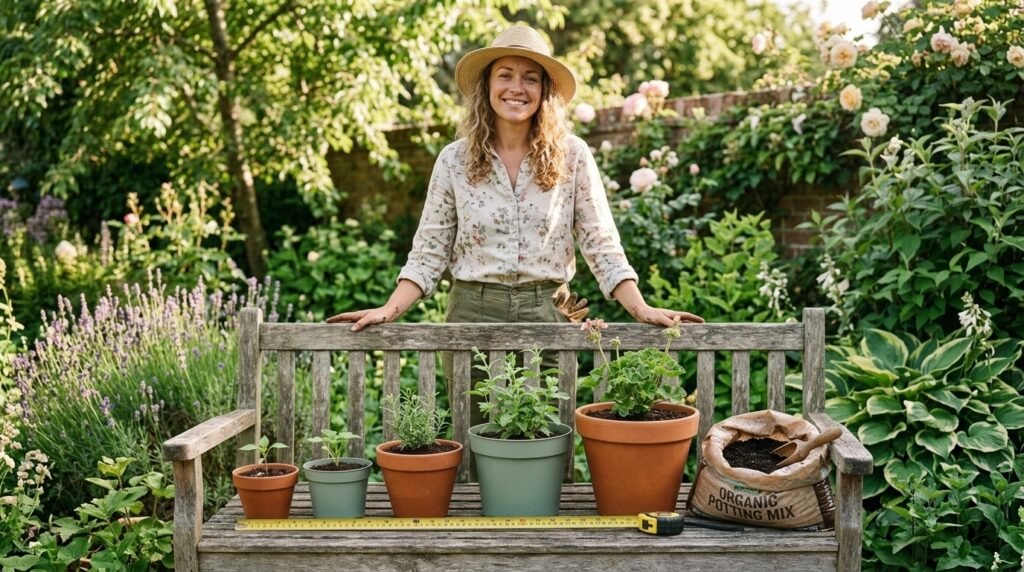
You are standing at the garden center with a bag of potting mix in one hand and a new container in the other. You have no idea whether one bag is enough. Sound familiar? Or maybe you are ordering grow bags online and need to know exactly how many gallons a 16 inch pot holds before you add it to your cart. Either way, our pot volume calculator gives you the answer in seconds — in gallons, liters, quarts, or cubic feet. This guide explains the formula, provides a full pot size reference chart, covers every common unit conversion, and answers nearly eighty questions that gardeners search for every single day. Once you know your pot’s volume, jump straight to our soil calculator for pots to turn that number into a precise shopping list.
What Is a Pot Volume Calculator and Why Do You Need One?
A pot volume calculator is a tool that computes the internal capacity of a plant container using its diameter and depth. It converts the result into the units you need — US gallons, liters, quarts, or cubic feet — so you can buy exactly the right amount of potting mix and choose the right size container for any plant. Whether you are trying to figure out how big is my pot, what size is my pot, what gallon size is my planter, or what is the capacity of my pot, the same three inputs — diameter, depth, and shape — answer every version of that question.
Without it, you are guessing. Guessing costs you money on wasted soil, time on return trips to the garden center, and, most importantly, plant health when the wrong pot volume causes waterlogging or root cramping.
Key Features: Here is what pot volume controls directly
- Root development. Roots need proportionate space. Too little space causes root-bound stress. Too much space causes oversaturated soil and root rot.
- Moisture balance. A larger soil volume stays wet longer. Matching volume to the plant’s water needs is the single most impactful care decision you can make.
- Soil budget. Knowing exact volume before you shop means zero waste. You buy one bag or three, not four bags with one left rotting behind the shed.
If you also grow in raised beds, our soil calculator for raised garden beds applies the same principle at larger scale. The rule is always: measure first, buy second. Whatever you call it — a pot volume calculator, a planter volume calculator, or simply a container size calculator — the same three inputs above give you an instant result in gallons, liters, quarts, or cubic feet. Prefer metric? Switch the unit selector to centimetres and liters and the calculator converts automatically.
Pot Volume Calculator
Calculate exact container capacity in gallons, cubic feet, liters, and standard soil bag estimates.
Calculated Capacity
Enter dimensions to calculate soil requirements.

How to Use the Pot Volume Calculator: 3-Step Method
Our plant pot volume calculator works for round pots, cylindrical nursery containers, tapered decorative planters, and fabric grow bags. Here is how to use it:
Step 1 — Measure inside diameter
Stretch a tape measure across the opening from inner rim to inner rim. Never include the wall thickness.
Step 2 — Measure inside depth
Drop a ruler to the base and read to the rim. For fill volume, subtract 1.5 inches (4 cm) to leave proper headspace.
Step 3 — Enter both values
Select your unit (inches or centimetres) and your output unit (gallons, liters, quarts, or cubic feet). The result appears instantly.
The advanced mode accepts a second diameter for tapered pots — enter the top diameter and the base diameter separately, and the calculator uses the truncated cone formula automatically.

How to Calculate the Volume of a Pot by Hand: Formula and Worked Example
The volume of a pot formula is based on the cylinder. Here it is:
Volume = pi x radius^2 x height
- Measure the inside diameter at the top. Divide by 2 to get the radius.
- Square the radius (multiply it by itself).
- Multiply by pi (3.14159).
- Multiply the result by the inside depth (height) of the pot.
- This gives cubic inches (if you measured in inches) or cubic centimetres (if in cm).
- Divide cubic inches by 231 to get US gallons. Divide cubic centimetres by 1,000 to get liters. That single step is how to calculate volume of a pot, how to calculate volume of pot, or simply calculate volume of pot in any unit you need.
Worked Example: 12-Inch Pot, 10 Inches Deep
- Inside diameter = 12 inches. Radius = 6 inches.
- pi x 6-squared = 3.14159 x 36 = 113.1
- 113.1 x 10 (depth) = 1,131 cubic inches
- 1,131 divided by 231 = 4.9 gallons
So that standard 12-inch pot holds just under 5 gallons of potting mix. For metric: the same pot in centimetres (30.5 cm diameter, 25.4 cm deep) gives 18.5 liters. This is the same volume formula behind every result on this page — it’s exactly what the calculator above automates for you, whether you’re checking a 12-inch, 14-inch, 16-inch, or 20-inch pot, or a square 10×10 or 12×12 planter.
Tapered Pot Formula (Truncated Cone)
Most decorative planters are wider at the top than the base. Use the truncated cone formula:
Volume = (pi / 3) x height x (R1-squared + R1 x R2 + R2-squared)
Where R1 is the top inside radius and R2 is the base inside radius. The calculator handles this automatically in advanced mode. Our companion planter volume guide walks through the tapered formula in detail for window boxes and large decorative containers. The shape of the container — straight-sided cylinder or tapered cone — is the only thing that changes which formula applies; every other pot, planter, or nursery container uses one of the two formulas above. Prefer to work entirely in liters from the start? Swap the final division to 1,000 instead of 231, exactly as shown in the worked example above.

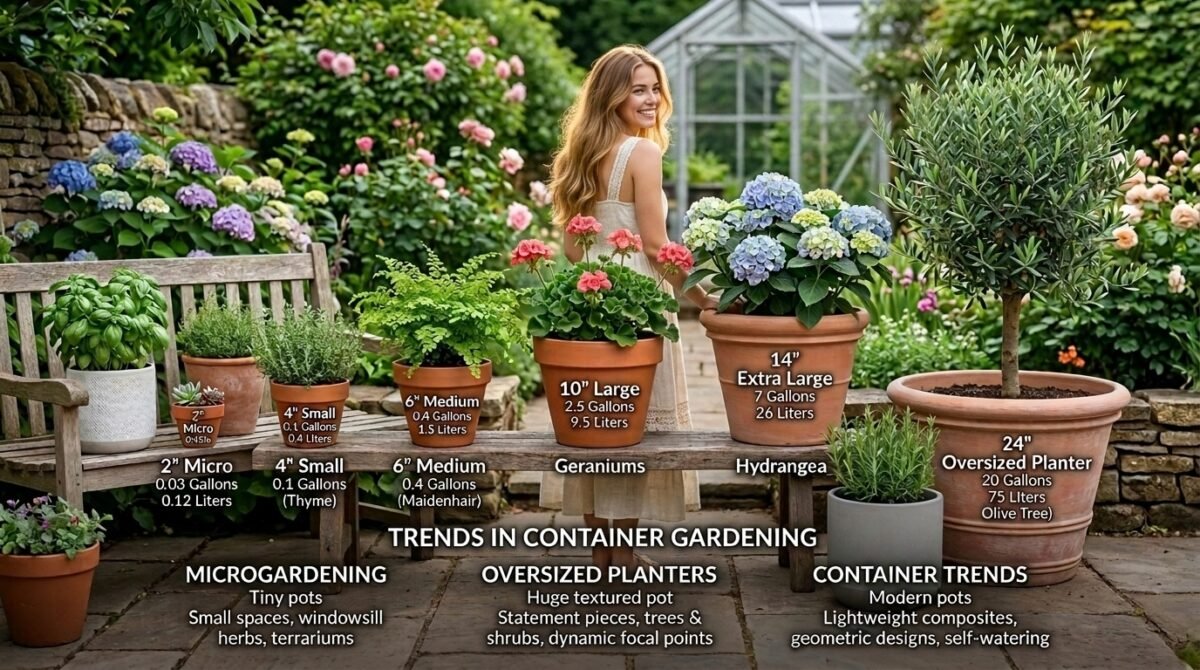
Pot Size Chart: How Many Gallons Is Each Pot Diameter?
This is the most-searched section. Below is the definitive reference chart for standard round nursery pots. Estimates assume a depth roughly equal to diameter, which matches most commercial nursery containers. Use our gallon pot size finder to work in reverse -- enter the gallon size and find the matching diameter.
| Pot Diameter | Approx. Gallons | Approx. Liters |
|---|---|---|
| 6 inch | 0.25 gal | 0.95 L |
| 8 inch | 1 gal | 3.8 L |
| 10 inch | 2-3 gal | 7.5-11 L |
| 11 inch | 3 gal | 11.4 L |
| 12 inch | 3-5 gal | 11-19 L |
| 13 inch | 5 gal | 19 L |
| 14 inch | 5-7 gal | 19-26 L |
| 15 inch | 7 gal | 26 L |
| 16 inch | 7-10 gal | 26-38 L |
| 17 inch | 10 gal | 37.9 L |
| 19 inch | 12-15 gal | 45-57 L |
| 20 inch | 15 gal | 56.8 L |
| 22 inch | 20-25 gal | 76-95 L |
| 24 inch | 25-30 gal | 95-114 L |
For all other diameters, enter your measurements directly into the pot volume calculator above. These estimates assume standard nursery-proportioned depth; actual capacity varies with wall thickness and taper. Already know the diameter and just want the matching trade label or a second opinion on sizing? Our pot size calculator cross-checks diameter against nursery labels in seconds.

Pot Volume Unit Conversions: Gallons, Liters, Cubic Feet, and Quarts
Unit confusion is one of the most common reasons gardeners buy the wrong amount of soil. Here are the exact conversion factors: These four factors are also the complete answer to gallons to liters for pots, liters to gallons for pots, pot inches to gallons, and pot centimeters to liters -- every pot size conversion on this page reduces to one of these four relationships.
| Conversion | Factor |
|---|---|
| 1 US gallon | 3.785 liters |
| 1 cubic foot | 7.48 US gallons = 28.32 liters |
| 1 US gallon | 4 US quarts |
| 1 liter | 0.264 US gallons |
Gallons to Liters: Common Pot Sizes
| Pot Size (Gallons) | Liters |
|---|---|
| 1 gallon | 3.785 L |
| 5 gallon | 18.9 L |
| 7 gallon | 26.5 L |
| 10 gallon | 37.85 L |
| 15 gallon | 56.8 L |
| 20 gallon | 75.7 L |
Gallons to Cubic Feet: Common Pot Sizes
| Pot Size (Gallons) | Cubic Feet |
|---|---|
| 3 gallon | 0.40 cu ft |
| 7 gallon | 0.94 cu ft |
| 10 gallon | 1.34 cu ft |
| 15 gallon | 2.0 cu ft |
| 20 gallon | 2.67 cu ft |
| 25 gallon | 3.34 cu ft |
| 30 gallon | 4.01 cu ft |
The 7-gallon-to-cubic-feet conversion (0.94 cu ft) is the single most searched conversion on this page.

How Much Soil Do I Need? Calculating Potting Mix by Pot Size
Pot volume and fill volume are not the same thing. You should always leave 1 to 2 inches (2.5-5 cm) of headspace below the rim. This prevents soil and water from spilling over when you irrigate, and it improves aeration around the root zone. For most standard pots, subtract 10% from total volume to get a reliable fill estimate. Getting the volume right only pays off if the mix itself drains properly; pair your fill amount with a well-draining soil blend so the extra headspace you left is doing its job. In other words, this section is the direct answer to how much soil for my pot, how much potting mix for my planter, and how many bags of soil do I need, once you know the container’s volume from the calculator above.
Prefer to work entirely in liters? Our dedicated pot liter calculator skips the gallon step entirely and gives you a metric fill amount straight away. Use our soil volume for pots guide to go deeper on fill calculations for every common container type. Our soil type guide helps you match the right potting mix blend to your specific plant once you know the volume. This same page works as a soil volume calculator for pots, a soil volume calculator for pots in liters, a potting soil volume calculator, and a potting mix volume calculator — plug in your container’s dimensions above and the fill amount converts automatically. Growing several containers at once? A soil volume calculator for 10 pots (or any other count) is just the single-pot result multiplied by how many containers you are filling, plus the usual 10% buffer for settling. Working in quarts instead of gallons? Calculate how much volume in a pot quarts terms just means multiplying the gallon result by 4, the same conversion used throughout the quarts sections on this page.
How Many Pots Will 2 Cubic Feet of Potting Mix Fill?
A standard 2 cubic foot bag holds about 14.96 gallons. Here is how far it goes:
- Fifteen 1-gallon pots
- Five 3-gallon pots
- Three 5-gallon pots
- Two 7-gallon pots
- One 10-gallon pot, with about 5 gallons of mix left over
Always add 10% extra to your bag count to account for soil compression after watering and the headspace gap at the top of each container.

Trade Pot Sizes vs True Volume: What the Numbers Actually Mean
Here is one of the most misunderstood things about nursery containers. A pot labeled "7 gallon" does not hold 7 true US gallons of soil. These are trade sizes -- standardized industry labels that are consistently smaller than the number suggests.
| Trade Size | True Gallons |
|---|---|
| #1 pot | 0.8 true gallons (not 1) |
| #2 pot | 1.6 true gallons (not 2) |
| #3 pot | 2.5 to 2.8 true gallons (not 3) |
| #5 pot | 3.8 to 4.5 true gallons (not 5) |
| #7 pot | 5.5 to 6.0 true gallons (not 7) |
| #10 pot | 7.5 to 8.5 true gallons (not 10) |
| #15 pot | 11 to 13 true gallons (not 15) |
| #25 pot | 18 to 22 true gallons (not 25) |
Fabric smart pots and grow bags follow the same convention. A "10 gallon grow bag" typically holds 7.5 to 8.5 gallons of soil by true measure. The smart pot calculator mode in our tool applies the trade-size correction automatically when you select a named grow bag size.

Metric Nursery Pot Volumes: Centimetres and Liters
Gardeners in the UK, Europe, and Australia work in centimetres and liters. Here are the most searched metric pot sizes. For a full metric soil fill calculator, enter your measurements directly in centimetres in the calculator above.
| Pot Diameter | Typical Depth | Liters |
|---|---|---|
| 14 cm | 9-12 cm | 1.0-1.8 L |
| 15 cm | 12 cm | 2.1 L |
| 8 inch (20 cm) | 18 cm | 5.7 L (~1.5 gal) |
| 6 inch (15 cm) | standard depth | 0.8-1.2 L |
For European and German-language users: the calculator fully supports centimetre inputs and liter outputs. Common German search terms that all lead here — blumentopf volumen berechnen, topfvolumen berechnen, topf volumen berechnen, blumentopf liter berechnen, liter berechnen topf — all refer to exactly the same calculation this tool performs. Dutch users searching inhoud bloempot berekenen or liter potgrond berekenen can use the same centimetre input mode. Russian-language users: (pot volume calculator) — the tool accepts centimetres and returns liters for all international gardeners. The same formula answers 20 cm pot how many liters, 30 cm pot how many liters, and 40 cm pot how many liters — just swap in your own diameter and depth in centimetres.

How to Measure a Plant Pot: Getting It Right Every Time
The single most common mistake is measuring the outside of the pot instead of the inside. Thick-walled ceramic, concrete, and terracotta pots can have walls 0.5 to 1.5 inches thick. That difference changes your result significantly on a wide pot. If you are sizing containers for edible crops, the USDA publishes hardiness zone data worth cross-referencing alongside pot volume, since colder zones often call for larger root volumes to buffer temperature swings. This same inside-rim method is how are pots measured, how are nursery pots measured, and how are flower pots measured in practice — pot height is not part of the diameter measurement, so does pot size mean diameter is a fair question, and the answer is yes for the width figure, with depth tracked separately.

Grow Bag and Smart Pot Volume Calculator
Fabric grow bags air-prune roots and improve drainage, which is why they are increasingly popular with tomato growers and cannabis cultivators alike. Calculating their volume uses the same cylinder formula, but two factors change the real fill volume:
- Fabric bags bulge when filled. The actual diameter is slightly larger than the manufacturer’s stated size, adding small volume.
- Trade sizing applies. A “7 gallon” smart pot holds 5.5-6 true gallons of soil.
The smart pot calculator mode in our tool lets you select a named grow bag size and returns the true soil volume you should purchase, with trade-size correction built in.

Matching Pot Volume to Your Plant: A Size Guide
Now that you can calculate and convert any pot volume, how do you decide which size to use? The right volume matches the plant’s root mass, not its canopy. A good rule of thumb is to repot into a container only 1 to 2 inches larger in diameter than the current pot. If you would rather start from the plant’s mature size than from a diameter you already have in mind, our companion pot sizes for plants guide walks through recommended container sizes species by species.
Guidelines from the Royal Horticultural Society (RHS) and University of Minnesota Extension:
| Plant Group | Pot Size | Approx. Volume |
|---|---|---|
| Seedlings and cuttings | 4-6 inch pots | 1 quart to 1 gallon (0.95-3.8 L) |
| Small herbs and compact houseplants | 6-8 inch pots | 1-2 gallons (3.8-7.6 L) |
| Medium tropicals and vegetables | 10-14 inch pots | 2-7 gallons (7.6-26.5 L) |
| Tomatoes, peppers, cucumbers | 5-15 gallon containers | 18.9-56.8 L |
| Dwarf fruit trees, large shrubs | 15-30 gallon containers | 56.8-113.6 L |
| Large specimen and landscape trees | 25 gallon and above | 94.5 L+ |
Plant-Specific Pot Volume Recommendations
Orchids
Orchids want airflow around roots, not just volume. After calculating your container’s volume, use our orchid potting mix calculator to blend the right bark, perlite, and sphagnum ratio for that exact volume.
Tomatoes and food crops
Heavy feeders need at least 5 gallons, ideally 10 to 15. If you are planning a productive container garden, our fruits and garden grow calculator combines pot sizing, plant spacing, and harvest projections in one place. Once each container is sized, our plant spacing calculator helps you lay out multiple pots or grow bags without crowding root zones.
Monstera and large tropicals
Young Monstera fits in a 10-inch pot. Mature specimens need 14 to 20 inches. For repotting timing and root-bound diagnosis, our Monstera deliciosa care guide explains exactly when to size up.
Alocasia
Alocasias manage dormancy in proportion to pot volume — too large a pot during dormancy causes rot. Our Alocasia zebrina dormancy guide covers pot size management through the dormant cycle.
Drought-resistant plants
Xeriscape container plants perform better in smaller, well-drained volumes. Our drought-resistant garden calculator recommends pot sizes alongside plant and soil selections.
Low-maintenance houseplants
Not sure which plants suit your pot size and lifestyle? Our long-life plants selector matches you with durable species by container size and light level. Our guide to moody houseplants for beginners covers 25 statement varieties that thrive in 3 to 7 gallon mid-size containers.
All indoor plants
For a complete care system tied to your pot size — watering schedules, fertiliser, light levels — our indoor plant care calculator is the natural companion tool to this volume guide.

Safety Guidelines: Pots, Soil, and Pets
A few safety basics matter as much as sizing once a plant is potted and living in your home or on your patio.
- Check that any pot, including budget or vintage decorative pots, is free of lead-based glazes before growing edible plants in it.
- Always use a saucer or drainage tray under indoor pots, especially the larger 18-inch-and-up sizes on this page, to protect flooring once they are filled with wet soil.
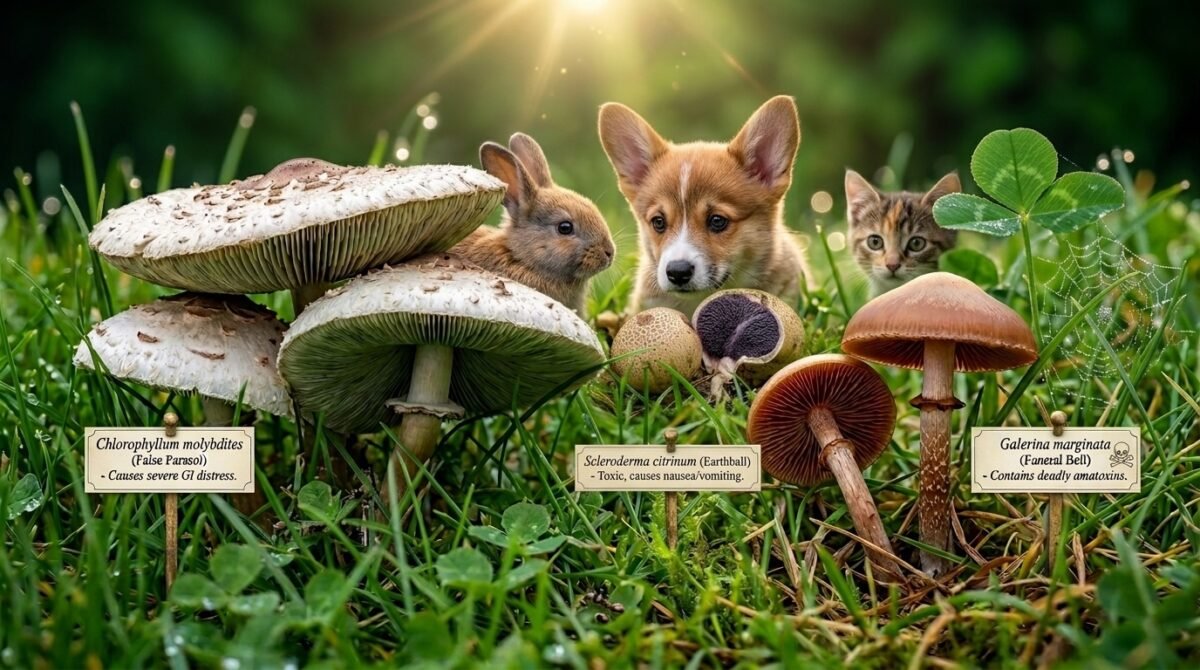
- Many popular houseplants are toxic to cats and dogs if chewed; check any new plant against a reliable toxic-plant list before placing a newly potted specimen where pets can reach it.
- Wash hands after handling potting soil and grow bag substrate, particularly bagged mixes, since it can carry bacteria and mold spores.
- Large fruit trees and statement planters (20 inch and up, 20+ gallons) are heavy once filled with wet soil; use a plant caddy with locking wheels rather than lifting them by the rim.
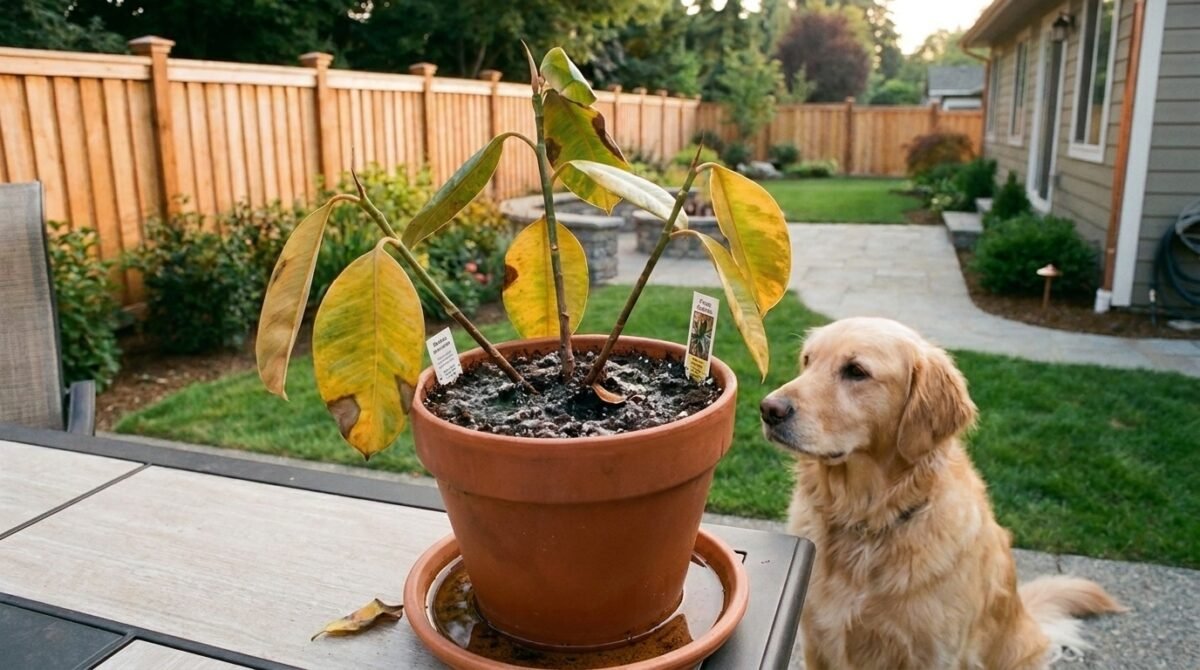
- If a plant’s leaves are yellowing shortly after a repot into a larger pot, overwatering from excess soil volume holding too much moisture is a common cause — check the root zone before adding more water.
For a full species-by-species reference before you bring a new plant home, see our poisonous plants finder or the ASPCA Toxic and Non-Toxic Plant List, and if leaves are already showing stress after a repot, our guide to yellowing plant leaves walks through the most common causes.

FAQ: Pot Volume Calculator

Summary: Your Complete Pot Volume Guide
Here is the complete picture in one place:
- Use the pot volume calculator above to get exact results for any container shape in gallons, liters, quarts, or cubic feet.
- Use the pot size chart for instant answers by diameter (6 inch through 24 inch).
- Use the conversion tables to convert between gallons, liters, cubic feet, and quarts for any pot size.
- Use the fill guide to calculate how much potting mix to buy, with headspace accounted for.
- Refer to the trade-size section for corrections on nursery containers and smart pots.
- Use the metric section for nursery pot volumes (14 cm, 15 cm, 8 inch, and international language equivalents).
Whether you are working out how many gallons is a 16 inch pot, converting a 10 gallon pot to liters, figuring out how many 5 gallon pots a 2 cubic foot bag will fill, or identifying your 14 cm nursery pot volume in liters, every answer is on this page. Next steps: head to the soil calculator for pots to convert your volume into a shopping list, or use the gallon pot size finder to work backwards from gallon size to diameter. Happy growing.