Garden Gate Size – 900mm Standard Width For Most US Homes
Ever ordered a “standard size” garden gate, only to get it home and find it’s two inches too wide for your posts? You’re not alone. Garden gate sizing is one of those projects that looks simple — until you’re standing in the driveway with a gate that won’t fit.
The good news is that once you know the standard measurements, picking or building the right gate becomes almost effortless. This complete garden gate guide covers exactly what “standard” means for garden gates in the US and UK, the different types and materials worth considering, and how to install one that won’t sag, stick, or swing the wrong way six months from now. Think of it as your full garden gate buying guide — sizing, styles, hardware, and safety, all in one place.

What Is The Standard Garden Gate Size?
For most US homes, the standard garden gate width sits around 36 inches (900mm) for a single pedestrian gate — wide enough for one person, a wheelbarrow, or a stroller to pass through comfortably.
Height standards vary more by purpose:
- Small garden gates (fence-height): 3ft garden gate (900mm) up to 4ft, matching typical picket or panel fencing.
- Large garden gates (privacy height): 6ft garden gate (1800mm), matching taller privacy fence panels.
- Driveway or double garden gates: Typically 8 to 12 feet (2400–3600mm) combined width across both leaves.

Garden Gate Size Chart — US vs UK
Garden Gate Dimensions: What Changes The Numbers
A few practical factors shift these standard measurements away from an off-the-shelf size and into custom gate size territory:
- Wheelchair or accessibility access generally needs a minimum clear opening of 32 to 36 inches, so a slightly wider gate — closer to 900mm — is the safer bet if mobility access matters.
- Wheelbarrow access typically needs at least 30 inches of clearance, comfortably covered by most standard-width gates.
- Double garden gates are the go-to option once you’re past a 5-foot opening, since a single leaf that wide becomes heavy and prone to sagging.
- Uneven ground or sloped paths often call for a custom gate size, since a standard rectangular gate won’t sit flush against an angled base.
Getting the gate size right starts with measuring gate opening correctly in the first place — measure the clear distance between posts, then subtract roughly ½ inch on each side for hinge and latch clearance.

Best Garden Gate Types To Choose From
Wooden Garden Gates
The most popular choice by far. Timber garden gates — cedar, pine, or reclaimed wood — offer warmth and character, and they’re easy to customize with paint or stain.
Closeboard and featheredge styles use overlapping vertical boards for privacy and strength, while a lighter picket fence garden gate suits a more open, English cottage garden gate look. If you want something that stands out, a unique wooden gate with a curved top or carved detailing makes a strong first impression at the front of a property.
Metal Garden Gates
Wrought iron garden gates and forged iron gates bring a more decorative, old-world feel — think scrollwork and ornamental detailing, well suited to a courtyard gate or formal entrance. Steel garden gates offer a heavier-duty, more contemporary alternative, while aluminium garden gates (aluminum gate in US spelling) are the lower-maintenance option, resisting rust without the weight of iron.
Vinyl, Composite & PVC Garden Gates
If you want zero maintenance, vinyl garden gates, composite garden gates, and PVC garden gates won’t rot, warp, or need repainting. They cost more upfront but save time and money over the years — a genuinely sustainable garden gate material choice if longevity matters more than a natural wood look.

Specialty And Style Garden Gate Ideas
- Arched garden gates with a curved top rail, often paired with a trellis for climbing plants.
- Moon gate garden designs — a full circular opening, popular in Japanese garden gate design.
- Gates with trellis or archway toppers, perfect for training climbing roses, wisteria, or clematis.
- Modern garden gates and contemporary garden gates — clean horizontal slats, minimal hardware, often in aluminium or powder-coated steel.
- Rustic garden gates and country gate styles — reclaimed timber, visible grain, simple ironmongery.

Exterior Gate And Fence Materials Comparison

Garden Gate Hardware, Fittings And Ironmongery
A beautiful gate with poor hardware will fail fast. Here’s what to prioritize when sourcing gate fittings:
- Hinges: Heavy-duty T-hinges are the standard for wooden gates, distributing weight evenly across the frame. A hinge calculator can help you pick the right size and quantity for your gate’s weight and width.
- Latches: A classic ring latch or thumb-operated gate handle works well for everyday pedestrian gates.
- Locks & bolts: A pad bolt secures a fixed gate leaf on double gates, while a garden gate with lock adds security to single gates. Pair your latch with a slide locks selector to find a compatible bolt lock.
- Self-closing hinges: Spring-loaded self-closing garden gate hinges automatically swing the gate shut — essential for pool gates and any garden with young kids or pets.
- Smart & keyless options: A smart garden gate lock or keyless garden gate lock lets you set codes or app-based access instead of managing physical keys — useful for shared driveways or rental properties.
Good gate ironmongery — hinges, latches, bolts, and handles together — is what actually determines how long a gate lasts, far more than the timber or metal it’s built from.

How To Hang A Garden Gate Without It Sagging
Sagging is the number one complaint with DIY gate installation, and it almost always comes down to frame construction or hinge placement. Whether you’re fitting a garden gate into an existing fence line or learning how to build a wooden garden gate (or a simpler picket-style fence gate) from scratch, the same principles apply.
- Measure the opening precisely, including both post faces, before ordering or building your gate.
- Build or choose a Z-frame construction — the diagonal brace transfers weight from the latch side down to the hinge post, which is the single biggest factor in preventing sag.
- Use at least two heavy-duty hinges for gates under 4 feet wide, and three for anything wider or taller.
- Check post stability first — a wobbly post will make even a perfectly built gate sag over time. Concrete-set posts are far more reliable than soil-packed ones.
- Leave a gate clearance gap — about ½ inch on the latch side and slightly more at the bottom if the gate crosses uneven ground.
If your existing gate has already started to sag, an anti-sag gate kit — a diagonal turnbuckle cable — can often correct it without rebuilding the whole frame.

Garden Gates For Pool And Child Safety
If your garden gate leads to a pool area, this isn’t just a style choice — it’s a legal one in most US states. Under the International Swimming Pool and Spa Code, pool barrier gates generally must be self-closing and self-latching, swing outward away from the pool, and keep the latch release mounted high enough (commonly around 54 inches) that a small child can’t easily reach over the top to open it. This is exactly the pool gate building code most inspectors will check first.
These rules exist for good reason. According to the CDC’s drowning prevention data, drowning is a leading cause of death for young children in the US, and a properly fenced and gated pool area is one of the most effective ways to prevent unsupervised access. If your garden gate sits anywhere near a pool, hot tub, or spa, it’s worth double-checking your local code requirements before finalizing your gate choice.
For gardens without a pool, a child-safe garden gate still matters — a self-closing gate hinge and a latch mounted out of a toddler’s reach go a long way, especially if the gate opens onto a driveway or street.

A Quick Word On Whole-Home Safety
While you’re thinking through gate and fence safety, it’s worth extending that same mindset indoors. According to the National Fire Protection Association, homes with working smoke alarms cut their risk of dying in a fire by roughly half, and U.S. Fire Administration data shows the majority of home fire deaths each year happen in properties without a working alarm.
It only takes a few minutes to check whether your home has adequate coverage — this smoke detector calculator walks you through exactly how many alarms your home needs and where to place them. Combine that with a few quick wins from this top safety tips guide, and you’ve covered two important safety upgrades — one outdoors, one indoors — in a single weekend.

Garden Gates For Dogs And Pets
A dog-proof garden gate needs a slightly different approach than a standard pedestrian gate:
- Keep gaps between pickets or bars under 3 to 4 inches to prevent smaller breeds from squeezing through.
- Choose gate height for dog breed size — larger, more athletic breeds may need the latch mounted higher than a standard 36-inch reach, and a gate lock for dogs that can’t be nudged open by a determined nose.
- Solid or closeboard styles work better than open picket designs if your dog tends to jump or paw at gaps.
If wildlife is more of a concern than pets, it’s worth checking an animal-resistant plants finder alongside your gate choice — a secure gate paired with the wrong border planting can still invite unwanted garden visitors.

Garden Gates With Climbing Plants: A Design Upgrade
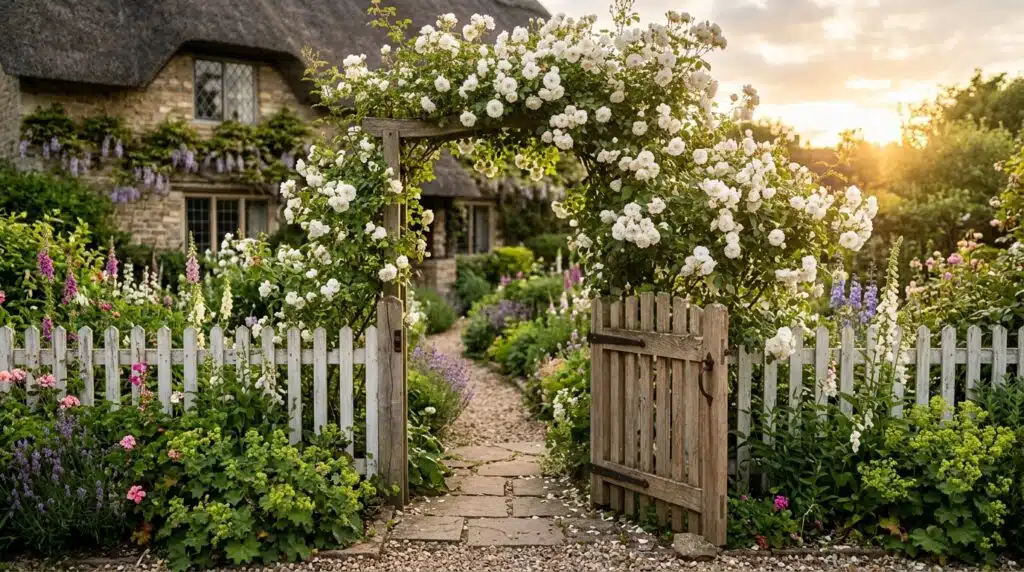
One of the easiest ways to elevate a plain garden gate is to let it double as a garden arch plant support. Climbing roses, wisteria, and clematis all do beautifully trained over an arched gate or trellis topper, turning a simple garden entrance into a genuine focal point.
If you’re planning a bigger garden entrance — pergola, archway, and gate combined — a pergola size calculator is useful for keeping proportions balanced before you commit to materials.
Garden Gate Framework FAQ
Standard landscaping layout specifications for sizes, materials, and installation rules

Final Thoughts
Garden gate sizing isn’t complicated once you understand the two numbers that matter most: a 36-inch (900mm) standard width for pedestrian gates, and a height that matches whatever fence line it’s joining — 3ft for open fencing, 6ft for privacy. From there, it’s really about choosing a style and material that fits your garden’s personality — whether that’s a rustic reclaimed wood gate framed in climbing roses, or a clean wrought iron design with modern hardware.
Get the measurements right, brace the frame properly, and choose hardware built for the gate’s weight and purpose, and you’ll have a garden entrance that swings smoothly for years, not months.