Best Fertilizer for New Grass Seed in Fall
Introduction: Why Fall is Prime Time for New Grass Seed
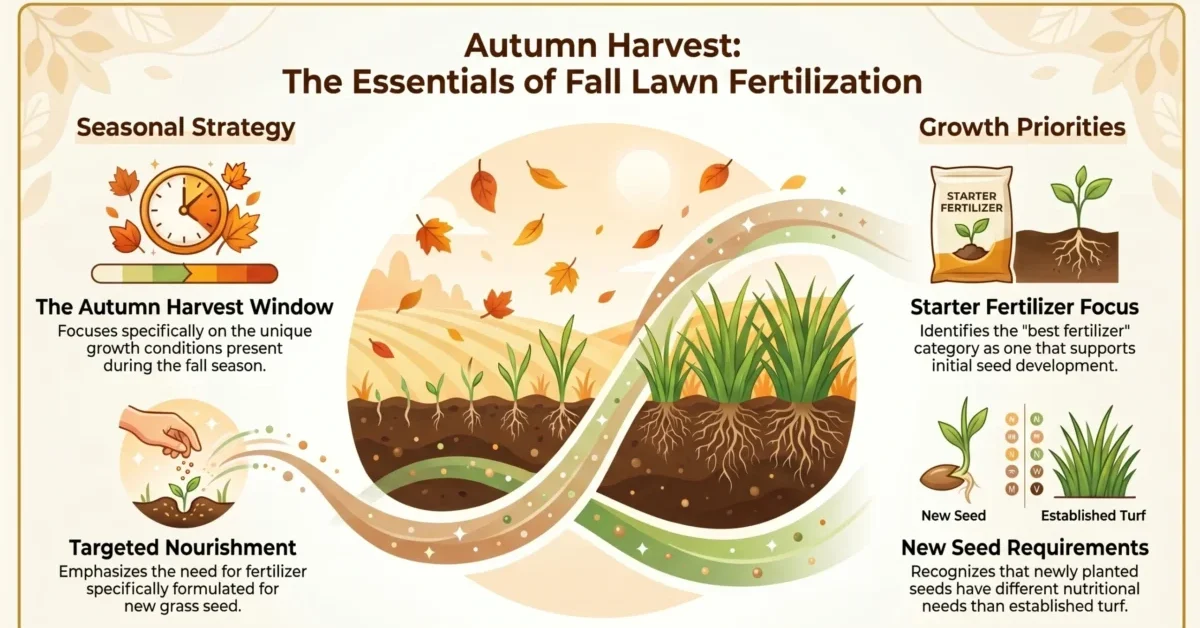
Fall is the best season to start or overseed a lawn, especially for cool-season grasses. Cooler air, warm soil, and increased moisture speed up grass seed germination and help new roots take hold before winter, setting the stage for strong, healthy growth in spring.
To ensure these new seedlings thrive, providing them with the right nutrients from the start is crucial. This is where starter fertilizer comes in. It’s a specialized blend designed to give young grass plants the boost they need to develop robust roots quickly. Without proper fertilization, new grass can develop shallow root systems, making it more vulnerable to drought and other environmental stresses.

Understanding Starter Fertilizer: NPK Ratios Explained
Every bag of fertilizer displays three numbers, known as the NPK ratio, separated by dashes (e.g., 24-25-4). These numbers represent the percentage by weight of the three primary plant nutrients: Nitrogen (N), Phosphorus (P), and Potassium (K). Each plays a distinct role in plant health, but for new grass, phosphorus is the star.
- N — Nitrogen: This nutrient primarily drives leaf and blade growth, giving grass its vibrant green color. While some nitrogen is necessary for initial top growth in new seedlings, too much can promote excessive leaf development at the expense of crucial root growth and can even burn delicate new grass. A moderate nitrogen content, typically 12-24%, is appropriate for starter fertilizers.
- P — Phosphorus: This is the most critical component for new grass seed because it fuels root development and energy transfer within the plant. New seedlings require readily available phosphorus to build a strong root network. Unlike nitrogen, phosphorus doesn’t move much in the soil, so applying it at seeding time ensures it’s directly in the root zone where it’s needed most.
- K — Potassium: Potassium supports overall plant health, including disease resistance and stress tolerance. It helps new grass withstand temperature extremes and recover from damage. While less critical than phosphorus for initial seedling development, a moderate potassium level (4-12%) contributes to long-term establishment.
A typical starter fertilizer will have a higher proportion of phosphorus, often seen in NPK ratios like 18-24-12 or 12-25-6. In contrast, regular maintenance fertilizers might have ratios like 32-0-4, where nitrogen is dominant, and phosphorus is absent.
Important Note: Many states and municipalities have restrictions on phosphorus application due to water quality concerns. Always check your local regulations. In many areas, phosphorus is only permitted for new seed establishment, which is exactly our use case. A soil test is highly recommended before applying any fertilizer. It can tell you if your soil already has adequate phosphorus, in which case you might only need a light nitrogen application.
Choosing the Best Starter Fertilizer for Your New Fall Lawn
When selecting the Best fertilizer for new grass seed in fall, consider the NPK ratio, slow-release properties, and whether you prefer organic or synthetic options.
Here’s a comparison of some popular starter fertilizers:
Scotts Turf Builder Starter Food for New Grass, The Andersons Starter Fertilizer 18-24-12, and Milorganite Slow-Release Nitrogen Fertilizer are all popular options. Each varies in NPK ratios, organic content, and price. Choose based on your lawn size, preference for organic or synthetic ingredients, and desired release speed.
Choosing the Best Starter Fertilizer for Your New Fall Lawn
When selecting the Best fertilizer for new grass seed in fall, consider the NPK ratio, slow-release properties, and whether you prefer organic or synthetic options.
Here’s a comparison of some popular starter fertilizers:
Scotts Turf Builder Starter Food for New Grass, The Andersons Starter Fertilizer 18-24-12, and Milorganite Slow-Release Nitrogen Fertilizer are all popular options. Each varies in NPK ratios, organic content, and price. Choose based on your lawn size, preference for organic or synthetic ingredients, and desired release speed.
Fall Application Summary Table
| Metric | Detail | Impact |
| Ideal Timing | Late Sept – Early Oct | Sets roots before the first frost. |
| N-P-K Focus | High Middle Number | Phosphorus is key for root “grip.” |
| Watering | 1/4″ post-application | Moves nutrients to the root zone. |
| Max Temp | Below 85°F | Prevents salt burn on new grass. |

Top Picks for Fall Seeding
- Best Overall: Scotts Turf Builder Starter Food for New Grass. This is a widely recommended choice for its proven effectiveness. With an NPK ratio of 24-25-4, it provides a powerful phosphorus boost for root development alongside sufficient nitrogen for initial top growth. Its granular formula is easy to apply, and Scotts provides clear spreader settings. It’s a reliable and cost-effective option for most homeowners.
- Premium Pick: The Andersons Starter Fertilizer with Humic DG. For those seeking a premium product, The Andersons offers an 18-24-12 NPK ratio combined with humic acid. Humic acid acts as an organic soil conditioner, enhancing nutrient availability, water retention, and microbial activity. Its Dispersing Granule (DG) technology ensures even distribution. This fertilizer is particularly beneficial for clay or sandy soils where nutrient availability might be an issue, helping phosphorus reach the root zone more effectively.
- Organic Option: Milorganite Slow-Release Nitrogen Fertilizer. While not a traditional starter fertilizer due to its 6-4-0 NPK ratio (low phosphorus), Milorganite is a popular organic choice. Its main advantage is that it’s nearly impossible to burn new seedlings. The slow-release nitrogen feeds gradually, aligning with the slow establishment of new grass, and it also contains iron for color. This is a safe option for those in phosphorus-restricted areas or committed to organic-only lawn care, though root development may be slower compared to dedicated starter fertilizers.

Application Techniques for Optimal Results
Proper application is just as important as choosing the right fertilizer.
When to Apply
The timing for applying starter fertilizer is straightforward: apply it at the same time you put down the seed. You can apply it immediately before seeding, concurrently, or within a few days after.
- For fall seeding (cool-season grass): Apply starter fertilizer when you seed, typically from late August through mid-October. This allows the fertilizer to be active in the soil as the seed germinates and roots begin to establish.
- For sod installation: Apply starter fertilizer to the prepared soil surface before laying the sod. This ensures phosphorus is directly where the sod roots will extend.
- Spreader Settings: For areas larger than 1,000 sq ft, use a broadcast (rotary) spreader. A drop spreader is better for precision along edges and garden beds. Always check the fertilizer bag for specific settings for your spreader brand. For optimal coverage, apply at half the recommended rate in two perpendicular passes (e.g., north-south, then east-west). This method helps prevent striping and ensures even distribution.
- Watering In: After application, lightly water the fertilizer in. A 10-15 minute irrigation cycle is usually sufficient to dissolve the granules and move nutrients into the topsoil layer where seeds and roots are. Avoid drenching the area to prevent washing away the fertilizer. If you’re seeding simultaneously, your regular seed-watering schedule (2-3 light waterings per day) will activate the fertilizer adequately .
Warning: Never apply starter fertilizer to dry soil and leave it unwatered. Undissolved granules can cause fertilizer burn on tender new seedlings. Water within 24 hours of application.
Quick Comparison Guide: Best Fertilizer for New Grass Seed in Fall
Best for New Seed (Organic)
Product: Milorganite 6-4-0
Key Feature: Slow-release nitrogen that won’t burn tender new sprouts.
Best For: Deep root establishment in Fescue or Bluegrass.
Best for Quick Green-Up
Product: Scotts Turf Builder Starter
Key Feature: High phosphorus (24-25-4) for immediate “root-jump.”
Best For: Fast coverage on bare patches or new sod.
Best for High-PH Soils
Product: Lesco Professional Starter
Key Feature: Added iron and micronutrients to balance soil alkalinity.
Best For: California lawns (like Roseville) with clay-heavy soil.
Best Liquid Option
Product: Simple Lawn Solutions 16-4-8
Key Feature: Immediate absorption through the blades and soil.
Best For: Homeowners who prefer a hose-end sprayer for ease of use.

Common Mistakes to Avoid When Fertilizing New Grass Seed
Avoiding these common pitfalls will significantly increase your chances of a successful new lawn.
- Using Weed-and-Feed Products: This is a critical mistake. Weed-and-feed products contain herbicides that will kill new grass seedlings. The pre-emergent components prevent any seed from germinating, including your grass seed. Wait at least 6-8 weeks after new grass has established, or until you’ve mowed 3-4 times, before applying any herbicide.
- Over-Applying Fertilizer: More is not better. Applying more than the recommended rate can burn seedlings because the high salt concentration in the fertilizer draws moisture out of delicate new roots. Always follow the bag’s instructions precisely. If in doubt, apply slightly less rather than more.
- Using High-Nitrogen Maintenance Fertilizer Instead: Regular lawn fertilizers, often high in nitrogen (e.g., 32-0-4), lack the crucial phosphorus new seedlings need. Using these instead of a starter fertilizer forces seedlings to rely on existing soil phosphorus, which might be insufficient. High nitrogen also promotes rapid blade growth before roots are established, leading to weak, drought-prone grass.
- Applying Too Early or Too Late: Applying starter fertilizer weeks before seeding wastes nitrogen through volatilization and leaching. Applying it weeks after germination means you’ve missed the critical window for root development. Aim to apply within a few days of seeding for the best fertilizer for new grass seed in the fall.
FAQs About Fall Fertilization for New Grass Seed
Can I use starter fertilizer on an established lawn?
While you can, it’s generally not recommended. Established lawns typically need more nitrogen than phosphorus, and excessive phosphorus can contribute to water pollution. Many jurisdictions even prohibit phosphorus application on established lawns. Stick to maintenance fertilizers for mature grass .
How long after applying starter fertilizer can I seed?
You can seed immediately after applying starter fertilizer. In fact, applying them at the same time is the most common and effective approach. Just ensure both are watered in properly.
Do I need starter fertilizer if my soil test shows adequate phosphorus?
If your soil test indicates adequate or high phosphorus levels, you can skip a traditional starter fertilizer. Instead, apply a light nitrogen fertilizer. A soil test can save you money and prevent unnecessary phosphorus loading in the environment.
How soon after applying starter fertilizer should I see results?
The initial benefits of starter fertilizer are primarily below ground, promoting root development, so you won’t see visual changes in the first 1-2 weeks. By weeks 3-4, you should notice denser germination and slightly faster-growing seedlings. The most significant visible difference, such as thicker and greener grass, usually appears at weeks 6-8.
What if I’m planting warm-season grass in the fall?
Warm-season grasses (like Bermuda, Zoysia, St. Augustine) prepare for dormancy in the fall. They need nutrients that support this transition (P, K) rather than encouraging active growth (N). Avoid applying nitrogen to warm-season lawns after August, unless you are in a very warm climate where they remain green year-round. Focus on phosphorus and potassium if a soil test shows deficiencies.
Conclusion: A Strong Start for a Beautiful Lawn
Choosing the Best fertilizer for new grass seed in the fall is a critical step in establishing a healthy, vibrant lawn. By understanding the importance of phosphorus for root development, carefully selecting a starter fertilizer with the appropriate NPK ratio, and following correct application techniques, you set your new grass up for success. Avoiding common mistakes like using weed-and-feed products or over-fertilizing will protect your delicate seedlings. A well-fertilized fall seeding will lead to a robust root system, improved winter hardiness, and an earlier, greener lawn come spring.
External Resources
- For more detailed information on starter fertilizers, visit Premium Grass Seeds.
- Explore additional insights on lawn care and fertilizer choices at The Lawn Report.
- Learn about fall lawn fertilization strategies at GardenerBible.
- Discover how to choose the right fall fertilizer for different grass types on LawnStarter.
- Find product comparisons and buying guides for fall seeding at Garden Tips and Tools