Lawn Spot Disease Guide | Identify • Treat • Repair

🌿 Lawn Spot Disease Guide

Got brown, yellow, or black spots on your lawn? This comprehensive guide will help you identify and treat common lawn spot diseases. Learn how to fix everything from fungus and poor drainage to bare patches and dog urine spots. We'll cover the best solutions, including fungicides and home remedies, to get your lawn looking healthy and green again, no matter your grass type.

Diagnostic Tool

Common Spot Types

Brown Spots

Often caused by fungus or dog damage.

© 2026 Comprehensive Lawn Spot Disease Guide

Lawn Spots Begone: A Homeowner’s Guide to a Spotless Yard

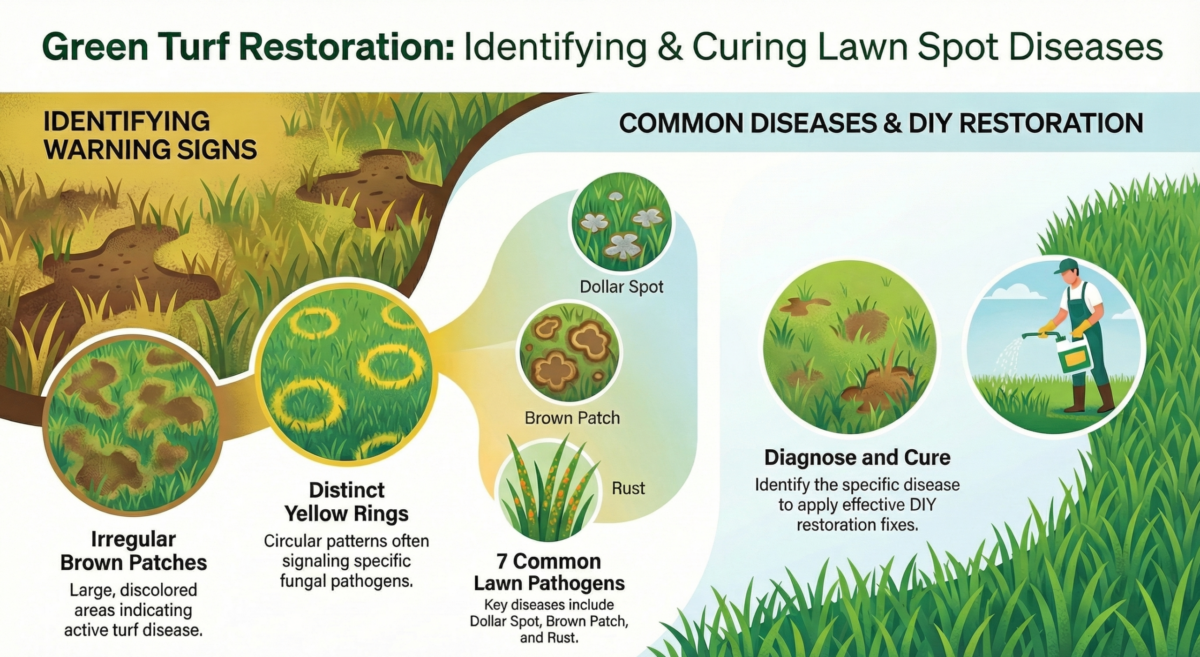
Don’t let brown patches or rust kill your lawn grass! 73% of lawn diseases thrive in humid weather. Learn to spot symptoms early—before your yard turns to straw. Lawn spot diseases affect residential lawns of all sizes, causing brown, yellow, white, black, and dark green spots. Understanding lawn disease identification—whether symptoms indicate fungal diseases, environmental damage, dog urine spots, seasonal issues, or physical problems like low spots and bare spots in the lawn—enables effective targeted treatment and complete lawn restoration. This comprehensive guide covers lawn spot identification for all lawn conditions, from fresh brown spots in the lawn during summer to brown spots in the lawn after winter, bald spots in the lawn, dead spots in the lawn, bare spots on the lawn, low spots in the lawn, and specialized situations like dog spot lawn repair and gravel parking spot lawn damage.

Identify & Treat Lawn Spot Diseases

Fix Brown Spots for a Greener Lawn

Solutions include complete bare spot restoration (reseeding lawn bare spots, filling low spots in lawn, fixing bald spots in lawn, growing grass in bare spots), dog urine damage treatment (fixing dog pee spots, repairing urine spots in lawn, dog brown spots on lawn repair), fungicide treatments for fungal lawn diseases, home remedies, cultural practices, seasonal lawn care adjustments, professional lawn care consultation, and comprehensive prevention strategies. Whether addressing brown spots on my lawn, fixing yellow spots on lawn, treating white spots on lawn grass, identifying black spot lawn disease, understanding why lawns have dark green spots, repairing bare spots in lawn from dogs, filling large low spots in lawn, removing gravel parking spot damage, addressing brown spots after mowing or winter, or achieving complete lawn restoration, this guide provides complete solutions for every lawn situation.

Diagnosing and Treating Lawn Spots

Diagnosing and Treating Lawn Spots

Seeing discolored spots on your lawn? It’s a common problem with a fixable solution. To get your lawn healthy again, you first need to identify the cause of the problem. By answering a few simple questions, you can pinpoint the issue and find the right treatment for a greener lawn.

Step 1: What Color Are the Lawn Spots?

The color of the spots is a major clue to what’s happening with your grass.

  • Brown Spots: These often indicate a fungal disease, but they can also be caused by dog urine or stress from heat and drought. If you’re seeing brown patches in your lawn, these are the most common culprits.
  • Yellow Spots: Yellowing grass typically points to a nutrient deficiency, such as a lack of nitrogen. It can also be a sign of lawn disease or damage from dog urine.
  • White Spots: This usually indicates a type of fungal disease, like powdery mildew, which can make your grass look like it’s been dusted with flour.
  • Black Spots: Dark or black spots on grass can be a sign of a more severe fungal disease that needs immediate attention.
  • Dark Green Spots: Unlike other colors, overly green spots are usually not a disease. They’re often caused by excess nitrogen, which can come from a fertilizer spill or dog urine.
  • Dead Spots: Patches of dead grass might be caused by severe fungal disease, heavy foot traffic, grubs, or highly concentrated dog urine.

Step 2: What Is the Shape and Location of the Spots?

Next, look at the pattern and location of the discolored areas on your lawn.

  • Circular Spots: Circles or rings in the grass are a classic sign of many common fungal diseases or dog urine spots.
  • Irregular Patches: Random, blotchy patches are often caused by environmental stress (like heat or inconsistent watering) or certain lawn fungi.
  • Spots in High-Traffic Areas: If the spots appear on paths where people walk or pets play, the cause is likely soil compaction and general wear and tear on the grass.
  • Spots in Low, Wet Areas: If the discoloration is in parts of your yard where water tends to pool, poor drainage is the likely problem. This can also encourage fungal growth.
  • Spots Appearing After Winter: If you notice spots as the snow melts, it could be “winter kill” from cold damage or a fungus known as snow mold.
  • Spots After Mowing: If damage appears right after you mow, you might be cutting the grass too short (also known as scalping) or spreading a disease with your mower blades.

Step 3: How Widespread Is the Damage?

Understanding the extent of the problem will help you choose the best course of action.

  • A Few Small Spots: For minor issues, a simple home remedy or a targeted spot treatment may be all you need.
  • 10-25% of Lawn Affected: This level of damage often requires a more specific treatment, such as a broad-spectrum fungicide.
  • Over 25% of Lawn Affected: When a large portion of your lawn is affected, you might need to consider professional lawn care services or a major reseeding project.
  • Large Bare Patches: If you have significant patches of dead grass, you will need to reseed those areas to restore your lawn.
  • Entire Lawn Looks Unhealthy: If the problem is widespread, a complete lawn assessment is recommended to identify all underlying issues.

Next Steps: How to Treat Discolored Lawn Spots

Once you have a good idea of the cause, you can start the treatment.

  • For Fungal Disease: Try to identify the specific disease. For minor cases, a home remedy like a baking soda spray can work. For more serious infections, purchase a targeted fungicide from your local garden center.
  • For Dog Damage: The best way to fix dog urine spots is to water the area heavily to dilute the nitrogen. You can also find lawn repair kits specifically designed for pet spots.
  • For Bare Patches: You will need to reseed these areas to get grass to grow back. Start by loosening the soil, then add a layer of fresh topsoil and compost. Spread new grass seed over the area, and water it regularly until the new grass is established.
  • For General Stress: Make sure your lawn is getting the right amount of water (about 1-1.5 inches per week) and is on a proper fertilizing schedule. Aerating your lawn can also help reduce soil compaction.
spots on your lawn

Better Decisions in 5 Minutes

A Homeowner’s Guide to Common Lawn Problems

Discolored or bare spots on your lawn can be disheartening, but most lawn problems are treatable. The first step is to figure out what’s wrong. This guide will help you identify the issue, find its cause, and choose the best solution.

Step 1: Identify the Problem by Appearance

The color and shape of the spots on your lawn are big clues. Here’s what to look for:

  • Brown Patches: Often a sign of fungal diseases like brown patch, but also caused by dog urine or seasonal dormancy.
  • Yellow Spots: Can indicate a nutrient deficiency, lawn diseases, or fresh dog urine.
  • White Spots: Usually a sign of powdery mildew, a fungus that looks like flour dusting the grass.
  • Black or Gray Spots: Suggests a more severe fungal issue like gray leaf spot or slime mold that needs quick attention.
  • Dark Green Spots: Caused by nitrogen-rich spots from fertilizer spills or dog urine, indicating uneven nutrient levels.
  • Bare or Bald Spots: Areas where grass has died, often from heavy foot traffic, grub damage, or severe disease.
  • Low Spots (Dips): An uneven lawn surface usually points to compacted soil, poor drainage, or pests.

Step 2: Determine the Cause

Once you’ve examined the spot, you can narrow down the cause.

  • Fungal Disease: Fungal problems often appear in humid weather and cause growing brown, yellow, or black spots.
  • Pest Damage: Grubs create spongy turf that peels back easily. Chinch bugs leave expanding yellow patches.
  • Dog Urine Damage: Look for distinct, circular yellow or brown spots, often with a green outer ring.
  • Environmental Stress: Drought, overwatering, or heat can weaken your lawn. Drought-stressed grass turns bluish-gray and doesn’t spring back when stepped on.
  • Improper Lawn Care: Mowing too short weakens grass. Compacted soil from foot traffic blocks roots from getting air and water. Thatch buildup can also suffocate your lawn.
  • Nutrient Deficiency: Uniform yellowing across the lawn often points to a lack of nitrogen.
  • Soil and Drainage Issues: Standing water after rain signals drainage or soil compaction problems.

Step 3: Choose the Right Treatment

Your treatment should match the diagnosis.

  • Lawn Fungicides: Professional-grade fungicides are the most reliable solution for fungal diseases.
  • Pest Control: Use targeted insecticides for grubs or chinch bugs. Apply grub control in late spring or early summer as a preventative measure.
  • Reseeding Bare Spots: To fix dead patches, rake away dead grass, add a thin layer of compost, and spread quality grass seed. Keep the area moist until the new grass is established.
  • Aerate and Overseed: For compacted soil, core aeration lets air, water, and nutrients reach the roots. Follow up by overseeding to build density.
  • Fixing Dog Spots: Special lawn repair kits can help neutralize salts from dog urine. You can also flush the spot with water immediately after your dog urinates.
  • Improve Your Lawn Care Routine: Mow high (3-4 inches), water deeply but infrequently (1-1.5 inches per week), and fertilize regularly to build a resilient lawn.

What the Color of Your Lawn Spots Means

Charming two-story brick house with manicured lawn and trees, perfect family home.
BROWN SPOTS ON LAWN

Brown Spots on Your Lawn? Here’s the Fix

Brown spots on a lawn are a frustrating but common problem for homeowners. Pinpointing the cause is the first step to reviving your grass and getting a lush, green lawn again. This guide will walk you through the most common culprits and how to treat them.

What Do Brown Spots Look Like?

First, let’s identify the problem. Brown patches in your grass can vary in appearance:

  • They can be circular or have irregular, spreading shapes.
  • Patches that grow over time often point to a fungal disease. If they remain the same size, the cause might be something like dog urine.
  • They can range from small, isolated spots to large areas of dead grass.
  • Some spots may have a distinct “halo” or a dark ring around the edge.
  • The spots might appear suddenly or develop slowly over weeks.

Common Causes of Brown Patches in Grass

Here are the top reasons why you might be seeing brown spots on your lawn.

1. Fungal Diseases

Fungal disease is one of the most common causes of brown patches.

  • Signs: You’ll typically see spots that expand over time, often with a darker border. Fungal issues thrive in summer heat and humidity.
  • Treatment: Apply a high-quality lawn fungicide according to the product’s directions. To prevent future outbreaks, avoid watering at night.

2. Dog Urine Damage

If you have a furry friend, their bathroom habits could be the cause.

  • Signs: Look for distinct yellow or brown spots, often with a vibrant green outer ring where the diluted nitrogen acts as a fertilizer. The spots won’t grow in size.
  • Treatment: Water the affected area deeply and immediately to dilute the nitrogen. Rake out the dead grass and reseed the patch. Consider training your dog to use a designated spot in the yard.

3. Grubs and Other Lawn Insects

Pests feeding on grass roots can cause widespread damage.

  • Signs: The brown patches will feel spongy underfoot. The turf may lift up easily, like a piece of carpet, because the roots have been eaten. You might see white, C-shaped grubs in the soil underneath.
  • Treatment: Apply a targeted grub killer or a broad-spectrum lawn insect control product in the spring or late summer.

4. Environmental Stress

Sometimes, the environment is to blame.

  • Drought Stress: Grass can go dormant and turn brown during periods of high heat and little rain.
  • Poor Drainage: Standing water suffocates roots, leading to root rot and disease.
  • Soil Compaction: Areas with heavy foot traffic can become compacted, preventing water, air, and nutrients from reaching the grassroots.
  • Treatment: For drought, water your lawn deeply but infrequently. For compaction and drainage issues, aerate your lawn to loosen the soil.

5. Incorrect Lawn Care Habits

Your maintenance routine could be harming your grass.

  • Mowing Too Short: Also known as “scalping,” cutting grass too low stresses the plant, making it susceptible to disease and sun scorch.
  • Dull Mower Blades: Dull blades tear and rip grass instead of making a clean cut. This frayed grass turns brown and invites disease.
  • Treatment: Raise your mower’s cutting height to about 3 inches and sharpen the blades at least once a season.

6. Heavy Thatch Buildup

A thick layer of thatch can choke out your lawn.

  • Signs: Thatch is a layer of dead grass, roots, and organic debris between the green grass and the soil surface. A thick layer (over half an inch) can block water and nutrients and become a breeding ground for fungus.
  • Treatment: Dethatch your lawn (power rake) in the early spring or fall to remove the excess layer.

How to Diagnose and Fix Brown Spots on Your Lawn

Follow these steps to bring your lawn back to life:

  1. Observe the Spot: Does the patch grow (likely fungus), or does it stay the same size (likely dog urine)? Is it in a high-traffic area (compaction)?
  2. Inspect the Soil: Is the ground overly wet (poor drainage) or bone-dry (drought)? Gently dig up a small section to check for grubs.
  3. Examine the Grass Blades: Are the blades torn (dull mower) or do they show discolored lesions (fungus)?
  4. Consider the Season: Fungal diseases are most active in the summer, while grub damage often appears in late summer or fall.

Fixing the Damage:

  • For Small Spots: Rake the dead grass out thoroughly. This improves airflow and exposes the soil for reseeding.
  • For Dog Spots & Dry Patches: Water the area well and reseed.
  • For Fungal Disease: Apply a fungicide as directed by the label.
  • For Widespread Damage: If your lawn has extensive issues, you may need a combination of treatments. A full lawn renovation might include aerating, dethatching, and overseeding. For persistent problems, consider calling a professional lawn care service for an assessment.
YELLOW SPOTS ON LAWN

YELLOW SPOTS ON LAWN

Why Is My Grass Turning Yellow?

Yellow spots on your lawn are frustrating. The first step to fixing them is finding the cause. Yellowing grass often points to disease, nutrient deficiency, or dog urine. Let’s look at the common causes and solutions.

What Do Yellow Spots on a Lawn Look Like?

The appearance of yellow spots can help you identify the problem.

  • Circular Yellow Patches: Often a sign of fungal diseases like dollar spot or brown patch.
  • Overall Pale Yellowing: If your whole lawn is a pale yellow color, it’s likely a nutrient deficiency.
  • Yellow Rings with a Brown Center: This “burn” pattern is common with dog urine.
  • Irregular Yellow Patches: Can be caused by poor drainage, compacted soil, or drought.

Common Causes of Yellow Grass and How to Fix Them

1. Nutrient Deficiency (Most Common)

If your whole lawn is a pale yellow, it’s likely hungry. A lack of nutrients, especially nitrogen, is the most common cause of yellow grass.

  • Signs: The entire lawn looks faded and weak, not just in spots.
  • Solution: A soil test is the best way to identify missing nutrients. Based on the results, apply a nitrogen-rich fertilizer.

2. Fungal Diseases

Fungal diseases often appear as distinct yellow spots that grow over time. Common culprits include dollar spot, brown patch, and summer patch.

  • Signs: Circular yellow spots, sometimes with a dark border or a web-like substance (mycelium) visible in the morning dew.
  • Solution: Apply a targeted fungicide. Prevent fungal growth by improving air circulation (dethatching and aerating) and avoiding overwatering.

3. Dog Urine Damage

Your dog could be the cause of your yellow spots. Dog urine is high in nitrogen, which can burn the grass, leaving a dead brown spot surrounded by a yellow or green ring.

  • Signs: Small, round patches with a brown center and a yellow or dark green outer ring.
  • Solution: Water the area right after your dog urinates to dilute the nitrogen. You can also train your dog to use one spot. For existing spots, rake out the dead grass and reseed.

4. Environmental Stress

Extreme weather can cause your grass to turn yellow.

  • Drought Stress: Lack of water turns grass a dull yellow-brown.
  • Overwatering: Too much water can suffocate the roots and stop them from absorbing nutrients.
  • Poor Drainage & Compacted Soil: If water pools or the soil is hard, roots can’t breathe or grow.
  • Solution: Adjust your watering schedule based on rainfall. For drainage issues, aerate your lawn annually to loosen the soil.

How to Diagnose Yellow Spots: A Checklist

  1. Look at the Pattern: Are the spots circular (disease, dog urine) or is the whole lawn yellow (nutrient deficiency)?
  2. Check for Growth: Are the spots getting bigger? This often points to a fungal disease.
  3. Inspect the Blades: Look for lesions or powdery substances on the grass.
  4. Consider Your Dog: Do the spots have a brown center and a yellow ring?
  5. Test Your Soil: A soil test is the best way to confirm a nutrient deficiency.
grass, lawn, leaves on the lawn, leaf, green, yellow, nature, bright, fresh
WHITE SPOTS ON LAWN

WHITE SPOTS ON LAWN

Overview: White spots on a lawn are usually caused by fungi like powdery mildew.

Visual Characteristics:

  • White, powdery coating on grass blades.
  • Distinct white spots.
  • Lighter in color than other lawn discolorations.

Likely Causes:

Powdery Mildew

  • What it is: A white, powder-like substance on grass blades.
  • Common in: Shady, high-humidity areas.
  • Impact: Reduces the grass’s ability to photosynthesize.
  • Treatment: Improve air circulation and sunlight, then apply a fungicide.

Fungal White Spot Disease

  • What it is: White spots, often with a border, that spread over time.
  • Treatment: Apply a fungicide.

Other Fungal Diseases

  • What it is: Appearance can vary. May require professional identification.
  • Treatment: Use a fungicide specific to the disease.

Solutions for White Spots:

  • Powdery Mildew: Improve air circulation and sunlight by trimming trees, then apply a fungicide.
  • Fungal White Spot: Treat with a fungicide and address environmental issues like poor drainage.
  • Uncertain Cause: Get a professional diagnosis for the correct treatment.
BLACK SPOTS ON LAWN
BLACK SPOTS ON LAWN

BLACK SPOTS ON LAWN

Overview: Black spots on your lawn are a sign of a serious fungal disease that requires immediate treatment.

Visuals:

  • Dark or black spots on the grass.
  • Spots may have rings.
  • The spots will spread over time.

Likely Cause: Fungal Disease

  • Dark spots indicate the disease is in an advanced stage.
  • It can spread rapidly and needs to be treated right away.
  • A professional can help identify the specific disease.

Solutions for Black Spots:

  • Immediate fungicide treatment: Apply within 1-2 days.
  • Professional assessment: Have an expert identify the disease.
  • Consider professional lawn care: The severity may require expert help.
  • Reseeding: May be necessary if the disease has spread.
lawn, grass, meadow, texture, yard, garden, nature, park, green, green grass, grassy, field
DARK GREEN SPOTS ON LAWN

DARK GREEN SPOTS ON LAWN

What They Are: Dark green spots are not a disease but patches of rapid growth caused by excess nutrients. This often results from:

  • Fertilizer spills or overuse
  • Uneven fertilizer application
  • Pet waste

These spots are harmless and will fade.

Solutions:

  • No treatment is necessary.
  • Water the area thoroughly to dilute the excess nutrients.
  • The lawn will even out in a few weeks.
  • Improve your fertilizing technique to prevent future spots.

Restore Bare and Bald Spots

Causes of Bare Spots:

Fungal Disease

  • Severe infections can kill large patches of grass.
  • Treat the disease before reseeding.

Dog Damage

  • Caused by urine or heavy paw traffic.
  • Address the root cause before repairing.

Environmental Stress

  • Winter kill, drought, or waterlogging.
  • Poor, compacted soil.
  • Heavy shade.

Physical Damage

  • Heavy foot traffic.
  • Vehicles or construction.
  • Items left on the grass, like gravel piles.

How to Fix Bare Patches in Your Lawn

Bare spots on your lawn are frustrating, but you can get your grass looking lush and green again with a little effort. This guide will walk you through repairing those patches step-by-step.

Step 1: Identify the Problem (15 mins)

First, figure out why you have a bare spot.

  • Find the cause: Is it from heavy foot traffic, pet urine, lawn disease, or pests?
  • Check the soil: Is it compacted? Poor soil can stop grass from growing.
  • Know your grass type: Look at the surrounding grass to identify its type (e.g., Fescue, Bermuda) so you can match it for a seamless look.

Step 2: Prepare the Patch (30-45 mins)

Now, get the area ready for new seed.

  • Clear the area: Rake away dead grass, weeds, and rocks from the bare patch.
  • Loosen the soil: Use a garden fork or small tiller to loosen the top 3-4 inches of soil. This helps the new seeds take root.

Step 3: Improve the Soil (30 mins)

Healthy soil is key to growing healthy grass.

  • Add topsoil and compost: Spread a 1-2 inch layer of quality topsoil or garden soil over the area. Mix in compost for nutrients.
  • Level the surface: Use a rake to smooth the new soil, ensuring it’s level with the surrounding lawn. Lightly tamp it down so it’s firm but not compacted.

Step 4: Choose the Right Grass Seed (10 mins)

Selecting the right seed is crucial.

  • Match your existing lawn: Choose a seed that matches the grass you already have.
  • Consider sun exposure: Select a variety that suits the amount of sun the area gets.
  • Buy quality seed: High-quality grass seed has a better germination rate.

Step 5: Plant the Grass Seed (15 mins)

It’s time to sow the seeds.

  • Spread the seed: Distribute the grass seed evenly over the prepared soil, following the instructions on the package.
  • Ensure good contact: Lightly rake the seeds into the top quarter-inch of soil to help them germinate.
  • Add starter fertilizer: A starter fertilizer gives new seeds the nutrients they need to grow.
  • Cover lightly: A thin layer of straw can protect the seeds from birds and keep the soil moist.

Step 6: Water Consistently (Ongoing)

Proper watering is the most important step.

  • Keep it moist: Water the area lightly once or twice a day to keep the soil moist but not soggy. Do this until the seeds sprout (usually 7-21 days).
  • Reduce watering after sprouting: Once grass is visible, water less often but more deeply to encourage strong root growth.

Step 7: Care for Your New Grass (3-4 weeks)

Your new grass needs extra care as it gets established.

  • Stay off the grass: Avoid walking on the new patches until the grass is at least 3 inches tall.
  • First mow: Set your mower to its highest setting for the first mow. Don’t cut more than one-third of the grass blade’s height.
  • Ongoing care: After 4-6 weeks, you can treat the new patch like the rest of your lawn. Continue to water as needed until it’s fully established.

How Long to Reseed a Lawn: A Week-by-Week Guide

Reseeding a lawn is a rewarding process that can transform a patchy yard into a lush, green carpet. But how long does it actually take? Here’s a general timeline, from preparing the soil to the first mow.

Week 1: Soil and Seed Preparation

The first week is all about creating the perfect environment for your new grass seed to thrive.

  • Day 1: Clear the Area (1 hour). Start by preparing the seeding area. Remove any weeds, rocks, or debris. Then, mow your existing lawn on a low setting.
  • Days 2-3: Prepare the Soil (1-2 hours). Healthy soil is key to a healthy lawn. If your soil is hard and compacted, it’s a good idea to aerate it. An aerator will loosen the soil, improving airflow and water drainage. After aerating, spread a thin layer of compost or topsoil. This adds vital nutrients and creates a good foundation for the new seeds.
  • Days 4-7: Spread the Seed (30 minutes). Now it’s time to sow the grass seed. For best results, use a broadcast or drop spreader to ensure even coverage across the prepared soil.

Weeks 2-3: Germination Period

This is when you’ll start to see the first signs of new life.

  • 7-21 Days After Sowing: During this germination phase, your main job is watering. Keep the soil consistently moist, but not waterlogged. A light watering once or twice a day is usually enough. Towards the end of this period, you should see tiny green grass sprouts beginning to appear.

Weeks 4-6: Early Grass Growth

Your new grass seedlings are still young and fragile.

  • Continue to water daily to encourage deep root growth. It’s important to keep foot traffic off the newly seeded areas to avoid damaging the delicate shoots.

Weeks 7-8: Your New Lawn is Establishing

By now, your hard work is paying off and the lawn should look much fuller.

  • The new grass is becoming established. You can start reducing your watering schedule to every few days, depending on rainfall and temperature.
  • Once the new grass reaches 3-4 inches in height, it’s ready for its first mow. Make sure to set your lawn mower to its highest setting to avoid stressing the new grass.

From Patchy to Perfect: Reseeding Your Lawn

Reseeding your lawn can turn patchy, thin grass into a lush yard. For the best results, follow the right steps. Use these lawn care tips to help your new grass seed grow thick and healthy.

1. Choose the Right Grass Seed

First, select the best grass seed for your lawn. You’ll need a high-quality blend that matches your local climate and sun exposure. Cool-season grasses like fescue and ryegrass are best for northern climates, while warm-season grasses like Bermuda or Zoysia thrive in the south.

2. Prepare the Soil for Seeding

Proper soil preparation is key. Start by mowing your existing lawn short and clearing any dead grass or debris. If the soil is compacted, aerate it to allow air, water, and nutrients to reach the roots. Then, rake the area and spread a thin layer of compost or topsoil to create a healthy base for the new seeds.

3. Water New Grass Seed Correctly

Watering is essential for seeds to germinate. For the first few weeks, keep the top inch of soil moist but not soggy. This usually means watering lightly once or twice a day. Light, frequent watering is better than an occasional deep soak when growing grass from seed.

4. Know When to Plant Grass Seed

Timing is everything. The best time to plant depends on your grass type. Plant cool-season grasses in early fall or spring. For warm-season grasses, the ideal time is late spring or early summer when soil temperatures are consistently above 65°F.

5. Consider Your Lawn’s Sun Exposure

Different grasses need different amounts of sunlight. Before you buy, assess your yard. Choose a seed variety that matches your yard’s conditions, whether it’s full sun, partial shade, or a mostly shady area. Many “sun and shade” mixes are available.

6. Keep Off the New Grass

It’s important to minimize foot traffic on newly seeded areas. Young grass seedlings are delicate and can be easily damaged. If possible, rope off the area to protect it from kids and pets until the new grass is established and has been mowed a few times.

Following these tips will help you grow a lush, green lawn that improves your home’s curb appeal.

How to Fix Bald Spots in Your Lawn

Bare patches, also known as bald spots, are frustrating spots in your yard where the grass has died. The good news is that repairing these patches to get a lush, green lawn is usually a simple fix.

What Causes Bald Spots in a Lawn?

Before you start repairing bald spots, it’s important to understand the underlying cause to prevent them from coming back.

Common reasons for bare patches include:

  • Heavy Foot Traffic: Areas that get a lot of use from people or pets can lead to compacted soil, which suffocates the grass.
  • Poor Drainage: If you have areas where water puddles after it rains, the grass roots can drown.
  • Lawn Diseases: Fungal diseases like brown patch or dollar spot can spread quickly and kill large sections of grass.
  • Pet Urine: The high levels of nitrogen in dog urine can burn the grass, leaving yellow or brown spots.
  • Poor Soil Conditions: If your soil is too compacted or lacks essential nutrients, it won’t be able to support healthy grass growth.
  • Too Much Shade: Most types of grass need several hours of direct sunlight each day. Deep shade from trees, houses, or other structures can cause the grass to thin out and eventually die.

How to Prevent Bald Spots and Maintain a Healthy Lawn

Once you’ve repaired the bare patches, follow these tips to maintain a healthy, beautiful lawn:

  • Aerate Your Lawn: Aeration helps relieve soil compaction, which allows air, water, and nutrients to get down to the grass roots.
  • Overseed Annually: Overseeding, which is spreading new grass seed over your existing lawn, is a great way to fill in thin spots and promote thicker growth. The best time to do this is usually in the fall.
  • Improve Your Soil Health: Topdress your lawn with a thin layer of compost or another soil amendment to add rich, organic matter.
  • Fix Drainage Issues: If you notice standing water, you may need to amend the soil or install a drainage system to redirect excess water.
  • Manage Pet Use: Try to train your dog to use one designated spot in the yard. It’s also a good idea to water down the areas where they urinate to dilute the nitrogen and prevent grass burn.

Is Dog Urine Killing Your Grass?

Noticing brown or yellow patches on your lawn? It might be dog urine damage. Here’s how to identify these spots and rule out other lawn problems.

Visual Clues

Dog pee spots have a distinct look that sets them apart from lawn diseases.

  • Circular Patches: Urine damage typically creates circles 3 to 6 inches wide.
  • A “Halo” Effect: You may see a vibrant green ring around the dead patch. This happens because nitrogen in the urine fertilizes the edges of the spot.
  • Dead Center: The grass in the middle of the circle will be brown or yellow where the urine was most concentrated.
  • Contained Spots: Unlike fungus, these spots won’t grow or spread.

Where and When Spots Appear

Your dog’s habits can help confirm if they’re the cause.

  • Timing: Patches usually appear a few days after your dog pees on the grass.
  • Location: You’ll find these spots where your dog frequently uses the bathroom.
  • Multiple Patches: If your dog uses the same area, you’ll likely see more than one spot.
  • New Spots Appear: While individual spots don’t grow, new ones will pop up if your dog keeps urinating on the lawn.

The Smell Test

One of the surest ways to identify dog urine damage is the smell.

  • Get close to the brown patch and smell it. A strong ammonia or urine odor is a clear sign your dog is the culprit. The smell often lingers until the area is watered or treated.

Dog Urine vs. Lawn Disease

It’s easy to mistake urine spots for a fungal disease. Here’s how to tell them apart:

  • Pattern: Dog urine creates static, circular spots. Fungal diseases often have irregular shapes and will spread.
  • Source: You can often connect the appearance of a spot to your dog using that area.
  • Location: The damage is confined to where urine directly contacted the grass.

How to fix dog pee spots on grass

Dog urine can leave unsightly yellow or brown spots on your lawn due to its high nitrogen content. Acting quickly is the key to minimizing damage. Here’s a step-by-step guide to fixing those spots and preventing them in the future.

Immediate Repair for Fresh Urine Spots (Within a Few Hours)

If you catch your dog in the act, you can prevent damage before it starts.

Step 1: Dilute the Area

  • Immediately flush the spot where your dog urinated with plenty of water.
  • Use a hose or a large watering can to thoroughly soak the soil. Aim for 10-15 gallons of water to wash away the excess nitrogen.
  • Repeat this process daily for the next 3-4 days to ensure the urine is fully diluted.

Step 2: Neutralize the Salts

  • Apply a soil amendment like gypsum to the affected patch according to the product’s directions.
  • Gypsum helps balance the soil and neutralize the salts left behind by the urine.
  • Water the area well after applying gypsum to help it absorb into the soil.

Step 3: Revitalize the Soil

  • Once the salts are neutralized, use a small rake or hand trowel to loosen the top layer of soil.
  • Mix in organic matter like compost to improve soil health and drainage. This creates a better environment for new grass to grow.

Step 4: Reseed the Bare Patch

  • Follow the reseeding instructions below for bare spots.
  • Ensure the soil is loose about 3 inches deep.
  • Add a fresh layer of topsoil and compost.
  • Spread a quality grass seed that matches your existing lawn.
  • Keep the new seeds consistently moist until the grass is well-established.

How to Fix Low Spots in Your Lawn

Tired of looking at an uneven, patchy lawn? This guide will walk you through how to fix common lawn problems like low spots and brown patches, helping you achieve the lush, green yard you’ve always wanted.

How to Fix Low Spots in Your Lawn

Low spots in your yard not only look bad but can also collect water, leading to drainage issues and unhealthy grass. Here’s how to level them out:

  • For shallow low spots (1-2 inches deep): The easiest fix is to top-dress the area. Simply apply a thin layer of a high-quality mix of topsoil, compost, and sand over the dip. The existing grass will grow through it, leveling the surface over time.
  • For deeper low spots (more than 2 inches deep): You’ll need to lift the existing turf. Cut out the piece of sod covering the low spot and set it aside. Fill the hole underneath with a soil mixture until it’s level with the surrounding ground. Finally, lay the original sod back on top and water it well.
  • For large or very wet areas: If you have significant depressions or areas that are always soggy, you might be dealing with a bigger drainage problem. In these cases, it’s best to call a professional for solutions like regrading the lawn or installing a French drain.

How to Get Rid of Brown Patches on Your Lawn

Brown spots can be frustrating, but they’re often fixable. Common causes include winter kill, snow mold, salt damage from de-icing, and improper mowing.

To revive your lawn and prevent future brown spots, follow these tips:

  • Rake Gently: Start by lightly raking the dead grass in the brown patch to clear away debris and allow air and sunlight to reach the soil.
  • Fertilize and Water: Apply a balanced lawn fertilizer in the spring to give your grass the nutrients it needs to recover. Water deeply but infrequently to encourage strong root growth.
  • Mow Correctly: Mowing habits have a huge impact on lawn health. To avoid damaging your grass, make sure your mower blades are sharp. Dull blades tear grass instead of cutting it, leaving it vulnerable to disease. As a rule of thumb, never cut more than one-third of the grass blade’s height at a time, and avoid mowing when the lawn is wet.

Frequently Asked Questions

Q: What causes brown spots on my lawn?

A.Brown spots on lawns are often caused by fungal diseases, dog urine, environmental stress, or mowing damage. Identifying the specific cause is the first step toward effective treatment.

Q: How do I tell if my lawn has a fungal disease or dog urine spots?

A: Fungal spots are odorless and grow over time, whereas dog urine spots have a strong ammonia smell and a dead center with a green ring. The easiest way to tell them apart is by the smell.

Q: Why does my lawn have yellow spots?

A: This could be a nitrogen deficiency, fungal disease, dog urine, or environmental stress. Test your soil first. If nutrients are okay, look for other signs to find the cause.

Questions About Treatment

Q: How do I fix brown spots on my lawn?

A: For fungal disease, use a fungicide. For dog damage, flush the area with water, apply gypsum, and reseed. For environmental stress, fix the underlying drainage or watering issue. For mowing damage, let the area recover and adjust your mowing habits.

Q: When should I treat my lawn with a fungicide?

A: Apply a fungicide as soon as you identify a fungal disease. Early treatment is crucial to stop it from spreading. Follow the product label, which often requires repeat applications.

Q: How do I fill in low spots in my lawn?

A: For shallow spots, loosen the soil and add topsoil in layers. For deeper spots, use a base of topsoil and compost, build up in layers, and reseed. Very large spots may require professional grading.

Q: How do I repair dog pee spots on my lawn?

A: Immediately flush the area with water. Apply gypsum to neutralize salts, then loosen the soil, add compost, and reseed. Water regularly until the new grass is established.

Questions for Prevention

Q: How do I prevent brown spots on my lawn?

A: Practice good lawn care: improve drainage (aeration), water in the early morning, use preventive fungicides in spring, fertilize based on soil tests, and mow with sharp blades at the proper height. Prevention is more effective than treatment.

Q: How do I prevent dog urine spots?

A: The best method is to train your dog to use a designated potty area. Otherwise, immediately flush the spot with water. Spot treatment products have limited effectiveness.

Q: When should I reseed bare spots in my lawn?

A: The best time is spring or fall when temperatures are moderate. Avoid reseeding in extreme heat or cold. Reseed 1-2 weeks after fixing the underlying cause of the bare spot.

Resources

Lawn Disease Identification & Treatment

Video Identification & Care Tutorials

Lawn Care Products & Supplies

Professional Lawn Care & Expert Guidance

Disclaimer

This guide is for educational purposes and provides general guidance. Always consult with local cooperative extension offices or professional lawn care specialists for specific identification and treatment advice. Follow all product label directions exactly. Results can vary based on climate, weather, soil, and grass type. This guide does not replace professional consultation.

Scroll to Top