Wide shot of a lush green suburban lawn on a sunny morning

10 Lawn Care Tips For A Healthy Green Lawn This Year

Ever look at your neighbor’s lawn and wonder what they know that you don’t? Chances are, it’s not luck. It’s not an expensive service either. Most thick, green, envy-inducing lawns come down to a handful of simple habits, done consistently, at the right time of year.

This lawn care guide breaks down the 10 changes that make the biggest difference — whether you’re completely new to yard work and searching for lawn care for beginners advice, or you’ve been mowing the same patch of grass for years and can’t figure out why it still looks patchy. No jargon, no 40-step routines. Just what actually works.

Lorem ipsum dolor sit amet, consectetur adipiscing elit. Ut elit tellus, luctus nec ullamcorper mattis, pulvinar dapibus leo.

Why Your Lawn Care Routine Might Be Working Against You


Why Your Lawn Care Routine Might Be Working Against You

Here’s something a lot of homeowners get backwards: more effort doesn’t always mean a better lawn. Mowing too short, watering too often, or fertilizing at the wrong time can all do more harm than good.

A healthy lawn isn’t about doing everything — it’s about doing the right things in the right order. That’s really what a solid lawn maintenance checklist is for: not a longer list, a smarter one. Once you understand the “why” behind each step, the “what to do” becomes a lot easier to remember.

If you’re just getting started, our free lawn care tools hub is worth bookmarking — it pulls together several calculators mentioned below in one place.

Flat-lay of lawn care tools including mower, rake, spreader, and soil test kit

10 Lawn Care Tips for a Healthier, Greener Lawn

1. Mow at the Right Height — Not Too Short

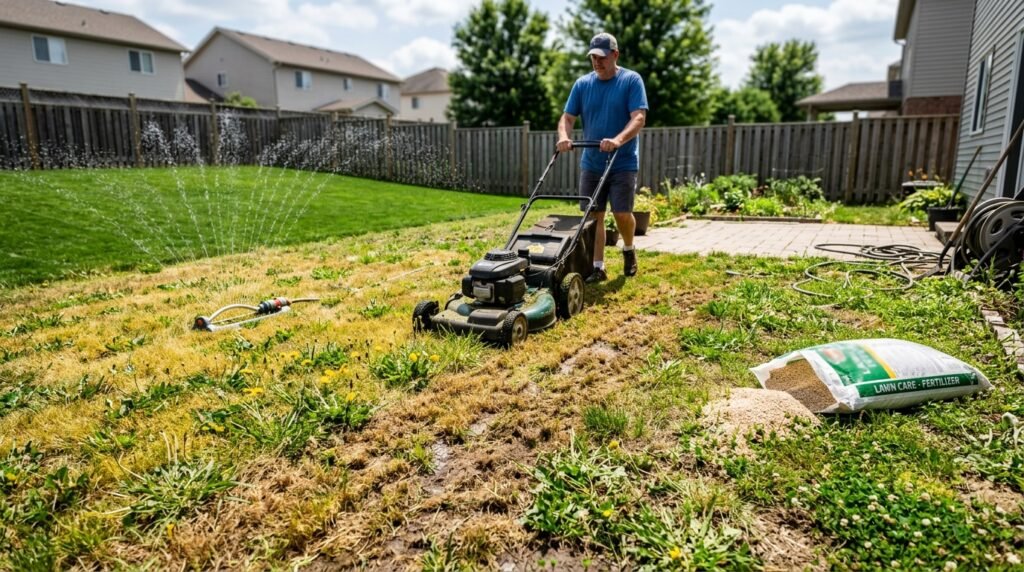
One of the most common lawn maintenance mistakes is cutting grass too low. Scalped lawns lose the ability to shade their own roots, which invites weeds and stresses the grass during hot weather.

As a rule of thumb, never remove more than a third of the blade height in a single cut. Most cool-season grasses do best kept around 3 inches, while warm-season varieties can handle a slightly shorter cut. How often should you mow depends on the season — expect weekly in spring and early summer, less often once growth slows down. Switching up your mowing patterns every couple of cuts — alternating vertical, horizontal, and diagonal passes — also helps prevent the soil compaction and grain that comes from wheels rolling the same path every single time.
 

Water Deeply, But Not Every Day


2. Water Deeply, But Not Every Day

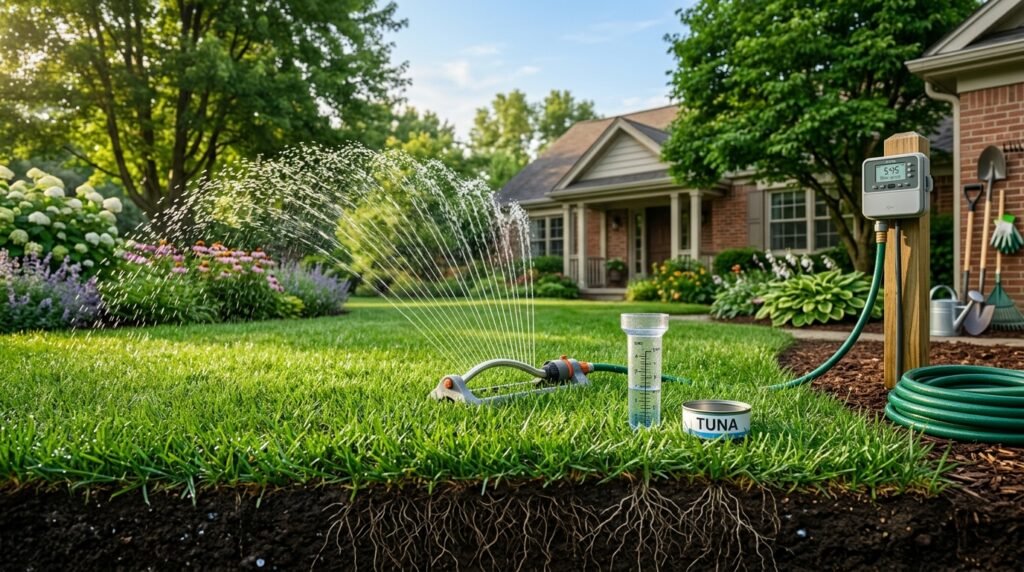
Daily light watering trains grass roots to stay shallow, which makes your lawn more vulnerable to drought and disease. A smarter lawn watering schedule means fewer, deeper waterings — roughly one inch of water per week, split across two sessions, is the standard most turf experts recommend.

According to the EPA’s WaterSense watering tips, a simple way to measure this is to place a few empty cans around the yard while you water, then time how long it takes to collect half an inch. Early morning is the best time to water grass, since it reduces evaporation and gives blades time to dry before nightfall, which helps prevent disease.

If you live somewhere hot and dry, it’s worth building your whole yard around drought resistant lawn care instead of fighting the climate. That usually means choosing a drought-tolerant grass variety, mowing slightly taller to shade the soil, and watering deeply but infrequently to encourage deep roots. Our drought resistant garden calculator can help you plan a water wise lawn that still looks green without running up the water bill.
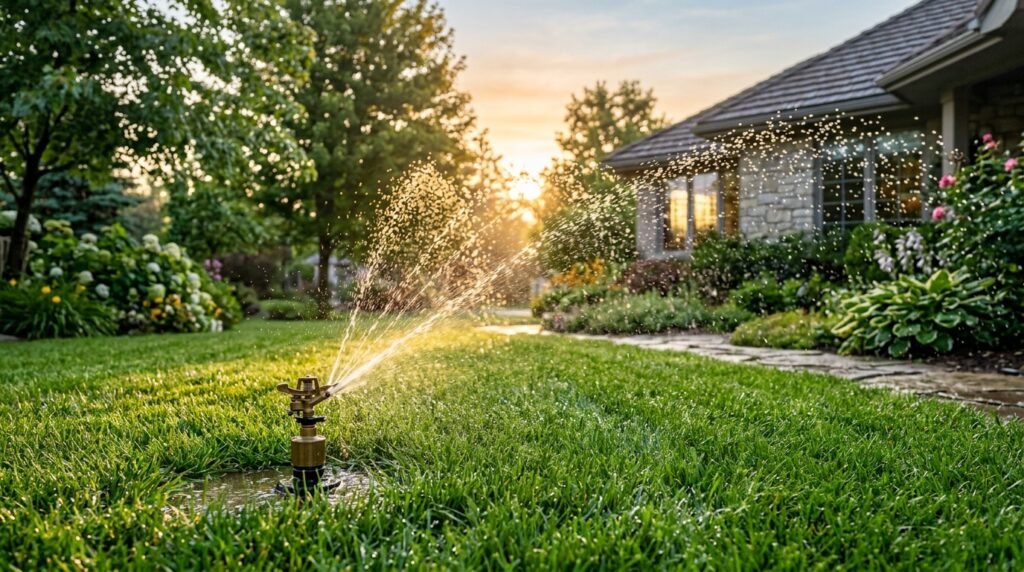
 

Sprinkler system watering a green lawn in early morning light


3. Feed Your Lawn on a Seasonal Schedule

Fertilizer timing matters just as much as fertilizer choice. A basic lawn fertilization schedule looks something like: early spring for green-up, early summer for growth support, and fall for root strengthening heading into winter.

If you’re leaning toward organic lawn care, compost top dressing and slow-release organic fertilizers feed the soil biology instead of just the grass, which tends to build healthier turf over time. For exact timing based on your grass type and region, our guide on the best time of year to fertilize grass walks through it season by season, and our organic lawn fertilizer options page compares products if you want to go the natural route.
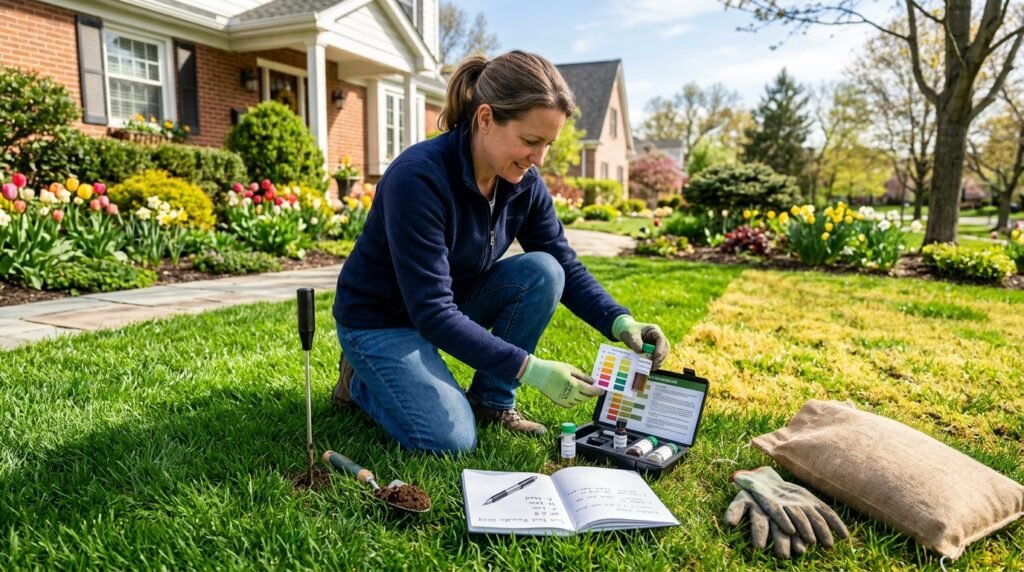
 

Test Your Soil Before You Guess


4. Test Your Soil Before You Guess

Most lawn soil health problems trace back to one thing: pH that’s out of range for the grass you’re growing. Grass typically prefers slightly acidic to neutral soil, and outside that range, it struggles to absorb nutrients no matter how much fertilizer you apply.

A basic soil test kit costs very little and tells you exactly what your lawn is missing — nitrogen, phosphorus, potassium, or a pH adjustment like lime or sulfur. Skipping this step is one of the quiet reasons fertilizer sometimes seems like it “isn’t working.”
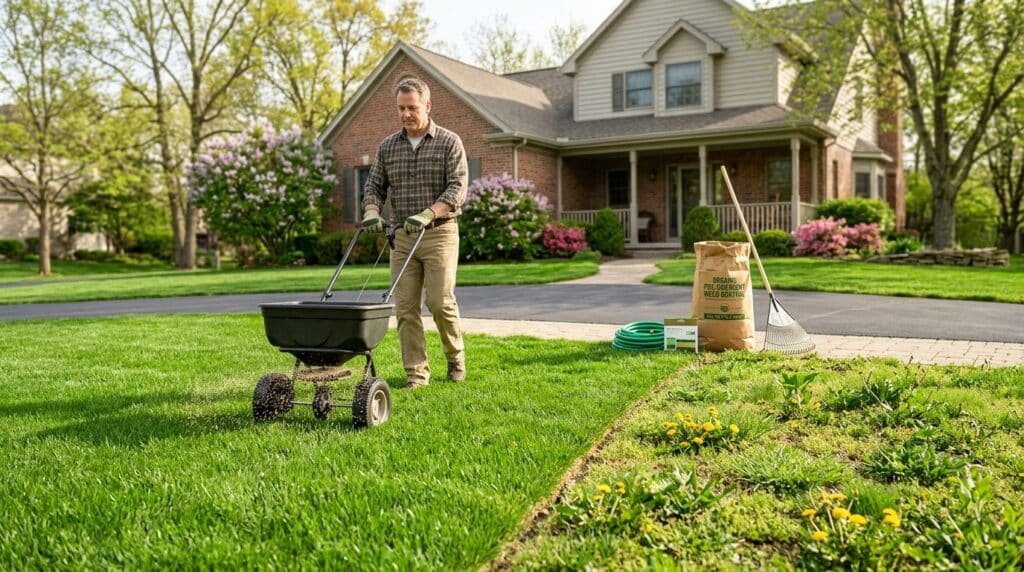
 

Get Ahead of Weeds Before They Take Over


5. Get Ahead of Weeds Before They Take Over

Lawn weed control is far easier as prevention than as cleanup. Crabgrass, for example, germinates from seed each spring, which means a pre-emergent herbicide applied before soil temperatures warm up can stop it before it ever appears — waiting until you see crabgrass means you’ve already missed the easiest window.

For lighter infestations, organic weed control methods like corn gluten meal or simply mowing higher (to shade out weed seedlings) can handle a lot of the problem without chemicals. If you do reach for a synthetic weed killer, spot-treating individual patches is usually gentler on the surrounding lawn than a blanket application. Persistent patches of clover or nutsedge usually mean the lawn itself is thin somewhere, and thickening the turf is often a longer-lasting fix than repeated spot-treatment.
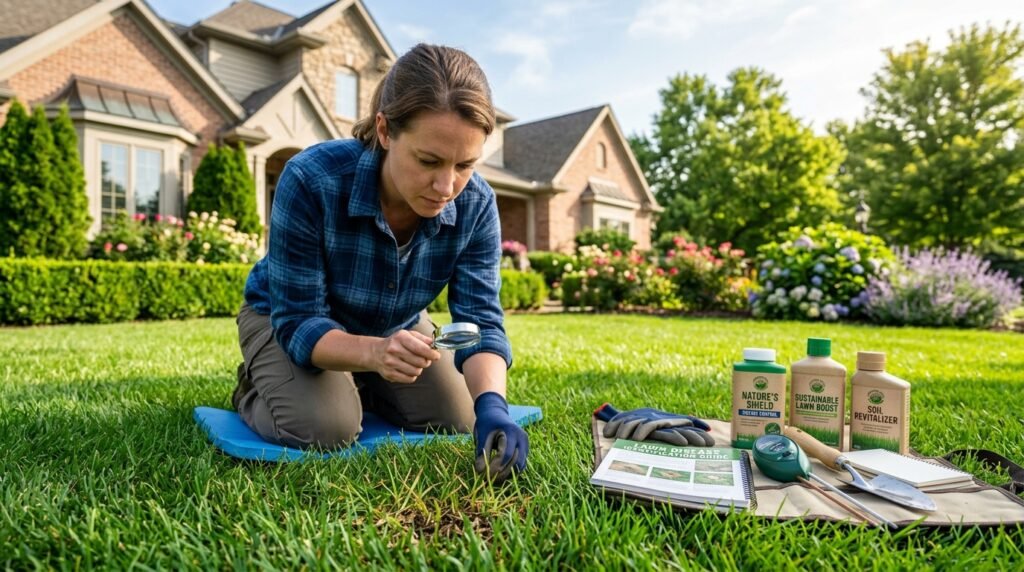
 

Watch for Early Signs of Lawn Disease


6. Watch for Early Signs of Lawn Disease

Lawn fungus issues like brown patch, dollar spot, and red thread often show up after long stretches of humid weather or overwatering. Catching them early — small discolored patches rather than large dead zones — makes treatment far more effective.

If you’ve noticed unusual patterns of yellow grass or spreading brown circles, our guides on lawn spot disease, grass spot disease, and leaf spot disease walk through how to tell them apart before reaching for a fungicide. In most cases, effective lawn disease treatment starts with improving airflow and cutting back watering frequency — the fungicide is really just a backup plan once the underlying moisture problem is fixed.
 

Control Lawn Pests Before They Spread


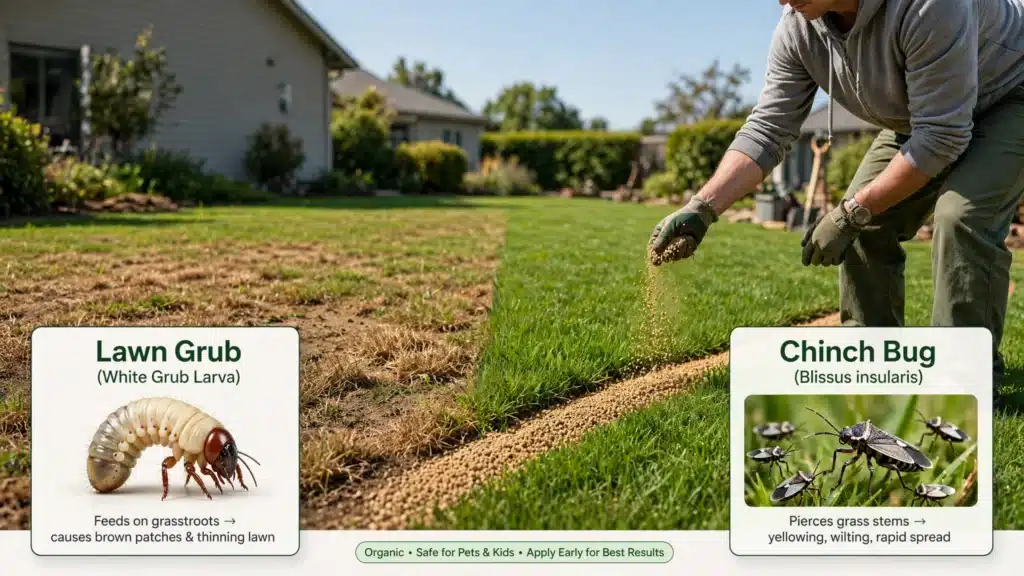
7. Control Lawn Pests Before They Spread

Grubs, chinch bugs, and armyworms can quietly damage a lawn’s root system before you ever notice the surface symptoms. Lawn pest control starts with correctly identifying which of these lawn insects you’re actually dealing with, since each one calls for a different treatment window. A simple tug test — grabbing a handful of grass and pulling — tells you a lot. If it lifts up easily with no resistance, grubs may already be feeding on the roots underneath.

Grub control timing matters: treating in early summer, when grubs are small and near the surface, is far more effective than treating in fall once they’ve burrowed deeper.
 

Aerate and Overseed at Least Once a Year


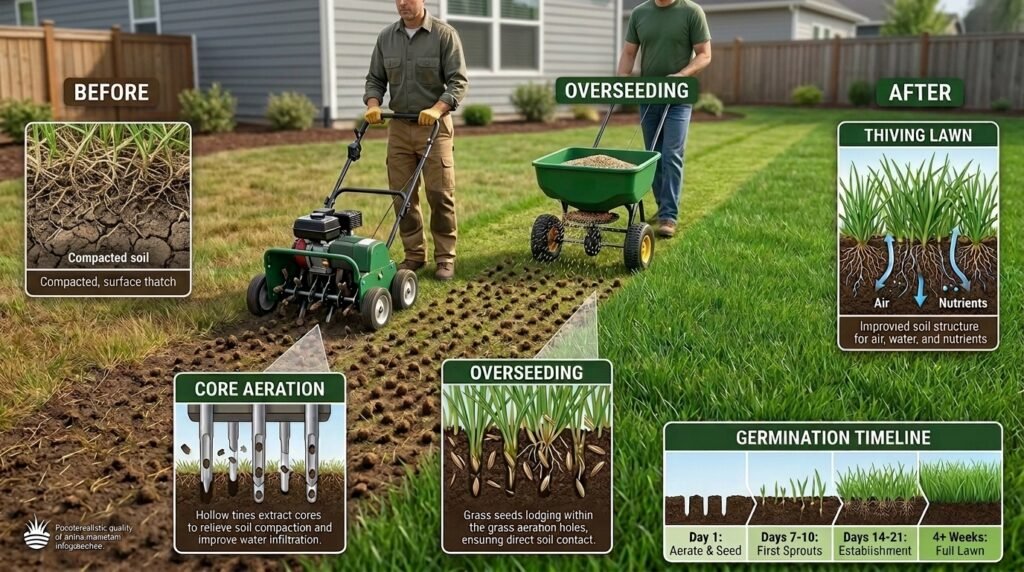
8. Aerate and Overseed at Least Once a Year

Compacted soil is one of the most overlooked reasons a lawn stops improving no matter what else you do. Lawn aeration — pulling small plugs of soil out of the ground — relieves that compaction and lets water, air, and nutrients reach the roots more easily.

Pairing aeration with overseeding fills in thin or bare patches with fresh grass seed at exactly the moment it has the best access to soil contact. If your lawn also has a thick, spongy layer of dead grass sitting on the surface, dethatching first clears the way so seed and water can actually reach the soil instead of sitting on top of it. Together, these two steps handle most lawn repair situations without needing to rip out and re-sod the whole yard. Early fall is generally the sweet spot for cool-season lawns, while late spring works better for warm-season varieties.
 

Match Your Grass Type to Your Climate


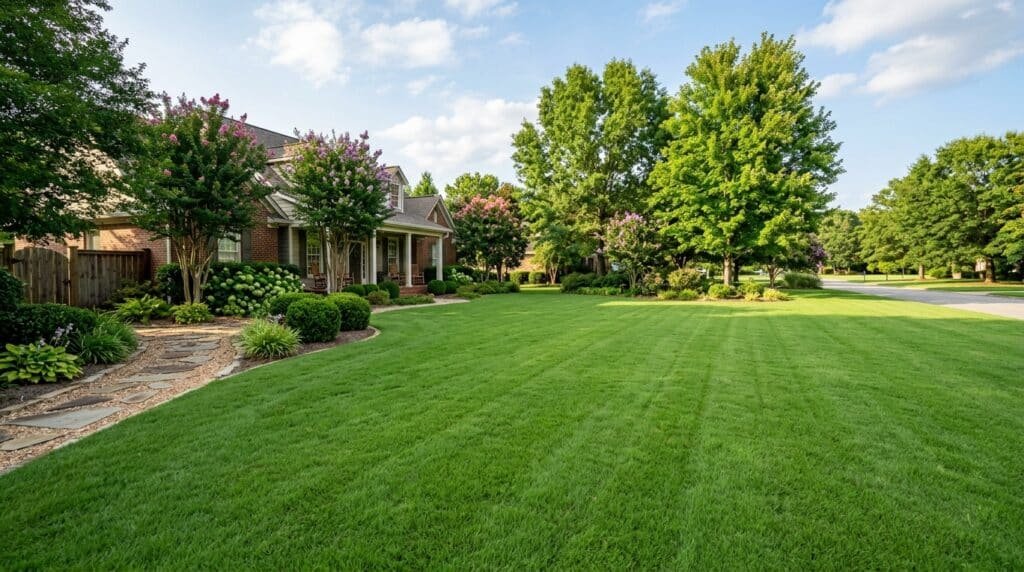
9. Match Your Grass Type to Your Climate

Not all grass behaves the same way, and a lot of “why won’t my lawn grow” frustration comes down to fighting the wrong grass type for the local climate. Warm-season grasses like Bermuda and Zoysia thrive in heat but go dormant and brown in cold winters. Cool-season varieties like Kentucky bluegrass and tall fescue handle cold well but can struggle in extreme summer heat.

Checking your growing zone on the USDA Plant Hardiness Zone Map is a genuinely useful first step before choosing or replacing a lawn, since it tells you which grasses are realistically built to survive your winters.

 

Modern robotic lawn mower cutting grass in a backyard


10. Consider Smart and Robotic Lawn Care Tech

Robotic lawn care maintenance has moved well past the novelty stage. Newer AI lawn mower models use LiDAR and RTK GNSS navigation to map a yard precisely, meaning many no longer require a buried boundary wire at all — a wire-free setup that used to be the biggest barrier to entry for robotic mowing.

Smart irrigation controllers pair naturally with this trend too, adjusting watering automatically based on local weather data instead of a fixed timer. Together, robotic mowers and smart irrigation are quietly becoming the biggest shift in home lawn care since the invention of the sprinkler.

A great lawn seasional plans
Year-Round Lawn Care Calendar

Seasonal DIY Lawn Care Calendar

Season
Key Focus
Primary Maintenance Tasks
Early Spring (Mar - Apr)
Cleanup & Pre-Emergent
Rake debris, test soil pH, apply pre-emergent weed control, service mower blades
Late Spring (May - Jun)
Active Growth & Feeding
Apply organic/slow-release fertilizer, start regular mowing (keep blades high), inspect for grubs
Summer (Jul - Aug)
Heat & Drought Stress
Water deeply and infrequently (early mornings), spot-treat weeds, raise mower deck height
Early Fall (Sep - Oct)
Recovery & Renovation
Core aerate, overseed thin spots, top-dress with compost, apply fall feeding
Late Fall / Winter (Nov - Feb)
Dormancy & Protection
Final low mow to prevent snow mold, clear leaves, winterize irrigation equipment
Building Your Own Lawn Care Calendar

Building Your Own Lawn Care Calendar

Rather than tackling all 10 tips at once, spread them across the year using a simple lawn care calendar — this is really what seasonal lawn care and seasonal lawn services are built around, whether you’re doing the work yourself or hiring it out:

  • Spring lawn care: Pre-emergent weed control, first mow, soil test
  • Late spring: First round of fertilizer, aeration if warm-season grass
  • Summer lawn care: Consistent deep watering, pest monitoring, spot disease checks
  • Fall lawn care: Aeration and overseeding for cool-season lawns, fall fertilizer
  • Late fall: Final mow at slightly lower height, winter prep
  • Winter lawn care: Minimal mowing, equipment maintenance, planning next year’s schedule

If you’re calculating exactly how much lawn you’re working with before ordering sod, seed, or fertilizer, our grass square footage calculator and sod area calculator make quick work of the math.

Lawn Care Maintenance Guide – Mowing, Watering & More

Eco-Friendly Lawn Care Worth Considering

Eco-friendly lawn care and sustainable lawn care aren’t just about skipping chemicals — equipment choice matters too. According to research highlighted by the Utah Department of Environmental Quality, a single gas-powered mower running for one hour can produce roughly as much pollution as a car driven 500 miles, and switching to electric or battery-powered equipment cuts that impact significantly. The same source notes that mowing taller — around 4 inches — builds deeper roots, which naturally improves drought and disease resistance without any extra product.

Composting grass clippings instead of bagging them, choosing native or regionally adapted grass over higher-maintenance varieties, and timing fertilizer applications precisely (rather than “just in case”) all add up to a genuinely lower-impact lawn, without sacrificing how it looks.

Lawn Care Maintenance Guide – Mowing, Watering & More

DIY Lawn Care vs. Professional Lawn Care

Both approaches can produce a great lawn — the right choice depends on time, budget, and how much you enjoy the process itself.

DIY lawn care works well if you have a smaller yard, enjoy the routine, and are willing to learn the basics of mowing height, watering, and fertilizer timing. Professional lawn care services make more sense for larger properties, complex disease or pest issues, or simply if your schedule doesn’t leave room for weekly upkeep.

Lawn maintenance cost varies a lot by region, lot size, and service frequency, and lawn service prices typically climb further if you add extras like aeration, overseeding, or pest treatments to a basic mowing package. Either way, our complete lawn care maintenance guide breaks down what a typical service package includes, so you know what you’re paying for if you do decide to hire help.

Outdoor lawn Equipment Safety

A Quick Word on Outdoor Equipment Safety

Lawn care involves more moving parts — literally — than most people think about, from gas mowers to string trimmers to extension cords for electric tools. It’s worth applying the same “don’t skip the basics” mindset to yard equipment safety that you apply to the lawn itself: store fuel properly, keep blades sharp and guarded, and unplug electric tools before clearing debris.

That same basics-first mindset extends indoors too. A well-maintained lawn won’t matter much if your home isn’t protected from more serious risks — working smoke alarms cut the risk of dying in a home fire by roughly 60%, according to research from the National Fire Protection Association, yet plenty of homes still have alarms that are missing, expired, or sitting on dead batteries. If it’s been a while since you checked yours, our smoke detector calculator tells you exactly how many you need and where to place them — a five-minute check worth doing the same weekend you tune up the mower.

Organic Lawn Care & Smart Tech FAQ

FAQs: Organic Lawn Care And Smart Maintenance

Guidelines for organic soil health, smart robotic mowers, and seasonal turf care packages

Start with a compost top dressing instead of expensive bagged fertilizers to feed soil microbes naturally. Maintain a higher mowing height (3 to 4 inches) to shade out weed seeds, and only treat pests when you have confirmed an active infestation rather than spraying preventive broad-spectrum chemicals.
Most robotic mowers perform best when run in short, frequent sessions—daily or every other day. Cutting tiny micro-clippings frequently allows the grass to mulch down naturally into the soil canopy without creating thatch buildup or stressing the grass blades.
Look for a foundational plan covering regular mowing, seasonal organic fertilization, and annual core aeration. Specialized add-ons like grub control, disease treatments, or overseeding should ideally be added on an as-needed basis to keep costs manageable.
Yes, though it works gradually by building turf density. Organic options like corn gluten meal (as a pre-emergent), manual weeding, and keeping grass tall naturally suppress weed pressure. While slower than synthetic herbicides, consistent organic care creates a thicker lawn that naturally chokes out weeds over a full season.
Minimize foot traffic when turf crowns are frozen or frosted, rake up heavy leaf piles so they don't smother grass blades, and perform a final slightly lower cut before the ground freezes to prevent snow mold and matting under winter snow cover.
Yes. Modern wire-free robotic mowers utilizing LiDAR, vision AI, or RTK GNSS satellite navigation operate without perimeter wires, mapping your property via onboard sensors. Highly complex yards with dense tree canopies or narrow side yards may occasionally benefit from hybrid signal boosters.
A great lawn

Final Thoughts

A great lawn isn’t the result of one big weekend project — it’s a handful of small, well-timed habits repeated across the year. Mow at the right height, water deeply instead of daily, feed on a real schedule, and stay ahead of weeds, pests, and disease before they spread.

Pick one tip from this list you’re not currently doing and start there. Small, consistent changes are what actually separate a good lawn from a great one — not more effort, just better-timed effort.

Leave a Comment

Your email address will not be published. Required fields are marked *

Scroll to Top