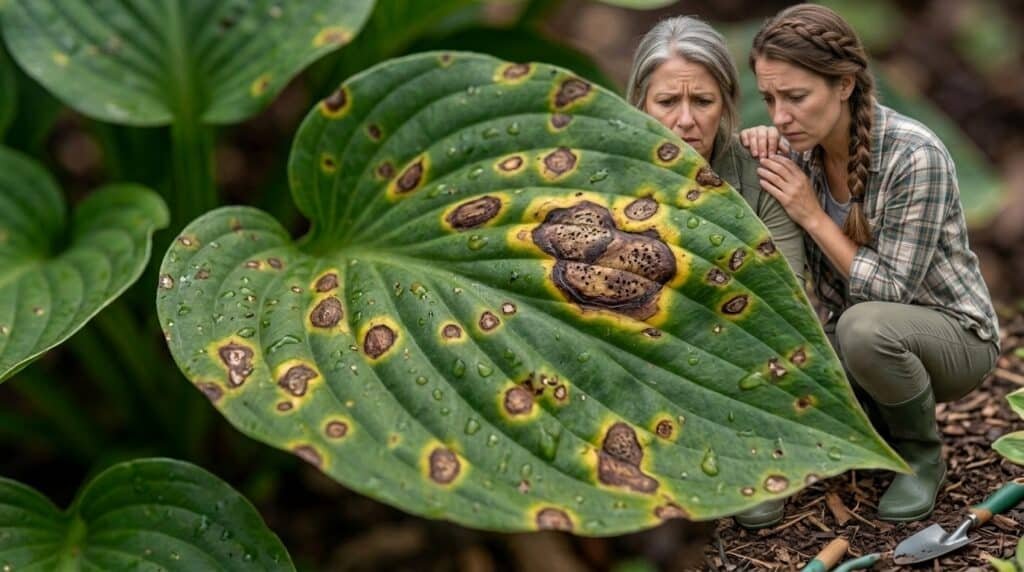
Macro close-up of leaf spot disease lesions with yellow halos on a green leaf
Leaf Spot Disease: Symptoms, Causes, and How to Treat It
🍃

Leaf Spot Diseases: Symptoms, Causes, and How to Treat It

You water your plants on schedule, they get decent light, and then one morning you notice black spots on leaves, or a scatter of brown spots on leaves that definitely weren't there last week. That sinking feeling is familiar to pretty much every gardener eventually, and the good news is leaf spot disease is one of the most common, most manageable problems your plants can have, as long as you catch it early and treat it correctly.
This guide walks through what leaf spot actually is, how to tell it apart from look-alike problems that don't need fungicide at all, and exactly how to treat it on houseplants, garden ornamentals, vegetables, and lawns.
Quick Facts: Tree & Shrub Leaf Spot Impact
📋

Quick Facts: Tree & Shrub Health

Energy Production Disruption Foliar spot infections compromise the health of woody plants and bushes by hampering their capacity to carry out normal photosynthesis.
Minor Physiological Strain The vast majority of leaf spot outbreaks target only a limited portion of the canopy, placing minimal overall stress on the specimen.
Multi-Year Threshold Intervention becomes crucial if an outbreak triggers significant to complete defoliation for two to four consecutive years.
Cumulative Vulnerability Repeated leaf loss across multiple seasons impairs overall growth rates and leaves the plant far more vulnerable to secondary pest pressures and environmental stressors.
Leaf Spot Disease: Symptoms, Causes, and How to Treat It

Leaf Spot Disease: Symptoms, Causes, and How to Treat It

You water your plants on schedule, they get decent light, and then one morning you notice black spots on leaves, or a scatter of brown spots on leaves that definitely weren't there last week. That sinking feeling is familiar to pretty much every gardener eventually, and the good news is leaf spot disease is one of the most common, most manageable problems your plants can have, as long as you catch it early and treat it correctly.
This guide walks through what leaf spot actually is, how to tell it apart from look-alike problems that don't need fungicide at all, and exactly how to treat it on houseplants, garden ornamentals, vegetables, and lawns.
Types of Leaf Spot Disease
What Is Leaf Spot Disease?

What Is Leaf Spot Disease?

Leaf spot disease is a broad, catch-all term for a group of plant diseases that all produce the same basic symptom: distinct spots or lesions on leaf tissue. It's not one single disease with one single cause—it's a category, caused by dozens of different fungal and bacterial pathogens, each with its own scientific name and preferred host plant.
💡 Key Takeaway: That's actually the most important thing to understand up front: treating "leaf spot" effectively means figuring out roughly which type you're dealing with, since fungal and bacterial versions respond to completely different treatments.
What Causes Leaf Spot Disease
What Causes Leaf Spot Disease?

What Causes Leaf Spot Disease?

Leaf spot sits within the broader category of plant fungal disease, alongside relatives like powdery mildew and rust disease on plants, all of which thrive under similar damp, still conditions.
Fungal Leaf Spot Disease The large majority of leaf spot cases are fungal. Common culprits include Septoria (frequent on tomatoes), Cercospora, Alternaria, and Fusarium, plus the fungus behind classic rose black spot, Diplocarpon rosae. Fungal spots often show a defined ring or halo, sometimes with a slightly fuzzy or powdery texture at the center in humid conditions, since humidity and plant disease risk are closely linked, and fungal spores on leaves germinate far more readily once moisture lingers on the surface.
Bacterial Leaf Spot Disease Bacterial leaf spot spreads faster in wet, warm conditions and tends to produce spots with a water-soaked or greasy-looking margin, sometimes with a yellow halo. It's less common than fungal leaf spot overall, but it's important to tell apart, since copper-based treatments work on it while many standard fungicides don't.
Environmental Look-Alikes Not every spot is a disease at all. Overwatering, sunscald, nutrient deficiencies, and even tap water mineral buildup can all create spot-like damage that gets mistaken for leaf spot disease. We'll cover how to tell these apart in the comparison section below, since treating a nutrient problem with fungicide obviously won't fix anything.
Leaf Spot Disease – 7+ Signs Your Plant Is Infected
Common Symptoms: What Leaf Spot Disease Actually Looks Like
🍃

Common Symptoms: What Leaf Spot Disease Actually Looks Like

Symptoms vary somewhat by pathogen and plant, but the visual progression usually follows a specific pattern.
Defined Spotting: Distinct black, brown, gray, or tan spots appear, often featuring a clearly defined edge or ring.
Halo Effect: A characteristic yellow halo frequently surrounds the individual spots.
Symptom Merging: Spots that begin small expand and merge over time, forming larger dead (necrotic) patches across the leaf surface.
Overall Yellowing: Yellowing develops on leaves—especially older or lower growth—alongside visible spotting.
Leaf Loss: Premature leaf drop begins once the infection establishes itself on the host plant.
Progression Matters: Disease trajectory is as important as the spots themselves. A few isolated, non-spreading marks present a minor concern, whereas spots multiplying across the foliage week after week indicate an active outbreak.
Is It Leaf Spot, or Something Else Entirely?
🔍

Is It Leaf Spot, or Something Else Entirely?

This is where a lot of home treatment goes wrong. Several common plant problems look similar to leaf spot at a glance but need a completely different response, and questions like leaf spot vs blight and leaf spot vs sunscald come up constantly for exactly that reason. Think of the chart below as a quick plant disease identification reference for the most common mix-ups:
Looks Like Leaf Spot, But Is Actually...
Key Difference
Sunscald
Bleached or tan patches on the side of the leaf facing direct sun, not scattered randomly; no fungicide needed, just shade adjustment.
Nutrient deficiency
Spotting often follows a specific pattern (leaf margins, between veins) tied to a missing nutrient, and improves with fertilizing, not spraying.
Powdery mildew
A white or gray powdery coating across the leaf surface rather than distinct isolated spots.
Anthracnose
Similar dark lesions, but often follows leaf veins and can affect stems and fruit, not just leaf blades.
Leaf blight
Larger, faster-spreading dead areas that often start at the leaf tip or edge rather than as isolated round spots.
How Leaf Spot Disease Spreads & Houseplant Breakdown
🌱

How Leaf Spot Disease Spreads

Water Splash Vector: Water splashes spores from infected leaves or soil onto healthy foliage, especially during overhead watering or heavy rain.
Wind Dispersion: Air currents carry microscopic spores short distances between nearby susceptible plants.
Tool Contamination: Unsanitized pruning shears and garden tools transfer pathogens directly from an infected plant to a healthy one.
Overwintering Debris: Fallen infected leaves left on top of the soil harbour spores that re-infect the plant season after season.
🪴

Leaf Spot on Houseplants

Leaf spot on indoor plants is especially common because indoor air often combines the two conditions fungi love most: still air and inconsistent humidity.
Plant
What to Know
Pothos
Usually fungal, often tied to overly wet soil or leaves that stay damp after watering.
Philodendron
Both fungal and bacterial forms occur; bacterial spots tend to look water-soaked with a yellow edge.
Monstera
Often linked to overhead watering that leaves standing moisture on the broad leaves.
Dracaena
Frequently shows as tan spots with a darker ring, often worsened by low light and poor airflow.
Calathea
Sensitive to both overwatering and tap water minerals, which can mimic true leaf spot.
Peace lily
Both fungal and bacterial spot are common, usually worsened by consistently wet foliage.
Aloe vera
More often bacterial, showing as soft, water-soaked lesions rather than dry, papery spots.
Leaf Spot on Garden Ornamentals and Trees
🌳

Leaf Spot on Garden Ornamentals and Trees

Roses (Black Spot) Black spot rose disease is probably the single most recognized case of leaf spot on roses, and it's the classic example most people picture. Circular black spots with fringed, irregular edges appear on lower leaves first, and heavily infected leaves usually yellow and drop. It's persistent, but manageable with consistent sanitation and, when needed, a targeted fungicide.
Hydrangea Leaf spot on hydrangea shows up as both fungal and bacterial forms, usually as purple-brown spots that can merge into larger blotches in wet seasons. Improving airflow between plants and avoiding overhead watering helps significantly.
Maple and Oak Trees Tar spot (raised black patches) and various Cercospora and Alternaria infections both show up as leaf spot on maple tree foliage and on oak. On mature trees, this is usually cosmetic rather than a serious health threat, and raking up fallen infected leaves in autumn matters more than any spray.
Camellia and Other Broadleaf Shrubs Leaf spot on camellia and similar evergreen shrubs often traces back to overhead irrigation keeping foliage wet for extended periods, since these plants' dense growth habit already limits airflow.
Leaf Spot on Ornamentals, Trees, Crops, and Lawns
🌳

Leaf Spot on Garden Ornamentals and Trees

Roses (Black Spot) Black spot rose disease is probably the single most recognized case of leaf spot on roses, and it's the classic example most people picture. Circular black spots with fringed, irregular edges appear on lower leaves first, and heavily infected leaves usually yellow and drop. It's persistent, but manageable with consistent sanitation and, when needed, a targeted fungicide.
Hydrangea Leaf spot on hydrangea shows up as both fungal and bacterial forms, usually as purple-brown spots that can merge into larger blotches in wet seasons. Improving airflow between plants and avoiding overhead watering helps significantly.
Maple and Oak Trees Tar spot (raised black patches) and various Cercospora and Alternaria infections both show up as leaf spot on maple tree foliage and on oak. On mature trees, this is usually cosmetic rather than a serious health threat, and raking up fallen infected leaves in autumn matters more than any spray.
Camellia and Other Broadleaf Shrubs Leaf spot on camellia and similar evergreen shrubs often traces back to overhead irrigation keeping foliage wet for extended periods, since these plants' dense growth habit already limits airflow.
🍅

Leaf Spot on Vegetables and Fruit

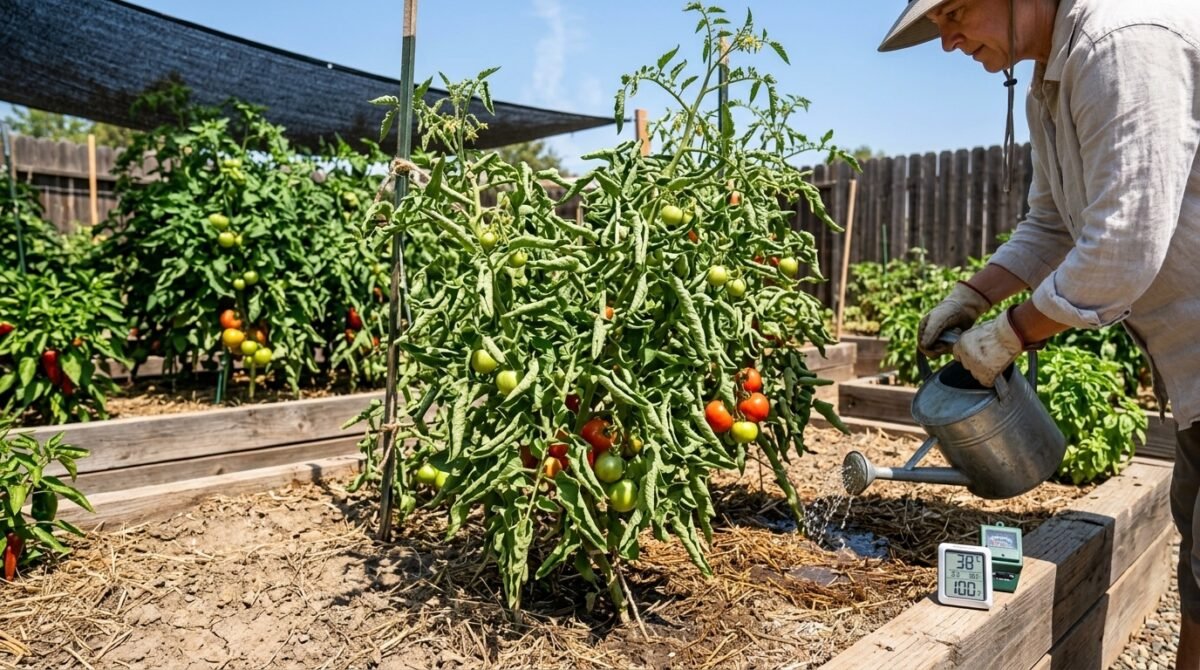
Tomatoes (Septoria Leaf Spot) Septoria leaf spot on tomato is extremely common and shows up as small, circular spots with dark margins and tan centers, usually starting on lower leaves. Left unchecked, leaf spot on tomato plants climbs the plant and can significantly reduce yield by defoliating the plant before fruit fully ripens. If you're specifically seeing leaf spot disease on tomato leaves turning yellow together, that combination usually means the infection has already progressed past the earliest stage, so start treatment right away rather than waiting to see if it clears on its own.
Peppers Bacterial leaf spot is a frequent pepper problem, especially after wet, warm weather, showing as small dark spots that can also appear on fruit, not just leaves.
Strawberries Leaf spots on strawberry plants usually appear as small purple-bordered spots with tan or gray centers. It rarely kills the plant outright but can reduce vigor and fruit quality if it spreads unchecked across the patch.
Citrus and Avocado Backyard citrus and avocado trees can develop fungal leaf spots, especially after cool, wet spring weather. It's usually manageable with sanitation and, in persistent cases, a copper-based spray timed to new growth flushes.
🌱

Leaf Spot on Lawns

Turfgrass Species Impact Gray leaf spot and its close relatives show up on lawn grasses too, not just garden plants. St. Augustine grass is particularly prone to gray leaf spot, while leaf spot disease in bermudagrass and bluegrass tends to show up as small, elongated brown-to-purple lesions rather than the round spots typical on broadleaf plants.
Triggers & Conditions Lawn leaf spot is usually worse after heavy nitrogen fertilization combined with hot, humid weather, since lush, tender grass growth is more susceptible.
How to Treat Leaf Spot Disease, Step by Step
✂️

How to Treat Leaf Spot Disease, Step by Step

If you're wondering how to get rid of leaf spot for good, there's no single magic spray—it's a combination of proper sanitation and targeted treatment:
Prune and Dispose: Remove and dispose of visibly infected leaves rather than composting them, since composting can spread spores right back into your garden.
Improve Air Circulation: Thin dense growth or space plants further apart if crowding is contributing to stagnant, humid conditions.
Adjust Watering Habits: Switch to watering at the soil level rather than overhead, and water in the morning so foliage dries fully before evening.
Sanitize Tools: Disinfect pruning tools between plants; a quick wipe with rubbing alcohol between cuts is enough to prevent cross-contamination.
Targeted Application: Apply a targeted fungicide or bactericide only after you've reasonably identified which type of pathogen you are dealing with.
🧪

Fungicide and Bactericide Basics

Copper-based leaf spot fungicide and spray products work against both fungal and bacterial leaf spot pathogens, making copper fungicide for leaf spot a reasonably safe starting point when you're not 100% sure which type you have.
💡 Targeted Treatments & Spray Schedules: Systemic and contact fungicides labeled specifically for the plant you're treating are more targeted, but require correct disease identification first. Always set up a plant fungicide spray schedule based on the specific product's label rather than a general rule of thumb, since application rates and reapplication windows vary significantly by product concentration and plant type.
Organic and Home Remedies: What Actually Works
🌿

Organic and Home Remedies: What Actually Works

Neem Oil: Prevention vs. Cure Does neem oil cure leaf spot disease? Honestly, no—not once a leaf is already infected. UNH Extension is clear on this: neem oil for leaf spot works by preventing fungal spores from germinating and penetrating new leaf tissue, but it won't reverse damage that's already happened.
Organic Protector for Healthy Foliage Used early and consistently, neem oil can meaningfully slow the spread to healthy leaves, making it a genuinely useful plant disease treatment organic gardeners can rely on—just not a cure for spots that already exist.
Homemade Sprays & Kitchen Remedies Every home remedy for leaf spot on plants, including homemade baking soda sprays, shows some mild antifungal effect in a few small studies. However, the evidence is thin compared to copper fungicide or neem oil, and results remain inconsistent across plant types.
💡 Practical Takeaway: Treat home remedies as a lower-commitment first step for minor cases, not a guaranteed fix for an established infection.
How to Prevent Leaf Spot Disease From Coming Back
🛡️

How to Prevent Leaf Spot Disease From Coming Back

Effective leaf spot prevention comes down to consistent garden hygiene disease prevention habits rather than any single product:
Debris Cleanup: Clean up and dispose of fallen infected leaves each season rather than leaving them on the soil surface.
Smart Irrigation: Water at the base of the plant, not overhead, and water in the morning so foliage dries quickly.
Airflow Spacing: Space plants properly for good airflow instead of crowding them together.
Resistant Varieties: Choose disease-resistant cultivars where available, especially for roses and tomatoes.
Crop Rotation: Rotate vegetable crops each season so the same soil does not build up pathogen pressure year after year.
Companion Planting: Consider companion planting disease resistance strategies, like interplanting susceptible crops with less-susceptible varieties, for an extra layer of protection.
Advanced Tips & Considerations
🌱

Advanced Tips & Considerations

For long-term garden health, you need a smart, comprehensive plan.
Integrated Pest Management (IPM) Integrated Pest Management focuses on long-term prevention. Instead of just spraying chemicals, IPM combines physical, biological, and cultural tactics. You monitor your garden closely, identify the specific leaf spot pathogens, and use the least toxic methods first.
Understanding Local Climate Impact Your local weather dictates how these diseases behave. If you live in a region with very wet springs, you need to be extra vigilant. Planting in raised beds improves drainage and keeps the root zone healthy. A healthy root system gives the plant more energy to fight off foliage diseases.
Consulting with an Expert Sometimes, a disease is too stubborn to handle alone. If a large, valuable shade tree shows signs of severe spotting, call an expert. Certified arborists, like those at SavATree, have the tools to safely spray large canopies. They can accurately diagnose the problem and save your valuable trees.
Home Safety Check While You're in Garden Mode
🚨

Home Safety Check While You're in Garden Mode

If part of your leaf spot routine involves storing fungicide, copper spray, or other garden chemicals in a shed, garage, or utility closet, it's worth a quick check that smoke alarms cover those storage areas too, since many garden chemicals are flammable. According to NFPA research, a working smoke alarm cuts your risk of dying in a home fire by roughly 60%, yet nearly three out of five home fire deaths still happen in homes with no working alarm.
Simple Home Remedies for Spotted Leaves

Simple Home Remedies

Spotted leaves on your plants? You can often treat them with simple home remedies. This guide covers five effective DIY solutions:
Neem Oil Spray An organic fungicide and pesticide that disrupts the life cycle of pests and fungal spores.
Baking Soda Solution An inexpensive spray that raises the pH on leaves, creating an environment where fungi cannot survive.
Copper Fungicide A powerful, broad-spectrum treatment that kills fungal and some bacterial spots on contact.
Pruning Physically removing and disposing of infected leaves to stop the disease from spreading.
Sulfur Fungicide A natural dust or spray that prevents fungal spores from germinating, ideal for issues like powdery mildew.
Frequently Asked Questions - Leaf Spot Disease

FAQs: Leaf Spot Disease

Clear answers to common questions about diagnosing, treating, and preventing leaf spot diseases.
Most commonly a fungal or bacterial leaf spot infection, though environmental issues like sunscald, nutrient deficiency, or mineral buildup from tap water can create similar-looking spots without any pathogen involved.
Remove infected leaves, improve airflow, switch to base-level watering instead of overhead, and apply neem oil or a copper-based organic fungicide early and consistently as a preventive measure on the remaining healthy foliage.
Yes, remove and dispose of visibly infected leaves rather than composting them, since this reduces the amount of active spore material on the plant and nearby soil.
Distinct black, brown, gray, or tan spots on leaves, often with a defined ring or edge and sometimes a yellow halo. Spots can merge into larger dead patches as the infection progresses.
Mainly through water splashing spores from infected leaves or soil onto healthy foliage, plus wind, contaminated tools, and fallen infected leaves left on the ground.
Yes, particularly to the same species or close relatives growing nearby. Isolating a visibly infected houseplant and disinfecting tools between plants both help limit spread.
Yes, in most cases. The same water-splash, wind, and contaminated-tool pathways that spread it between plants of the same species can sometimes carry it to closely related species growing nearby.
Rarely outright, especially in mature, otherwise healthy plants. The bigger risk is repeated defoliation weakening the plant over time or reducing fruit and flower production, not sudden death from the disease itself.
Leaf spot disease in vegetable garden settings responds to the same core steps as any other plant: remove infected leaves, water at the soil level instead of overhead, rotate crops yearly, and apply a copper-based leaf spot treatment if sanitation alone isn't controlling the spread.
Start with cultural fixes, better airflow, less overhead watering, and removing infected leaves, before reaching for a product. If you do need one, choose a fungicide or neem oil formula explicitly labeled safe for indoor/houseplant use.
Copper-based fungicides are a common, broadly effective choice for tomato leaf spot, including Septoria. Always follow the specific product's label instructions for tomato plants, since rates and timing vary by brand.
This varies by product, but many fungicides are labeled for reapplication every 7 to 14 days during active disease pressure. Check your specific product's label rather than assuming a universal schedule.
Almost certainly rose black spot, a common fungal disease (Diplocarpon rosae) that thrives in humid conditions with wet foliage. Improving airflow, watering at the base, and removing infected leaves are the first steps before reaching for fungicide.
Clean up fallen infected leaves each season, water at the base rather than overhead, space plants for airflow, and choose disease-resistant varieties where they're available.
No. Neem oil prevents fungal spores from germinating on healthy tissue, which slows the spread, but it doesn't reverse damage on leaves that are already infected.
Leaf spot creates distinct, often ringed lesions from an active pathogen, while nutrient deficiencies typically cause more uniform discoloration patterns tied to leaf position or vein structure, and improve with fertilizing rather than fungicide.
There's no fixed timeline, since existing spots won't disappear, but new spread should visibly slow within one to two weeks of consistent treatment and improved watering habits. Full recovery depends on removing enough infected material and correcting the underlying conditions.
Roses, tomatoes, hydrangeas, and maples are among the most commonly affected garden plants, while pothos, philodendron, and peace lily are frequent houseplant cases, largely due to how often their growing conditions stay damp and still.
It can meaningfully reduce yield if left untreated, since heavy defoliation limits the plant's ability to support fruit development, but it's rarely fatal to the plant itself if caught and managed early.
Wipe blades with rubbing alcohol or a diluted bleach solution between cuts on different plants, and let tools air dry fully before storing them.
Fungal spots often show a defined dry ring, sometimes with a slightly fuzzy texture in humid conditions. Bacterial spots tend to look water-soaked or greasy at the margin. The distinction matters because copper treatments and some fungicides work differently against each type.
No. Leaf spot produces distinct, usually round lesions, while blight causes larger, faster-spreading dead areas that often start at a leaf's tip or edge rather than as isolated spots.
The Bottom Line - Leaf Spot Disease
📌

The Bottom Line

Leaf spot disease looks alarming the first time you notice it, but it's genuinely one of the more manageable plant problems out there once you know what you're looking at. Identify roughly which type you're dealing with, remove what's already infected, fix the damp, still conditions that let it spread, and treat proactively rather than hoping it resolves on its own.

Leave a Comment

Your email address will not be published. Required fields are marked *

Scroll to Top