10 Plants That Stop Mosquitoes: Your Guide to Outdoor Enjoyment
Key Statistics
Major Diseases
- Malaria causes 249 million cases and 608,000 deaths yearly, mostly in children under 5, who
- Dengue affects 3.9 billion people at risk, with 96 million symptomatic cases and 40,000 deaths annually. who
- Other illnesses like Zika, chikungunya, and yellow fever add hundreds of millions more infections. worldmosquitoprogram
Regional Impact
Why Mosquitoes Are a Problem
- Masking your scent
- Confusing bug senses
- Blocking their tracking systems
- Making them leave the area
Important: Just Planting Isn’t Enough
- Burning sprigs
- Using extracted oils
- Placing plants near you
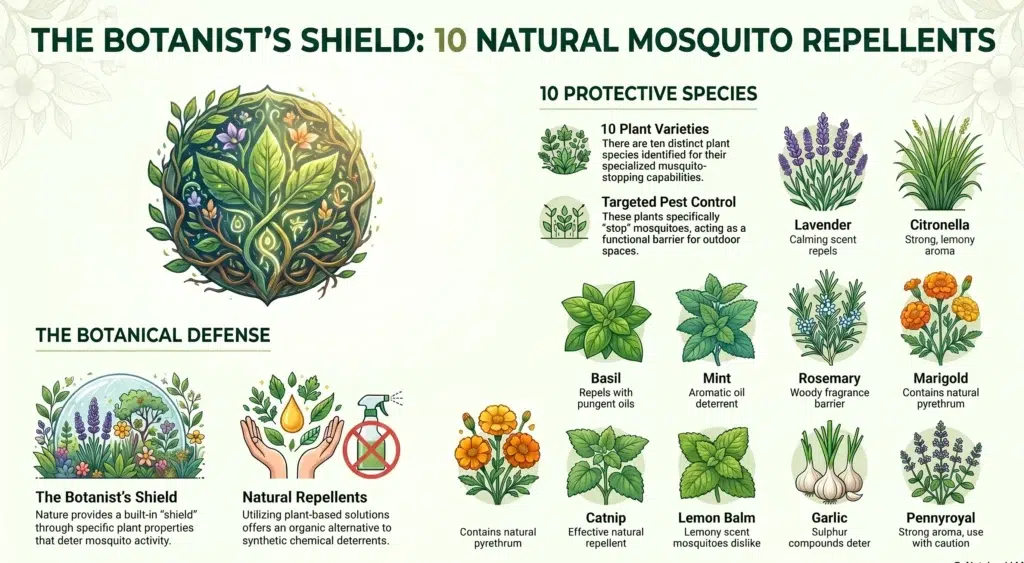
10 Best Mosquito-Fighting Plants
1. Citronella Grass
- Plant in sunny spots
- Crush leaves on skin.
- Rub on arms and legs.
- Plant in large pots
- Grows 3-6 feet tall
- Needs full sun
- Dies in frost
- Very effective
- Strong lemon smell

2. Lavender
- Plant near seating areas
- Crush flowers
- Burn dried stems
- Grow in pots
- Loves sunshine
- Drought tolerant
- Pretty purple flowers
- Smells wonderful
- Easy to grow

3. Marigolds
- Plant in pots
- Place near the doors
- Plant near patios
- Scatter throughout the garden
- Yellow and orange flowers
- Annual plant
- Easy to grow
- Also stops flies
- Musky scent repels bugs.

4. Catnip
- Plant in containers
- Crush leaves for skin use.
- Dry and burn sprigs
- Grow in clusters
- Mint family plant
- Attracts cats
- Very strong smell
- More effective than DEET (in lab tests)
- Grows quickly

5. Rosemary
- Throw sprigs on the grill.
- Burn in a fire pit
- Crush before guests arrive.
- Plant in containers
- Culinary herb
- Loves hot, dry weather
- Evergreen plant
- Works well with heat
- Smoke travels far

6. Basil
- Plant in sunny clusters
- Crush before gatherings
- Place near seating
- Keep in pots
- Culinary herb
- Loves sun
- Quick growing
- Easy care
- Very fragrant

7. Lemon Balm
- Crush the leaves often and rub them on your skin to help keep mosquitoes away.
- Plant in containers
- Grow near doors
- Keep in pots, as this plant spreads easily.
- Mint family plant
- Easy to grow
- Handles shade
- Lemon balm can spread quickly and take over your garden. According to ttseeds.com, it is best to grow lemon balm in containers and trim it often. This helps keep your garden balanced and tidy.
- Container planting is best.

8. Peppermint
- Crush leaves
- Make a diluted oil spray.
- Plant in containers
- Dry for burning
- Very strong smell
- Hard to grow near other plants
- Spreads aggressively
- Use containers only
- Very effective

9. Lemon Eucalyptus
- Use the extracted oil spray.
- Plant for mild help
- Apply diluted oil to skin.
- Combine with other methods.
- Oil is most effective (OLE)
- A plant alone is weak.
- Warm-weather plant
- Sunny location needed
- Professional oils work best.

10. Sage
- Burn dried bundles
- Crush fresh leaves
- Throw on fires
- Plant near seating
- Culinary herb
- Gray-green leaves
- Easy to grow
- Smoke works great
- Pretty plants too

Summary of plants That Resist Mosquitoes
| Citronella | Lemon scent | Crush leaves, plant near you |
| Lavender | Pretty flowers | Crush, burn dried |
| Marigolds | Easy growing | Plant near doors |
| Catnip | Most powerful | Crush, burn, make oil |
| Rosemary | Grill use | Throw on fire |
| Basil | Culinary use | Plant in clusters |
| Lemon balm | Container plant | Crush leaves often |
| Peppermint | Oil making | Use in containers |
| Lemon eucalyptus | Oil use | Use extracted oil |
| Sage | Burning | Use dried bundles |

Create a Bug-Free Garden Step By Step
Step 1: Pick Your Spot
Step 2: Choose Your Plants
Step 3: Place Strategically
- Near doorways
- By windows
- Around seating areas
- Near grills
- On patios
- Near decks
- Tall plants in the back
- Medium plants in the middle
- Short plants in front
Step 4: Use the Heat
How to Care for Plants That Stop Mosquitoes
Sunlight
Water
- Water in the mornings
- Water at the soil level
- Don’t over-water
- Avoid standing water
- Check the soil with your finger. Only water when it feels dry about an inch below the surface. This keeps the roots healthy.
Trimming
- Prune often
- Crush leaves gently
- Release more oils
- Encourage new growth
- Trim your plants every 2-3 weeks. This keeps them healthy and full and helps them repel mosquitoes more effectively.
Stop Standing Water
- Empty containers regularly
- Fix drainage problems
- Clean gutters
- Fill low spots
- Remove bird baths
- Cover water barrels
Real Talk: What Plants Can’t Do
Plants Alone Don’t Work
- Release oils slowly
- Oils weaken fast
- Don’t cover large areas.
- Need crushing to work.
- Short-lasting effects
For the best results, use mosquito-repelling plants along with other steps. Experts say removing standing water is the most effective way to prevent mosquitoes. You can also use screens on your windows.
- Wear light clothing
- Use fans (wind confuses bugs)
- Call professionals if needed.
Best Results
Use Safe Plants
For Skin Use
- Test on a small skin patch first
- Wait 15 minutes
- Check for reactions
- Then use more
- Peppermint oil (high dose)
- Pennyroyal (toxic!)
Kids Friendly
- Watch young kids
- Keep oils out of reach.
- Teach kids not to eat plants.
- Supervise plant touching
- Wash your hands after handling.
Avoid Pennyroyal
Wondering which mosquito-repelling plant works best?
Simple Homemade Mosquito Spray
Recipe
- 1 cup carrier oil (coconut or olive)
- 10-15 drops of plant essential oil
- Spray bottle
- Pour carrier oil into the bottle.
- Add essential oil
- Shake well
- Spray on exposed skin
- Reapply every 2-3 hours.
The Pest Experts' Secret Weapon for Repelling Mosquitoes
The ‘Pest Expert’ Secret
What You’ll Need:
Coffee Grounds: 2 teaspoons.
Ground Cinnamon: ½ teaspoon.
Whole Cloves: A small handful.
Aluminum Foil: Shaped into a small bowl.
Step-by-Step Guide:
Form the Foil Bowl: Wrap a piece of foil over the bottom of a jar or glass to create a sturdy “cup” shape.
Layer the Ingredients: Place the coffee, cinnamon, and cloves into your foil bowl and mix them together.
Apply Heat: Place the foil bowl over a low flame on your stove for about one minute.
How it Works: The gentle heat releases the essential oils and volatile compounds in the spices. Mosquitoes and roaches find this concentrated “smoke” unbearable and will quickly exit the area.
FAQs: 10 Plants That Stop Mosquitoes
Q: Do mosquito-repelling plants really work on their own?
A: While plants that resist mosquitoes contain compounds that deter insects, simply having them in your garden is often not enough for comprehensive mosquito control. Their effectiveness is limited unless their essential oils are actively released and concentrated, such as by crushing leaves, burning sprigs, or using extracted oils.
Q: Which plant is considered the most effective at repelling mosquitoes?
A: Citronella grass is widely known, but catnip has shown remarkable effectiveness in lab trials, sometimes even more potent than DEET. Oil of lemon eucalyptus (OLE) is also highly regarded and recommended by the CDC.
Q: Can I make my own mosquito repellent spray from these plants?
A: Yes, you can make homemade sprays by steeping crushed leaves in a carrier oil or boiling sprigs in water and then straining the liquid. However, homemade sprays may not be as concentrated or long-lasting as commercial products and their effectiveness can vary. Always dilute essential oils properly if using them.
Q: Are these plants safe for pets and children?
A: Most culinary herbs mentioned are generally safe, but some plants or their highly concentrated essential oils can be toxic to pets or if ingested by children. Always research specific plant toxicity and exercise caution, especially with essential oils.
Q: How should I arrange plants to deter mosquitoes most effectively?
A: For best results, plant plants that resist mosquitoes in clusters around seating areas, doorways, and windows. Using containers allows for strategic placement and mobility. Consider creating a layered defense with plants of varying heights.
Final Tips for Success
Create Your Defense
- Pick mosquito plants ✓
- Arrange strategically ✓
- Remove standing water ✓
- Use fans or screens ✓
- Wear light clothes ✓
- Apply oils when needed ✓
Make It Easy
- Use containers
- Group the same plants
- Water on a schedule
- Crush leaves before guests.
- Burn sprigs on the grill.
- Keep oil spray ready.
Key Takeaways
Health & Safety Disclaimer
Medical Information
The information in this guide about mosquito-borne diseases and health risks is for general awareness only.
Important:
- ⚠️ If you suspect mosquito-borne illness, consult a healthcare provider
- ⚠️ For disease concerns, contact your local health department
- ⚠️ Don’t rely on plants alone for disease prevention
- ⚠️ Use CDC-recommended repellents (DEET, Picaridin, OLE) if traveling to high-risk areas