Fertilizer Selector: How To Choose The Right Fertilizer For Every Plant
Standing in the fertilizer aisle, staring at a wall of bags covered in numbers like 10-10-10 and 24-0-6, is one of the most quietly overwhelming moments in gardening. Nobody explains what those numbers actually mean, and picking the wrong one can do more harm than good.
Here’s the good news: choosing fertilizer doesn’t have to be a guessing game. Once you understand a few basics — what NPK actually stands for, when to use organic versus synthetic, and what your specific plants need — the whole decision gets a lot simpler.
This fertilizer guide works like a fertilizer selector in article form — think of it as a fertilizer buying guide you can actually follow. If you’ve been asking yourself “what fertilizer do I need?” or searching for the best fertilizer for garden use in general, tell us what you’re growing, and we’ll walk you straight to what you need — whether that’s a lawn feed, a fix for houseplants, or the right fertilizer for tomatoes.

Why Picking The Right Fertilizer Actually Matters
Fertilizer isn’t a “more is better” product. Over-apply it, and you can burn roots, pollute nearby water, or push weak, disease-prone growth. Under-apply it, and your plants quietly struggle without ever quite telling you why.
The single best first step, before you even think about how to choose fertilizer, is a soil test. It sounds like extra effort, but it’s the only way to know what your soil already has plenty of — and what it’s actually missing.
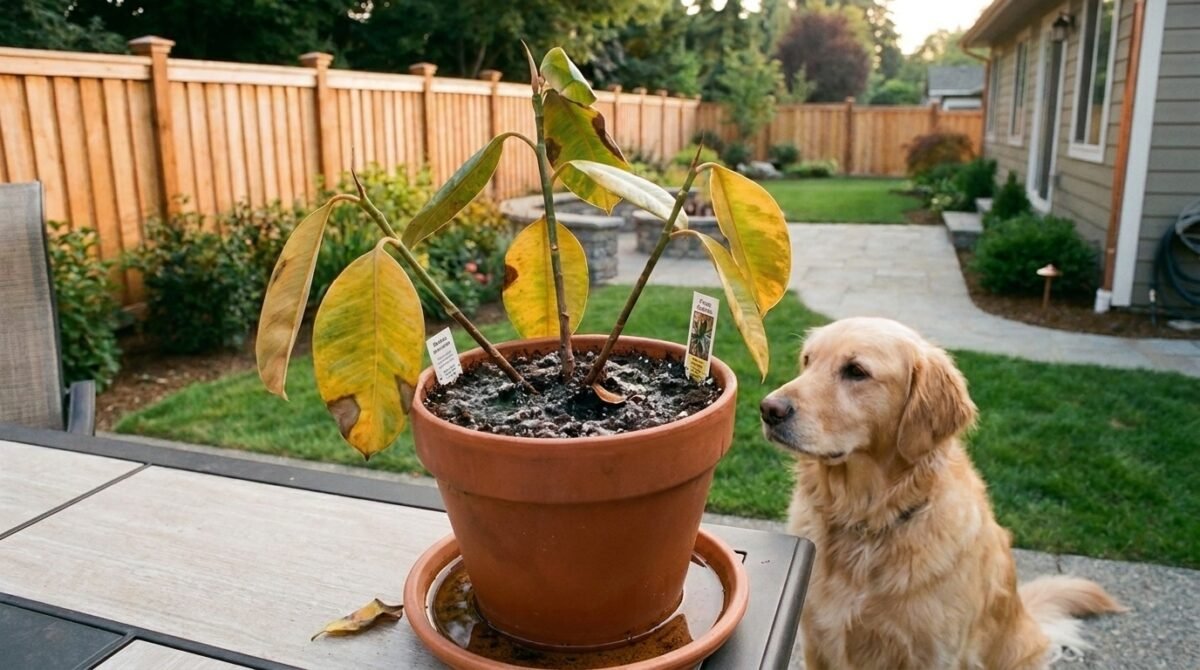
If you’ve noticed odd symptoms in your existing plants, our post on why plant leaves are turning yellowish is worth a read before you fertilize, since nutrient deficiency is only one of several possible causes.
[Image: Photorealistic soil test kit with soil sample and small vials on a wooden garden table]

How To Test Soil Before Fertilizing
A basic soil test tells you your soil’s pH and existing nutrient levels, which takes all the guesswork out of choosing a fertilizer. Most home test kits are inexpensive, though lab tests through your local extension office give more precise results.
Once you know what your soil actually needs, you can pick a fertilizer that fills the gap instead of guessing — or worse, adding nutrients your soil already has plenty of. A soil test is also the fastest way to confirm whether stunted or pale growth is genuinely a nutrient deficiency, rather than a watering or light problem. If you’re not sure what kind of soil you’re working with in the first place, our soil type guide is a useful starting point.
Adjusting Fertilizer For Your Soil Type
Your soil’s texture changes how fertilizer behaves once it’s applied, so it’s worth adjusting your approach rather than using a one-size-fits-all routine.
- Fertilizer for clay soil: Clay holds onto nutrients longer, so lighter, less frequent applications usually work better than a heavy single dose.
- Fertilizer for sandy soil: Sandy soil drains fast and takes nutrients with it, so smaller, more frequent feedings — or a slow-release option — help nutrients actually stick around.
- Fertilizer for compacted soil: Compacted soil struggles to absorb anything well. Aerating first helps fertilizer actually reach the root zone instead of sitting on the surface.
- Fertilizer after aeration: This is actually the ideal time to feed a lawn — the holes left behind let nutrients travel straight down to the roots instead of running off.
🌿 Fertilizer Reference
Find the best fertilizer variations and matching schedules for your garden setup

Understanding NPK: What Those Numbers Actually Mean
Consider this section your quick fertilizer NPK guide. Every fertilizer bag has three bold numbers, like 10-10-10 or 24-0-6. This is the NPK ratio, and it’s the single most important piece of information on the label.
- N (Nitrogen): Fuels leafy, green growth.
- P (Phosphorus): Supports strong roots, flowers, and fruit development.
- K (Potassium): Builds overall plant resilience — think disease resistance and stress tolerance.
Together, nitrogen, phosphorus, and potassium are known as macronutrients — the nutrients plants need in the largest quantities. Fertilizers can also include micronutrients like iron, zinc, and manganese in smaller amounts, which round out overall plant nutrition and correct more subtle deficiencies a basic NPK blend won’t fix.
According to Clemson Cooperative Extension’s guide to reading fertilizer labels, the three numbers represent the percentage by weight of nitrogen, phosphate, and potash in the bag, and the ratio between them tells you which nutrient the fertilizer is emphasizing.
How To Read NPK Numbers On A Fertilizer Bag
Here’s a simple way to think about it: a 10-10-10 fertilizer is “balanced,” offering equal parts of all three nutrients. A 24-0-6 is nitrogen-heavy, ideal for leafy growth but light on the nutrients roots and flowers need most.
Penn State Extension explains that you can calculate a fertilizer’s ratio by dividing each number by the smallest one — so an 18-6-6 fertilizer simplifies to a 3-1-1 ratio, meaning three parts nitrogen for every one part phosphate and potash.

Organic Vs Synthetic Fertilizer: Which One Should You Choose?
Think of this as your quick organic fertilizer guide alongside the synthetic side of the equation. This is one of the most common questions gardeners ask, and honestly, there’s no single “better” answer — it depends on your goals and how much you’re prioritizing long-term soil fertility.
Organic fertilizer comes from natural sources like compost, manure, bone meal, and fish emulsion. It releases nutrients slowly as soil microbes break it down, which means it also improves soil health over time.
Synthetic fertilizer is manufactured to deliver nutrients quickly in an exact, measurable ratio. It works faster, but it doesn’t build soil structure the way organic options do.
According to Nebraska Extension in Lancaster County, organic products are derived from living organisms and materials, while synthetic products are manufactured and don’t contain carbon — and both can supply the nutrients your plants need, just through very different mechanisms.
A simple way to decide:
- Want long-term soil health and don’t mind slower results? Go organic.
- Need a quick fix for a visibly struggling plant? Synthetic works faster.
- Many experienced gardeners use both — organic for baseline soil health, synthetic for targeted boosts.
For lawns specifically, our organic fertilizer for lawn guide goes deeper into product options and timing.

Slow-Release Vs Quick-Release Fertilizer: Liquid Vs Granular
This section works as a mini slow release fertilizer guide, covering how each of the main types of fertilizer actually behaves once it hits the soil. Beyond organic and synthetic, these fertilizer types also differ in how quickly they release nutrients into the surrounding soil nutrients pool.
- Slow-release (controlled-release) fertilizer: Feeds gradually over weeks or months. Great for a “set it and forget it” approach.
- Quick-release (water-soluble) fertilizer: Delivers nutrients almost immediately, ideal for a fast correction.
- Granular fertilizer: Solid pellets spread by hand or spreader, often slow-release.
- Liquid fertilizer: Mixed with water and applied directly, generally fast-acting.
Liquid fertilizer vs granular really comes down to convenience versus control. Granular fertilizer is easier for large areas like lawns, while liquid fertilizer gives you more precise, immediate feeding for containers and houseplants.

Best Fertilizer By Plant Type
Different plants have very different appetites. Here’s how to match fertilizer to what you’re actually growing.
Fertilizer For Vegetables And Tomatoes
Good vegetable garden fertilizer almost always leans toward more phosphorus and potassium once plants start flowering, since NPK for vegetables works differently than the nitrogen-heavy blends you’d use on leafy greens. Vegetable gardens, especially fruiting crops like tomatoes, need a fertilizer with solid phosphorus and potassium to support fruit development, not just leafy growth. If you’re hunting for the best fertilizer for tomatoes specifically, look for something like a 5-10-10 blend once flowering starts.
If you’re growing your own black krim tomatoes, timing your fertilizer to their growth stage makes a real difference in fruit size and flavor. According to the University of Georgia Extension, vegetables generally benefit from fertilizer applied at planting time, with a soil test guiding exactly how much and when to add more later in the season.
Lawn Fertilizer Guide
Lawn fertilizer is its own category, and getting the lawn fertilizer NPK ratio and timing right makes the difference between a thick, green lawn and a patchy one. Finding the best lawn fertilizer for your specific fertilizer for grass type matters more than brand loyalty. Wondering exactly when to fertilize lawn areas for the best results? Our best time of year to fertilize grass guide covers exact seasonal timing, and our lawn care maintenance resource rounds out the rest of your lawn routine.
- New sod or seed: Needs a higher phosphorus fertilizer to support root establishment.
- Established cool-season lawns: Typically benefit most from fall nitrogen applications.
- Established warm-season lawns: Usually fed more heavily through late spring and summer.
Fertilizer For Flowering Plants And Roses
When it comes to NPK for flowers, flowering plants generally want a flower fertilizer with a higher middle number — the phosphorus that fuels blooms. These are often labeled as “bloom booster” fertilizers, and they’re worth using once buds start forming rather than throughout the whole growing season.
Fertilizer For Fruit Trees And Shrubs
Choosing the right fertilizer for trees and shrubs needs a more measured approach than fast-growing annuals. Feed in early spring as new growth begins, and avoid fertilizing late in the season, which can encourage tender growth that won’t survive winter.
Fertilizer For Houseplants And Potted Plants
Container-grown plants can’t reach out for extra nutrients, so regular light feeding matters more here than almost anywhere else. A diluted liquid fertilizer every few weeks during the growing season works well for most houseplants. Our indoor plant care calculator can help you build a feeding routine tailored to your specific plants.
Fertilizer For Raised Beds
Raised beds often use lighter, richer soil mixes that can deplete faster than in-ground gardens. If you’re building or maintaining one, our soil calculator for raised garden beds and build a raised bed yourself guides pair naturally with a solid feeding schedule.
[Image: Photorealistic raised garden bed with thriving vegetables and a bag of granular fertilizer nearby]

Fertilizer Application: Rate, Schedule, And Avoiding Fertilizer Burn
Even the right fertilizer can cause problems if it’s applied incorrectly.
- Always follow the label’s application rate. More isn’t better — it’s how fertilizer burn happens.
- Water after applying granular fertilizer, which helps nutrients reach the root zone instead of sitting on the surface.
- Never fertilize dry, stressed soil. Water first, then feed.
- Stick to a consistent fertilizer schedule rather than random, occasional feeding — most plants respond better to steady, moderate nutrition.
Fertilizer burn shows up as browned, crispy leaf edges, often within a day or two of over-application. If you spot it, water deeply to help dilute and flush excess fertilizer from the soil.

Common Fertilizer Mistakes To Avoid
- Applying fertilizer without a soil test, essentially guessing at what your plants need.
- Over-fertilizing container plants, since excess salts have nowhere to drain in a small pot.
- Using high-nitrogen fertilizer late in the season, which pushes tender growth right before frost.
- Ignoring the NPK ratio entirely and grabbing whatever bag is on sale.
- Fertilizing dry soil, which increases the risk of root burn.
🌿 Frequently Asked Questions
What type of fertilizer do I need for my garden?
How do I choose the right fertilizer for plants?
How do I read NPK numbers on a fertilizer bag?
What NPK ratio is best for lawn grass?
What's the best fertilizer for a vegetable garden as a beginner?
Organic fertilizer vs synthetic fertilizer — which is better?
Slow release vs quick release fertilizer for lawn — which should I use?
Liquid fertilizer vs granular fertilizer for plants — what's the difference?
How often should I fertilize my lawn?
When should I fertilize my vegetable garden?
What's the best fertilizer for flowering plants?
What's the best fertilizer for fruit trees?
How do I test soil before fertilizing?
What's a good fertilizer application rate for gardens?
What's the best fertilizer for raised garden beds?
Is there a fertilizer for potted plants guide I should follow?
What's a good fertilizer for houseplants?
How do I use a fertilizer selector tool?
What fertilizer should I use based on a soil test?
How do I choose fertilizer based on NPK ratio?
Final Thoughts
Choosing the right fertilizer really comes down to two things: knowing what your soil already has, and matching the NPK ratio to what your plant actually needs. Skip the guesswork, start with a soil test, and you’ll stop wasting money on fertilizer your garden didn’t even need.
Once you’ve got the basics down, feeding your garden becomes second nature — a quick glance at the NPK numbers, and you’ll know exactly what’s in the bag and why it matters.
If you’re building out your growing space this season, pair this guide with our soil calculator for pots or garden harvest projection calculator to plan your feeding schedule around what you’re actually growing.
Sources & Further Reading: