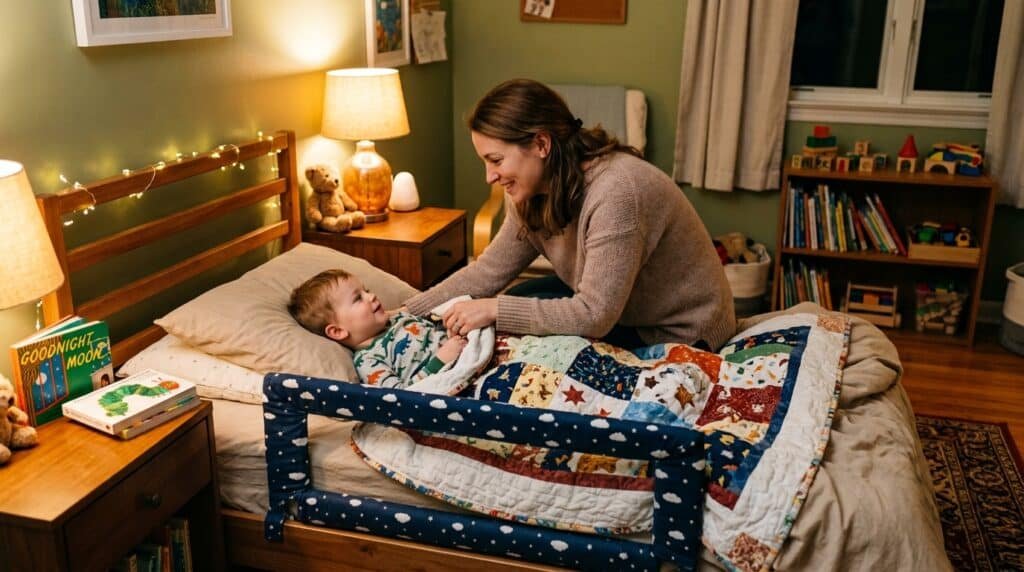
DIY Toddler Bed Rail

DIY Toddler Bed Rail: A Safe & Affordable Guide

Transitioning your child from a crib to a toddler bed is a major milestone. While it’s an exciting time, many parents worry about their child rolling out of bed. A DIY toddler bed rail is an effective, budget-friendly solution to keep your little one safe and sound.

Store-bought bed rails can be expensive, but building your own is a simple project that can save you a lot of money. With just a few basic materials, you can create a sturdy and reliable bed rail that gives you peace of mind.


This guide will walk you through how to build a DIY toddler bed rail from scratch. We’ll cover the tools and materials you’ll need, provide easy step-by-step instructions, and share important safety tips to ensure your child’s bed is secure. Get ready to build a safe and cozy space for your toddler.

Why You Need Bed Rails

Making the Move from Crib to Bed Less Stressful

Why toddler bed rails matter for safety and peace of mind

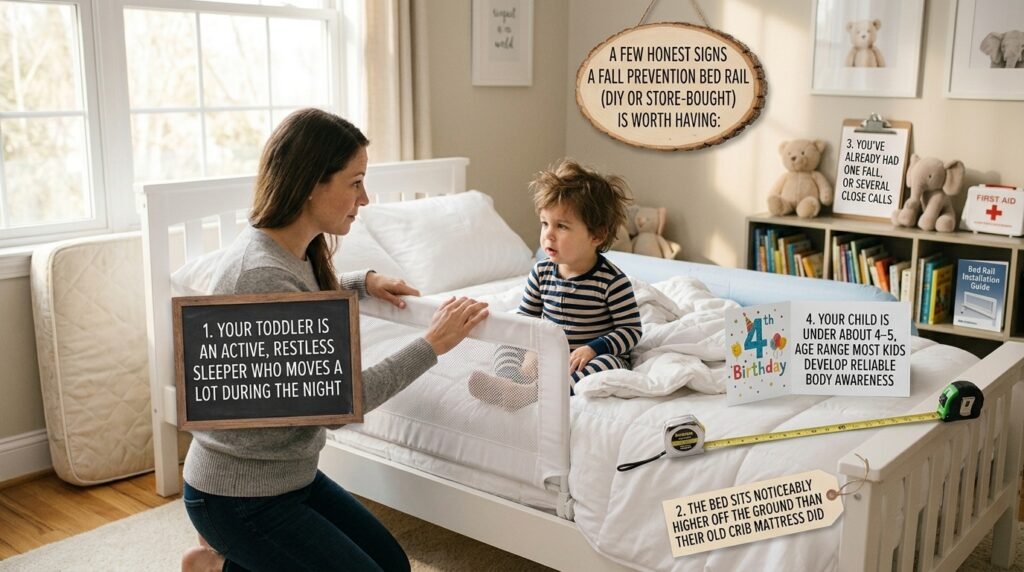
When a child moves out of a crib, they lose the high walls that previously kept them contained. A bed rail acts as a protective barrier, preventing accidental falls at night. Knowing your child is secure allows everyone in the house to sleep better.

Common nighttime worries parents face

Parents frequently worry about their child’s restless sleeping habits. Toddlers are notorious for tossing and turning, which significantly increases the risk of them tumbling onto the floor. This anxiety often leads to parents waking up multiple times a night to check on their child.

How a DIY solution can solve both safety and budget concerns

Purchasing multiple safety gadgets can quickly add up on your credit card. A DIY bed rail provides a custom-fit safety solution at a fraction of the retail cost. Excellent money management involves finding practical ways to reduce everyday costs, and a weekend DIY project is a perfect way to keep your savings goals on track.

Converting a Child Craft Crib to a Toddler Bed

Top 10 Bed Rails of 2026

  1. Best for Cribs — Child Craft Toddler Guard Rail: Converts in minutes.
  2. Most Portable — Regalo My Cot: Packs down to diaper-bag size.
  3. Best for Queen Beds — Hiccapop BedRail: A solid buy at around $25.
  4. Most Stylish — Pottery Barn Bed Rail: Available in five colors, including wood options.
  5. Best for Travel — JetKids BedBox: Suitcase and sleep surface in one.
  6. Best Adjustable — Milliard Bed Rail: Grows with your child.
  7. Best for Bunk Beds — Dream On Me Extra Tall: 20 inches high; works for adults too.
  8. Best Budget Pick — Summer Infant Double Safety: Under $20.
  9. Best for Co-Sleeping — DockATot Deluxe+: Soft, contained, and cozy.
  10. Best for Trundle Beds — Milliard Low-Profile: Slim enough to slide underneath.
A playful toddler climbing a crib while father relaxes in a cozy, warmly lit bedroom.

What Is a Toddler Bed Rail and How Does It Work?

Simple explanation of a bed rail’s purpose

A bed rail is a physical barrier placed along the open side of a toddler’s bed. It creates a gentle boundary that stops a sleeping child from rolling off the mattress.

How bed rails prevent falls without restricting movement

Unlike a crib, a bed rail does not trap the child. It usually covers only a portion of the bed’s length. This design allows the child to safely climb in and out of bed on their own, promoting independence while maintaining nighttime safety.

When your child actually needs one

Most children benefit from a bed rail when they first transition out of the crib, typically around 18 months to 3 years old. If you notice your child frequently migrating across the mattress during naps, a rail is highly recommended.

Choosing the Right Toddler Bed Rail

Choosing the Right Toddler Bed Rail

Choosing the right bed rail is crucial for safety and comfort. With so many options available, it can be tough to know which one is best. To help you make an informed decision, we’ve broken down the key factors to consider when selecting a bed rail for yourself or a loved one.

Your Need

Best Rail Type

Why It Works

Crib graduates

Crib guard rail

Fits convertibles; padded edges

Crib side gaps

Crib blocker

Mesh panel; affordable

Twin beds

Twin bed rails with toddler fit

Delta Children’s glow-in-the-dark models are fun and safe

Thick mattresses

Adjustable safety bed rail

Stretches to fit; grows with your child

Travel

Collapsible bed rail

Regalo My Cot folds down smaller than a diaper bag

Any bed, fast

Portable bed rail

Velcro straps; no tools needed

Metal bed frames

Hook-on bed rails

Easy to install; secure fit

Headboard/footboard

Bolt-on bed rails

Wood options that anchor directly to the frame

Red flag to watch for

Sharp edges, loose screws, and other household hazards can pose a significant risk to curious toddlers. Childproofing your home is essential to ensure a safe environment for your little one to explore.

Signs Your Toddler Is Ready for a Bed Rail

Transitioning out of the crib: key milestones

Your toddler might be ready for a standard bed if they are consistently trying to climb out of their crib. Reaching a height of 35 inches is another common indicator that the crib is no longer safe.

Sleep behaviors that signal the need for protection

If your child wakes up pressed against the crib slats or frequently shifts positions, they are an active sleeper. These movement patterns strongly signal the need for a protective barrier once they move to a standard mattress.

Age vs readiness: what matters

While age provides a general guideline, behavioral readiness is far more important. A child who understands basic boundaries and can safely navigate getting out of bed is a prime candidate for the transition, provided a safety rail is in place.

Size of the bed rail

Why Choose a DIY Toddler Bed Rail Instead of Buying One?

Cost savings that make DIY appealing

Commercial bed rails can be surprisingly expensive. When you calculate your grocery bills and other essential expenses, finding room for overpriced baby gear is tough. Building your own rail means you keep more cash in your savings account.

Custom sizing for a perfect fit

Store-bought rails come in standard sizes that may not fit your specific furniture. A DIY project allows you to measure and cut materials to the exact dimensions of your child’s mattress, ensuring zero dangerous gaps.

Control over materials and design

When you build it yourself, you choose the wood, paint, and hardware. This means you can use non-toxic finishes and sturdy lumber that matches your exact safety standards.

Pros and cons compared to store-bought options

A DIY rail requires time and basic tools, which could deter some people. However, the benefits of durability, customization, and cost-effectiveness usually outweigh the convenience of buying a pre-made, potentially flimsy plastic rail.

Truck Bed Rails

Safety First: Non-Negotiable Rules Before You Build

Ideal rail height and why it matters

The top of the bed rail must sit at least 5 to 7 inches above the top of the mattress. This height prevents an active toddler from simply rolling over the barrier during deep sleep.

Avoid dangerous gaps and entrapment risks

There must be absolutely no gap between the mattress and the rail. Even a small space poses a severe entrapment hazard. Ensure the rail sits flush against the side of the mattress.

Choosing strong, child-safe materials

Opt for solid wood rather than cheap particle board. Sand down all rough edges to prevent splinters, and only use paints or sealants labeled non-toxic and child-safe.

Importance of secure installation

A loose rail is incredibly dangerous. The structure must be firmly attached to the bed frame using heavy-duty screws or sturdy L-brackets.

Bed Rails for Traveling

Tools and Materials You’ll Need to Get Started

Basic tools every DIYer should have

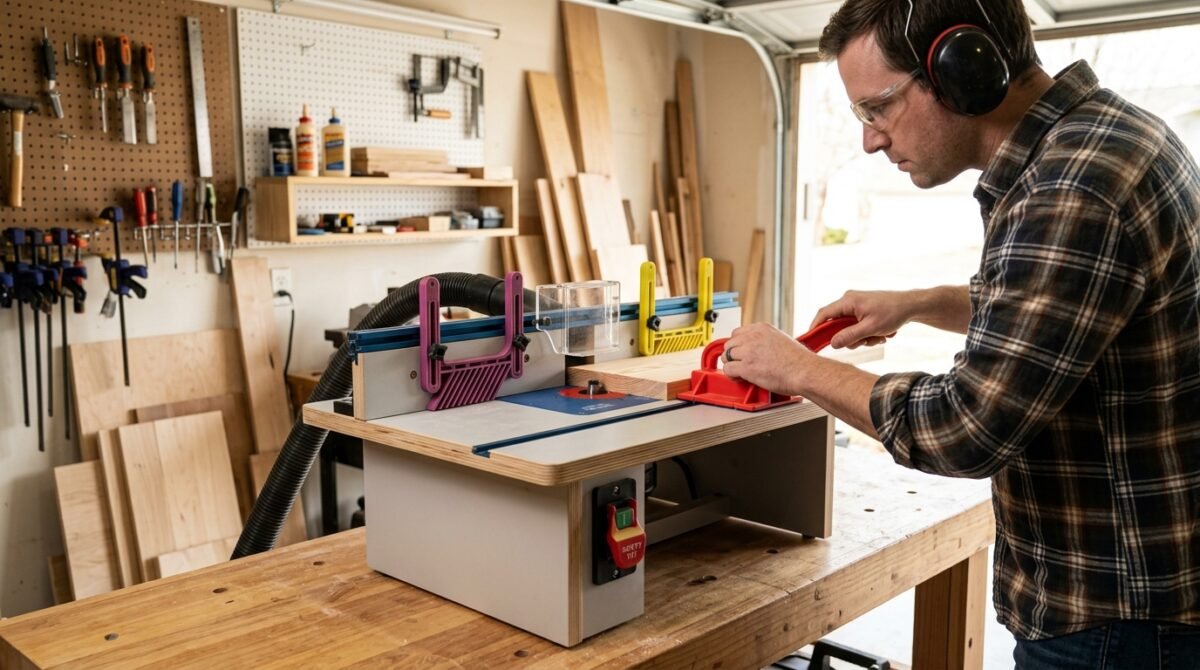
You will need a measuring tape, a power drill, a saw, and plenty of sandpaper. These are standard items you might already have in your garage.

Recommended wood types and alternatives

Pine is an excellent, affordable choice for this project. If you want something harder, oak is incredibly durable, though slightly more expensive.

Optional add-ons for comfort and style

Consider adding foam padding wrapped in a soft, washable fabric to the top of the rail. This prevents accidental bumps in the middle of the night.

Budget-friendly material substitutions

If lumber is too expensive, you can construct a highly effective barrier using PVC pipes. This alternative is lightweight, cheap, and very easy to assemble. (Note: We may include affiliate links to recommended hardware supplies to help you find the best deals.

Planning Your DIY Bed Rail Like a Pro

Measuring your toddler’s bed correctly

Strip the bed and measure the mattress length. You will also need to measure the mattress thickness to determine the correct height for your vertical supports.

Determining the perfect rail length

The rail should cover roughly half to three-quarters of the bed’s total length. This provides plenty of fall protection while leaving an opening for the child to exit safely.

Choosing the right design for your space

Look at your child’s room and decide if you want a natural wood look, a painted finish, or an upholstered design.

Sketching a simple plan before building

Draw a basic diagram of your bed rail. Label the measurements for the horizontal piece and the vertical supports before you make any cuts.

Step-by-Step Guide to Building a Wooden Toddler Bed Rail

Cutting your materials to the right size

Using your saw, cut your 1×4 or 1×6 wooden boards according to your sketch. You will generally need one long horizontal piece and two or three shorter vertical supports.

Smoothing edges for child safety

Take your sandpaper and vigorously sand every side, corner, and edge of the wood. The surface must be completely smooth to the touch.

Assembling the rail frame securely

Apply wood glue to the joints where the vertical supports meet the horizontal rail. Drive screws through the wood to lock the pieces together permanently.

Attaching the rail to the bed without wobbles

Position the assembled rail against the bed frame. Use strong L-brackets and screws to anchor the vertical supports directly into the solid wood of the bed base.

Testing strength before first use

Give the rail a firm shake. It should not wobble, lean, or shift. If it moves, add more screws or reinforce the base with additional brackets.

Alternative DIY Toddler Bed Rail Ideas for Every Parent

PVC pipe rail for lightweight flexibility

PVC pipes can be cut and joined with standard connectors to form a rectangular barrier. This slides easily under the mattress and is incredibly cheap.

Pool noodle hack for a quick, no-tool solution

If you need an immediate fix, slip a large pool noodle under the fitted sheet along the edge of the mattress. It creates a soft bumper that deters rolling.

Foam cushion rail for soft protection

Purchase a dense piece of upholstery foam. Cut it to size, wrap it in a soft blanket, and secure it under the fitted sheet.

Fabric rail for a minimalist and modern look

Heavy-duty mesh or canvas can be pulled taut between two sturdy wooden dowels attached to the bed frame, creating a breathable, soft barrier.

How to Customize Your Bed Rail for Comfort and Style

Adding padding for extra safety

Wrap pipe insulation or custom-cut foam around the top wooden rail to protect your child from hard impacts.

Choosing child-friendly paints and finishes

Select zero-VOC paints. Let the paint cure completely outside or in a well-ventilated garage before bringing the rail into the bedroom.

Matching the rail to your bedroom décor

Paint the rail to match the bed frame exactly, making it look like an integrated piece of furniture, rather than a temporary add-on.

Creative design ideas kids will love

Use stencils to paint stars, animals, or their name on the outside of the wooden rail to make the new bed feel special.

DIY Toddler Bed Rail vs Store-Bought: Which One Wins?

Side-by-side comparison of cost and durability

Store-bought rails often rely on plastic joints and thin metal bars that can bend over time. A wooden DIY rail is built to last and costs significantly less, which helps with your long term financial planning.

Safety considerations for both options

Commercial rails undergo standard testing, but they rely on you installing them perfectly. A DIY rail can be bolted directly to the frame, often making it safer.

When buying might be the better choice

If you are traveling frequently, a lightweight, foldable commercial rail is much more practical than a heavy wooden DIY build.

When DIY clearly stands out

For everyday home use, DIY is the clear winner for stability, aesthetics, and keeping your bank statements looking healthy.

Common Mistakes Parents Make & How to Avoid Them

Building the rail too low or too short

If the rail does not sit at least 5 inches above the mattress, the child will simply roll over it. Measure twice to ensure adequate height.

Forgetting to secure it properly

Never just wedge a wooden rail between the mattress and the frame. It must be mechanically fastened with screws or brackets.

Using weak or unsafe materials

Avoid thin plywood or cracked lumber. A child leaning against a weak rail can cause it to snap.

Ignoring regular safety checks

Wood can shrink and screws can loosen over time. Inspect the rail periodically to ensure it remains completely rigid.

How High and Long Should a Toddler Bed Rail Be?

Recommended height guidelines for different mattresses

A thick pillow-top mattress requires a much taller vertical support than a thin foam mattress. Always measure from the top of the uncompressed mattress upward.

Finding the right balance between safety and accessibility

Do not block the entire side of the bed. Leave at least 15 to 20 inches of open space near the foot of the bed so the child can easily climb out to use the bathroom.

Adjusting measurements for active sleepers

If your child is incredibly active, consider extending the length of the rail to cover 80% of the bed side.

Making Your Toddler Comfortable with New Bed Rail

Helping your child adjust to the change

Explain to your child what the rail is for. Let them help you paint it or pick out the fabric padding so they feel ownership.

Turning the rail into a “safe space” feature

Frame the rail as a cozy “wall” that turns their bed into a fun fort or a safe little nest.

Tips for reducing nighttime anxiety

Maintain a strict bedtime routine. Keep a nightlight nearby, so they can clearly see the boundaries of their new bed if they wake up in the dark.

Real-Life Benefits of Using a DIY Bed Rail

Better sleep for both parents and toddlers

When the fear of falling is removed, the child sleeps more deeply. Parents also sleep soundly, knowing they don’t have to listen for a midnight thump.

Fewer nighttime accidents and disruptions

A secure barrier drastically reduces the chances of a child falling out of bed, preventing unnecessary tears and injuries.

Building confidence in independent sleeping

As the child learns to sleep in a big bed safely, their confidence grows. This is a crucial step in their overall development.

Maintenance and Safety Checks Over Time

Weekly inspection checklist

Every time you change the sheets, wiggle the rail. Check for loose screws, cracked wood, or shifting brackets.

Signs your rail needs repair or replacement

If the wood begins to splinter or the joints become permanently loose, it is time to replace the damaged sections immediately.

Keeping materials clean and durable

Wipe the painted wood with a mild soap solution. If you use fabric padding, ensure it can be easily unzipped and thrown in the washing machine.

Travel-Friendly DIY Bed Rail Options

Portable solutions for vacations and visits

You cannot easily pack a wooden rail. For trips to grandma’s house, the pool noodle trick is highly effective and completely portable.

Lightweight materials that are easy to carry

Inflatable bed bumpers are a fantastic commercial alternative for travel, taking up very little space in your luggage.

Quick setup ideas for temporary use

Rolling up heavy blankets and tucking them tightly under the fitted sheet provides a makeshift barrier when you are away from home.

How Much Does a DIY Bed Rail Cost?

Low-cost vs premium DIY builds

A basic pine wood rail can be built for under $20. If you opt for oak and high-end non-toxic paints, the project might cost closer to $50.

Where to save money without sacrificing safety

Check your garage for leftover screws and scrap wood before heading to the hardware store. Every dollar saved helps when you are trying to stay on track with debt management and meal planning.

Comparing long-term value

A sturdy DIY rail can be reused for younger siblings. Over time, saving a few months’ worth of baby gear expenses adds up to significant financial relief.

Bed Rail Size Calculator - Twin, Full, Queen, King | ConvertersLab

Toddler Bed Rail Size Calculator

Calculate perfect bed rail dimensions for any mattress size instantly. Find exact measurements for twin, full, queen, and king bed rails with our comprehensive size charts, material requirements, and precise dimensional formulas.

Twin Bed Rail Calculator

Full Bed Rail Calculator

Queen Bed Rail Calculator

King Bed Rail Calculator

Standard Bed Rail Sizes

Bed SizeMattress WidthMattress LengthSide Rail Width RangeTypical Rail Height
Twin38-39 inches75 inches30-39 inches7-14 inches
Twin XL38-39 inches80 inches30-39 inches7-14 inches
Full (Double)53-54 inches75 inches40-54 inches7-14 inches
Full XL53-54 inches80 inches40-54 inches7-14 inches
Queen60 inches80 inches54-60 inches7-14 inches
King76 inches80 inches60-76 inches7-14 inches
California King72 inches84 inches60-72 inches7-14 inches

Bed Rail Specifications by Type

Bed SizeSide Rails (2)Head Rail (1)Foot Rail (1)Total Lumber
Twin2 × 75" rails1 × 38" rail1 × 38" rail226 inches (18.8 ft)
Twin XL2 × 80" rails1 × 38" rail1 × 38" rail236 inches (19.7 ft)
Full2 × 75" rails1 × 54" rail1 × 54" rail258 inches (21.5 ft)
Full XL2 × 80" rails1 × 54" rail1 × 54" rail268 inches (22.3 ft)
Queen2 × 80" rails1 × 60" rail1 × 60" rail280 inches (23.3 ft)
King2 × 80" rails1 × 76" rail1 × 76" rail312 inches (26 ft)
California King2 × 84" rails1 × 72" rail1 × 72" rail312 inches (26 ft)

Bed Rail Dimension Formulas

Side Rail Length Formula

Side Rail Length = Mattress Length

Where:

  • Mattress Length = length of mattress in inches
  • Side rails run full length of mattress
  • Standard mattress lengths: Twin 75", Queen/King 80"

Example: Queen mattress 80 inches long:

Side Rail Length = 80 inches each

Side Rail Width Formula

Side Rail Width = Mattress Width

Where:

  • Mattress Width = width of mattress in inches
  • Twin: 30-39 inches
  • Full: 40-54 inches
  • Queen: 54-60 inches
  • King: 60-76 inches

Head and Foot Rail Formula

Head/Foot Rail = Mattress Width

Where:

  • Both head and foot rails equal mattress width
  • Rails connect to side rails at corners
  • Total: 2 rails at mattress width each

Example: Full bed 54 inches wide:

Head Rail = 54 inches Foot Rail = 54 inches

Rail Height Formula

Rail Height = Mattress Thickness + Clearance

Where:

  • Mattress Thickness = height of mattress (typically 8-14 inches)
  • Clearance = additional height for bedding (typically 2-4 inches)
  • Minimum rail height should support mattress edge

Example: 12 inch mattress with 3 inch clearance:

Rail Height = 12 + 3 = 15 inches minimum

Total Frame Perimeter Formula

Perimeter = (Mattress Length × 2) + (Mattress Width × 2)

Where:

  • Mattress Length = length in inches
  • Mattress Width = width in inches
  • Multiply by 2 for both sides
  • Result is total lumber length needed

Example: Queen bed 60" × 80":

Perimeter = (80 × 2) + (60 × 2) = 160 + 120 = 280 inches (23.3 feet)

Board Feet for Bed Rails

Board Feet = (Width × Height × Length) ÷ 144

Where:

  • Width = rail width in inches (typically 4-6 inches)
  • Height = rail height in inches (typically 1-2 inches)
  • Length = total perimeter length
  • Divide by 144 to convert cubic inches to board feet

Example: 1" × 6" rails for queen bed (280" total):

Board Feet = (6 × 1 × 280) ÷ 144 = 1,680 ÷ 144 ≈ 11.7 board feet

Rail Spacing for Support Slats

Slat Spacing = Mattress Width ÷ (Number of Slats + 1)

Where:

  • Mattress Width = side rail width
  • Number of Slats = support slats across frame (typically 5-7)
  • Add 1 to include end spaces

Example: 60" queen with 6 slats:

Slat Spacing = 60 ÷ (6 + 1) = 60 ÷ 7 ≈ 8.6 inches between slats

Disclaimer: This bed rail size calculator provides standard dimensions based on common mattress sizes. Actual bed rail measurements may vary by manufacturer, bed frame style, and specific design requirements. Mattress dimensions can vary slightly between brands. Always measure your actual mattress before cutting materials. Add 1-2 inches tolerance for assembly and bedding clearance. For safety bed rails (toddler rails, elderly assist rails), follow manufacturer specifications and safety standards. Custom bed frames may require adjustments to standard dimensions. Consult a professional carpenter for structural bed frame construction. Rail heights should adequately support mattress weight and prevent sagging. This calculator is for planning and estimation purposes only and does not replace professional furniture design advice.

FAQs About DIY Toddler Bed Rails

1. Is a DIY bed rail safe for everyday use?

Yes, provided it is built with solid materials, sanded smooth, and securely bolted to the bed frame.

2. Can it fit all bed types and sizes?

Absolutely. The main advantage of a DIY rail is that you can customize the measurements to fit a toddler bed, a twin bed, or even a full mattress.

3. What tools are absolutely necessary?

You will need a measuring tape, a saw to cut the wood, sandpaper, and a power drill to drive the screws.

4. How long should a child use a bed rail?

Most children use a bed rail until they are 4 or 5 years old, or until they stop moving excessively during their sleep.

5. Can I use a DIY bed rail on a box spring?

It is difficult to anchor a rail directly to a box spring. It is much safer to attach the brackets directly to a solid wooden bed frame.

6. Do pool noodles actually work as bed rails?

Yes, for mild to moderate sleepers. Slipping a large pool noodle under the fitted sheet creates a gentle slope that deters most toddlers from rolling off.

7. How do I prevent my child from getting stuck between the rail and mattress?

You must ensure the rail is installed flush against the side of the mattress. Regularly check that the mattress hasn’t shifted away from the rail.

8. Will building a bed rail help me stick to a budget?

Yes. Commercial rails can cost upwards of $60 to $100. A DIY wood or PVC rail usually costs under $20, freeing up money for your family.

9. Are PVC pipes safe to use for a bed rail?

Yes, PVC is durable and lightweight. However, you should wrap the pipes in foam padding to prevent your child from bumping into hard plastic.

10. Can I paint the bed rail?

Yes, but you must use zero-VOC, non-toxic paint. Toddlers sometimes chew on furniture, so the finish must be child-safe.

11. How do I know if the rail is high enough?

Measure the rail once the mattress is on the bed. The top of the rail must be at least 5 inches above the uncompressed top of the mattress.

12. Does a bed rail restrict my child’s independence?

No, as long as you do not run the rail the entire length of the bed. Leave an opening at the bottom so they can get out easily.

13. Can a DIY bed rail be removed easily later?

If you attach the rail with standard wood screws or L-brackets, you can simply unscrew it when your child outgrows the need for it.

14. What is the best wood for a bed rail?

Pine is inexpensive and easy to work with. Poplar and oak are stronger but will cost slightly more.

15. How do I ensure the bed rail matches the room’s decor?

You can paint or stain the wood to match the existing bed frame, or upholster the rail in a fabric that matches the bedroom curtains.

Quick Checklist Before Letting Your Toddler Use the Rail

Stability and strength test

Push and pull the rail forcefully. It should remain completely rigid against the bed frame.

Gap and spacing check

Run your hand along the seam where the mattress meets the rail. If you can fit your hand into a gap, the mattress needs to be pushed tighter against the barrier.

Comfort and usability review

Ensure the open space at the end of the bed is wide enough for your child to exit safely in the dark without tripping.

Final Thoughts: Building Safety, Comfort, and Confidence

Why a DIY toddler bed rail is a smart parenting solution

Taking the time to build your own bed rail is a rewarding project. It provides superior safety, allows for accurate customization, and helps protect your household budget from overpriced retail goods. (For more advice on child safety and AAP guidelines, consult your pediatrician.

Encourage independence while ensuring protection

A properly designed bed rail strikes the perfect balance. It keeps your child safe during their deepest sleep cycles, while allowing them to get out of bed safely in the morning.

Taking the next step in your child’s sleep journey

Transitioning to a standard bed is a huge step for any child. By installing a reliable, sturdy DIY bed rail, you are setting them up for a lifetime of healthy, confident, and safe sleeping habits.


Scroll to Top