Fence Picket Spacing - 3.5 To 4.5 Inches For Elegant Styles
Standard Gaps, the Spacing Formula, and a Free Calculator for Every Fence Style
You’ve measured your fence line. You’ve bought the pickets. And now you’re staring at a pile of pressure treated wood wondering: how far apart should these actually go? Get the spacing wrong and your fence looks uneven, warps after a season, or fails to keep dogs in (or out). This fence picket spacing guide gives you the standard numbers, the formula, the jig trick, the type-by-type breakdown, and the calculator shortcut — everything you need to space fence pickets correctly the first time.
Skip manual math mistakes and plan your complete material build instantly using our fence panels calculator.

What Is the Standard Spacing Between Fence Pickets?
Quick Answer: The most common picket fence spacing is 1.5 to 3.5 inches for decorative fences and 0 to 0.5 inches for privacy fences. The sweet spot for traditional wood picket fences is 2.5 to 3.5 inches.
The history of the picket fence stretches back centuries, and the proportions that made it iconic haven’t changed much. The average spacing between fence pickets depends on what the fence needs to do. There’s no single universal number for standard fence picket spacing, but there are clear standards based on style and purpose.
| Fence Type / Style | Recommended Spacing Gap |
|---|---|
| Classic decorative picket fence | 2.5 to 3.5 inches gap between pickets |
| Privacy fence | 0 inches (boards touching) to 0.5 inches maximum |
| Shadow box fence | Alternating pickets, typically 3 to 4 inches stagger overlap |
| Pool fence | Maximum 4 inches gap -- mandatory safety code in most US states |
| Dog fence | Under 2 inches for small breeds; 3 to 3.5 inches for large breeds |
| Decorative metal or iron fence | 3.5 to 4.5 inches for elegant open proportions |
Why 3.5 to 4.5 Inches?
Why does 3.5 to 4.5 inches appear in the article title? Because this range is the standard for elegant decorative styles — particularly French gothic and dog ear picket designs where visible gaps are part of the aesthetic. It’s the fence picket spacing range where the gap looks intentional, not accidental.

Fence Picket Spacing Calculator
Calculate pickets, spaces, and edge spacing allocations dynamically across your custom gate or run panel layout.

How to Calculate Fence Picket Spacing -- The Formula Explained
Here’s the picket fence spacing formula every builder uses. It’s straightforward once you see it with real numbers.
(Total Fence Length – Total Picket Width) / (Number of Pickets + 1) = Gap Size
Real-World Calculation Example
For a fence section measuring 96 inches (8 feet), using 3.5-inch wide pickets with 20 pickets:
- Total fence length: 96 inches
- Total picket width: 20 x 3.5 = 70 inches
- Remaining space: 96 – 70 = 26 inches
- Number of gaps: 20 + 1 = 21
- Gap per space: 26 / 21 = 1.24 inches
Since 1.24 inches is a bit tight for a decorative look, reduce to 16 pickets: (96 – 56) / 17 = 2.35 inches gap. That’s right in the decorative sweet spot. This is how you figure out fence picket spacing before cutting a single board.
The formula also works in reverse — decide your target gap first (say 3 inches), then calculate how many pickets fit. This ‘gap-first’ method gives you consistent spacing with a clean visual result from the start.
How to Work Out Spacing Without Software
Lay your pickets on the ground in a row on a flat surface. Place spacer blocks of your target gap width between each one. Measure the total length:
- Too long: Widen the gaps slightly.
- Too short: Tighten the gaps.
This physical dry-run takes 5 minutes and prevents expensive mistakes on a long fence run.
For full fence panel and post planning, our fence panels calculator works out post count and panel quantities for your whole project from a single fence length.
How to Make a Jig for Spacing Fence Pickets Evenly
Once you know your target gap, a spacing jig is the fastest and most accurate way to install every picket consistently — especially on a run of 50 feet or more.
Cut a scrap piece of wood to your exact target gap width
For a 2.5-inch spacing, cut a block precisely 2.5 inches wide.
Size for vertical clearance
Make the block 4 to 5 inches tall — short enough to sit between pickets without touching the rail behind.
Position as you build
Hang it over the top rail as you work, sliding it along to position each new picket against.
Secure and repeat
Nail or screw the picket in place. Slide the jig. Repeat across the entire section.
Efficiency Gains and Handling Uneven Terrain
A fence picket spacing jig eliminates the need to re-measure every gap. On a 100-foot fence run, this saves over an hour of work and produces far more consistent results than tape-and-pencil measuring. The jig is genuinely the most important tip on this whole page.
For uneven ground — slopes, dips, and terrain changes — keep the jig block consistent but check level on each picket independently. Gaps will stay even if picket heights follow the ground contour.
Before building your jig and mounting pickets, accurately lay out your total post positions and material requirements using our fence panels calculator. For detailed practical advice on handling exterior woodwork around your fence line, This Old House's fencing how-to guides are an excellent builder-grade reference.

Fence Picket Spacing by Style -- The Complete Type-by-Type Guide
Different fence styles serve distinct functional and aesthetic roles. Here is the comprehensive breakdown of recommended gap dimensions based on fence design, material choice, and airflow needs. This fence picket gap spacing breakdown covers fence picket spacing for privacy, fence picket spacing for dogs, and every decorative style in between.
Classic Wood Picket Fence Spacing
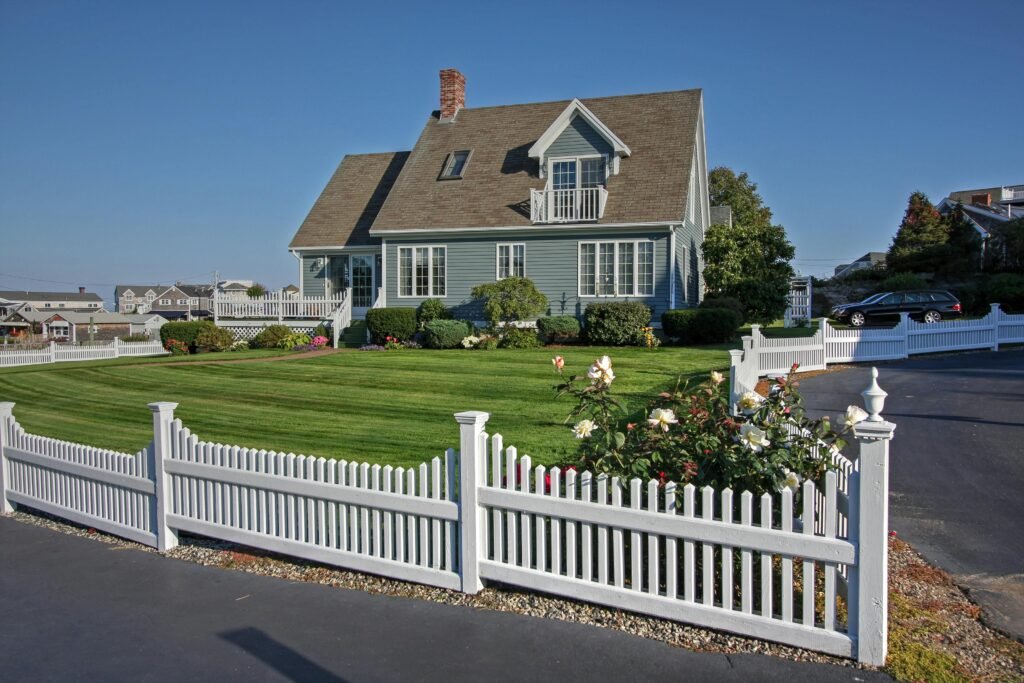
The traditional wood fence picket spacing is 1.5 to 3 inches for standard decorative applications. This gives the classic open, airy look that defines picket fence aesthetics. The most common picket fence spacing in American suburban front yards sits at exactly 2.5 inches — wide enough to see through, narrow enough to feel like a real boundary.
Privacy Fence Picket Spacing
Privacy fence picket spacing targets as close to zero as possible. For a true privacy fence, boards are installed touching or with a maximum 0.25-inch gap for wood expansion. Cedar privacy fence picket spacing often allows 0.5 inches because cedar handles moisture more dimensionally stably than pine. Recommended picket spacing for a privacy fence: 0 to 0.5 inches. Green (freshly cut) boards need 0.25 inches — they’ll shrink as they dry. Kiln-dried boards can be installed nearly touching.
Shadow Box Fence Picket Spacing
Shadow box fence picket spacing is unique — pickets are staggered on alternating sides of the rail. Viewed straight-on, the fence looks solid. Viewed at an angle, air and light pass through. Each picket typically overlaps adjacent pickets by 1 to 2 inches, with a 3 to 4-inch actual gap between pickets on the same face. Shadow box fence spacing at post positions: ensure full coverage on both faces at each post so there’s no gap that lines up with direct sightlines through the fence.
Dog Ear Fence Picket Spacing
Dog ear fence picket spacing follows the same logic as privacy fencing — 0 to 0.5 inches for privacy, 2 to 3 inches for semi-open styles. The dog ear refers to the angled cut at the top of the picket, not the gap. A 6-foot dog ear picket fence with 2-inch spacing is a common residential backyard specification that balances privacy with some airflow.
Gothic Picket Fence Spacing
Gothic fence picket spacing typically runs 3.5 to 4.5 inches for maximum visual elegance. The pointed gothic top is a decorative element that needs room to breathe visually. Board spacing for a French gothic picket fence is commonly set at 4 inches — this proportion showcases the pointed profile properly and creates beautiful shadow patterns at low sun angles.
Board on Board Fence Picket Spacing
Board on board picket spacing uses overlapping boards on the same face of the rail — boards overlap by 1 to 1.5 inches, with the hidden gap behind each board allowing airflow and reducing wind loading. Board on board fence picket spacing calculator tools account for this overlap when estimating material quantities.
Metal, Wrought Iron, and Aluminum Fence Picket Spacing
Metal fence picket spacing and wrought iron fence picket spacing typically run 3.5 to 4 inches for decorative residential applications. This is the range that gives iron fencing its characteristic elegant, open feel. Aluminum fence picket spacing matches wrought iron conventions in most residential styles — slim profiles with wider gaps read as refined, not sparse.

Quick Reference Matrix
| Fence Style / Material | Target Gap Range | Key Characteristics |
|---|---|---|
| Classic Wood Picket | 1.5 - 3.0 in | Open, traditional look; 2.5 in is standard |
| Privacy Fence | 0 - 0.5 in | Blocks sightlines; accounts for shrinking/expansion |
| Shadow Box | 3.0 - 4.0 in | Alternating faces; 1-2 in stagger overlap |
| Dog Ear Picket | 0 - 0.5 in or 2 - 3 in | Versatile; privacy or semi-open options |
| French Gothic / Gothic | 3.5 - 4.5 in | Elegant open proportions; 4.0 in sweet spot |
| Board on Board | 1.0 - 1.5 in overlap | Complete privacy with built-in wind relief |
| Wrought Iron and Aluminum | 3.5 - 4.0 in | Slim profiles; elegant, open security barrier |
Planning a full outdoor renovation around your new fence? Calculate your complete panel requirements with our fence panels calculator. Our Home Renovation Guide covers project sequencing, materials, and cost planning for complete exterior upgrades including fencing, patios, and garden structures.

Pool and Dog Fence Picket Spacing -- Safety Codes You Must Follow
Pool fence picket spacing is governed by building codes and safety standards, not optional guidelines. The CDC reports drowning is the leading cause of death for children ages 1 to 4 in the United States. Proper pool barriers are one of the most evidence-backed prevention measures available.
Mandatory Pool Safety Standards
The Pool Safely campaign — run by the US Consumer Product Safety Commission — recommends pool fencing as a primary layer of child drowning prevention. Here’s what the code requires in most jurisdictions:
- Maximum 4-inch gap between pickets — so a 4-inch sphere (approximate head width of a toddler) cannot pass through.
- Minimum 48-inch fence height for pool enclosures.
- Self-closing, self-latching gates that open away from the pool.
- No horizontal rails that could serve as footholds for climbing children.
Fence code spacing of pickets is most strictly enforced at pool enclosures. The 2021 International Swimming Pool and Spa Code (ISPSC) provides the complete technical standard for pool barrier requirements across the US. Always verify your local authority’s version, as some jurisdictions adopt stricter requirements.
Dog Fence Picket Spacing -- Keeping Pets Safely In
Picket fence spacing for dogs depends directly on breed size. General rules:
- Small breeds (under 20 lbs): maximum 1.5 to 2 inches gap.
- Medium breeds (20 to 60 lbs): maximum 3 inches gap.
- Large breeds (over 60 lbs): 3 to 3.5 inches is typically safe.
One-inch spacing wood fence pickets is the safest choice for households with multiple dog sizes or toy breeds, including a Chihuahua or other small dog breeds. One-and-a-half inch picket fence spacing eliminates escape risk for all but the smallest animals while still allowing airflow through the fence. When in doubt, go tighter — an escaped dog is a harder problem than a few extra pickets.
Safety and Compliance Matrix
| Application / Category | Mandatory / Target Gap | Key Safety Objective |
|---|---|---|
| Pool Enclosures (ISPSC Code) | Max 4.0 in | Prevents child head passage; strict code enforcement |
| Small Dog Breeds (< 20 lbs) | Max 1.5 - 2.0 in | Blocks toy breeds and puppies from squeezing through |
| Medium Dog Breeds (20-60 lbs) | Max 3.0 in | Prevents head entrapment and escaping |
| Large Dog Breeds (> 60 lbs) | Max 3.0 - 3.5 in | Maintains containment while ensuring good airflow |
Calculate your total material needs for pool or boundary fencing accurately using our fence panels calculator. For yard boundary management on sloped or challenging terrain, our Silt Fence Guide covers ground-level installation techniques for irregular terrain -- the same slope-handling principles apply when running a picket fence across undulating ground.

Wood Expansion and Contraction -- Why Spacing Matters Beyond Looks
One of the most common first-timer mistakes in fence building is ignoring what wood does over time. The Wood Preservation industry’s use category standards classify pressure treated lumber by moisture exposure, and that moisture exposure is exactly what causes wood to expand and contract seasonally.
Seasonal Movement and Standard Expansion Allowances
Pressure treated wood, cedar, and pine all expand with moisture absorption and contract as they dry. Install boards perfectly touching in spring and they can buckle visibly by summer after the first heavy rain. The standard allowance: at least 0.25 inches for every 5.5 inches of board width. For a standard 5.5-inch wide fence board, a minimum 0.25-inch gap on privacy fences handles seasonal movement without buckling. For decorative fences with 1.5 to 3.5-inch gaps, expansion is not a concern — there’s more than enough buffer. The issue only arises when boards are installed tight for privacy.
Green Wood vs. Kiln-Dried Wood
- Green (freshly cut) pressure treated wood: Holds significant moisture and will shrink as it cures. Install green boards slightly closer together than your final target — they’ll open up to your intended gap as they dry over the following months.
- Kiln-dried boards: Already dimensionally stable and go straight in at your exact target gap.
- Cedar lumber: Naturally moisture-resistant and more dimensionally stable than pine. Cedar privacy fence picket spacing can be tighter (0 to 0.25 inches) without warping risk in most temperate climates.
Calculate your total material quantities before installation using our fence panels calculator. Dealing with landscape timber edging and borders near your fence line? Our Landscape Timbers Guide covers installation techniques for ground-level wood elements that face the same wood movement challenges as fence pickets.

Fence Post Spacing and Rail Spacing -- How It All Connects
Picket spacing and post spacing are interdependent — get one wrong and it throws off the other. Standard picket fence post spacing is 6 to 8 feet between posts. Eight feet is most common because it aligns with standard fence panel lengths and minimizes wood waste when cutting rails.
Post Spacing and Section Layout
Each post-to-post section (called a bay) is calculated independently using the picket spacing formula. This matters particularly on uneven ground where sections may vary in length because of slope adjustments.
Rail Spacing for Picket Fence
Picket fence rail spacing determines whether your pickets stay straight and resist wind loading over time. Standard rail spacing guidelines:
- Fences up to 4 feet tall: 2 rails (top and bottom)
- Fences 4 to 6 feet tall: 3 rails (top, middle, bottom)
- Fences over 6 feet tall: 3 or 4 rails depending on wind exposure and local code
The middle rail on a 6-foot fence should sit at 3 feet — the midpoint — for balanced load distribution. Rail spacing a picket fence correctly means boards don’t flex, bow outward, or pull out of alignment over successive seasons.
Rail Count Reference Table
| Fence Height | Required Rail Count | Recommended Rail Placement |
|---|---|---|
| Up to 4 feet | 2 Rails | Top and bottom rails |
| 4 to 6 feet | 3 Rails | Top, bottom, and middle rail at 3 ft midpoint |
| Over 6 feet | 3 or 4 Rails | Distributed evenly; based on wind exposure and code |
Work out your total post counts and panel materials effortlessly using our fence panels calculator. For gate sizing and hardware that integrates with your fence layout, our Wooden Garden Gate Size Guide and Hinge Calculator ensure your gate hardware is properly matched to fence weight and post dimensions.

Picket Fence Spacing Ideas -- Styles That Actually Look Great
Spacing affects how your fence reads visually as much as the picket profile itself. For broad design inspiration, This Old House’s fences section showcases dozens of real fence projects with different spacing and style combinations across a variety of homes and garden settings.
The Cottage Garden Look — 1.5 to 2 Inch Spacing
A tight 1.5 to 2-inch gap on a white painted wood fence gives the classic English cottage garden aesthetic. The fence reads as solid and airy simultaneously. Pair with climbing roses and picket height of 36 to 42 inches for the full effect. Gothic or dog ear tops at this spacing create beautiful repeating rhythm.
The Open Country Look — 3 to 4 Inch Spacing
Wider gaps on natural cedar or pressure treated wood give a relaxed, ranch-style feel. Good for front yards where you want visibility through the fence without fully opening the boundary. French gothic picket tops with 3.5 to 4-inch spacing cast beautiful diagonal shadow patterns at low sun angles.
The Modern Minimalist Look — 4 to 4.5 Inch Spacing
Slim metal or aluminum pickets with 4 to 4.5-inch gaps read as clean and contemporary. Popular for front garden boundaries where the fence is a visual marker rather than a barrier. The wider spacing with slim profiles looks intentional and architectural — the proportions in the title (3.5 to 4.5 inches) are specifically this elegant range.
Alternating Height Designs
Some decorative fences use alternating tall and short pickets with consistent gap spacing throughout. The gap between each board remains the same (typically 2.5 to 3 inches) but the height variation creates visual rhythm. This works particularly well on long fence runs that would otherwise look monotonous.
Style Comparison Table
| Aesthetic Style | Target Gap Spacing | Ideal Materials and Profile |
|---|---|---|
| Cottage Garden | 1.5 - 2.0 in | White painted wood; Gothic or Dog Ear tops |
| Open Country | 3.0 - 4.0 in | Natural Cedar / PT Wood; French Gothic tops |
| Modern Minimalist | 4.0 - 4.5 in | Slim Metal or Aluminum pickets; clean lines |
| Alternating Height | 2.5 - 3.0 in | Alternating tall and short wood pickets |
Calculate your panel layouts and material quantities instantly with our fence panels calculator. Finishing the outdoor space around your fence? Our Modern Patio Guide and Furniture Spacing Guide help you design the living area immediately inside the fence line for a cohesive outdoor space.

Common Fence Picket Spacing Mistakes -- and How to Avoid Them
Avoiding these four critical errors will save you time, materials, and long-term repair costs when setting up your fence line.
Mistake 1 — Not Subtracting Post Width
When calculating picket spacing for a fence section, many builders forget that the space between posts isn’t the same as the bay length. A 4×4 post measures 3.5 inches wide. Two posts reduce a nominally 96-inch bay to 89 inches of usable space. Measure the actual clear space between posts, not the post-center-to-post-center distance.
Mistake 2 — Installing Green Wood Without an Expansion Gap
Green pressure treated fence pickets installed touching on a privacy fence will buckle when they absorb rain moisture. Allow a minimum 0.25-inch gap for green wood. Many first-time builders have returned to a warped, buckled fence after their first summer season.
Mistake 3 — Eyeballing Gaps Without a Jig
What looks consistent while you’re working rarely is across a long run. Without a jig for spacing fence pickets evenly, small accumulated errors compound along the fence. By the end of a 50-foot section, you can be 2 to 3 inches off alignment from where you started. Make the jig. It takes 10 minutes and saves the entire job.
Mistake 4 — Ignoring Local Fence Picket Spacing Code
Fence picket spacing rules vary by municipality and HOA. Some homeowners’ associations specify maximum gap widths for neighborhood aesthetic consistency. Some local councils regulate fence opacity and height. Check before you build, not after. Tearing down a non-compliant fence is an expensive and avoidable lesson.
Budgeting your full fence build? Use our fence panels calculator and Building Materials Calculator to estimate total material quantities -- posts, rails, and pickets -- for your entire fence project from a single set of measurements.

Frequently Asked Questions - Fence Picket Spacing
Conclusion - Get the Spacing Right and Your Fence Will Look Professional
Fence picket spacing is one of those details that separates a fence that looks built from a fence that looks professionally installed. The gap between each board affects visual rhythm, privacy level, wind resistance, and the long-term structural behavior of the whole fence.
Summary of Core Standards
- Decorative wood and standard pickets: 2.5 to 3.5 inches gap
- Privacy fencing: 0 to 0.5 inches gap
- Gothic and elegant metal styles: 3.5 to 4.5 inches gap
- Pool safety barriers: 4 inches maximum (mandatory code compliance)
Best Practice Execution Checklist
Use the formula. Build the jig. Check your local fence picket spacing code before the first post goes in. And if you want all the math handled in seconds, use the calculator.
Use our fence panels calculator for instant gap calculations and panel layouts. For your complete outdoor project, visit our Home and Garden Calculator Hub, featuring essential tools from our Pergola Size Calculator to our Paint Calculator covering every step of your build.