Follow Dimension ideas: 11+ Furniture Spacing Rules hack
Follow Dimension ideas: 11+ Furniture Spacing Rules hack for Proper furniture spacing is the secret to transforming a cramped room into an open, functional, and inviting space. Knowing the right measurements—like the ideal distance between a sofa and coffee table, the space needed behind dining chairs, or the clearance required around your bed—can dramatically improve a room’s flow and feel.
This guide provides clear, industry-standard measurements and practical tips for every room in your home. You’ll learn how to create layouts that are not only beautiful but also comfortable and practical for everyday living.
Where to Start: A Simple Tip for Immediate Results
Feeling overwhelmed? You don’t have to rearrange everything at once. Start by focusing on the walkways in one room. Widening these paths is a simple fix that offers instant improvement, making the space feel more open and comfortable. This small change will build your confidence and show you how impactful proper furniture spacing can be.
Ready to create a home that looks and feels just right? Let’s get started.

How to Arrange Furniture for a Perfect Room Layout
A great room layout isn’t just about style; it’s about flow and function. Follow these steps in order to create a space that’s both beautiful and easy to live in.
1. Plan Your Traffic Flow: Before you move a single piece of furniture, figure out how people will walk through the room. Identify the doorways and natural entry/exit points. These pathways are the most important part of your floor plan, so keep them clear.
2. Create Functional Zones: Next, think about how you’ll use the space. Group furniture to create specific zones for different activities, like a seating area for conversations, a dining area for meals, or a small desk for a home office. Use furniture arrangement and rugs—not walls—to define these areas.
3. Focus on Aesthetics and Decoration: Once your layout is functional, it’s time to make it beautiful. This is where you can play with color palettes, create symmetry with pairs of lamps or chairs, and establish a focal point, like a fireplace or a piece of art. These finishing touches will bring your room’s design together.

Space Planning Calculation Tool
Wondering how much furniture can fit in your room? Here’s a simple formula to help you figure it out.
Step 1: Calculate Your Usable Wall Space
First, measure the length of the wall where you plan to place your furniture. To ensure you have enough room to move around, subtract 10% from your total measurement. This leftover space is your “usable space.”
- Formula: Total Wall Length – (Total Wall Length x 0.10) = Usable Space
Step 2: Determine How Many Pieces Will Fit
Next, measure the width of the furniture you want to add (like a sofa section or an armchair). Divide your usable space by the width of the furniture piece.
- Formula: Usable Space ÷ Furniture Width = Number of Pieces that Fit
Let’s look at an example:
Imagine you have a 15-foot (180-inch) wall.
- Calculate usable space: 180 inches – 18 inches (10%) = 162 inches of usable space.
- Calculate how many pieces fit: If your sofa section is 36 inches wide, you would do: 162 inches ÷ 36 inches = 4.5.
This means you can comfortably fit four 36-inch-wide furniture pieces along that wall.
11 INTERIOR HACKS That Makes ANY ROOM Look 10x Better
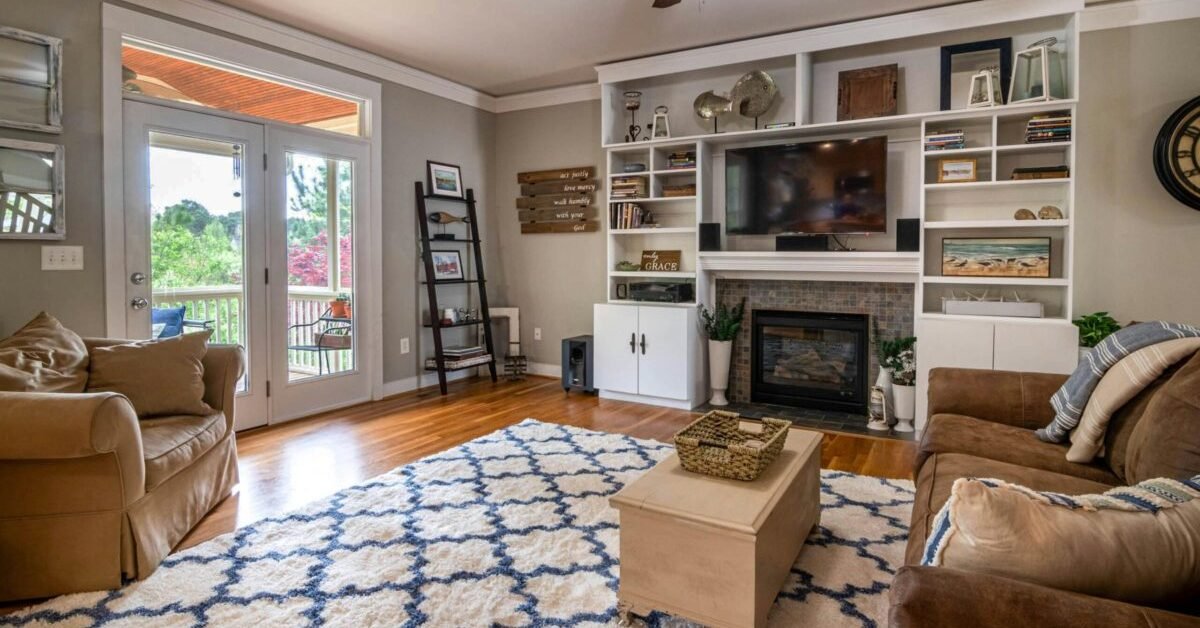
Love your sofa—don’t let it bully the room. Check furniture density first, so you’ve got breathing space and walkways that actually work.Skip the couch that suffocates your living room. Mind the furniture density—keep traffic flowing and the vibe comfy |13 Area Types • Clearance Directory • Comfort Standards • Pro-Layout Guide
Find exact clearance measurements for any furniture configuration
• Sofa ↔ TV: 6–10 feet (1.8–3 m) (depends on screen size)
• Walkways: 30–36 inches (75–90 cm)
• Between chairs: 18–24 inches (45–60 cm)
👉 Tip: Keep enough space to walk comfortably without bumping furniture.
• Between chairs: 6–10 inches (15–25 cm)
• Behind seated person: 36 inches (90 cm) minimum
• Table ↔ Buffet: 40–48 inches (100–120 cm)
👉 Tip: Allow extra space if chairs have arms.
• Bed foot clearance: 30–36 inches (75–90 cm)
• Between bed & dresser: 36 inches (90 cm)
• Nightstand height: same as mattress height
👉 Tip: Tight spaces can go down to 18 inches, but comfort reduces.
• Work triangle (sink–stove–fridge): 4–9 feet each side
• Island ↔ Counter: 42–48 inches (105–120 cm)
• Seating at island: 24 inches (60 cm) per person
👉 Tip: Larger kitchens need wider walkways for multiple users.
• Sink spacing: 20–30 inches (50–75 cm)
• Shower space: 30" × 30" minimum
• Vanity ↔ Wall: 30–36 inches (75–90 cm)
• Chair clearance: 42 inches (105 cm)
• Between desks: 48 inches (120 cm)
👉 Tip: Allow space for chair movement and storage access.
• Comfortable walkway: 42–48 inches (105–120 cm)
• Entry bench space: 18–24 inches depth
• Coffee table gap: 16–18 inches (40–45 cm)
• Walkways: 36 inches (90 cm) minimum
• Lounge chairs: 24 inches (60 cm) between
• Chair spacing: 24 inches (60 cm) per person
• Serving space behind chairs: 36 inches (90 cm)
• Pathways: 36–48 inches (105–120 cm)
• Between planters: 24–36 inches (60–90 cm)
• Walkways: 4 feet (120 cm) for safety
• Furniture ↔ pool edge: 2–4 feet (60–120 cm)
• Walkway around: 36 inches (90 cm)
• Storage access space: 36 inches (90 cm)
• Comfortable spacing: 36–48 inches
• Dining clearance: ~36 inches behind chairs
• Outdoor spacing: Slightly larger than indoor for safety and environment factors
Always prioritize movement flow first. Map out major foot traffic paths before placing bulky items.
2. HIGH-TRAFFIC BUFFERS
Increase spacing in high-traffic areas (kitchen, hallways) by 6-12 inches more than the minimum.
3. SMALL HOMES ADAPTATION
Use smaller spacing only in compact homes (down to 18" in some cases), but be prepared for reduced physical comfort.
4. OUTDOOR FLEXIBILITY
Outdoor layouts need extra room for flexibility and because elements like wind or uneven ground can change how people move.
• Footprint: The actual floor space a piece of furniture occupies.
• Clearance: The empty space needed around the item for people to use it or pass by it.
HOW TO MEASURE:
1. Measure from the outermost edge (cushion or armrest, not just the frame).
2. For sitting areas, measure from the seat's front edge to the nearest obstacle.
3. For storage, measure from the face of the unit with drawers/doors fully open.
• Parallel Flow: High-traffic aisles created by linear furniture placement.
• L-Shaped: Corner-focused layouts good for maximizing small spaces.
• Floating: Furniture pulled away from walls to create distinct zones in open plans.
• Keep distance between flammable furniture and heat sources (stoves, fireplaces) at least 3-5 feet.
• Avoid placing small rugs in high-traffic spacing zones to prevent trips.

| Spacing Type | Minimum | Standard | Optimal |
| Walkways | 30″ | 36″ | 42–48″ |
| Between seating | 12″ | 18–24″ | 24–30″ |
| Behind dining chairs | 36″ | 42″ | 48″ |
| Sofas to coffee tables | 12″ | 16–18″ | 20″ |
| Bedroom sides | 18″ | 24–30″ | 30–36″ |
| Counter-to-counter | 36″ | 42″ | 48″ |
| TV viewing distance | 4–6 ft | 6–8 ft | 8–10 ft |
| Spacing Type | Minimum | Standard | Optimal |
| Walkways | 30″ | 36″ | 42–48″ |
| Between seating | 12″ | 18–24″ | 24–30″ |
| Behind dining chairs | 36″ | 42″ | 48″ |
| Sofas to coffee tables | 12″ | 16–18″ | 20″ |
| Bedroom sides | 18″ | 24–30″ | 30–36″ |
| Counter-to-counter | 36″ | 42″ | 48″ |
| TV viewing distance | 4–6 ft | 6–8 ft | 8–10 ft |

| Distance Type | Minimum | Standard | Optimal | Notes |
| Table ↔ Wall | 36″ | 42″ | 48″ | Chair clearance + pull-back |
| Chair ↔ Wall | 12″ | 18″ | 24″ | From chair back to wall |
| Table ↔ Buffet | 36″ | 42″ | 48″ | Service access space |
| End of Table ↔ Wall | 24″ | 30″ | 36″ | Corner chair clearance |

| Clearance Type | Minimum | Standard | Optimal | Notes |
| Bed Side (each) | 18″ | 24–30″ | 30–36″ | Making bed + access |
| Bed Foot | 24″ | 30–36″ | 36″+ | Walking space at foot |
| Bed to Wall | 0″ | 6–12″ | 12″ | Open side preference |
| Bed to Dresser | 24″ | 30–36″ | 36–42″ | Drawer opening space |
| Bed to Chair | 30″ | 36″ | 42″+ | Sitting distance |

| Distance Type | Minimum | Standard | Optimal | Application |
| Counter ↔ Counter | 36″ | 42″ | 48″ | Aisle width (one/two-person) |
| Island ↔ Counter | 36″ | 42″ | 48″ | Work circulation |
| Cabinet Door Swing | 24″–36″ | 36″–42″ | 42″+ | Safety + accessibility |
| Refrigerator Door | 30″–36″ | 36″–48″ | 48″+ | Full door opening |
| Oven Door Swing | 24″–30″ | 36″ | 42″ | Hot surface clearance |
| Sink to Counter Front | 18″–24″ | 24″ | 30″ | Standing comfort |
| Fixture | Clearance Type | Minimum | Standard | Optimal |
| Toilet | Front of bowl | 21″ | 24–30″ | 30″+ |
| Toilet | From wall (Side) | 15″ | 15–18″ | 18″ |
| Toilet | Center-to-center | 30″ | 36–42″ | 42″ |
| Sink | Standing distance | 18″ | 20–24″ | 24″+ |
| Sink | Dual (Center-to-Center) | 30″ | 36″ | 42″ |
| Shower | Footprint | 30″×30″ | 36″×36″ | 48″×48″ |
| Tub | Front clearance | 18″ | 24″ | 30″ |
| Vanity | Distance to wall | 30″ | 30–36″ | 36″ |

| Spacing Element | Minimum | Standard | Optimal | Ergonomic Note |
| Desk ↔ Wall | 24″ | 36″ | 42″ | Air circulation + cleaning |
| Chair ↔ Desk Front | 8″ | 10–12″ | 12″ | Thigh clearance when seated |
| Chair Radius | 24″ | 30–36″ | 36–42″ | Rolling mobility |
| Monitor ↔ Eyes | 20″ | 24–26″ | 26″ | Comfortable viewing |
| Keyboard Height | 28″ | 29″ | 30″ | Arm angle 90° when seated |
| Traffic Type | Minimum | Standard | Optimal | Notes |
| Single Person | 30″ | 36″ | 42″ | 36″ is the standard ADA width |
| Two People Passing | 36″ | 42″ | 48″ | 48″ allows side-by-side walking |
| Furniture Clearance | 30″ | 36″ | 42″ | Space remaining after furniture |

Outdoor Spacing Reference Tables
| Spacing Element | Minimum | Standard | Optimal | Notes |
| Between Chairs | 12″ | 18–24″ | 24–30″ | Slightly tighter than indoor |
| Lounge Chair Gap | 18″ | 24″ | 30″ | Allows for side tables |
| Walkway/Path | 30″ | 36″ | 42″ | Main circulation through deck |
| Sofa ↔ Wall/Rail | 12″ | 18″ | 24″ | Space for railing/fence |
| Seating to Edge | 24″ | 30–36″ | 36″+ | Safety zone from deck drop |

| Room Type | Critical Spacing | Min | Std | Optimal | Primary Function |
| Living | Sofa ↔ Table | 12″ | 16–18″ | 20″ | Relaxation |
| Living | Walkway | 30″ | 36″ | 42″ | Circulation |
| Living | Sofa ↔ TV | 4–6 ft | 6–8 ft | 8–10 ft | Viewing |
| Dining | Behind Chair | 36″ | 42″ | 48″ | CRITICAL FLOW |
| Dining | Table ↔ Wall | 36″ | 42–48″ | 48″ | Movement |
| Bedroom | Bed Sides | 18″ | 24–30″ | 30–36″ | Access |
| Bedroom | Bed ↔ Dresser | 24″ | 30–36″ | 36″ | Storage Access |
| Kitchen | Counter ↔ Counter | 36″ | 42″ | 48″ | One/Two Cooks |
| Kitchen | Work Triangle | 12 ft | 15–21 ft | 18 ft | Efficiency |
| Bath | Toilet Clearance | 21″ | 24–30″ | 30″+ | Comfortable Use |
| Office | Chair Radius | 24″ | 30–36″ | 36–42″ | Rolling Mobility |
| Office | Monitor ↔ Eyes | 20″ | 24–26″ | 26″ | Viewing Comfort |
| Hallway | Width | 30″ | 36″ | 42–48″ | Traffic Flow |
| Outdoor | Chair Gap | 12″ | 18–24″ | 24–30″ | Seating |
Interior Design Spacing Guidelines: A Quick Reference Guide
Proper spacing is essential for creating a functional and comfortable home. This guide provides standard measurements for furniture layout and room design to help you plan your space effectively.
Living Room Spacing
- Coffee Table to Sofa: Maintain a distance of 16 to 18 inches between your sofa and coffee table.
- Sofa to TV: For optimal viewing, place your sofa 6 to 10 feet away from the television.
Dining Room Spacing
- Behind Dining Chairs: Allow a minimum of 36 inches of clearance behind chairs for easy movement.
- Between Dining Chairs: Leave 6 to 10 inches between each chair to ensure guests aren’t bumping elbows.
Bedroom Spacing
- Sides of the Bed: A walkway of 24 to 30 inches on either side of the bed is recommended.
- Foot of the Bed: Ensure there is at least 36 inches of space between the foot of the bed and the nearest wall or dresser.
Kitchen Layout Spacing
- Kitchen Aisles & Walkways: Main kitchen walkways should be at least 42 inches wide.
- The Kitchen Work Triangle: The total distance between your sink, refrigerator, and stove should be between 15 and 21 feet.
Home Office Spacing
- Chair Clearance: Allow 30 to 36 inches of space behind your desk for your chair to move freely.
- Monitor Distance: Position your computer monitor 20 to 26 inches away from your eyes for comfortable viewing.
Walkway and Hallway Clearance
- Minimum Walkway Width: A walkway should be at least 30 inches wide.
- Standard Walkway Width: For comfortable traffic flow, a 36-inch walkway is standard.
- Optimal Walkway Width: For a more spacious feel, aim for 42 inches or more.
Outdoor Living Spacing
- Fire Pit Safety Clearance: Keep a safety distance of 3 to 5 feet around your fire pit.
- Pool Deck Clearance: Ensure there is 2 to 4 feet of clear space around the edge of your pool.
Key Design Principle: When planning your room layout, it’s always better to have more space. If a walkway looks tight in your floor plan, it will feel even more cramped in reality. Prioritize comfortable movement and flow over fitting in more furniture.
FAQs: Follow Dimension ideas: 11+ Furniture Spacing Rules hack
Q: What is the absolute “Golden Rule” of furniture spacing?
A: Prioritize flow over furniture. A room filled with expensive pieces feels cheap if you have to turn sideways to walk through it. Always establish your “traffic highways” first. If a piece of furniture blocks a natural path between two doors, it doesn’t belong there—no matter how good it looks.
Q: Can I use “Minimum” spacing everywhere to fit more in?
A: You can, but you probably shouldn’t. Minimum spacing (like 30″ walkways) is meant for “emergency” situations in tiny apartments. If you use minimums in a large room, the space will feel strangely “tight” despite having plenty of square footage. For a home that feels comfortable and high-end, always aim for Standard or Optimal clearances.
Q: How do I measure space if I don’t have a tape measure?
A: Get creative with common objects!
A standard sheet of paper is 11 inches long (perfect for checking coffee table gaps).
Standard floor tiles are often 12″x12″.
Your own “Hand Span” (thumb to pinky) is usually about 8–9 inches.
Pro Tip: Use painter’s tape to “draw” the furniture on the floor before you buy it. It’s the best way to feel the scale of the room.
Room-Specific Dilemmas
Q: Is it a “design sin” to push my sofa against the wall?
A: Not a sin, but a missed opportunity! “Floating” your sofa—even just 6–12 inches off the wall—creates instant breathing room and makes a room feel larger. It allows for air circulation and prevents that “waiting room” look where all the furniture is hugging the perimeter.
Q: Why is the “36-inch rule” for dining chairs so critical?
A: Because people aren’t static. When someone is sitting, the chair occupies space; when they stand up, they push the chair back. If you have less than 36 inches behind a dining chair, guests will literally be trapped at the table or will bang the chair into the wall every time they get up.
Q: My bedroom is tiny. Where do I compromise on space?
A: Compromise on the Bed to Wall distance on the “non-access” side. You can push one side of the bed closer to a wall (or even against it) to save a full 24–30 inches for a comfortable walkway on the side you actually use to get in and out or access your closet.
Q: How far is “too far” for a TV?
A: If you find yourself leaning forward or squinting, you’re too far. A good rule of thumb is $1.5 \times$ to $2.5 \times$ the diagonal screen size. For a 65″ TV, that “sweet spot” is usually around 9–10 feet. If you’re further than 12 feet, it’s time to either move the sofa or buy a bigger screen!
The “Hidden” Spacing Factors
Q: Does ceiling height affect furniture spacing?
A: Absolutely. High ceilings can handle “heavier” furniture and wider gaps. If you have low ceilings (8 feet or less), use lower-profile furniture and stick closer to Standard spacing to avoid making the room feel like a cave.
Q: Should I account for “Door Swings” in my measurements?
A: Always. This is the #1 mistake in home offices and bathrooms. A door needs its full radius to open. Always leave a 6-inch “buffer zone” beyond the door’s reach so you aren’t constantly worried about the door handle denting your new desk or vanity.
Lorem ipsum dolor sit amet, consectetur adipiscing elit. Ut elit tellus, luctus nec ullamcorper mattis, pulvinar dapibus leo.