Sewage Smell in Bathroom

Causes, Dangers & How to Fix It

 A Complete Homeowner’s Reference Guide

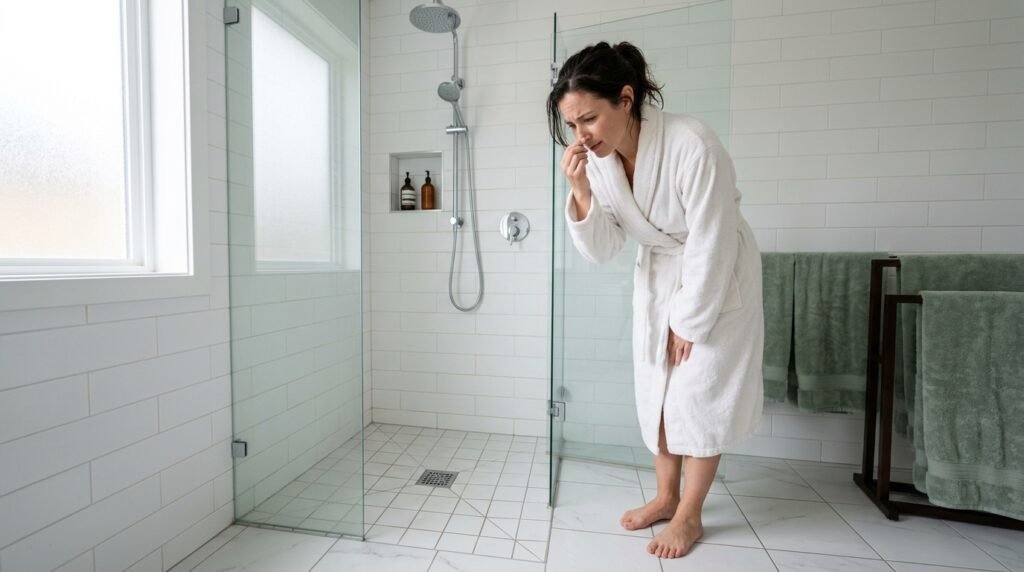
You step into your bathroom and freeze as the sharp, unmistakable scent of sewage hits your nose. Maybe it’s faint, just beneath the surface, or a sudden wave that makes you wrinkle your face and turn away. If you’ve noticed a sewage smell in your bathroom, you’re not alone. It is one of the most common household plumbing concerns and one of the most important to address promptly. Whether the smell comes and goes, appears only at night, or is constant, understanding the source is the first step toward safely and permanently fixing it.
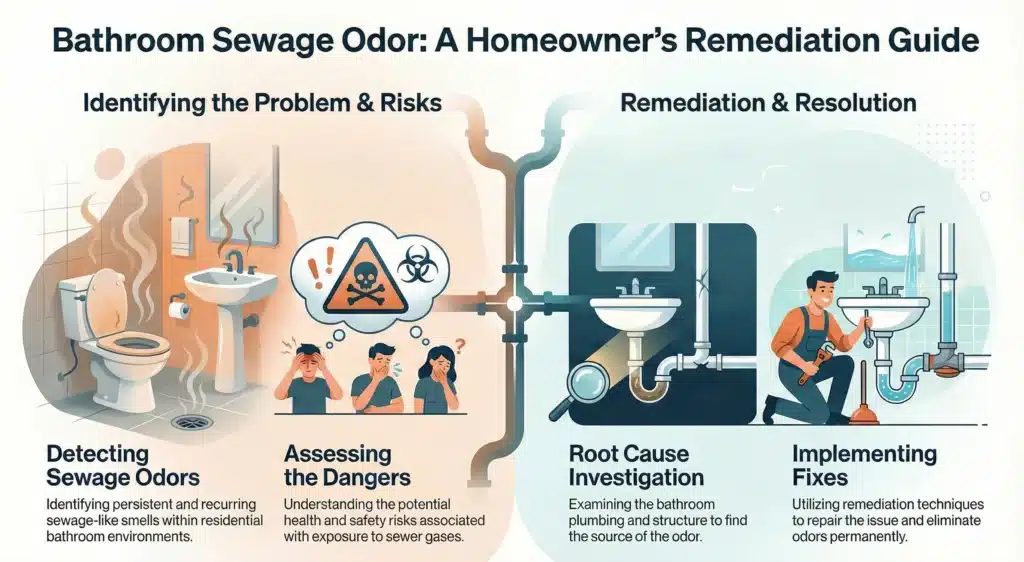
This guide explains every possible cause of sewage smell in a bathroom, how to identify the source, whether it is dangerous, and how to get rid of it. To help you feel confident tackling this issue, we will walk you through three main steps: identifying the source, applying the right fix for each cause, and adopting prevention techniques to stop sewage odours from returning.

Is Sewage Smell in the Bathroom Dangerous?

Yes, a sewage smell in the bathroom can be dangerous and should never be ignored or masked with an air freshener. The odour means sewer gas is entering your living space, and it contains gases that can cause health and safety risks. For example, hydrogen sulfide, which causes the rotten egg smell, is hazardous at concentrations as low as 10 parts per million (ppm), where it can quickly cause headaches, eye irritation, and nausea. At 50–100 ppm, exposure can become life-threatening with longer exposure. Methane, while odorless, is a significant fire or explosion hazard at concentrations above 5 percent in air. Key dangers include headaches, nausea, dizziness, irritation of the eyes or throat, and, in some cases, a risk of fire or explosion from flammable gases like methane. If you notice any of these symptoms or if the smell is strong and persistent, the situation may be urgent and requires immediate attention.

What Is Sewer Gas?

Sewer gas is a byproduct of the breakdown of household and human waste inside a sewage or septic system. It is a mixture of several gases:
Hydrogen sulfide • Source: Breakdown of organic matter in sewage.

Key risk: Primary cause of the rotten egg or sewage smell. Even at low concentrations, it can trigger headaches, eye irritation, and nausea. At higher concentrations in enclosed, poorly ventilated bathrooms, it becomes more hazardous and can numb the sense of smell.

Methane • Source: Produced by organic decay in sewage.

 Key risk: A colourless, odourless gas that is highly flammable and creates a risk of fire or explosion if it accumulates near an open flame.
Ammonia • Source: Released from the decomposition of urea in waste.
 Key risk: Adds a sharp, acrid quality to the sewage odour and can irritate the eyes, nose, and throat at elevated levels.
Carbon dioxide and nitrogen • Source: General byproducts of sewage decomposition.
 Key risk: Present in sewer gas and can displace oxygen in poorly ventilated spaces at high concentrations, though not typically the cause of odour or acute symptoms.

Symptoms to Watch For

If a sewage smell is strong, persistent, or accompanied by any of the following symptoms, ventilate the space immediately and contact a licensed plumber:
  • Headaches or dizziness after time in the bathroom
  • Eye, nose, or throat irritation
  • Nausea or fatigue
  • A visible crack or damage to plumbing fixtures
  • The smell appeared suddenly and intensely with no clear cause.
⚠️ A strong, raw, or toxic sewage smell that is constant and intense warrants urgent professional attention. A faint or intermittent sewage smell is typically less urgent but still needs to be identified and resolved.

What Causes Sewage Smell in the Bathroom?

There are several distinct causes of sewage smell in a bathroom. Identifying the correct one is essential for applying the right fix.

Dry P-Trap (Most Common Cause)

Every drain has a U-shaped pipe beneath it called a P-trap that holds water to prevent sewer gas from entering the home.
Before taking action, ask yourself: When was the last time this drain was used? A dry P-trap is often the culprit if the drain hasn’t been used recently. When a drain is unused, the water evaporates, breaking the seal and allowing gas to rise freely. This explains intermittent smells, basement bathroom smells, guest bathroom smells, and smells that come and go.
Fix: Run water in every drain for 30–60 seconds to refill the P-trap. For low-use drains, run water weekly. To slow evaporation, pour about one tablespoon of mineral oil into the drain immediately after adding water. The oil floats on top of the water in the trap, forming a barrier that helps retain the water seal for longer.

Blocked or Clogged Drain Vents

Vent pipes extend through the roof to allow sewer gas to escape outdoors. When blocked by debris, bird nests, leaves, or ice, gas is pushed back down through drains into the home. This explains smells after rain, in winter, on hot days, or in the kitchen and bathroom simultaneously.
Fix: Have a plumber inspect and clear the vent pipes. Roof access is required — this is not a safe DIY task.

Loose or Damaged Wax Ring Under Toilet

The wax ring seals the toilet base to the drain. When it degrades or is displaced, sewer gas escapes around the toilet base. Signs include a sewage smell from the toilet area, water pooling at the base, or the toilet rocking.
Fix: A licensed plumber can replace the wax ring. The toilet must be lifted and a new ring installed.

Cracked or Damaged Pipes

Cracks in drainpipes, sewer lines, or connections allow sewer gas to seep into the living space without a visible water leak. This explains a sewage smell with no leak, smells in both the bathroom and basement, or smells throughout the house.
Fix: A plumber can perform a camera inspection to identify cracks. Repair options include pipe relining or section replacement.

Missing or Deteriorated Caulking

Caulk around the toilet base, bathtub, and tile seams prevents gas from entering through gaps. Cracked or missing caulk — particularly around the toilet — can contribute to sewage odours.
Fix: Remove old caulk and apply fresh mould-resistant silicone caulk around the toilet base and any visible gaps.

Bacteria Buildup in Drains

Organic matter — hair, soap residue, skin cells — accumulates in drains and develops bacterial colonies that produce unpleasant gases. This is a common cause of sewage smell from the bathroom sink, shower drain, or after showering.
Fix: Clean drains monthly with baking soda and white vinegar. Remove visible debris from drain covers and flush with hot water. This routine prevents odours and is an eco-friendly, pipe-safe way to maintain your plumbing without harsh chemical cleaners. This sustainable solution helps protect your pipes and the environment, making regular maintenance easier.

Full or Overdue Septic Tank

In homes with septic systems, a full tank pushes gas backwards through the plumbing. This explains sewage smells in septic-connected bathrooms, particularly when the tank is overdue for pumping.
Fix: Have the septic tank inspected and pumped by a licensed service provider. Most tanks require pumping every 3–5 years.

Air Admittance Valve (AAV) Failure

An Air Admittance Valve allows air into pipes without a full roof vent. If it fails or sticks open, sewer gas can enter the home through the valve. A properly functioning AAV should not allow gas in.
Fix: Have a plumber inspect and replace the AAV if needed.

Sewer Backup

A sewage backup — indicated by slow drains, gurgling sounds, or visible backup — points to a main sewer line blockage. This is common after heavy rain when municipal systems are overwhelmed, or when tree roots have entered the main line.
Fix: Do not use water in the home. Contact a plumber immediately. Mainline blockages require professional clearing.

Exhaust Fan Drawing in Odours

A poorly configured exhaust fan can create negative air pressure, drawing sewer gas into drains rather than expelling it. If the fan is not properly vented to the outside, it can worsen the problem.
Fix: Ensure the exhaust fan vents to the outside, not into a wall cavity or attic. Confirm the fan is correctly sized for the bathroom.

Sewage Smell in Bathroom: Location-by-Location Breakdown

Sewage Smell from the Bathroom Sink

Most commonly caused by a dry P-trap under the sink, bacteria and buildup inside the drain, a blocked vent pipe affecting the sink drain, or a cracked drain connection under the sink cabinet.
Check under the sink for the P-shaped pipe. Run water for 60 seconds to ensure the trap is filled. Clean the drain with baking soda and vinegar.

Sewage Smell from the Shower or Bathtub

Typically caused by a dry P-trap in the shower drain (especially after travel or extended non-use), hair and soap scum buildup that can create bacterial odour, or a cracked shower drain fitting.
Remove the shower drain cover and look for visible buildup. Run the shower for a full minute. Clean the drain cover thoroughly.

Sewage Smell from the Toilet

Typically caused by a failed or degraded wax ring, a cracked toilet base, or sewer gas escaping around an improperly sealed toilet flange.
Flush the toilet and observe whether the smell intensifies. Check for any rocking movement at the base. Look for discolouration or soft spots in the floor around the toilet.

Sewage Smell from a Floor Drain

Floor drains — particularly in basements and older homes — have P-traps that dry out quickly when unused. Pour a gallon of water into the drain to refill the trap.
ℹ️ Placing a cover over a dry drain can temporarily reduce odour, but it does not fix the cause. Keeping the P-trap filled with water is the correct solution.

Why Sewage Smell Appears at Specific Times

Sewage Smell at Night or in the Morning

Temperature drops overnight, shifting the air pressure and pushing the gas upward. Windows and doors are closed, reducing ventilation. P-traps are not refreshed during hours of non-use, and water seals thin in dry conditions. By morning, these combined factors make the smell most noticeable when you first enter the bathroom.

Sewage Smell After Shower

Water pressure during a shower can create a brief vacuum in the drain, drawing gas upward if the vent is partially blocked. Steam makes existing drain odours more pronounced. A shallow or low P-trap may briefly lose its seal under flow.

Sewage Smell After Rain

Rain increases pressure in municipal sewer systems, pushing gas backwards through plumbing connections. It can block roof vent pipes with debris or temporarily interfere with septic drainage in saturated soil.

Sewage Smell in Summer or on Hot Days

High temperatures speed up P-trap water evaporation, causing gas to expand and rise more readily. Bacterial growth in drain buildup also increases in warm, moist conditions.

Intermittent or Occasional Sewage Smell

A P-trap that is low but not fully dry holds most of the time but fails under specific conditions. A partially blocked vent pipe causes problems when the weather or wind direction changes. A loose fitting allows gas to escape only when water pressure shifts.

Sewage Smell in Specific Types of Homes

Apartment or Condo Bathroom

In multi-unit buildings, sewage smells can travel through shared plumbing stacks. If one unit has a plumbing problem, the odour can affect adjacent units. Notify building management immediately, as the issue may require building-wide inspection.

Mobile Home Bathroom

Mobile homes use different plumbing and venting configurations than site-built homes. Common causes include dry P-traps in compact drain layouts, worn insulation that allows ground odours to enter, and ageing plastic pipes that may crack or separate at joints.

RV Bathroom

A full holding tank, a blocked roof vent, a dry P-trap after storage, or a deteriorated tank seal are most commonly the cause of RV sewage smells. Regular tank maintenance and running water through all drains before and after storage are the most effective preventative measures.

Basement Bathroom

A dry floor drain P-trap is the most common cause. Pour a gallon of water into the floor drain to refill the trap. If the smell persists, have the drain inspected for a cracked trap or a missing trap.

Sewage Smell in House — Not in Bathroom

When the smell is throughout the home but not centred in a bathroom, likely causes include a cracked main sewer line under the foundation, a damaged cleanout cap venting gas indoors, a plumbing issue near a washing machine or kitchen drain, or a broad septic system problem.

Sewage Smell in One Bathroom Only

When only one bathroom is affected, the cause is almost certainly isolated to that bathroom’s plumbing — a dry trap, a failed wax ring, a cracked drain fitting, or a blocked vent branch serving just that area.

How to Get Rid of Sewage Smell in the Bathroom

Step 1 — Identify the Source

Go through each fixture one at a time: run water in the sink, run the shower, flush the toilet, check the floor drain. Open sink cabinets and check for dampness, cracks, or unusual odours.

Step 2 — Refill All P-Traps

Run water in each drain for at least 60 seconds. Pour a full gallon of water into any floor drain. This step often resolves the smell immediately if dry traps were the cause, and many readers find their issue is fixed at this point. Celebrating this early win can build momentum to continue with the next steps, even if further action is needed.

Step 3 — Clean the Drains

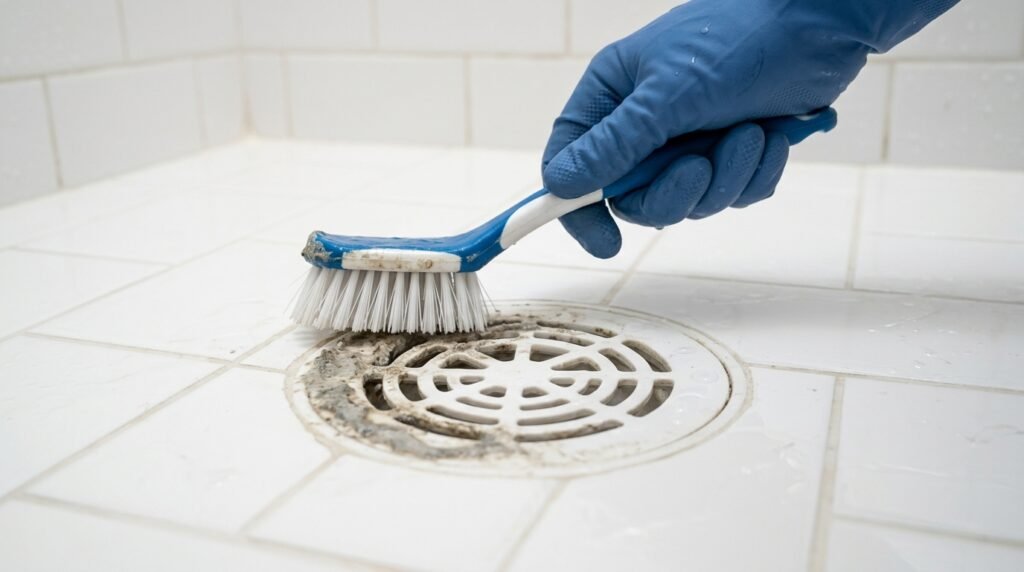
Pour half a cup of baking soda into the drain, followed by half a cup of white vinegar. Let it fizz for 20–30 minutes, then flush with hot (not boiling) water. Remove the drain cover and clean it with a brush. Remove any visible debris from inside the drain opening.
⚠️ Use chemical drain cleaners sparingly and only as a last resort. Occasional, cautious use is generally safe, but avoid relying on them frequently, as they can damage pipe joints over time and may worsen odours if residue is left behind. Consider trying alternative cleaning methods first to help maintain the long-term health of your plumbing system.

Step 4 — Inspect and Reseal the Toilet

Check the toilet base for any movement when you shift your weight. If it rocks, the wax ring may need to be replaced professionally. Inspect caulk around the toilet base — if cracked or missing, remove and replace it with fresh mould-resistant silicone caulk.

Step 5 — Check the Vent Pipes

If steps 1–4 do not resolve the issue, have the vent pipes inspected. Signs of a blockage include gurgling drain sounds when water is used elsewhere in the home, multiple drains affected simultaneously, and smells that worsen during or after rain.

Step 6 — Professional Inspection

When home remedies do not work, it is important to call a licensed plumber. A professional can use a drain camera to inspect inside pipes, conduct a smoke test to locate where gas is escaping, or perform pressure testing to detect cracks. You should contact a plumber promptly if you notice any of the following: the sewage smell is persistent or has lasted more than a few days, the odour is strong or worsening, there is visible damage to plumbing fixtures or pipes, multiple rooms are affected, you see water pooling near the toilet, or there are signs of a sewage backup such as slow drains or gurgling noises. Enzyme-based drain treatments can help reduce bacterial buildup as a supplementary measure, but they do not fix structural plumbing issues.

How to Prevent Sewage Gas Smell in the Bathroom

  • Run all drains weekly — any drain not used regularly should have water run through it at least once a week.
  • Clean drains monthly with a baking soda and vinegar treatment to prevent odour-producing buildup.
  • Inspect caulking around the toilet, bathtub, and shower twice a year and repair any cracks.
  • Have septic tanks inspected and pumped on schedule — typically every 3–5 years.
  • Keep roof vent pipes clear after storms, leaf fall, and winter weather.
  • Never ignore a sudden or strong sewage smell. As soon as you notice it, open windows and doors to ventilate the area and avoid using air fresheners as a substitute. Check all drains and run water to refill P-traps in sinks, showers, and floor drains. These actions help reduce your exposure to sewer gas and may solve the problem if the cause is a dry trap. Investigate the source promptly instead of masking the smell, and seek professional help if the odour is strong or persistent. By making small weekly habits like running water through drains and checking for early signs, you can help avoid costly surprises. These routines offer lasting peace of mind and keep your bathroom fresh and safe.

Smell Strength & Frequency: Why Sewage Odours Vary

Smell Type
Likely Cause
Urgency
Faint / SlightLow water in P-trap, minor drain buildupLow — address within a week
Comes and GoesPartially dry P-trap, partly blocked ventModerate — identify the pattern
After Rain / WeatherVent blockage, sewer pressure changesModerate — inspect vents
Only at Night / MorningTemperature shift, reduced ventilationLow to moderate — check traps
Strong / BadFailed wax ring, cracked pipe, full septicHigh — call a plumber soon
Raw / Toxic / SuddenMain line issue, serious crack or backupUrgent — professional immediately
Damp + SewageMoisture + gas — possible leakHigh — inspect for leak
From One Fixture OnlyIsolated P-trap or drain issueModerate — start with that fixture

Frequently Asked Questions

Q: Is the sewage smell in the bathroom dangerous?
Yes, it can be. Sewer gas contains hydrogen sulfide, methane, and ammonia. Low-level, occasional exposure is generally not considered an acute emergency, but persistent or strong sewer gas in an enclosed bathroom should be taken seriously. Ventilate the space, identify the cause, and seek professional help if the smell is strong or persists.
Q: What causes sewage smell in the bathroom?
The most common causes are a dry P-trap, blocked plumbing vent pipes, a failed wax ring under the toilet, cracked drain pipes, bacterial buildup in drains, a full septic tank, or a failed air admittance valve. The fix depends on correctly identifying which of these is responsible.
Q: Why does sewage smell occur only at night or in the morning?
Overnight temperature drops shift air pressure, reduce airflow, allow gas to concentrate, and prevent P-traps from being refreshed for hours. By morning, these combined factors make the smell most noticeable when you first enter the bathroom.
Q: How do I stop the sewage smell in my bathroom sink?
Run water for 60 seconds to refill the P-trap, then clean the drain with baking soda and white vinegar. If the smell persists, the vent pipe or drain connection should be inspected by a plumber.
Q: Why does the sewage smell come and go?
An intermittent sewage smell usually points to a P-trap that is low but not completely dry, a partially blocked vent pipe, or a loose plumbing connection. The smell appears under specific conditions — temperature changes, pressure shifts, or after extended non-use — and then dissipates.
Q: What causes sewage smell in the bathroom after rain?
Rain increases pressure in the sewer system, pushing gas backwards through plumbing. It can also block roof vent pipes with debris or temporarily interfere with septic drainage in saturated soil.
Q: Why is there a sewage smell only in one bathroom?
When the smell is isolated to one bathroom, the cause is almost certainly specific to that bathroom — a dry P-trap, a failed wax ring, a cracked drain fitting, or a blocked vent branch serving just that area.
Q: Can I fix a sewage smell myself?
Many common causes — dry P-traps, drain buildup, and deteriorated caulk — can be addressed without professional help. However, wax ring replacement, cracked pipes, blocked vent pipes, and septic system issues should always be handled by a licensed plumber.
Q: What should I do if I smell sewage in my bathroom right now?
Open windows and doors to ventilate the space immediately. Do not use aerosol sprays as a substitute. Check all drains and run water to refill P-traps. If the smell is very strong, leave the bathroom and contact a licensed plumber — strong sewer gas concentrations can be hazardous.
Q: Why does my basement bathroom smell like sewage?
Basement floor drains are rarely used, and their P-traps dry out quickly. Pour a gallon of water into the floor drain to refill the trap. If the smell persists, have a plumber check for a missing or damaged trap or a cracked drain line.
Q: Can sewage smell appear in bathrooms without a septic tank?
Yes. Most causes — dry P-traps, blocked vents, failed wax rings, cracked pipes, and drain bacteria — apply equally to homes on municipal sewer systems. A septic system is not required for sewage smells to occur.
Q: Why does my bathroom smell like sewage in summer or on hot days?
Hot temperatures speed up P-trap water evaporation, cause gases to expand and rise more readily, and encourage bacterial growth in drain buildup. All of these factors intensify sewage-related odours during warm weather.
Q: What causes sewage smell in both the bathroom and kitchen at the same time?
When the smell is present in both rooms, the most likely causes are a blocked main plumbing vent pipe or a problem with the main sewer line. Both require professional inspection.
Q: Why does my RV bathroom smell like sewage?
A full holding tank, a blocked roof vent, a dry P-trap after storage, or a deteriorated tank seal are most commonly the cause of RV sewage smells. Regular tank maintenance and running water through all drains before and after storage are the most effective preventative measures.

Disclaimer

Your safety and your family’s wellbeing are always the top priorities. This guide is designed to give you practical knowledge so you feel more confident in responding to sewage smells in your home. Still, every home and plumbing system is unique, and there can be important differences based on your location, your building’s specific design, or local plumbing codes. That is why, for any concern that goes beyond quick fixes or if you ever feel unsure, it’s always best to talk with a licensed, trusted local professional who knows how to protect your home and health.
Health & Safety: If you detect a strong, sudden, or persistent sewage smell in your home, ventilate the area right away and contact a licensed plumbing professional. Do not try to locate or repair gas-related plumbing issues without proper training and equipment. If you notice any health symptoms you think could be related to sewer gas, get medical attention promptly. Your health and peace of mind come first.
Plumbing & Repair Advice: The repair suggestions in this guide are general recommendations meant to help most homeowners. Please consult a licensed and qualified plumber before beginning any repair involving pipes, toilet removal, or septic maintenance. Trying to fix complex issues on your own can make the problem worse or even create safety risks.
 
Septic Systems: Recommendations about septic systems are intended as general background. Local septic codes, system designs, inspection intervals, and pumping schedules can vary widely. For septic care, always seek out a licensed, reputable septic service provider who understands your local requirements.
No Professional Advice: This guide is not a substitute for professional plumbing, engineering, medical, or legal advice. While care has been taken to offer helpful tips, the authors and publishers cannot be responsible for any outcomes, injuries, damages, or costs arising from the use of the information here.
 
When in doubt, choose the safe path: consult a qualified local expert about any plumbing concerns in your home. That way, you can protect your property and your loved ones with confidence.