Wall Panels: The Complete Style, Size & Installation Guide
A plain wall is just… a plain wall. But add texture, rhythm, and a bit of dimension, and suddenly a flat, forgettable surface becomes the whole reason a room feels finished. That’s the quiet power of wall panels — they’re one of the fastest ways to transform a space without touching the layout, the furniture, or the budget for a full renovation.
This wall panel guide covers everything: styles, sizes, materials, room-by-room ideas, installation steps, costs, and the trends shaping 2026. Whether you’re after decorative wall panels for a feature wall or waterproof wall panels for a bathroom refresh, you’ll find exactly what you need here.
What Is Wall Paneling, Exactly?
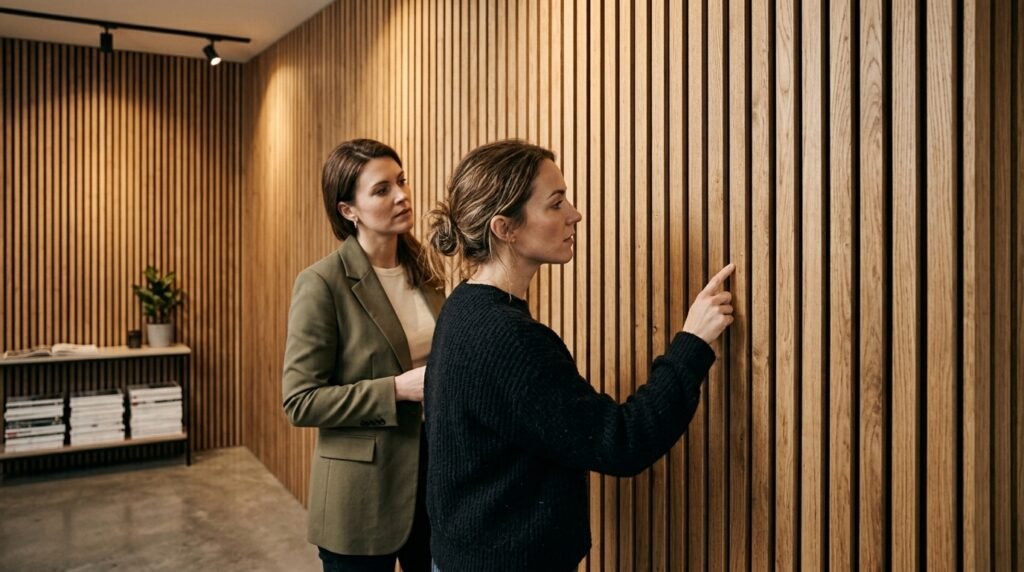
Wall paneling (also spelled wall panelling outside the US) refers to decorative or functional material applied to a wall’s surface, either covering the whole wall or forming a feature wall panels accent. Unlike paint or wallpaper, interior wall panels add real, tactile dimension — shadows, grooves, and texture that catch the light differently throughout the day.
Wall cladding panels serve two purposes at once: they look good, and many styles also protect the underlying wall from scuffs, moisture, or wear. That combination of form and function is exactly why wall panels for interior walls have become such a popular fixture in modern renovations.

Wall Panel Styles: Finding Your Look
Wall panel styles vary enormously, and picking the right one comes down to the mood you’re going for.
- Board and batten – wide flat boards with narrow strips covering the seams; classic and versatile for farmhouse wall panels or traditional homes.
- Beadboard – narrow vertical planks with a small rounded groove; a cottage and coastal favorite.
- Shiplap – horizontal overlapping boards, a rustic staple that pairs well with farmhouse wall panels.
- Fluted panel designs – evenly spaced concave grooves that create a sleek, architectural rhythm; one of the biggest wall panel trends 2026 has going. As Homedit’s roundup of fluted design ideas for 2026 points out, designers are extending these vertical grooves well beyond accent walls — onto islands, fireplaces, and full-height media walls.
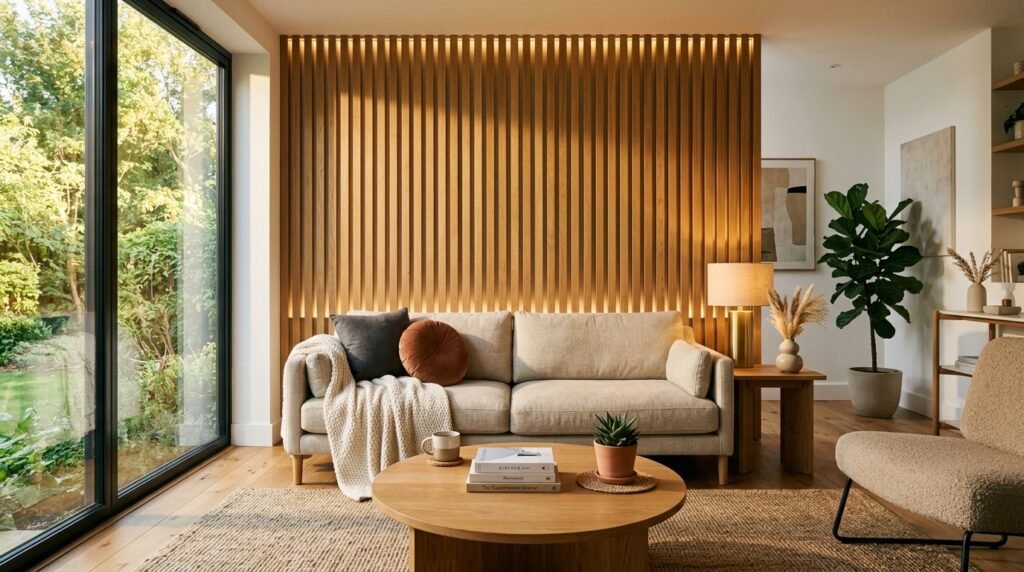
- Slat wall and vertical slats – narrow wood strips mounted with visible gaps, popular for TV media wall panels and modern wall panels generally.
- Tongue and groove – interlocking boards for a seamless, gap-free finish.
- Shaker panel – flat recessed panels within a simple frame, clean and understated.
- Wainscoting – general term for lower-wall paneling, covering everything from raised panel to flat panel styles.
- Geometric wall panels and grid wall panels – bold repeating shapes for a striking luxury wall panels look.
- Ribbed wall panels – similar to fluted, with a slightly rounder profile often called reeded. According to Scobis Millwork’s comparison of fluted and reeded panels, fluted grooves curve inward for bold shadow lines, while reeded profiles curve outward for a softer, more rounded texture.
- Contemporary wall panels, minimalist wall panels, Japandi wall panels, and Scandinavian wall panels – all lean toward clean lines, natural tones, and restraint.
- Industrial wall panels – raw finishes, exposed texture, often paired with black metal accents.

Wall Panel Materials Compared
Wood Wall Panels
Wood wall panels, including wood slat wall panels, oak wall panels, walnut wall panels, and wood veneer panels, bring natural texture and warmth. Timber wall panels and reclaimed wood wall panels add character, while natural wood panels generally need occasional sealing or staining to stay protected.
MDF & PVC Panels
MDF wall panels are affordable, paintable, and easy to cut — a favorite for DIY wall paneling projects. PVC wall panels and WPC wall panels (wood-plastic composite) step in wherever moisture is a concern, making them a natural fit as bathroom wall panels or kitchen wall panels. Choosing between MDF vs wood wall panels usually comes down to budget and moisture exposure — MDF costs less but needs protection from water, while solid wood offers more natural character at a higher price point.
Decorative & Textured Panels
3D wall panels, textured wall panels, and geometric wall panels create visual depth through shadow rather than color. Faux stone panels, faux brick panels, faux concrete panels, and faux marble panels replicate the look of heavier natural materials at a fraction of the weight and cost, while genuine stone veneer wall panels offer the real texture for those who want authenticity over budget savings.
Acoustic Panels
Acoustic wall panels combine acoustic felt panels or fabric wall panels with sound-dampening cores to reduce echo and noise — ideal for home office wall panels, media rooms, or apartments with thin walls. Upholstered wall panels take this further, adding a soft, tactile surface that works beautifully as a bedroom feature wall.
Metal & Composite Panels
Aluminum composite panels, metal wall panels, and FRP wall panels (fiberglass-reinforced plastic) show up more in commercial or high-moisture settings, though they’re increasingly popular in residential kitchens and modern industrial wall panels designs too.

Comparing Your Options
If you’re stuck deciding, here’s how the most common comparisons usually shake out:
- PVC vs MDF panels – PVC wins on moisture resistance; MDF wins on natural texture and paintability.
- Fluted vs slat wall panels – fluted panels have a continuous grooved surface; slat panels use individual boards with visible gaps between them.
- Wall panels vs wallpaper – panels add physical texture and durability; wallpaper is cheaper and faster to change but offers no dimensional depth.
- WPC vs PVC wall panels – WPC leans closer to a natural wood look and feel; PVC is typically lighter and more budget-friendly.
- Stone veneer vs faux stone panels – veneer offers authentic texture and weight; faux stone panels are lighter, cheaper, and easier to install.

Wall Panel Sizes and Layout
Wall panel sizes vary by style and material, but most sheet-based panels (MDF, PVC, WPC) come in standard 4×8 foot sheets that get cut down to fit your panel spacing and layout. Slat and fluted panels are often sold as narrower individual boards, which you piece together for full coverage.
When planning your wall panel layout, keep these tips in mind:
- Measure your wall’s full width and height before ordering, and always add a small buffer for cutting.
- Center your panel spacing so the pattern looks intentional rather than lopsided at the edges.
- For vertical wall panels, plan your starting point from the most visually prominent corner of the room, since that’s where the eye lands first.
If math isn’t your thing, a wall panel style and size calculator can help you work out exact panel counts and spacing based on your wall dimensions in just a few clicks.

Room-by-Room Wall Panel Ideas
- Living room wall panels – a living room feature wall behind the sofa or a TV feature wall panel ideas setup instantly upgrades the whole room.
- Bedroom wall panels – a bedroom feature wall panel idea behind the headboard adds texture without overwhelming a restful space; upholstered wall panels for bedroom designs are especially popular for a soft, cozy feel.
- Hallway wall panels and stair wall panels – protect high-traffic walls while adding architectural interest to otherwise overlooked spaces.
- Bathroom wall panels – waterproof wall panels for bathrooms and PVC wall panels for shower walls are increasingly used bathroom wall panels instead of tiles, since they install faster and have fewer grout lines to clean.
- Kitchen wall panels – kitchen splashback wall panels offer an easy-clean alternative to tile behind the stove or sink.
- Dining room wall panels – often paired with wainscoting or board and batten for a classic, elegant look.
- Fireplace wall panels – fluted or ribbed panels around a fireplace create a striking, architectural focal point.
- Home office wall panels – acoustic panels here reduce echo on video calls and help with focus.
- Entryway wall panels – durable, scuff-resistant materials handle daily foot traffic well.

Benefits of Wall Panels
Beyond looks, wall panels bring real functional benefits:
- Waterproof wall panels and moisture resistant wall panels – ideal for bathrooms, kitchens, and laundry areas.
- Soundproof wall panels and acoustic treatment – reduce noise transfer and echo in shared walls or media rooms.
- Thermal insulation – some panel systems add a layer of insulation against exterior walls.
- Impact resistant wall panels – hold up better than paint or wallpaper in high-traffic zones.
- Easy clean wall panels and mold resistant wall panels – a major reason PVC and WPC panels dominate bathroom and kitchen applications.
- Fire rated wall panels – required in some commercial and multi-family settings, and a smart consideration for basements or utility rooms.
- Low maintenance wall panels – once installed, most panel systems need little more than an occasional wipe-down.

Wall Panel Installation: Step by Step
Ready to tackle wall panel installation yourself? Here’s the general DIY wall paneling process:
- Prep the wall. Clean the surface and check it’s flat — you can generally install over drywall, and in many cases even install over tile with the right adhesive and prep work.
- Plan your layout. Dry-fit panels to confirm your panel spacing looks balanced before committing to adhesive or nails.
- Cut your panels. Use a fine-tooth saw to cut wall panels cleanly, especially around outlets or trim.
- Apply adhesive. Panel adhesive or construction adhesive bonds most panels directly to the wall; some styles also use a glue-on wall panels method combined with light nailing for extra security.
- Consider peel and stick. Peel and stick wall panels are the fastest option for renters or anyone wanting a no-tools installation — just clean, align, and press.
- Secure with finishing nails. For heavier wood panels, finishing nails add extra hold beyond adhesive alone, especially over a proper stud wall installation.
- Add trim. Wall panel trim and wall panel molding cover raw edges and give the installation a finished, professional look.
For those wondering can wall panels be installed over existing walls, the answer is generally yes, as long as the surface is clean, dry, and structurally sound — which makes wall paneling one of the more beginner-friendly upgrades in this entire guide.

Wall Panel Cost and Buying Guide
Wall panel cost varies widely by material and finish:
- Affordable wall panels – basic MDF or PVC sheet panels sit at the lower end of the price range, making them ideal for cheap wall panels projects on a budget.
- Wall panel installation cost climbs with more complex materials like stone veneer or metal, plus any professional labor involved.
- Wall panel kits bundle pre-cut pieces together, which simplifies DIY wall paneling for beginners who don’t want to measure and cut everything from scratch.
- Peel and stick wall panels remain some of the most affordable and lowest-effort options if you want a quick refresh without a big investment.
Before buying, think through your room’s humidity level, how much wear the wall sees, and whether you want a paintable finish (MDF, shaker panels) or a fixed material finish (stone veneer, metal).

Wall Panel Trends for 2026
The biggest wall panel trends 2026 include:
- Fluted wall panel trend 2026 and ribbed textures continuing to dominate feature walls
- Wall panel ideas with LED lighting built into grooves or behind slats for a soft glow
- Japandi wall panel ideas blending Japanese minimalism with Scandinavian warmth
- Warm minimalism wall panels – neutral tones with restrained texture
- Panel drenching wall trend 2026 – covering walls, trim, and even ceilings in a single tone for a cohesive, immersive look
- Biophilic wall panel ideas – natural wood textures that bring an organic feel indoors
- Curved wall panel designs – softer, rounded profiles pairing with today’s curved furniture trends
- Modern wall panel colours 2026 – deep charcoal, warm greige, and soft earth tones leading the palette
- Luxury feature wall ideas 2026 – sculptural, oversized textures used sparingly for maximum impact

A Word on Home Safety While You Renovate
Any time you’re up on a ladder working on walls or ceilings, it’s worth checking your smoke detectors too. Working smoke alarms cut the risk of dying in a reported home fire by more than half, according to the National Fire Protection Association’s smoke alarm research. Homes without working alarms account for a disproportionate share of home fire deaths, often simply because a battery had died or a unit had outlived its typical ten-year lifespan.
Since you’ll likely have tools and a ladder out anyway for your paneling project, take a minute to test your existing alarms — or use a smoke detector calculator to check your home has full coverage in the right spots.

Finishing Touches for Your Wall Panel Project
A few related upgrades pair naturally with new wall paneling:
- If your project touches trim throughout the home, beadboard wainscoting is a great companion style for hallways and dining rooms.
- Planning a bigger overhaul? Browse general home renovation ideas for what to tackle alongside your new panels.
- If your feature wall sits behind a media setup, check the TV wall mount calculator to plan bracket placement before the panels go up.
- Pairing panels with new lighting? LED lighting that’s bright, safe, and efficient covers ideas for building light into grooves or slats.
- For an overall budget estimate across materials, a building materials calculator helps you plan costs before you order panels.

🧱 Wall Panels FAQs
What is the best wall panel material for interior walls?
How much do wall panels cost to install?
Are wall panels still in style in 2026?
Can wall panels be installed over existing walls?
What's the easiest wall panel to install yourself?
Are wall panels waterproof?
What's the difference between fluted and slat wall panels?
Do wall panels help with soundproofing?

Final Thoughts
Wall panels are one of the rare home upgrades that deliver serious visual impact without a serious price tag or timeline. Pick a style that matches your room’s personality, choose a material suited to the space’s moisture level, and take your time with layout and trim — that’s really all it takes to turn a flat, forgettable wall into the best-looking part of the room.
And while you’ve got the ladder out for your paneling project, take a couple of extra minutes to check your smoke alarms too. It’s a small step that pairs perfectly with any home upgrade and adds real peace of mind to the space you just gave a whole new look.