Grow Gardenia Care Guide: How to Grow Healthy, Fragrant Gardenias Without the Guesswork
If you’ve ever walked past a gardenia bush in full bloom, you already know why people fall in love with this plant. That sweet, creamy fragrance stops you mid-step. But if you’ve ever tried growing one yourself, you probably also know the frustration — yellow leaves, dropped buds, a shrub that just won’t flower no matter what you do.
Here’s the truth: gardenia care isn’t actually complicated. It just has a few non-negotiable rules. Get the soil, water, light, and humidity right, and the plant practically takes care of itself. Ignore those rules, and you’ll be troubleshooting problems for years.
This guide covers everything — gardenia soil, watering, fertilizer, pruning, propagation, pests, diseases, and the most common problems — so you can finally grow the fragrant, healthy gardenia shrub you pictured when you bought it.

🌿 Meet the Plant: Gardenia Jasminoides
Commonly known as Cape Jasmine
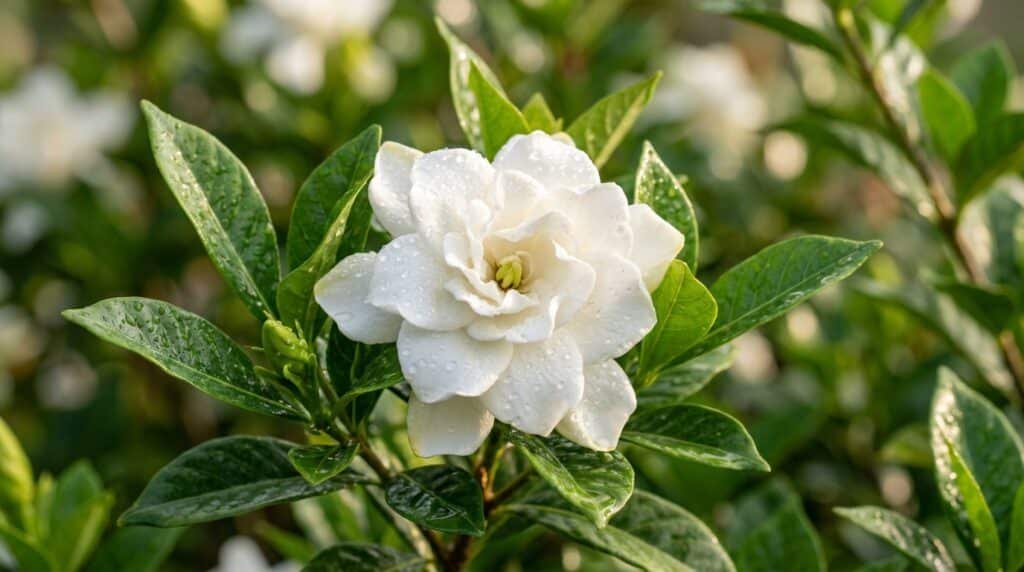
Gardenias belong to a select group of evergreen flowering shrubs highly prized for two distinct qualities: glossy, deep-green year-round foliage and intensely fragrant white blooms. Unlike truly difficult specimens, gardenias are simply highly specific about their microclimate requirements rather than delicate by nature.
When vital conditions are missed, the plant reacts immediately—typically presenting warning indicators through yellowing leaf veins or developing flower buds dropping before opening. Once you understand their primary checklist, providing proper care transitions from a mystery into a simple routine.

How Choosing the Right Spot? Gardenia Sunlight Requirements
Gardenia sunlight requirements are one of the most misunderstood parts of gardenia care. People assume “flowering shrub” means “full sun all day,” but that’s not quite right here.
- Outdoors: morning sun with afternoon shade is ideal. All-day filtered sunlight also works well.
- Indoors: place near an east-facing window, or several feet back from a south-facing window, for bright indirect sunlight.
- Avoid: intense, unbroken afternoon sun, which scorches the glossy leaves.
If your gardenia isn’t blooming, weak light is one of the first things to check. Not enough light is a leading reason gardenias produce plenty of leaves but very few flowers. For a deeper dive on window placement and light intensity indoors, the New York Botanical Garden’s houseplant care guide is a solid, research-backed reference.

Gardenia Soil: Getting the Acidity Right
This is where most gardenia problems actually start. Gardenias need acidic soil, and most average garden soil simply isn’t acidic enough on its own. Aim for a soil pH between 5.0 and 6.5.
If you’re not sure what your soil currently sits at, a basic soil test kit will tell you in minutes — worth doing before you plant, not after your leaves start yellowing.
To build the right soil environment:
- Mix in organic matter like compost, peat moss, or ericaceous compost
- Use composted pine bark or pine bark mulch to boost acidity and drainage at once
- Use a potting mix formulated for acid-loving plants if growing gardenias in pots
- If your soil runs alkaline, a sulfur soil amendment or chelated iron product can gradually lower pH
- Avoid soils that stay compacted or waterlogged, since gardenias hate wet feet just as much as dry ones
If you’re planning a full garden bed rather than a single shrub, it helps to understand your starting point first — our soil type guide walks through how to identify what you’re working with before you start amending it.

Gardenia Watering: The Rule That Prevents Most Problems
Water gardenia when the top 2 to 3cm of soil feels dry to the touch. That’s really the whole rule — not a rigid schedule, just a finger test. Check the top layer of soil, and water when it’s dry there.
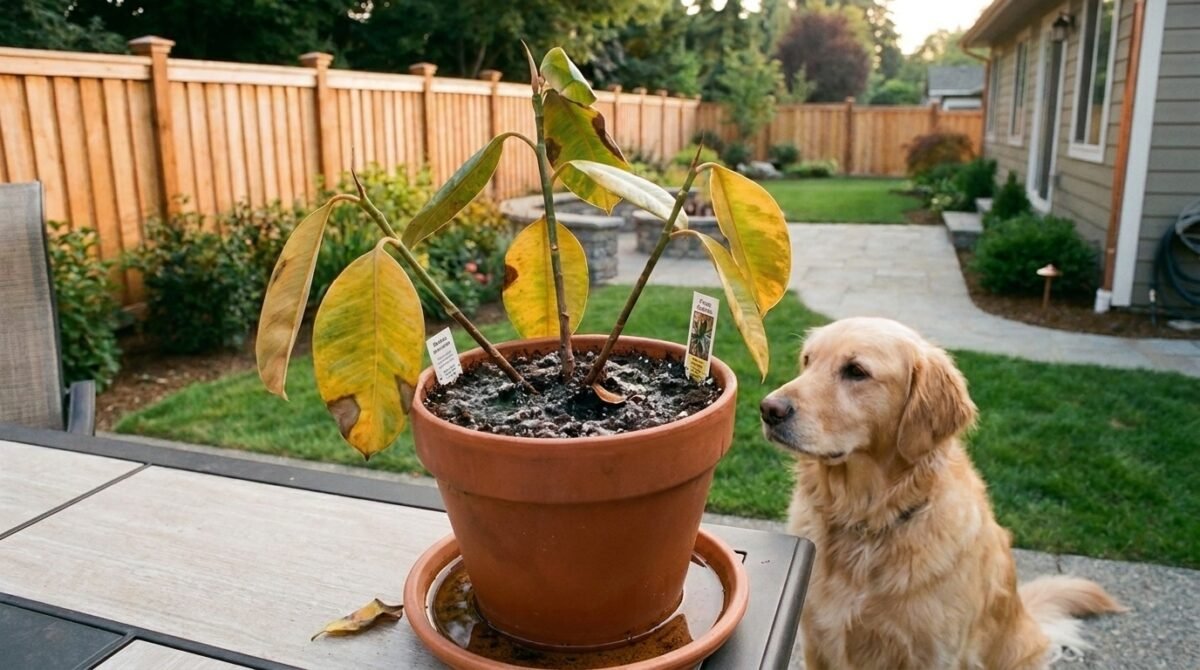
Gardenias want evenly moist soil, never soggy. Overwatering is one of the fastest ways to trigger gardenia root rot, since roots simply can’t breathe in waterlogged soil. Underwatering shows up just as fast, usually as curling leaves and dry, brittle growth.
A few watering habits that make a real difference:
- Water deeply at the base of the plant, not over the leaves, to reduce leaf spot and fungal issues
- Use rainwater or filtered water where possible, since hard tap water can gradually push soil pH upward
- Increase frequency during heat or drought, and ease off once growth slows in cooler months
- Confirm drainage holes are clear, especially in containers, so excess water actually leaves the pot

Gardenia Humidity and Temperature: The Overlooked Essentials
Humidity gets far less attention than watering, but it matters just as much, especially for indoor gardenias. These plants naturally prefer humid conditions, and low indoor humidity is one of the top reasons flower buds fail to open.
- Use a humidity tray (a shallow tray of pebbles and water, with the pot sitting above the waterline, not in the water) or a humidifier
- Keep gardenias away from heating vents, air conditioning drafts, and frequently opened exterior doors
- Aim for daytime temperatures in the 65–75°F range, with slightly cooler nights
Interestingly, gardenias actually need a stretch of cooler nights, generally 50–55°F, to properly set flower buds. A plant kept in constant warmth year-round may stay green and healthy but simply refuse to bloom.
For cold climates, frost protection matters too. Cold-hardy cultivars like ‘Kleim’s Hardy’ and ‘Frostproof’ can tolerate temperatures down to around 10°F, but most standard gardenias need winter protection, mulch, or a move indoors before the first hard freeze.

Gardenia Fertilizer: Feeding Without Overdoing It
Gardenias are fairly hungry plants during their growing season, but the wrong fertilizer, or too much of the right one, causes more harm than good.
Use an acid fertilizer made for plants like azaleas, camellias, or rhododendrons — an azalea fertilizer or camellia fertilizer will work just as well on gardenias, since all three share similar acid-loving needs. Feed roughly every 2 to 4 weeks through spring and summer, and stop fertilizing by late summer so you’re not pushing tender new growth right before cooler weather arrives.
Watch out for:
- Too much nitrogen: pushes leafy growth at the expense of flowers
- Yellow leaves with green veins: often a sign of iron deficiency, correctable with an iron chelate supplement alongside proper soil pH
- Magnesium deficiency: can also cause yellowing between leaf veins; a diluted Epsom salt solution is a common home remedy
- Fertilizing in fall or winter: stimulates growth that’s vulnerable to cold damage
For a step-by-step breakdown of fertilizer ratios and organic alternatives like fish emulsion and blood meal, Southern Living Plants’ gardenia growing guide is a helpful supporting resource. If your own fertilizer routine feels like guesswork right now, our fertilizer selector can help you match the right formula to your soil conditions instead of grabbing whatever’s on the shelf.

How to Measure for a Shower Curtain
Measuring takes two minutes and saves you from a wrong buy. Here is the simple method.
- Measure the width. Measure the length of your rod or the opening you need to cover.
- Measure the height. Measure from where the rod sits down to a few inches off the floor.
- Add for fullness. Multiply the width by 1.5 to 2 for a nice, gathered look.
- Account for the drop. Subtract the hook drop length, usually 2 to 3 inches.
The width should always be larger than your opening so the curtain gathers instead of clinging to you. That extra width is the fullness factor, and it is what separates a flat, sad curtain from a full, hotel-style one.
To plan the rod height and placement, our curtain rods calculator helps you get it right the first time.

Common Gardenia Problems (And What They’re Actually Telling You)
Gardenia Leaves Turning Yellow
This is the single most common gardenia complaint, and it almost always traces back to one of three things: soil pH that’s too high, iron deficiency, or poor drainage. Yellow leaves with darker green veins specifically point to chlorosis, which happens when the plant can’t access iron from soil that isn’t acidic enough.
If you’re seeing this across other plants in your yard too, not just your gardenia, it’s worth a broader look — our guide on why plant leaves turn yellowish breaks down the wider set of causes beyond just gardenias.
Gardenia Leaves Turning Brown or Curling
Brown leaves usually point to water stress in either direction, heat or cold exposure, wind burn, or drainage problems. Curling leaves often mean underwatering, though they can also signal a spider mite infestation, since mites feed on leaf undersides and distort growth as they go.
Gardenia Bud Drop
Few things are more disappointing than watching flower buds fall off right before they open. The usual suspects are inconsistent watering, low humidity, sudden temperature swings, or moving the plant after buds have already formed.
Once your gardenia has buds, treat it like it’s fragile: keep the watering steady, don’t relocate the pot, and don’t let humidity drop too low, especially indoors.
Gardenia Not Flowering
If your gardenia is green and healthy but simply won’t bloom, look at three things: light levels, pruning timing, and night temperatures. As mentioned above, gardenias need that stretch of cooler nights to set buds — a plant kept indoors in constant warmth may struggle to flower at all.

Gardenia Pests and Diseases: What to Look For
Gardenias attract a fairly predictable set of pests, and catching them early makes all the difference. Common gardenia pests include:
- Aphids: small, pear-shaped insects that curl new growth and leave sticky honeydew behind
- Whiteflies: tiny, moth-like insects that flutter when disturbed and coat leaves in honeydew
- Scale insects: flat or waxy bumps on stems and leaf undersides that suck sap and stunt growth
- Spider mites: near-microscopic pests that cause yellow stippling and fine webbing, usually a sign humidity is too low
- Mealybugs: white, cottony masses on stems and leaf joints
Most of these pests share one telltale side effect: sooty mold, a black, powdery coating that grows on the honeydew these insects excrete. It won’t directly damage the plant tissue, but it blocks light from reaching the leaves, which weakens the plant over time. Control the pests, and the sooty mold clears up on its own.
For treatment, start gently: a strong blast of water from the hose, insecticidal soap, or horticultural oil handles most infestations before they escalate. Reserve stronger insecticides for serious outbreaks. The Clemson HGIC gardenia pest guide offers detailed identification photos if you’re not sure exactly what you’re dealing with.
The most common gardenia disease, root rot, isn’t caused by a pest at all — it’s caused by soggy, poorly drained soil suffocating the roots. Preventing it comes back to the same fundamentals covered earlier: well-draining acidic soil and a proper watering routine, not a fungicide.

Growing Gardenias in Pots
Potted gardenias are a great option if your climate is too cold for outdoor gardenias year-round, or if you simply don’t have garden bed space. Container gardening also makes dwarf gardenia varieties, which naturally stay compact, an especially good fit for patios and small balconies.
- Choose a pot at least 12 inches in diameter to give the root system room to grow
- Make sure it has drainage holes — this one’s non-negotiable
- Use a potting mix designed for acid-loving plants
- Repot every 2 to 3 years, or whenever the plant becomes root-bound
If you’re not sure what container size actually fits your plant’s root system as it matures, our pot size calculator makes it easy to plan ahead instead of repotting twice in one year.

Gardenia Transplanting: Handle With Care
Gardenias resent root disturbance, which is why transplanting deserves a bit of extra caution. Fall is generally the best time to plant or transplant a gardenia, since cooler temperatures reduce stress on the root system. When you do move one, keep as much of the original root ball intact as possible, water deeply right after, and avoid fertilizing for the first few weeks while the roots settle in. According to Wilson Bros Gardens’ planting guide, digging a planting hole two to three times as wide as the root ball, without going much deeper, gives the roots the best possible start.

When and How Gardenia Pruning:
Gardenias don’t strictly require pruning, but they respond well to it. Light shaping and deadheading spent blooms can happen right after the spring bloom finishes. Save any heavier, rejuvenation-style pruning for late winter or very early spring, before new growth emerges, since cutting into a gardenia mid-bloom season can cost you flowers.
Deadheading also helps redirect the plant’s energy toward producing new buds rather than maintaining old, faded flowers.

Propagating Gardenias From Cuttings
Growing gardenias from stem cuttings is a genuinely rewarding way to multiply your collection for free. Here’s the basic process:
- In early summer, take a 4- to 6-inch softwood cutting from a healthy, non-flowering branch
- Remove the lower leaves, leaving just a few at the top
- Dip the cut end in rooting hormone to encourage root development
- Plant the cutting in a mix of peat moss and perlite, or try water propagation in a glass of water first
- Cover the pot loosely with plastic, or use a propagator, to keep humidity high
- Keep the cutting in bright, indirect light with consistently moist soil until roots establish
Stem propagation takes patience, but it’s genuinely one of the more satisfying ways to expand a garden full of fragrant shrubs without buying more plants.

Gardenia Soil And pH Ratios
Gardenia soil is really about one thing above everything else: acidity. These plants are true acid lovers, and most average garden soil just isn’t acidic enough to keep them happy. The sweet spot is a soil pH between 5.0 and 6.5. Go much higher than that, and the plant starts struggling to absorb iron from the soil, even if plenty of iron is technically there.
That’s actually the root cause behind the most common gardenia complaint: yellow leaves with darker green veins. This is called chlorosis, and it’s rarely a fertilizer problem — it’s a pH problem blocking nutrient uptake.
Before you plant, test your soil with a basic pH test kit. It takes minutes and saves you months of guessing later.
To build the right soil environment:
- Add organic matter — compost, peat moss, or ericaceous compost all help lower pH gradually
- Use pine bark or composted pine bark mulch — this naturally boosts acidity while also improving drainage
- Amend with sulfur if your soil runs alkaline, since elemental sulfur lowers pH more reliably than compost alone
- Choose an acidic potting mix (the kind made for azaleas or camellias) if growing gardenias in containers
Drainage matters just as much as acidity. Gardenias want soil that’s consistently moist, not compacted or waterlogged — soggy roots lead to root rot fast, regardless of pH. A loose, well-draining soil structure with plenty of organic matter solves both problems at once.
One thing to watch long-term: hard tap water and certain fertilizers can slowly push soil pH back up over time, even after you’ve corrected it. Retesting your soil once or twice a year, especially if you notice new yellowing, keeps small problems from turning into bigger ones.
Get the pH right, and most other gardenia issues — yellow leaves, poor blooming, weak growth — tend to sort themselves out on their own.

Gardenia Companion Plants and Landscaping
Gardenias pair beautifully with other acid-loving shrubs that enjoy similar light and moisture — think azaleas, camellias, rhododendrons, hydrangeas, and ferns. Just make sure companion plants aren’t fighting your gardenia for water, and that there’s enough air circulation between shrubs to prevent fungal issues like sooty mold and leaf spot.
Gardenias also work well as foundation planting, a fragrant hedge plant, or a patio plant near seating areas where their scent can be fully enjoyed. Their creamy white flowers are a long-time favorite in cottage gardens, pollinator gardens, and even wedding flowers, thanks to that unmistakable fragrance.
If you’re planning a hedge or foundation planting with gardenias as part of the layout, getting the distance between shrubs right matters just as much as soil and light. Our plant spacing calculator can help you map out a layout that gives each shrub room to mature without overcrowding.

A Quick Home Safety Note Worth Mentioning
Since gardenias are often planted right along porches, entryways, and foundations, it’s a good moment to bring up something unrelated but genuinely important: smoke alarm coverage near the entry points of your home.
Working smoke alarms cut the risk of dying in a home fire by roughly 60 percent, according to the National Fire Protection Association’s smoke alarm research, yet a significant share of home fire deaths still occur in properties with no working alarm present. If you’re already out in the yard planning your landscaping, it’s an easy moment to also check that your entryways and hallways are properly covered.
Our smoke detector calculator can help you figure out exactly how many alarms your home needs and where they’re best placed, based on your home’s layout and room count.

Bringing It All Together
If you take away just one thing from this guide, let it be this: gardenias aren’t hard, they’re specific. Acidic soil, consistent but not soggy moisture, bright indirect light, steady humidity, and a stretch of cooler nights once buds appear — that’s the whole formula.
Get those fundamentals right, and you’ll go from constantly troubleshooting yellow leaves and dropped buds to actually enjoying what gardenias are famous for: glossy green foliage and that unmistakable fragrance drifting through your garden all season long. For a broader overview that ties all of these steps together in one place, gardenia.net’s full growing guide is worth bookmarking. And if you’re planning a bigger overhaul of your outdoor space around your new gardenias, our indoor plant care calculator is a handy next stop for keeping the rest of your plant collection on the right schedule too.