Free Paint Calculator Guide: How Much Paint Do You Actually Need?
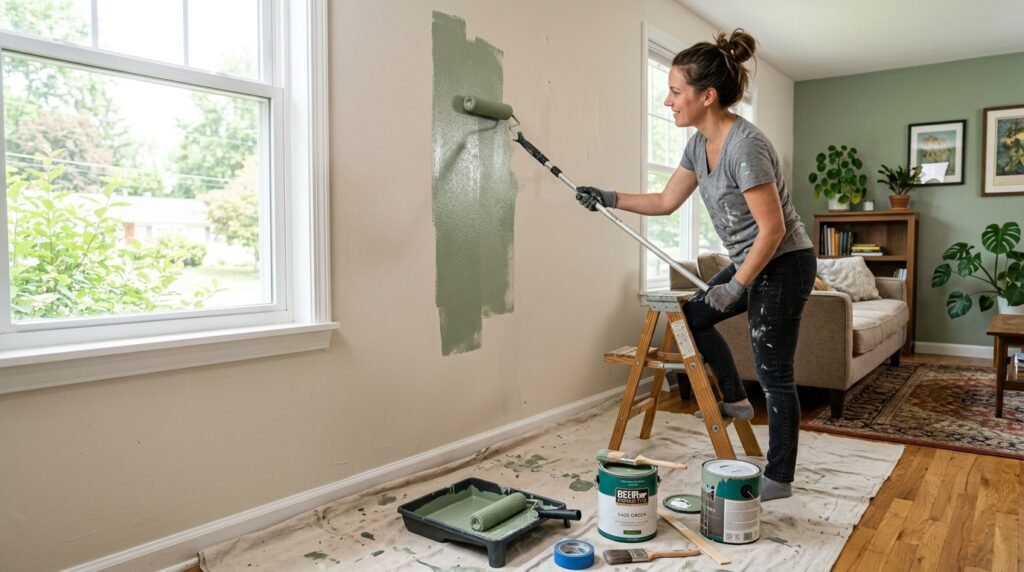
There are two ways a painting project goes wrong on the paint-buying side: you guess low and end up making a second trip to the store mid-coat with wet paint drying unevenly while you wait in line, or you guess high and end up with three half-full cans taking up shelf space for the next five years. Neither is fun, and both come from the same root cause, skipping the math.
A paint calculator fixes that. This guide walks through the exact formula professionals use, real coverage rates by paint type, and worked examples for actual room sizes, so you can buy exactly what you need the first time. If you’d rather skip straight to plugging in numbers, our paint calculator does the math instantly.

🎨 Paint Calculator – Estimate Gallons, Cost & Coverage
Coverage, costs, and drying times for all painting projects
Subtract: Doors (21 sq ft each), Windows (15 sq ft each)
| Paint Type | Coverage (sq ft/gal) | Best Use |
|---|---|---|
| Latex | 350-400 | Interior walls |
| Oil-Based | 300-350 | Trim, cabinets |
| Enamel | 250-350 | Doors, surfaces |
| Epoxy | 200-300 | Special surfaces |
The Paint Calculator Formula, Explained
Every paint calculator, whether it’s a free online tool or a big-box retailer’s app, runs on the same basic math:
Total Paintable Area ÷ Coverage per Gallon × Number of Coats = Paint Needed
That’s genuinely it. The complexity people run into isn’t the formula itself, it’s getting the three inputs right: how much surface you’re actually painting, how far your specific paint spreads, and how many coats the job realistically needs.
Paint Coverage Rates: How Far Does a Gallon Really Go?
Standard coverage metrics per container size and wall surface type.
📏 Industry Standard: These numbers are consistent across most major brands, aligning directly with Sherwin-Williams' paint calculator guidance: a gallon typically covers 350 to 400 square feet (enough for a 10-by-10-foot room), and a quart covers about 100 square feet (plenty for an accent wall or single door).
🎨 Key Adjustments: Dark-to-light color changes almost always need a primer coat first, and rough or textured walls soak up noticeably more paint than smooth drywall—sometimes 15 to 20% more.

US vs. UK Home Paint Standards & Terminology
Comparing container sizes, coverage rates, and finish names across US and UK paint markets.
📐 Quick Conversion Rule: 1 UK Liter covers roughly 100 to 130 sq ft in US terms. A standard 2.5L UK tin will cover approximately 270 to 350 sq ft with one coat.
🖌️ Base Formulation: What is labeled as "Latex Paint" in the US is universally referred to as "Water-Based Paint" or "Emulsion" in the UK. "Oil-Based Paint" is often called "Solvent-Based."

International Paint Standards Guide
Global frameworks for test methods, performance criteria, surface prep, and environmental safety.
- Wet Scrub Resistance: Class 1 (< 5 µm loss @ 200 scrubs) to Class 5 (≥ 40 µm loss @ 40 scrubs).
- Opacity (Hiding Power): Class 1 (≥ 99.5% coverage at specified yield) down to Class 4.
- Gloss Levels: Gloss (> 60 @ 60°), Mid-Gloss (Satin/Semi-Gloss), Matt (< 10 @ 85°), and Dead Matt (< 5 @ 85°).

How to Calculate Wall Area, Step by Step
- Measure the perimeter of the room (add up the length of all four walls)
- Multiply the perimeter by the ceiling height to get total wall area
- Measure each door and window, then subtract that area from your total
- Standard deduction estimates: about 20 sq ft per door, about 15 sq ft per window
If you’d rather not eyeball door and window sizes, our door size calculator and window size calculator give you exact standard dimensions to subtract, which matters more than you’d think on a room with several windows.
Worked Example: A 12×12 Room
Here’s how much paint you need for a 12×12 room with 8-foot ceilings, one standard door, and one window:
- Perimeter: (12 + 12 + 12 + 12) = 48 feet
- Wall area: 48 × 8 = 384 sq ft
- Subtract 1 door (20 sq ft) and 1 window (15 sq ft): 384 − 35 = 349 sq ft
- At 350 sq ft per gallon coverage, that’s almost exactly 1 gallon per coat
- For 2 coats (the standard recommendation), plan for roughly 2 gallons

More Real-World Paint Calculator Examples
Estimated paint quantities for common room dimensions, open layouts, and full-home estimates.
💡 Layout Tip: Full-house estimates based solely on floor square footage are the least reliable. An open-concept home with fewer interior partition walls requires noticeably less paint than a traditional chopped-up floor plan with the same total square footage.

Interior vs. Exterior Paint Calculations
The core formula stays the same outside, but a few things shift:
- Exterior siding, stucco, and brick are more textured than interior drywall, so budget for that same 15-20% reduction in coverage
- Exterior projects almost always need 2 coats for proper weather protection, even over a color you’re not changing
- Masonry and metal surfaces often need a specific primer type rather than a general-purpose one
- Wind, temperature, and humidity affect drying time and how evenly paint applies, which indirectly affects how much you’ll actually use
If you’re repainting siding as part of a bigger exterior refresh, our home renovation guide is a useful starting point for sequencing the whole project.

Ceilings and Trim: What’s Different
Ceiling Paint
Calculate ceiling area as room length × width, not perimeter × height like walls. Ceilings usually only need 1 coat unless you’re covering a stain or making a major color change, and flat ceiling paint has slightly different coverage characteristics than wall paint, so check the can rather than assuming it matches your wall paint’s spread rate.
Trim, Doors, and Window Frames
Trim paint covers a much smaller area but often needs more coats for a smooth, durable finish, typically 2 to 3. Since trim area is small, most people buy a quart rather than a full gallon. Our rough opening calculator can help if you’re also planning any door or window framing work alongside the paint job.

Primer: When You Actually Need It
Primer isn’t always required, but skipping it in the wrong situation means uneven color, poor adhesion, or stains bleeding through your new paint.
- Going from a dark wall color to a light one: prime first, almost without exception
- Painting bare drywall, wood, or a patched repair area: prime first
- Covering water stains, smoke damage, or crayon marks: use a stain-blocking primer
- Repainting the same or a similar color over a sound existing coat: primer is usually optional
Since primer covers less per gallon than paint (200 to 300 sq ft), run it through the same formula separately rather than assuming your paint calculation covers both.

Paint Calculator by Unit: Metric vs. Imperial
If you're working in square meters and liters instead of square feet and gallons, the formula doesn't change, only the units do.
⚠️ Unit Warning: UK, Canadian, and Australian paint calculators typically default to square meters and liters, so double-check which unit any online tool is actually using before you buy, since mixing up square feet and square meters can throw your estimate off by a factor of ten.

Comparing Big-Brand Paint Calculators
Nearly every major paint brand offers its own free calculator, and while they all use the same underlying formula, the extra features differ:
- Sherwin-Williams: offers Quick, Custom, and Deck calculation modes, with wastage factored in automatically
- Behr: covers interior, exterior, and stain projects in one tool, sold exclusively through Home Depot
- Lowe’s: includes a rough man-hours estimate alongside gallons, useful if you’re budgeting your own time
- Dulux: the go-to for UK and Australian shoppers, calculating in square meters and liters by default
- Benjamin Moore and PPG: geared more toward room-by-room and professional-scale planning, respectively
Coverage assumptions vary slightly between brands, so if you’re comparing paint prices across brands, run the same room dimensions through two or three calculators rather than trusting just one number.

Paint Cost Estimator: Budgeting the Whole Project
Once you know how many gallons you need, the cost math is simple: gallons needed × price per gallon, plus supplies. But a full project budget includes more than the paint itself:
- Primer, if your walls need it
- Brushes, rollers, and trays, see our paint brushes and rollers guide for picking the right tools for your surface
- Painter’s tape, drop cloths, and patching compound
- Labor, if hiring a professional rather than doing it yourself
DIY painting typically costs a fraction of a professional job, since labor is usually the largest line item on a professional quote, not the paint itself. Get at least two quotes if you’re hiring out, since labor pricing varies a lot by region and project complexity.

Common Mistakes That Throw Off Your Paint Estimate

One More Thing While You've Got the Ladder Out

Health Safety, Falling injury , Allergy Guideline
Falls are a leading cause of injuries worldwide. Proper prevention, immediate safety assessment, and first-aid steps can prevent further damage.
- Keep pathways, hallways, and stairs clear of clutter, cords, and loose rugs.
- Ensure adequate lighting in stairwells, hallways, and entrances.
- Install non-slip mats in bathrooms and showers.
- Use handrails on stairs and grab bars in wet areas.
- Wear supportive, non-skid footwear; avoid walking indoors in slick socks.
- Get regular vision and balance checks (especially for older adults).
- Review medications with a physician if they cause dizziness or drowsiness.
- Loss of consciousness, even for a few seconds.
- Confusion, memory loss, vomiting, or severe headache (signs of concussion/traumatic brain injury).
- Inability to move a limb or severe pain when pressing on a joint/bone.
- Bleeding that does not stop with direct pressure.
- Numbness, tingling, or weakness in the arms or legs.
2. Allergy Guidelines
Allergies occur when the immune system overreacts to a foreign substance (allergen). Reactions range from mild irritation to life-threatening emergencies.
- Administer Epinephrine: Inject the epinephrine auto-injector into the outer thigh (can be administered through clothing if necessary). Note the time.
- Call Emergency Services: State clearly that someone is experiencing an anaphylactic emergency.
- Position the Person: Lay them flat on their back with their legs elevated. If they are vomiting or having trouble breathing, allow them to sit up or lay on their side (recovery position).
- Do Not Wait: Even if symptoms improve after the epinephrine injection, the person MUST go to an emergency room because a second wave of symptoms (biphasic reaction) can occur hours later.
- Second Dose: If emergency help has not arrived and symptoms persist or return after 5–15 minutes, administer a second epinephrine dose if available.
Frequently Asked Questions
Common scenarios, formulas, and estimates for your interior and exterior paint projects