The Ultimate Guide to Toddler Bed And Rail & Safety (2026)
The first night your toddler sleeps in a real bed is a big one, for them and for you. No more crib bars, no more built-in walls, just an open edge and a kid who rolls around more than you’d expect. That’s exactly why toddler bed rails exist, and exactly why picking the right one matters more than most parents realize.
This guide walks through every type of bed rail for toddlers, the safety standards that actually matter, honest sizing advice, and the installation details that prevent the one mistake that causes almost every bed rail injury: a gap between the rail and the mattress. If you’re still deciding whether your child needs one at all, our toddler bed rail guide and our step-by-step DIY toddler bed rail project are both good next stops after this one.
What Are Toddler Bed Rails, and Does Your Child Actually Need One?
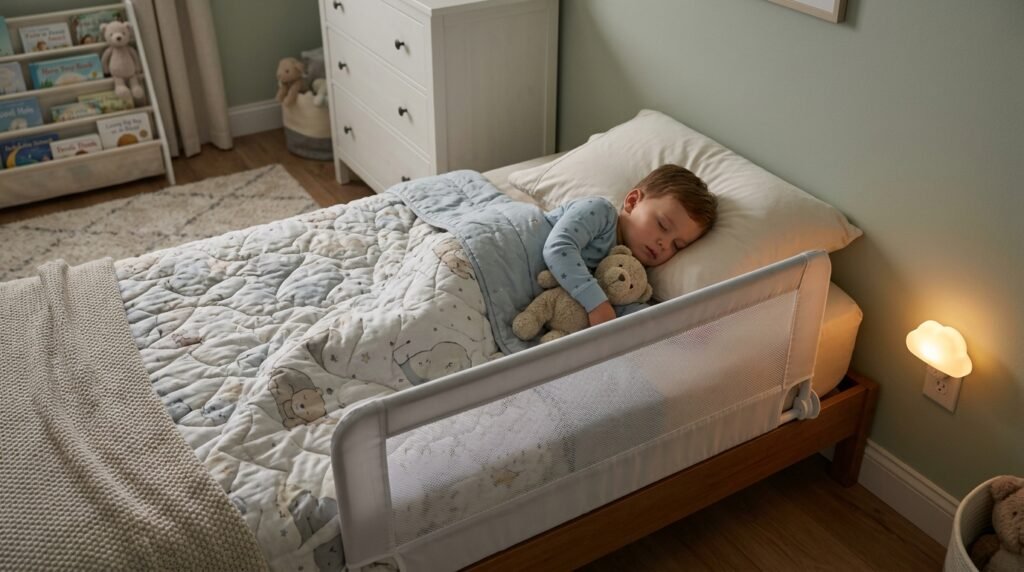
A toddler safety rail is a barrier that attaches to the open side of a bed to stop a sleeping child from rolling onto the floor. They’re built for kids who can already climb in and out of bed on their own, generally somewhere between ages 2 and 5.
Here’s the part most parents don’t expect: toddlers don’t actually know where the edge of a bed is until around age 4 or 5. In a crib, the walls did that job automatically. In a bed, that awareness has to be learned, and until it is, a rail fills the gap.
It’s worth being precise about what a bed rail can and can’t promise. Health Canada’s own child-safety guidance is refreshingly honest about this: a guardrail is mainly there to remind a child they’re near the edge, not to physically guarantee they can never fall out or climb over it. That’s a good, realistic way to think about a toddler bed guard rail: a strong nudge in the right direction, not a forcefield.
Health Canada also recommends buying only portable bed rails that meet current ASTM International safety standards, and specifically advises against using bed rails for children under age 2. That second point trips a lot of parents up, since the crib-to-bed switch often happens right around a second birthday.
Not All “Bed Rails” Are the Same
Quick note before we go further: “bed rail” is a term used for a few very different products, and it matters that you’re shopping for the right one.
- Toddler and children’s bed rails (this guide): built to a child-safety standard, meant to prevent rolling falls during sleep
- Adult and senior bed rails: mobility aids for getting in and out of bed, built to a completely different standard
- Hospital and care-facility bed rails: used under clinical supervision, with their own separate safety guidance
- Truck bed rails, dorm bunk rails, and camper bed rails: unrelated hardware for vehicles and bunk furniture
This article focuses only on the first category. If a listing doesn’t specifically say it’s tested for children’s use, don’t assume it’s safe for a toddler bed, since the entrapment risks and hardware requirements are genuinely different between categories.

5 Types of Toddler Bed Rails
1. Mesh Swing-Down Rails
Breathable mesh fabric stretched over a metal frame that slides under the mattress and anchors with straps. The whole rail folds down flat during the day, which makes bed-making painless.
Best for: younger toddlers (2-3) and anyone who wants daily convenience. Popular models: the Regalo Swing Down Bed Rail (43″ long × 20″ tall, tool-free) and the UPGOGO Folding Bed Rail (71″ length, wide U-shaped base for larger beds).
2. Fixed Wood or Metal Rails
A rigid frame that clamps or screws onto the bed, built to look like part of the furniture. There’s no sagging and no folding mechanism to wear out over time.
Best for: older toddlers (3-5) and permanent setups where sturdiness matters more than flexibility.
3. Foam Bumpers
A solid foam wedge that slides under the fitted sheet, invisible once the bed is made. No hardware, no frame, nothing to bump into in the dark.
Best for: temporary use, travel, and lighter sleepers who don’t move around much. The Hiccapop Foam Toddler Bumper is a well-known example of this style.
4. Inflatable Bed Rails
Similar concept to the foam bumper, but it’s an inflatable vinyl bolster that slides under the sheet and inflates to size. Deflate it and it packs down to almost nothing, which makes it a natural fit for a
portable toddler bed rail for travel or a night at grandma’s house.
5. Crib-to-Toddler Bed Conversion Rails
If you’re using a convertible crib, this is often the cleanest option: a wooden rail designed to replace the crib’s front panel entirely. Many convertible cribs already include this rail, or sell it as a matching accessory, so the transition looks and feels seamless rather than like a random add-on.

Toddler Bed Rail Safety Standards You Should Know About
Key governing specifications, mandatory regulatory rules, and safety compliance checks.
📏 The Guardrail Height Rule Worth Memorizing: For a compliant toddler bed guardrail, the top edge needs to sit at least 5 inches (130 mm) above the sleeping surface, measured using the thickest mattress allowed by the manufacturer. If you upgrade to a plush mattress later, always recheck that this 5-inch clearance still holds.

Recent Bed Rail Recalls You Should Know About
Recalls happen more often in this category than you’d hope, which is exactly why checking before you buy is worth the extra two minutes. In late 2025, the CPSC recalled the Children’s HOMEAL Bed Rails (about 2,370 units sold on Amazon) after finding that, once installed, a child could become entrapped in the openings between the rail and the mattress.
Around the same period, the CPSC also issued a string of separate recalls and warnings for adult portable bed rails, including JOKOSIS-branded models, over entrapment and asphyxiation risks. Those are a different product category built to a different standard, but the pattern is the same one worth remembering: a rail that leaves any gap against the mattress is a genuine hazard, whether it’s built for a toddler or an adult.
Before you buy anything, it’s worth doing a quick search on CPSC.gov for the brand and model. It takes less time than reading the product reviews, and it’s the one check that actually catches a genuinely dangerous product before it’s in your child’s room.

Sizing Guide: How to Choose the Right Length and Height
Match bed rail dimensions, mattress height adjustments, and bed frame compatibility for safe installation.
🛏️ Mattress Thickness Tip: If shopping for a toddler bed rail for a queen bed with a thick mattress, pay close attention to that adjustable range. A standard queen mattress runs about 80 inches long, and the matching side rail typically measures 81 to 83 inches once you account for hardware and connection points. Our memory foam and hybrid mattress guide is a useful cross-reference if you're not sure how thick your child's current mattress actually is.

Materials Compared: Mesh vs. Wood vs. Metal vs. Foam
A side-by-side honest safety evaluation of common toddler bed rail materials.
💡 Selection Tip: If your toddler is a genuine roller, lean toward metal or wood for extra rigidity. If bumped heads worry you more than a rail that occasionally sags, mesh is the gentler choice.

How to Install a Toddler Bed Rail (Without the Common Mistake)
A simple step-by-step installation walkthrough, safety gap checks, and quick stopgap solutions.
⚠️ The One Mistake That Causes Almost Every Injury
The most dangerous part of any bed rail isn't the rail itself—it's the gap between the rail and the mattress. If a child slips into that gap, they can become wedged and unable to free themselves. This gap is the primary hazard described in nearly every safety recall on record. Checking for that gap every single night takes five seconds and is worth doing without fail.
A Regalo-Specific Note
For Regalo bed rails specifically, the swing lock assemblies rest on top of the box spring for stability, allowing the rail to swing down out of the way when you need full bed access. Downloadable instruction manuals are available online for every current model if your original paperwork is misplaced.
Budget Alternative: The Pool Noodle Hack
If you need a stopgap solution tonight rather than next week, a pool noodle slid under the fitted sheet along the bed's edge creates a subtle bump that discourages rolling. While not a long-term substitute for a proper safety rail, it works well during short transition periods.

Toddler Bed Rails Maintenance & Safety Checklist
Weekly Checks
- Rail is firmly pressed against the mattress with zero gap
- Anchor straps are still tight, not loosened from nightly movement
- No loose, cracked, or missing parts
- No sharp edges or splinters, especially on wood rails
Monthly Checks
- Wash removable mesh or fabric covers if machine-washable
- Wipe down metal or wood surfaces and check for rust or wear
- Verify all hardware is still fully secured
When to Stop Using a Bed Rail
Retire the rail once your child can reliably get in and out of bed alone, once they’ve developed solid body awareness (usually around age 5), or if the rail itself shows real wear, damage, or has been outgrown by weight or age limits.
One More Safety Box to Check: Smoke Detectors
While you’re bed rail shopping, it’s a good moment to double-check the other big-ticket safety item in a child’s bedroom: working smoke alarms. According to NFPA research, a working smoke alarm cuts your risk of dying in a home fire by roughly 60%, yet nearly three out of five home fire deaths still occur in houses with no working alarm at all.
It’s an easy thing to overlook once the bed rail is installed and the room finally feels finished. Our smoke detector calculator can tell you how many alarms your child’s room and the rest of your home actually need, and where to place them for the best coverage.

Quick Reference: Choosing the Right Toddler Bed Rail
Match your specific household priorities with the ideal bed rail style.
💡 Safety Reminder: Regardless of rail type, always verify that the top edge sits at least 5 inches above the mattress top and that no gaps exist between the rail and the mattress edge.
FAQs: Toddler Bed Rails
Essential guidance on toddler bed rail safety, installation, sizing, and recall information
The Bottom Line
A good toddler bed rail isn't complicated, but the details matter: the right standard, the right size for your child's bed, and a gap-free fit checked every single night. Get those three things right and you've solved the one problem a bed rail actually exists to solve, keeping your toddler safely on the mattress until they're ready to graduate from it entirely.
For more on choosing and building the right setup for your child's room, take a look at our full bed rails guide and our DIY toddler bed rail tutorial if you'd rather build one yourself. And while you're making the room safer, it's worth a quick check of your smoke detector coverage too, since both jobs are really about the same thing: catching the everyday risks before they become a real problem.
🛡️ Safety Reminder: Daily checks take only five seconds—always ensure the rail sits snugly against the mattress edge with no visible gaps or loose straps.