Rivets Selector: How to Choose the Right Rivet (Type, Size & Material)
A rivet is tiny, but pick the wrong one and your repair pops loose, rattles, or rusts within a season. Pick the right one and it holds for decades. The strongest of all are heavy-duty structural rivets with a locking mandrel — the pin stays locked inside, so the joint resists far more load than an ordinary pop rivet. This rivet selector guide makes the choice simple: the right type, size, and material for any job. Want an instant match? Try our rivet selector and size calculator, then read on. Grab the right gear first with our home and DIY tools.
Rivet Selector & Size Calculator
Pick the perfect rivet in seconds. Enter how thick your materials are, the load, and where the joint will live, and this calculator returns the right diameter, grip range, length, drill bit size, type, and material. Want the full how-to behind the numbers? Read our rivet selector guide, and grab the gear with our DIY tools list.
Rivet Size Quick Reference
| Diameter | Typical Use |
|---|---|
| 1/8 in (3.2 mm) | Light sheet metal, crafts |
| 5/32 in (4.0 mm) | General DIY repairs |
| 3/16 in (4.8 mm) | Heavier sheet metal, brackets |
| 1/4 in (6.4 mm) | Heavy-duty, structural joints |
Frequently Asked Questions
What is grip range?
It is the total thickness of the materials a rivet can clamp. Add up both layers and choose a rivet whose grip range covers that figure, so it sets tight rather than loose.
What size hole do I drill for a rivet?
The same nominal size as the rivet. A 3/16 inch rivet needs a 3/16 inch (about 4.9 mm) bit so it slides in snugly. A hole that is too big leaves the joint loose.
When should I use a structural rivet?
For load-bearing joints. Structural rivets have a locking mandrel that stays inside the body, boosting shear and pull strength well beyond a standard pop rivet.
Which rivet material is best outdoors?
Stainless steel. It resists rust near rain and salt water. Aluminium suits dry indoor jobs, while copper and brass are best for leather and decorative work.
Note: Results are a guide. Always check the rivet's stated grip range on the pack, and match the rivet material to the metal you are joining.
More: overview of rivets.
What Is a Rivet?
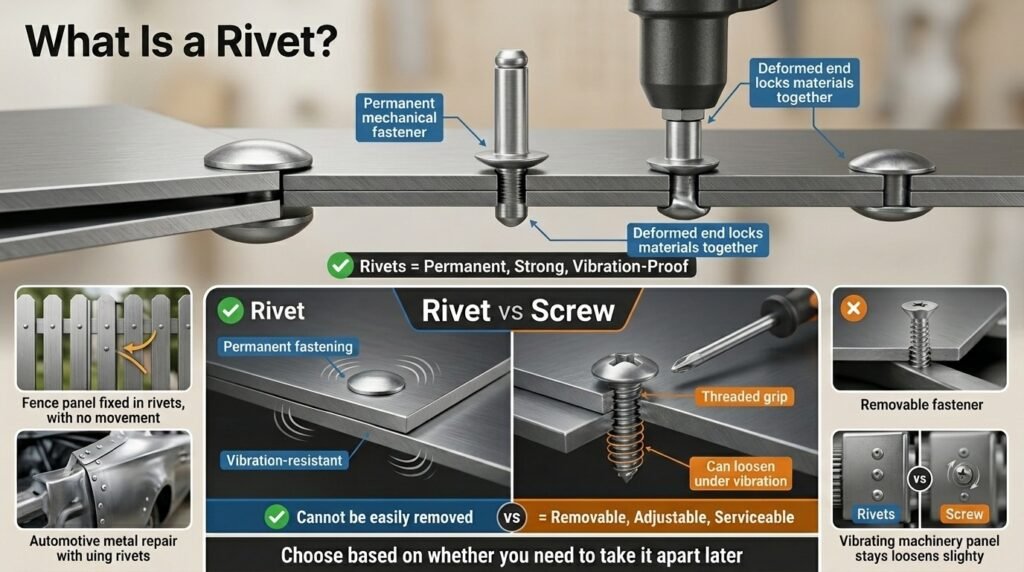
A rivet is a permanent mechanical fastener. You push it through a hole in two materials, then deform one end so it cannot pull back out. Unlike screws or bolts, rivets are not meant to be undone, which makes them fast, strong, and vibration-proof.
So how do rivets vs screws compare? Screws grip with threads and can be removed; rivets clamp permanently and shrug off shaking. For a fence panel, a car repair, or a metal joint that must never work loose, rivets win.
Types of Rivets
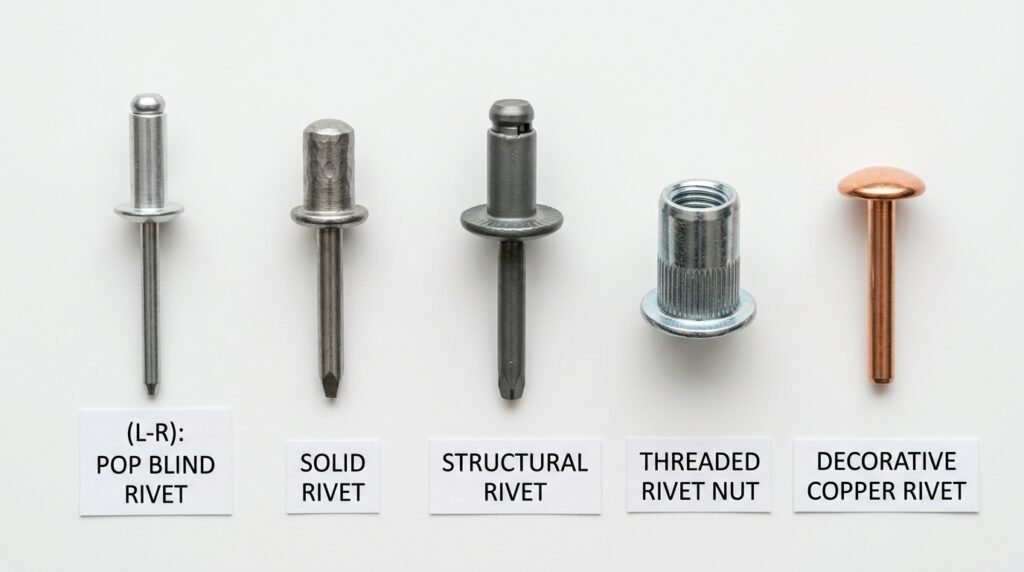
There are many types of rivets, but a handful cover almost every job. Here are the ones you will actually reach for.
Pop (Blind) Rivets
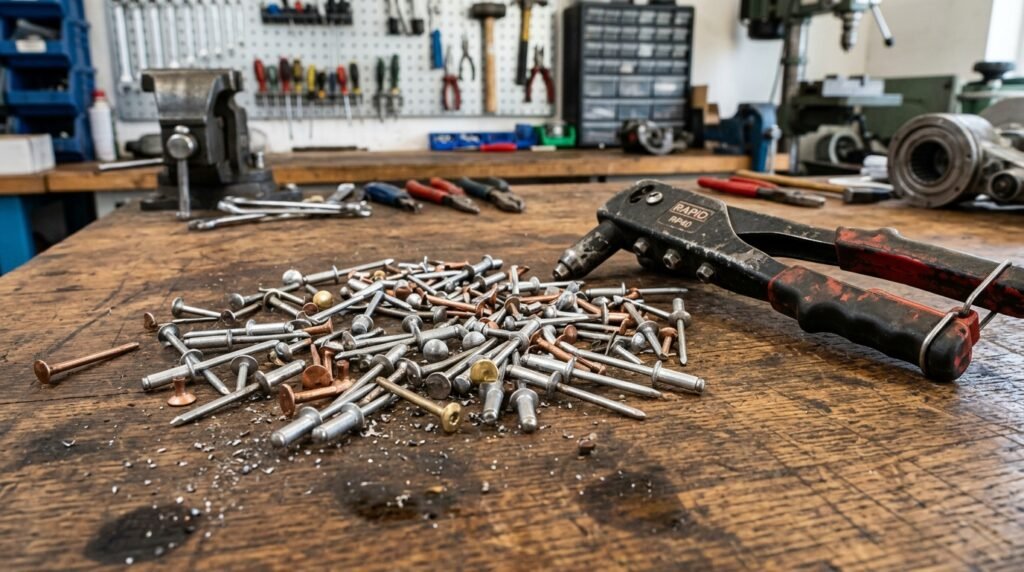
The most popular by far. Pop rivets, also called blind rivets, install from one side only — perfect when you cannot reach the back. A rivet gun pulls the mandrel until it snaps, leaving a tight, permanent joint. Great for sheet metal, guttering, and quick repairs.
Solid Rivets
Solid rivets are the oldest and strongest simple type, set by hammering or pressing (peening) the tail flat. They need access to both sides and serious force, which is why you see them in bridges, aircraft, and cookware.
Structural Rivets and the Locking Mandrel
When strength matters most, choose structural rivets such as monobolt or multi-grip types. Their secret is a locking mandrel: instead of snapping off and falling away, the pin locks permanently inside the rivet body. That retained mandrel fills the hole and dramatically boosts shear strength and pull strength, making these the heavy-duty choice for load-bearing joints.
Rivet Nuts
Rivet nuts (threaded inserts or nutserts) add a strong, reusable threaded hole to thin metal. Set one from the front, then screw a bolt in and out as often as you like — ideal for thin panels that cannot be tapped.
Specialty and Decorative Rivets
Beyond the basics sit copper rivets and leather rivets for craft and decorative rivets for upholstery and clothing — think the studs on jeans pockets. There are also tubular, split, and self-piercing rivets, plus knife-handle and craft rivets for makers.
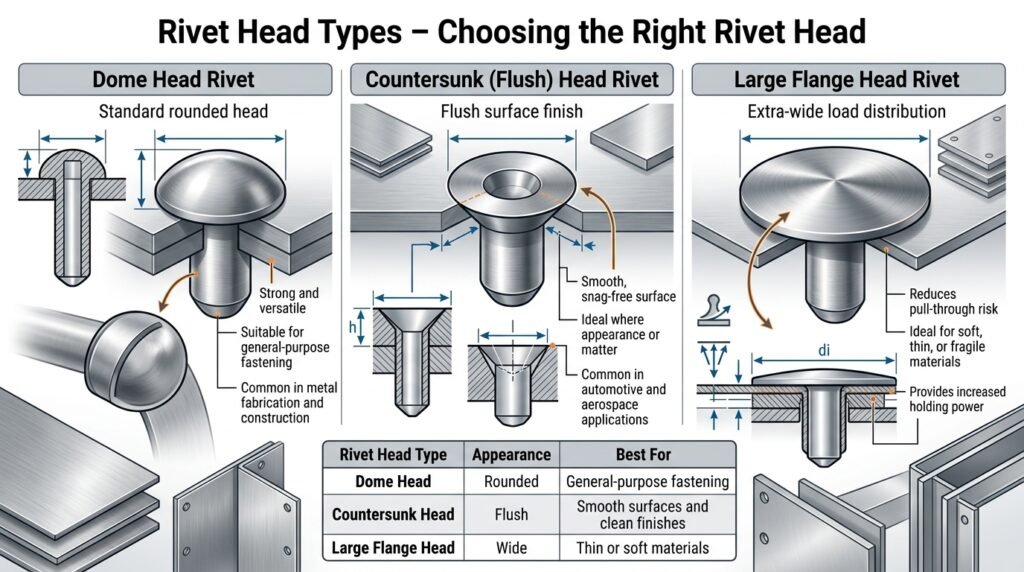
Rivet Head Types
The head you choose affects both grip and looks. The main rivet head types are simple to tell apart.
- Dome head: the standard rounded head, strong and all-purpose.
- Countersunk (flush) head: sits flat with the surface for a smooth finish.
- Large flange head: a wide head that spreads load, great for soft or thin materials.
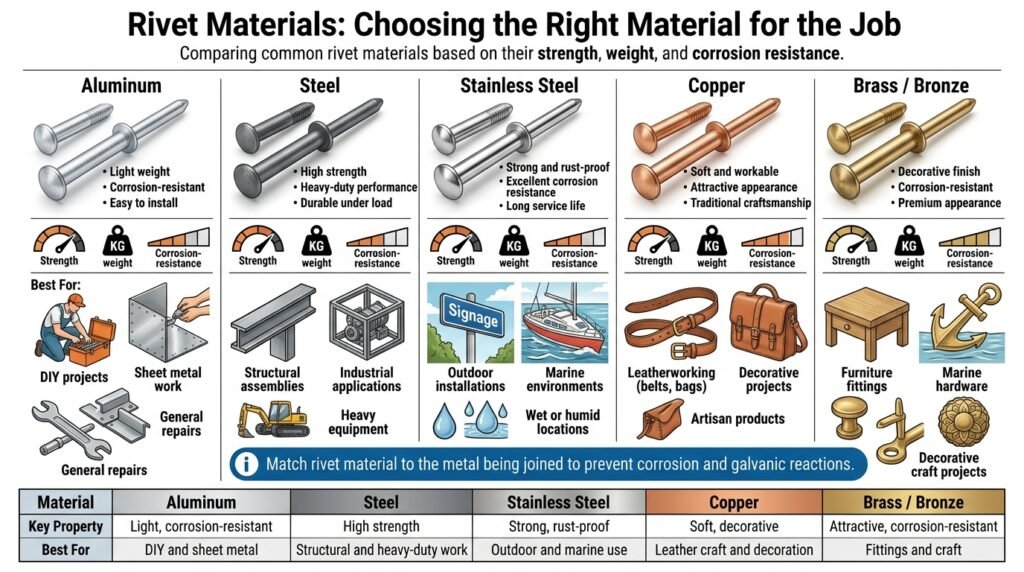
Rivet Materials
Material decides strength, weight, and how well a rivet handles weather. Here is how the main rivet material options compare.
Material | Key Property | Best For |
Aluminum | Light, corrosion-resistant | Most DIY and sheet metal |
Steel | High strength | Heavy-duty, structural work |
Stainless steel | Strong + rust-proof | Outdoor and marine use |
Copper | Soft, attractive | Leather craft and decoration |
Brass / bronze | Decorative, corrosion-resistant | Fittings and craft |
Aluminum rivets suit most home jobs, while stainless steel rivets are the smart pick for anything outdoors or near water, thanks to their corrosion resistance. Match the rivet material to the metal you are joining to avoid reactions and rust.
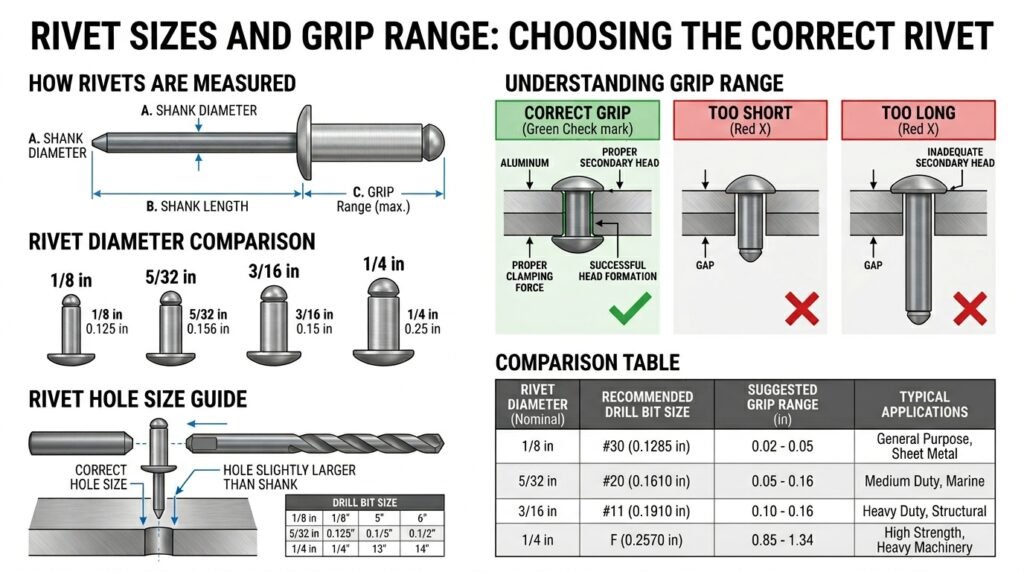
Rivet Sizes and Grip Range
Two numbers matter most: diameter and grip range. The grip range is the total thickness of the materials you are joining — always pick a rivet whose grip range covers your stack. Too short and it will not clamp; too long and it stays loose.
Diameter | Common Use |
1/8 in (3.2 mm) | Light sheet metal, crafts |
5/32 in (4.0 mm) | General DIY repairs |
3/16 in (4.8 mm) | Heavier sheet metal, brackets |
1/4 in (6.4 mm) | Heavy-duty, structural joints |
How are rivets measured? By diameter first, then length. For the rivet hole size, drill the hole the same nominal size as the rivet so it slides in snugly — for example, a 3/16 inch rivet needs a 3/16 inch (about 4.9 mm) bit. Our rivet size calculator matches diameter, grip, and hole size to your material in seconds.
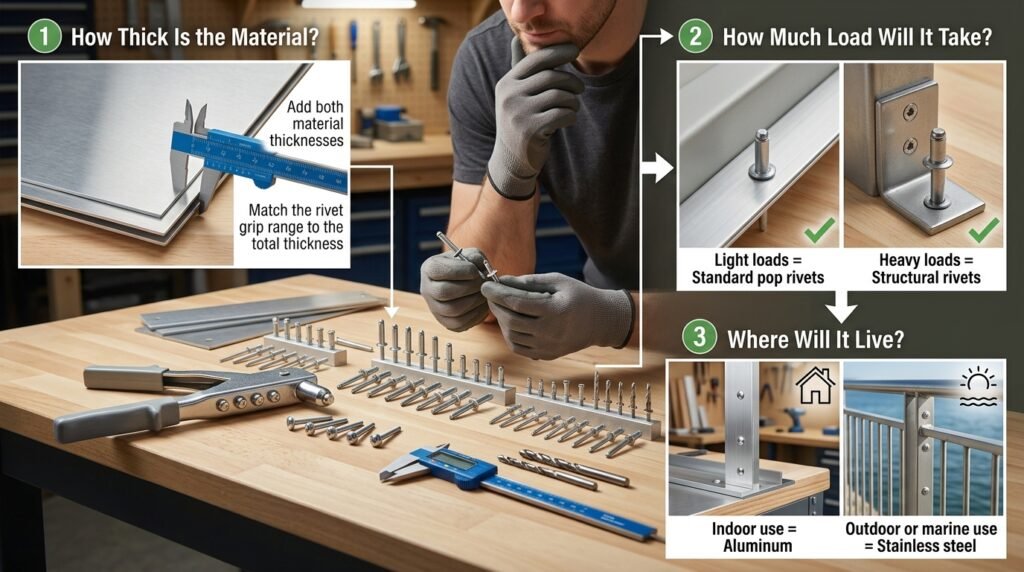
How to Choose the Right Rivet
Pull it together with three quick questions and the right rivet appears.
- How thick is the material? Add up both layers to find the grip range you need.
- How much load will it take? Light trim uses standard pop rivets; load-bearing joints need structural rivets.
- Where will it live? Indoors, aluminum is fine; outdoors or near water, choose stainless steel.
Answer those and you will rarely pick wrong. For bigger builds, pair this with our building materials calculator and shelf brackets guide.
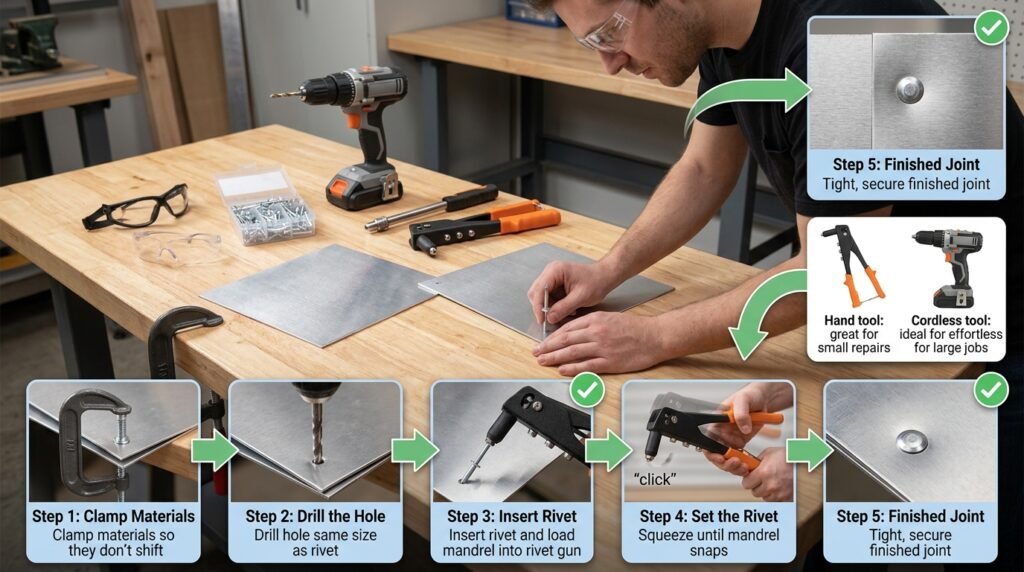
How to Install Pop Rivets
Setting a pop rivet is quick once you know the steps.
- Clamp the two materials together so they cannot shift.
- Drill a hole the same size as the rivet through both layers.
- Slide the rivet mandrel into the rivet gun, then push the rivet into the hole.
- Squeeze the handle until the mandrel snaps off with a click.
- Check the joint is tight and the head sits flush.
A cordless pop rivet gun makes big jobs effortless, but a hand tool is fine for occasional repairs around the home or renovation projects.
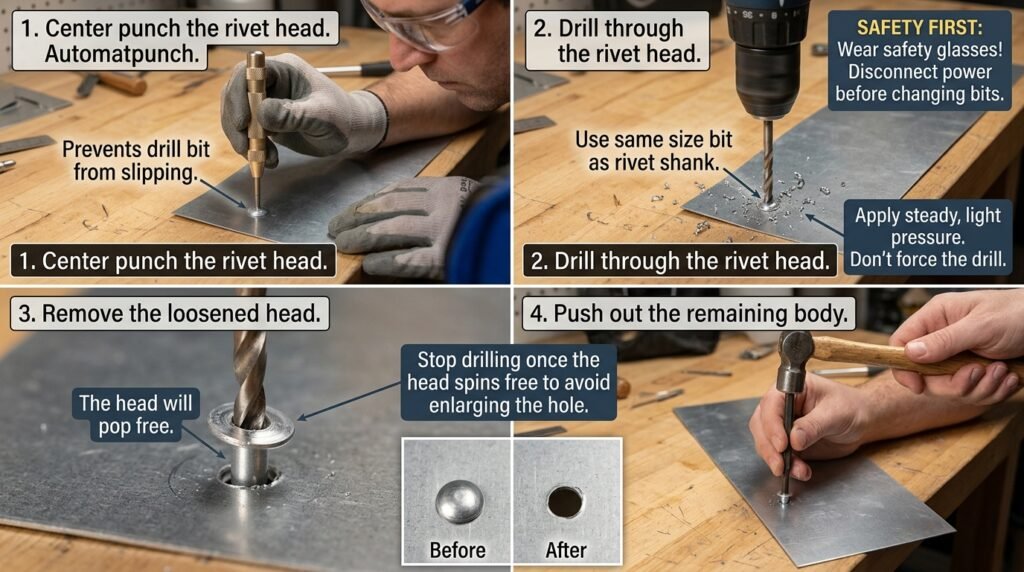
How to Remove Rivets
Need to undo one? Removing a rivet is straightforward. Centre-punch the head, then drill it out with a bit the same size as the rivet. Once the head pops off, push the remaining body through with a punch. Go slow so you do not enlarge the hole or scratch the surface.
Common Home and DIY Uses
Rivets quietly hold together more of your home than you would think. Handy uses include:
- Sheet metal and guttering: fast, weatherproof joints with aluminium or stainless rivets.
- Fence and gate repair: secure loose panels and brackets that screws keep working loose.
- Roofing and flashing: paired with sealed rivets to keep water out; see our roofing guide.
- Leather and craft: copper rivets for belts, bags, and repairs.
- Workshop fixes: a tidy organised garage makes riveting jobs quicker.
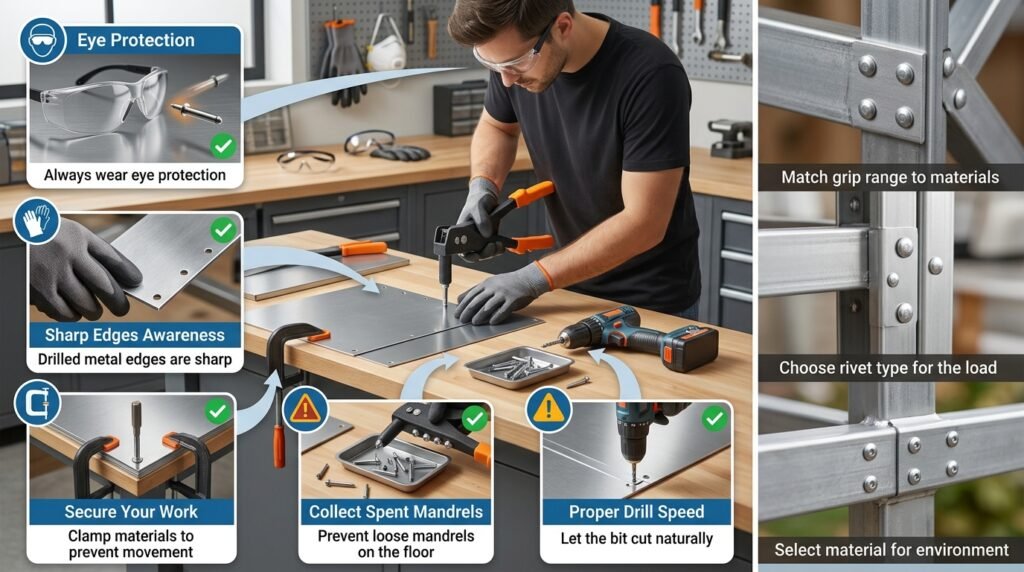
Health and Safety Tips
Riveting is safe with a few sensible habits.
- Wear eye protection: snapped mandrels can fly, so always use safety glasses.
- Mind sharp edges: drilled metal and trimmed rivets are sharp; wear gloves and deburr holes.
- Secure your work: clamp materials so the drill cannot grab and spin them.
- Collect spent mandrels: the little pins roll underfoot and into eyes; catch them in the gun or a tray.
- Match drill speed to metal: let the bit cut without forcing, and keep fingers clear.
Final Thoughts
The humble rivet is one of the most reliable fasteners you can use. Match the grip range to your materials, pick a type that suits the load — a structural locking-mandrel rivet for heavy-duty strength, a simple pop rivet for everyday repairs — and choose a material that handles the weather. Get those three right and your joints stay tight for years. Start with our rivet selector, and learn more about how these fasteners work in this overview of rivets.
Frequently Asked Questions
What is the difference between a blind rivet and a pop rivet?
Quick answer: There is no difference — pop rivet is just the popular name for a blind rivet. Both install from one side using a rivet gun, which makes them perfect when you cannot reach the back of the joint.
What is the strongest type of rivet?
Quick answer: For simple types, solid rivets are strongest, as used in aircraft and bridges. For one-sided fitting, structural rivets with a locking mandrel are the heavy-duty choice, since the retained pin boosts shear and pull strength.
How do I know what size rivet I need?
Quick answer: Measure the total thickness of the materials you are joining; that is your grip range. Pick a rivet whose grip range covers it, then drill a hole the same nominal diameter as the rivet body.
What size hole do I drill for a rivet?
Quick answer: Drill the hole the same nominal size as the rivet so it fits snugly. For example, a 3/16 inch rivet needs a 3/16 inch (about 4.9 mm) bit. A hole that is too big will leave the joint loose.
Which rivet material is best for outdoor use?
Quick answer: Stainless steel rivets are best outdoors and near water because they resist rust. Aluminium works for general indoor jobs, while copper suits leather craft and decorative projects rather than structural ones.
Are rivets waterproof?
Quick answer: Standard rivets are not fully waterproof, but sealed or closed-end rivets are designed to keep water out. For guttering or roofing, choose sealed stainless or aluminium rivets and add sealant for a watertight joint.
How do you remove a pop rivet?
Quick answer: Centre-punch the rivet head, then drill it out with a bit the same size as the rivet. When the head separates, push the remaining body through with a punch, working slowly so the hole is not enlarged.