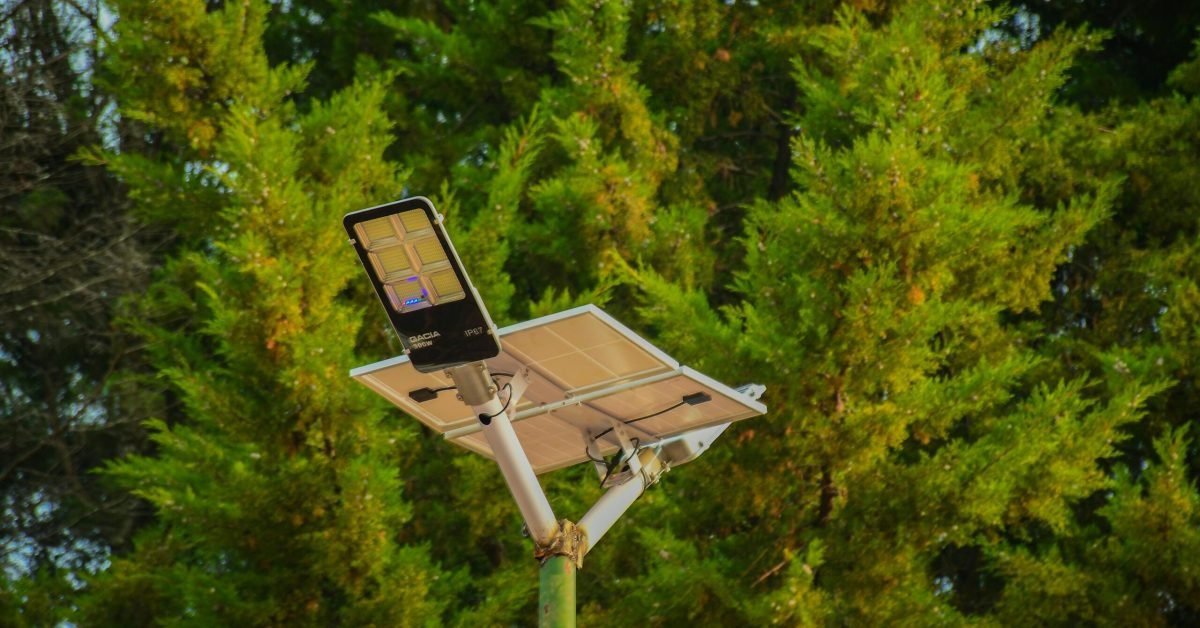







Self-Cleaning Solar Street Lamps: Research and Technology

The Rise of Self-Cleaning Solar Street Lamps

 Self-cleaning solar street lamps use automated mechanical brushes and smart sensors to remove dust accumulation from solar panels. This automated technology maintains over 90% power generation efficiency, reduces manual maintenance costs by up to 50%, and ensures reliable urban lighting in harsh, dusty environments.

Urban lighting infrastructure keeps modern cities safe and accessible after dark. However, maintaining thousands of individual fixtures presents a massive logistical challenge for municipalities. A major obstacle to reliable illumination is environmental debris, which rapidly degrades equipment performance. As cities transition to renewable energy, engineers must find ways to protect solar panels from the elements.

To address these challenges, researchers and engineers developed self-cleaning solar street lamps. This innovative lighting solution uses built-in robotic mechanisms to automatically wipe away debris. By removing the need for manual upkeep, this technology offers a practical path toward sustainable, low-maintenance urban infrastructure.

Self-Cleaning Solar Street Lamps: Research and Technology

Why does dust accumulation fail traditional urban street lamps?

Dust accumulation severely impacts the performance of traditional and solar-powered street lamps. When dirt, sand, or bird droppings cover a fixture’s surface, the debris physically blocks the LED output. This blockage results in a noticeable loss of bright light, creating dangerous, dimly lit areas for pedestrians and drivers.

For solar lighting systems, the problem extends beyond immediate visibility. A study published by the National Institutes of Health (2023) showed that dusty solar modules display significantly lower efficiency. When dust coats the solar panels, it blocks sunlight and cripples the system’s power generation capabilities. Without adequate power generation, the battery fails to charge fully, causing the street lamp to turn off prematurely during the night.

Historically, cities combated this issue by deploying maintenance crews to manually wash the fixtures. However, these manual cleaning schedules introduce extremely high costs. Municipalities must pay for specialized lifting equipment, labor, and traffic management just to keep the lamps working.

Self-Cleaning Solar Street Lamps: Research and Technology

How do self-cleaning solar street lamps solve the dust problem?

Self-cleaning solar street lamps integrate mechanical wipers directly into the lamp housing. These built-in cleaning features routinely sweep across the solar panels’ surfaces, pushing away accumulated sand and dirt.

The primary advantage of these cleaning solar street lamps is their ability to maintain optimal efficiency solar output without human intervention. By keeping the photovoltaic surface clear, the solar panels can absorb maximum solar energy every day. This ensures the internal batteries reach full capacity, providing reliable, energy-efficient illumination throughout the night. Consequently, automated wiping systems drastically reduce maintenance requirements and eliminate the high costs associated with manual cleaning crews.

Self-Cleaning Solar Street Lamps: Research and Technology

What technology powers dust-resistant street lamp projects?

Modern dust-resistant street lamp projects depend on advanced robotics, durable materials, and smart controllers. The core component is typically a motorized coarse bristle brush mounted on a guide rail. According to Sresky (2024), these intelligent systems can run cleaning cycles lasting up to four hours, effectively scrubbing stubborn dirt from the panels.

To ensure the lamps work seamlessly over the long term, engineers use specialized protective materials. Aluminum alloy housings and polycarbonate lenses resist corrosion from humidity and extreme weather. Additionally, intelligent anti-interference sensors detect obstacles on the panel surface. If the brush hits a solid obstruction, the sensor automatically retracts the wiper to prevent motor burnout. This combination of smart sensing and durable engineering ensures a highly reliable service life.

Self-Cleaning Solar Street Lamps: Research and Technology

What are the main benefits of self-cleaning street lamps?

Adopting automated cleaning technology provides several critical advantages for city planners and businesses. Choose self-cleaning solar street lamps if your project prioritizes the following benefits:

  • Significant reduction in maintenance costs: Automated brushing systems eliminate the need to hire manual cleaning crews. According to Sresky (2024), self-cleaning technology reduces street lamp maintenance costs by 30% to 50%.
  • Enhanced energy-efficient operation: A clean solar panel captures more sunlight. Self-cleaning solar lamps retain over 90% of their energy capacity, while dirty conventional solar lamps can drop to 60% efficiency.
  • Environmental sustainability: Solar-powered lighting reduces reliance on the traditional electrical grid. By maximizing solar power generation, cities lower their carbon footprint and promote green infrastructure.
  • Improved safety and visibility: Consistent power generation ensures the lamps emit bright light consistently, eliminating hazardous dark spots in communities and industrial zones.
Self-Cleaning Solar Street Lamps: Research and Technology

Which case studies show self-cleaning street lamps succeeding?

Real-world applications demonstrate the immense value of this technology. In arid desert environments, sandstorms frequently coat infrastructure in thick layers of dust. According to Leap Pole (2025), the Gletscher Energy project successfully deployed self-cleaning solar street lamps in high-dust desert regions. While regular solar lamps lost up to 40% of their energy due to sand coverage, the self-cleaning units maintained over 90% efficiency.

Similarly, projects in African oil palm plantations have used dust-proof, self-cleaning solar lighting to illuminate vast agricultural belts. By adopting these automated systems, plantation managers secured reliable nighttime visibility while avoiding the high costs of transporting maintenance crews across remote, difficult terrain.

Self-Cleaning Solar Street Lamps: Research and Technology

The Future of Efficient Urban Lighting Infrastructure

As global populations grow, the demand for sustainable, resilient infrastructure has never been higher. Self-cleaning solar street lamps represent a massive leap forward in municipal engineering. By directly solving the persistent issue of dust accumulation, this technology ensures communities receive reliable, bright light while protecting city budgets from spiraling maintenance costs. As smart city initiatives continue to expand, we can expect automated, solar-powered lighting to become the standard for modern urban development.

Frequently asked questions about self-cleaning solar street lamps

How often do the automated cleaning features activate?

Most self-cleaning solar street lamps run automated sweeping cycles daily. The internal smart controller typically triggers the brushes to sweep the solar panels at dawn or dusk, ensuring the surface is clear for peak daytime solar absorption.

Do self-cleaning mechanisms consume too much battery power?

No. The motorized brushes use highly efficient micro-motors that require very little electricity. The energy gained by keeping the solar panels perfectly clean far outweighs the minimal power required to run the brief daily cleaning cycle.

What happens if ice or heavy snow covers the street lamp?

Advanced self-cleaning street lamps often include automatic heating systems. When temperature sensors detect freezing conditions, the lamp gently heats the panel to melt snow and ice, allowing the mechanical brush to sweep the resulting water away safely.

Related External Links

Scroll to Top