Vapor Barrier Calculator | Basement & Crawl Space • Installation Guide • Cost Estimate

🏠 Vapor Barrier Basement Crawl Space Calculator

Basement & Crawl Space • Installation Guide • Sizing & Cost • Maintenance

Vapor Barrier Types & Materials
Barrier Type Material Thickness Permeability Cost/Sq Ft Best For
Polyethylene Sheet Plastic (PE) 4–6 mil Very Low (excellent) $0.10–0.20 Crawl spaces, basements, budget option
6-mil Polyethylene Plastic (PE) 6 mil Very Low $0.15–0.25 Standard for most installations
Reinforced Polyethylene PE with grid 6 mil Very Low $0.20–0.35 High-traffic areas, durability needed
Cross-Laminated PE Layered PE 6–10 mil Very Low $0.25–0.40 Superior puncture resistance
Polyester-Backed PE PE + polyester 6 mil Very Low $0.30–0.50 Premium durability, high moisture
Polypropylene Plastic (PP) 5–7 mil Very Low $0.15–0.30 Alternative to PE, similar performance
Kraft Paper (Traditional) Paper backing Various Variable (moderate) $0.05–0.15 NOT recommended for crawl spaces (absorbs water)
Spray-Applied Polyurethane Liquid foam 1–2 inches Very Low (+ insulation) $1.50–3.00 Professional installation, vapor + insulation combined
Bituthene/Rubberized Asphalt Asphalt-based 20–40 mil Very Low $2.00–4.00 Walls, foundation perimeters, premium option
Perm Rating Class I: ≤0.1 perm (best) | Class II: 0.1–1.0 perm (good) | Class III: 1.0–10 perm (fair) | Standard PE: ~0.06 perm
🏠 VAPOR BARRIER HEIGHT & PLACEMENT
CRAWL SPACE INSTALLATIONS:
• Floor coverage: 100% of floor area
• Wall height: Typically 12–24 inches up walls (or to rim joist)
• Typical perimeter walls: 6–12 inches minimum
• Building code often requires: 6 mil minimum,
• Overlaps: Minimum 6 inches (typically 12 inches recommended)
• Sealing: Tape all seams and overlaps with compatible tape

BASEMENT FLOOR INSTALLATIONS:
• Under flooring system: Full coverage
• Under concrete slabs: 4–6 mil, sealed seams
• Walls: May extend 12–24 inches up (depends on moisture)
• Sump pump areas: Seal around pump basin
• Perimeter: 12 inches up walls minimum

STANDARD RECOMMENDATIONS:
• Most crawl spaces: 12–18 inches up walls
• Wet crawl spaces: 24+ inches or full wall height
• Very dry crawl spaces: 6–12 inches minimum
• Over foundation cracks: Extend 12+ inches to ensure coverage
✅ BARRIER SELECTION GUIDE
CHOOSE 4–6 mil Polyethylene IF:
• Budget is limited
• Crawl space is relatively dry
• Installation is straightforward
• You want best value

CHOOSE 6 mil Reinforced PE IF:
• High-traffic crawl space (equipment movement)
• Moderate moisture issues
• Want better durability
• Plan to use space frequently

CHOOSE Cross-Laminated PE IF:
• Very wet crawl space
• Long-term installation (25+ years)
• Puncture resistance important
• Willing to invest more for reliability

CHOOSE Spray Foam IF:
• Need insulation + vapor barrier
• Professional installation available
• Want seamless installation
• Budget allows for premium option

AVOID Kraft Paper IF:
• Any moisture is present (absorbs water!)
• Crawl spaces (too humid)
• Below-grade installations
Vapor Barrier Sizing Calculator
Vapor Barrier Cost Estimator
Vapor Barrier Installation Guide
🛠️ PRE-INSTALLATION PREPARATION
STEP 1: INSPECT CRAWL SPACE
□ Clear debris, rocks, sharp objects
□ Remove old damaged vapor barrier
□ Check for active water intrusion (fix first!)
□ Repair foundation cracks before installing
□ Ensure proper drainage around foundation
□ Install/verify sump pump if needed

STEP 2: PREP THE FLOOR
□ Sweep floor clean
□ Remove sharp rocks/gravel that could puncture barrier
□ Consider thin sand layer as base (optional)
□ Level major low spots (puddles cause problems)
□ Measure dimensions and calculate materials

STEP 3: GATHER MATERIALS
□ Vapor barrier material (rolls, usually 6–20 ft wide)
□ Seaming tape (compatible with barrier material)
□ Fasteners (nails or staples for edges)
□ Utility knife for cutting
□ Measuring tape
□ Gloves & protective equipment
□ Extra material for overlaps/repairs (15–20%)
□ Inspection notes from preliminary assessment
📏 INSTALLATION STEPS
STEP 4: LAYOUT BARRIER SHEETS
1. Start at one corner or wall
2. Roll out first sheet across floor
3. Unroll slowly, checking for tears/damage
4. Leave 12–18" extending up walls
5. Trim excess with utility knife
6. Keep edges smooth (no wrinkles trap water)

STEP 5: OVERLAPPING & SEALING
1. Second sheet overlaps first by 12" (standard)
2. Use seaming tape on all overlaps
3. Press tape firmly for good seal
4. Overlap all seams minimum 6 inches
5. Continue across entire floor
6. Seal around penetrations (supports, sump pump)
7. Tape any cuts or tears immediately

STEP 6: WALL TREATMENT
1. Pull barrier up walls 12–24 inches
2. Nail or staple at top (12" intervals)
3. Fold corners neatly
4. Seal gaps between sheet and wall
5. For very wet spaces: extend to rim joist

STEP 7: SPECIAL AREAS
Sump pump: Cut hole, seal around basin
Support posts: Cut X-shape, overlap cuts, tape
Cracks: Extend barrier over cracks, seal edges
Penetrations: Seal around all pipes/conduits
Vents: If sealed (foundation vents), tape edge

STEP 8: FINAL INSPECTION
□ Check all seams for proper overlap
□ Verify seaming tape is everywhere
□ Look for tears or punctures
□ Confirm walls are covered to proper height
□ Test for water pooling or wrinkles
□ Allow 24 hours before covering (if tape used)
□ Document installation (photos, date)
⚠️ COMMON MISTAKES TO AVOID
Using thin/cheap material → Punctures easily, fails quickly
Solution: Invest in 6 mil minimum

Insufficient overlaps → Moisture seeps through
Solution: Minimum 6", recommended 12"

Not sealing overlaps → Same as insufficient overlaps
Solution: Tape every single overlap

Sharp objects puncturing barrier → Water seeps in
Solution: Clear floor, smooth surface, use protective layer if needed

Installing over wet conditions → Doesn't solve moisture problem
Solution: Fix drainage/water source FIRST

Pulling too tight/wrinkled installation → Traps water
Solution: Lay flat, smooth, slight slack allowed

Wrong tape on wrong barrier → Tape won't stick
Solution: Use compatible seaming tape for your barrier type

Not covering to proper wall height → Moisture creeps up walls
Solution: Check local codes, extend 12–24" minimum
🔧 MAINTENANCE & REPAIR
ANNUAL INSPECTION:
• Walk crawl space, inspect entire barrier
• Look for tears, punctures, wrinkles
• Check for water pooling
• Verify seams still sealed
• Confirm no debris on barrier

REPAIRS:
• Small holes/tears: Patch with compatible tape or material
• Wrinkled areas: Smooth out and re-seal edges
• Failed seams: Re-tape with compatible seaming tape
• Pooling water: Check drainage, may indicate equipment failure
• Degraded tape: Re-seal with new compatible tape

LIFESPAN EXPECTATIONS:
• Standard 6 mil PE: 10–15 years
• Reinforced/Premium PE: 15–25 years
• Cross-laminated: 20–30 years
• Spray foam: 25–40 years
• Bituthene: 30–50 years
Note: Lifespan depends on moisture levels, foot traffic, UV exposure, maintenance
🚨 TROUBLESHOOTING MOISTURE ISSUES
WATER POOLING ON BARRIER:
✓ Check for low spots in floor
✓ Ensure proper grading around foundation
✓ Check downspout drainage (should be 4–6 ft away)
✓ Verify gutters are clean and draining
✓ Check for interior drainage/sump pump issues
✓ May need French drain or sump system

MOISTURE ON WALLS/JOISTS:
✓ Verify barrier extends 18–24" up walls
✓ Check that wall-to-barrier seal is complete
✓ Look for unsealed cracks at foundation
✓ Check for condensation (install dehumidifier)
✓ Ensure crawl space vents are working properly
✓ May need additional dehumidification

MUSTY SMELL:
✓ Barrier not sealed completely (moisture still entering)
✓ High humidity levels (install dehumidifier)
✓ Install proper ventilation/exhaust fan
✓ Check for active water intrusion (fix source)
✓ Ensure existing odor-causing issues resolved before barrier install

© 2026 Vapor Barrier Calculator | Basement & Crawl Space • Installation • Sizing • Cost Estimate

Basement and Crawl Space Complete Guide: Vapor Barriers, Moisture Control, Repairs, and Mold Prevention

Solve Basement Problems Before They Become Expensive Disasters

Most homeowners ignore their basements until a crisis hits—water seeping through walls after heavy rain, a musty smell indicating mold, or bowing walls threatening structural integrity. By then, problems have already caused expensive damage.

The secret to basement health is prevention and early detection. Proper vapor barriers prevent moisture. Correct humidity levels prevent mold. Early crack repair prevents wall bowing. French drains prevent flooding.

This comprehensive guide covers every major basement and crawl space challenge: vapor barrier selection and installation, crawl space ventilation and conversion, water leak diagnosis and repair, wall crack and bowing repair, humidity management, mold prevention and treatment, and practical solutions for homeowners at any experience level.


VAPOR BARRIERS AND MOISTURE CONTROL

Moisture is your basement’s primary enemy. It causes mold, mildew, structural damage, and health problems. Vapor barriers prevent moisture migration from soil into living spaces.

Understanding Vapor Barriers

What is a vapor barrier? A vapor barrier (or vapor retarder) is a material that restricts moisture (water vapor) movement through walls, floors, and crawl spaces. It prevents ground moisture from rising into your basement and home.

Why vapor barriers matter:

  • Soil contains moisture that evaporates continuously
  • This moisture vapor migrates upward (natural physics)
  • Without a barrier, moisture enters the basement
  • Causes mold, mildew, musty smells, and damage
  • A proper barrier prevents 90%+ of moisture problems

Vapor barrier vs. air barrier:

  • Vapor barrier: Blocks water vapor (moisture)
  • Air barrier: Blocks air movement
  • Both needed for optimal moisture/air control
  • Can be the same material or separate layers

Vapor Barrier Materials Comparison

Polyethylene Sheeting (Most Common)

  • Thickness: 4-6 mil (standard), 10 mil (heavy-duty)
  • Cost: $0.10-0.30 per square foot
  • Effectiveness: Excellent (blocks 99% moisture)
  • Durability: 15-20 years, typical
  • Installation: Easy (lay and seal seams)
  • Pros: Affordable, effective, easy to install
  • Cons: Can tear easily, seams are critical, and there is no air barrier
  • Best use: Crawl spaces, under concrete slabs

Reinforced polyethylene (6 mil with fabric)

  • Thickness: 6 mil with fabric reinforcement
  • Cost: $0.20-0.40 per square foot
  • Effectiveness: Excellent
  • Durability: 20+ years
  • Installation: Moderate difficulty
  • Pros: Stronger than plain poly, resists tears
  • Cons: Higher cost, still requires careful sealing
  • Best use: High-traffic crawl spaces, areas prone to damage

Kraft Paper (Older, Not Recommended)

  • Thickness: Varies
  • Cost: Historically cheaper
  • Effectiveness: Poor (only 50-70% effective)
  • Durability: 5-10 years
  • Problems: Deteriorates with moisture, tears easily, holds moisture
  • Status: Largely replaced by polyethylene
  • Note: If you have kraft paper, consider replacing it with a modern vapor barrier

Rubber/Membrane Barriers

  • Thickness: 40-60 mil
  • Cost: $0.50-1.50 per square foot
  • Effectiveness: Excellent (blocks 99%+)
  • Durability: 30-50+ years
  • Installation: Requires a professional in many cases
  • Pros: Extremely durable, resists punctures, and is long-lasting
  • Cons: Higher cost, more difficult installation
  • Best use: Crawl spaces, areas needing maximum durability

Spray-On Barriers

  • Type: Liquid applied, hardens
  • Cost: $0.75-2.00 per square foot
  • Effectiveness: Excellent when properly applied
  • Durability: 20-30 years
  • Installation: Professional application recommended
  • Pros: Seamless coverage, fills cracks, uniform
  • Cons: Higher cost, requires a professional
  • Best use: Irregular surfaces, hard-to-cover areas

Concrete Sealers (Surface Barriers)

  • Type: Applied directly to concrete
  • Cost: $0.50-2.00 per square foot
  • Effectiveness: Moderate (blocks 50-80%)
  • Durability: 3-7 years (requires reapplication)
  • Installation: DIY possible
  • Pros: Less expensive, easier application
  • Cons: Less effective than polyethylene barrier, requires reapplication
  • Best use: Temporary solution, surface moisture control

Vapor Barrier Installation Best Practices

Crawl Space Barrier Installation

Step 1: Preparation

  • Remove debris, rocks, and protruding roots from the soil
  • Fill low spots with clean sand or gravel
  • Clear the area of sharp objects (thorns, nails, stones)

Step 2: Material Selection

  • Standard crawl space: 4-6 mil polyethylene
  • High-traffic areas: 10 mil or reinforced poly
  • Long-term solution: Rubber membrane or spray-on

Step 3: Barrier Placement

  • Lay the barrier directly on the soil
  • Bring up 6-12 inches up the foundation walls
  • Cover piers and posts with a barrier or wrap them separately
  • Leave 12-18 inches exposed on walls for inspection

Step 4: Seaming

  • Overlap seams 12 inches minimum
  • Seal seams with compatible tape (critical)
  • Duct tape is temporary; use polyethylene tape for permanent
  • Inspect all seams for proper overlap

Step 5: Penetrations

  • Seal around pipes, ducts, and electrical conduits
  • Use compatible caulk or sealant
  • Don’t puncture the barrier around penetrations
  • Wrap penetrations with a barrier before sealing

Step 6: Inspection

  • Walk barriers after installation
  • Look for wrinkles, tears, gaps
  • Check that all seams are sealed
  • Fix any damage immediately

Basement Floor Barrier Installation

Step 1: Surface Preparation

  • Clean the basement floor thoroughly
  • Fill cracks with concrete filler
  • Allow filler to cure per the manufacturer
  • Ensure floor is dry (may need drying period)

Step 2: Moisture Testing

  • Perform moisture test (calcium chloride or RH testing)
  • If reading over 3 lbs per 1000 sq ft, address before barrier
  • High moisture requires a vapor barrier under the concrete

Step 3: Barrier Installation (Under Concrete)

  • Install before pouring concrete (new construction)
  • 4-6 mil polyethylene standard
  • Polyethylene is placed directly on the prepared subgrade
  • Overlapped and sealed seams are critical

Step 4: Barrier Installation (Existing Concrete)

  • Apply concrete sealer to the existing surface
  • Multiple thin coats are better than one thick coat
  • Allow full cure per manufacturer.
  • Follow with epoxy for maximum protection.

Step 5: Finishing

  • Allow the sealer/epoxy to cure fully
  • Typical cure: 24-72 hours
  • Proper ventilation aids curing

Basement Wall Vapor Barrier Installation

Step 1: Wall Assessment

  • Identify moisture entry points
  • Check for existing water damage
  • Assess wall condition and straightness

Step 2: Surface Preparation

  • Clean walls thoroughly
  • Patch holes and cracks
  • Apply concrete primer if needed
  • Allow to dry completely

Step 3: Interior Barrier Options

  • Option A: Polyethylene sheeting secured to the frame
  • Option B: Vapor-retarding paint
  • Option C: Spray-on barrier
  • Option D: Membrane barrier with tape

Step 4: Installation

  • For poly: Frame wall 1-2 inches away from the basement wall, install 6 mil poly
  • For paint: Apply per manufacturer (typically 2-3 coats)
  • For spray: Professional application recommended
  • Seal all penetrations (electrical, pipes, HVAC)

Step 5: Air Barrier Consideration

  • If framing a new wall, install an air barrier
  • Separate from the vapor barrier (different purpose)
  • Creates the most effective moisture/air control

Vapor Barrier Placement Rules

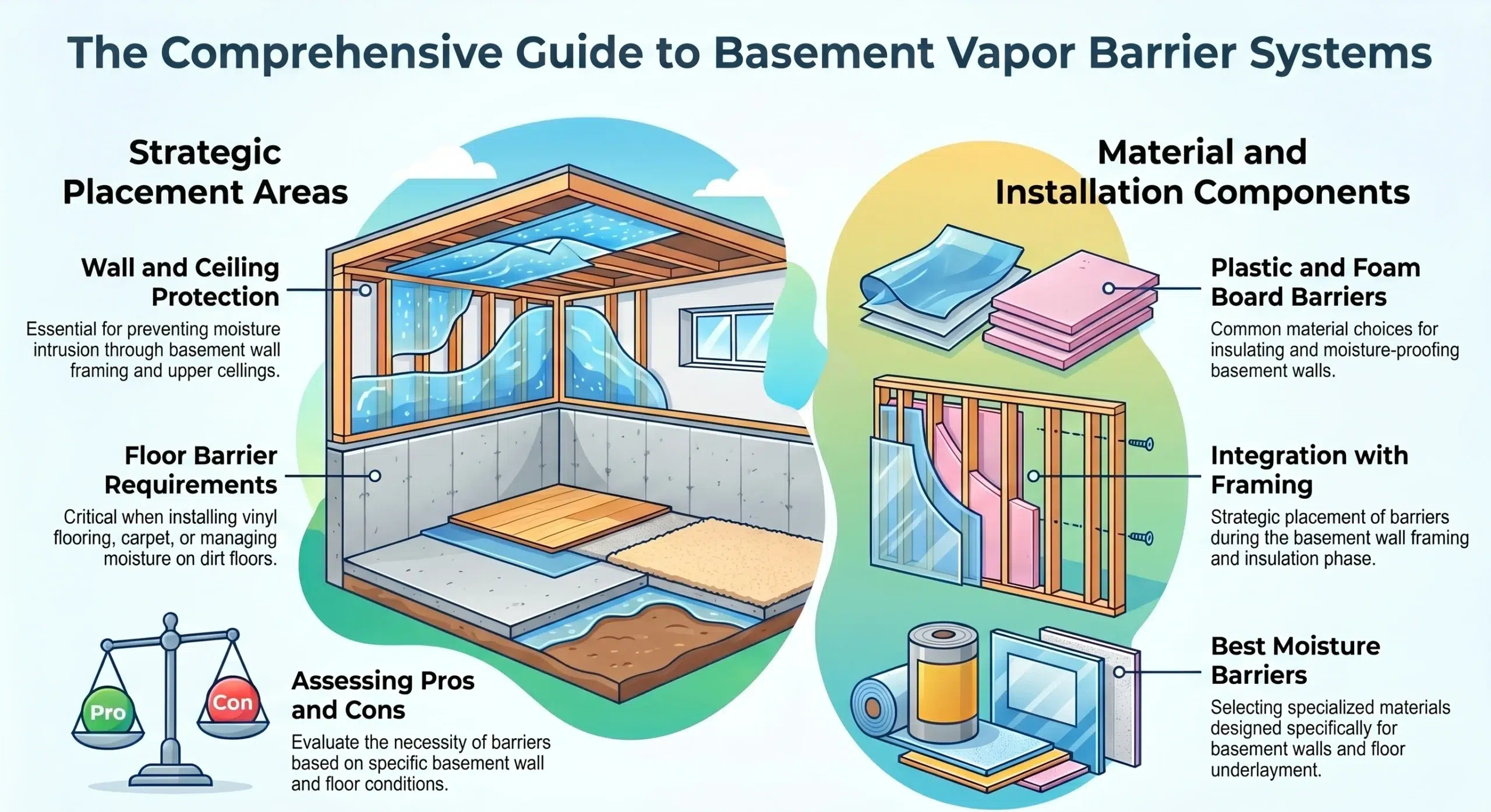
Placement principle: Vapor barrier should be on “warm side” of assembly (inside basement, not outside soil side)

Why:

  • Moisture moves from warm to cold
  • In winter, it is: warm inside the basement, cold outside the soil
  • The barrier should stop moisture from traveling inward

Correct placement:

  • Crawl space: On soil, under house (warm basement above)
  • Basement floor: Underneath concrete (warm basement above)
  • Basement walls: Interior side of walls (warm inside, cold outside)

CRAWL SPACE TOPICS

Crawl Space Basics

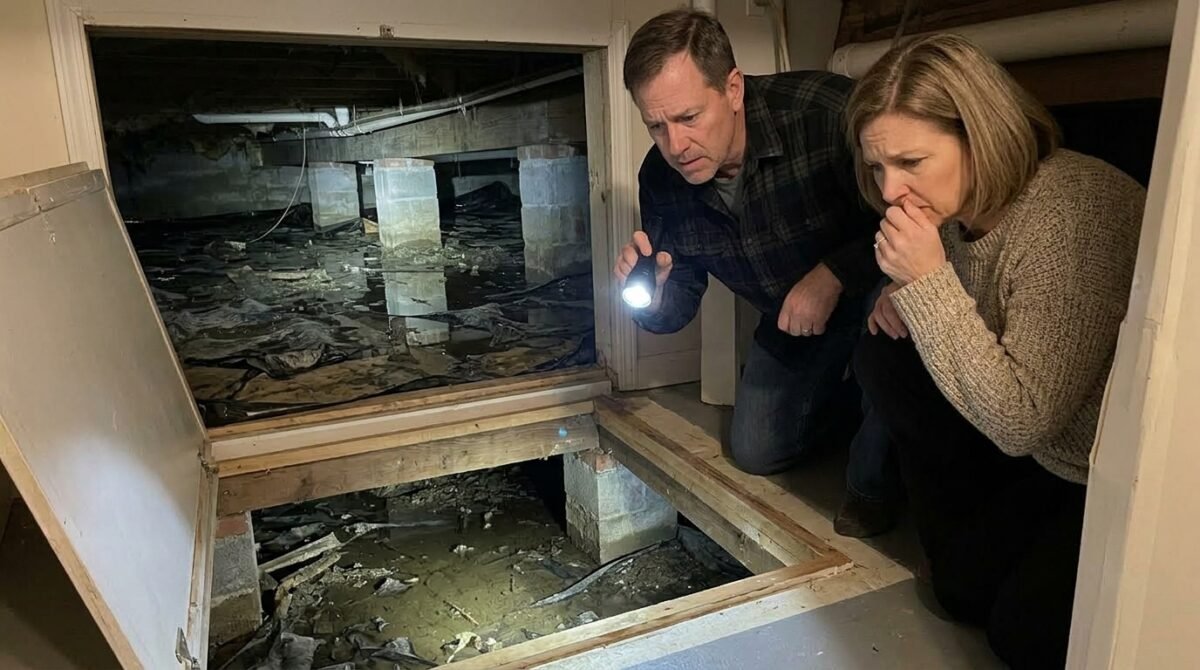
What is a crawl space? A crawl space is the area between the ground and the first-floor joists, typically 1-4 feet tall. Access is typically through foundation vents, hatches, or crawl doors.

Why crawl spaces matter:

  • Contains plumbing, electrical, and HVAC systems
  • Affects basement and first-floor moisture
  • Poor crawl space = moisture problems upstairs
  • Proper management is critical to home health

Crawl Space Ventilation

Traditional Ventilation

  • Vents on foundation walls (typically 1 per side minimum)
  • Vent size: 1 sq. ft. per 150 sq. ft. of crawl space area
  • Purpose: Air circulation removes moisture

Problems with traditional ventilation:

  • Summer humid air enters (increases moisture in winter)
  • Cold air in winter increases heating costs
  • Moisture from the soil still enters
  • Rodents and insects enter through vents
  • Often ineffective at controlling moisture

Modern Approach: Encapsulation (Recommended)

  • Seal all foundation vents
  • Install a vapor barrier on the soil
  • Control humidity mechanically (dehumidifier)
  • Close the crawl space completely
  • Much more effective than ventilation

Ventilation Installation (if used):

  • Install vents on at least 2 opposite walls
  • Vents should face the prevailing wind
  • Install insect/rodent screens
  • Keep vents clear of snow and debris
  • Check vents open fully (not blocked by dirt)

Crawl Space Encapsulation

What is encapsulation? Sealing crawl space completely: vapor barrier on soil, sealed walls, sealed vents, sealed ducts, and mechanical humidity control.

Benefits:

  • Reduces moisture 90%+
  • Prevents mold and mildew
  • Improves air quality
  • Reduces heating/cooling costs
  • Protects stored items
  • Prevents pest entry

Encapsulation Components:

  1. Vapor Barrier on Soil

    • 6 mil polyethylene or thicker
    • Covers all soil areas
    • Sealed seams, sealed penetrations
    • Cost: $0.10-0.30/sq ft
  2. Sealed Foundation Vents

    • Close exterior vents
    • Seal from inside with plywood or foam
    • Caulk around the seal
    • Cost: $50-200 per vent
  3. Dehumidification

    • Crawl space dehumidifier (90+ pints/day)
    • Continuous drainage to sump or exterior
    • Automatic humidity control
    • Cost: $800-2,000 plus installation
  4. Sealed Access

    • Install a sealed hatch or door
    • Prevents outside air and pest entry
    • Allows access for maintenance
    • Cost: $300-800
  5. Duct Sealing

    • Seal all HVAC ducts in the crawl space
    • Prevents conditioned air loss
    • Improves heating/cooling efficiency
    • Cost: $500-1,500

Encapsulation Cost:

  • DIY partial: $1,500-3,000
  • Professional complete: $5,000-15,000+
  • Size dependent (larger = higher cost)

Encapsulation ROI:

  • Energy savings: 10-20% annually
  • Extends equipment lifespan
  • Prevents expensive moisture damage
  • Typically pays for itself in 7-10 years

Crawl Space to Basement Conversion

Can you convert the crawl space to a basement?

  • Yes, but expensive
  • Requires excavation
  • Significant structural/foundation work
  • Building permits required
  • Average cost: $10,000-50,000+

Conversion Process:

Step 1: Assessment

  • Hire a structural engineer
  • Assess feasibility
  • Check building codes
  • Determine if the soil is stable enough
  • Check for water table issues

Step 2: Permits

  • Obtain building permits
  • Structural engineer review
  • Building department approval
  • Estimated cost: $500-2,000

Step 3: Excavation

  • Professional excavation required
  • Remove soil to the desired depth
  • Proper drainage slope created
  • Dispose of the removed soil
  • Cost: $3,000-8,000+ depending on volume

Step 4: Foundation Work

  • Assess the existing foundation
  • May need underpinning
  • Pour a new concrete floor
  • Waterproofing essential
  • Cost: $5,000-20,000+

Step 5: System Installation

  • Plumbing relocation
  • Electrical upgrade
  • HVAC modification
  • Drainage system installation

Step 6: Framing and Finishing

  • Wall framing
  • Insulation
  • Drywall
  • Flooring
  • Electrical/plumbing finish
  • Cost: $5,000-15,000+

Total conversion cost: $15,000-50,000+

Alternatives to conversion:

  • Finish the existing basement
  • Improve existing crawl space encapsulation
  • Consider the cost-benefit before converting

WATER AND LEAK ISSUES

Water Entry Problems: Causes and Solutions

Horizontal Cracks in Basement Walls

  • Cause: Hydrostatic pressure (water pushing on the wall from outside)
  • Severity: Moderate to serious (can widen over time)
  • Solution: Epoxy injection or polyurethane injection
  • Cost: $300-1,000+, depending on crack length
  • Prevention: French drain system outside

Vertical Cracks in Basement Walls

  • Cause: Settlement, foundation movement, temperature changes
  • Severity: Mild to moderate (less likely to leak than horizontal)
  • Solution: Caulking, epoxy injection, and concrete patching
  • Cost: $100-500+, depending on crack length
  • Large cracks: May indicate a structural issue

Bowing Basement Walls

  • Cause: Hydrostatic pressure from water-saturated soil outside
  • Severity: Serious (structural concern)
  • Solution: Install wall anchors, carbon fiber reinforcement, and external drainage
  • Cost: $2,000-5,000+ depending on severity
  • Professional assessment essential

Water Seeping Through Basement Floor Cracks

  • Cause: Water in the soil pushing through cracks
  • Severity: Moderate (indicates water table problem)
  • Solution: Interior sump pump, floor drain, external drainage
  • Cost: $500-2,000, depending on the solution
  • Prevention: Address external drainage first

Water Seeping Through Basement Walls

  • Cause: Hydrostatic pressure, missing waterproofing, cracks
  • Severity: Moderate to serious
  • Solution: Interior/exterior waterproofing, drain installation
  • Cost: $1,000-5,000+ depending on extent
  • External solutions preferred (address root cause)

Leaking Basement Windows

  • Cause: Failed seals, cracks in the frame, water outside the window well
  • Severity: Mild to moderate (localized water entry)
  • Solution: Reseal windows, install/repair window wells, and interior drain
  • Cost: $300-2,000 per window
  • Prevention: Keep window wells drained, clear of debris

Water Coming Through Basement After Heavy Rain

  • Cause: Overwhelmed exterior drainage, missing gutters, poor grading
  • Severity: Can be severe (bulk water entry)
  • Solution: Address exterior problems first (gutters, grading, drainage)
  • Cost: $500-5,000+ depending on scope
  • Prevention: Proper exterior grading and drainage

French Drain Systems

What is a French drain? An underground pipe system that collects water and diverts it away from the foundation. Prevents water from accumulating around the basement.

French Drain Components:

  1. Perforated Drainage Pipe

    • 4-6 inch diameter typically
    • Perforations allow water entry
    • Wrapped in landscape fabric (prevents clogging)
    • Cost: $1-3 per linear foot
  2. Gravel Bed

    • Surrounds pipe
    • Allows water flow into the pipe
    • Typically 6-12 inches deep
    • Cost: $10-30 per cubic yard
  3. Landscape Fabric

    • Covers gravel bed (top layer)
    • Prevents soil mixing with gravel
    • Allows water flow
    • Cost: $0.20-0.50 per sq foot
  4. Proper Grading

    • Slope 1% minimum away from the foundation
    • Redirects surface water away
    • Critical for preventing water accumulation
    • No cost (labor only)
  5. Outlet System

    • Daylight drain (exits to daylight, gravity flow)
    • Sump pump (pumps to the outlet if there is no daylight)
    • Storm drain connection (if available)
    • Costs vary

French Drain Installation Cost:

  • Linear footage: $25-100 per linear foot, fully installed
  • 100 feet of foundation: $2,500-10,000
  • Professional installation recommended

Interior vs. Exterior French Drains:

Exterior French Drain (Preferred)

  • Installed outside foundation, below grade
  • Diverts water before it reaches the basement
  • Requires excavation and restoration
  • Cost: Higher upfront ($3,000-10,000+)
  • Benefit: Solves root cause, most effective
  • Best for: New construction, severe problems

Interior French Drain

  • Installed inside the basement perimeter
  • Collects water that enters the basement
  • Doesn’t prevent water from reaching the foundation
  • Cost: Lower ($1,500-4,000)
  • Benefit: Works with existing basement, less excavation
  • Best for: Existing basements, moderate water

Sump Pump Systems

What is a sump pump? The pump in the pit removes water from the basement. Used when a gravity drain (French drain) is not possible or as a backup.

Sump Pump Components:

  1. Sump Pit

    • Dug below the basement floor
    • Collects water from interior drainage
    • 18-24 inches in diameter, typical
    • Cost: $200-500 to install
  2. Sump Pump

    • Submersible or pedestal style
    • Turns on when water reaches the float trigger
    • Pumps water out of the pit
    • Cost: $300-1,000
  3. Check Valve

    • Prevents water from backing up into the pit
    • Essential component
    • Cost: $30-100
  4. Discharge Pipe

    • Carries water away from the house
    • Minimum 10 feet from foundation (further preferred)
    • Buried or sloped downward
    • Cost: $100-300
  5. Backup System (Highly Recommended)

    • Battery backup pump (for power failures)
    • Water-powered backup (uses water pressure)
    • Cost: $300-1,500
    • Essential in wet climates

Sump Pump Maintenance:

  • Test monthly (verify it turns on)
  • Clean the intake screen quarterly
  • Check that the discharge pipe is clear
  • Battery backup test every 6 months
  • Replace the pump every 5-10 years

Sump Pump Cost:

  • Basic system: $800-1,500
  • With backup: $1,500-3,000
  • Professional installation: $500-1,500

Basement Floor Drains

What are basement floor drains? Drains in the basement floor that connect to the drainage system. Allow water that pools on the floor to exit the basement.

Floor Drain Installation:

  • Typically, in low spots where water collects
  • Connected to interior or exterior drainage
  • Cost: $200-500 per drain
  • Should connect to the sump system or exterior

Basement Drain Backing Up

  • Cause: Clogged drain line, sewer backup, system overload
  • Solution: Professional drain cleaning/inspection
  • Cost: $300-1,000 for clearing
  • Prevention: Regular maintenance, proper grading

BASEMENT REPAIRS

Crack Repair

Horizontal Cracks (Most Critical)

  • Indicate the hydrostatic pressure
  • It can worsen over time
  • Professional epoxy injection recommended
  • Cost: $300-1,000+

Vertical Cracks (Less Critical)

  • Usually from the settlement
  • Can be monitored if stable
  • Repair if widening or leaking
  • Cost: $100-500

Crack Repair Methods:

  1. Surface Caulking

    • Polyurethane or concrete caulk
    • Good for hairline cracks, non-leaking
    • Temporary solution
    • Cost: $20-100
    • Lifespan: 3-5 years
  2. Concrete Patching Compound

    • Fill crack, allow cure, seal surface
    • Good for small, non-leaking cracks
    • DIY possible
    • Cost: $50-200
    • Lifespan: 5-10 years
  3. Epoxy Injection

    • Professional application
    • Epoxy fills the crack completely
    • Very effective for non-leaking cracks
    • Cost: $300-800 per crack
    • Lifespan: 20+ years
  4. Polyurethane Injection

    • Professional application
    • Can work on wet cracks (expands as applied)
    • Flexible, moves with the foundation
    • Cost: $400-1,000 per crack
    • Lifespan: 20+ years
  5. Interior Epoxy Coating

    • Applied to the interior wall surface
    • Seals cracks in the process
    • Doesn’t address the root cause
    • Cost: $500-2,000 for entire wall
    • Lifespan: 10-15 years

Bowing Wall Repair

What causes walls to bow?

  • Hydrostatic pressure (water-saturated soil pushing on the wall)
  • Improper drainage outside
  • Foundation settlement
  • Poor construction

Bowing Wall Assessment:

  • A professional structural engineer assessment is required
  • Measure bowing (even 1-2 inches serious)
  • Determine if active (ongoing) or stable
  • Cost of assessment: $300-600

Bowing Wall Repair Solutions:

  1. Wall Anchors (Most Common)

    • Steel anchors push the wall back
    • Installed on the interior or exterior
    • Interior: $2,000-5,000+
    • Exterior: $3,000-8,000+
  2. Carbon Fiber Reinforcement

    • Applied to the interior wall surface
    • Prevents further bowing, prevents collapse
    • Doesn’t push the wall back (stops the problem)
    • Cost: $2,000-4,000
    • Less invasive than anchors
  3. External Drainage

    • Address root cause (water pressure)
    • Install/improve French drain system
    • Often combined with other solutions
    • Cost: $3,000-10,000+
  4. Wall Replacement

    • For severe bowing (6+ inches)
    • Structural engineer design required
    • Very expensive option
    • Cost: $10,000-30,000+

Bowing Wall Prevention:

  • Proper exterior drainage (most important)
  • Adequate grading sloping away
  • Functional gutters and downspouts
  • Addressing cracks early

Epoxy Flooring

What is epoxy flooring? Epoxy is a plastic coating applied to concrete floors. Creates a durable, waterproof, attractive surface.

Epoxy Benefits:

  • Waterproof (prevents moisture from below)
  • Durable (resists staining, chemicals, wear)
  • Easy to clean
  • Attractive appearance
  • Long-lasting (10-15 years typical)

Epoxy Drawbacks:

  • Doesn’t address high moisture problems (use a vapor barrier under)
  • Can be slippery (use textured finish)
  • Initial cost is moderate to high
  • Professional application recommended

Epoxy Floor Process:

Step 1: Floor Preparation

  • Clean concrete thoroughly
  • Repair cracks and damage
  • Test moisture levels
  • Cost: $500-1,500 (included in epoxy cost)

Step 2: Surface Treatment

  • Grind or etch concrete
  • Remove sealers or oils
  • Create a surface for epoxy bonding
  • Professional required

Step 3: Moisture Barrier (Critical)

  • Apply a moisture barrier if needed
  • The test determines the necessity
  • Prevents vapor through epoxy
  • Cost: $200-500

Step 4: Epoxy Application

  • Professional application (multiple coats)
  • Temperature and humidity are critical during application
  • Allow cure time (typically 72 hours)
  • Cost: $1,500-4,000+ depending on size

Epoxy Floor Cost:

  • Basic finish: $2-4 per sq foot
  • Standard epoxy: $4-8 per sq foot
  • Decorative/specialty: $8-15+ per sq foot
  • 1,000 sq foot basement: $2,000-8,000+

Epoxy Maintenance:

  • Sweep regularly
  • Damp mop with mild detergent
  • Avoid harsh chemicals
  • Reseal if surface dulls (every 5-10 years)

Concrete Sealers

What are concrete sealers? Protective coating applied to the concrete surface. Reduces moisture penetration and staining.

Types of Sealers:

  1. Penetrating Sealers

    • Absorb into concrete
    • Water-based or solvent-based
    • Less visible finish
    • Cost: $0.50-1.50 per sq foot
    • Lifespan: 3-5 years
  2. Membrane Sealers

    • Form a protective layer on the surface
    • High-gloss or matte finish
    • More durable than penetrating
    • Cost: $1-3 per sq foot
    • Lifespan: 5-10 years
  3. Epoxy Sealers

    • Professional-grade coating
    • Most durable option
    • See the epoxy flooring section
    • Cost: $2-8+ per sq foot
    • Lifespan: 10-15 years

Sealer Installation:

  • Clean the surface thoroughly
  • Apply per manufacturer’s instructions
  • Multiple thin coats are better than one thick coat.
  • Allow cure time before use
  • Professional application recommended

Sealer Maintenance:

  • Test the moisture after the seal
  • Reapply every 3-5 years
  • Clean spills promptly
  • Avoid harsh chemicals

Basement Floor Coatings

Beyond Epoxy:

Polyurethane Coatings

  • More flexible than epoxy
  • Better for concrete movement
  • Cost: $4-10 per sq foot
  • Lifespan: 10-15 years

Polyaspartic Coatings

  • Fast-curing polyurethane
  • Can be applied in cooler weather
  • Very durable
  • Cost: $5-12 per sq foot
  • Lifespan: 10-15+ years

Acid Staining (Decorative)

  • Chemical reaction with concrete
  • Creates unique colors
  • Can be combined with a sealer
  • Cost: $1-3 per sq foot
  • Lifespan: 10+ years with sealer

Polished Concrete

  • Professional grinding and polishing
  • Exposing aggregate for appearance
  • No additional coating (or sealed)
  • Cost: $3-12 per sq foot
  • Contemporary aesthetic

HUMIDITY AND MOLD

Ideal Basement Humidity Levels

Recommended basement humidity: 30-50%

  • Below 30%: Too dry (dust, static electricity)
  • 30-50%: Ideal (prevents mold, comfortable)
  • 50-60%: Acceptable, but monitor
  • 60%+: Risk for mold growth, musty smell
  • 70%+: Serious mold risk, odor problems

Why humidity matters:

  • Mold growth begins above 60% humidity
  • Dust mites thrive above 50%
  • Dehumidification is necessary in most basements
  • Proper humidity prevents health issues

Musty Basement Smell

What causes a musty basement smell?

  • Mold spores in the air
  • Mildew on surfaces
  • Stagnant moisture
  • Inadequate ventilation
  • High humidity

Eliminating musty smell:

Step 1: Address the moisture source

  • Fix leaks
  • Install drainage
  • Apply a vapor barrier in the crawl space
  • Most important step

Step 2: Reduce humidity

  • Install dehumidifier
  • Keep humidity below 60%
  • Improve ventilation
  • Remove standing water

Step 3: Clean and treat

  • Wash surfaces with mold-killing cleaners
  • Remove affected materials if severe
  • Use an air purifier with a HEPA filter
  • Address black/white mold specifically

Step 4: Prevention

  • Maintain proper humidity
  • Good ventilation (basement vent fan if needed)
  • Remove moisture sources
  • Regular inspection

Black Mold vs. White Mold

Black Mold (Stachybotrys)

  • Appearance: Black, slimy, clustered
  • Location: Wet areas, around leaks
  • Health risk: Severe (allergies, respiratory)
  • Identification: Requires lab testing
  • Remediation: Professional required if extensive

White Mold (Various Species)

  • Appearance: White, powdery, thread-like
  • Location: Damp areas, on wood
  • Health risk: Moderate (allergies possible)
  • Identification: Can often identify visually
  • Remediation: DIY possible for small areas, professional for extensive areas

Mold Remediation:

Small areas (less than 10 square feet):

  • Wear N95 mask
  • Use mold-killing cleaner (bleach or commercial)
  • Scrub the affected surface
  • Allow to dry completely
  • Monitor for regrowth

Large areas (over 10 square feet):

  • Professional remediation required
  • Assess the extent with a professional
  • Containment during removal
  • HEPA filtering during work
  • Cost: $2,000-10,000+ depending on extent

Mold Prevention:

  • Humidity below 60% (most important)
  • Good drainage (prevents moisture)
  • Dehumidification
  • Ventilation
  • Regular inspection
  • Quick cleanup of spills/leaks

Dehumidification Systems

Portable Dehumidifiers

  • Capacity: 30-90 pints per day
  • Cost: $200-800
  • Size: Moderate, movable
  • Energy use: Moderate
  • Best for: Single rooms, temporary solutions
  • Maintenance: Empty tank or drain line

Whole-Home Dehumidifiers

  • Integrated into the VAC system
  • Capacity: 100+ pints per day
  • Cost: $2,000-5,000 installed
  • Size: Compact (integrated)
  • Energy use: More efficient than portable
  • Best for: Entire basement, permanent solution

Crawl Space Dehumidifiers

  • Specialized for crawl spaces
  • High capacity (90+ pints/day)
  • Cost: $800-2,000 plus installation
  • Automatic drainage (line to sump/exterior)
  • Essential for encapsulation systems

Dehumidifier Selection:

  • Measure the basement square footage
  • Assess the humidity level
  • Determine capacity needed (pints per day)
  • Consider location and access
  • Professional recommendation for sizing

Dehumidifier Maintenance:

  • Empty the tank or drain line regularly
  • Clean filters monthly
  • Check that drainage is working
  • Monitor humidity levels
  • Replace filters per manufacturer

Mold Mitigation and Prevention

Mold Prevention Checklist:

☐ Humidity below 50% (target)

☐ Functioning dehumidifier

☐ No standing water

☐ Proper drainage system

☐ Vapor barrier in place

☐ Good ventilation (air flow)

☐ Regular inspection for moisture

☐ Quick cleanup of spills

☐ No organic growth (leaves, debris)

☐ HVAC system clean and functioning

Annual Mold Inspection:

  • Visual inspection for mold/mildew
  • Smell for musty odors
  • Check humidity levels
  • Inspect for water damage
  • Clean vents and ducts
  • Test the air quality if concerned
  • Professional assessment if problems are found

PRACTICAL CHECKLISTS AND SOLUTIONS

Water Problem Diagnosis Checklist

If you have water in the basement, determine the cause:

☐ When does water appear? (During heavy rain, always, occasionally)

☐ Where does water enter? (Walls, floor, windows, corners)

☐ How much water? (Drops, puddles, flooding)

☐ What color/smell? (Clear, rusty, sewery smell)

☐ Pattern? (Consistent location, random, perimeter)

Based on answers:

  • Water during heavy rain = Exterior drainage issue
  • Water from walls = Hydrostatic pressure
  • Water from floor = High water table/sump pump failure
  • Sewer smell = Sewer backup
  • Perimeter pattern = French drain needed

Basement Moisture Improvement Prioritization

Priority 1 (Most Important):

  1. Fix exterior grading (slope away from house)
  2. Install/clean gutters and downspouts
  3. Extend downspouts 10+ feet away

Priority 2:

  1. Install or improve the French drain system
  2. Seal cracks in walls/floor
  3. Install a vapor barrier in the crawl space

Priority 3:

  1. Install dehumidification
  2. Improve interior ventilation
  3. Seal interior basement walls

Priority 4:

  1. Epoxy floor coating
  2. Paint/seal interior surfaces
  3. Interior waterproofing

Budget-Conscious Solutions

Under $500:

  • Exterior grading work (DIY)
  • Gutter cleaning and repair
  • Downspout extensions
  • Basic dehumidifier
  • Surface sealing

$500-2,000:

  • Portable dehumidifier (high-end)
  • Crawl space vapor barrier (DIY partial)
  • Small French drain (DIY)
  • Interior sump pump basic system
  • Concrete sealing

$2,000-5,000:

  • Professional French drain
  • Crawl space encapsulation (partial)
  • Professional wall crack repair
  • Sump pump with backup system
  • Basic basement waterproofing

$5,000+:

  • Complete crawl space encapsulation
  • Exterior French drain + waterproofing
  • Professional basement waterproofing
  • Wall anchors for bowing walls
  • Epoxy flooring

Basement Improvement Checklist

Before any basement finishing, address moisture:

☐ Measure humidity levels (should be below 60%) ☐ Test for water problems (none should exist) ☐ Inspect for mold/mildew (should be clean) ☐ Check for unpleasant odors (should be fresh) ☐ Verify drainage system working ☐ Confirm dehumidification in place ☐ Check vapor barrier installed (crawl space) ☐ Walls and floor dry to touch ☐ No signs of active moisture problems ☐ Plan adequate ventilation during finishing

Then proceed with finishing work:

  • Insulation installation
  • Framing and drywall
  • HVAC
  • Flooring (epoxy preferred)
  • Finishing touches

FAQs: Vapor Barrier Basement Crawl Space

Q: How much does complete basement waterproofing cost?

A: $5,000-15,000+ depending on method. Exterior French drain ($3,000-10,000) + interior sump ($800-2,000) + wall sealing ($1,000-3,000) is typical.


Q: Can I finish my basement if the humidity is high?

A: Not recommended. Mold will develop quickly in finished spaces. Address moisture first (critical). Humidity must be below 60%, ideally below 50%.


Q: How often should I run my dehumidifier?

A: Continuously in summer (peak humidity). Winter is less frequent if the heating dries out the space. Run until humidity reaches the target level, then as needed.


Q: Is crawl space encapsulation worth the cost?

A: Yes. Prevents 90% of moisture problems, reduces heating/cooling costs 10-20%, and prevents mold and structural damage. Typically pays for itself in 7-10 years.


Q: Can I apply epoxy over existing concrete without testing moisture?

A: Not recommended. High moisture prevents proper epoxy adhesion. Test first (calcium chloride or RH test). Use a vapor barrier when the moisture levels are high.


Q: What causes a musty basement smell if there’s no visible mold?

A: High humidity (above 60%) creates conditions for mold spores. Mold may be hidden (in walls, under flooring, in ducts). Reduce humidity to eliminate smell.


Q: Should I finish my crawl space or leave open?

A: Encapsulation with dehumidification is superior to leaving open or traditional ventilation. Encapsulated crawl spaces have better air quality and less moisture.


Q: How long does basement waterproofing take?

A: French drain installation: 3-7 days. Interior drainage: 1-3 days. Epoxy flooring: 2-5 days (cure time additional)—complete project: typically 2-4 weeks.


The Bottom Line: Basement Health Starts with Moisture Control

Most basement problems—water, mold, musty smells, structural damage—result from one root cause: uncontrolled moisture. Solve moisture, and you solve 90% of basement problems.

Proper vapor barriers prevent most moisture. Exterior drainage prevents water entry. Dehumidification controls humidity. These three actions solve most basement issues.

Invest in moisture control before finishing your basement. It costs far less than fixing mold damage or water damage later.


Resources

For comprehensive basement and crawl space guidance:

University Extension Basement Moisture Guide: Evidence-based moisture control strategies, humidity management, and basement construction from housing experts.

EPA Basement and Crawl Space Moisture Control: Federal guidance on moisture control, mold prevention, and basement waterproofing best practices.


Disclaimer

Purpose: This article is educational about basement and crawl space moisture management.

Professional Services: For structural issues (bowing walls), extensive mold, or major water problems, hire qualified professionals.

Building Codes: All work must comply with local building codes. Obtain necessary permits.

Safety: Mold remediation and structural work may require professional handling.

Individual Assessment: Every basement is unique—tailor recommendations to your specific situation.

This article is informative only and not a substitute for professional consultation from a structural engineer, contractor, or moisture specialist.