🪟 Window And Door Sills Complete Guide
7 Main Types • 20+ Design Types • Size Charts • Materials • Installation Guide
| Sill Type | Location | Typical Depth | Typical Thickness | Primary Use | Common Materials |
|---|---|---|---|---|---|
| Window Sill | Bottom of window frame | 4–12" | 1–2" | Frame support, water drainage | Wood, PVC, stone |
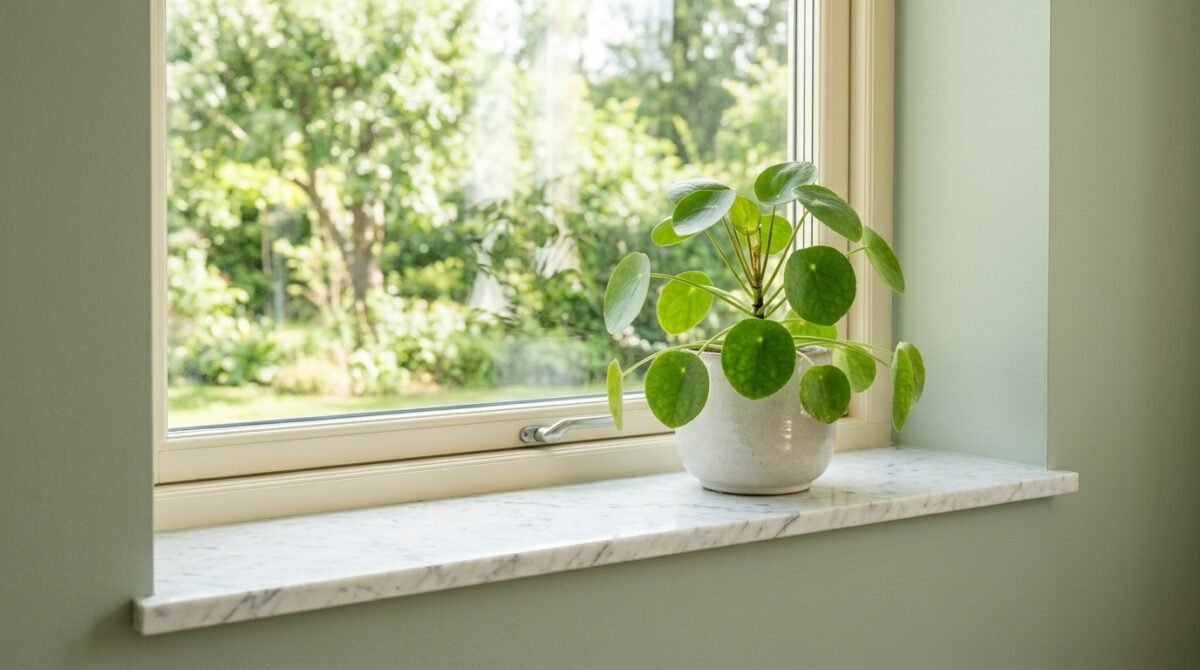
| Interior Sill | Inside the house | 5–10" | 1–1.5" | Decoration, planters, ornaments | Wood, plastic, marble |
| Exterior Sill | Outside the window | 6–12" | 1.5–3" | Water drainage, wall protection | Stone, concrete, metal |
| Door Sill (Threshold) | Bottom of door frame | 3–8" | 0.5–1.5" | Water/air barrier, stepping point | Wood, metal, composite |
| Stone Sill | Exterior windows | 6–12" | 2–4" | Durable exterior support | Granite, marble, limestone |
| Concrete Sill | Modern buildings | 6–10" | 2–3" | Weather-resistant support | Precast concrete |
| Brick Sill | Traditional exterior | 4–8" | Varies (brick stacked) | Traditional construction | Brick, mortar |
Typical Dimensions:
• Depth: 4–12 inches (10–30 cm)
• Thickness: 1–2 inches
• Length: 24–72 inches (depends on window width)
Functions:
✓ Supports the window frame
✓ Prevents water entry
✓ Provides slope for water drainage
✓ Decorative space for plants or décor
Materials: Wood, PVC, aluminum, composite, stone
Typical Dimensions:
• Depth: 5–10 inches
• Thickness: 1–1.5 inches
• Extends from wall to outer edge
Uses:
✓ Indoor decoration and aesthetics
✓ Space for small houseplants
✓ Display for candles or ornaments
✓ Functional shelf space
Materials: Wood (pine, oak, hardwood), marble, plastic laminate, ceramic tile
Design:** Usually matches interior trim and finish
Typical Dimensions:
• Depth: 6–12 inches
• Thickness: 1.5–3 inches
• Slope: 4–6 degrees for water runoff
Primary Functions:
✓ Critical water drainage away from walls
✓ Protects exterior walls from moisture damage
✓ Prevents water infiltration
✓ Weather resistance and durability
Materials: Stone (granite, slate), concrete, metal, PVC
Important: Must have proper slope and drip edge for water runoff
Typical Dimensions:
• Width: 3–8 inches
• Height: 0.5–1.5 inches (trip hazard consideration)
• Length: 30–72 inches (matches door width)
Primary Functions:
✓ Prevents water and air from entering
✓ Provides structural support
✓ Creates weather seal with weatherstripping
✓ Defines entry boundary
Materials: Wood, metal (aluminum, bronze), composite, rubber
Types: Raised thresholds, flush thresholds (ADA), beveled edges
Typical Dimensions:
• Depth: 6–12 inches
• Thickness: 2–4 inches
• Slope: 4–8 degrees for water drainage
Stone Types:
✓ Granite (most durable, most expensive)
✓ Limestone (traditional, moderate cost)
✓ Slate (elegant, expensive)
✓ Marble (beautiful, needs sealing)
✓ Sandstone (warm color, softer)
Advantages:
✓ Extremely durable (50+ years)
✓ Beautiful decorative element
✓ Excellent water drainage
✓ Increases home value
Disadvantages:
✗ Expensive ($50–150+ per linear foot)
✗ Heavy (requires structural support)
✗ Some stones need regular sealing
Typical Dimensions:
• Depth: 6–10 inches
• Thickness: 2–3 inches
• Slope: 4–6 degrees built-in
Characteristics:
✓ Strong and durable
✓ Weather-resistant
✓ Common in commercial buildings
✓ Cost-effective
✓ Uniform quality (precast)
Advantages:
✓ Lower cost than stone ($20–50 per linear foot)
✓ Very durable (30–50 years)
✓ Lightweight than stone
✓ Easy installation
Disadvantages:
✗ Can stain easily
✗ May crack from freeze-thaw cycles
✗ Less aesthetic than natural stone
Typical Dimensions:
• Brick height: 2.5–3 inches per layer
• Depth: 4–8 inches
• Usually 1 brick thick
Characteristics:
✓ Traditional home construction
✓ Good water runoff with proper slope
✓ Matches brick facade
✓ Moderate cost
Advantages:
✓ Aesthetic appeal (matches walls)
✓ Moderate cost ($15–30 per linear foot)
✓ Durable (30–50 years)
✓ Repairs blend with exterior
Disadvantages:
✗ Requires proper mortar maintenance
✗ Can crack or shift
✗ Water damage if mortar fails
✗ Needs periodic repointing
2. Beveled Sill: Angled edges, easier water runoff
3. Bullnose Sill: Rounded front edge, elegant finish
4. Ogee Sill: Ornate S-curve profile, decorative
5. Cove Sill: Curved underside, architectural detail
6. Sloped Sill: Significant slope (4–8°) for water drainage
7. Double-Sloped Sill: Slopes both directions for optimal drainage
8. Projecting Sill: Extends beyond wall, dramatic appearance
9. Flush Sill: Sits level with wall, modern minimalist
10. Molded Sill: Decorative molding details, traditional
12. Accessible/Low Sill: Very shallow (2–4"), accessibility for all
13. Picture Window Sill: Extra deep (12–18"), supports large windows
14. Bay Window Sill: Angled sills for bay configurations
15. Sloped Interior Sill: Interior slope helps water drainage
16. Marble Sill: Polished stone, luxury aesthetic
17. Granite Sill: Most durable natural stone
18. Quartz Sill: Engineered stone, non-porous
19. Slate Sill: Natural stone, elegant gray/black
20. Limestone Sill: Warm beige tones, traditional
21. Concrete Precast Sill: Modern, uniform, cost-effective
22. Aluminum Sill: Lightweight, corrosion-resistant
23. PVC/Composite Sill: Maintenance-free, durable
24. Wood Composite Sill: Looks like wood, won't rot
2. Flush Threshold: Level with floor (ADA compliant), minimal water seal
3. Beveled Threshold: Angled edges, easier rolling/walking
4. Saddle Threshold: Curved top, both sides slope away
5. Ramp Threshold: Gentle slope, accessibility
6. U-Shaped Threshold: Channel, excellent water containment
| Sill Type | Standard Depth | Standard Thickness | Standard Length | Recommended Slope | Weight (per LF*) |
|---|---|---|---|---|---|
| Window Sill (Wood) | 6–10" | 1.25–1.75" | Custom to window | 4–6° | 2–4 lbs |
| Window Sill (PVC) | 6–10" | 1.25–1.5" | Custom to window | 4–6° | 1–2 lbs |
| Interior Sill (Wood) | 5–10" | 1–1.5" | Custom | Flat (0°) | 2–3 lbs |
| Interior Sill (Marble) | 5–10" | 1–1.5" | Custom | Flat (0°) | 8–12 lbs |
| Exterior Sill (Stone) | 8–12" | 2–4" | Custom | 4–8° | 25–60 lbs |
| Exterior Sill (Concrete) | 6–10" | 2–3" | Custom | 4–6° | 15–25 lbs |
| Door Sill (Wood) | 3–6" | 0.5–1.5" | Match door width | Minimal | 1–3 lbs |
| Door Sill (Metal) | 3–6" | 0.5–1" | Match door width | Minimal | 2–5 lbs |
*LF = Linear Feet | Weights vary by material density
• 24" window → 24" sill
• 28" window → 28" sill
• 32" window → 32" sill
• 36" window → 36" sill
• 40" window → 40" sill
• 48" window → 48" sill
• 60" window → 60" sill
• 72" window → 72" sill
Standard Depth by Window Type:
• Single-hung: 4–6" depth
• Double-hung: 4–6" depth
• Casement: 5–8" depth
• Picture window: 8–12" depth
• Bay window: 6–10" depth
Interior Sill Depth (from wall to edge):
• Standard: 6–8"
• Narrow: 5–6"
• Deep: 8–10"
• Extra deep: 10–12" (for plants/décor)
| Material | Durability | Water Resistance | Cost (per LF) | Maintenance | Best For |
|---|---|---|---|---|---|
| WOOD (Pine/Oak) | 20–30 years | Low (needs coating) | $8–25 | High (staining, sealing) | Interior, traditional |
| PVC/Composite | 30–50+ years | Excellent | $15–40 | Low (wipe clean) | All windows, modern |
| Aluminum | 30–50 years | Excellent | $20–50 | Low (paint if desired) | Commercial, modern |
| Granite (Stone) | 50+ years | Excellent | $80–200 | Moderate (seal yearly) | Exterior, luxury |
| Marble (Stone) | 30–50 years | Good (porous) | $100–250 | High (seal, protect) | Interior, decorative |
| Limestone | 40–60 years | Moderate | $50–150 | Moderate (seal) | Exterior, traditional |
| Slate | 50+ years | Excellent | $100–200 | Low (seal optional) | Exterior, elegant |
| Concrete (Precast) | 30–50 years | Good | $20–50 | Moderate (seal, clean) | Exterior, commercial |
| Brick | 30–50 years | Moderate | $15–40 | Moderate (repoint mortar) | Traditional exterior |
| Quartz (Engineered) | 30–50 years | Excellent | $60–150 | Low (wipe clean) | Interior, modern |
✓ Granite (most durable, 50+ years)
✓ Slate (elegant, very durable)
✓ Concrete (cost-effective, durable)
✓ PVC/Composite (modern, maintenance-free)
BEST FOR INTERIORS:
✓ Wood (warm, traditional)
✓ Marble (luxury, decorative)
✓ Quartz (modern, easy-clean)
✓ PVC (affordable, durable)
BEST FOR DOORS:
✓ Metal (aluminum, bronze) - durable
✓ Wood (traditional) - needs maintenance
✓ Composite (modern, durable)
MOST MAINTENANCE-FREE:
✓ PVC/Composite (just wipe clean)
✓ Aluminum (paint if desired)
✓ Quartz (non-porous)
MOST AFFORDABLE:
✓ Wood ($8–25/LF)
✓ PVC ($15–40/LF)
✓ Brick ($15–40/LF)
✓ Concrete ($20–50/LF)
LUXURY/HIGH-END:
✓ Granite ($80–200/LF)
✓ Marble ($100–250/LF)
✓ Slate ($100–200/LF)
1. Measure window opening width (interior frame to frame)
2. Add 1/2"–1" on each side for overlap (typical)
3. Measure from interior wall to exterior wall for depth
4. Note the sill slope (should be 4–6°)
Door Sill/Threshold:
1. Measure door opening width (exactly)
2. Check door swing direction
3. Measure current threshold height (if replacing)
4. Determine if raising threshold would be ADA issue
Interior Sill:
1. Measure window opening width
2. Decide depth (5–10" typical)
3. Check for any wall obstacles
4. Consider weight (important for marble/stone)
1. Remove old sill carefully
2. Clean and inspect substrate
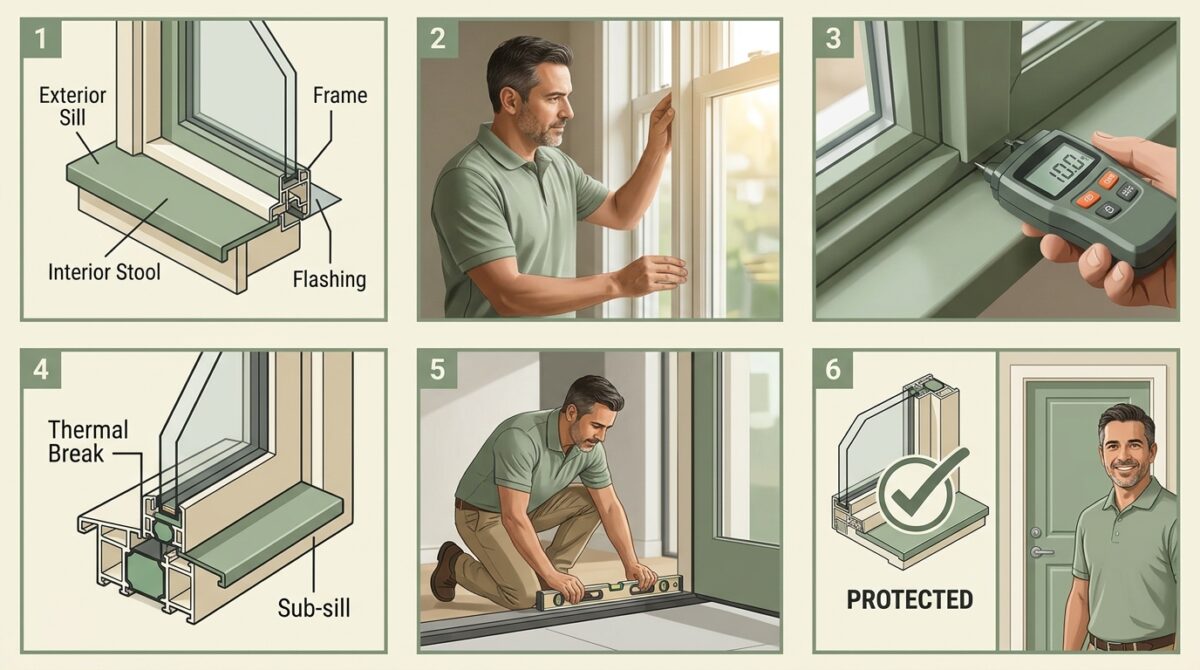
3. Apply sill pan or flashing (critical!)
4. Set new sill in mortar/sealant with slope
5. Ensure 4–6° slope for drainage
6. Seal all joints and edges
7. Allow proper curing time
Interior Sill Installation:
1. Remove old sill if present
2. Level the substrate
3. Install support brackets if needed
4. Set sill and secure
5. Caulk and seal edges
6. Apply finish coat
Door Sill Installation:
1. Remove old threshold
2. Clean surface thoroughly
3. Check for proper slope away from door
4. Install new sill/threshold
5. Add weatherstripping above
6. Ensure proper water seal
✓ Exterior sill MUST slope 4–6° for water drainage
✓ Install sill pan/flashing behind sill
✓ Create drip edge at outer edge
✓ Seal all joints and edges completely
✓ No water should sit on sill
Structural:
✓ Sill must be properly supported
✓ Stone sills may need additional bracing
✓ Weight considerations for floor joists
✓ Proper support brackets for heavy materials
Sealing:
✓ Use quality sealant (not caulk) at all joints
✓ Exterior sill should be sealed with polyurethane
✓ Interior can use caulk or sealant
✓ Allow proper curing time before exposure
☑️ Interior Windows: Wood, marble, quartz, or PVC
☑️ Wet Areas (kitchens/baths): Stone, quartz, or PVC
☑️ Climate: Freeze-thaw → stone, concrete, or PVC (not brick)
☑️ Budget-conscious: PVC, wood, or concrete
☑️ Luxury: Granite, marble, or slate
☑️ Maintenance-free: PVC, aluminum, or quartz
☑️ Traditional homes: Wood or stone
☑️ Modern homes: PVC, aluminum, or concrete
☑️ Commercial: Concrete or aluminum
Cause: Poor slope, failed sealant, or no sill pan
Solution: Replace with proper slope, install sill pan, seal all joints
Cause: Freeze-thaw, settling, or impact
Solution: Replace sill, use PVC or stone for durability
Cause: Poor installation, inadequate support
Solution: Remove and reinstall with proper support/slope
Cause: Water deposits, algae growth
Solution: Clean regularly, seal stone sills, improve drainage
Window Sills and Door Sills: A Complete Guide to Types, Sizes, and Materials
Why Your Window Sill Matters More Than You Think
Most homeowners focus on the glass, the frame, and the finish. The sill? It barely gets a second glance. But this unassuming ledge at the base of your window is one of the hardest-working components in your home’s exterior.
Window sills are engineered to solve one of construction’s most persistent problems: water. A properly designed sill channels rainwater away from your wall, protecting the framing, insulation, and interior from rot and moisture damage. Get it right, and your window system performs for decades. Get it wrong, and you’re looking at costly repairs—rotten framing, compromised insulation, and interior water damage—all traced back to a single overlooked component.
This guide covers everything you need to know: the main sill types, standard sizes, material options, design variations, and practical advice to help you make the right choice.
The 7 Main Types of Sills
1. Window Sill (Standard)
The horizontal ledge at the base of a window frame. Window sills serve two key functions: supporting the window structure and directing water away from the building.
Common Sizes:
- Depth: 4–12 inches (10–30 cm)
- Thickness: 1–2 inches
- Length: Matches window width (typically 24–72 inches)
Primary Uses:
- Supports the window frame and glass weight
- Slopes away from the building to prevent water entry
- Creates a decorative ledge for plants or décor
- Acts as a thermal break in modern window systems
Installation Location: Both interior and exterior (though the term most commonly refers to the exterior component)
2. Interior Window Sill
The finished surface on the inside of the window opening. Interior sills are primarily decorative, providing a clean finish and a functional shelf.
Common Sizes:
- Depth: 5–10 inches
- Thickness: 1–1.5 inches
- Length: Matches window width
Primary Uses:
- Provides an indoor aesthetic finish
- Creates display space for plants, candles, or décor
- Doubles as a seat in homes with deep, older wall construction
Popular Materials:
- Wood (warm, traditional)
- Marble or granite (luxurious, elegant)
- PVC or composite (modern, low-maintenance)
- Ceramic tile (contemporary, durable)
3. Exterior Window Sill
Located outside the window opening, the exterior sill slopes downward to drain rainwater away from the wall. This is the primary weather-protection element in the window system.
Common Sizes:
- Depth: 6–12 inches (extending beyond the window frame)
- Thickness: 1.5–3 inches
- Slope: Typically angled downward away from the building
Primary Uses:
- Manages water drainage and runoff
- Protects exterior walls from water intrusion
- Supports the window frame structure
- Provides a weather seal
Why Slope Matters: Without adequate slope, water pools on the sill surface instead of draining away, leading to accelerated deterioration and potential structural damage.
4. Door Sill (Threshold)
The threshold is the sill at the base of a door frame—the transition point between interior and exterior. It’s functional first, providing an air and water seal at the door opening.
Common Sizes:
- Width (depth): 3–8 inches
- Height (rise): 0.5–1.5 inches
- Length: 30–72 inches (matches door frame width)
Primary Uses:
- Blocks water and air infiltration
- Provides structural support for the door frame
- Creates a weather seal at the threshold
- Minimizes trip hazards (regulated by modern codes)
Code Considerations: Under the Americans with Disabilities Act (ADA), threshold height is limited to 0.5 inches for exterior doors and 0.25 inches for interior doors to ensure safe, accessible passage. Traditional thresholds were often taller (0.75–1.5 inches), but modern accessible construction follows these stricter limits.
5. Stone Sill
A sill cut from natural stone—granite, limestone, marble, slate, or bluestone. Stone sills are prized for their durability, timeless appearance, and longevity.
Common Sizes:
- Depth: 6–12 inches
- Thickness: 2–4 inches
- Length: Custom to window width
Popular Stone Types:
- Granite: Extremely durable, weather-resistant, and of a premium cost
- Limestone: Classic appearance, softer, requires more maintenance
- Marble: Elegant, but susceptible to etching and staining
- Slate: Fine texture, durable, attractive, natural aging
- Bluestone: Popular in the Northeast, natural gray tones
Advantages:
- Lifespan of 50–100+ years
- Develops attractive patina over time
- Adds resale value
- Low maintenance once properly sealed
Disadvantages:
- Expensive ($100–$400+ per linear foot)
- Heavy, requiring adequate structural support
- Professional installation required
- Some varieties need periodic sealing
6. Concrete Sill
A precast concrete sill is used in both modern residential and commercial construction. Strong, weather-resistant, and cost-effective.
Common Sizes:
- Depth: 6–10 inches
- Thickness: 2–3 inches
- Length: Custom to opening
Advantages:
- Durable (50+ year lifespan)
- More economical than natural stone
- High structural strength
- Low maintenance
Disadvantages:
- Utilitarian appearance without finishing
- Vulnerable to cracking if water infiltrates and freezes
- Requires sealing
- May not complement traditional architectural styles
Finish Options:
- Smooth (standard, industrial look)
- Textured (improved visual appeal)
- Colored (expanded aesthetic options)
- Polished (more upscale appearance)
7. Brick Sill
A sill constructed from bricks arranged beneath the window opening. Traditional, characterful, and well-suited to period homes.
Common Sizes:
- Brick height: 2.5–3 inches per course
- Depth: 4–8 inches
- Length: Custom to opening
Advantages:
- Period-appropriate for older homes
- Good water drainage when correctly laid
- More affordable than natural stone
- Visually consistent with brick construction
Disadvantages:
- Mortar requires periodic repointing
- Bricks can crack from freeze-thaw cycles
- Less durable than stone or concrete over the long term
Quick Reference Table: All Sill Types at a Glance
Type | Typical Depth | Typical Thickness | Main Use | Relative Cost |
|---|---|---|---|---|
Window Sill (Standard) | 4–12 in | 1–2 in | Window support | Low |
Interior Sill | 5–10 in | 1–1.5 in | Decoration, display | Low–Medium |
Exterior Sill | 6–12 in | 1.5–3 in | Water drainage | Medium |
Door Sill / Threshold | 3–8 in | 0.5–1.5 in | Door protection | Low–Medium |
Stone Sill | 6–12 in | 2–4 in | Durable exterior | High |
Concrete Sill | 6–10 in | 2–3 in | Modern buildings | Medium |
Brick Sill | 4–8 in | Varies | Traditional homes | Medium |
Standard Window Sill Sizes: Residential Construction
Window Width | Recommended Sill Depth | Typical Thickness | Interior Width | Exterior Extension |
|---|---|---|---|---|
24″ (2 ft) | 4–6″ | 1.25″ | 4″ | 4″ |
30″ (2.5 ft) | 5–7″ | 1.25″ | 5″ | 4–5″ |
36″ (3 ft) | 6–8″ | 1.5″ | 6″ | 5–6″ |
48″ (4 ft) | 7–9″ | 1.5″ | 7″ | 6–7″ |
60″ (5 ft) | 8–10″ | 1.5″ | 8″ | 7–8″ |
72″ (6 ft) | 10–12″ | 1.5–2″ | 10″ | 8–10″ |
Standard Window Sill Sizes: Commercial Construction
Opening Width | Sill Depth | Thickness | Overhang |
|---|---|---|---|
4–6 ft | 8–10″ | 2″ | 4–6″ |
6–8 ft | 10–12″ | 2.5″ | 6–8″ |
8–10 ft | 12–14″ | 2.5–3″ | 8–10″ |
10+ ft | Custom | 3″+ | Custom |
Door Threshold Standards: Residential
Door Width | Threshold Depth | Height | Material Depth |
|---|---|---|---|
30″ | 3–4″ | 0.5–0.75″ | 1.5–2″ |
32″ | 3–4″ | 0.5–0.75″ | 1.5–2″ |
36″ | 4–6″ | 0.5–0.75″ | 2″ |
42″ | 6–8″ | 0.5–0.75″ | 2–2.5″ |
22 Window Sill Design Types
Beyond the functional categories, sills come in a wide variety of design styles to suit different aesthetics and applications.
1. Contemporary Flat Sill
Minimal depth (around 4 inches), clean lines, typically PVC or painted wood. Ideal for modern and minimalist homes.
2. Traditional Victorian Sill
Deep profile (8–10 inches) with decorative molding details. Usually painted wood with an ornate, formal appearance.
3. Modern Minimalist Sill
Very shallow (3–4 inches), flush with the window frame, seamlessly integrated into the wall.
4. Farmhouse Display Sill
Extra-deep (10–14 inches) for plant displays. A defining feature of farmhouse-style interiors.
5. Sloped Sill
Pronounced slope for optimized water drainage. A standard feature in well-executed modern exterior construction.
6. Decorative Edge Sill
Beveled or rounded edges for added visual detail. Common in traditional painted wood sills.
7. Thick Stone Sill
2–4 inches thick, creating a substantial architectural statement. Typically granite or marble.
8. Thin Contemporary Sill
1 inch or less. Minimalist profile using composite or PVC, designed to disappear into the frame.
9. Cantilever (Extended) Sill
Projects 8–12+ inches beyond the wall face, providing both weather protection and a strong visual accent.
10. Recessed Sill
Set into the wall opening to maintain a flush, continuous wall appearance. Requires careful waterproofing.
11. Tiled Sill
Ceramic or stone tiles are applied to the sill surface. Practical for kitchens and bathrooms where durability and easy cleaning are priorities.
12. Wraparound Sill
Continuous sill design wrapping around corner windows. Custom fabrication and installation required.
13. Curved (Radius) Sill
Designed for arched or radius window openings. Specialty fabrication required.
14. Split-Level Sill
Two-tier construction that creates a layered visual accent. A contemporary styling choice.
15. Beveled Edge Sill
Angled edge treatment for a decorative yet functional detail. Common in traditional woodwork.
16. Bullnose (Rounded) Sill
Rounded edge profile for a softer, safer finish. Widely used in modern residential construction.
17. Flush Sill
Perfectly level with the surrounding frame—no visible overhang. Achieves a seamless, modern finish.
18. Stepped (Tiered) Sill
Multiple tiers create a decorative, tiered profile. Adds architectural interest to traditional homes.
19. Textured Sill
Non-smooth surface finish applied to stone or concrete. Adds visual depth and contemporary character.
20. Composite Sill
PVC or engineered composite material with a wood-look finish. Practical, low-maintenance, and widely used in new construction.
21. Composite Marble-Look Sill
Engineered stone or composite material mimicking marble. Provides the look of luxury at a lower price point.
22. Reclaimed Wood Sill
Salvaged or antique timber with inherent character. Best suited to heritage restorations and homes where originality matters.
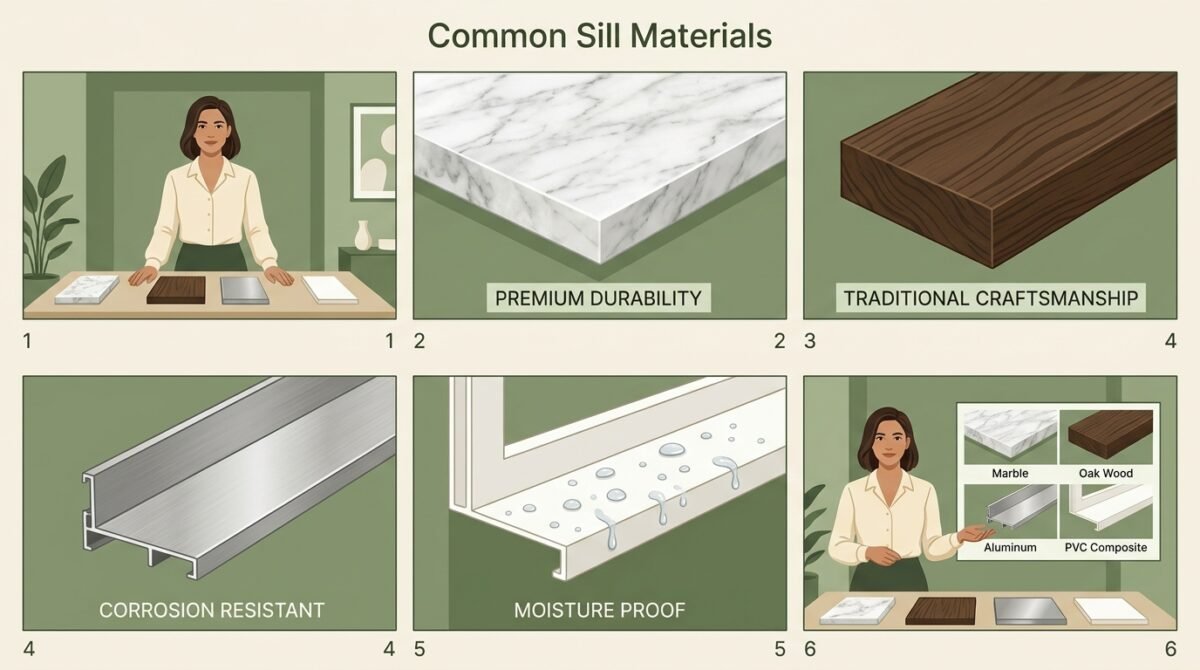
Materials: Detailed Breakdown
Wood
Best for: Traditional and historic homes; interior sills with protective overhangs; custom decorative installations.
Characteristics: Warm appearance, easy to shape and finish, but absorbs moisture if not properly sealed. Requires regular maintenance, particularly in exterior applications.
Maintenance: Seal every 2–3 years; refresh paint or stain as needed; inspect regularly for signs of rot.
Cost: $30–$80 per linear foot
Common Types: Pine (affordable, paintable), Oak (attractive grain), hardwoods (more durable), engineered composite wood (dimensionally stable).
Marble
Best for: High-end interiors; bathrooms and kitchens; formal rooms.
Characteristics: Elegant with natural veining, but susceptible to etching from acidic substances. Better suited to interior use where it’s sheltered from the elements.
Maintenance: Seal annually; avoid acidic cleaners; professional cleaning recommended.
Cost: $150–$400+ per linear foot
Popular Varieties: Carrara (classic white with gray veining), Calacatta (bold veining, premium price), black marble (dramatic), and colored varieties.
Granite
Best for: Exterior applications; high-end homes; long-term investments.
Characteristics: One of the hardest natural stones available—highly resistant to weather, staining, and physical damage. Requires minimal upkeep once installed.
Maintenance: Seal every 3–5 years; easy to clean.
Cost: $100–$300+ per linear foot
Popular Colors: Black (sophisticated), gray (versatile), red (warm, dramatic), white (bright, contemporary).
Concrete
Best for: Commercial buildings; modern residential projects; large-scale or budget-conscious installations.
Characteristics: Strong, economical, and weather-resistant when properly sealed. Vulnerable to cracking if water infiltrates and freezes.
Maintenance: Seal on installation and reseal every 3–5 years; can be stained or polished for improved appearance.
Cost: $40–$100 per linear foot
PVC (Vinyl)
Best for: Modern homes; low-maintenance applications; replacement window projects.
Characteristics: Won’t rot, warp, or absorb moisture. Minimal upkeep required, though color can fade under prolonged sun exposure.
Maintenance: Wipe clean; no sealing or painting needed.
Cost: $30–$80 per linear foot
Key Trade-offs: Very practical but can look synthetic. May not suit traditional architectural styles.
Composite (Engineered)
Best for: Homeowners who want the appearance of wood without the maintenance demands.
Characteristics: Blend of wood fiber and resin. Resists rot and warping, is largely maintenance-free, and is often manufactured using recycled materials.
Maintenance: Minimal—wipe clean periodically; sealing optional.
Cost: $50–$120 per linear foot
Slate
Best for: Exterior applications; high-end contemporary and traditional homes.
Characteristics: Fine-grained natural stone with a distinctive layered texture. Durable and attractive, but can split if water penetrates cracks and freezes.
Maintenance: Seal every 2–3 years; professional cleaning recommended.
Cost: $120–$280 per linear foot
Limestone
Best for: Historic restoration; traditional architecture; buildings that value natural patina.
Characteristics: Softer than granite and more susceptible to etching from acids. Ages beautifully, developing a warm patina over time.
Maintenance: Seal annually; avoid acidic cleaners; professional care recommended.
Cost: $100–$250 per linear foot
Bluestone
Best for: Exterior use; colonial and traditional homes, particularly in the Northeast and Mid-Atlantic regions.
Characteristics: Durable natural stone with a characteristic gray tone. Weathers well and integrates naturally into period architectural styles.
Maintenance: Seal every 2–3 years.
Cost: $80–$150 per linear foot
Ceramic Tile
Best for: Kitchens, bathrooms, and other high-moisture areas; contemporary interiors.
Characteristics: Waterproof, easy to clean, and available in a wide range of colors and patterns. Grout lines require periodic maintenance.
Maintenance: Wipe clean; seal grout periodically; replace cracked tiles as needed.
Cost: $40–$120 per linear foot
Stainless Steel
Best for: Commercial buildings; modern or industrial aesthetics; coastal and harsh-climate environments.
Characteristics: Extremely durable, corrosion-resistant, and easy to maintain. Prone to fingerprints; best suited to commercial or specialty residential applications.
Maintenance: Wipe clean; occasional buffing to maintain appearance.
Cost: $150–$400+ per linear foot
Installation Best Practices
Slope: Exterior sills must slope away from the building to ensure water drains clear of the wall. Insufficient slope causes pooling, which accelerates deterioration.
Overhang: Exterior sills should extend 2–4 inches beyond the wall face to direct water away from the cladding and foundation.
Sealing and Waterproofing:
- Apply sealant at all joints and interfaces
- Caulk between the sill and frame
- Maintain a continuous moisture barrier
- Reapply sealant as recommended for the material
Structural Support: Ensure adequate framing or structural support beneath the sill to prevent sagging or failure over time. Professional installation is strongly recommended for stone and concrete sills.
Thermal Breaks: In modern window systems, sills should incorporate thermal breaks to limit heat transfer and prevent condensation buildup.
Choosing the Right Sill
For exterior durability: Granite, concrete, or composite. Wood requires considerably more upkeep in exposed conditions.
For visual impact, natural stone (marble, granite, slate) creates a luxurious finish; wood or composite materials suit traditional aesthetics well.
For low maintenance, PVC, composite, or concrete are the most practical choices.
For budget-conscious projects, PVC, basic concrete, or painted wood offer the lowest entry cost.
For historic homes: Match the original sill type and detailing—typically wood, slate, or brick.
For modern homes, PVC, composite, concrete, or stone all deliver a clean contemporary look.
FAQs: Window And Door Sills
What’s the standard window sill depth?
For residential windows, 4–8 inches is typical. Larger windows may require 10–12 inches. Interior sills used as display surfaces are often 5–10 inches deep.
How long do window sills last?
Lifespan varies by material: wood typically lasts 20–30 years; natural stone (particularly granite) can last 50–100+ years; concrete 30–50 years; PVC and composite 50+ years.
Can I replace just the sill?
In some cases, yes—but the sill and frame are often integrated, making isolated replacement complex. A professional assessment is recommended before proceeding.
What causes failure still?
The most common causes are poor drainage, inadequate slope, water infiltration, and material degradation from neglected maintenance. Correct installation and regular upkeep prevent most failures.
Do all sills need to be sealed?
Natural stone requires regular sealing. Wood always needs sealing—especially in exterior applications. PVC and composite rarely require it. Always follow the manufacturer’s guidance for the specific material.
Which is still the most economical?
PVC and basic wood are the most affordable options, typically $30–$50 per linear foot. Natural stone is at the premium end, ranging from $100 to $400+ per linear foot.
The Bottom Line
A window sill is far more than a decorative ledge. It’s a structural and weatherproofing component that directly affects the longevity of your window system and the integrity of your building envelope. Choosing the right type, ensuring proper installation, and following appropriate maintenance schedules will determine how well your windows perform over the long term.
Prioritize adequate slope and thorough waterproofing on all exterior sills. For everything else—material, profile, and finish—let your budget, architectural style, and maintenance preferences guide the decision.
Resources
National Association of Home Builders (NAHB)
Professional standards and guidance for residential window installation, sizing, and waterproofing best practices.
American Architectural Manufacturers Association (AAMA)
Technical specifications for window sill materials, performance standards, and industry guidelines.
Disclaimer
This article is intended for educational and informational purposes only. Window and door sill installation requires professional expertise—improper installation can result in water damage and structural problems. Material selection should account for your local climate, building style, budget, and maintenance capacity. All installations must comply with applicable local building codes, which vary by location and climate zone. For new construction or major replacement work, consult a qualified architect or licensed contractor.