Side Tables Selector & Sizing Calculator | 100+ Styles & Designs

🛋️ Side Tables Selector & Sizing Calculator

Find the perfect side table • 100+ styles, sizes & designs • Budget & material guide

Side Tables Selector & Calculator
Complete Side Tables Styles & Types Guide
Category Table Types (Examples) Best For Typical Dimensions Key Features
🛋️ Living Room End tables, accent tables, nesting tables Next to sofas/chairs, lamp placement 20-30"W × 24-28"H Decorative, sturdy, style-forward
🛏️ Bedroom Nightstands, floating tables, tall bedside Next to bed, lamp/alarm placement 18-24"W × 24-30"H Drawers, soft edges, convenient height
🏢 Office Printer stands, filing tables, workspace tables Workspace organization, storage 18-30"W × 28-36"H Functional, sturdy, organized
🌿 Outdoor Patio tables, garden tables, poolside Outdoor entertaining, plants 20-28"W × 18-24"H Weatherproof, durable, maintenance-free
🚪 Entryway Console tables, decorative, shoe racks Entry display, key storage, mirror top 28-48"W × 30-36"H Decorative, functional, narrow
🌿 Travertine & Natural Stone Traveling travertine, stone accent, marble-look, natural finish High-end living, bedroom, outdoor accent pieces 20-28"W × 24-30"H Luxury, durable, natural veining, unique patterns
📦 All 100+ Side Table Types (Including Travertine)
Living Room (21): End table, accent table, nesting tables, round, square, rectangular, C-shaped, drum, pedestal, glass top, marble top, wooden, metal, mirrored, storage, with drawer, with shelf, industrial, modern minimalist, rustic farmhouse, traveling travertine
Bedroom (11): Nightstand, floating, charging station, slim, tall, compact small, upholstered, mirrored, vintage, corner, travertine accent
Multi-Purpose (10): Lift-top, folding, adjustable height, rolling, laptop, TV tray, snack, sofa arm, magazine rack, bar cart
Outdoor (11): Patio, garden, balcony, rattan, wicker, concrete, metal, plastic, poolside, folding, traveling travertine
Event (11): Wedding, cocktail, party accent, display, reception, cake display, floral, entryway console, showcase, exhibition, travertine display
Office (11): End table, printer stand, filing, conference room, waiting room, study room, computer, compact workspace, reception, break room, travertine accent
Entryway (11): Console, hallway slim, storage, shoe rack, key organizer, mirror-top, foyer, floating, corner hall, rustic entry, travertine accent
Designer (10): Scandinavian, mid-century modern, bohemian, art deco, luxury, hand-carved, acrylic, resin art, LED light, smart with USB
Unique (10): Tree stump, crate, reclaimed wood, pipe, wall-mounted, geometric, hexagon, stackable, modular, multi-level tier
🎨 Design Styles Explained (Including Travertine)
Modern/Minimalist: Clean lines, simple, neutral colors, function-first (typically $100-300)
Mid-Century Modern: Iconic 1950s-60s design, tapered legs, organic shapes (typically $300-600)
Rustic/Farmhouse: Natural wood, distressed finishes, warm tones (typically $150-400)
Industrial: Metal + wood, exposed elements, vintage feel (typically $200-500)
Bohemian: Eclectic, colorful, natural materials, global influences (typically $150-350)
Traditional: Classic, formal, ornate details, timeless (typically $300-700)
Art Deco: Geometric, luxury, bold patterns, high-end (typically $500-1200)
Scandinavian: Light, minimal, functional, natural light (typically $200-500)
Mediterranean/Tuscan: Warm earth tones, travertine stone, natural materials, rustic elegance (typically $400-1000+)
Modern Luxury: Travertine tables, high-end materials, contemporary design, statement pieces (typically $600-1500+)
🎯 100+ Types Summary (Including Traveling Travertine)
By Shape: Round, square, rectangular, C-shaped, drum, hexagon, geometric, organic, travertine block
By Material: Wood, metal, glass, marble, concrete, rattan, wicker, acrylic, resin, travertine, mixed
By Function: Decorative, storage, work surface, display, utility, multi-purpose, travertine accent
By Feature: Drawers, shelves, lift-top, rolling, folding, adjustable, floating, charging, travertine finish
By Location: Living room, bedroom, office, outdoor, entryway, event, multi-room, spa/wellness
By Price: Budget ($50-150), mid-range ($150-400), premium ($400-800), luxury travertine ($600-1500+)
Premium Natural Stone: Traveling travertine tables offer one-of-a-kind luxury, warm natural aesthetics, durability for decades
Side Tables Sizing Guide & Specifications
📏 Standard Dimensions by Room
Living Room End Tables: 20-30"W × 24-28"H (pairs with sofa height 30-36")
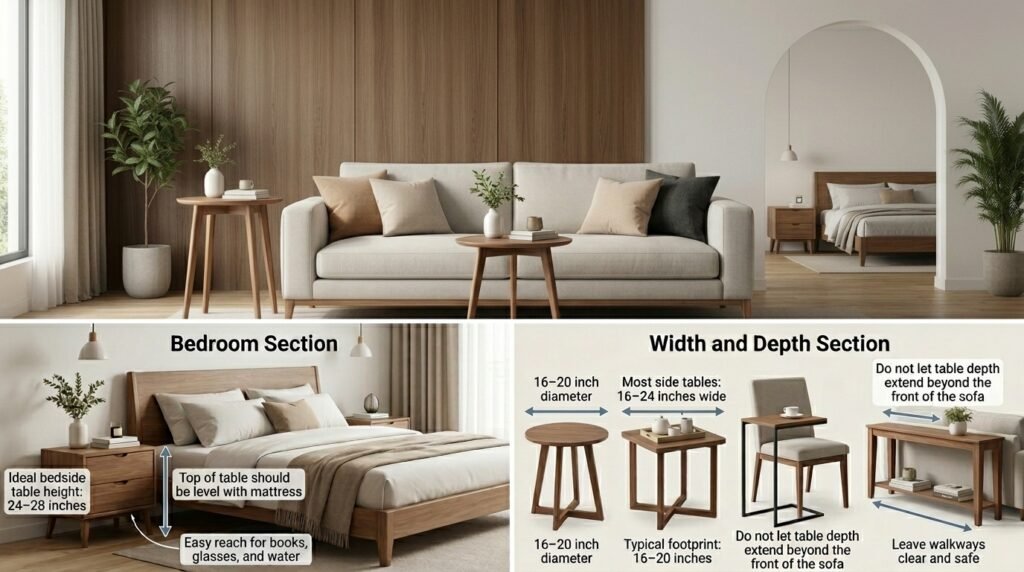
Bedroom Nightstands: 18-24"W × 24-30"H (aligned with bed height 24-30")
Office Work Tables: 24-36"W × 28-36"H (functional height for sitting)
Entryway Consoles: 28-48"W × 30-36"H (taller, decorative, narrow)
Outdoor Patio: 20-28"W × 18-24"H (lower for relaxation, weather-resistant)
🔢 Height Proportions (Key Formula)
Sofa Side Tables: 16-18 inches BELOW armrest height (typically 24-28" tall for 32-36" sofa)
Bed Nightstands: 24-30" tall (same height as mattress top, ±2")
Office Tables: 28-36" tall (functional for seated work)
Standing Level: 36-42" tall (for standing access)
General Rule: Table should align with top of armrest or cushion for easy placement
Furniture Pair Ideal Table Height Ideal Table Width Top Surface Spacing
Sofa (32-36" seat height) 24-28" (16-18" below armrest) 20-28" 400-600 sq in 2-4" from sofa edge
Queen Bed (24-26" mattress) 24-28" (same as mattress) 18-24" 300-500 sq in 0-2" from bed edge
Armchair (18-20" seat) 20-24" (same as armrest) 18-22" 250-400 sq in 0-2" from chair edge
Office Desk (30" height) 28-32" (lower for side access) 20-30" 400-600 sq in 2-4" from desk
Entry Wall 30-36" (eye level) 28-48" (narrow) 600-1200 sq in N/A (wall-mounted)
✨ Traveling Travertine Side Tables (Premium Natural Stone)
What is Travertine? Natural sedimentary rock formed from mineral springs, featuring unique porous texture and natural veining. Each piece is one-of-a-kind with organic patterns and variations.
Appearance: Warm earth tones (cream, beige, tan, ivory), natural holes/pits (characteristic of travertine), subtle veining, matte or polished finish options
Durability: Very durable, harder than marble, scratch-resistant top surface, resists etching better than marble
Porosity: Naturally porous (can stain if untreated), requires sealing for protection, sealed travertine is stain-resistant and easy to clean
Weight: Heavy (natural stone), requires sturdy base, not ideal for moving frequently (hence "traveling" refers to style, not portability)
Maintenance: Seal annually, clean with pH-neutral cleaner, avoid acidic substances, wipe spills immediately, use coasters/placemats
Price Range: Premium to luxury ($400-1200+), investment piece that lasts decades
Best For: Living room accent tables, bedroom nightstands, entryway consoles, outdoor patio tables (if sealed properly), luxury home decor
Style Compatibility: Mediterranean, Tuscan, modern luxury, contemporary, bohemian, transitional, coastal-luxury, spa-like aesthetics
Ideal Dimensions: 20-28"W × 24-30"H (pairs well with mid-range to high-end furniture)
Unique Features: Each table is one-of-a-kind, natural color/pattern variations, porous texture adds tactile interest, warm natural material
🛋️ Travertine Side Tables by Room Application
Living Room Traveling Travertine: Perfect accent table next to sofa, pairs with neutral upholstery beautifully, lamp placement, decorative showcase piece, 24-28"W recommended
Bedroom Travertine Nightstand: Luxurious bedside alternative to marble, warm tones complement most color schemes, 18-24"W fits standard bed spacing, pairs with upholstered headboards
Entryway Travertine Console: Makes dramatic first impression, larger surface for decorative displays, 28-36"W ideal, natural stone adds sophistication
Outdoor Travertine Patio Table: Must be sealed for outdoor use, creates resort-like atmosphere, weathered finish becomes more beautiful over time, 20-28"W
Spa/Wellness Room: Creates calming environment, natural stone aesthetic promotes relaxation, perfect for luxury bathrooms adjacent to vanities
💎 Travertine vs Other Premium Materials
Travertine vs Marble: Travertine is harder, more scratch-resistant, warmer tones, more affordable than marble, less prone to etching from acids
Travertine vs Granite: Travertine has more organic appearance, warmer feel, more decorative veining, granite is harder but colder appearance
Travertine vs Limestone: Travertine is denser, more durable, holds polish better, limestone is softer and less suitable for furniture
Travertine vs Concrete: Travertine feels more luxurious, warmer aesthetic, more refined, concrete is industrial and harder to maintain
🛠️ Travertine Care & Maintenance Tips
Sealing: Professionally sealed before delivery or DIY seal with stone sealer, reapply annually or every 2-3 years
Cleaning: Daily: dust with soft cloth, spills: wipe immediately, deep clean: use pH-neutral stone cleaner (not vinegar/lemon)
Protection: Use coasters for glasses/mugs, placemats for food, avoid direct heat (hot pans), use felt pads under decorative items
Avoid: Acidic cleaners, abrasive scrubbers, harsh chemicals, prolonged moisture exposure (for outdoor), sitting/leaning on edges
Stain Removal: Fresh spills: blot immediately, set stains: contact professional stone cleaner, natural aging patina is desirable
Outdoor Care: Sealed travertine can withstand weather, but benefits from covered areas, clean seasonally, reseal every 1-2 years for outdoor use
🌍 Where to Find Traveling Travertine Side Tables
High-End Furniture Retailers: Design Within Reach, Room & Board, Mitchell Gold + Bob Williams, Restoration Hardware
Premium Online: 1stDibs, Chairish, Wayfair Premium, Article, CB2 (limited selection)
Specialty Stone Furniture: Custom travertine furniture makers, local stone fabricators, European furniture importers
Interior Design Showrooms: High-end design studios, luxury home showrooms, architectural stone dealers
Price Range: $500-$1500+ depending on size, finish, base material (metal, wood), custom vs standard
💰 Budget Breakdown by Price Range
Budget ($50-150): Ikea, Wayfair basics, Amazon - simple styles, particle board/metal
Mid-Range ($150-400): West Elm, Target, Wayfair - quality wood, design options
Premium ($400-800): Article, CB2, Design Within Reach - solid wood, designer pieces
Luxury ($800+): High-end furniture stores - hand-crafted, marble, high-end designers
🎯 Selection Tips by Room
Living Room: Choose tables 16-18" below armrest height, 20-28" wide, style matches sofa aesthetic
Bedroom: Match mattress height, 18-24" wide (fits between furniture), consider storage
Office: Functional height (28-36"), 20-30" wide, supports equipment/organization
Outdoor: Weather-resistant material, lower height (18-24"), 20-28" wide
Entryway: Taller (30-36"), 28-48" wide, narrow depth (12-15"), decorative priority
📐 Space Planning Guidelines
Small Spaces: 18-20"W tables, single drawers, vertical storage, wall-mounted options
Medium Spaces: 20-28"W tables, standard heights, multiple shelves/drawers
Large Spaces: 24-30"W tables, statement pieces, design-forward styles
Traffic Flow: Keep 18-24" of clearance around table edges
Visual Balance: Pair large sofa with larger tables, small chair with compact table

© 2026 Side Tables Selector & Sizing Calculator | 100+ table styles • dimensions • material guide • budget recommendations

Side Tables

The Ultimate Buyer’s Guide — Materials, Styles, Sizes & Expert Tips

What Is a Side Table — and Why Does Every Room Need One?

A side table is one of the hardest-working pieces of furniture in any home. It sits beside a sofa, next to a recliner, next to a bed, or out on the patio — and it does exactly what its name promises: it stands by your side, holding whatever you need within easy reach: a drink, a lamp, a book, a remote control, a phone charging overnight. The side table is modest in footprint but enormous in function.
What makes the side table such an interesting furniture category is its sheer variety. There is no single shape, material, or style that defines it. A solid wood side table with a single drawer works perfectly in a traditional living room. A round marble side table with gold legs transforms a modern bedroom. A teak outdoor side table weathers the seasons beside an Adirondack chair on the porch. A side table with a charging station keeps your nightstand tech-ready in a contemporary home.
This guide explores every aspect of the side table — from the classic solid walnut side table and the mid-century modern side table to the outdoor wicker side table and the viral umbrella side table for poolside living. Whether you are shopping for your first apartment, redesigning a main bedroom, or building out a covered patio, this is your complete reference for choosing, sizing, styling, and caring for side tables of every kind.
 

Side Table Materials: A Complete Comparison

Material choice is the single most important decision you will make when buying a side table. It determines durability, maintenance, visual weight, and how the piece will age over time. Here is a thorough look at every major material category.

Marble & Stone Side Tables

Few materials command a room like marble. A round marble side table brings instant sophistication to a living room or bedroom. The cool, smooth surface, the natural veining, and the sense of geological permanence make marble side tables a perennial favorite in high-end interiors. Options range from white marble side table classics to dramatic black marble side table designs, eye-catching red marble side tables, warm brown marble side tables, and the increasingly popular calacatta marble side table and calacatta viola side table with their bold grey veining on creamy white backgrounds.
For those who want the look without the weight or price, the marble-topped side table — a wood or metal base topped with a marble slab — offers an excellent compromise. A marble-top side table with storage adds a drawer or shelf beneath the stone surface, solving the one problem marble tables have always had: nowhere to put things. The rectangular marble side table and the round marble-top side table are the two most popular shapes in this category.
Beyond marble, travertine side tables have become increasingly popular. The travertine side table has a distinctive pitted, fossil-rich surface that feels both ancient and completely contemporary. Round travertine side tables work especially well in earthy, organic-modern interiors. For extreme drama, the onyx and agate side tables let natural crystal patterns do all the decorative work. The petrified wood side table occupies its own fascinating category — millions of years old, impossibly beautiful, and technically both wood and stone at once.
Outdoor stone side tables — concrete, sandstone, limestone, and the increasingly popular terrazzo — bring durability and natural beauty to garden and patio settings. A round concrete side table weathers beautifully over time. The outdoor terrazzo side table, with its colorful aggregate surface, has become a design darling for modern patios.
Care Tip:  Marble and stone side tables require sealing every 12 to 24 months to prevent staining. Wipe spills immediately with a soft cloth. Avoid acidic cleaners — even lemon juice can etch the surface. Use a felt pad under any items that could scratch.
 

Wood Side Tables

Wood is the most beloved material for side tables across every style and price point. From the solid-wood side table built to last a lifetime to the live-edge side table that celebrates the raw beauty of a single slab of timber, wood brings warmth, texture, and natural variety that no other material can replicate.
At the premium end, the solid walnut side table is one of the most desirable pieces in contemporary furniture. Its rich chocolate tones, tight grain, and natural luster age beautifully over decades. A round walnut side table works as a sculptural object as much as a functional one. The live-edge walnut side table pushes this further, preserving the organic contour of the original tree in every curve of the tabletop. A mid-century walnut side table — tapered legs, clean profile, warm finish — remains one of the most copied forms in furniture history.
The white oak side table has surged in popularity alongside Scandinavian and Japandi interiors. Its pale, almost grey-tinged grain reads as calm and refined. Solid wood side tables in white oak feel clean and architectural without being cold. Paired with linen upholstery and muted tones, the white oak side table is practically the unofficial furniture piece of the 2020s.
Teak is the gold standard for outdoor wood side tables. A teak outdoor side table resists moisture, insects, and UV exposure in ways that other woods simply cannot. As teak weathers, it turns a distinguished silver-grey unless treated with teak oil to maintain its warm honey color. The teak root side table is a particularly spectacular variation — the gnarled, sculptural root system becomes the base of the table, making every single piece unique.
For sustainability-minded buyers, the reclaimed wood side table and the reclaimed timber side table offer character and environmental responsibility in one. Salvaged wood side tables are made from old barns, factories, and demolished buildings — each plank carries history in its grain, nail holes, and saw marks. The live-edge wood side table and the wood slab side table celebrate the tree in its most honest form: one piece, minimal processing, nothing added.
The stump side table — literally a cross-section of a tree trunk finished and sealed — has become a favourite in boho and organic-modern interiors. Natural stump side tables, tree stump side tables, and wood stump side tables range from rough-cut to highly polished. The log side table takes a similar approach, using whole rounds of timber as a base. Rustic wooden side tables like the driftwood side table and the twig side table bring the outdoors in, working especially well in coastal and woodland-themed rooms.
Wood Care Tip:  Solid wood side tables benefit from annual treatment with furniture wax or oil. Keep them away from direct sunlight and heating vents to prevent cracking. For outdoor wood side tables, apply teak oil or a UV-resistant wood sealer at the start of every season.
 

Metal Side Tables — Brass, Gold, Iron & Steel

Metal side tables bring an edge — literally and figuratively. The sharp lines of a brass side table, the industrial honesty of a wrought iron side table, the weightless drama of a glass and steel side table. Metal is the great chameleon of furniture materials: it can feel industrial or glamorous, antique or thoroughly modern, depending entirely on finish and form.
Brass is having its longest renaissance in decades. The brass side table — warm, slightly aged, impossibly elegant — works in traditional, mid-century, and contemporary settings alike. A vintage brass side table with a natural patina adds character that money cannot buy quickly. An antique brass side table pairs beautifully with velvet upholstery, dark wood floors, and library-style spaces. The gold marble side table combines brass or gold-finished metal legs with a marble top for maximum luxury impact.
Wrought iron side tables are among the most durable options in any category. An outdoor wrought iron side table can live in a garden through every season without complaint. The wrought iron and glass side table balances visual heaviness with transparency — the iron base feels substantial while the glass top keeps things light. For a more refined version of this combination, the wrought-iron glass-top side table with scrolled metalwork brings a Victorian or French country sensibility that feels at home in romantic interiors.
Copper side tables occupy a beautiful niche between warm gold and rich bronze. A hammered copper side table with its irregular, handworked surface reflects light in a way that polished metals never do. Copper ages through a green patina over time — lean into it or maintain it with copper polish, depending on your taste. Bronze side tables have a similar aged quality, especially antique bronze side table pieces that have already developed their patina in someone else’s home.
For contemporary interiors, the black metal side table is a workhorse. Sleek, minimal, strong. The black metal round side table and the black metal rectangle side table give you shape options within the same neutral palette. A matte black side table disappears into a dark room or pops dramatically against white walls. The gold-and-black side table splits the difference — black structure, gold accent — and has become one of the most popular combinations in current interior design.
 

Glass & Acrylic Side Tables

Glass side tables have a superpower: they take up no visual space. In a small room, a glass side table makes the room feel larger. A round glass side table beside a sofa reads as almost invisible while still doing its functional job perfectly. The glass side table square works well in contemporary settings where clean geometry is the point.
Glass-and-chrome side tables were the defining accent piece of the 1980s and have regained relevance as people rediscover the playfulness of postmodern design. A round glass-and-chrome side table beside an Art Deco sofa or a velvet armchair has a deliberate retro energy that works very well in maximalist interiors. The glass-and-gold side table updates the same idea with warmer metal tones.
Acrylic and Lucite side tables are the ghost furniture of the design world. A round acrylic or lucite side table creates the impression of floating objects — the top appears to hover, while the base disappears. Lucite side tables work brilliantly in rooms where you need function but cannot afford to lose visual floor space. Interior designers use them constantly for this reason—the square acrylic side table and the plexiglass side table work on the same principle.
 

Rattan, Wicker & Bamboo Side Tables

Natural fiber side tables bring softness, texture, and a handcrafted touch to any room. The wicker side table and the rattan round side table have been interior design staples for generations — and they show no signs of slowing down. Their appeal lies in the warmth of the woven texture, the lightness of the construction, and the effortless way they work in both indoor and outdoor settings.
The scalloped rattan side table has become one of the most searched pieces in this category. Its decorative scalloped edge, shaped like a series of gentle curves, transforms a simple side table into a design statement. The scallop side table and the scalloped wicker side table, available in bleached, natural, or painted finishes, have become staples in boho, coastal, and contemporary-organic interiors. Paired with linen, jute, and terracotta, the scalloped side table creates a room that feels considered, handcrafted, and warm.
Bamboo side tables have their own distinct character. Bamboo is one of the fastest-growing plants on earth, making bamboo side tables among the most sustainable options available. The tortoise bamboo side table — named for its distinctive segmented culms — brings an exotic texture that works in tropical, Asian-inspired, and coastal rooms. Brass bamboo side tables combine gold-finished metal with bamboo-style framing for a glamorous hybrid look. Faux bamboo side tables achieve a similar effect using turned wood.
For outdoor use, the outdoor wicker side table is a classic choice. Resin wicker weathers far better than natural wicker and maintains its appearance season after season. The wicker side table with storage — a shelf or basket below the top — adds functionality to the natural texture. A small rattan side table fits neatly beside a reading chair, while a large rattan side table makes a statement beside an outdoor sectional.
 

Ceramic, Plaster & Terracotta

Ceramic outdoor side tables have become one of the most exciting categories in outdoor furniture. A ceramic patio side table is waterproof, fade-resistant, and available in a vast range of glazed finishes — deep blue-green, earthy terracotta, neutral ivory, and dramatic jet black. The fluted ceramic side table, with its vertical ridges, adds architectural texture that plain smooth surfaces cannot match.
The plaster side table and its close relative have become defining pieces of the 2020s interior design aesthetic. Their matte, textured surface absorbs light rather than reflecting it, creating a calm, almost meditative presence in a room. White plaster side tables work especially well in minimal, pared-back interiors where texture does the work that color or pattern might do elsewhere.
The terracotta side table brings the warmth of fired clay indoors. Its porous, matte, rust-orange surface connects a room to ancient craft traditions while feeling completely contemporary in the right setting. The terracotta outdoor side table is equally at home in a Mediterranean courtyard or a tropical garden. The bone inlay side table takes decorative craft to another level — intricate patterns of inlaid bone or resin create surfaces of extraordinary complexity and beauty.
 

Side Table Styles: From Mid-Century Modern to Antique

Mid-Century Modern Side Tables

No style has proved more enduring in the side table category than mid-century modern. The mid-century modern side table — tapered legs, clean lines, honest materials, no unnecessary ornamentation — feels as contemporary today as it did when Charles Eames, Eero Saarinen, and their peers were designing it in the 1950s. The mid-mod side table and the midcentury side table are among the most consistently searched furniture styles online, decade after decade.
The Saarinen side table and its widely reproduced variations — the tulip side table — are perhaps the most iconic. A single pedestal base sweeps up to support a round top, eliminating the need for legs. The tulip table side in white marble is a design classic that works in virtually any contemporary or transitional interior. The Platner side table, with its fan of wire rods forming a base, is another masterpiece of the period — sculptural, geometric, utterly of its time and yet completely timeless.
The Eames side table — associated with Charles Eames’s various furniture systems — typically features wire or bent plywood construction that feels light and modern even now. The Eileen Gray side table, designed by the Irish designer in the 1920s, bridges Art Deco and modernism with a chrome tubular adjustable frame and glass top that is still in production today. The Eileen Grey side table (alternate spelling) refers to the same iconic piece.
For authentic pieces, the Lane mid-century modern side table and other American mid-century brands like Lane, Heywood Wakefield, and Adrian Pearsall produced highly collectible side tables. A vintage mid-century side table with a walnut top and tapered legs from the 1950s or 1960s has more design intelligence in its proportions than most contemporary reproductions. The mcm side table with storage — often a small drawer or shelf in walnut veneer — is particularly practical for modern living.
 

Antique & Vintage Side Tables

Antique side tables are investments in beauty, history, and craft. A genuine antique French side table, carved in walnut or painted in the provincial style, carries two or three centuries of craftsmanship. The quality of joinery, the depth of the patina, the handmade proportions — none of these things can be fully replicated by a contemporary manufacturer, no matter how skilled.
The drop-leaf side table is one of the most practical antique forms. The antique drop-leaf side table has leaves that fold down when not needed, making it ideal for small spaces where flexibility matters. The vintage drop leaf side table and the Duncan Phyfe drop leaf side table are particularly beautiful examples of this form. A vintage side table with a drawer combines discreet storage with elegant proportions. Antique side tables with drawers are among the most sought-after pieces in the antique market, especially in walnut, mahogany, and cherry.
The waterfall side table — a 1930s and 1940s form where the sides curve smoothly to the floor like a waterfall — is one of the most distinctive vintage side table designs. The vintage waterfall side table and vintage round side table have developed strong collector followings. The 1940s side table, in blond wood or a lacquered finish, belongs to this era. The barley twist side table — with its spiraling turned legs — is a quintessentially English form found in early American and Victorian-era furniture.
Victorian side tables range from the heavily carved and ornamented round Victorian side table to simpler forms in the cottage Victorian or aesthetic movement styles. An antique round side table with spindle legs brings a light, almost Japanese quality to its ornament. The antique octagon side table and the antique oval side table are both fine examples of Victorian ingenuity with form. Antique white side tables, often painted European pieces in the Gustavian or French provincial style, add softness and femininity to bedrooms and sitting rooms.
 

Contemporary & Modern Side Tables

Contemporary side tables push material and form to their limits. A sculptural side table might be a single piece of bent steel, a cluster of irregular marble forms, or a resin casting that captures an explosion in mid-air. The organic side table has an asymmetrical, freeform quality that feels grown rather than manufactured. The abstract side table uses geometry as pure expression — a hexagon side table, a wedge side table, a squiggle side table.
Japandi side tables bring together the Japanese philosophy of wabi-sabi (finding beauty in imperfection and impermanence) with Scandinavian minimalism. The result is a side table with quiet proportions, natural materials, and a deliberate simplicity that makes mass-produced furniture look cluttered. The Nordic and Scandinavian side tables follow similar principles. The scandi side table — typically in white oak, solid beech, or painted in muted Scandinavian pastels — has a calm authority that elevates any room it enters.
Modern pedestal side tables reduce the form to its absolute minimum: a column supporting a surface. The marble and wood pedestal side tables are the most popular versions. The pillar side table and the column side table explore similar territory. A round pedestal side table, black in a matte finish, makes a strong graphic statement in a minimalist interior. The plinth side table takes this even further, reducing the base to a pure rectangular block.
 

Rustic, Farmhouse & Country Side Tables

Rustic side tables are about honesty and warmth. A rustic wooden side table shows its grain, its knots, its saw marks — all the evidence of its origins. The rustic narrow side table fits alongside a sofa or in a hallway without demanding attention, just quietly doing its job. Farmhouse side tables for living room use typically combine a distressed wood top with simple, sturdy turned legs. The farmhouse round side table, in particular, has become a staple of the modern farmhouse aesthetic.
French country side tables bring a softer version of the rustic aesthetic. Often painted in soft whites, greys, or pale blues, with carved details and gently curved legs, the French country side table and the country French side table feel simultaneously aged and fresh. A vintage painted side table in chalky white with a distressed finish is the signature look. The antique painted side table might have original paint showing through subsequent layers — a phenomenon known as ‘chippy paint’ that collectors actively seek out.
The mission side table and the craftsman side table reflect the American Arts and Crafts movement of the early 20th century: honest construction, visible joinery, quarter-sawn oak, and an emphasis on function over ornamentation. Arts-and-crafts side tables and the shaker side table belong to this family of purposeful, beautifully proportioned furniture. The mission-style side table in dark quartered oak makes a superb companion to a leather Stickley sofa or a Morris chair.
 

The Right Side Table for Every Room

Living Room
Choose a solid wood side table, marble topped side table, or mid century modern side table. Height should align with sofa arm. Consider a side table with storage for remotes and coasters.
Bedroom
The bedroom side table handles a lamp, phone, glass of water, and book. A vintage side table with drawer keeps things tidy. A side table with charging station eliminates cable clutter overnight.
Outdoor Patio
Go for a teak outdoor side table, ceramic outdoor side table, or outdoor wicker side table. Weather resistance is non-negotiable. Pool side tables need an umbrella hole option.
Home Office
An office side table beside your chair holds a lamp, notebook, and coffee. A C side table slides under a standing desk surface. Look for contemporary side tables with clean profiles.
Nursery & Kids
Rounded corners and stability matter here. A solid wood side table with no sharp edges and a low profile works well. Avoid glass. A bamboo side table is lightweight and non-toxic.
Reading Nook
A small side drink table beside a reading chair holds your coffee and opens your book flat. The recliner side table with an adjustable arm is the most practical solution.
 

Side Table Sizes, Heights & Standard Dimensions

Getting the height right is the most important sizing decision you will make. A side table that is the wrong height is functionally useless and visually awkward. The standard side table height is 24 to 28 inches, which aligns with the arm height of most sofas and upholstered chairs. A 24-inch side table is the most common specification. For lower, modern sofas, an 18-inch side table may work better.
Bedroom side tables should align with your mattress height — typically 24 to 30 inches for a standard bed. A 24-inch-tall side table works for most platform beds. For a high traditional bed with a thick mattress and box spring, a 30-inch side table or taller is more appropriate. The 32-inch-tall side table with drawers is the right choice for very high beds or a tall reading lamp setup.
Side table width depends on the surrounding furniture. Beside a sofa, a side table between 18 and 24 inches in diameter or width feels proportional. A 30×30 side table is more appropriate beside a large sectional or in a spacious room. A small rectangular side table, at 15 to 18 inches wide, slips neatly into tighter spots. The 36 side table works as a statement piece in a large living room or as an alternative to an end table beside a sectional.
 
Beside sofa
24–28 inches
Match to sofa arm height
Beside recliner
22–26 inches
Allow for reclining clearance
Bedroom nightstand
24–30 inches
Match mattress top height
Beside reading chair
22–26 inches
Level with chair arm
Outdoor / poolside
18–24 inches
Lower for lounging positions
Behind sofa
30–36 inches
Console height for lamps
Kids room
16–20 inches
Scale to child-size furniture
Outdoor dining
28–30 inches
Standard dining height
 
Sizing Rule:  Your side table should be within 2 inches of the height of your sofa or chair arm. Too short, and your drink is out of reach. Too tall, and it looks like a podium beside your furniture. When in doubt, err slightly shorter rather than taller.
 

Side Table Shapes: Round, Rectangle, Square & Beyond

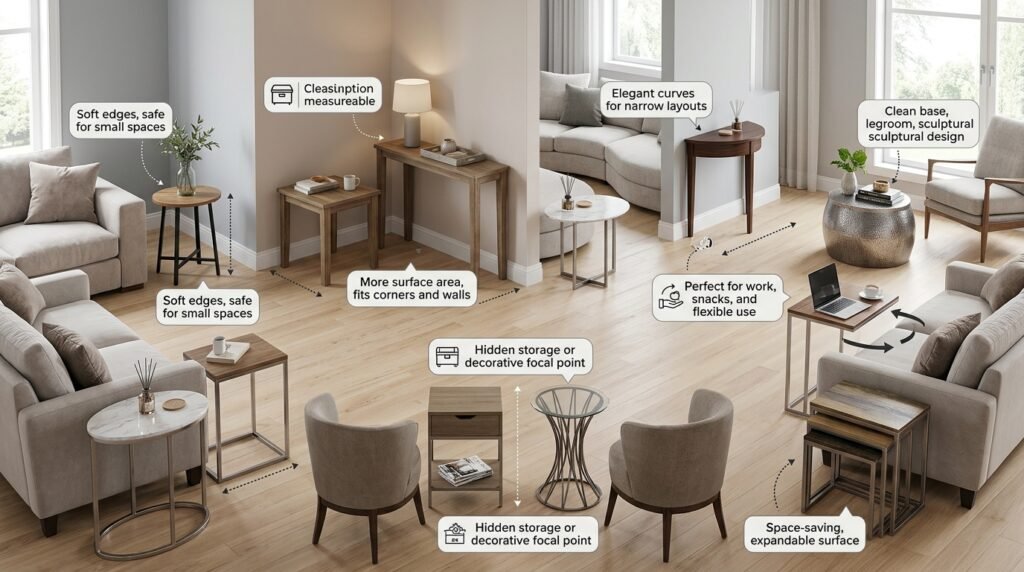
Shape is both an aesthetic and a practical decision. Round side tables are the most popular shape for good reason: they have no sharp corners to bump into, they work well in tight spaces because there are no edges to catch on other furniture, and they read as softer and more welcoming than angular forms.
The round marble side table and the round wood pedestal side table are the workhorses of the side table world. A 20-round side table fits nearly any space. A 24-inch round side table is the most common size. A tall round side table — 28 to 36 inches — works beside a barstool or in an entryway as an accent piece.
Rectangular side tables and square side tables give you more surface area for the same footprint. A small rectangular side table fits neatly into a corner or alongside a sofa. A large square side table can double as a side table and a small coffee table in a compact space. The marble side table, in a rectangular form — a popular choice in contemporary interiors — has a clean, architectural quality. The black marble side table rectangle makes a particularly strong statement in a modern room.
Beyond these basic shapes, there is a full grammar of unusual side table forms. The hexagon side table is architectural and geometric. The oval side table is graceful and elegant, especially in antique forms. The hourglass side table — widest at top and bottom, cinched in the middle — is sculptural and glamorous. The wedge side table fills a corner efficiently. The demilune side table (half-moon) works against a wall. The tulip side table eliminates the traditional four legs. The tripod side table uses three legs for a sculptural, graphic effect.
 
Round side table
Living rooms, beside sofas, small spaces — no corners to catch on furniture
Rectangle side table
Beside sectionals, in hallways, tight spots needing maximum surface area
Square side table
Contemporary rooms, corners, pairs of matching tables flanking a sofa
Hexagon side table
Eclectic or contemporary interiors where geometric shapes define the scheme
Oval side table
Antique and traditional rooms, bedrooms, French or Victorian settings
Hourglass side table
Glamorous contemporary or Art Deco inspired interiors
Tulip / pedestal
Modern and mid-century rooms, small spaces, minimalist interiors
Tripod side table
Contemporary, industrial, or mid-century modern settings
Wedge side table
Corner placements, beside angled sectionals
C-table / C side table
Beside recliners, over sofa arms, beside hospital beds and CPAP users
 

Outdoor Side Tables: Complete Guide

Outdoor side tables face challenges that no indoor table ever encounters: UV radiation, rain, humidity, temperature swings, insects, and general exposure to the elements. Choosing the right outdoor side table means choosing the right material first, and then finding the style you want within that material category.

Best Materials for Outdoor Side Tables

Teak is the single best material for outdoor wood side tables. The outdoor teak side table contains natural oils that repel water and deter insects, so it requires no treatment. Properly cared for, a teak outdoor side table will last 50 years or more. Teak side tables outdoor require oiling once or twice a year to maintain their warm color, or they can be left to silver naturally.
Aluminum outdoor side tables are the lightweight, rust-proof workhorse of the category. A cast aluminum outdoor side table is stronger than sheet aluminum and can be molded into ornate forms. An aluminum outdoor side table does not corrode or rust and is light enough to move easily. For coastal environments where salt air destroys iron and steel, the aluminium outdoor side table is the most practical choice.
Concrete outdoor side tables are heavy, but that weight is an asset in windy environments. A round concrete side table stays put where others blow away. The outdoor concrete side table develops a beautiful weathered texture over time. Polywood outdoor side tables, made from recycled high-density polyethylene lumber, offer the look of painted wood without the maintenance. A polywood umbrella side table with a hole for a patio umbrella solves two problems at once.
Ceramic outdoor side tables are fired at temperatures that make them virtually impervious to outdoor conditions. A ceramic patio side table in a deep glaze holds its color beautifully in direct sun. Outdoor terrazzo side tables bring the fashionable terrazzo pattern to garden settings. Resin side table options for outdoor use are lightweight, affordable, and UV-stable.

Umbrella & Pool Side Tables

The umbrella side table is a specialized outdoor piece with a hole in the center of the top, designed to accept a standard umbrella pole. This allows you to have both shade and a surface beside your lounge chair without two separate pieces of furniture. The outdoor side table with an umbrella hole, the poolside side table with an umbrella hole, and the side table with an umbrella are all variations on this highly practical concept. The umbrella stand side table combines the umbrella holder and side table into a single freestanding unit.
Poolside tables need to be completely waterproof and, ideally, light enough to move easily when the pool deck needs cleaning. The poolside table in polywood, resin, or powder-coated aluminum is the best option. The outdoor poolside table in ceramic is beautiful but heavier. For in-pool use or on very wet pool decks, a plastic poolside table is the most practical option.
Outdoor Storage: At the end of the season, clean outdoor side tables with mild soap and water, then store or cover them. For teak, apply teak oil before covering. For powder-coated metal, check for any chips in the coating and touch up with paint to prevent rust from starting beneath the surface.
 

Special Side Table Types Worth Knowing

C-Tables and Side Tables for Recliners

The C side table — named for its C-shaped profile when viewed from the side — slides under sofas and over armrests, positioning a surface exactly where you need it without occupying floor space in front of you. The C side table furniture category has become enormously popular as more people work and relax on sofas rather than at desks. The most popular configurations are the metal C side table in matte black, the marble C side table with a stone top, and the wood C side table in solid oak.
The recliner side table is a variation designed specifically for reclining chairs. It often mounts directly to the chair arm or sits on an adjustable arm that positions the surface at exactly the right height and angle. The lazy boy recliner side table and the adjustable side table for recliner are the most searched versions of this type. The corbel adjustable side table offers a freestanding version that adjusts to any height and swings aside when not needed.

Side Tables with Charging Stations

The side table with a charging station has become one of the most essential pieces in modern bedrooms and living rooms. A good powered side table includes both USB-A and USB-C ports, at least one standard outlet, and, ideally, wireless charging built into the tabletop. The side table with USB ports and outlets solves the problem of permanently charging a bedside phone. Side tables with charging stations in modern walnut or white oak finish blend seamlessly with contemporary bedroom furniture.
The Vasagle side table with charging station is one of the most-purchased versions of this type online. Modern side table designs with charging stations have become sophisticated enough that the technology is barely visible — flush-mounted ports in the tabletop edge, hidden cable management, and surfaces that look like conventional side tables until you look closely.

Nesting & Stacking Side Tables

Nesting side tables are two or three tables of slightly different heights and sizes designed to stack together when not in use and spread out to create a larger surface area when needed. A nesting side table set of 3 gives you maximum flexibility: use all three as a cluster beside a sofa, spread them across a living room, or store two and use one daily. Black nesting side tables in matte powder-coated metal are a contemporary standard. Marble nesting side tables bring a luxurious version of this concept to high-end interiors.

Storage Side Tables

The vintage side table with drawer is one of the most useful pieces of furniture in any room. A single drawer beneath the tabletop keeps surfaces uncluttered while providing immediate access to whatever you need most often — reading glasses, medications, a notebook, and charging cables. A three-drawer side table provides significant storage capacity in the footprint of a single piece of furniture. The antique side table with storage — whether it’s a cabinet, shelf, or drawer — represents the practical side of antique furniture collecting.
For maximum storage, the trunk side table is a brilliant double-duty piece. A vintage trunk side table is a genuine antique storage trunk that serves as both a side table and a storage chest simultaneously. The side table storage trunk, available in faux leather or solid wood, adds substantial hidden storage beside a sofa or at the foot of a bed. The drum side table with storage offers a more refined version of this concept, featuring a cylindrical form that opens to reveal a cabinet or drawer.
 

How to Style a Side Table

A side table is a styling opportunity as much as a functional piece. The surface of a side table tells visitors something about who you are. The best-styled side tables follow a simple principle that interior designers call the triangle rule: group three objects of different heights to create visual interest without clutter.
The Triangle Rule
Place your tallest object (a lamp) at the back, your medium-height object (a small plant, a stack of books, a vase) in the middle, and your smallest object (a coaster, a decorative object, a candle) at the front. The three different heights create a visual triangle that feels deliberate and balanced rather than random.
 
For a bedroom side table, functionality leads the styling. A lamp for reading, your current book, your phone charger (ideally a side table with a charging station), and a single small personal object — a photo, a piece of jewelry, a small plant — is everything you need. Resist the urge to add more.
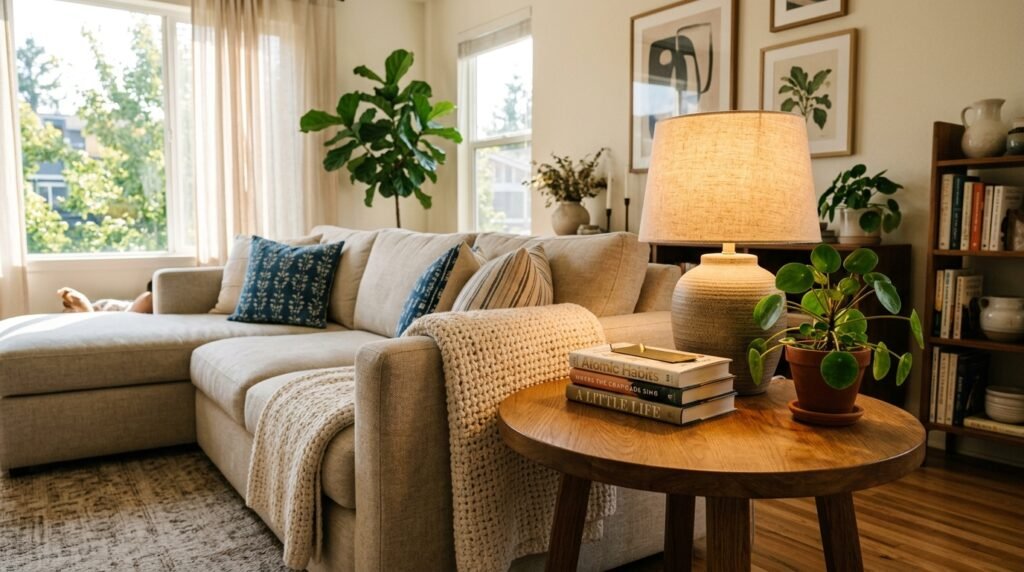
For a living room side table, the lamp is still the anchor. Below it, a small tray corrals smaller objects (a coaster, a lighter, a remote) so they look intentional rather than abandoned. A trailing plant, a small sculpture, or a stack of design books adds visual interest. The side table with a lamp is the most classic and most functional combination in any living room.
For outdoor side table decor, keep it simple and weather-resistant. A small plant in a ceramic pot, a pillar candle in a glass hurricane, and a tray to hold drinks are all you need. The tray top side table — a table whose top is a removable tray — makes outdoor styling both easy and practical.
 

Side Table Buyer’s Guide: What to Look for

Height
Within 2 inches of your sofa or chair arm height. Most sofas need 24–28 inch tables.
Surface area
Large enough for a lamp plus two or three small items. Round 20–24″ or rect. 18×24″ is standard.
Material durability
Match material to use: teak or aluminum outdoors, marble or wood indoors.
Stability
Lift slightly and release to test. Wobble is a red flag. Check that all legs touch the floor.
Weight
Heavier is not always better. You need to move it for cleaning. Outdoor tables may need to be heavy enough not to blow away.
Storage needs
Do you need a drawer? A shelf? A cabinet? Assess before buying.
Style match
Does it work with your existing furniture? Test with photos first.
Budget
Good solid wood or marble side tables start around $200–400. Antiques and designer pieces range widely.
 

FAQs: Side tables selector  

Q: What is a side table?
A side table is a small table placed beside a sofa, chair, or bed. It holds lamps, drinks, books, and personal items within easy reach. Side tables are typically 18 to 30 inches tall and 16 to 24 inches wide, though sizes vary enormously. They come in virtually every material and style — from the classic solid wood side table to the modern glass side table, the outdoor ceramic side table to the antique marble-topped side table.
Q: What is the standard side table height?
The standard side table height is 24 to 28 inches, designed to align with the arm height of most sofas and upholstered chairs. For bedroom use, your side table should match the height of your mattress top — typically 24 to 30 inches. For recliner side tables, the height should accommodate the reclining position. As a general rule, a side table should be within 2 inches of the sofa or chair arm it sits beside.
Q: What is the difference between a side table and an end table?
In practice, the terms ‘side table’ and ‘end table’ are used interchangeably in most contexts. Technically, an end table sits at the end of a sofa or sectional, while a side table can be placed beside any piece of furniture, including beds, chairs, and outdoor loungers. Both terms describe small accent tables used for holding lamps and other items within reach of seating.
Q: What is a C side table?
A C side table (also called a C-table or sofa side table) has a C-shaped profile when viewed from the side. Its base slides under or over the sofa arm, positioning the tabletop directly over your lap or beside you without occupying floor space in front of you. C side tables are especially useful for people who work or relax on their sofas, for recliner users, and for anyone who wants a surface at a non-standard height.
Q: How do I choose a side table for a recliner?
For a recliner, the best options are: an adjustable side table that can be set to the right height; a C-side table that slides over or beside the recliner arm; or a recliner side table that mounts directly to the chair. The key requirement is that the table does not interfere with the reclining mechanism. Look for tables with swivel or sliding arms that can be moved out of the way when reclining and back in position when upright.
Q: Are marble side tables durable?
Yes, marble is an extremely durable natural stone that can last centuries. However, marble side tables require care. Marble is porous and stains if spills are not wiped up promptly. It is also susceptible to etching from acidic substances like lemon juice, wine, and coffee. Seal your marble side table every 12 to 24 months. Avoid placing acidic drinks directly on the surface without a coaster. With proper care, a marble-topped side table will last a lifetime and beyond.
Q: What side table material is best for outdoors?
Teak is the gold standard for outdoor wood side tables — naturally weather-resistant and beautiful. Cast aluminum is the best metal option — lightweight, rust-proof, and suitable for coastal environments. Concrete is heavy but virtually indestructible outdoors. Polywood (recycled HDPE lumber) requires zero maintenance and withstands all conditions. For the most decorative option, a ceramic outdoor side table in a glazed finish holds its color and surface beautifully. Avoid natural rattan, uncoated steel, and most natural woods unless they are sealed and maintained diligently.
Q: How tall should a side table be next to a bed?
The height of your bedroom side table should match the top of your mattress, including the box spring, bed frame, and any mattress topper. For most standard beds, this is 24 to 28 inches. For platform beds with low profiles, an 18 to 22-inch side table may be more appropriate. For very high traditional beds, a 28 to 32-inch side table is needed. When lying in bed, you should be able to reach your phone, lamp switch, and glass of water without straining.
Q: What is a live-edge side table?
A live-edge side table preserves the natural outer edge of the wood slab — the ‘live edge’ — rather than cutting it square. The result is a tabletop where one or both sides follow the organic contour of the original tree, complete with its natural irregularities, indentations, and character marks. Live-edge side tables are made from solid slabs of wood, often from highly figured species like walnut, maple, or elm. A live-edge walnut side table is one of the most coveted pieces in contemporary furniture.
Q: What is the difference between a side table and a side table with storage?
A standard side table is simply a flat surface on legs. A side table with storage adds at least one drawer, shelf, cabinet, or basket beneath the tabletop. Storage side tables are more functional but often heavier and sometimes more visually complex. A vintage side table with a drawer is the most classic storage configuration. A drum side table with storage opens to reveal a cabinet inside the cylindrical base. A trunk side table is an antique storage chest repurposed as a side table.