Grass Types – Only 16+ Grasses That 89.5% Guarantee Success

Stand in the middle of your yard for a minute. Now be honest: do you actually know what kind of grass is under your feet? Most homeowners don’t, and that’s exactly why so many lawns and garden beds struggle — people plant (or inherit) a grass that was never built for their sun, their soil, or their climate.

That mismatch is the single biggest reason lawns thin out, ornamental grass clumps die back, and “low-maintenance” grass ends up being anything but. Get the match right, though, and grass genuinely takes care of itself. This guide walks through the 16+ grass types actually worth knowing in 2026 — both the lawn (turf) varieties that cover most American yards and the ornamental grasses having a real design moment right now — plus how to figure out which one you already have, how to pick the right one, and how to keep it alive.

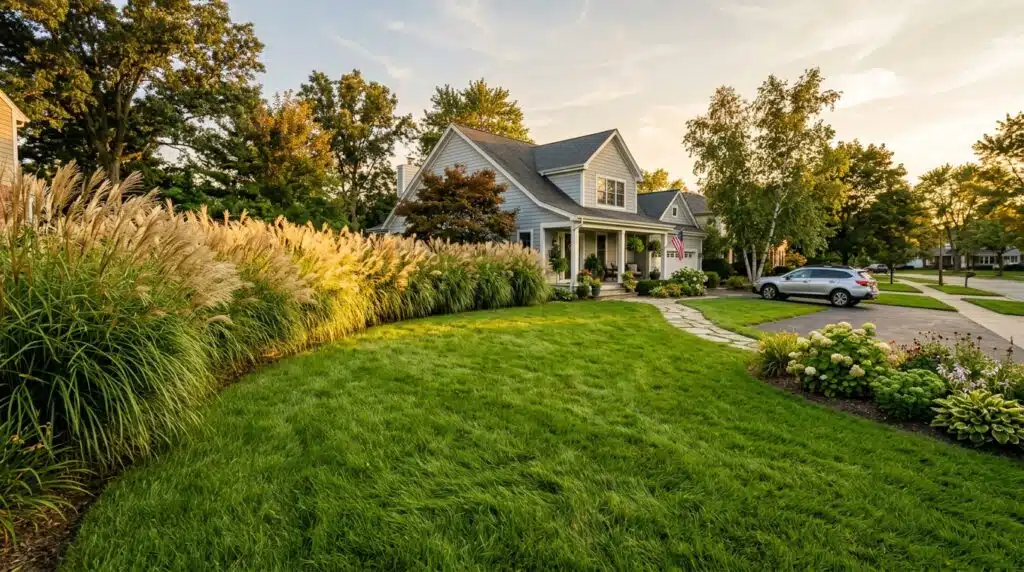
healthy lawn with ornamental grass border in golden hour light

Warm-Season vs. Cool-Season Grass: The One Decision That Changes Everything

Before you fall in love with a grass because of how it looks in a photo, answer one question: does your region freeze in winter, or does it stay warm most of the year? That single fact eliminates more than half the list for you.

Warm-season grasses — Bermuda, Zoysia, St. Augustine, Centipede, Buffalo, and Bahia — grow hardest in the heat of summer and go dormant (turning tan or brown) once temperatures drop. They’re the default across the South, Southwest, and Gulf Coast.

Cool-season grasses — Kentucky bluegrass, tall fescue, and perennial ryegrass — do their best growing in spring and fall, hold their color through cold winters, and can struggle in a scorching summer. They dominate the North, Midwest, and Pacific Northwest.

If you’re somewhere in the middle — think Virginia, Kansas, or Tennessee — you’re in what turf specialists call the transition zone, where neither type is a perfect fit and hybrid or tall fescue blends usually perform best. Whichever zone you’re in, it helps to check your area against the USDA Plant Hardiness Zone Map before buying seed or sod, since it’s the standard reference growers use to judge what will actually survive your winters.

warm-season versus cool-season grass comparison in a split yard

The 16+ Grass Types Worth Knowing in 2026

Here’s the rundown — ten lawn (turf) grasses that cover almost every American yard, plus six ornamental grasses that are dominating garden design searches this year. Each one gets a quick, honest look at where it thrives and where it struggles.

1. Bermuda Grass

Bermuda is the workhorse of Southern lawns — dense, wiry, and tough enough to bounce back from kids, dogs, and drought. It needs full sun (six-plus hours) and goes dormant and tan in winter, which is the trade-off for its heat tolerance.

Bermuda grass lawn close-up in full sun

2. Zoysia Grass

Zoysia forms a thick, carpet-like mat that feels great underfoot and handles moderate shade better than Bermuda. It’s slower to establish and pricier per square foot, but once it fills in, it chokes out most weeds on its own.

Grass Types – 16+ Ornamentals For Every Garden 2026
thick Zoysia grass lawn with mowing stripes

3. St. Augustine Grass

The go-to for Florida and Gulf Coast yards, St. Augustine has broad, flat blades and handles shade far better than most warm-season grasses. It’s less traffic-tolerant, though, so it’s not the best pick for a yard that doubles as a play field.

St. Augustine grass blades in a shaded Florida yard

4. Kentucky Bluegrass

This is the classic dense, blue-green lawn look people picture in the Midwest and Northeast. It spreads through underground rhizomes, so it self-repairs bare patches, but it wants regular watering and doesn’t love a hot, dry summer.

Grass Types – 16+ Ornamentals For Every Garden 2026
Kentucky bluegrass lawn in soft morning light

5. Tall Fescue

Tall fescue is the low-drama cool-season option — deep roots make it far more drought-tolerant than bluegrass, and it handles both sun and moderate shade. It grows in clumps rather than spreading, so bare spots need reseeding rather than filling in on their own.

tall fescue grass clump close-up

6. Centipede Grass

Nicknamed the “lazy man’s grass,” Centipede grows slowly, needs very little fertilizer, and rarely requires more than an occasional mow. It’s a natural fit if you want a Southern lawn without a Saturday-morning maintenance routine.

low-maintenance Centipede grass lawn

7. Perennial Ryegrass

Ryegrass germinates fast — often within a week — which is why it’s the go-to for overseeding warm-season lawns to keep them green through winter. On its own it’s less heat- and drought-tolerant than fescue or bluegrass.

perennial ryegrass blades with morning dew

8. Buffalo Grass

A true American native, Buffalo grass survives on rainfall alone once established, making it a favorite for xeriscaping and water-wise yards. It’s soft, fine-textured, and best suited to drier, sunnier climates rather than humid ones.

drought-tolerant Buffalo grass in a xeriscape yard
drought-tolerant Buffalo grass in a xeriscaped yard

9. Bahia Grass

Bahia isn’t glamorous, but it’s cheap, low-input, and holds up in the sandy, infertile soils common across Florida and the Gulf. Expect a coarser texture and less visual polish than St. Augustine or Zoysia.

Bahia grass with seed heads in sandy soil

10. Hybrid Bermuda Grass

This is the sports-turf-grade version of Bermuda — finer texture, denser growth, and the kind of surface golf courses and athletic fields use. It needs more attention (frequent mowing, dethatching) than common Bermuda, so it’s really for homeowners chasing a showpiece lawn.

Grass Types – 16+ Ornamentals For Every Garden 2026
manicured hybrid Bermuda grass fairway-style turf

11. Miscanthus (Maiden Grass)

One of the most popular ornamental grasses for a reason — tall, arching, and topped with feathery plumes that catch the light in fall. Varieties like ‘Gracillimus’ and ‘Morning Light’ add height and movement to a border without ever needing mowing.

Miscanthus ornamental grass plumes backlit by the sun

12. Fountain Grass (Pennisetum)

Fountain grass earns its name — soft, arching blades that spill outward like water, topped with bottlebrush-style seed heads. It’s drought-tolerant and reliably showy from midsummer into fall, which is why it keeps showing up in 2026 design trend lists.

purple fountain grass seed heads in a garden border

13. Little Bluestem

A native prairie grass that shifts from blue-green in summer to copper-orange in fall, Little Bluestem is a top pick for pollinator gardens and drought-tolerant borders alike. It stays upright through winter, giving beds structure when little else is blooming.

Grass Types – 16+ Ornamentals For Every Garden 2026
Little Bluestem grass in fall copper color

14. Blue Fescue (Festuca glauca)

This compact, silvery-blue clumping grass is built for small spaces, borders, and containers rather than open beds. Varieties like ‘Elijah Blue’ hold their color best in full sun with sharp drainage.

Grass Types – 16+ Ornamentals For Every Garden 2026
blue fescue ornamental grass clumps along a path

15. Pink Muhly Grass

In fall, Pink Muhly turns entire beds into a haze of cotton-candy pink — it’s one of the most photographed ornamental grasses for that reason alone. It’s also genuinely drought-tolerant once established, so the display doesn’t cost much in upkeep.

pink Muhly grass in full fall color

16. Karl Foerster Feather Reed Grass

Straight, upright, and almost architectural, Karl Foerster is the grass landscapers reach for when they want vertical structure without softness. It tolerates heavier, wetter soil better than most ornamental grasses, which makes it useful in spots where others rot out.

Karl Foerster feather reed grass in a modern garden border

Bonus mention: keep an eye on Andropogon gerardii ‘Blackhawks’ (big bluestem) — it was named the 2026 Perennial Plant of the Year for its bold upright form and near-black fall foliage, and it’s a strong native alternative if you want ornamental grass without a maintenance routine.

St. Augustine vs. Bermuda vs. Zoysia: Head-to-Head

These three get compared constantly because they’re the default warm-season options — and each one wins on a different priority. Here’s the honest breakdown:

FeatureSt. AugustineBermudaZoysia
Best climateWarm, humid (Gulf Coast, FL)Warm, full sun, heat-heavyWarm to transition zone
Shade toleranceBest of the threePoorModerate
Foot trafficFairExcellentVery good
MaintenanceModerateHigh (frequent mowing)Low to moderate
Drought toleranceFairExcellentVery good
Typical install costSod only, $$Seed or sod, $Sod/plugs, $$$

If shade is your biggest problem, St. Augustine wins easily. If you want the toughest possible lawn for kids, pets, and heavy use, Bermuda is hard to beat. If you want something in between — good looks, good durability, less mowing — Zoysia is usually the compromise everyone’s happiest with.

side-by-side comparison of three warm-season grass textures

Matching Grass to Your Yard's Real Conditions

Climate zone narrows the list, but your actual yard — the shade, the soil, the traffic it takes — narrows it further. Here’s how to match grass to the conditions you’re actually working with.

  • Shade: St. Augustine and fine fescue tolerate shade best; Bermuda and Kentucky bluegrass need real sun to thrive.
  • Drought and water bills: Buffalo grass, Bahia, and tall fescue need the least supplemental watering once established.
  • High traffic (kids, dogs, cookouts): Bermuda and hybrid Bermuda recover from wear fastest.
  • Pets and urine spots: Fescue and Zoysia tend to bounce back from urine damage better than a thin Bermuda lawn.
  • Heavy clay or poor drainage: Tall fescue and Zoysia are more forgiving than Bermuda. Confirm what you’re working with using a soil type guide before you commit to seed.

If your yard leans dry and you’re already thinking about cutting back on turf altogether, it’s worth comparing options with a drought-resistant garden calculator and pairing it with the right nutrition — a good fertilizer selector makes it easy to match feed to whichever grass you land on.

homeowner checking lawn soil and grass condition

How to Tell What Grass Type You Already Have

If you moved into a house with an existing lawn, you’re probably not starting from zero — you’re trying to identify what’s already there before you overseed, fertilize, or fix bare patches.

  • Leaf width and texture: Bermuda and Zoysia are fine and wiry; St. Augustine and centipede are broad and coarse.
  • Growth habit: Does it spread via runners along the surface (Bermuda, St. Augustine) or grow in tight clumps (tall fescue)?
  • Color and season: If it stays green through a hard frost, it’s cool-season. If it browns out in winter and comes back in late spring, it’s warm-season.
  • Blade tip shape: Kentucky bluegrass has a distinctive “boat-shaped” tip you can feel by folding a blade in half.

If you’re still not sure after checking those four things, a magnifying lens on the ligule and collar (where the blade meets the stem) usually settles it — Penn State Extension’s turfgrass identification resources walk through exactly what to look for if you want to go that deep.

Once you know what you’re working with, our grass square footage calculator and sod solutions area calculator make it easy to figure out exactly how much seed or sod you’ll need to fix or expand it.

macro close-up of a grass blade for identification

Grass Seed vs. Sod: Which Should You Choose

Seed is cheaper and gives you far more variety to choose from, but it takes weeks to establish and needs consistent watering the whole time. Sod is instant — you get a finished lawn the same day — but it costs several times more per square foot and still needs careful watering for the first two to three weeks while roots knit into the soil.

As a rule of thumb: seed makes sense if you’re patient, budget-conscious, or working with a warm-season grass that spreads on its own anyway. Sod makes sense if you need the yard usable fast, you’re fighting erosion on a slope, or you’re installing a grass type that’s slow or unreliable from seed, like most Zoysia and St. Augustine varieties.

Whichever route you choose, get your ongoing care dialed in early — our guide on the best time of year to fertilize grass and this organic fertilizer for lawn breakdown will save you from the classic new-lawn mistake of feeding it too much, too soon.

Grass Types – 16+ Ornamentals For Every Garden 2026
fresh sod rolls being installed on prepared soil

Quick Answers to Common Grass Problems

A few issues come up constantly regardless of grass type, so it’s worth clearing them up here before the FAQ section.

Yellow or brown patches usually mean one of three things: dormancy (normal, seasonal), a fungal issue, or a watering problem. If patches show a distinct ring or pattern rather than an even fade, check our grass spot disease and lawn spot disease guides before assuming it’s just dryness.

Grass going brown in winter is almost always dormancy on warm-season lawns, not death — it typically greens back up on its own once soil temperatures rise in spring.

Dogs eating grass is common and usually harmless in small amounts; it’s rarely a sign of a grass-type problem specifically, though a lawn treated with recent herbicide or fertilizer is worth keeping pets off of until it’s dry and watered in.

Grass Types Frequently Asked Questions

patchy lawn compared to a repaired healthy lawn

Quick answer: Centipede grass in warm climates and tall fescue in cooler ones both need the least attention — low fertilizer needs, infrequent mowing, and solid drought tolerance once established.

Quick answer: Check leaf width and texture, whether it spreads by runners or grows in clumps, and whether it stays green through frost or goes dormant. See the identification section above for the full walkthrough.

Quick answer: St. Augustine is the top warm-season pick for shade; fine fescue is the best cool-season option. Neither will do well under deep, all-day shade, though — very little grass will.

Quick answer: Bermuda and tall fescue both hold up well to running, digging, and urine spots. Fescue recovers from urine damage a bit faster than most warm-season grasses.

Quick answer: Seed is cheaper and offers more variety but takes weeks to establish. Sod gives you an instant lawn at a higher price. See the seed vs. sod section above for the full comparison.

Quick answer: None reliably do without help — most warm-season grasses go dormant in winter unless overseeded with ryegrass, and most cool-season grasses can brown out under summer heat stress.

Quick answer: Warm-season grasses grow most in summer heat and go dormant in cold winters. Cool-season grasses grow best in spring and fall and stay green through winter but can struggle in extreme summer heat.

Quick answer: Neither is strictly better — Zoysia handles shade and needs less mowing, while Bermuda tolerates more foot traffic and drought. The right one depends on how the lawn will actually be used.

Quick answer: Buffalo grass and Centipede grass both grow slowly and need mowing far less often than Bermuda or Kentucky bluegrass.

Quick answer: Bermuda and Buffalo grass both thrive in full sun and high heat, with Bermuda tolerating more traffic and Buffalo needing less water.

Quick answer: Centipede, Buffalo, and Zoysia are the three most commonly recommended low-input options, depending on your climate zone.

Quick answer: Ryegrass can germinate in about a week; Kentucky bluegrass and Bermuda commonly take two to four weeks, depending on soil temperature and moisture.

Quick answer: Hybrid Bermuda is the most common choice for fairways in warm climates, while bentgrass is typically used on cool-season putting greens.

Quick answer: Tall fescue and Zoysia both tolerate heavier, slower-draining clay soil better than Bermuda or Kentucky bluegrass.

Quick answer: Yes — ornamental grasses like Miscanthus, fountain grass, and pink Muhly are grown for texture and visual interest in beds and borders, not for a walkable turf surface.

Quick answer: Most ornamental grasses are best cut back to a few inches in late winter or very early spring, before new growth starts, so they can provide winter structure and habitat until then.

One More Thing Before You Head Outside

While you’re making improvements around the house, it’s worth a two-minute check indoors too. According to the National Fire Protection Association, working smoke alarms cut the risk of dying in a reported home fire by more than half, yet a large share of fatal home fires still happen in houses with no working alarm at all. If you’re not sure how many alarms your home actually needs or where they should go, our smoke detector calculator walks you through it room by room in a couple of minutes.

Final Thoughts

There’s no single “best” grass — there’s only the best grass for your climate, your sun, and how hard your yard gets used. Start with warm-season versus cool-season, narrow it down by shade, traffic, and water, and you’ll land on one of the 16+ types above with a genuinely good chance of it thriving rather than just surviving.

And if part of your plan includes ornamental grasses for structure and movement in the beds, mix in a couple of the varieties above — a clump of Miscanthus or pink Muhly next to a well-matched lawn does more for curb appeal than either one does alone.

landscaped yard combining lawn grass and ornamental grasses at sunset

Leave a Comment

Your email address will not be published. Required fields are marked *

Scroll to Top