Poisonous Houseplants – 13 Top You Shouldn’t Keep Indoors
You bring home a gorgeous new plant. It looks perfect on the windowsill. Then, a week later, your cat takes one curious bite — and suddenly you’re googling “is this plant poisonous” at 11 p.m. with your heart racing.
If that sounds familiar, you’re not alone. Thousands of pet owners and parents search for poisonous houseplants every single day, usually right after something (or someone) has already taken a nibble.
Here’s the good news: most plant poisoning cases are mild and treatable if you catch them early. The real key is knowing which plants deserve a second thought before they land a spot on your shelf. That’s exactly what we’re covering today — the 13 most common toxic houseplants, what makes them dangerous, and what to do if the worst happens.
Why Some Houseplants Are More Dangerous Than They Look
Here’s something that surprises a lot of people: toxicity has nothing to do with how a plant looks. Some of the prettiest, glossiest, most Instagram-friendly plants are also some of the most dangerous plants for kids and pets.
Plants defend themselves chemically, the same way a skunk defends itself with smell. Compounds like calcium oxalate crystals, cyanogenic glycosides, and saponins exist purely to make a plant taste awful — or physically harmful — to anything that tries to eat it. That’s great for the plant. Not so great for a curious puppy or a toddler who puts everything in their mouth.
This is exactly why a poisonous plant guide matters more than a plant’s popularity or price tag. It’s also why the question changes depending on who’s living with you — poisonous plants for dogs aren’t always the same as poisonous plants for cats, since cats are far more sensitive to true lilies while dogs tend to get into trouble with bulbs and berries instead. Before you fall for a trendy new addition, it’s worth running it through a quick poisonous plants finder to check its safety rating first.

How to Tell If a Plant Is Poisonous
You can’t always tell from looks alone, but there are a few smart habits that help:
- Look up the botanical name, not just the common name — common names overlap a lot between safe and unsafe species. This is the first real step in poisonous plant identification.
- Cross-check the list of ASPCA toxic plants (and the shorter list of ASPCA safe plants) before buying anything new for a pet-friendly home.
- Assume poisonous berries, poisonous seeds, and poisonous leaves are risky until proven otherwise — these plant parts concentrate the highest toxin levels.
- Watch for milky or irritating poisonous sap when you prune — it’s often a red flag for skin and mouth irritation.
If you’re building out a plant collection room by room, our indoor plants guide is a good starting point for matching greenery to your space safely.
A Quick Note for Homes With Kids
It’s not just pets. Poisonous plants for children and toddlers deserve the same caution, since young kids explore the world mouth-first, just like puppies do. Bright berries, glossy leaves, and colorful bulbs are especially tempting to a curious two-year-old. If you’re childproofing this season, treat plants dangerous for babies the same way you’d treat a cleaning product — up high, out of reach, or out of the house entirely — and keep a child safe garden plants list handy for the yard as well as the living room.

The 13 Most Poisonous Houseplants You Should Know
1. Sago Palm
Every part of the sago palm is toxic, but the seeds are by far the most dangerous. Dogs especially seem drawn to chewing on them, and even a small amount can cause liver failure. This is one of the few houseplants where sago palm toxicity can be fatal within days if untreated.
2. Peace Lily
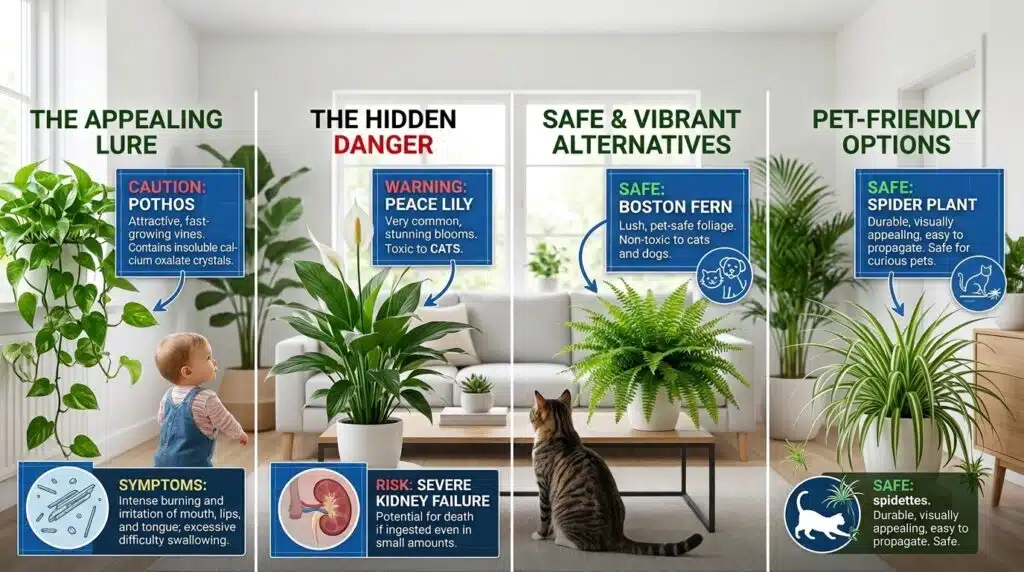
Despite the name, peace lilies aren’t true lilies — which is good news, since true lilies are far more dangerous to cats. Still, peace lily toxicity causes mouth irritation, drooling, and swelling if chewed, thanks to calcium oxalate crystals in the leaves. Kittens tend to be the biggest risk group here, since kitten poisonous plants incidents often happen simply because a young cat is exploring a new leaf texture, not because it’s actually hungry.
3. Pothos (Devil’s Ivy)
Pothos is one of the most common poisonous houseplants simply because it’s everywhere — it’s cheap, hardy, and beginner-friendly. Pothos toxicity causes mouth irritation, a burning sensation, and swollen tongue in both pets and small children when the leaves are chewed. It’s especially worth watching with a new puppy poisonous plants checklist in hand, since teething puppies chew on trailing vines more than adult dogs do. If you love trailing vines, our split leaf philodendron guide covers a similar-looking family worth knowing about too.
4. Philodendron
Like pothos, philodendron toxicity comes from calcium oxalate crystals. Symptoms include drooling, oral pain, and stomach upset. It’s a stunning plant for shelves and hanging baskets, but keep it well out of reach of pets that like to chew leaves.
5. Dieffenbachia (Dumb Cane)
This one earns its nickname honestly — chewing the leaves can cause the tongue and throat to swell so badly that speech becomes difficult, hence “dumb cane.” It’s a serious contender on any toxic houseplants list.
6. Caladium
Grown for its striking heart-shaped, colorful leaves, caladium toxicity brings the same calcium oxalate irritation as its cousins — burning mouth, excessive drooling, and swelling of the lips and tongue.
7. Elephant Ear (Alocasia)
Alocasia’s huge, dramatic leaves make it a favorite for statement corners — but elephant ear poisoning is a real risk for pets that chew the foliage. If you already grow one, our Alocasia zebrina dormancy guide is worth bookmarking for seasonal care.
8. Lily of the Valley
Small, sweet-smelling, and deceptively dangerous. Lily of the valley contains cardiac glycosides that affect the heart directly. Lily of the valley poisoning can cause vomiting, an irregular heartbeat, and in severe cases, collapse — this one is genuinely one of the deadliest plants on any common household list.
9. Oleander
Often grown as a patio or indoor accent in warmer climates, every part of oleander is toxic. Even the smoke from burning oleander branches can be dangerous. It contains powerful taxine alkaloids-like cardiac toxins that affect heart rhythm.
10. Azalea
Frequently grown as a flowering bonsai indoors, azalea poisoning comes from grayanotoxins, which cause vomiting, weakness, and in rare severe cases, a dangerous drop in blood pressure.
11. English Ivy
A classic trailing houseplant, English ivy contains saponins that irritate the stomach and skin. Kids handling the leaves during a craft project can also develop a mild skin rash.
12. ZZ Plant
Marketed heavily as a “low-maintenance, low-light” plant, the ZZ plant does contain calcium oxalates in its sap and leaves, causing mouth and skin irritation on contact or ingestion. If you’re picking plants for a dim apartment, our low light indoor plants guide has safer picks worth comparing.
13. Amaryllis
Popular around the holidays, the amaryllis bulb is the most toxic part of the plant. Poisonous bulbs like this one can cause vomiting, abdominal pain, and drooling if dug up and chewed by a curious dog.

Don’t Forget the Garden: A Quick Word on Outdoor Toxic Plants
Houseplants get most of the attention, but poisonous outdoor plants and poisonous garden plants deserve a mention too, especially if pets and kids spend time outside. Common poisonous backyard plants include oleander hedges, foxglove, and certain poisonous shrubs used in landscaping. If you keep horses, goats, or chickens, know that many ornamentals on this same list double as horse poisonous plants and livestock poisonous plants — what’s mildly irritating to a dog can be far more serious for grazing animals.
Poisonous weeds and other poisonous wild plants growing along fence lines are worth learning to spot too, since they spread without being planted on purpose. When you’re reworking outdoor beds, it’s a good moment to also plan the space itself — our raised bed building guide is handy if you’re swapping a risky border for something safer.

Common Symptoms of Plant Poisoning
Every plant behaves a little differently once it’s ingested, but a handful of plant poisoning symptoms show up again and again, whether the exposure was accidental ingestion, direct skin contact, or a bit of sap that made its way into someone’s eye:
- Excessive drooling or foaming at the mouth
- Mouth or throat swelling
- Abdominal cramps or stomach pain
- Vomiting or bloody diarrhea
- Weakness, wobbliness, or collapse
- Blurred vision or disorientation
- Skin redness, a rash, or a burning sensation on contact
- Eye irritation or watering after handling leaves or sap
Signs of plant poisoning in cats often show up as drooling and pawing at the mouth first, while signs of plant poisoning in dogs tend to lean more toward vomiting and lethargy. Either way, any toxic exposure that produces more than one of these symptoms is worth a same-day call to your vet, not a wait-and-see approach.

What To Do If Someone Eats a Poisonous Plant
Stay calm — panic never helps, but speed does. This is the same first aid for poisoning logic paramedics and vets teach, whether it’s a person or a pet involved. Here’s the order of operations that actually matters:
- Remove any remaining plant material from the mouth right away.
- Note the plant name (or snap a photo) so professionals can identify the toxin quickly.
- Call for help immediately. For pets, contact the ASPCA Animal Poison Control Center. For people, contact Poison Control at 1-800-222-1222 in the US.
- Don’t induce vomiting unless a professional specifically tells you to — some plant saps cause more damage coming back up.
- Head to an emergency veterinarian or emergency room if symptoms are severe, especially swelling, collapse, or breathing trouble.
This same “act fast, call first” instinct applies to nearly every home hazard, not just plants. It’s worth applying to fire safety too — the same way plant poisoning is often silent until symptoms show, a smoke event without a working alarm goes unnoticed until it’s serious. According to NFPA research, a working smoke alarm cuts the risk of dying in a home fire by roughly 60%, yet smoke alarms were missing in close to a quarter of fatal home fires reviewed. Home fires caused thousands of civilian deaths in a single recent year alone. If it’s been a while since you checked yours, our smoke detector calculator makes it easy to figure out how many you actually need per room.
A quick caution on home treatment for poisonous plant exposure: rinsing skin or eyes with lukewarm water is fine as a first step, and mild skin rash from poisonous plants treatment usually just means soap, water, and a cool compress. But don’t rely on home remedies alone for anything ingested — that’s when to call poison control for plant poisoning, every time, even if symptoms seem mild at first.

Safe Alternatives — Pet and Child Friendly Houseplants
The good news: you don’t have to give up on greenery altogether. Plenty of gorgeous plants are completely non-toxic houseplants and make great dog safe plants or cat safe plants, including:
- Spider plant
- Boston fern
- Calathea
- Areca palm
- Parlor palm
If you already love the look of big, dramatic foliage, the white bird of paradise is a stunning, pet-safer option with a similarly bold presence. And if you’re rebuilding your plant lineup from scratch with safety in mind, our 25 moody houseplants for beginners list mixes striking looks with easier care.
Once you’ve picked your new plants, don’t forget to match the right container — our pot size calculator takes the guesswork out of repotting, so root systems have enough room to thrive. A little planning now means a home full of genuinely pet friendly indoor plants and child safe plants, instead of a collection you’re constantly second-guessing.
Plant Toxicity & Pet Safety FAQ
Essential guidance on toxic flora, emergency protocols, and safe indoor and landscape varieties

Final Thoughts
Loving plants and keeping your home safe aren’t opposites — they just take a little homework. Once you know which of your favorites belong on a toxic plants list, you can make smarter swaps, place risky plants safely out of reach, and enjoy your indoor jungle without the late-night panic.
Take five minutes this week to walk through your home with fresh eyes. Check your shelves, check your windowsills, and while you’re at it, check your smoke alarms too. A little prevention now saves a lot of stress later.