10 NASA-Tested Air-Purifying Plants: What the Science Really Says
What NASA’s 1989 Clean Air Study actually tested, what newer research says about real homes, which plants are safe for cats and dogs, and how to pick the right one for each room.
NASA’s 1989 study tested plants in sealed chambers, not in homes
You walk into your bedroom after a long day, and the air feels… heavy. Stuffy, almost stale. It is not your imagination. Paint, new carpet and furniture, air fresheners, and everyday cleaning products can all release volatile organic compounds (VOCs) into the air indoors.
Back in 1989, NASA’s Clean Air Study found that some ordinary houseplants — together with the microbes in their potting soil — removed formaldehyde, benzene, and trichloroethylene from small, sealed test chambers. That finding made “air-purifying plants” famous. What it did not show is that a few pots will noticeably clean the air in a normal, ventilated home, and newer research explains why.
In this guide, we cover which plants were actually tested, what the science does and does not support, which ones are safe for pets, where each one grows best, and the safety habits that keep houseplants a healthy part of your home.
What Is the NASA Clean Air Study, Really?
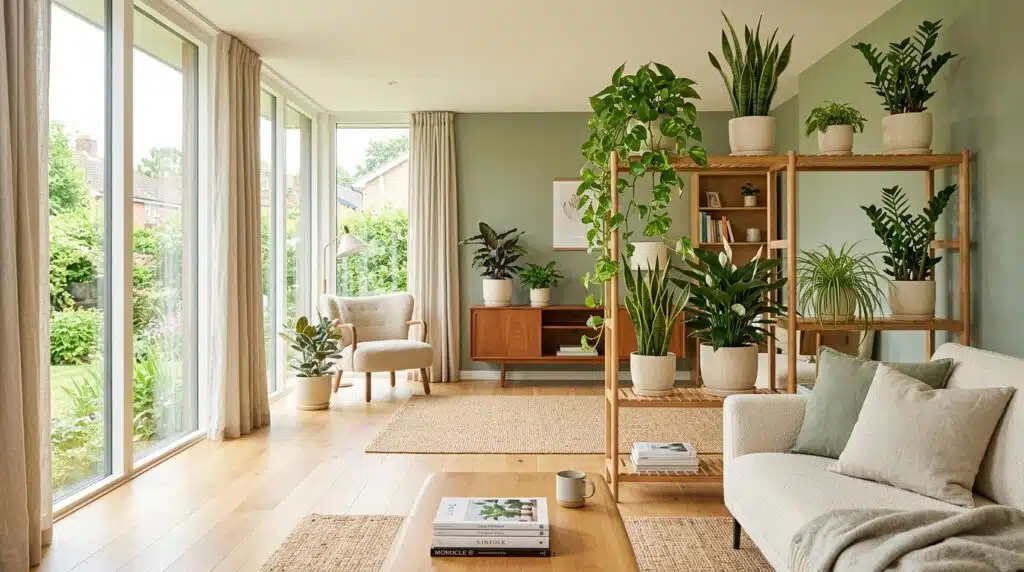
Illustration: houseplants in a lab-style test setup
In the late 1980s, NASA was looking for low-cost ways to keep air clean inside tightly sealed buildings and future space habitats. Working with the Associated Landscape Contractors of America, NASA researcher Dr. B.C. Wolverton tested common houseplants in sealed chambers dosed with three chemicals: formaldehyde, benzene, and trichloroethylene (TCE). Several more plants were tested against formaldehyde alone.
Many of the plants removed a large share of these chemicals from the chambers within 24 hours, and the researchers found that the potting soil and its microorganisms did much of the work. Almost every NASA air purifying plants list online, including this one, traces back to this report and to Wolverton’s later books, which rated more plants such as Areca palm, Boston fern, and rubber plant.
The catch: the tests ran in small sealed chambers, not in rooms with doors, windows, and HVAC systems constantly exchanging air. That difference matters a lot, as the next section explains.
Do Air Purifying Plants Really Work? An Honest Look
Ventilation still matters alongside houseplants
Short answer: in a lab chamber, yes; in a normal home, not by an amount you could measure. Plants and their soil really do absorb some VOCs. What gets exaggerated online is the scale.
In a 2019 review of 12 chamber studies, Drexel University engineers Bryan Cummings and Michael Waring converted those lab results into real-room terms. They estimated it would take roughly 10 to 1,000 plants per square meter of floor space to match the VOC removal that ordinary building air exchange already provides. Meanwhile, the EPA notes that many VOCs are consistently higher indoors than outdoors — up to ten times higher — from sources like paint, furniture, and cleaning products.
So are plants pointless? No — just not as air cleaners. They make a room more pleasant, many people find caring for them relaxing, and they are inexpensive. For cleaner air, the steps that work are ventilation (open windows, run kitchen and bathroom exhaust fans), reducing VOC sources, choosing low-VOC products, and using a properly sized HEPA purifier — with activated carbon if odors or gases are the concern.
The 10 Classic Air-Purifying Plants (NASA-Tested and Wolverton-Rated)
The ten classic plants at a glance
Seven of these ten — snake plant, peace lily, spider plant, pothos, English ivy, Chinese evergreen, and dracaena — were tested in NASA’s 1989 report. Areca palm, Boston fern, and rubber plant come from Wolverton’s later research. The “Lab-tested against” column lists the chemicals each plant was tested with in that research; it is not a promise of what a plant will remove in your home. Pet safety follows the ASPCA plant list.
The 10 classic air-purifying plants: chemicals tested in lab research, light needs, and pet safety
Plant
Lab-tested against (source)
Light
Pets (ASPCA)
Snake Plant
Formaldehyde, benzene, TCE (NASA 1989)
Low to bright indirect
Toxic
Peace Lily
Formaldehyde, benzene, TCE (NASA 1989)
Low to medium
Toxic
Spider Plant
Formaldehyde (NASA 1989)
Medium to bright indirect
Non-toxic
Pothos
Formaldehyde (NASA 1989)
Low to bright indirect
Toxic
English Ivy
Formaldehyde, benzene, TCE (NASA 1989)
Medium to bright indirect
Toxic
Areca Palm
Formaldehyde, xylene, toluene (Wolverton, later)
Bright indirect
Non-toxic
Boston Fern
Formaldehyde, xylene (Wolverton, later)
Medium to bright indirect
Non-toxic
Chinese Evergreen
Formaldehyde, benzene (NASA 1989)
Low to medium
Toxic
Rubber Plant
Formaldehyde (Wolverton, later)
Medium to bright indirect
Toxic
Dracaena
Formaldehyde, benzene, TCE (NASA 1989)
Low to bright indirect
Toxic
1. Snake Plant — The Hardest to Kill
If you have ever killed a plant by accident, start here. Snake plant tolerates low light, irregular watering, and near-total neglect. It uses CAM photosynthesis, so it takes in carbon dioxide at night — a fun bit of botany, though the amount of oxygen involved is far too small to change a bedroom’s air. It is mildly toxic to cats and dogs.
2. Peace Lily — The Beautiful Multitasker
Peace lily was one of the stronger performers against formaldehyde, benzene, and TCE in NASA’s chambers. Its leaves droop dramatically when thirsty, telling you exactly when it needs water. It contains calcium oxalate crystals, so keep it away from pets.
3. Spider Plant — The Pet-Safe Beginner Pick
Spider plant is one of the few plants on these lists that the ASPCA rates non-toxic to cats and dogs, which makes it a favorite for family homes. It grows fast, produces baby “pups” you can root for free, and does best in medium to bright indirect light.
4. Pothos — The Almost-Impossible-to-Kill Vine
Pothos (golden pothos, sometimes called money plant) was tested against formaldehyde in NASA’s report. It trails beautifully from a shelf or hanging basket and forgives missed waterings better than almost anything — just keep it away from pets, as it contains calcium oxalate.
5. English Ivy — The Trailing Classic
English ivy performed well against benzene in NASA’s chambers. A few small lab studies have also reported it reducing airborne mold in sealed containers, but that has not been shown in real homes. It prefers cool rooms with medium to bright indirect light and does best trailing from a hanging basket. It is toxic to pets.
6. Areca Palm — The Pet-Safe Statement Plant
Areca palm brings a lush, tropical look and was highly rated in Wolverton’s later research. Like other leafy plants, it releases some moisture through its leaves, though you would need several large ones to notice a humidity change. It is non-toxic to pets and suits a bright living-room corner.
7. Boston Fern — The Humidity Lover
Boston fern was rated for formaldehyde in Wolverton’s later work and thrives in humid, bright spots like a bathroom with a window. It is fussier than the rest — it wants consistently moist soil — but it is non-toxic to pets.
8. Chinese Evergreen — The Low-Light Specialist
Few plants tolerate dim corners as gracefully as Chinese evergreen, which NASA tested against formaldehyde and benzene. Its patterned leaves brighten offices and hallways. It is toxic to pets.
9. Rubber Plant — The Bold Floor Statement
Rubber plant (Ficus elastica) grows into a tall, glossy-leafed floor plant; Wolverton rated it for formaldehyde. Our rubber plant care guide covers watering and the most common mistakes. Its milky sap can irritate skin, and it is toxic to pets.
10. Dracaena — The Easy-Care All-Rounder
NASA tested several dracaenas — ‘Janet Craig’, marginata, mass cane, and ‘Warneckei’ — against formaldehyde, benzene, and TCE. With many varieties and heights, one fits almost any corner. Dracaena is toxic to cats and dogs.
A Few More Honorable Mentions
NASA’s 1989 report also tested bamboo palm, weeping fig (Ficus benjamina), aloe vera, heartleaf philodendron, and gerbera daisy. Aloe vera is a handy sunny-windowsill plant, and bamboo palm suits larger, bright rooms. ZZ plant was not part of NASA’s testing, but it has become a favorite for its low-light tolerance. Aloe, weeping fig, and philodendrons appear on the ASPCA’s toxic list, and ZZ plant also contains calcium oxalate, so keep them away from pets.
If you want something that fits a totally different care category, our long-life plants selector and dramatic thirsty plants guide round out the broader low-maintenance houseplants world — including a few succulents for beginners that overlap with this list, like aloe vera.
How Many Plants Do You Need? A Realistic Answer
Sizing plants to match your room's square footage
You will often see “one plant per 100 square feet” credited to NASA. That rule of thumb is not in the 1989 report; it is an extrapolation popularized later, and the 2019 Drexel review suggests that even far more plants would not measurably change VOC levels in a ventilated home.
So choose a number based on what you can care for and what looks good, not on an air-quality target. For an average 10×12 ft bedroom, one to three healthy plants of different heights is plenty — for example, one floor plant like rubber plant or dracaena plus a couple of smaller pots. For the air itself, rely on ventilation and reducing VOC sources.
Not sure how much room your containers actually need? Our pot size calculator and gallon pot size finder make it easy to match the right container to each plant as it grows.
Best Air Purifying Plants by Room
Matching each plant to the room it suits best
Different rooms have different light, humidity, and traffic patterns. Here is how to match the right plant to the right space.
Snake plant: a low-light bedroom pick
Bedroom
Snake plant and peace lily suit bedrooms because they tolerate lower light. Snake plant’s nighttime CO₂ uptake is interesting botany, but no houseplant produces enough oxygen to change bedroom air or your sleep. Both are toxic to pets, so keep them out of reach.
Low-light Chinese evergreen at a desk
Office or Desk
Pothos and Chinese evergreen handle low desk lighting and inconsistent watering better than almost anything else. A small ZZ plant works well too if you want something completely hands-off.
Boston fern thriving in bathroom humidity
Bathroom
Boston fern and English ivy enjoy the humidity of a bathroom. Make sure the room has a window or other source of bright, indirect light for part of the day.
Areca palm filling a bright corner
Living Room & Small Apartments
A larger statement plant like Areca palm or rubber plant fills a bright corner beautifully. Tight on floor space? Hanging plants like pothos and English ivy trail from a shelf instead of taking up square footage.
Pet-Friendly Air Purifying Plants (Safe for Cats and Dogs)
Pet-safe picks: spider plant & Areca palm
Here is an uncomfortable truth the best-of lists rarely lead with: most of the classic NASA-list plants are toxic to cats and dogs, including snake plant, peace lily, pothos, English ivy, dracaena, Chinese evergreen, and rubber plant. Chewing them typically causes mouth irritation, drooling, or vomiting.
Pet safety of common air-purifying plants according to the ASPCA
Plant
Pet Safety (ASPCA)
Possible signs if chewed
Spider Plant
Non-toxic to cats & dogs
Non-toxic; cats that nibble a lot may have mild stomach upset
Areca Palm
Non-toxic to cats & dogs
Non-toxic; eating large amounts of any plant can upset the stomach
If your track record with plants is more “accidental cactus murder” than green thumb, start with snake plant, pothos, or ZZ plant. All three tolerate irregular watering, low light, and general neglect.
Whatever you plant, the right soil matters just as much as the right species. Our soil type guide walks through drainage and mix basics so your new plant actually thrives.
Plants vs. Air Purifiers: Which One Actually Wins?
Weighing mechanical purifiers against houseplants
Being honest here matters more than being popular. A HEPA air purifier sized for your room filters far more air per hour than any realistic number of houseplants. If you have allergies or asthma, a purifier plus good ventilation is the effective tool, and your doctor can advise what suits your situation.
Where plants win is everything else: they look good, many people find caring for them calming, and they cost a fraction of a purifier. The smart approach is to use ventilation and a purifier for air quality, and plants for the enjoyment they bring.
Plant Safety Guidelines Every Home Should Follow
Growing air-purifying plants is safe for most households — a few real habits keep it that way for kids, pets, and your own health too.
1
Keep toxic varieties away from kids and pets.
Snake plant, peace lily, pothos, English ivy, dracaena, Chinese evergreen, and rubber plant are toxic if chewed or eaten. Place them out of reach or skip them entirely with curious toddlers or animals around.
2
Wash your hands after handling sap.
Sap from pothos, English ivy, and rubber plant can irritate skin or eyes on contact. Rinse hands after pruning or repotting.
3
Never let water sit in decorative pot liners.
Standing water in a cache pot or saucer invites fungus gnats, mold, and root rot, and water left standing for about a week can breed mosquitoes. Empty saucers after watering.
4
Do not overwater.
Constantly soggy soil encourages mold and fungus gnats, which can worsen allergies rather than ease them.
5
Stabilize tall floor plants.
A top-heavy rubber plant or dracaena in a lightweight pot can tip onto a child or pet. Use a wide, weighted base.
6
Skip pesticides and leaf-shine sprays.
Spraying VOC-heavy products on a plant meant to remove VOCs defeats the purpose. Use a mild soap-and-water wipe instead.
7
Know who to call in an emergency.
In the US: ASPCA Animal Poison Control (888) 426-4435 (a consultation fee may apply) and Poison Help for people 1-800-222-1222. Outside the US, contact your local poison centre or vet.
Simple Care Tips to Keep Your Air Purifying Plants Thriving
Simple habits that keep air-purifying plants thriving
Water when the top inch of soil feels dry, not on a fixed schedule — overwatering kills more houseplants than neglect ever does.
Wipe dust off leaves every few weeks. Dust blocks light and slows growth.
Repot every 12 to 18 months, or once roots start circling the pot. Our pot liter calculator helps you size the next container correctly.
Group plants together loosely to raise ambient humidity — check our plant spacing calculator first so airflow stays healthy between pots.
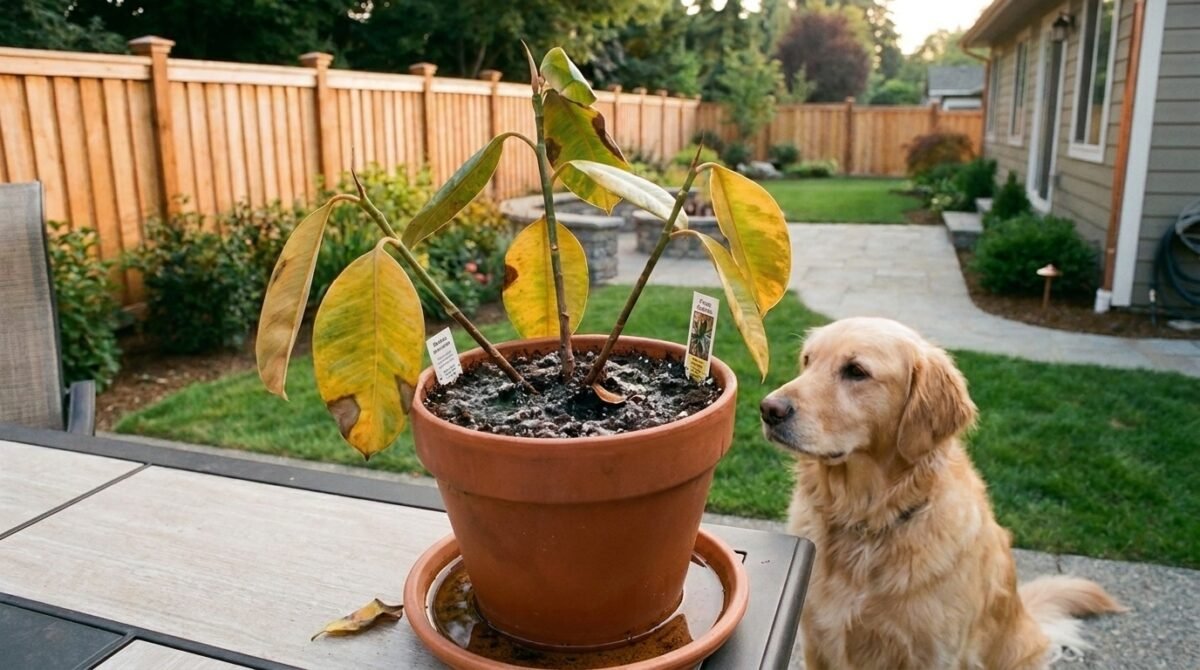
Watch for yellowing leaves, a common early warning sign of overwatering, poor light, or a nutrient issue worth catching early.
Air-Purifying Plants: Frequently Asked Questions
Answers to the most-asked air-purifying plant questions
In sealed lab chambers, yes. In a normal ventilated home, not measurably: a 2019 review of 12 chamber studies estimated you would need 10 to 1,000 plants per square meter of floor to match the VOC removal that ordinary air exchange already provides. Ventilation, reducing VOC sources, and a HEPA purifier are what actually improve indoor air.
Snake plant, peace lily, spider plant, pothos, English ivy, Chinese evergreen, and dracaena were tested in NASA’s 1989 report. Areca palm, Boston fern, and rubber plant were added from Dr. Wolverton’s later research.
Spider plant, Areca palm, and Boston fern are listed as non-toxic by the ASPCA. Snake plant, peace lily, pothos, English ivy, dracaena, Chinese evergreen, and rubber plant are toxic. Always check the exact species on the ASPCA list before buying.
Snake plant, pothos, Chinese evergreen, and ZZ plant tolerate low light. No plant survives indefinitely with zero light, so a windowless room needs a grow light on a timer.
Snake plant and peace lily handle lower light well. Snake plant takes in CO₂ at night, but no houseplant produces enough oxygen to change bedroom air or sleep. Both are toxic to pets.
Houseplants are unlikely to ease allergies. Overwatered soil can grow mold and some flowering plants shed pollen, so allergy-prone homes should water carefully and choose non-flowering foliage plants.
No. A HEPA purifier sized for your room filters far more air per hour than any realistic number of plants. Use a purifier and ventilation for air quality, and plants for enjoyment.
Water when the top inch of soil feels dry rather than on a fixed schedule. Snake plant and pothos often need water every one to two weeks; Boston fern needs it more often.
Snake plant, pothos, and spider plant are inexpensive, widely available, and forgiving. Spider plant and pothos are also easy to propagate from pups or cuttings.
Spider plant and Areca palm are non-toxic and low-maintenance. Even so, keep all plants, pots, and soil out of reach of small children.
Bringing It All Together
Choose plants that fit your light, pets, and routine
Houseplants will not measurably clean the air in a typical home — ventilation, reducing VOC sources, and a HEPA purifier do that. What plants do offer is real: a greener, more pleasant space that many people find calming. Start with one or two forgiving picks like snake plant, pothos, or (for pet homes) spider plant, learn their rhythm, and expand from there.
Pick plants that match your light, your pets, and your patience level, and you will end up with a home that looks and feels better — no renovation required. Follow the safety habits above, and your plants stay a safe part of the household.
Sources and How This Guide Was Checked
This guide was written by Jaweed, a hands-on home gardener, and fact-checked against the primary sources below. Last reviewed: September 26, 2026. Spotted an error or have a question? Contact us.
Wolverton, B.C. (1996). How to Grow Fresh Air: 50 Houseplants That Purify Your Home or Office. Penguin Books.
This article is general information, not medical or veterinary advice. If a person or pet may have eaten a toxic plant, contact a poison centre or vet right away.
Jaweed is the founder of Prime Home and Garden. A retired electronics engineer with decades of hands-on experience in home repairs, DIY projects, and garden care, he writes practical, tested guides to help homeowners take on projects with confidence.