Chimney Types and Sizes: A Simple Guide to Choosing the Right One
Picking a chimney sounds easy until you actually start reading about it. Suddenly you are staring at words like flue tile, Type A pipe, crown, and liner, and nobody bothered to explain any of them. If your head is spinning a little, take a breath. You are in exactly the right place.
This guide breaks down chimney types and chimney sizes in plain, friendly English. No jargon dumped on you, no fluff. By the end, you will know which chimney suits your home, what size flue your appliance needs, and how tall the whole thing should be. It pairs nicely with our fireplace types and sizes guide, since a fireplace and its chimney always work together as one team.
What a Chimney Actually Does
A chimney has two simple jobs. First, it pulls smoke and gases up and out of your home. Second, it keeps that heat away from anything that could catch fire. That upward pull is called “draft,” and almost every rule about chimney dimensions exists to protect it.
Keep those two jobs in mind. Once you understand them, the rest of this stops feeling like a science exam and starts making real sense.

The Two Big Families of Chimneys
Almost every chimney belongs to one of two groups. Get this part right and you are already halfway there. The two main types of chimneys are masonry chimneys and factory-built chimneys.
Masonry Chimneys (The Classic Brick Kind)
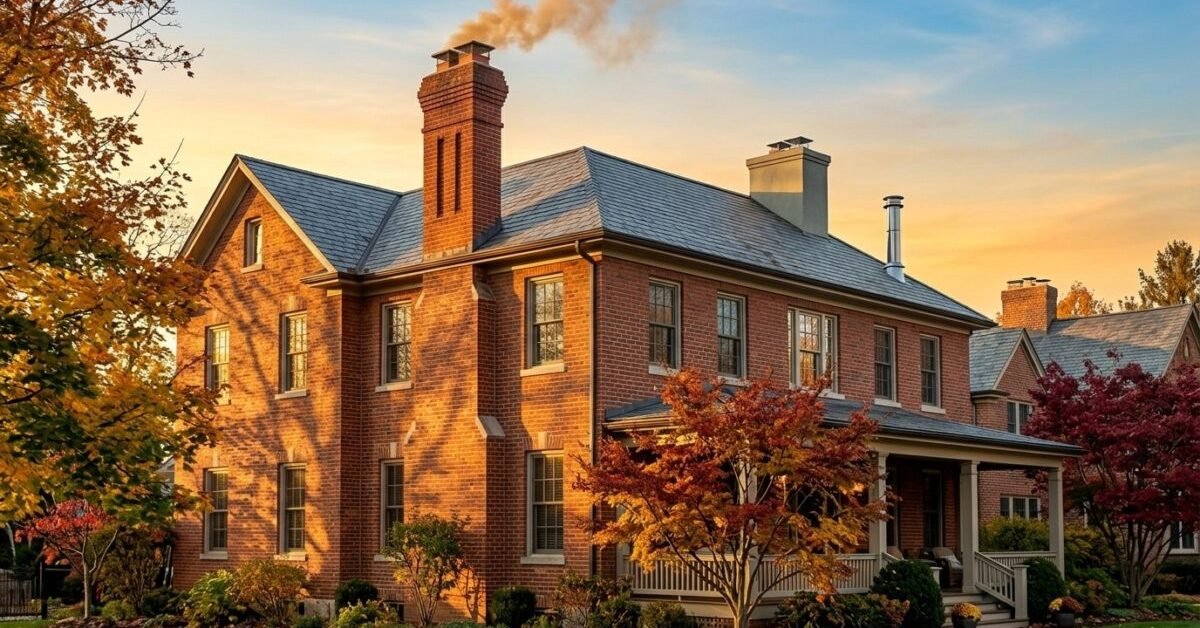
A masonry chimney is the old-school brick or stone one you picture when someone says “chimney.” It is built piece by piece on site using brick, stone, or concrete block, and it sits on its own foundation, called a footing. Inside, a clay flue tile lines the passage so smoke never touches the raw masonry. A brick chimney is heavy and takes time to build, but a well-made one can last for decades. If you are costing out a build, our building materials calculator can help you estimate brick and mortar quickly.
The trade-off is weight and price. Masonry chimneys need a solid base and skilled labor, so they cost more upfront than the metal kind.
Prefabricated (Factory-Built) Chimneys
A prefab chimney, also called a factory-built chimney, is made of metal pipe that ships ready to install. Most use double-wall or triple-wall stainless steel, with air or solid insulation between the layers to stay cool on the outside. These are lighter, faster to fit, and friendlier on the wallet.
One important rule: a factory-built chimney must match the appliance it serves. You cannot mix random brands of metal chimney pipe. The maker tests them as a matched system, so stick with what the manufacturer lists.

Chimney Flue Size Calculator
Getting the flue right is the difference between a fire that draws cleanly and one that smokes you out. This free tool gives you two quick answers: the minimum flue diameter for your appliance, and whether your chimney passes the 3-2-10 height rule. Pair it with our full guide to chimney types and sizes, and if you are still choosing a hearth, see fireplace types and sizes.
1. Find Your Minimum Flue Size
Pick your appliance. The flue should match or exceed the appliance outlet — never smaller.
2. Check Chimney Height (3-2-10 Rule)
The chimney must rise at least 3 ft above the roof and 2 ft above anything within 10 ft.
Minimum Flue Diameter Reference
| Appliance | Min Flue Diameter | Flue Area |
|---|---|---|
| Small stove / boiler (≤20 kW) | 125 mm (5″) round | 28.3 sq in |
| Standard stove (≤30 kW) | 150 mm (6″) round | 38.5 sq in |
| Open fireplace (≤500×550 mm) | 200 mm (8″) round | 50.3 sq in |
| Large open fireplace | ≥15% of opening area | Varies |
| Gas fireplace / insert | As specified by maker | Varies |
Need to plan how high the flue reaches your roofline? Try our ceiling height calculator.
Frequently Asked Questions
What size flue do I need for a 6 kW wood stove?
A 150 mm (6-inch) flue works for most stoves up to 30 kW. Match the flue to the stove's outlet — if the outlet is 5 inches, a 5-inch flue is fine, but never go smaller than the outlet.
Can a flue be too big?
Yes. An oversized flue cools the smoke too quickly, which weakens the draft and speeds up creosote build-up. Matching the flue to the appliance is safer than going large.
What is the 3-2-10 rule in simple terms?
The chimney must stand at least 3 ft above where it exits the roof and 2 ft higher than anything within 10 ft of it. It keeps embers away from the roof and gives the chimney a clean, strong draft.
How do I size the flue for a large open fireplace?
Aim for a flue area of at least 15% of the fireplace opening. Measure the opening width and height, multiply them, take 15%, and that is your minimum flue area. This tool does the math for you above.
Does my flue size set my liner size too?
In most cases, yes — the liner should match the flue and the appliance outlet. A 6-inch outlet wants a 6-inch liner. Flexible stainless steel is the easiest choice when relining an older masonry chimney.
Heads up: This calculator gives general guidance based on common sizing rules. Local codes and your appliance manual always come first, and a certified installer should confirm any final design.
Sources & standards: NFPA 211 · Chimney Safety Institute of America.

Answer first: chimney letter classes tell you what fuel and heat level a chimney is built for. Type A is for solid fuel like wood, Type B is for gas, and Type L suits oil and gas. Here is the quick map.
You may also see “Class 1” and “Class 2” in the UK. A Class 1 chimney is the larger, traditional masonry flue for open fires, while a Class 2 is a smaller pre-cast or lined flue for many gas and stove setups. Same idea, different label.

Minimum Flue Diameter by Appliance
Here is the golden rule of chimney flue size: the flue should roughly match the outlet on your appliance. Too big and the draft goes weak, so smoke lingers. Too small and smoke spills back into the room. Goldilocks sizing wins every time.
Common Chimney Liner Sizes
The chimney liner size matters just as much. A liner is the smooth inner channel that carries smoke safely. Below are the everyday sizes you will run into, which already gives you well over ten size options to match almost any setup.
Not sure which liner you need? Match it to your appliance outlet first, then confirm the run length and any bends. Flexible stainless is popular for relining old masonry because it bends around tricky shapes.

The Parts of a Chimney Worth Knowing
A chimney is more than a hollow tube. A few key parts do the heavy lifting, and knowing their names makes any repair quote far less scary.
- Firebox – where the fire actually burns.
- Throat and damper – the narrow gap above the fire with a flap that opens and closes the flue.
- Smoke chamber – funnels smoke from the firebox up into the flue.
- Flue and liner – the main passage and its protective inner skin.
- Chimney crown – the concrete top that sheds rain away from the masonry.
- Chimney cap – the little hat on top that blocks rain, leaves, and animals.
**Chimney flashing** – the metal seal where the chimney meets the roof, often paired with clay or tile roofing. If your roof uses tile, our guide to clay roof tiles explains how that surface and the flashing work together to stop leaks.
Answer first: your chimney should rise at least 3 feet above the roof where it comes through, and stand 2 feet higher than anything within 10 feet of it. That simple line is the famous 3-2-10 rule, and it keeps your draft strong.
Height also ties into your room and roofline. If you are planning a build or remodel and juggling those numbers, our ceiling height calculator can take some guesswork out of the vertical math.

Clearance and Safety You Cannot Skip
Chimneys carry fire and gas, so safety is not optional. In the US, the key rulebook is NFPA 211, the national standard for chimneys, fireplaces, and vents. It sets the chimney clearance distances that keep heat away from wood framing and other combustibles.
Pair safe clearances with good detection. While you are thinking about fire safety, our smoke detector calculator shows how many alarms your home needs and where to put them.
And book a yearly check. The Chimney Safety Institute of America recommends an annual inspection to catch creosote buildup and cracks before they become a real fire risk.

A Guide to Chimney Repair: Costs, Methods, and Materials
Common chimney repairs involve addressing various issues to maintain the structure’s safety and functionality. Some typical repairs include:
- Crown repair: Fixing cracks in the chimney crown, which is the cement slab at the top of the chimney. Minor repairs might cost around $200.
- Tuckpointing: Replacing deteriorating mortar joints in the brickwork to prevent water damage and structural issues.
- Chimney relining: Installing a new liner to ensure that smoke and gases are safely vented.
- Waterproofing: Applying a water-repellent sealant to protect the chimney from moisture.
The cost of chimney repair can vary significantly, from a few hundred dollars for small fixes to over $20,000 for a complete chimney rebuild. To ensure a durable and safe repair, chimney professionals use specialized materials like flexible sealants for crown cracks and specific mortar types (like Type N or S) for brick and masonry work.

How to Pick the Right Chimney Size in 5 Quick Steps
- Start with your appliance. Note the outlet size and fuel type from the maker’s manual.
- Match the flue. Size the flue to that outlet, never wildly bigger or smaller.
- Choose the family. Pick masonry for a classic permanent build, or factory-built for speed and lower cost.
- Confirm the height. Apply the 3-2-10 rule and the 15-foot minimum for solid draft.
- Check clearances. Follow NFPA 211 spacing and add a cap and proper flashing.
Run through those five and you have basically sized your chimney like a pro. When you are unsure, a certified chimney sweep can confirm the numbers for your exact setup.
FAQs: Chimney Types And Sizes
Essential answers regarding chimney types, flue sizing, heights, liners, and safety standards
Final Thoughts
Chimneys feel complicated only until someone explains them simply, and now you have that explanation. You know the two main families, the letter classes, how to size a flue and liner, how tall to build, and how to stay safe. That is more than enough to make smart, confident choices. If a chimney is part of a bigger project, keep the momentum going with our home renovation resources, where you will find more friendly guides to plan your space the right way.
Take it one step at a time, match the parts to your appliance, and you will get warmth that is cozy, clean, and safe for years to come.