
10 Lawn Care Tips for a Healthier, Greener Lawn
1. Mow at the Right Height — Not Too Short
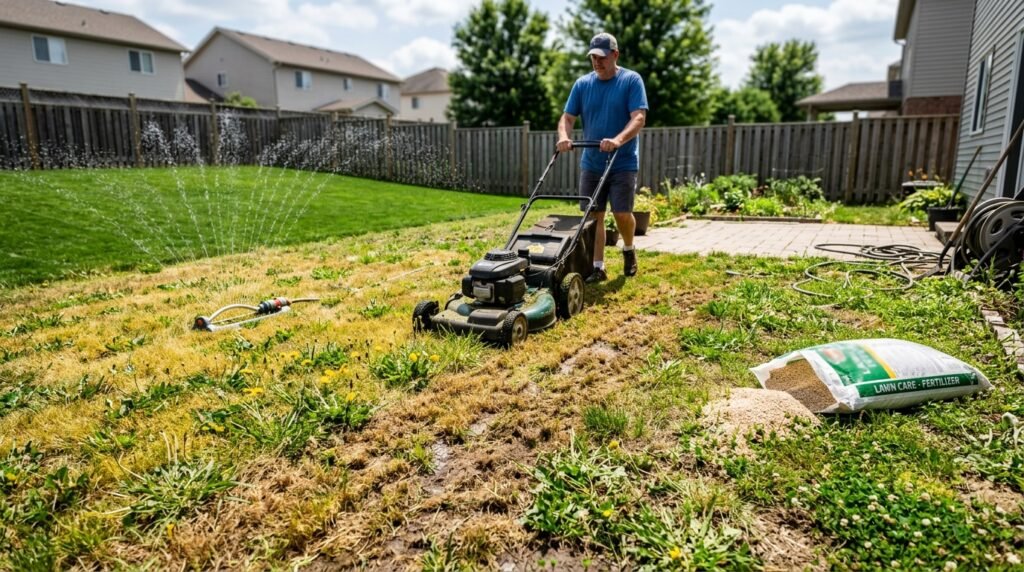
One of the most common lawn maintenance mistakes is cutting grass too low. Scalped lawns lose the ability to shade their own roots, which invites weeds and stresses the grass during hot weather.
As a rule of thumb, never remove more than a third of the blade height in a single cut. Most cool-season grasses do best kept around 3 inches, while warm-season varieties can handle a slightly shorter cut. How often should you mow depends on the season — expect weekly in spring and early summer, less often once growth slows down. Switching up your mowing patterns every couple of cuts — alternating vertical, horizontal, and diagonal passes — also helps prevent the soil compaction and grain that comes from wheels rolling the same path every single time.
2. Water Deeply, But Not Every Day
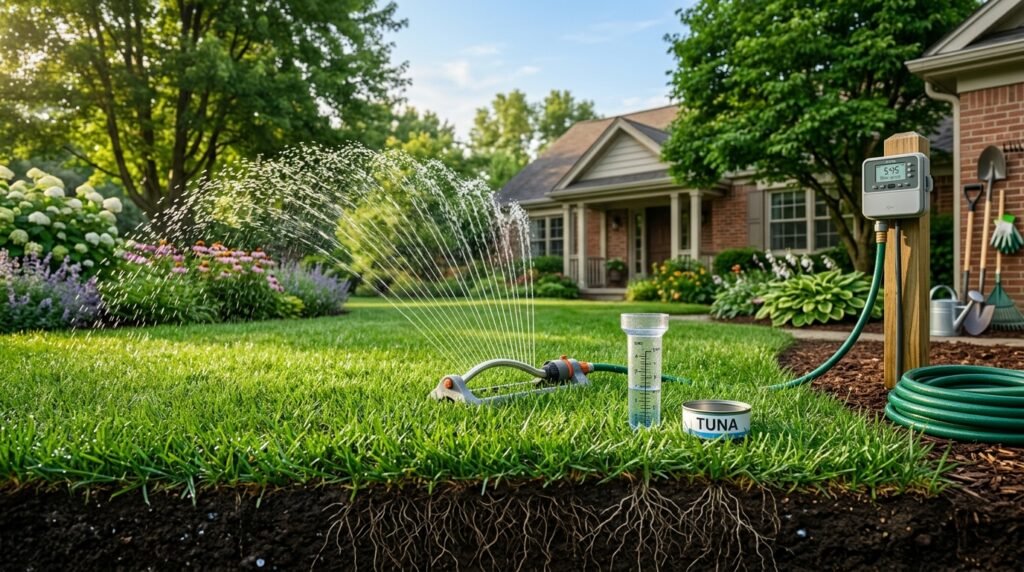
Daily light watering trains grass roots to stay shallow, which makes your lawn more vulnerable to drought and disease. A smarter lawn watering schedule means fewer, deeper waterings — roughly one inch of water per week, split across two sessions, is the standard most turf experts recommend.
According to the EPA’s WaterSense watering tips, a simple way to measure this is to place a few empty cans around the yard while you water, then time how long it takes to collect half an inch. Early morning is the best time to water grass, since it reduces evaporation and gives blades time to dry before nightfall, which helps prevent disease.
If you live somewhere hot and dry, it’s worth building your whole yard around drought resistant lawn care instead of fighting the climate. That usually means choosing a drought-tolerant grass variety, mowing slightly taller to shade the soil, and watering deeply but infrequently to encourage deep roots. Our drought resistant garden calculator can help you plan a water wise lawn that still looks green without running up the water bill.
3. Feed Your Lawn on a Seasonal Schedule
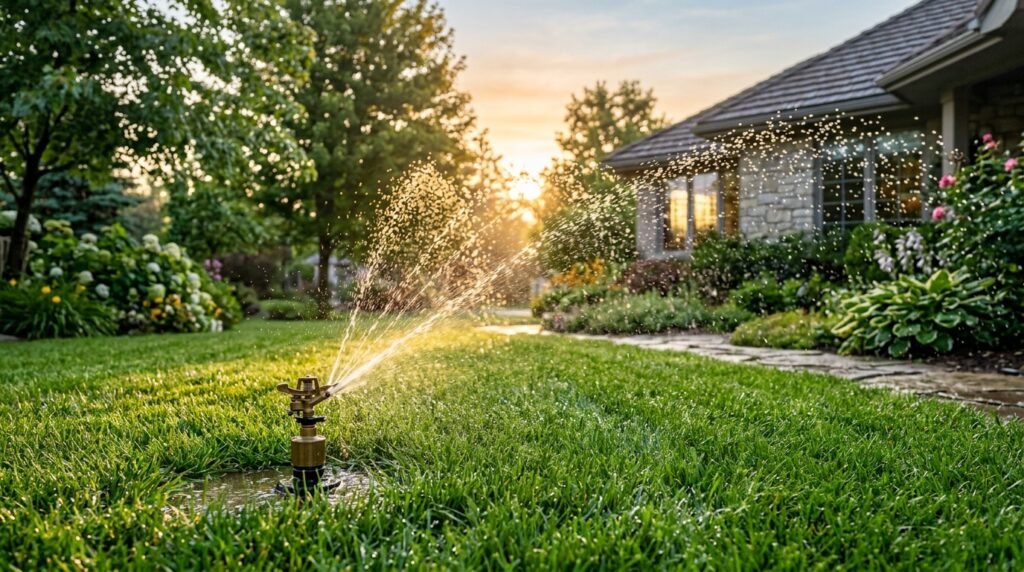
Fertilizer timing matters just as much as fertilizer choice. A basic lawn fertilization schedule looks something like: early spring for green-up, early summer for growth support, and fall for root strengthening heading into winter.
If you’re leaning toward organic lawn care, compost top dressing and slow-release organic fertilizers feed the soil biology instead of just the grass, which tends to build healthier turf over time. For exact timing based on your grass type and region, our guide on the best time of year to fertilize grass walks through it season by season, and our organic lawn fertilizer options page compares products if you want to go the natural route.
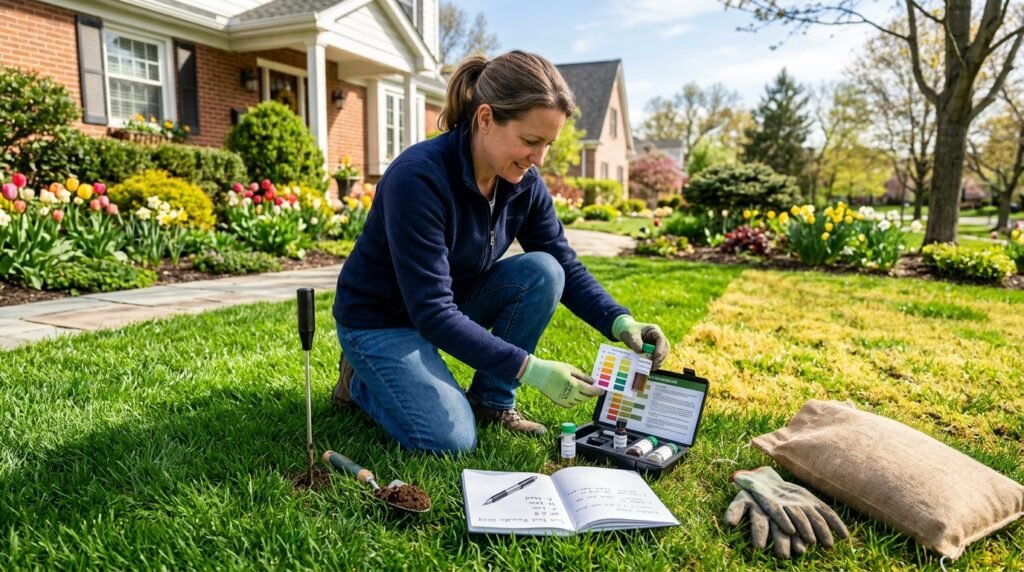
4. Test Your Soil Before You Guess
Most lawn soil health problems trace back to one thing: pH that’s out of range for the grass you’re growing. Grass typically prefers slightly acidic to neutral soil, and outside that range, it struggles to absorb nutrients no matter how much fertilizer you apply.
A basic soil test kit costs very little and tells you exactly what your lawn is missing — nitrogen, phosphorus, potassium, or a pH adjustment like lime or sulfur. Skipping this step is one of the quiet reasons fertilizer sometimes seems like it “isn’t working.”
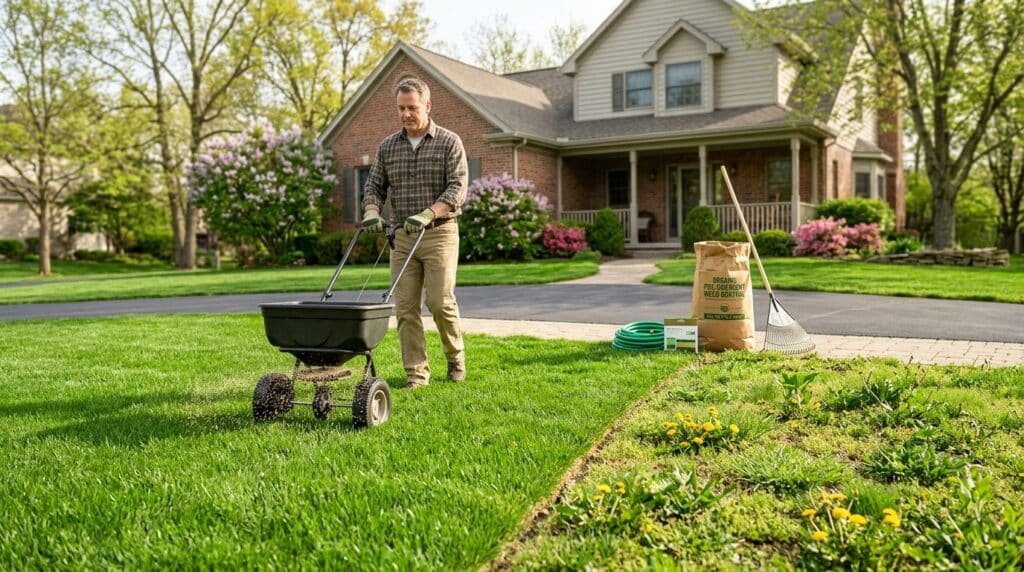
5. Get Ahead of Weeds Before They Take Over
Lawn weed control is far easier as prevention than as cleanup. Crabgrass, for example, germinates from seed each spring, which means a pre-emergent herbicide applied before soil temperatures warm up can stop it before it ever appears — waiting until you see crabgrass means you’ve already missed the easiest window.
For lighter infestations, organic weed control methods like corn gluten meal or simply mowing higher (to shade out weed seedlings) can handle a lot of the problem without chemicals. If you do reach for a synthetic weed killer, spot-treating individual patches is usually gentler on the surrounding lawn than a blanket application. Persistent patches of clover or nutsedge usually mean the lawn itself is thin somewhere, and thickening the turf is often a longer-lasting fix than repeated spot-treatment.
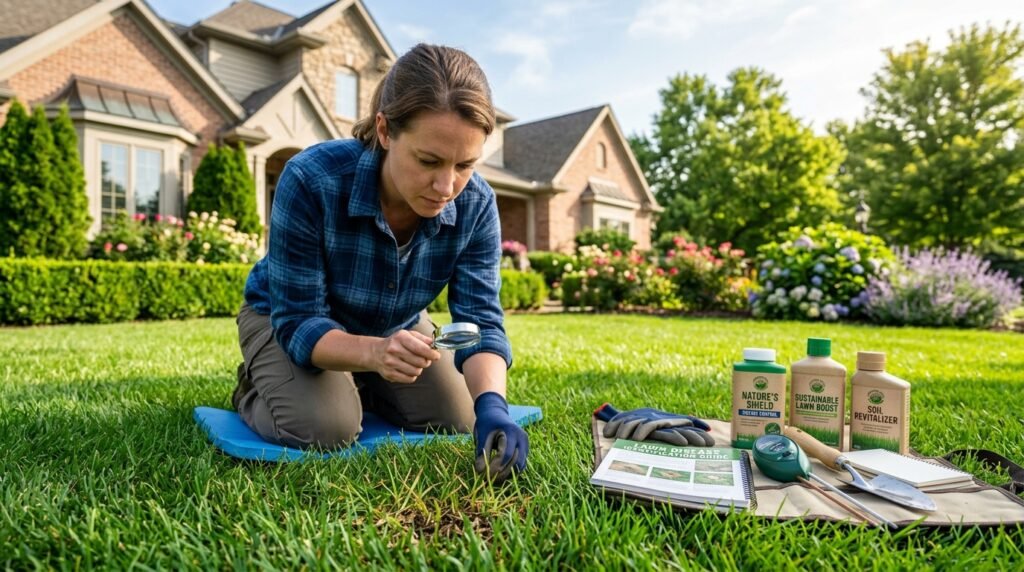
6. Watch for Early Signs of Lawn Disease
Lawn fungus issues like brown patch, dollar spot, and red thread often show up after long stretches of humid weather or overwatering. Catching them early — small discolored patches rather than large dead zones — makes treatment far more effective.
If you’ve noticed unusual patterns of yellow grass or spreading brown circles, our guides on lawn spot disease, grass spot disease, and leaf spot disease walk through how to tell them apart before reaching for a fungicide. In most cases, effective lawn disease treatment starts with improving airflow and cutting back watering frequency — the fungicide is really just a backup plan once the underlying moisture problem is fixed.
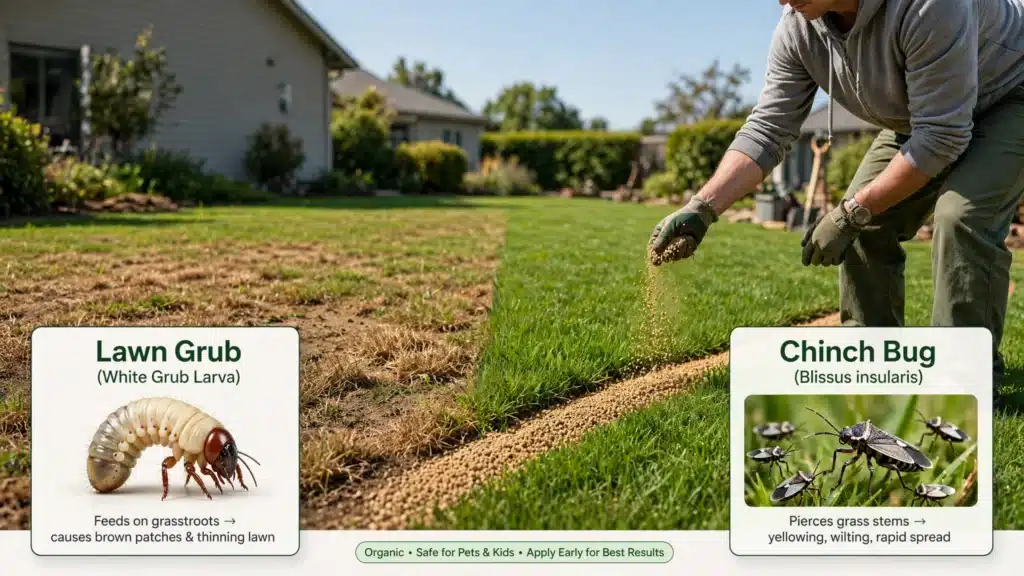
7. Control Lawn Pests Before They Spread
Grubs, chinch bugs, and armyworms can quietly damage a lawn’s root system before you ever notice the surface symptoms. Lawn pest control starts with correctly identifying which of these lawn insects you’re actually dealing with, since each one calls for a different treatment window. A simple tug test — grabbing a handful of grass and pulling — tells you a lot. If it lifts up easily with no resistance, grubs may already be feeding on the roots underneath.
Grub control timing matters: treating in early summer, when grubs are small and near the surface, is far more effective than treating in fall once they’ve burrowed deeper.
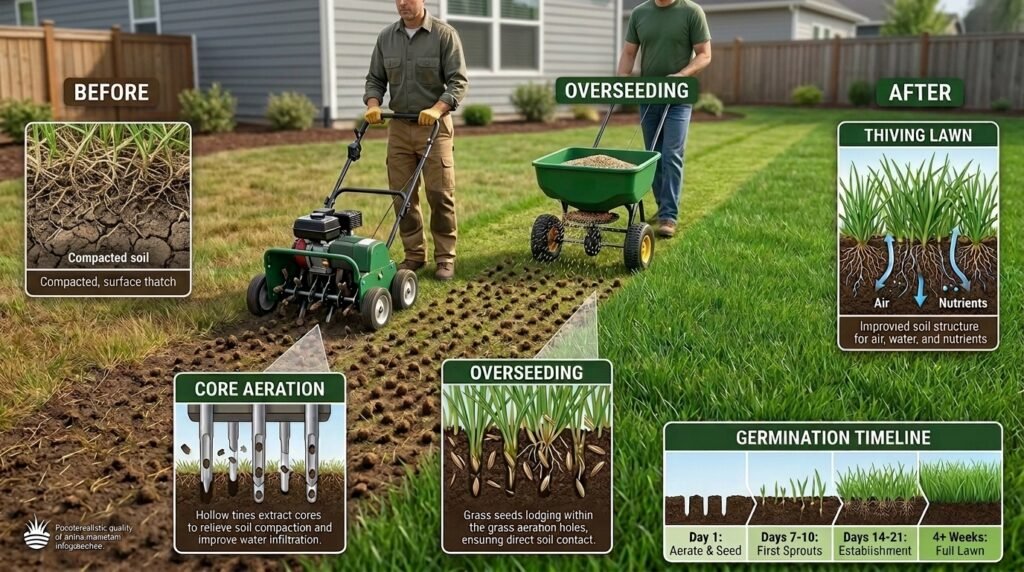
8. Aerate and Overseed at Least Once a Year
Compacted soil is one of the most overlooked reasons a lawn stops improving no matter what else you do. Lawn aeration — pulling small plugs of soil out of the ground — relieves that compaction and lets water, air, and nutrients reach the roots more easily.
Pairing aeration with overseeding fills in thin or bare patches with fresh grass seed at exactly the moment it has the best access to soil contact. If your lawn also has a thick, spongy layer of dead grass sitting on the surface, dethatching first clears the way so seed and water can actually reach the soil instead of sitting on top of it. Together, these two steps handle most lawn repair situations without needing to rip out and re-sod the whole yard. Early fall is generally the sweet spot for cool-season lawns, while late spring works better for warm-season varieties.

9. Match Your Grass Type to Your Climate
Not all grass behaves the same way, and a lot of “why won’t my lawn grow” frustration comes down to fighting the wrong grass type for the local climate. Warm-season grasses like Bermuda and Zoysia thrive in heat but go dormant and brown in cold winters. Cool-season varieties like Kentucky bluegrass and tall fescue handle cold well but can struggle in extreme summer heat.
Checking your growing zone on the USDA Plant Hardiness Zone Map is a genuinely useful first step before choosing or replacing a lawn, since it tells you which grasses are realistically built to survive your winters.

10. Consider Smart and Robotic Lawn Care Tech
Robotic lawn care maintenance has moved well past the novelty stage. Newer AI lawn mower models use LiDAR and RTK GNSS navigation to map a yard precisely, meaning many no longer require a buried boundary wire at all — a wire-free setup that used to be the biggest barrier to entry for robotic mowing.
Smart irrigation controllers pair naturally with this trend too, adjusting watering automatically based on local weather data instead of a fixed timer. Together, robotic mowers and smart irrigation are quietly becoming the biggest shift in home lawn care since the invention of the sprinkler.