10 House Plants With Variegated Leaves: 20+ Expert Care Tips
There’s a moment every plant lover remembers: spotting a leaf that’s half green, half creamy white, almost like someone took a paintbrush to it mid-growth. That’s variegation, and once you notice it on one plant, you start seeing it — and wanting it — everywhere.
But variegated plants have a reputation for being finicky. Their pale patches can’t photosynthesize like solid green leaves can, which means they’re a little pickier about light, a little slower to grow, and occasionally, they revert back to plain green out of nowhere.
This guide covers what variegation actually is, ten of the most popular variegated houseplants you can grow right now, and more than twenty expert-backed care tips to keep those patterns sharp for years instead of watching them fade.
What Does Variegated Mean?
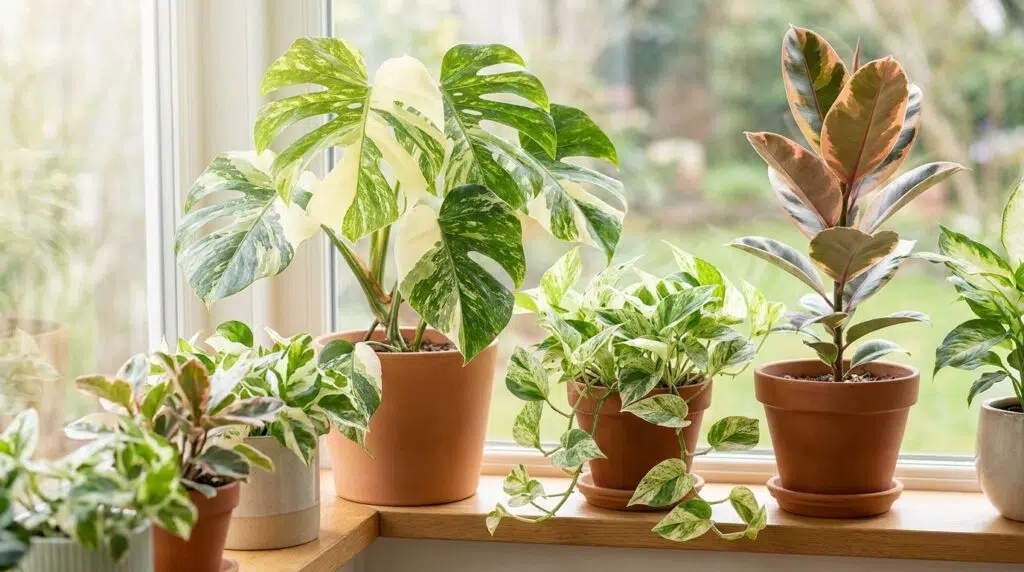
In plain terms, variegated means a leaf, stem, or flower shows two or more colors instead of one solid shade — most often green paired with white, cream, yellow, or pink. The word comes from the Latin variegatus, meaning “made of various colors.”
For plants specifically, variegation shows up as patches, streaks, speckles, or marbled patterns across the leaf surface. Some plants are born this way. Others develop it through mutation, disease, or deliberate cross-breeding.
If you’re building out a broader indoor plant collection, our best indoor plants guide is a good companion piece once you’ve settled on which variegated varieties to start with.

What Causes Variegated Leaves?
Not all variegation happens for the same reason, and understanding the type behind your plant actually changes how you should care for it.
| Variegation Type | What Causes It | Stability |
|---|---|---|
| Chimeral (genetic) | A genetic mutation creates two distinct types of plant cells growing side by side | Can revert if green (chlorophyll-rich) cells outcompete the white ones |
| Pigment (natural) | The plant naturally produces pigment patterns consistent from leaf to leaf | Generally stable and predictable |
| Viral | A plant virus disrupts normal chlorophyll production, creating color breaks | Can spread to other plants; not recommended to propagate |
| Reflective | Air pockets between leaf cell layers scatter light, creating a silvery sheen | Stable, tied to leaf structure rather than pigment |
Most of the trendy variegated houseplants sold today — think Monstera ‘Albo’ or Marble Queen Pothos — are chimeral, which is exactly why they’re the ones prone to “reverting” to solid green if conditions aren’t right.

Is Variegation Natural?
Yes and no, depending on the plant. Some species are naturally variegated in the wild as a form of camouflage or to deter pests. Others, especially the ultra-popular white-and-green varieties collectors chase today, are the result of a spontaneous mutation that growers then propagate through cuttings.
Either way, the white or pale sections of a variegated leaf contain little to no chlorophyll, meaning those parts can’t produce energy through photosynthesis. That’s the core trade-off of growing variegated plants.
10 House Plants With Variegated Leaves

1. Variegated Monstera (Monstera deliciosa 'Albo' / 'Thai Constellation')
This is the plant that arguably kicked off the modern variegation craze. Its large, split leaves come marbled or half-mooned in bold white against deep green. It’s also one of the more temperamental varieties — the white sections are especially prone to leaf burn, so bright, indirect light matters more here than with almost any other plant on this list.
2. Marble Queen Pothos (Epipremnum aureum 'Marble Queen')
A far more forgiving option, Marble Queen pothos handles lower light and occasional neglect without much complaint, though its variegation is more vivid with brighter, indirect light. It’s a great starting point if you’re new to variegated plants.
3. Variegated Rubber Plant (Ficus elastica 'Tineke' / 'Ruby')
Rubber plants already have thick, glossy leaves, and the variegated cultivars add streaks of cream, pink, or ivory along the edges. They’re sturdier than most variegated plants. Our rubber plant care guide covers the full care routine for both solid and variegated types.
4. Variegated Snake Plant (Dracaena trifasciata 'Bantel's Sensation')
Snake plants are famous for surviving almost anything, and the variegated cultivars carry over most of that resilience. This variety tolerates low light better than nearly every other plant here, though the stripes stay crisper with a bit more brightness.
5. Variegated Philodendron (Philodendron 'White Wizard' / 'Birkin')
These philodendrons show striking white-and-green pinstripe or splash patterns and tend to hold their variegation more reliably than some other aroids, provided light stays consistent.
6. Variegated Spider Plant (Chlorophytum comosum 'Vittatum')
One of the most beginner-friendly variegated plants that exists. Its arching, striped leaves tolerate a wide range of light and humidity levels, and it’s famously easy to propagate from baby plantlets.
7. Variegated Peace Lily (Spathiphyllum 'Domino')
Less common than the standard peace lily, this cultivar carries white speckling across dark green leaves. It shares the same low-light tolerance and air-purifying reputation, worth pairing with our air-purifying plants guide.
8. Variegated Prayer Plant (Calathea / Maranta varieties)
Prayer plants are naturally patterned, but variegated cultivars push that further with additional pink, cream, or white detailing. These are humidity lovers — dry indoor air will show up as crispy leaf edges faster here than on almost anything else on this list.
9. Variegated Fittonia (Nerve Plant)
Small, low-growing, and dramatically veined in white, pink, or red against deep green, fittonia is a striking terrarium or bathroom plant thanks to its love of humidity. It droops fast when thirsty and perks back up just as quickly after watering.
10. Variegated English Ivy (Hedera helix)
A classic trailing variegated plant, English ivy handles cooler indoor temperatures better than most tropical variegated plants on this list and works beautifully in hanging baskets or climbing a trellis.
Variegated Houseplants Comparison Table
| Plant | Light Needs | Difficulty | Variegation Stability |
|---|---|---|---|
| Variegated Monstera | Bright, indirect | Advanced | Prone to reverting |
| Marble Queen Pothos | Medium–bright, indirect | Beginner | Moderately stable |
| Variegated Rubber Plant | Bright, indirect | Beginner–intermediate | Fairly stable |
| Variegated Snake Plant | Low–bright | Beginner | Very stable |
| Variegated Philodendron | Bright, indirect | Intermediate | Moderately stable |
| Variegated Spider Plant | Medium–bright | Beginner | Very stable |
| Variegated Peace Lily | Low–medium | Beginner | Fairly stable |
| Variegated Prayer Plant | Medium, indirect | Intermediate | Fairly stable |
| Variegated Fittonia | Medium, indirect | Intermediate | Fairly stable |
| Variegated English Ivy | Medium–bright | Beginner | Very stable |
20+ Expert Care Tips for Variegated Plants

Light
- Give bright, indirect light — variegated plants need more light than their solid-green counterparts since less of the leaf surface can photosynthesize.
- Avoid harsh direct sun on white sections — those pale patches scorch far more easily than green tissue.
- Rotate the pot regularly so all sides get even light, preventing lopsided growth.
- Consider a grow light in low-light rooms, especially for finicky varieties like variegated Monstera.
- Watch for reversion — if new leaves come in solid green, it’s usually a sign of insufficient light.
- In very hot climates, manage heat as much as light — growing variegated plants through Karachi summers, where temperatures regularly pass 45°C, I’ve found that pale, low-chlorophyll sections scorch from heat and reflected glare even when the spot counts as “bright indirect light” by normal standards, so in extreme heat pulling the plant back from the window or behind a sheer curtain protects it more than adjusting light alone.
Watering
- Water based on soil moisture, not a fixed schedule — check the top inch or two of soil before watering.
- Avoid soggy soil, which stresses roots faster in variegated plants already working with reduced energy production.
- Use room-temperature water to avoid shocking sensitive root systems.
- Pair with well-draining soil — see our well-draining soil guide for what that looks like in practice.
Humidity & Temperature
- Boost humidity for tropical varieties like Calathea and Fittonia with a humidity tray or humidifier.
- Keep away from cold drafts and heating vents, both of which stress variegated leaves faster than solid green ones.
- Maintain consistent room temperature — sudden swings often show up first as curling or spotting on variegated sections.
Feeding & Soil
- Fertilize lightly, not heavily — too much growth pushes the plant toward energy-efficient green leaves over variegated ones.
- Use a balanced, diluted liquid fertilizer during the growing season and skip feeding in winter dormancy.
- Repot into fresh potting mix every year or two, since old, compacted soil holds less oxygen for roots.
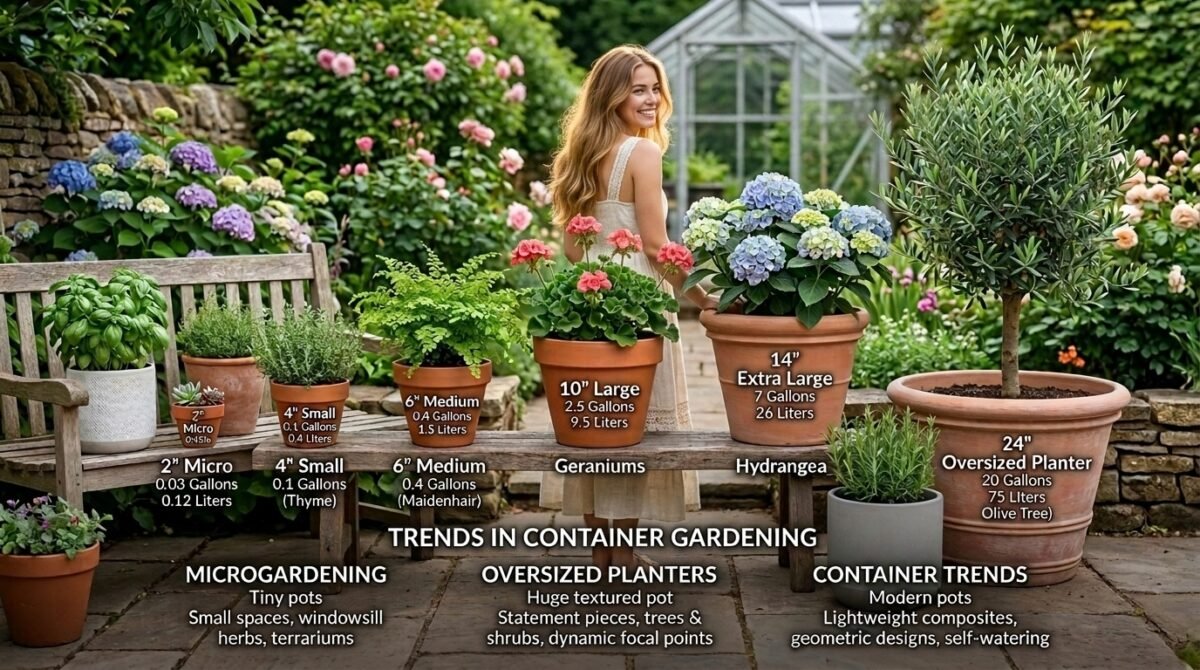
- Choose the right pot size using our pot size calculator — an oversized pot holds excess moisture that variegated plants handle poorly.
Pruning & Propagation
- Prune reverted green growth as soon as you spot it, cutting back to a variegated leaf node.
- Take cuttings from variegated stem sections only — propagating from an all-green stem will almost always grow back solid green.
- Sterilize pruning tools between cuts, especially important with any plant showing signs of viral variegation.
- Be patient with growth rate — variegated plants typically grow slower than their solid green relatives, and that’s normal.
General Maintenance
- Dust leaves regularly so the reduced chlorophyll in variegated sections isn’t further blocked from available light.
- Check for pests on new growth, since soft new variegated leaves can be more vulnerable to common houseplant pests.
- Avoid moving the plant often — variegated plants adjust to light changes more slowly, and frequent moves can trigger stress-related reversion.
If your variegated leaves are showing yellowing rather than the intended pattern, it’s worth ruling out other causes with our why are my plant leaves turning yellowish guide before assuming it’s a variegation issue.
Do Variegated Plants Need More Light?
Yes, almost universally. Because the pale sections of a variegated leaf can’t photosynthesize, the plant relies on a smaller percentage of green tissue to generate all the energy it needs. Bright, indirect light compensates for that reduced capacity — too little light, and the plant essentially reverts to solid green to maximize its ability to produce energy.
Can Variegated Plants Lose Their Variegation?
Yes — this is called reverting, and it’s one of the most common frustrations variegated plant owners run into. A few common triggers:
- Insufficient light over an extended period
- Heavy fertilizing that encourages fast, energy-efficient green growth
- Natural genetic instability in certain chimeral varieties
- Stress from repotting, temperature swings, or root disturbance
Once a section reverts to solid green, it typically stays that way — pruning the reverted growth back to a variegated node is the most reliable way to encourage the plant to keep producing patterned leaves going forward.
Can Variegation Come Back?
Occasionally, yes, particularly if the underlying cause (usually low light) gets corrected quickly and the plant hasn’t fully reverted at the genetic level. But once cells lose their chimeral variegation entirely in a given stem, that specific section generally won’t regain it — new variegated growth typically comes from elsewhere on the plant.
For a broader look at building a light-appropriate indoor collection around this challenge, our low light indoor plants guide and indoor plant care calculator can help match each plant’s needs to the spots in your home that can actually support them.
Variegated Houseplants FAQ
What does variegated mean in plants?
It means a leaf, stem, or flower displays two or more colors instead of a single solid shade, usually a mix of green with white, cream, yellow, or pink.
Why do some plants have white leaves?
White sections lack chlorophyll, the pigment responsible for a leaf’s green color and its ability to photosynthesize, which is why those areas appear pale or white.
Are variegated plants harder to care for than regular plants?
Generally yes, mainly because they need more light to compensate for reduced photosynthesis and are more prone to stress-related reverting, though some varieties like variegated snake plants are nearly as forgiving as their solid green counterparts.
Why are my variegated leaves turning green?
This is called reverting, and it’s most commonly caused by insufficient light, though over-fertilizing and general plant stress can contribute too.
Do variegated plants grow slower than regular plants?
Yes, typically. With less chlorophyll available to produce energy, variegated plants often put out new growth more slowly than fully green varieties of the same species.
Is variegation good or bad for a plant?
It’s neither inherently — it’s simply a different growth strategy. In the wild, some variegation offers camouflage or pest deterrence; in cultivated houseplants, it’s primarily valued for its appearance.
Safety Guidelines
Several of the plants on this list are popular exactly because they’re forgiving to grow — but that’s not the same as being harmless around pets and small children. Worth knowing before you bring one home:
- Toxic if chewed or ingested (cats, dogs, and children): variegated Monstera, Marble Queen pothos, variegated rubber plant, variegated philodendron, variegated peace lily, and variegated English ivy all contain calcium oxalate crystals or irritant sap. Symptoms typically include drooling, oral irritation, and vomiting; the sap in rubber plant and English ivy can also irritate skin on contact.
- Mildly toxic: variegated snake plant contains saponins that can cause stomach upset if a large amount is eaten, though reactions are usually mild.
- Considered pet-safe: variegated spider plant, variegated prayer plant (Calathea/Maranta), and variegated Fittonia are non-toxic to cats and dogs according to the ASPCA’s plant list, making them better picks for households with curious pets.
If a pet or child ingests any of the toxic varieties, remove plant material from the mouth if it’s safe to do so and contact a vet or poison control — have the plant’s name ready, since that speeds up advice considerably. When repotting or pruning any variegated plant, wearing gloves and washing your hands afterward is a good habit regardless of species, since several of these release sap that can irritate skin.
Final Thoughts
Variegated plants ask for a little more attention than their all-green relatives, but that’s exactly what makes them satisfying to grow. Every new leaf is a small reveal — will the pattern hold, shift, or surprise you entirely?
Start with a forgiving variety like a Marble Queen pothos or variegated spider plant if you’re new to this, give it real light rather than a dim corner, and resist the urge to over-fertilize. The rest tends to fall into place.
Once you’ve got your variegated collection settled, our soil type guide and fertilizer selector can help fine-tune the growing conditions so those patterns stay vivid season after season.