20 Best Garden Plants for Shade (And How to Pick the Right Ones)
By Jaweed · Last updated September 25, 2026
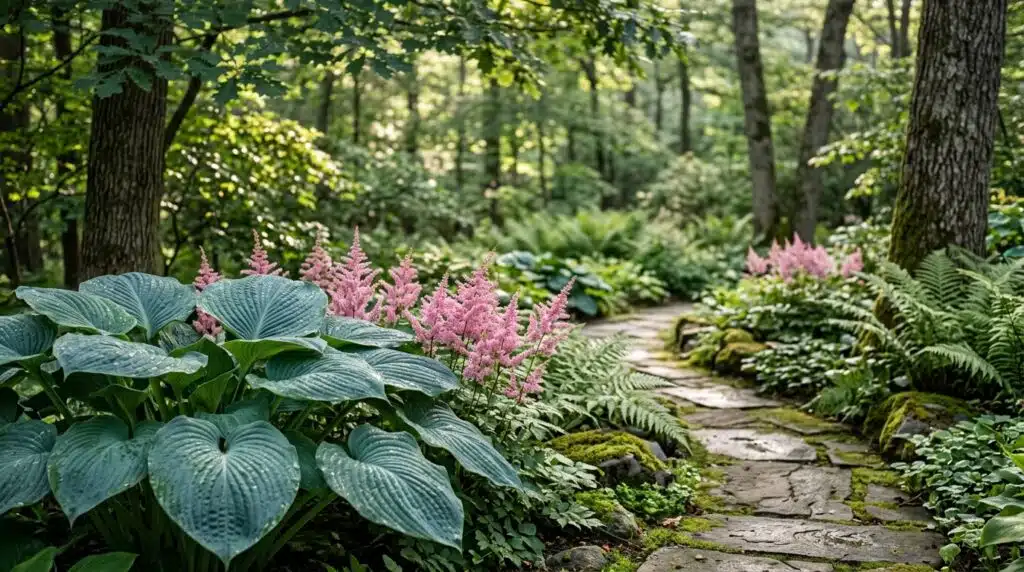
If you’ve written off the shady corners of your yard as a lost cause, think again. A layered shade garden isn’t a consolation prize for gardeners without full sun — it’s one of the most rewarding spaces you can grow. Cool, calm, and full of texture, it has a quiet beauty that a sun-baked border can’t match.
The trick is matching each plant to the type of shade you actually have. A plant that thrives under a light, leafy canopy will sulk — or die outright — in the deep, dry gloom under a mature oak. Once you understand that one distinction, choosing plants gets much less overwhelming.
Below are 20 dependable shade plants organized by type, a quick-reference table, and the design, soil, and pet-safety notes you need. Whether you’re working with a north-facing yard, dry soil under a big tree, or a shaded container on a porch, there’s something here for you. Before buying, check that each plant is hardy in your climate zone and isn’t invasive where you live.
Understanding the Different Types of Shade

Before you buy a single plant, spend a few minutes working out what kind of shade you’re dealing with. It’s the biggest single factor in whether shade plants succeed, and skipping it is the most common reason shade gardens fail. On a sunny day, check the bed every couple of hours and note roughly how many hours of direct sun it gets, and when.
Dappled or Light Shade
This is the bright, shifting shade you find under deciduous trees, where sunlight filters through the leaves in moving patches throughout the day. It’s the easiest shade to work with, and a huge range of plants — including most flowering perennials — thrive here.
Partial Shade
Partial (or part) shade generally means about 3 to 6 hours of direct sun per day, ideally in the morning or late afternoon rather than the harsh midday hours. Many colorful perennials and flowering annuals do their best work in this zone. Afternoon sun is much stronger than morning sun, so in hot climates choose shade-rated plants even for a spot that gets 4–5 hours of afternoon light.
Full Shade
Full shade means less than about 3 hours of direct sun — or none at all — such as under dense evergreens or along the north side of a house. Fewer plants tolerate it, but the ones that do (hostas, many ferns, hellebores) can still create a striking display. The difference from dappled shade is intensity: dappled shade shifts and brightens through the day, while full shade stays consistently low-light from morning to evening.
Dry Shade
This is the toughest combination in gardening: low light plus soil that tree roots constantly rob of moisture. Fortunately, a handful of resilient plants have adapted to exactly these conditions — they’re covered in the dry-shade section below.
Best Perennials for Shade Gardens
Perennials are the backbone of a shade bed, coming back bigger each year, so start your planning here before you add annuals or shrubs.
Foliage Favorites

1. Hosta. The best-known shade perennial. With thousands of cultivars, hostas range from blue-green giants to bright chartreuse minis, and most tolerate part to full shade. Most perform best in part shade with some morning sun, according to Missouri Botanical Garden’s Plant Finder, though they’ll also fill in deep shade. Keep in mind that deer love hostas, and they’re toxic to dogs and cats.
2. Heuchera (Coral Bells). A great choice when you want color beyond hostas. Its ruffled leaves come in purple, amber, lime, and silver, and it stays low and mounding — perfect for edging a shaded border. Most varieties do best in part shade; lighter-leaved types can scorch in strong afternoon sun.
3. Ferns. For a woodland feel, ferns are hard to beat. The soft fronds of a lady fern or the silvery-purple markings of a Japanese painted fern make a shaded corner look intentional rather than neglected. Both are hardy to about USDA zone 4, making them a safe bet in colder climates.
4. Brunnera (Siberian Bugloss). Less commonly planted but excellent, brunnera pairs heart-shaped, often silver-veined leaves with sprays of tiny sky-blue, forget-me-not-like flowers in spring. The silver-leaved cultivars brighten an all-green bed, so it earns its place for both foliage and flowers.
Flowering Perennials for Shade

A common frustration is the belief that shade means no flowers. These perennials prove otherwise, and they come back every year without replanting. No single shade perennial blooms all summer, so combine plants with different bloom times for a longer show.
5. Astilbe. Feathery plumes in pink, red, and white appear in early to midsummer, depending on the variety. Astilbe blooms best in part shade with consistently moist soil and struggles in dry shade. Its fine texture pairs beautifully with broad hosta leaves — a classic shade-bed combination.
6. Bleeding Heart (Dicentra). A cottage-garden classic, with heart-shaped pink or white flowers dangling from arching stems in spring. Common bleeding heart often dies back by midsummer, so plant it beside hostas or ferns that will fill the gap.
7. Hellebore (Lenten Rose). Blooms when almost nothing else will — late winter into early spring — and its leathery, evergreen foliage adds winter interest too. It’s deer resistant but toxic to pets.
Tough Perennials for Dry Shade Under Trees

Under mature trees, plants compete with roots for every drop of water and nutrient, and the canopy keeps much of the rain off the soil. Every plant in this section can cope with that once established. The RHS guide to dry, shady spots is a great reference if you want to go deeper.
8. Epimedium (Barrenwort). Arguably the toughest dry-shade perennial there is, and generally deer resistant. It forms a low, spreading mat of delicate foliage with small, spurred flowers in spring, and needs little care once established.
9. Lamium (Dead Nettle). A fast-spreading groundcover with silvery, variegated leaves and small hooded flowers — a good way to fill bare patches under trees. It can spread vigorously, so give it room or edge it.
10. Solomon’s Seal (Polygonatum). A graceful, arching woodland plant with small, dangling bell-shaped white flowers in spring. Once established, it copes well with dry, root-filled soil.
11. Lily of the Valley. A classic groundcover for difficult shade, prized for its fragrant white bells in spring. Two cautions: it spreads aggressively and is considered invasive in some regions, and it’s highly toxic to pets and people (see the safety section below). If either is a concern, epimedium or a moss planting gives a similar low, carpeted effect.
Annuals and Bulbs for Season-Long Color

If you want a fast, changeable burst of color — especially in pots on a shaded porch or patio — this is your shortlist.
12. Impatiens. A classic choice for flowers in full shade, producing masses of color from late spring until frost with little care. If impatiens downy mildew has been a problem in your area, choose mildew-resistant varieties or swap in New Guinea impatiens or begonias.
13. Coleus. Grown for its foliage, coleus offers some of the most vivid leaf color you can buy, in combinations of lime, maroon, and cream. Pinch off flower spikes to keep plants bushy.
14. Begonia. Both wax and tuberous begonias handle part to full shade well, offering dependable flowers and glossy leaves all season.
15. Caladium. Known for large, heart-shaped leaves splashed with pink, red, white, and green, caladiums grow from tubers, love warmth and humidity, and bring instant drama to a shady bed. Plant them once the soil has warmed.
16. Fuchsia. With pendulous, jewel-toned blooms that hummingbirds love, fuchsia is one of the best shade plants for hanging baskets. Keep it out of hot afternoon sun and water often — baskets dry out quickly.
Shrubs and Small Trees for Structure and Height

Shrubs provide the “bones” of a shade garden — height, winter structure, and a sense of permanence that perennials alone can’t give.
17. Hydrangea. Oakleaf and bigleaf hydrangeas are loved for their big flower clusters and do well in part shade, ideally with morning sun and afternoon shade.
18. Rhododendron & Azalea. Among the most rewarding flowering shrubs for a partly shaded garden, with a spectacular spring display year after year. They need acidic, well-drained soil that stays evenly moist.
19. Camellia. A classic evergreen shrub with rose-like flowers in late winter or early spring (some types bloom in fall), when little else is in flower. Most camellias are hardy only to about USDA zone 7, so check your zone first.
20. Boxwood. An evergreen for year-round structure and formal hedging. For a low to medium shade hedge, boxwood is a dependable starting point; for taller screening, our guide to the best privacy trees covers larger options that also tolerate part shade.
Quick Reference: Shade Plant Guide

| Plant | Type | Shade tolerance | Key feature |
|---|---|---|---|
| Hosta | Perennial | Part to full shade | Huge foliage variety |
| Heuchera (Coral Bells) | Perennial | Part shade | Colorful, low-mounding foliage |
| Ferns | Perennial | Part to full shade | Feathery, textural fronds |
| Brunnera | Perennial | Part to full shade | Silvery leaves, blue spring flowers |
| Astilbe | Perennial | Part shade (moist soil) | Feathery early- to midsummer plumes |
| Bleeding Heart | Perennial | Part shade | Heart-shaped spring flowers |
| Hellebore | Perennial | Part to full shade | Late-winter and early-spring blooms |
| Epimedium | Perennial | Part to full shade (dry OK) | Toughest dry-shade groundcover |
| Lamium | Perennial | Part to full shade (dry OK) | Fast, silvery groundcover |
| Solomon's Seal | Perennial | Part to full shade (dry OK) | Arching stems, dangling white bells |
| Lily of the Valley | Perennial | Part to full shade | Fragrant spring bells (toxic, spreads) |
| Impatiens | Annual | Part to full shade | Color from late spring to frost |
| Coleus | Annual | Part shade | Vivid, patterned foliage |
| Begonia | Annual | Part to full shade | Reliable flowers and foliage |
| Caladium | Annual (tuber) | Part to full shade | Bold heart-shaped leaves |
| Fuchsia | Annual/Perennial | Part shade | Pendulous hummingbird blooms |
| Hydrangea | Shrub | Part shade | Large flower clusters |
| Rhododendron & Azalea | Shrub | Part shade | Spectacular spring flowers |
| Camellia | Shrub | Part shade | Winter to early-spring blooms |
| Boxwood | Shrub | Part to full shade | Evergreen year-round structure |
Shade Garden Design Ideas and Layout Tips

Most good shade garden designs come back to the same handful of principles:
- Plan in layers. Put tall shrubs at the back, medium perennials in the middle, and low groundcovers along the front edge. This mirrors the layers of a natural woodland and is the foundation of good woodland garden design.
- Lean into foliage. In shade, leaf color and texture become your main design tool — pair silver brunnera with golden Japanese forest grass and deep-purple heuchera for real depth.
- Use variegation to brighten dark corners. Plants with white- or gold-edged leaves, like many hostas, lift a gloomy spot.
- Match each plant to your shade type. This is the most important design decision — dappled, partial, full, and dry shade each call for different plants.
- Improve your soil first. Shade under trees often means poor, dry soil. Working in well-rotted compost solves most problems before you plant — our soil type guide and well-draining soil guide go deeper if your soil needs work.
- Mulch and maintain. A 2–3 inch layer of shredded bark or leaf mulch in spring helps hold moisture and gradually improves the soil, including heavy clay. Divide overgrown perennials every few years.
- Pair companions. Combine plants with different textures, bloom times, and root habits — astilbe with ferns, or hostas with brunnera — so the bed reads as designed rather than scattered.
- Be patient. A shade garden with slow-growing shrubs takes a few seasons to fill in. That’s normal, not a sign anything’s wrong.
North-facing gardens: a north-facing yard is essentially a permanent part- to full-shade zone, so lean on the part-shade perennials and evergreen shrubs above for year-round interest. The RHS guide to shade gardening is a useful reference, especially in the UK, where north- and east-facing plots are common.
Safety Guidelines: Keeping Pets and Kids Safe in a Shade Garden

Several popular shade plants are toxic if eaten by pets or curious children. Hostas contain saponins that can cause vomiting and diarrhea in dogs and cats, and lily of the valley is far more dangerous because it contains cardiac glycosides that affect the heart.
Of the 20 plants in this guide, the ASPCA lists hosta, lily of the valley, hellebore, rhododendron and azalea, hydrangea, boxwood, begonia, caladium, and coleus as toxic to dogs and cats, while coral bells (heuchera), camellia, and Boston fern are listed as non-toxic. For any other plant, check the ASPCA’s searchable toxic and non-toxic plant database by name before you buy.
- Keep toxic plants such as lily of the valley, hellebore, and foxglove out of reach of pets and toddlers, or fence off that part of the bed.
- If deer or rabbits are a problem, our animal-resistant plants finder pairs well with this list. Epimedium, hellebore, and most ferns are generally deer resistant — but deer resistant doesn’t mean pet-safe (hellebore is toxic).
- For a plant-by-plant breakdown before you buy, use our poisonous plants finder, which covers common garden plants and houseplants side by side.
- If you suspect a pet has eaten a toxic plant, contact your veterinarian or the ASPCA Animal Poison Control Center (888-426-4435) right away rather than waiting for symptoms. For a child, call your local poison control center (1-800-222-1222 in the US).
FAQs: Garden Plants For Shade
What are the best plants for a shade garden?
What flowers grow best in full shade?
Hellebores, impatiens, and begonias are the most reliable bloomers in full shade. Hellebores add late-winter and early-spring color, while impatiens and begonias flower from late spring until frost. Astilbe and bleeding heart also bloom in shade but flower best with a few hours of morning sun.
How many hours of sun is considered part shade?
What ground cover grows well in shade and dry soil?
Do hostas need full shade or partial shade?
What colorful plants grow in shade besides hostas?
What shade plants are deer and rabbit resistant?
What shade plants are safe for pets?
Coral bells (heuchera), camellia, and Boston fern are listed as non-toxic by the ASPCA, while hosta, lily of the valley, hellebore, rhododendron, azalea, hydrangea, and boxwood are toxic to dogs and cats. Always check the ASPCA database for the specific plant before adding it to a yard shared with pets.
What is considered dappled shade for plants?
How to add color to a shady garden?
What shrubs grow well in shade for privacy?
Best shade plants for hanging baskets?
How often to water shade garden plants?
What evergreen plants work well in shade?
What are the best low maintenance shade plants?
How to plant a shade garden under a large tree?
What are the best shade plants for a north facing yard?
Final Thoughts

A shade garden isn’t a compromise — it’s an opportunity to grow plants and textures that a sunny border simply can’t support. Start by figuring out exactly which type of shade you have, choose two or three plants from each category above, and improve your soil before you dig a single hole. Give it a couple of seasons, and you’ll have a cool, layered retreat that’s just as striking as anything grown in full sun.
For more ways to round out the rest of your yard, browse our full home and garden calculator collection or check out the latest posts on our blog.