🛒 Garden Trolley Selector: Choose the Right Cart for Grass, Snow & Rocks
Match your cart capacity, wheel profile, and frame build to your yard's heavy hauling demands
If you have ever lugged heavy bags of compost across the lawn and felt it in your back the next day, you already know why the right garden trolley matters. A good one turns a brutal chore into a five-minute job.
🌱 Quick Matching & Essential Equipment Tools
- Calculate exact weight capacities and wheel requirements using our interactive garden trolley selector tool.
- Pair your trolley setup with the right garden tools to make outdoor hauling and property maintenance even easier.
- Keep your seasonal landscaping tasks and garden builds organized with a garden organizer.

What Is a Garden Trolley?
Understanding versatile outdoor utility carts for efficient yard maintenance
A garden trolley — also called a garden cart in the US — is a wheeled container you load up and move around your yard. Most are pulled by hand using a handle, though some attach to a mower or run on a battery.
🌱 Keep Your Outdoor Projects Organized
- Streamline your seasonal landscaping tasks and track equipment with a garden organizer.

🛒 Best Garden Trolley Selector With Savings Money & Time
Not sure which garden trolley to buy? This selector matches you to the right one fast. Tell it what you move, how heavy it gets, your terrain, and your storage, and it returns the best trolley type, weight capacity, wheels, and frame. New to trolleys? Read our full garden trolley buying guide, and gear up with the right garden tools.
Garden Trolley Types at a Glance
| Type | Best For | Capacity |
|---|---|---|
| Heavy-duty / dump cart | Soil, mulch, rocks | 200–500+ kg |
| Mesh trolley | Leaves, clippings | 500–600 kg |
| Platform trolley | Pots, awkward items | 150–300 kg |
| Folding wagon | Small spaces | 68–100 kg |
| Electric cart | Heavy loads, easy push | ~100 kg |
| Tool cart | Carrying tools | 30–40 L |
Frequently Asked Questions
How much weight capacity do I need?
Pick a trolley rated well above your heaviest load. Aim for about 1.5 times your typical heavy load so you never push the cart to its limit, which extends its life.
What wheels are best for grass and rough ground?
Pneumatic (air-filled) wheels. They absorb shocks and roll over grass, gravel, and roots far better than solid wheels, which suit smooth concrete.
Which trolley is best for moving soil and compost?
A heavy-duty cart with a tipping (dump) feature. The tilt empties soil, mulch, and gravel in seconds without lifting, saving your back.
Are folding garden wagons strong enough?
Yes, for lighter loads up to about 100 kg. For heavier soil, rocks, or slabs, choose a full steel-frame cart instead, as folding wagons top out lower.
Note: This selector gives general guidance. Always check the maker's rated capacity, and load within it.
Safety: HSE safe handling technique.

⚖️ Garden Trolley vs Wheelbarrow: Which Is Better?
Evaluate stability, weight capacity, and maneuverability to choose the right hauling tool for your yard
Choosing between a garden trolley and a wheelbarrow comes down to how much weight you need to move and how much balance you want to maintain while working.
🛞 Wheelbarrow
A wheelbarrow has one wheel and tips easily, which is great for quick dumping but tiring to balance over longer distances or uneven ground.
🛒 Garden Trolley
A garden trolley has four wheels, stays completely level, and carries far more volume and weight without putting physical strain on your arms and back.
🌱 Upgrade Your Yard Equipment Setup
- Find the right gear to match your outdoor maintenance routine with essential home garden tools.

Types of Garden Trolleys
There is a trolley for every job. Here are the main types, what they suit, and their standout features.
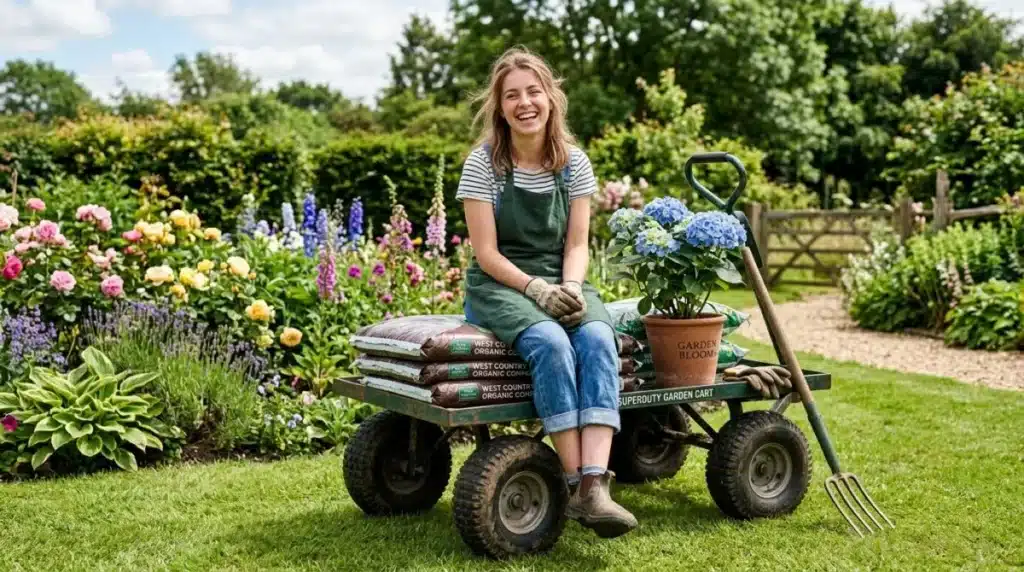
A heavy duty garden trolley with a steel frame is the workhorse for moving heavy loads, while a folding wagon is perfect if storage space is tight.

🔍 Key Factors to Consider Before You Buy
Essential checklist for choosing the perfect garden cart for your yard work requirements
⚖️ Load and Weight Capacity
Start with your typical loads. Weight capacity ranges from about 68 kg up to 600 kg. For transporting heavy items like bags of compost, rocks, or paving slabs, pick a higher capacity. Some mesh carts carry heavy items up to 500 kg in motion. If you regularly shift heavy bags of soil, do not skimp here. Our soil calculator helps you work out how much you will be hauling.
🏡 Yard Size and Terrain
Match the cart to your ground. Small, flat yards do fine with a compact folding wagon. Large or uneven ground calls for all-terrain wheels that roll over gravel, roots, and thick grass. On uneven terrain or slopes, look for big rugged wheels and a comfy handle. This is where an all-terrain model that shrugs off grass, snow, and rocks really earns its keep.
🛞 Wheel Types and Durability
Wheels make or break performance. Pneumatic tires (air-filled) are best for uneven ground, gravel, and grass because they absorb shocks. Solid rubber wheels suit smooth concrete. Large, sturdy wheels give traction on steep paths, and 360° rotating wheels make tight turns easy.
🏗️ Material and Frame
A steel frame is tough and long-lasting, and powder coated steel adds rust protection on top. Poly (plastic) bodies are light and rust-proof but can crack under extreme overload. Tough 600D Oxford fabric is common on folding wagons — durable and water-resistant.
⚙️ Features and Convenience
- Side panels: removable side panels make loading bulky items easy and keep loose loads secure.
- Dump or tilt: a tipping feature unloads gravel and mulch in seconds.
- Folding design: some fold to just 3.5 inches thick for storage.
- Tow hitch: lets you hook the cart to a ride-on mower for big yards.
- Ergonomic handle: padded or adjustable grips reduce strain.

🎯 Match the Trolley to Your Task
Select the ideal cart based on the specific material and workload demands of your yard project
Still unsure? Let the job decide. Different garden tasks point to different carts:
🪴 Compost and Soil
A tipping heavy-duty cart for carrying heavy loads. Great for building a raised bed.
🍂 Garden Waste
A mesh or waste cart keeps clippings and leaves contained during yard cleanups.
🪴 Potted Plants
A platform trolley or plant trolley rolls heavy pots smoothly without physical lifting strain.
🧱 Paving Slabs
A low flatbed trolley for awkward, heavy items — handy for a patio project.
🛠️ Tools
A garden tool cart keeps your gardening tools organised and within reach as you work.
🏗️ Building Materials
A steel-frame cart paired with our building materials calculator.

⚡ Accessibility and Electric Options
Ergonomic haulage solutions and powered equipment designed to reduce strain and preserve mobility
Moving heavy loads gets harder with age or injury. Choosing equipment tailored for ease of use ensures gardening remains accessible and enjoyable for everyone.
🔋 Self-Propelled Electric Carts
A self-propelled electric garden cart does the pushing for you — ideal for navigating hilly yards, steep inclines, or supporting gardeners with limited mobility.
🪶 Lightweight Folding Models
Lightweight folding models with easy-roll wheels provide a gentle, low-effort alternative that easily maneuvers over smooth paths and stores in tight spaces.
🌱 Related Guides & Lawn Care Advice
- For comprehensive yard maintenance and turf care strategies, explore our lawn care and maintenance guide.

🛒 How to Choose Your Garden Trolley
Three quick questions to find the perfect match for your yard work and storage setup
Pull it together with three quick questions and the right cart appears:
📦 What will you carry?
Light tools, or heavy soil and slabs? Match the weight capacity to your heaviest routine loads.
🏞️ What is your ground like?
Smooth patio, or rough grass and gravel? Pick the wheels to suit your yard's specific terrain.
🧱 Where will you store it?
Tight shed or small garage? Choose a folding model to save valuable floor space when not in use.

🛡️ Health and Safety Tips for Heavy Loads
Protect your spine and prevent injuries with simple, proven manual handling habits
A trolley protects your back, but only if you load and move it safely. These simple habits prevent injury during heavy outdoor work:
-
⚖️
Do not overload: spread the weight evenly and stay within the cart's rating limit. A 25 kg load is a common safe upper limit for an adult to lift manually.
-
🚶♂️
Push, do not pull: pushing utilizes your body weight efficiently and puts far less strain on back muscles than pulling behind you.
-
🦵
Bend your knees: when loading or unloading, lift with your legs, keep the load close to your core, and avoid twisting your torso.
-
🧹
Clear the route: remove stray debris or garden tools and assess slopes before you set off with a heavy trolley.
-
🛞
Check the wheels and brakes: verify tire pressure and test brakes, especially before working on inclines so the cart cannot run away.
🌟 Final Thoughts
Transform heavy outdoor chores into quick, effortless yard maintenance
The right garden trolley saves your back, your time, and your weekends. Match the capacity to your loads, the wheels to your ground, and the size to your storage, and you will wonder how you ever managed without one.
🌱 Take the Next Step for Your Yard
- Find your ideal cart configuration using our interactive garden trolley selector to make hauling the easiest job in the garden.
- Equip yourself with other essential home garden tools for comprehensive property upkeep.
- Keep track of seasonal planting and outdoor projects with our garden organizer.