Plant Tag Size Guide: Standard Dimensions for Every Plant in Your Garden
Introduction
Picture a tray of seedlings, all green, all identical, and not one of them labeled. Two weeks later, you genuinely can’t tell the basil from the parsley, or which tray is tomatoes and which is peppers. It’s a small mistake with an annoying result — and it’s completely avoidable with the right plant tags.
Choosing plant tag size isn’t just about picking whatever’s cheapest at the garden center. A tag that’s too small gets lost in foliage. A tag that’s too large shades tiny seedlings or looks clunky stuck next to a delicate herb. Getting plant tag dimensions right makes your whole garden easier to manage, from seed tray to mature tree.
This guide breaks down standard plant tag sizes for every situation — seedlings, pots, garden beds, shrubs, and trees — along with materials, shapes, and tools that make labeling simple. If you’d rather skip straight to personalized recommendations, our plant tag size calculator matches tag size and type to your specific plants and pots in seconds.
Why Plant Tag Size Actually Matters
It’s tempting to think any plant label will do the job. In practice, size affects three things every gardener cares about:
- Visibility — A tag too small to read from a normal standing distance defeats the purpose entirely.
- Plant health — Oversized tags and stakes can shade small seedlings or crowd tightly spaced plants.
- Durability — The right size, paired with the right material, survives a full growing season instead of fading or snapping in the wind.
Getting this balance right is really the whole point of a good plant tag size chart.
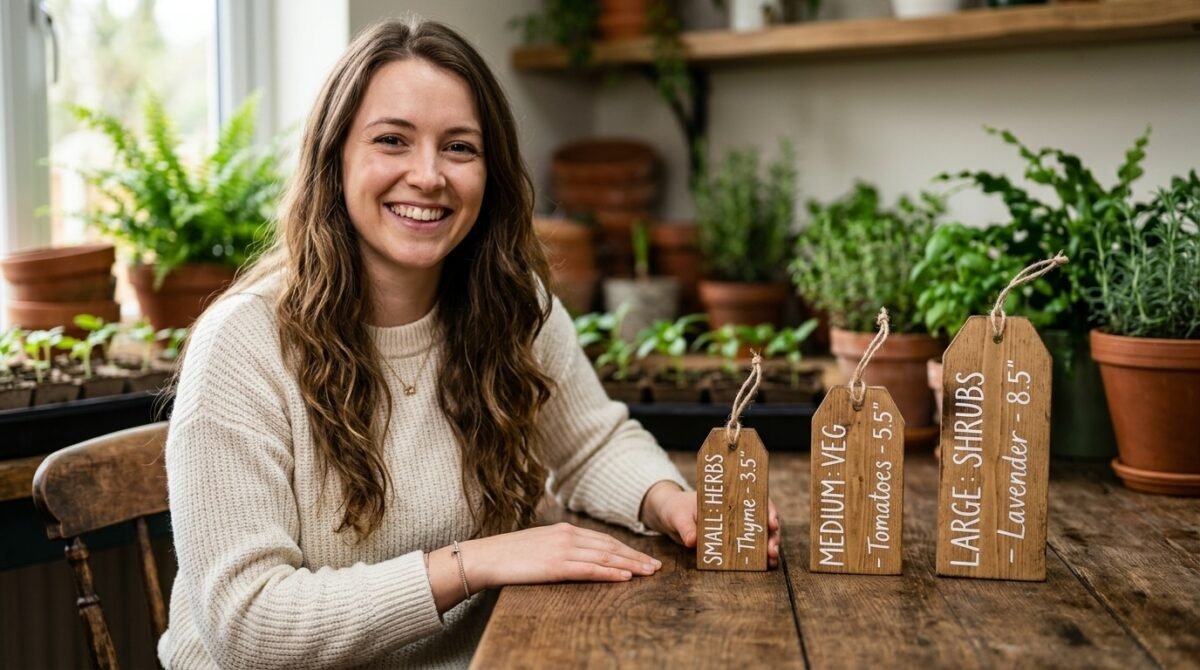

Standard Plant Tag Size Chart
Here's a practical plant tag size guide covering the ranges most home gardeners and small nurseries actually use.
| Tag Category | Typical Dimensions | Best For |
|---|---|---|
| Mini plant tag | 5 × 1 cm | Tiny seed trays, individual seed cells |
| Small plant tag | 6 × 10 cm | Herb pots, small seedlings |
| Medium plant tag | 6.3 × 10 cm to 10 × 2 cm | Vegetable transplants, small perennials |
| Large plant tag | 12 × 6 cm to 15 × 7.5 cm | Larger pots, garden bed rows |
| Plant stake (small) | 15 × 50 cm | Shrubs, taller perennials |
| Plant stake (large) | 20 × 50 cm | Young trees, large shrubs |
| 4 inch plant tag | ~10 cm | General nursery pot labeling |
| 8 inch plant stake | ~20 cm | Deeper pots and raised beds |

Plant Tag Shapes: Which One Fits Your Garden?
Plant tags aren’t one-size-fits-all in shape, either. Each style solves a slightly different labeling problem.
- T-type plant tag — A classic T-shaped stake with a flat face for writing, ideal for seed trays and small pots.
- Rectangular plant tag — Flat and simple, often used for pot tags stuck directly into soil.
- Hanging plant tag — Attaches with string or wire, common for tree markers and shrub labels.
- Wrap-around plant tag — Loops around a stem or branch and expands as the plant grows, perfect for young trees.
- Stick-in plant tag (stake tag) — Pushed directly into soil, the most common style for seedling tags and garden rows.
- Pot tag — Designed to clip or slide onto the rim of a container rather than into the soil itself.
If you’re setting up new pots for the season, our pot size calculator and gallon pot size finder can help you match container size to the plant before you even think about labeling it.

Plant Tag Materials: Picking What Lasts
Material affects both the lifespan of your tag and how it looks in the garden.
- Plastic plant labels and PVC plant tags — Inexpensive, lightweight, and easy to write on, though they can fade with heavy UV exposure over time.
- Wooden plant labels and bamboo plant tags — A natural look that suits herb gardens and raised beds, though they break down faster in wet climates.
- Aluminum plant tags and metal plant markers — Extremely durable and ideal for permanent specimens like trees and shrubs.
- Slate plant tags — A premium option, often used for ornamental gardens where appearance matters as much as function.
- Waterproof plant tags and weatherproof plant labels — Built to survive rain and irrigation without smudging or curling.
- UV-resistant plant tags — Specifically treated to resist sun fading, worth the extra cost for tags left outdoors year-round.
For long-term plantings, especially trees and shrubs you’re hoping will last decades, our guide on long-life plants pairs naturally with a durable metal or aluminum tag choice.

Choosing Plant Tag Size by Use
Seedlings and Seed Trays
For seedling tags and seed tray labels, go small. A mini plant tag around 5 × 1 cm or a slightly larger 10 × 2 cm tag works well without shading tiny sprouts or crowding a tray of cells.
Herbs and Small Pots
Herb markers usually sit in the 6 × 10 cm range — big enough to read the plant name clearly, small enough not to overwhelm a modest herb pot. If you’re growing something specific like Black Krim tomatoes or acorn squash in containers, this size range works well for those too, at least until transplant.
Vegetable Gardens and Raised Beds
Vegetable plant labels for a full garden bed can go a size up — the 12 × 6 cm to 15 × 7.5 cm range gives enough space for both plant name and planting date, which is genuinely useful if you’re following a raised bed you built yourself with multiple crop rotations each year.
Shrubs and Perennials
Shrub tags and perennial plant labels benefit from a plant stake size around 15 × 50 cm, tall enough to stay visible above surrounding foliage as the plant fills in. This pairs well with a regular bush trimming schedule, since a visible tag helps you remember exactly what you’re pruning and when.
Trees
Tree markers need to handle years of growth, which is exactly why wrap-around tags and larger 20 × 50 cm plant stakes are the standard choice. Wrap-around tree tag sizes are specifically designed to expand as the trunk or branch thickens, so they don’t girdle the tree over time. If you’re documenting notable specimens, it’s the same identification principle used by arborists cataloging champion trees in the field.

Nursery and Commercial Plant Tag Sizes
Nursery tag size standards exist for a reason: commercial growers need consistency across thousands of plants. According to AmericanHort’s American Standard for Nursery Stock, which has guided nursery terminology and sizing conventions since 1923, standardized language around plant sizing helps buyers and sellers communicate clearly, and the same logic extends naturally to tag sizing across a nursery’s inventory. The University of Florida IFAS Extension also references this standard as a widely accepted reference point across the horticultural trade.
Commercial plant tags, breeder plant tags, and greenhouse plant markers typically standardize around a handful of sizes to keep costs down and make bulk ordering simple, often falling into the same small, medium, and stake categories used at home, just produced at scale.

Plant Labeling Tools Worth Having
Beyond the tags themselves, a few tools make labeling faster and more permanent:
- Plant label printer — Produces clean, weather-resistant text far faster than handwriting dozens of tags.
- Garden marker pen (including popular options like an Artline garden marker) — A paint-based pen designed specifically to write on plastic, metal, or wood without smudging in the rain.
- Engraved plant labels — A one-time investment that never fades, ideal for permanent garden features.
- Custom plant labels and personalized plant markers — Increasingly popular for gifting plants or creating a cohesive look across a garden.
Reusable, writable plant tags are worth the slightly higher upfront cost if you rotate crops seasonally, since you can simply wipe and relabel them each year instead of buying new ones.

How to Choose the Right Plant Tag Size: A Quick Buying Guide
- Match size to plant stage — seedlings need small tags; mature shrubs and trees need stakes or wrap-around tags.
- Match material to environment — wooden and bamboo for casual indoor or short-term use; metal, aluminum, or slate for permanent, weatherproof durability.
- Match shape to space — stick-in tags for open soil, wrap-around for growing trunks, pot tags for containers.
- Think about legibility — always size up slightly if you plan to include more than just a plant name, like a planting date or care notes.
If you’re organizing more than just tags, our garden organizer and home garden tools guides round out a well-equipped growing space.
Frequently Asked Questions
Final Thoughts
Plant tags feel like a small detail until the one season you forget which seedling is which. Getting the size, shape, and material right for each stage of growth — from a 5 × 1 cm seedling tag to a 20 × 50 cm tree stake — keeps your garden organized and genuinely easier to enjoy.
Start with your smallest, most confusing plants — seed trays and herb pots — and work your way up to shrubs and trees. A little consistency in labeling pays off every single time you walk outside and instantly know what you’re looking at.