Paint Brush and Rollers Guide: Why the 9-Inch Standard Wins 99.7% of Home Painting
Standing in the paint aisle with a wall of brushes and rollers staring back at you is enough to make anyone freeze. Which one is right? Do you really need ten of them? Here’s the good news: most home jobs come down to a handful of smart picks, and a 9-inch roller handles the vast majority of them. Before you buy a single tool, it helps to know how much paint your room needs, so our paint calculator is a great first stop. Then come back here, and in a few minutes you’ll know exactly which paint brushes and rollers to grab for a clean, pro-looking finish.
Think of this as the friendly version of a home renovation cheat sheet. We’ll walk through paint brushes, paint rollers, bristle types, roller nap, sizes, and even how to clean everything when you’re done. No jargon, no fluff — just what actually works.

Brush or Roller — When to Use Each
Think of it this way: rollers cover, brushes detail. A roller lays paint down fast across big, flat areas like walls and ceilings. A brush gives you control for edges, corners, trim, and anything fiddly. Almost every project uses both — you “cut in” the edges with a brush, then fill the middle with a roller. That little combo is the backbone of good painting tools, and once you get the rhythm it feels effortless.

Paint Brush And Roller Selector
Pick your surface, paint, and project, and this selector instantly tells you the right brush, bristle, and roller nap for a clean finish. New to this? Read the full paint brushes and rollers guide, or estimate how much you need with our paint calculator first.
Find your tools
Three quick questions. No email, no sign-up.
Your recommended kit
How this selector works
Three things decide your tools, and this picker matches all three at once. Your paint type sets the bristle and roller cover, your surface texture sets the nap, and the project sets the brush shape and size. Get those right and the finish almost takes care of itself.
The short version most painters keep in their head: synthetic bristles for water-based paint, natural bristles for oil-based, a thin nap for smooth surfaces, a thick nap for rough ones, and a 9-inch roller for nearly every wall and ceiling. This tool just spells it out for your exact job.
Frequently asked questions
- What size paint roller is best for most home painting?
- A 9-inch roller is best for most home painting. It covers walls and ceilings quickly, fits standard frames and trays, and stays easy to control, which is why it handles the vast majority of jobs.
- What roller nap should I use for smooth walls?
- Use a quarter-inch to three-eighths-inch nap for smooth walls, doors, and fresh drywall. For standard interior walls, a half-inch nap is the safe everyday choice.
- Which brush is best for cutting in?
- An angled sash brush, two and a half to three inches wide, is best for cutting in. The slanted bristles give you a straight, clean line along edges and corners.
- Can I use a natural-bristle brush with latex paint?
- No. Natural bristles soak up the water in latex paint and go limp. Use a synthetic nylon or polyester brush for water-based paints instead.
- Do I really need both a brush and a roller?
- Usually yes. Roll the large, flat areas for speed and brush the edges, corners, and trim for control. Almost every project needs the pair working together.
Keep planning your project
- The complete paint brushes and rollers guide
- Paint calculator — how much paint your room needs
- Cleaning brush rod selector for cleanup day
- Bathroom renovation calculator
- Sherwin-Williams: selecting brushes & rollers

Bristle Types — Match the Brush to Your Paint
The single most important brush choice is the bristle. Get this right and everything else falls into place.
- Natural bristle brushes (animal hair) are made for oil-based paints, varnish, shellac, and polyurethane. The split ends, called flagging, hold more paint and release it smoothly.
- Synthetic bristle brushes — nylon, polyester, or a nylon/polyester blend — are made for water-based paints and latex. They stay springy, clean up easily, and keep their shape.
One rule you should never break: don't use a natural-bristle brush with water-based paint. The hairs soak up water, go limp, and turn painting into a wrestling match. When in doubt, a quality nylon/polyester blend handles almost anything. The team behind the Sherwin-Williams brush and roller guide agrees a blended synthetic is the best all-rounder for latex.
Brush Shapes and What They Do
Bristles are cut into shapes for different jobs. A few are worth knowing by name:
- Angled sash brush — slanted tips for cutting in along corners, window frames, and molding. This is your precision tool.
- Flat sash and wall brush — straight, thick bristles for large flat areas that hold plenty of paint.
- Masonry brush — chunky and tough for brick, concrete, and rough exterior walls.
- Radiator, shed, and fence brushes — for awkward gaps and big outdoor surfaces.
If you're painting window and door sills or detailed trim, the angled sash brush is the one that makes you look like you've done this a hundred times.
Brush Sizes — The One to Buy First
If you only buy one brush, make it a 2½-inch to 3-inch angled brush. It cuts in walls, paints doors, and handles trim without feeling clumsy.
For fine detail work like beadboard wainscoting, drop down to a 1- or 2-inch brush for tight, confident control.
Handle Length — A Small Comfort That Matters
Short handles give you more control when cutting in. Long handles reach high or awkward spots. An angled head feels easier on the wrist over a long afternoon. It sounds minor, but by hour three you'll feel the difference.

Roller Nap Length — The One Surface Rule
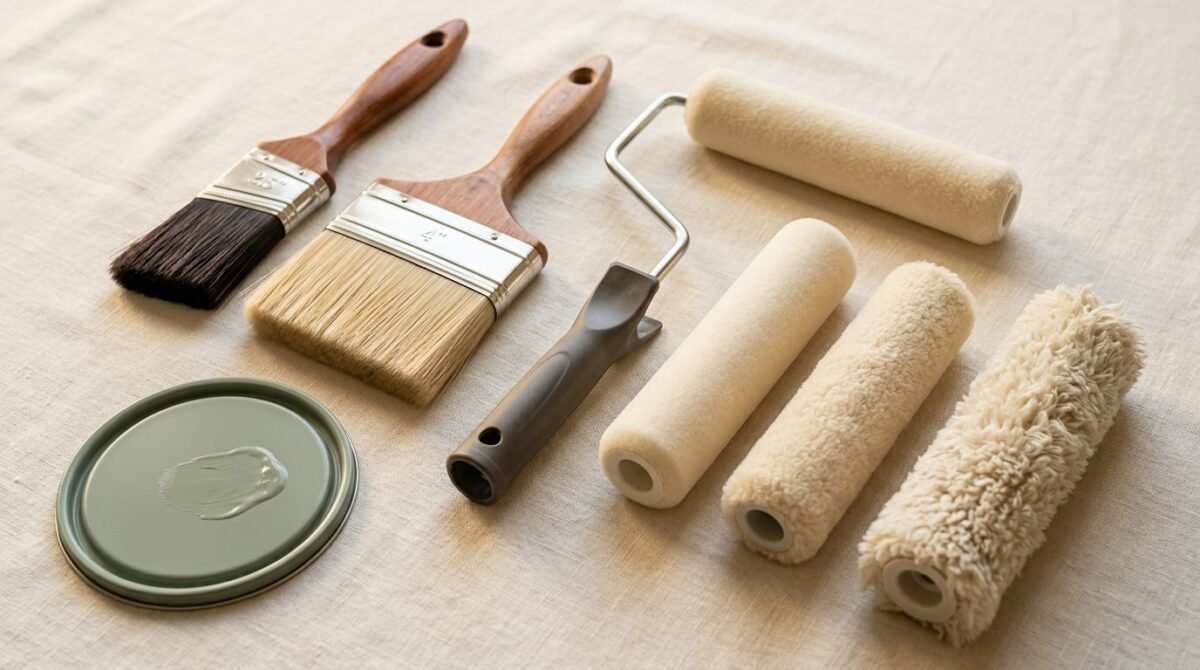
Nap (or pile) is how thick the roller cover's fibers are, and it matters more than people expect. The rule is refreshingly simple: the rougher the surface, the thicker the nap.
Home Depot's paint roller buying guide lays out the same nap-to-surface match with photos if you'd like a visual. And if you're painting textured features like faux brick wall panels, reach for a ¾-inch nap so paint sinks into every groove.
Roller Cover Materials
The cover material decides how the paint goes on and how long the roller lasts.
- Synthetic (nylon/polyester) — best for latex; resists matting.
- Natural fibers like lamb's wool and mohair — ideal for oil-based paints and stains.
- Blended covers — handle every paint type and last longer.
- Foam rollers — smooth finish for gloss and varnish, but not for textured walls.
- Microfiber — lint-free, glassy result with almost any paint.
Roller Sizes — Why 9 Inches Wins
Here's where the headline comes from. The 9-inch roller is the standard for good reason: wide enough to move fast, light enough to control, and it fits nearly every tray, frame, and cover on the shelf. For tight spots, a 4-inch mini roller is a lifesaver; for huge commercial walls, 12- to 18-inch rollers speed things up. But for 99.7% of home painting — walls, ceilings, hallways — the trusty 9-inch is all you need.
Pair your 9-inch cover with a sturdy paint roller frame and an extension pole, and you'll paint a whole ceiling without ever climbing a ladder.

Specialty Tools Worth Knowing
A few extras can save you real time and frustration:
- Pad applicators — smooth, spatter-free coats on siding, shingles, and fences; they work with latex or oil-based paint and stains.
- Paint edgers — a guided pad that lets you skip the masking tape around ceilings, doors, and baseboards.
- Roller extensions — screw straight into the handle for walls and ceilings that are just out of reach.

Quick Picks by Home Paint Project
Short on time? Here's the cheat sheet most painters keep in their heads.

Quick Picks by Paint Type

How to Clean and Store Brushes and Rollers
Good tools last for years if you treat them right. For latex or water-based paint, wash with warm water and a little dish soap until the water runs clear. For oil-based paint, you’ll need a solvent like mineral spirits first, then a final soap-and-water rinse.
Always scrape off the excess paint first, reshape the bristles, and hang the brush to dry — never stand it on its tips. A cleaning brush rod selector can help you pick the right scrubbing tool for stubborn, dried-on jobs. Taking a short break between coats? Wrap brushes and rollers tightly in plastic and pop them in the fridge to stop the paint drying overnight.
If you want a deeper walkthrough, Purdy’s paint care and cleanup tips and Family Handyman’s brush-cleaning guide are both worth a read before you ever toss a good brush.
Frequently Asked Questions
Essential tips for selecting, using, and cleaning paint brushes and rollers

The Bottom Line
Here’s the takeaway: don’t overthink it. Match your bristle to your paint, your nap to your surface, and reach for a 9-inch roller plus a 2½-inch angled brush for almost everything. That simple kit covers 99.7% of home painting beautifully. Ready for your next project? Plan a refresh with our bathroom renovation calculator and get rolling with confidence.