DIY Toddler Bed And Rail Ideas: Creative, Budget-Friendly Ways to Keep Your Kid Safe in Bed
Not every family needs a $40 store-bought rail shipped in a box. Sometimes you need a fix tonight, with what’s already in the house, because your toddler just rolled out of bed for the second time this week and you are not about to Google-shop at 11pm.
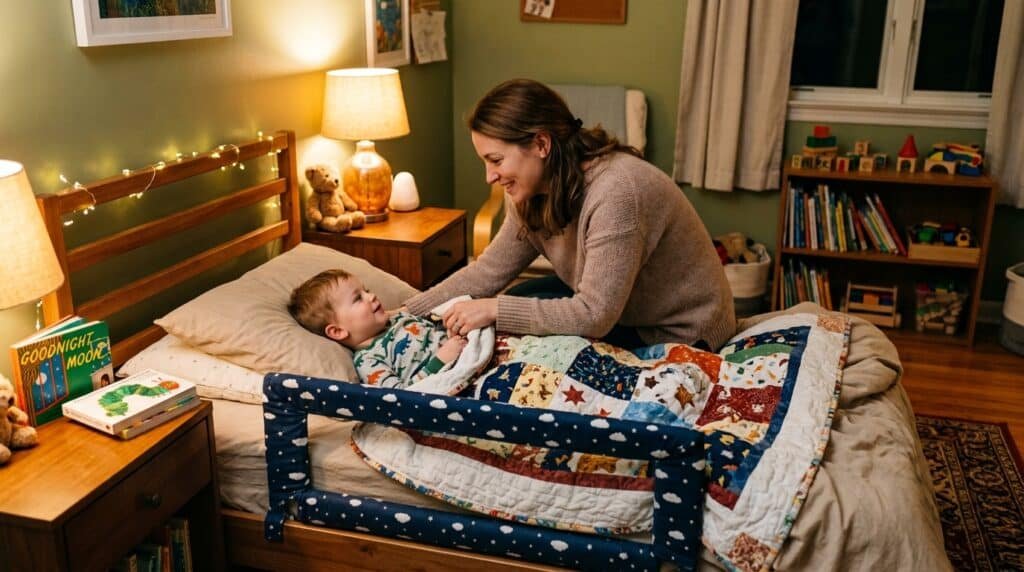
This guide covers real DIY toddler bed rail projects you can build today, how they stack up against store-bought bed rails for toddlers, and how to match either one to your specific bed, budget, and kid, including a bed rail for toddler transitioning from crib for the very first nights in a big-kid bed. For the full rundown on safety standards, sizing, and recalls, our complete toddler bed rail safety guide is the deeper companion to this one.
Do You Actually Need a Bed Rail, or Can You Skip It?
Not every toddler needs one. Some kids develop bed awareness early and simply never roll far enough to be at risk. Others are genuine tumblers who need a real barrier from night one of the crib to toddler bed transition.
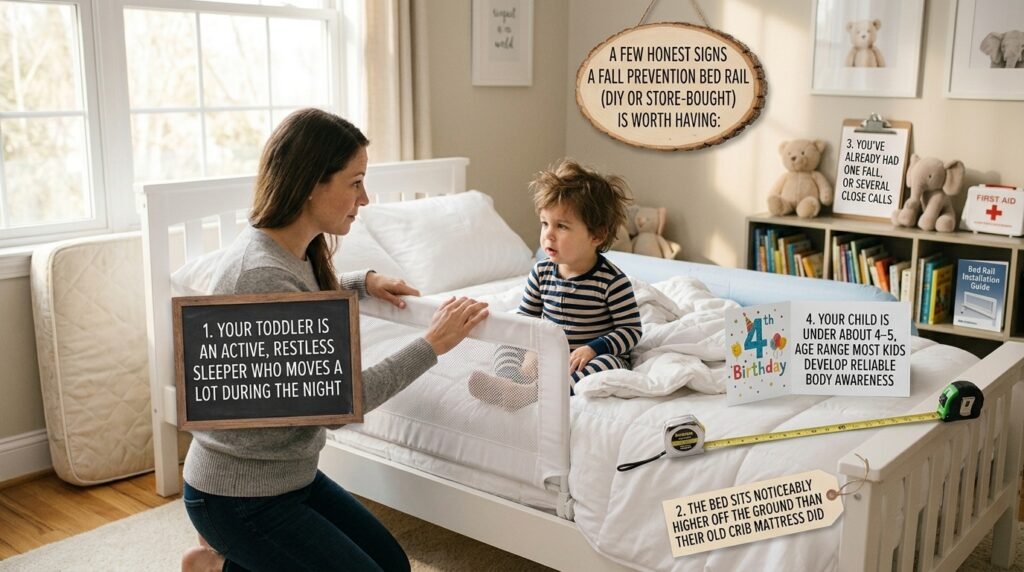
A few honest signs a fall prevention bed rail (DIY or store-bought) is worth having:
- Your toddler is an active, restless sleeper who moves a lot during the night
- The bed sits noticeably higher off the ground than their old crib mattress did
- You’ve already had one fall, or several close calls
- Your child is under about 4-5, the age range most kids develop reliable body awareness
If none of that applies and your toddler sleeps like a log dead-center in the mattress, a rail is a nice-to-have rather than a must-have. There’s no shame in skipping it if it’s genuinely not needed.

5 DIY Toddler Bed Rail Projects You Can Build Today
💡 Safety Check: Regardless of which DIY method you choose, make sure the rail sits snug against the mattress so there are no dangerous gaps where your child could become trapped.

DIY vs. Store-Bought: Which Is Actually Safer?
✅ Essential Safety Checks: Whichever route you pick, apply the same three checks: no gap against the mattress, adequate height (top edge at least 5 inches above mattress), and no sharp edges or small parts a toddler could pull loose.

Store-Bought Toddler Bed And Rail Types and Brands to Know
💡 Buyer's Tip: Whatever you're considering, reading current toddler bed rail reviews on the specific listing matters more than the brand name alone, since manufacturing quality can vary between production runs even for well-known brands.
Availability and specific models change constantly across Amazon, Target, Walmart, and baby specialty retailers, so treat any "best of 2026" list you find, including general category advice like this, as a starting point for your own comparison rather than a final answer. Always check current reviews and confirm the specific listing you're buying still meets current safety standards before checkout.

Matching a Rail (DIY or Store-Bought) to Your Bed Size
💡 Alternative Furniture Option: If you're shopping around this much, it might also be worth comparing against a toddler bed frame or bed style with the guard built directly into the design, sometimes marketed as a toddler bed with rails built in, rather than adding a separate rail to an existing frame. That's a different product category from a standalone rail, and worth its own comparison if you're starting from scratch on furniture anyway.

Travel and Grandparents’ House: Portable Options
If your toddler splits nights between your place, a grandparent’s house, and the occasional hotel room, packing a full rigid rail every time isn’t realistic. A few practical options:
- An inflatable travel rail that deflates flat into a suitcase side pocket
- A pool noodle, genuinely, since you can find one practically anywhere and it packs down to almost nothing
- A lightweight folding mesh rail specifically marketed for travel use
- Simply pushing the bed against a wall on the open side, if the room layout allows it, as a zero-equipment backup
Keeping a small, dedicated travel rail in an overnight bag means you’re never caught improvising with couch cushions in an unfamiliar room at bedtime.

Special Situations: Sensitive Sleepers, Climbers, and Kids With Additional Needs

Safety Non-Negotiables, Even for a DIY Rail
- No toddler bed rail entrapment gap between the rail and the mattress, wide enough for a child to slip into and get stuck
- Top edge at least 5 inches above the mattress surface
- No sharp edges, splinters, or small detachable parts
- A rail secure enough that it can’t be pushed loose or shifted out of place overnight
- Check it every single night if it’s a DIY or non-locking setup, since straps and props can loosen over time
These same points apply whether you built it yourself last night or bought a child safety bed rail from a certified retailer. For the full technical breakdown, including the exact CPSC bed rail guidelines and ASTM standards a store-bought rail should meet, see our complete bed rail safety guide.

Choosing the Right Toddler Bed Rail
💡 Safety Tip: Make sure the bed rail fits tightly against the mattress without any gaps, ensuring the top edge sits at least 5 inches above the top of the mattress surface.
One More Quick Safety Win While You're At It
FAQs: DIY Toddler Bed And Rail
Everything you need to know about selecting, installing, and safely using toddler bed rails.