
Specialty Insurance Guide – 10 Types, Costs & Coverage
Here’s a scenario that trips up more people than you’d think: you buy a classic car, host a backyard wedding, or launch a small consulting business — and assume your regular insurance policy already has you covered. Then something goes wrong, you file a claim, and you hear four words nobody wants to hear: “this isn’t covered.”
That gap is exactly where specialty insurance lives. It’s built for the risks that standard home, auto, and business policies were never designed to handle — rare cars, valuable art, cyber breaches, weddings, boats, planes, and more. If you’ve ever wondered whether your prized possessions or your business are actually protected, this guide walks through everything in plain English.

What Is Specialty Insurance?
Specialty insurance, sometimes called specialty lines insurance, is coverage designed for risks that fall outside what a standard policy will touch. Think of a regular homeowners or auto policy as a one-size-fits-most solution — it works fine for average risks, but it starts to break down the moment your situation isn’t average.
So, what is specialty insurance, in the simplest terms possible? It’s a policy written specifically for a unique asset, unique event, or unique liability. A vintage motorcycle, a nonprofit’s board of directors, a wedding photographer’s equipment, a cyberattack on your small business — all of these need something more tailored than a generic plan. Whether you’re shopping for specialty insurance for individuals or researching specialty insurance for businesses, the underlying idea is the same: match the policy to the actual risk, not the average one.
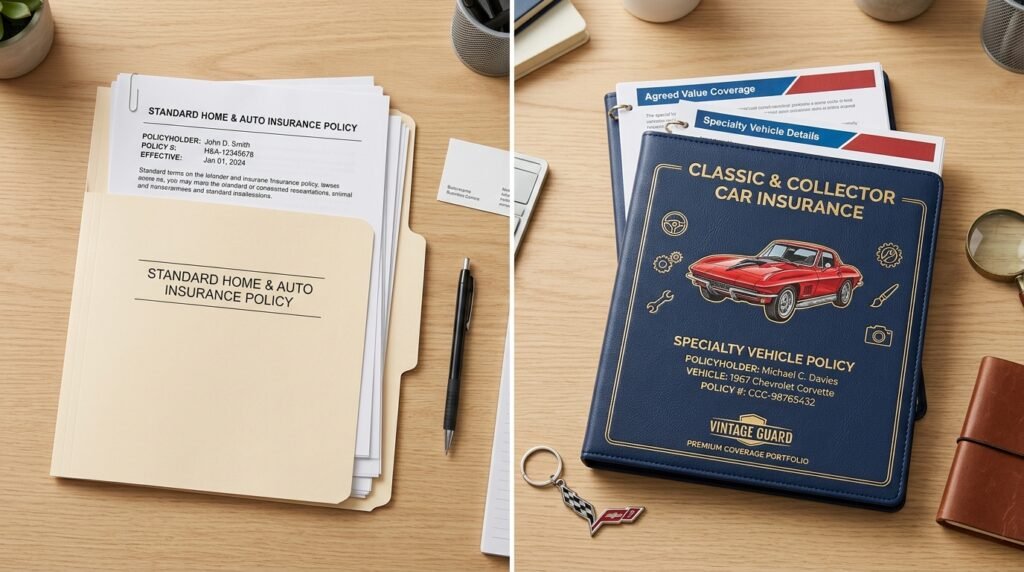
Specialty insurance explained another way: it’s less about “more coverage” and more about “the right coverage.” This is also why you’ll sometimes see it called speciality risk insurance or specialized risk insurance — the whole category exists to price and cover unique risk coverage that a standard actuarial table simply wasn’t built to handle. A standard auto policy might cap a car’s value at its depreciated market price. A specialty policy insures it at agreed value instead — the number you and the insurer settle on upfront, not whatever a claims adjuster decides after the fact.
Specialty Insurance vs. Standard Insurance
The difference comes down to how the policy is underwritten:
- Standard insurance uses fixed formulas and broad risk pools — fast to buy, but rigid.
- Specialty insurance is a genuinely tailored insurance policy, individually underwritten by specialists through a process called specialty underwriting — professionals who understand one specific risk category deeply, rather than insurance in general.
- Many specialty policies also include features standard plans skip entirely, like worldwide insurance coverage for valuables that travel with you, or built-in asset protection insurance language that shields personal wealth from a lawsuit.
- Many specialty insurance companies operate through the excess and surplus (E&S) insurance market — also called the wholesale insurance market — rather than as admitted insurance carriers, which simply means they’re licensed to write non-standard risks that traditional insurers won’t touch.
This E&S corner of the industry has grown fast for a reason. U.S. excess and surplus lines direct premiums reached roughly $86.5 billion in 2023, up from about $75.5 billion the year before, according to S&P Global Market Intelligence — and E&S now makes up close to one-tenth of all U.S. property and casualty premium written. Growth has cooled slightly since its post-2021 highs, but it’s still expanding faster than the standard market, largely because more risks — cyber, environmental, high-value property — keep landing outside what admitted insurers are willing to underwrite.

The 10 Main Types of Specialty Insurance
1. Umbrella Insurance
Umbrella insurance sits on top of your existing home and auto policies, adding extra liability protection once those limits run out. It’s one of the most common forms of excess liability coverage, and it’s often surprisingly affordable for the protection it adds — especially if you own property, host guests often, or simply want a bigger safety net.
2. Collector Car & Classic Car Insurance
If you own a vintage vehicle, collector car insurance protects it very differently than a standard auto policy would. Classic car insurance specialty providers typically offer agreed value coverage, meaning you’re paid the full agreed amount in a total loss — not the depreciated value a standard insurer would calculate. This is the heart of the classic car insurance agreed value vs. actual cash value debate, and agreed value almost always wins for collectible vehicles.
This same logic extends beyond cars. Under the broader umbrella of specialty auto insurance and specialty vehicle insurance, you’ll also find dedicated policies for motorhomes and RVs. Full-time RV insurance differs from standard RV coverage by treating the vehicle as a primary residence, adding liability protection closer to a homeowners policy than a car policy — worth knowing if you’ve swapped a house for the road.
3. Cyber Liability Insurance
Cyber liability insurance covers the financial fallout from data breaches, ransomware, and hacking incidents — legal fees, customer notification costs, and even ransom negotiations. Cyber risk insurance has become one of the fastest-growing specialty lines simply because almost every business, big or small, now stores some kind of sensitive data.
4. Professional Liability (Errors & Omissions) Insurance
Professional liability insurance, also called errors and omissions insurance, protects consultants, freelancers, and service-based businesses if a client claims your advice or work caused them financial harm. It’s different from general liability, which covers physical injury and property damage — professional liability insurance vs. general liability really comes down to “did someone get hurt” versus “did someone lose money because of your work.”
5. Directors and Officers (D&O) Insurance
Directors and officers insurance, or D&O insurance, protects executives and board members personally if the company is sued over a decision they made. It’s a must-have for startups raising outside capital and for nonprofit organizations whose board members are volunteers, not paid risk-takers.
6. Event & Wedding Insurance
Wedding insurance specialty policies and broader event insurance specialty coverage protect against vendor no-shows, venue cancellations, and even extreme weather ruining an outdoor event. Event cancellation insurance is especially popular for destination weddings and festivals, where deposits are large and non-refundable.
7. Entertainment & Performer Insurance
Entertainment insurance, performers insurance, and exhibitor insurance cover musicians, performers, and vendors against equipment damage, liability claims, and cancelled bookings. If you’ve ever wondered how a touring band insures a stage full of expensive gear, this is the answer.
8. Marine & Aviation Insurance
Marine insurance specialty coverage protects boats, yachts, and cargo, while aviation insurance specialty policies cover private aircraft owners and operators. Both are classic examples of maritime risk insurance and aviation risk insurance — categories where a single incident can be catastrophically expensive, so specialist underwriting matters.
Within marine coverage alone, you’ll typically find several distinct products: yacht insurance and charter boat insurance for pleasure and rental vessels, commercial boat insurance for working fleets, cargo insurance for goods in transit, and hull insurance for physical damage to the vessel itself. On the aviation side, aircraft insurance works much the same way — hull coverage plus liability, scaled to whether the plane is privately owned or commercially operated. And if you’re wondering do you need insurance for a jet ski, the short answer is yes in most states, since jet skis are usually excluded from standard homeowners and auto policies entirely.
9. Environmental Liability Insurance
Environmental liability insurance covers contractors, manufacturers, and property owners against pollution cleanup costs and related lawsuits. Contractors pollution liability is a common sub-type, especially for anyone doing excavation, demolition, or site remediation work.
10. High-Net-Worth, Art & Jewelry Insurance
High net worth insurance bundles together art insurance specialty, jewelry insurance specialty, and coverage for other valuables that standard homeowners policies cap at low limits. If you’re renovating a high-value home and want the surrounding structure protected the same way, pairing this with a solid home insurance strategy is a smart move before you finish the project.

Other High-Risk Specialty Niches Worth Knowing
Not every specialty policy fits neatly into the 10 categories above. A handful of niche products come up often enough that they deserve a mention:
- Political risk insurance protects businesses operating internationally against government seizure, currency restrictions, or civil unrest disrupting operations.
- Kidnap and ransom insurance covers negotiation costs and ransom payments for employees traveling in higher-risk regions, often paired with broader crisis management insurance and extortion insurance.
- Terrorism insurance fills a gap that many standard commercial property policies explicitly exclude.
- Renewable energy insurance covers solar farms, wind projects, and similar installations against equipment failure and weather-related losses — a fast-growing niche as more businesses invest in specialty insurance for renewable energy projects.
- Livestock insurance protects farms and ranches against the death or theft of valuable animals, filling a gap that standard farm policies often cap too low.
These are lower-volume searches than umbrella or cyber coverage, but if your situation matches one of them, a generalist broker likely won’t have the right market access — you’ll want someone who places this kind of coverage regularly.

Who Actually Buys Specialty Insurance?
Specialty insurance for high net worth individuals is one common buyer profile, but the list is broader than most people expect. It typically includes:
- Collectors and hobbyists insuring cars, art, or memorabilia
- Business owners, consultants and freelancers covering professional liability
- Executives and directors protecting themselves personally through D&O
- Event organizers planning weddings, festivals, or fundraisers
- Nonprofit organizations with volunteer boards and public events
- Contractors exposed to pollution or environmental liability
- Technology companies managing data breach and cyber exposure
If more than one of these describes you, it’s worth reviewing several specialty lines at once rather than shopping for a single policy in isolation.
This is one of the most searched questions in the space, and understandably so — specialty insurance cost varies enormously depending on the risk. A few general patterns:
- Cyber liability insurance for a small business often runs a modest annual premium, scaling up quickly with revenue and the sensitivity of stored data.
- Classic car insurance is frequently cheaper than standard auto coverage, since collector vehicles are driven less and stored more carefully.
- D&O insurance for startups tends to rise with funding rounds, since bigger valuations mean bigger lawsuits if something goes wrong.
- Event cancellation insurance is usually priced as a percentage of the total event budget, so event cancellation insurance cost for festivals tends to scale with attendance and total production spend.
- Jewelry and art insurance cost is often quoted as a small percentage of the item’s appraised value per year — art insurance in particular is sometimes priced per $1,000 of declared value, which makes it easy to compare quotes side by side.
Because pricing depends so heavily on individual risk factors, treat these as general patterns rather than quotes. Specialty insurance cost per year can shift significantly based on claims history, location, and deductible choice — and understanding your specialty insurance deductible matters just as much as the premium, since a lower deductible usually means a higher annual cost. An independent specialty insurance broker can walk you through exact specialty insurance coverage limits explained for your specific situation. This article is for general education and isn’t personalized financial or insurance advice.
If you’re wondering how to insure collectibles properly, the short version is: get a professional appraisal first, choose agreed value coverage over actual cash value, and update the appraisal every few years as market value shifts. This applies whether you’re looking for the best insurance for rare collectibles like coins and memorabilia, or something as specific as a wine collection or vintage guitar.

How to Choose the Right Specialty Insurance Policy
Picking the right coverage isn’t about buying everything on this list — it’s about matching the policy to your actual risk. A few practical steps:
- List your unique assets and exposures — anything a standard policy wouldn’t fully value or cover.
- Compare admitted vs. non-admitted insurance options, since non-admitted (E&S) carriers often have more flexibility for unusual risks.
- Ask about specialized claims handling — a good specialty insurer should have real experience settling claims in your specific category, not just writing the policy.
- Review loss mitigation services offered alongside the policy, since many specialty insurers help prevent claims, not just pay them.
- Get quotes from more than one specialty insurance broker, since pricing and appetite for risk vary a lot between insurers.
Reducing risk before you even file a claim also helps keep premiums down. For homeowners bundling specialty coverage with a standard policy, small upgrades matter more than people expect — upgrading old electrical panels reduces fire risk substantially, and a working smoke alarm is one of the single most effective (and cheapest) risk reducers in any home. According to NFPA research, a working smoke alarm cuts the risk of dying in a home fire by roughly 60%, yet a fair share of fatal home fires still happen in homes where the alarm was missing or not working. If you haven’t checked yours recently, our smoke detector calculator will tell you exactly how many you need and where to place them — a five-minute check that can lower both your risk and, in some cases, your premium.

Best Specialty Insurance Companies (What to Look For)
Rather than chasing a single “best” name, look for these traits in best specialty insurance providers:
- A.M. Best rating of A- or higher, which signals financial strength to actually pay large claims.
- Deep experience in your specific niche — a broker who insures 500 classic cars a year understands that market better than a generalist.
- Access to the surplus lines insurance market, since the best fit for unusual risks often isn’t an admitted carrier at all.
- Clear crisis response coverage built into the policy, not bolted on as an afterthought.
FAQs: Specialty Insurance
Guidelines on excess & surplus lines, niche property coverage, and specialized liability structures
Source Verifications

Guide Disclaimer And Editorial Disclosures
Educational Purpose Only: The information provided in this Specialty Insurance Guide – 10 Types, Costs & Coverage is for general informational and educational purposes only. It does not constitute formal financial, legal, tax, or underwriting advice.
Coverage & Pricing Variability: Specialty, Excess & Surplus (E&S), and non-admitted insurance policies are highly customized. Actual premium rates, coverage limits, deductibles, exclusions, and policy terms vary significantly based on your specific risk profile, industry, geographical location, and underwriting approval.
No Licensed Broker Relationship: Accessing or reading this guide does not establish a licensed agent-client or broker-client relationship. Before purchasing or altering any specialty insurance coverage, consult directly with a licensed insurance agent, broker, or risk manager to evaluate your specific liabilities.

Final Thoughts
Specialty insurance isn’t about overcomplicating your coverage — it’s about closing the gaps a standard policy was never built to fill. Whether you’re protecting a classic car, a growing business, or a once-in-a-lifetime wedding day, the right specialty policy means one less thing to worry about if life throws a curveball.
Start by listing what you actually own and risk that feels unusual or high-value, then talk to a broker who specializes in that exact niche. A little research now can save you a very expensive surprise later.