Wooden Flooring Guide 2026: Types, Costs, Installation & Care
Few upgrades change how a home feels quite like new wood flooring. But between solid versus engineered, a dozen wood species, installation methods, and a price range wide enough to make your head spin, it’s easy to feel stuck before you’ve even picked a sample.
This wood flooring guide breaks down everything — what you’re actually paying for, which type fits which room, and how to keep it looking good for decades. Whether you’re comparing hardwood floors for the first time or replacing carpet after twenty years, you’ll leave this with a clear plan instead of more questions.
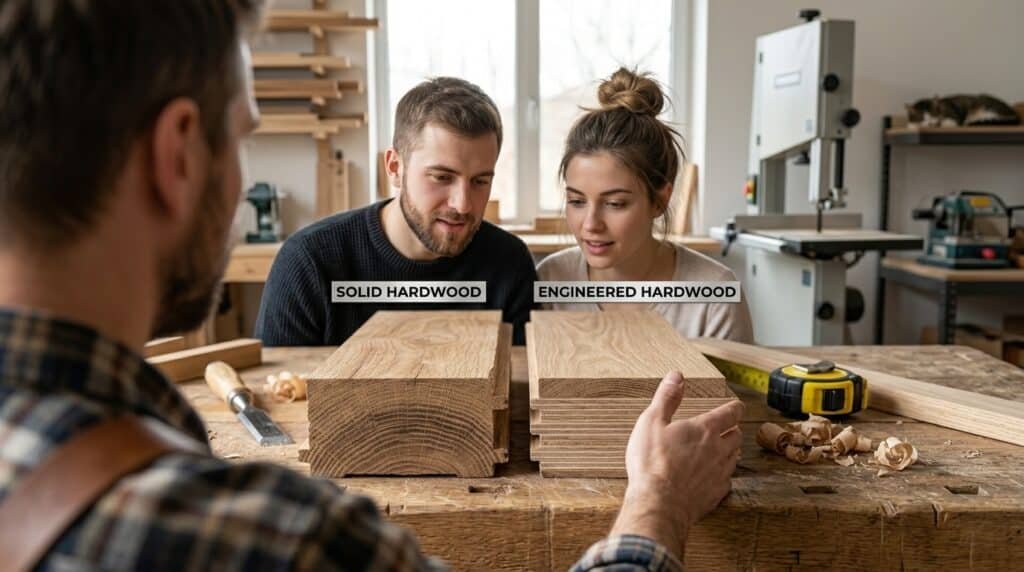
Solid Wood vs. Engineered Wood Flooring: What’s Actually Different
What is engineered hardwood flooring, exactly? It’s a real wood veneer layered on top of a plywood or high-density core, rather than a single solid piece of timber. This construction matters more than it sounds:
- Solid wood flooring is one piece of timber top to bottom, can be sanded and refinished many times over its life, but reacts more to humidity and temperature swings.
- Engineered wood flooring is more dimensionally stable thanks to its layered core, making it a better fit for basements, over concrete, or homes with radiant heat — though it can typically only be refinished a limited number of times depending on veneer thickness.
The veneer vs. solid wood decision really comes down to where the floor is going. Engineered wood in basement installations is common precisely because solid wood struggles with the moisture and temperature variation typical of below-grade spaces.
One more distinction worth knowing before you shop: unfinished hardwood flooring is sanded and coated on-site after installation, giving a perfectly seamless, custom-stained result but adding time and mess to the project. Prefinished hardwood flooring (sometimes written pre-finished hardwood flooring) arrives already sanded and sealed at the factory, which means a faster install with no downtime waiting for finish to cure, though seams between boards are slightly more visible. Installation method matters too — nail-down wood flooring is the traditional approach for solid wood over a wood subfloor, while floating floorboards click together and rest on top of an underlayment without being fixed to the subfloor at all, which is why floating installation has become the default for engineered wood over concrete.

Standard Wood Species And Cost Breakdown
🪵 Key Selection Insights:
- Red Oak vs. White Oak: Red oak features warmer tones with a pronounced grain pattern. White oak offers cooler undertones and a more subtle grain, driving the popularity of engineered and rustic white oak flooring in modern interiors.
- Durability Rating: For peak impact resistance, hickory and hard maple rank highest on the Janka hardness scale among domestic species—making them ideal for high-traffic homes with pets and kids.

Real Cost Breakdown: What Wood Flooring Actually Costs
[Image Prompt: Flooring contractor reviewing cost estimate with wood samples spread on a table, photorealistic, natural indoor lighting]
How much does hardwood flooring cost per square foot is one of the most common questions homeowners ask, and the honest answer is: it depends heavily on species, plank width, and installation complexity. Based on current national data, most installed hardwood flooring falls in the $6 to $25 per square foot range, including both materials and labor:
- Budget tier ($6–$10/sq ft): Simple layouts, minimal subfloor prep, domestic species like red oak
- Mid-range ($10–$16/sq ft): The most common real-world scenario — some subfloor work, standard trims and transitions
- Premium ($16–$25+/sq ft): Wide planks, exotic species, herringbone or chevron patterns, and more detailed finishing work
For cost to install 1000 sq ft hardwood floors, that typically lands between $10,000 and $16,000 for a mid-range project, though budget installs can come in closer to $6,000–$10,000. How much does it cost to replace carpet with hardwood usually adds a modest removal and disposal fee on top of standard installation pricing, plus potential subfloor leveling if the concrete or plywood underneath isn’t perfectly flat. Herringbone wood flooring installation cost runs meaningfully higher than a straight-lay pattern — often 20-30% more — since the cutting and fitting takes considerably longer.
If you’re planning the numbers side of a flooring project, our flooring calculator and wooden flooring size guide help estimate exactly how much material you’ll need before you order, and our construction loans overview is worth a look if flooring is part of a larger renovation budget.

How to Install Hardwood Flooring on Concrete
How to install hardwood floors on concrete is one of the most searched installation questions, and for good reason — concrete subfloors need extra prep that wood-framed floors don’t:
- Test for moisture using a calcium chloride test or moisture meter before anything else; excess moisture is the number one cause of installation failures on concrete.
- Install a vapor barrier, since concrete slabs, especially at grade or below grade, can wick moisture upward over time.
- Choose floating or glue-down installation rather than nail-down, since you can’t nail into concrete the way you would into a wood subfloor.
- Acclimate the flooring to the room’s humidity and temperature for several days before installation, following the manufacturer’s specific guidance.
The floating wood floor vs. glue down decision matters here specifically: floating floors click together and rest on an underlayment without being fixed to the subfloor, making them faster to install and easier to replace individual boards later. Glue-down installation bonds the flooring directly to the concrete, which offers a slightly more solid underfoot feel but is more labor-intensive and harder to repair. The National Wood Flooring Association publishes detailed installation guidelines covering subfloor requirements, acclimation timing, and moisture testing that most professional installers follow as the industry standard.

Which Way Should Wood Flooring Run?
Which direction to lay wooden flooring isn’t just an aesthetic question — it affects how a room feels and how the floor performs structurally:
- Running boards parallel to the longest wall typically makes a room feel longer and more spacious.
- Running boards perpendicular to floor joists (rather than parallel) generally provides better structural support and reduces flexing over time.
- In open-concept homes, keeping flooring direction consistent between rooms creates visual flow rather than a choppy, segmented look.

Hardwood vs. Laminate vs. LVP: How They Actually Compare
Before committing to wood, it’s worth knowing how it stacks up against the two most common budget-friendly alternatives, since hardwood floor vs. laminate vs. engineered is one of the most common comparisons homeowners research:
- Real hardwood offers genuine resale value and can be refinished repeatedly, but costs the most and is more sensitive to water and humidity.
- Laminate is a printed image layer over a fiberboard core — it looks like wood at a glance but isn’t real wood at all, and can’t be refinished if it’s scratched or damaged.
- Luxury vinyl plank (LVP) is fully waterproof and often more affordable than engineered wood, making the LVP vs. engineered hardwood decision genuinely close for kitchens, bathrooms, and basements where moisture is the deciding factor.
If your priority is the look of wood rather than resale value or refinishing ability, LVP or a quality laminate can be a smart, budget-conscious swap — just know you’re trading real wood’s resale appeal and repairability for water resistance and a lower upfront cost.

Wood Flooring Dimensions and Plank Sizes
Hardwood floor thickness typically ranges from 3/4 inch for solid wood down to 3/8 or 1/2 inch for engineered products, with thicker engineered flooring generally allowing for more refinishing over its lifetime. Wooden flooring plank size varies by style too — traditional strip flooring runs about 2 1/4 inches wide, while wider plank styles reach 5 or 7 inches for a bolder, modern look. Right in between sits 3 inch hardwood flooring, a popular middle ground between classic strip flooring and today’s wide-plank trend. Wider planks generally cost more and show more natural grain character, but they’re also less forgiving of subfloor imperfections and seasonal gaps.

Wood Flooring Patterns Beyond Straight Planks
Types of wooden flooring patterns go well beyond simple straight-lay boards:
- Herringbone — boards laid in a zigzag, interlocking pattern, classic and increasingly popular in 2026 interiors
- Chevron wooden flooring — similar to herringbone but with mitered angled cuts creating a continuous V pattern, generally the more expensive and labor-intensive of the two
- Parquet flooring — geometric patterns using smaller wood pieces arranged in repeating designs, often associated with traditional and formal spaces

Hardwood Floor Finishes and Styles
Finish and color trends shift, but a few categories consistently dominate:
- Matte floor finish — increasingly popular for a natural, low-shine look that hides scratches and dust better than glossy finishes
- High gloss hardwood floors — a more traditional, formal look, though they show scuffs and dust more readily
- Polyurethane finished wood floors — the most common protective topcoat, available in both oil-based and water-based formulas
- Dark wooden flooring — dramatic and cozy, though it shows dust and pet hair more visibly than lighter tones
- Light wood floors — currently trending for their ability to make small spaces feel larger and brighter
For warm earth tone wood floor colors trending this year, look toward brushed oak and mid-tone walnut finishes rather than the very dark espresso tones popular a decade ago. Kitchens with wood floors and living rooms with hardwood floors remain the two most common (and most requested) applications — a dark wood floor kitchen pairs well with white or light cabinetry for contrast, while a light wood floor living room tends to make the space feel airier and larger. Wood floors in dining room spaces hold up well since foot traffic there is generally lighter than a kitchen, and a timber floor bedroom is one of the coziest, most requested upgrades homeowners make. Hardwood floor entryway installations take the most abuse of any room — grit, moisture, and heavy traffic all concentrate right at the front door, so a harder species and a durable finish matter more there than almost anywhere else in the home. Hardwood floor stairs need a non-slip finish option or runner, since bare wood treads can become genuinely dangerous when slightly worn or polished too high-gloss. Bathroom timber flooring requires careful moisture-resistant engineered products or specifically rated waterproof wooden flooring given the humidity involved.
If you’re deciding between tile or hardwood in kitchen spaces, tile wins on water resistance while wood wins on warmth and resale appeal in open-concept homes where the kitchen flows directly into living space — many homeowners split the difference with waterproof engineered planks instead of committing to either extreme.

Maintenance, Cleaning & Refinishing
Hardwood floor maintenance and care is mostly about prevention rather than intensive cleaning:
- Sweep or vacuum regularly to prevent grit from scratching the finish
- Wipe spills immediately, especially on solid wood, which is more moisture-sensitive than engineered
- Use furniture pads under heavy items to prevent dents and scratches
- Avoid steam mops, which can force moisture into seams and damage the finish over time
For how to clean wood floors without damaging finish, a slightly damp microfiber mop with a pH-neutral wood floor cleaner is the safest bet — avoid vinegar-based or ammonia-based cleaners, both of which can dull polyurethane finishes over repeated use. Our eco-friendly wood floor cleaning guide covers gentler cleaning options in more depth if you’re trying to avoid harsh chemicals.
Wood floor maintenance tips for pet owners specifically: keep nails trimmed to reduce scratching, choose a harder wood species like hickory or maple if you’re installing new floors in a home with dogs, and clean up accidents immediately since urine can both stain and warp wood over time.
Can you refinish prefinished hardwood floors? Yes, in most cases — prefinished floors can be sanded and refinished just like site-finished floors, though very thin veneer engineered products have limits on how many times this can be done. Price to refinish hardwood floors runs considerably less than replacement — typically $3 to $8 per square foot versus $6 to $25 for new flooring — making wood floor refinishing cost vs. replacement an easy decision when the existing floor is structurally sound but just cosmetically tired.
Staining hardwood floors during a refinish is where you get to change the look entirely, and colors of stain for wood floors range from natural and honey tones through gray-washed and deep espresso finishes — always test a sample patch first, since the same stain can look noticeably different on red oak versus white oak due to how each species absorbs pigment. Once staining is done, a topcoat wood floor coating like polyurethane or a hardwax oil seals and protects the surface; oil for wooden flooring finishes penetrate the wood itself rather than sitting on top, giving a more natural look that’s easier to spot-repair but needs reapplication more often than polyurethane. A quality floor polish for wood can extend time between full refinishes by restoring shine to a finish that’s dulling but not yet damaged. If boards have developed seasonal gaps, a flexible wooden flooring gap filler color-matched to your floor is a simple fix that doesn’t require sanding the whole room.
Two small but genuinely useful accessories round out most flooring projects: a wooden flooring transition strip bridges the height or material change between rooms (say, wood meeting tile or carpet), and wood stair caps (also called stair nosing) finish the edge of each step in a matching species and finish, since standard flooring boards aren’t designed to wrap a stair edge safely on their own.
If your floors are creaking or making noise beyond normal wear, that’s usually a subfloor or fastening issue rather than something refinishing will fix — our guide to noisy wood floors walks through the most common causes before you call in a professional.

Is Laminate or Vinyl Flooring Toxic? What You Should Know
Is laminate flooring toxic and is vinyl flooring toxic are questions worth taking seriously, especially for households with kids, pets, or anyone sensitive to chemical smells. According to the EPA’s overview of volatile organic compounds, VOC concentrations indoors can run several times higher than outdoors, and building materials, adhesives, and finishes are a recognized contributing source. In practice, this means:
- Laminate flooring can off-gas formaldehyde from its adhesive layers, particularly in the weeks right after installation
- Vinyl flooring may release VOCs from plasticizers used in manufacturing
- Solid and engineered hardwood generally emit fewer VOCs from the wood itself, though stains and finishes applied on-site still contribute
Looking for GREENGUARD Gold or FloorScore certification on any flooring product — laminate, vinyl, or engineered wood — is the most reliable way to choose a lower-emission option, and running good ventilation for the first week or two after any flooring installation meaningfully reduces exposure regardless of material.

A Quick Word on Fire Safety During Refinishing Projects
Sanding and refinishing hardwood floors involves fine wood dust and, often, oil-based polyurethane finishes — both of which are genuinely flammable and have contributed to real house fires during DIY refinishing projects, usually from rags improperly disposed of or finish fumes near an open flame or pilot light. If you’re taking on a refinishing project, let rags dry flat outdoors before disposal, and ventilate the space thoroughly rather than sealing it up while fumes are still present.
It’s also a smart moment to confirm your home’s smoke alarms are actually working — National Fire Protection Association research shows a working smoke alarm cuts the risk of dying in a home fire by roughly 60%, and a refinishing project involving solvents and dust is exactly the kind of activity where that protection matters most. Our smoke detector calculator tells you how many alarms your home actually needs and where to place them.
FAQs: wooden Flooring
Essential guide to solid vs. engineered wood, costs, subfloors, and maintenance

Final Thoughts
Choosing wood flooring doesn’t have to feel overwhelming once you break it into the decisions that actually matter: solid versus engineered based on where it’s going, a species that fits your budget and traffic level, and a finish that matches how you actually live. The right choice isn’t the most expensive option — it’s the one that fits your specific room, climate, and household.
Take the time to get samples in your actual lighting before committing, and don’t be afraid to ask installers directly about subfloor prep, since that’s where most flooring problems actually start. A well-chosen, well-installed wood floor is genuinely one of the longest-lasting investments you can make in a home.