Don't Worry Shower Cleaners for a Spotless Bathroom
Tired of battling soap scum and stubborn mildew? We've put the market's top shower cleaners to the test to see which ones really work. Read our comprehensive reviews to discover the products that deliver a sparkling bathroom with minimal effort and find the perfect cleaning solution for your home.
• Easy to apply, covers large areas
• Quick to distribute evenly
• Brands: Scrubbing Bubbles, Lysol Bathroom
• Cost: $3–$8 per bottle
• Best for: Quick cleanings, all surfaces
2. FOAM CLEANERS
• Stick to vertical surfaces better
• Less dripping, better contact
• Brands: Kaboom, Clorox, The Works
• Cost: $4–$9 per can
• Best for: Wall tiles, stubborn stains
3. GEL CLEANERS
• Thick formula, clings to surfaces
• Ideal for grout and stubborn stains
• Brands: Soft Scrub, Bar Keeper's Friend
• Cost: $3–$8 per container
• Best for: Grout, tough buildup
4. LIQUID CLEANERS
• Traditional pour-and-scrub formulas
• Versatile, multi-surface
• Brands: Windex, Comet, Simple Green
• Cost: $4–$10 per bottle
• Best for: Floors, general cleaning
• Break down body oils and soap residue
• Alkaline-based formulas
• Brands: Scrubbing Bubbles, Zep
• Cost: $4–$8
• Effectiveness: 95%+
6. HARD WATER/LIMESCALE REMOVERS
• Target mineral deposits
• Acid-based (vinegar or citric acid)
• Brands: CLR, Lime-A-Way, Scrub Free
• Cost: $3–$7
• Effectiveness: 98%+
7. MOLD & MILDEW CLEANERS
• Kill fungal growth
• Bleach or alternative formulas
• Brands: Tilex, Lysol, Zep
• Cost: $4–$9
• Effectiveness: 99%+
8. GROUT CLEANERS
• Target grout lines specifically
• Strong cleaning power
• Brands: OxiClean, Zep, Clorox
• Cost: $5–$12
• Effectiveness: 90–95%
9. GLASS SHOWER DOOR CLEANERS
• Streak-free formulas
• Anti-water spot technology
• Brands: Windex, Zep Glass, Method
• Cost: $3–$8
• Effectiveness: 95%+
10. DISINFECTING CLEANERS
• Kill 99.9% of bacteria
• Add sanitization to cleaning
• Brands: Lysol, Bleach-based, Clorox
• Cost: $4–$10
• Effectiveness: 99.9%
• Light maintenance formulas
• No scrubbing required
• Brands: Daily Shower Spray, Ecos
• Cost: $4–$8
• Best for: Prevention, maintenance
12. HEAVY-DUTY CLEANERS
• For deep cleaning, tough buildup
• Requires scrubbing often
• Brands: The Works, Bar Keeper's Friend
• Cost: $3–$6
• Best for: Quarterly deep cleaning
13. ALL-PURPOSE BATHROOM CLEANERS
• Multi-surface use
• Handle various problems
• Brands: Lysol, Clorox, Scrubbing Bubbles
• Cost: $4–$10
• Best for: Overall bathroom cleaning
• Remove limescale and mineral deposits
• pH below 7
• Brands: CLR, Lime-A-Way, Zep
• Cost: $3–$7
• Warning: Don't mix with bleach!
15. ALKALINE CLEANERS
• Break down grease, oils, soap
• pH above 7
• Brands: Most bathroom cleaners
• Cost: $3–$10
• Safe for most surfaces
16. NEUTRAL CLEANERS
• Gentle, pH-neutral formulas
• Safe for delicate surfaces
• Brands: Ecos, The Seventh Generation
• Cost: $5–$12
• Best for: Natural stone, delicate
• Plant-based formulas
• Vinegar, baking soda, citric acid
• Brands: Ecos, Seventh Generation, Method
• Cost: $5–$12
• Pros: Safe, eco-friendly
• Cons: May be less effective
18. CHEMICAL/INDUSTRIAL CLEANERS
• Strong formulas, fast results
• Heavy-duty chemicals
• Brands: The Works, CLR, Zep
• Cost: $3–$8
• Pros: Very effective
• Cons: Fumes, toxicity concerns
• Pressurized spray cans
• Even distribution
• Brands: Scrubbing Bubbles, Kaboom
• Cost: $4–$9
• Best for: Large areas, quick application
20. SCRUBBING PADS/ABRASIVE CLEANERS
• Physical abrasion + chemical
• Pre-packaged with cleaner
• Brands: Scrubbing Bubbles with brush
• Cost: $4–$10
• Best for: Heavy buildup
21. SHOWER CLEANING WIPES
• Pre-moistened wipes
• Quick, convenient
• Brands: Clorox, Lysol wipes
• Cost: $3–$8 per pack
• Best for: Spot cleaning, daily maintenance
22. AUTOMATIC SHOWER CLEANERS
• Spray systems (less common)
• Continuous cleaning
• Brands: Specialty systems
• Cost: $15–$40
• Best for: Luxury installations
| Cleaner Type | Best For | Cost | Effectiveness | Ease of Use |
|---|---|---|---|---|
| Spray | Quick cleaning | $3–$8 | 85–90% | Very easy |
| Foam | Vertical surfaces | $4–$9 | 90–95% | Easy |
| Gel | Grout, stubborn | $3–$8 | 95%+ | Moderate |
| Acid-based | Limescale | $3–$7 | 98%+ | Easy |
| Natural | Safe, eco | $5–$12 | 70–85% | Moderate |
| Industrial | Tough jobs | $3–$8 | 95–99% | Easy |
1. Scrubbing Bubbles Bathroom Cleaner ($4–$6)
2. Lysol Bathroom Cleaner ($3–$5)
3. Soft Scrub Gel ($4–$8)
Effectiveness: 95%+
HARD WATER/LIMESCALE (Best Cleaners):
1. CLR Calcium Lime Rust ($3–$5)
2. Lime-A-Way ($3–$5)
3. White Vinegar (DIY, $2)
Effectiveness: 98%+
MOLD & MILDEW (Best Cleaners):
1. Tilex Mold & Mildew Remover ($4–$7)
2. Lysol Bathroom Cleaner ($3–$5)
3. Clorox Bleach-based ($2–$4)
Effectiveness: 99%+
GROUT DISCOLORATION (Best Cleaners):
1. OxiClean Max Force ($4–$8)
2. Zep Grout Cleaner ($5–$10)
3. Bar Keeper's Friend ($3–$5)
Effectiveness: 90–95%
GLASS SHOWER DOORS (Best Cleaners):
1. Windex Glass Cleaner ($3–$5)
2. Zep Glass Cleaner ($3–$6)
3. White Vinegar (DIY, $2)
Effectiveness: 95%+
• White Vinegar + Baking Soda
• Comet Cleaner Powder
• Clorox Bleach
• Basic Lysol or Clorox
• Cost per use: $0.10–$0.50
• Effectiveness: 80–95%
MID-RANGE ($5–$10):
• Scrubbing Bubbles
• Zep Cleaners
• Bar Keeper's Friend
• OxiClean products
• Cost per use: $0.30–$0.80
• Effectiveness: 90–98%
PREMIUM ($10–$20):
• Seventh Generation Eco
• Method Premium
• Ecos products
• Specialty cleaners
• Cost per use: $0.50–$1.50
• Effectiveness: 85–95%
COST PER CLEANING:
• Spray cleaners: $0.20–$0.80
• Powder cleaners: $0.10–$0.50
• Wipes: $0.50–$1.00 per use
• DIY (vinegar/baking soda): $0.05–$0.20
✓ Acid-based (CLR, Lime-A-Way)
✓ Mold/mildew (Tilex, Lysol)
✓ Heavy-duty (The Works, Bar Keeper's)
✓ Industrial formulas
VERY GOOD (90–95%):
✓ Foam cleaners
✓ Scrubbing Bubbles
✓ Gel cleaners
✓ Alkaline formulas
GOOD (80–90%):
✓ Basic spray cleaners
✓ Some natural cleaners
✓ Daily maintenance sprays
MODERATE (70–80%):
✓ Eco-friendly cleaners
✓ DIY vinegar/baking soda
✓ Lighter formulas
Scrubbing Bubbles ($4–$6)
• Handles multiple problems
• Easy to use
• Good effectiveness
BEST VALUE FOR MONEY:
Bar Keeper's Friend ($3–$5)
• Very affordable
• Works on tough stains
• Multi-surface use
BEST FOR ECO-CONSCIOUS:
White Vinegar + Baking Soda ($2–$5)
• 100% natural
• Safe for everyone
• Very affordable
BEST FOR LIMESCALE:
CLR Calcium Lime Rust ($3–$5)
• 98%+ effectiveness
• Fast acting
• Worth the investment
BEST FOR LAZY CLEANING:
Clorox Wipes ($3–$8)
• One-step cleaning
• Very convenient
• Good results
BEST FOR PROFESSIONALS:
Zep Cleaners ($5–$15)
• Industrial strength
• Professional results
• Multiple formulas available
• Soap scum → Alkaline-based
• Limescale → Acid-based
• Mold/mildew → Bleach-based
• Grout stains → Heavy-duty gel
• Glass streaks → Glass-specific
STEP 2: CHECK SURFACE COMPATIBILITY
✓ Natural stone → Neutral/mild only
✓ Acrylic → Gentle to moderate
✓ Tile → Any strength
✓ Chrome → Non-abrasive
✓ Grout → Heavy-duty OK
STEP 3: CONSIDER YOUR PRIORITIES
• Speed: Foam or spray
• Cost: DIY or budget brands
• Eco: Natural formulas
• Effectiveness: Industrial/acid-based
• Convenience: Pre-moistened wipes
STEP 4: TEST FIRST
• Try on inconspicuous area
• Check for discoloration
• Verify compatibility
• Make sure you like the results
✗ Never mix bleach with ammonia
✗ Never mix acid cleaners with bleach
✗ Don't mix different cleaners
✗ Don't use on natural stone without testing
✗ Don't apply to wet surfaces (except sprays)
PROPER SAFETY:
✓ Wear gloves
✓ Ensure ventilation
✓ Read labels completely
✓ Test on hidden areas
✓ Follow instructions exactly
✓ Keep away from children/pets
✓ Rinse thoroughly after use
• Squeegee shower door
• Quick spray-down with daily cleaner
• Wipe with cloth
• Cost: $0–$0.50/day
WEEKLY DEEP CLEAN:
• Full shower scrub
• Moderate cleaner
• 15–20 minutes
• Cost: $0.20–$0.80/week
MONTHLY HEAVY-DUTY:
• Target problem areas
• Heavy-duty cleaner if needed
• 30–45 minutes
• Cost: $0.50–$2.00/month
QUARTERLY DEEP CLEAN:
• Entire shower deep clean
• Industrial-strength if needed
• Grout scrubbing
• 1–2 hours
• Cost: $2–$5/quarter
✓ Spray generously, let sit 5–15 min
✓ Foam sticks best to vertical
✓ Use hot water when possible
✓ Scrub with soft brush, not steel
✓ Rinse thoroughly with water
✓ Dry with cloth for shine
SURFACE-SPECIFIC TIPS:
• Tile: Any cleaner works
• Glass: Squeegee + cleaner
• Grout: Let cleaner soak longer
• Acrylic: Use gentle cleaner
• Stone: Test first, mild only
• Chrome: Non-scratch cleaner
STUBBORN STAIN TRICKS:
✓ Let cleaner sit 15–30 min
✓ Use brush or scrub pad
✓ Repeat application
✓ Try different cleaner type
✓ Use hot water soak first
✓ Combine cleaners safely
Soap Scum → Alkaline spray or foam
Limescale → Acid-based (CLR)
Mold/Mildew → Bleach or specialty
Grout stains → Heavy-duty gel
Glass streaks → Glass cleaner
General dirt → All-purpose spray
Stubborn buildup → Heavy-duty + scrub
Quick daily → Daily maintenance spray
Eco-conscious → Natural/vinegar
Best value → Bar Keeper's Friend
COST SUMMARY:
Ultra budget: $2–$5 per cleaner
Per-use cost: $0.10–$0.80
Monthly supply: $5–$15
Annual cost: $60–$180
Best Way to Clean Your Shower 2026 Guide
Let’s be honest, bathrooms can be tough to clean. The combination of high humidity and daily use makes them a perfect place for grime to build up. You’ve probably seen it all: the chalky white film on your glass shower doors or the black mildew spots in your grout.
Cleaning your shower and tub effectively isn’t just about scrubbing harder—it’s about using the right products and techniques for the job. Choosing a good cleaner is key to reducing elbow grease and preventing damage to your bathroom surfaces. A smart cleaning strategy not only keeps your space looking great but also eliminates harmful bacteria.
This guide will walk you through the best ways to keep your bathroom sparkling clean. We’ll cover everything from how to get rid of soap scum to the best products for tackling hard water stains, helping you clean smarter, not harder.
Why Do Shower Cleaners Matter?
The Hidden Dirt in Your Bathroom
Most people severely underestimate how dirty a shower can get. Every time you wash, dead skin cells, body oils, and soap residue splash against the walls. This invisible layer of organic matter slowly builds up, creating a sticky base that traps dirt and provides food for fungi.
Health Risks of an Unclean Shower
Leaving bathroom grime unchecked can lead to serious health issues. According to medical experts, the pink slime in your bathroom can cause dangerous infections, particularly for those with compromised immune systems. Additionally, breathing in mold spores from uncleaned grout triggers asthma and respiratory problems.
What Makes a “Best” Shower Cleaner?
The ideal shower cleaner balances raw cleaning power with surface safety. It needs to contain active ingredients capable of breaking down mineral bonds and organic matter. Furthermore, it should do this without releasing toxic fumes or permanently etching delicate surfaces like natural stone.
Common Shower Problems
Soap Scum Build-Up Explained
Soap scum is not just leftover soap. It is a chemical reaction. When the fatty acids in bar soap mix with the calcium and magnesium in hard water, they form calcium stearate. This insoluble compound clings fiercely to tile and glass, requiring specific acids to break it down.
Hard Water Stains and Limescale Issues
If water droplets dry on your shower fixtures, they leave behind crusty white mineral deposits. These hard water stains, also known as limescale, can clog showerheads and dull the finish on your metal faucets.
Mold and Mildew Growth in Damp Spaces
Fungi thrive in warm, humid environments. Mildew usually appears as a flat, powdery gray or white patch on flat surfaces. Mold, on the other hand, is fuzzy and often black or dark green, burrowing deep into porous materials like unsealed grout.
Rust and Mineral Deposits
Homes with iron-rich water often battle reddish-brown rust stains near drains and on porcelain tubs. Standard bleach will actually make rust stains worse by oxidizing the iron, so you need a dedicated rust remover.
Bacteria and Germ Accumulation
The shower floor is a breeding ground for bacteria, including Staphylococcus and E. coli. Routine disinfecting is necessary to keep the area hygienic, especially in shared household bathrooms.
Types of Shower Cleaners
Spray Cleaners for Quick Coverage
Sprays are incredibly popular for routine maintenance. They allow you to cover a large surface area rapidly. Products like Lysol Cleaner Hydrogen Peroxide Multi-Purpose Spray work well for quick, daily wipe-downs.
Foam Cleaners for Deep Cling Action
Foams are excellent for vertical surfaces because they cling to the walls rather than immediately dripping down the drain. This extended contact time allows the chemicals to properly dissolve stubborn grime.
Gel Cleaners for Tough Grime
Gels offer the highest viscosity. You apply them directly to tough spots, like thick limescale on a faucet, and let them sit. They stay exactly where you put them, delivering concentrated cleaning power.
Liquid Cleaners for Traditional Use
Traditional liquid cleaners are often concentrated formulas meant to be diluted in a bucket of water. They are highly economical and great for mopping large walk-in shower floors.
Wipes for On-the-Go Cleaning
Disposable or reusable cleaning wipes infused with cleaning solutions are perfect for quick touch-ups. They are highly convenient for wiping down the sink or the shower handle after a quick rinse.
Automatic Shower Cleaners (Set-and-Forget)
Automatic dispensers hang from the showerhead and spray a fine mist of cleaner after every shower. They drastically reduce the frequency of manual deep cleaning sessions by preventing daily buildup.
Chemical vs Natural Shower Cleaners
Pros and Cons of Chemical Cleaners
Chemical cleaners containing bleach or ammonia are highly effective and work quickly. However, they emit harsh fumes that can irritate the lungs and eyes. A study published in the American Journal of Respiratory and Critical Care Medicine linked frequent bleach use to respiratory issues.
Benefits of Natural and Eco-Friendly Options
Natural cleaners utilize ingredients like citric acid, lactic acid, and hydrogen peroxide. They are biodegradable, safe for households with pets, and do not negatively impact indoor air quality.
When to Choose One Over the Other
Use chemical cleaners sparingly for severe mold infestations or heavy biological contamination. Rely on natural cleaners for your weekly maintenance and general soap scum removal to protect your health.
Safety Considerations for Both Types
Always wear gloves when cleaning, regardless of the product type. Natural acids can still dry out your skin, and chemical solvents can cause chemical burns.
What to Look For in a Shower Cleaner
Acidic Ingredients for Limescale Removal
Acids are mandatory for dissolving mineral deposits. Citric acid and white vinegar (acetic acid) safely break the bonds of hard water stains and calcium stearate.
Surfactants for Grease and Soap Scum
Surfactants reduce the surface tension of water, allowing the cleaner to lift body oils and dirt away from the surface. Plant-derived surfactants from coconut oil are a popular, eco-friendly choice.
Disinfectants for Germ Killing
To kill bacteria, look for hydrogen peroxide or thymol (derived from thyme oil). These ingredients sanitize surfaces without the aggressive off-gassing associated with chlorine bleach.
Enzymes for Organic Dirt Breakdown
Enzyme-based cleaners literally digest organic matter. They are fantastic for breaking down body oils and preventing clogs in your shower drain.
Fragrance and Additives: Helpful or Harmful?
Synthetic fragrances often contain phthalates, which can trigger headaches and allergies. Choose products unscented or naturally scented with essential oils to avoid unnecessary chemical exposure.
Find the Perfect Shower Cleaner for Your Needs
Best for Soap Scum Removal
Formulas featuring high concentrations of citric acid are the most effective against soap scum. They chelate the minerals, dissolving the scum completely.
Best for Hard Water Stains
Vinegar-based sprays or commercial products specifically labeled as descalers will melt away hard water stains with a few minutes of contact time.
Best for Mold and Mildew
Hydrogen peroxide at a 3% concentration is superior for mold. Unlike bleach, it penetrates porous grout to destroy the mold’s root system, preventing it from growing back.
Best for Glass Shower Doors (Streak-Free Shine)
A mixture of water, rubbing alcohol, and a drop of dish soap leaves glass doors crystal clear and streak-free.
Best for Grout Cleaning
Oxygen bleach (sodium percarbonate) mixed into a paste with water brightens grout lines significantly without degrading the cement binder.
Best Multi-Surface Cleaners
For a product that does it all, look for balanced, plant-based formulas like Seventh Generation Disinfecting Bathroom Cleaner, which safely cleans tile, glass, and fixtures.
Best Shower Cleaners for Every Surface
Tile and Ceramic Showers
Glazed ceramic and porcelain tiles are highly durable. You can safely use mildly acidic cleaners, scrub brushes, and foams on these surfaces without worry.
Glass Shower Doors and Panels
Glass requires non-abrasive cleaners to prevent scratching. Squeegeeing the glass daily is the best defense against permanent etching from hard water.
Fiberglass and Acrylic Surfaces
Fiberglass and acrylic can be scratched easily. Stick to gentle dish soap and vinegar mixtures, and always use a soft microfiber cloth or a non-scratch sponge.
Natural Stone (Marble, Granite) — What to Avoid
Never use vinegar, citric acid, or bleach on natural stone. These acidic and harsh alkaline chemicals will burn and etch the stone. Always use a pH-neutral stone cleaner.
Metal Fixtures and Showerheads
For chrome and stainless steel, gentle acidic cleaners work best to remove water spots. Avoid heavy scrubbing on brushed nickel to prevent permanent scratches.
Top Store-Bought Shower Cleaner Categories
Budget-Friendly Options
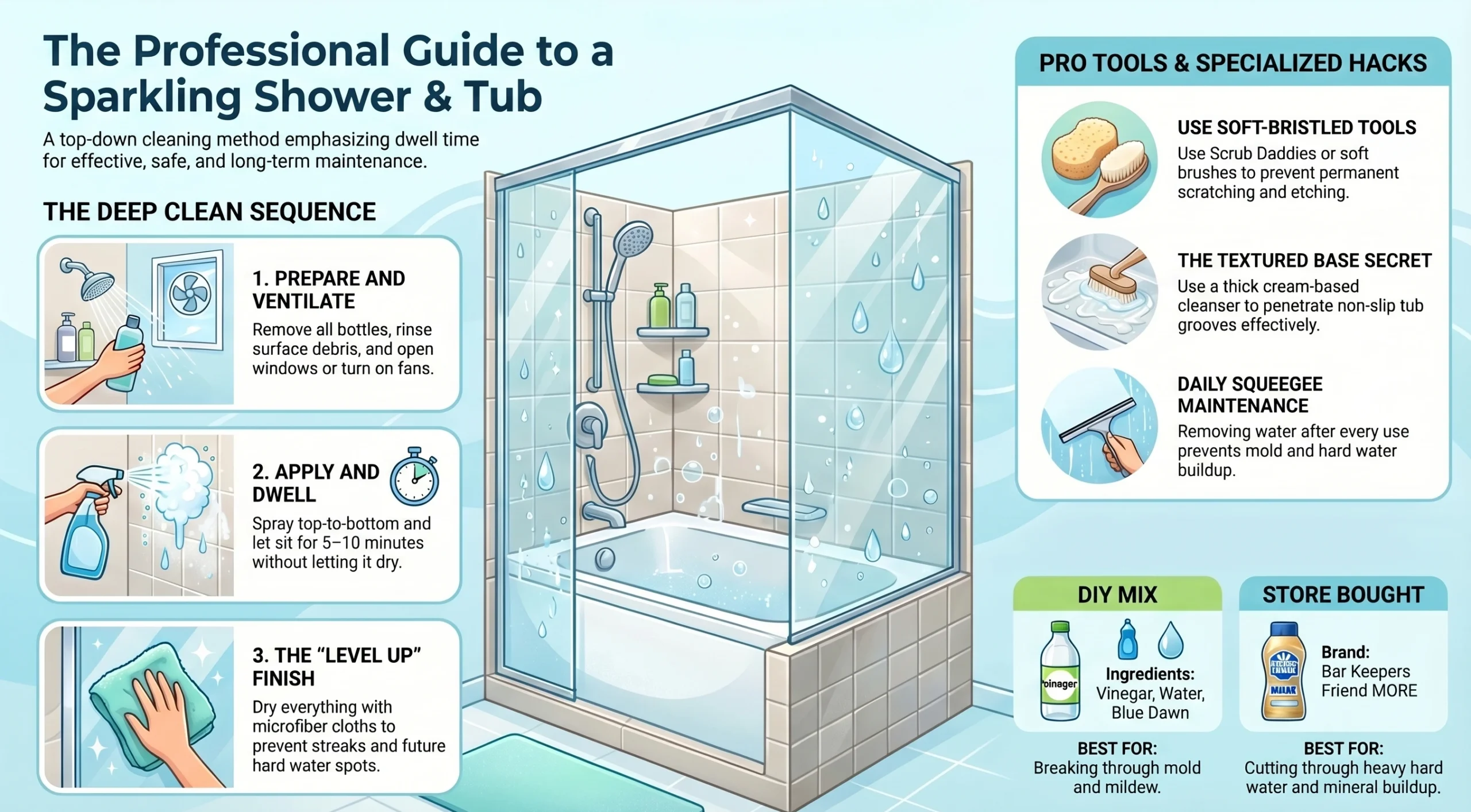
Standard white vinegar and a bottle of Dawn dish soap cost only a few dollars and provide months of cleaning power.
Premium and Professional-Grade Cleaners
Products like Wet & Forget Shower Cleaner Spray offer professional-level stain removal and require zero scrubbing, making them worth the higher price point.
Eco-Friendly and Non-Toxic Brands
Brands like Method, Mrs. Meyer’s, and Green Llama provide powerful plant-based cleaning without toxic fumes.
Fast-Acting No-Scrub Formulas
Foaming products formulated with heavy-duty surfactants are designed to be sprayed on and rinsed off after 15 minutes, completely eliminating manual scrubbing.
DIY Shower Cleaners That Actually Work
Vinegar and Dish Soap Power Mix
Combine equal parts heated white vinegar and Dawn dish soap in a spray bottle. Shake gently. This combination cuts through grease and dissolves mineral buildup simultaneously.
Baking Soda Scrub for Deep Cleaning
Make a paste using baking soda and water. Apply it to dirty grout lines, spray with hydrogen peroxide, and scrub with a small brush for perfectly white grout.
Lemon-Based Natural Cleaner
Lemon juice contains natural citric acid. Rubbing half a lemon directly onto chrome fixtures will remove light water spots and leave a fresh scent.
Essential Oil Additions for Fresh Scent
Add 15 drops of tea tree or peppermint essential oil to your DIY vinegar sprays. Tea tree oil adds natural antifungal properties while masking the sharp vinegar smell.
DIY vs Store-Bought: Which Performs Better?
DIY cleaners easily handle light to moderate grime and are incredibly cost-effective. However, heavily neglected showers may require the concentrated chemical power of a commercial cleaner to restore the surface.
Daily vs. Deep Cleaning
Daily Maintenance Cleaners
Daily cleaners are lightly formulated sprays you mist onto the walls after showering. They prevent minerals and soap from adhering to the walls in the first place.
Weekly Cleaning Routine
A weekly routine involves spraying your primary cleaner, waiting five minutes, and giving the tub and walls a light scrub and thorough rinse.
Monthly Deep Cleaning Strategy
Monthly deep cleaning requires scrubbing the grout, descaling the showerhead, and washing the plastic shower liner in the washing machine.
Signs It’s Time for a Deep Clean
If your water drains slowly, the grout looks dark, or you feel a sticky residue on the shower floor, it is time for a deep clean.
How to Use Shower Cleaners
Step-by-Step Cleaning Process
Start by removing all shampoo bottles and loofahs. Spray your cleaner from the top of the shower and work your way down.
How Long to Let Cleaners Sit
Always read the label, but most cleaners require at least 5 to 10 minutes of contact time to dissolve mineral bonds. Do not wipe them away immediately.
Scrubbing Techniques That Work
Use circular motions with a soft-bristled brush to lift dirt from textured tub floors. For grout, scrub in straight lines along the joints.
Rinsing and Drying Tips
Rinse the walls thoroughly with a detachable showerhead. To prevent new water spots from forming immediately, dry the fixtures and glass with a microfiber towel.
Tools That Boost Cleaning Results
Best Brushes for Tiles and Grout
A stiff-bristled nylon grout brush is essential for getting deep into the narrow crevices between tiles.
Microfiber Cloths vs Sponges
Microfiber cloths grab and trap dirt particles, making them vastly superior to standard sponges, which tend to just push dirt around.
Squeegees for Glass Doors
A high-quality silicone squeegee is the single most important tool for maintaining pristine glass shower doors.
Drill Brush Attachments for Deep Cleaning
For severely stained tubs, a brush attachment fastened to a cordless power drill will save your arms and scrub away years of grime in minutes.
Shower Cleaning Mistakes to Avoid
Mixing Harmful Chemicals
Never mix bleach with ammonia or vinegar. Mixing these chemicals creates highly toxic chloramine or chlorine gas, which can be fatal.
Using the Wrong Cleaner on Delicate Surfaces
Applying harsh abrasives or acidic sprays to marble or fiberglass will cause irreversible damage. Always check surface compatibility.
Skipping Ventilation
Failing to turn on the bathroom exhaust fan or open a window during cleaning traps you in a small room with concentrated chemical fumes.
Overusing Abrasive Tools
Scrubbing acrylic tubs with steel wool or pumice stones will destroy the smooth finish, making it easier for dirt to stick in the future.
Eco-Friendly Shower Cleaning Practices
Reducing Chemical Usage
By cleaning more frequently with gentle products, you eliminate the need to use harsh, heavy-duty chemicals.
Reusable Cleaning Tools
Swap disposable paper towels and plastic sponges for washable microfiber cloths and wooden brushes with natural bristles.
Water-Saving Cleaning Methods
Turn off the shower while you are actively scrubbing. Only turn the water back on when you are ready to rinse the walls.
Sustainable Cleaning Habits
Look for companies utilizing sustainable packaging innovations, such as refillable glass bottles and dissolvable cleaning tablets.
How to Prevent Shower Dirt and Build-Up
Daily Habits That Keep Showers Clean
Switching from bar soap to liquid body wash significantly reduces the amount of soap scum that forms in your shower.
Using a Squeegee After Every Shower
Taking 30 seconds to squeegee the walls and glass after showering removes the water and minerals before they have a chance to dry and harden.
Proper Bathroom Ventilation
Run your exhaust fan for at least 20 minutes after you shower. Keeping the humidity low is the best way to prevent mold spores from growing.
Anti-Mold Sprays and Coatings
Applying a specialized shower protectant or a light mist of tea tree oil and water can deter mold from taking root on your grout lines.
Shower Cleaner Safety Tips
Protecting Skin and Eyes
Always wear rubber gloves to protect your skin barrier. If you are spraying chemicals above shoulder height, wear safety glasses to prevent eye irritation.
Safe Storage Practices
Store all bathroom cleaners in a cool, dry cabinet away from direct sunlight and heat sources to prevent chemical degradation and gas expansion.
Pet and Child Safety Considerations
Keep cleaners locked away or on high shelves. If you have pets that lick the bathtub, stick exclusively to food-safe natural cleaners like vinegar and baking soda.
Reading Labels Correctly
Always read the back label to identify active ingredients, proper contact times, and specific surface warnings before spraying a new product.
DIY vs. Store-Bought Cleaners: A Cost Breakdown
Upfront Costs
A jug of vinegar and dish soap costs under $5. Premium store-bought cleaners often range from $6 to $15 per bottle.
Long-Term Savings
Mixing your own cleaners can save a household upwards of $100 a year on cleaning supplies.
Effectiveness vs Price
While DIY options are cheaper, premium enzymatic and descaling formulas save valuable time and physical effort, which justifies the cost for many busy individuals.
Value for Money Breakdown
Concentrated formulas and refillable tablets offer the best value for money in the commercial space, reducing plastic waste while keeping the cost per ounce low.
Shower Cleaning Trends for 2026 and Beyond
Smart Cleaning Devices
Robotic shower cleaners that navigate the walls and glass automatically are becoming increasingly accessible for modern smart homes.
Eco-Conscious Formulas
The industry is shifting rapidly toward plant-derived surfactants and biodegradable ingredients as consumer demand for non-toxic homes grows.
Subscription-Based Cleaning Products
Brands like Blueland are leading a refill revolution. Consumers receive small, concentrated tablets in the mail that dissolve in water, drastically cutting down on single-use plastics.
Minimalist Cleaning Routines
Homeowners are embracing minimalism by using one highly effective, multi-surface cleaner for the entire bathroom rather than buying five different specialized bottles.
FAQs:
What is the best shower cleaner overall?
The best cleaner depends on your surface. A mix of equal parts Dawn dish soap and warm vinegar is widely considered the best overall for ceramic tile, fiberglass, and glass.
Can natural cleaners disinfect effectively?
Yes. Hydrogen peroxide (3%) and thymol are powerful natural disinfectants capable of killing household bacteria and mold.
How often should a shower be cleaned?
You should do a light spray-down daily, a standard clean once a week, and a deep scrub of the grout and fixtures once a month.
What removes tough stains fastest?
Products containing citric acid or specific descaling agents remove hard water stains the fastest. For organic stains on grout, an oxygen bleach paste works best.
Are daily shower sprays worth it?
Yes. Daily sprays prevent the buildup of minerals and soap scum, which drastically reduces the amount of time you spend scrubbing on the weekends.
The Bottom Line
Matching Cleaner to Problem Type
Identify your main enemy. If it is soap scum, use an acid. If it is mold, use peroxide. Knowing the chemistry of the stain is half the battle.
Balancing Effectiveness and Safety
You do not have to sacrifice your health for a sparkling bathroom. Modern plant-based cleaners offer incredible power without the hazardous fumes.
Building a Simple Cleaning Routine
Consistency beats intensity. A quick daily squeegee and a weekly wipe-down will keep your shower looking brand new year-round.
Making Your Bathroom Shine Effortlessly
Armed with the right tools, the correct ingredients, and a few smart habits, maintaining a pristine shower is entirely within your reach.
Health & Safety Disclaimer
This article is for informational purposes only. Always read and follow the manufacturer’s instructions on cleaning products. Never mix different cleaning chemicals (especially bleach and ammonia), as this can create toxic, life-threatening gases. Test any new cleaner on a small, inconspicuous area of your shower before applying it fully to ensure it does not damage the surface.