
Carpet & Rug Size Guide: Standard Dimensions, Room Placement & How to Measure
You finally found the rug you love. You order it, it arrives, and… it’s either swimming in the middle of the room or barely peeking out from under the couch. Sound familiar? Getting carpet size or rug size wrong is one of the most common (and most fixable) mistakes in home decorating.
This carpet size guide covers everything — standard rug sizes, exact placement for every room, how to measure for wall-to-wall carpet, and what it actually costs. By the end, you’ll know precisely what size to order before you ever click “buy.”
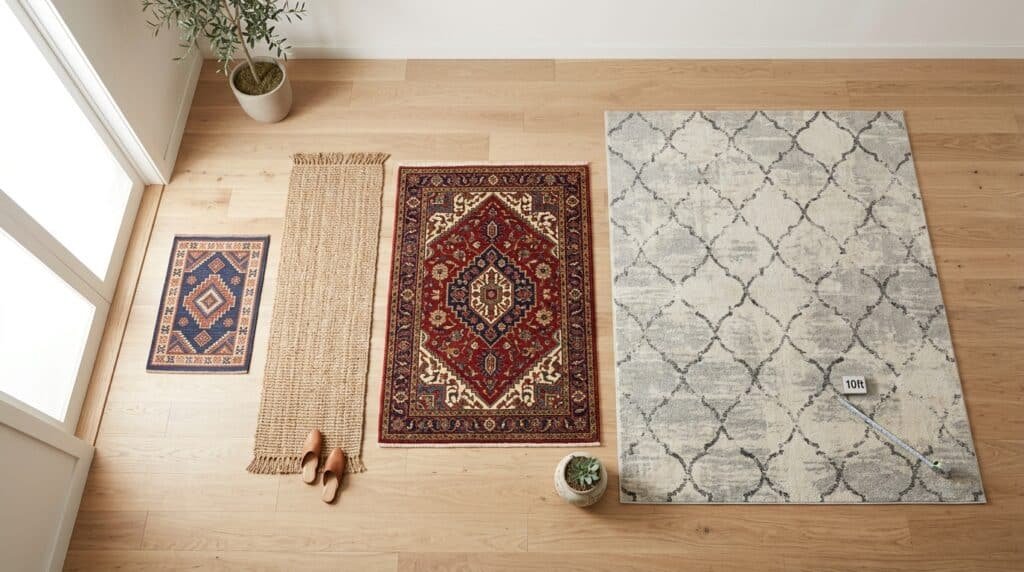
Standard Rug Sizes & Placement Chart
📐 8x10 vs. 9x12 Rug — Which Is Better? It really comes down to overall room size: an 8x10 fits most standard living rooms comfortably with front furniture legs anchored on the rug, while a 9x12 suits larger rooms or open floor plans where an 8x10 would look undersized and float in the middle of the space.
🧮 Our rug size calculator takes your exact room dimensions and furniture layout and tells you which size actually fits, eliminating guesswork between options.
Runner Rug Sizes
Runners follow their own sizing logic since length matters more than width:
- 3 x 10 runner rug — standard hallway length for most residential hallways
- 8 foot runner rug — shorter hallways or narrow galley kitchens
- 12 foot runner rug — longer hallways or extended entryways
- 14 ft runner rug — very long hallways or runners used along a staircase
Standard carpet runner sizes typically run 2 to 3 feet wide, with length being the variable you customize to your space. For hallway runner size, always measure the full hallway length and subtract about 6 inches on each end, so the runner doesn’t look like it’s touching the walls or crowding doorways.

How to Measure a Room for Carpet or Rug
How to measure a room for carpet starts with the room’s total length and width in feet, then multiplying them for total square footage. A few things that trip people up:
- Always measure the longest and widest points of the room, including closets or alcoves that will also be carpeted.
- Add a carpet waste factor of 10-15% to your total square footage, since carpet installs require extra material for seams, pattern matching, and trimming around edges.
- For wall-to-wall installations, note where carpet seams will likely fall, since most carpet rolls are 12 or 15 feet wide — a room wider than that will need at least one seam.
How to calculate carpet square footage is simply length × width in feet, then add your waste factor on top. For a 12×12 room, that’s 144 square feet before waste, or roughly 158-165 square feet once you account for a realistic waste factor. Our carpet size calculator and mat size calculator do this math instantly if you’d rather skip the manual multiplication.

Carpet Roll Sizes and Wall-to-Wall Installation
Carpet roll sizes matter more than most people realize when budgeting a wall-to-wall install. Standard carpet widths come in two main options: 12 feet and 15 feet. Carpet roll widths 12ft vs. 15ft comparison comes down to this — a 15-foot roll can cover more rooms without a seam, which looks better and holds up longer, but not all carpet styles are manufactured in the wider format, and 15-foot rolls sometimes cost slightly more per square foot.
How to lay padding for carpet matters just as much as the carpet itself — padding should be stapled or taped at the seams, never overlapped, and trimmed flush to the wall before the carpet itself goes down. Wall-to-wall carpet installation typically follows this order: remove old flooring, install tack strips around the room’s perimeter, lay and secure padding, then stretch and secure the carpet using a power stretcher for the tightest, longest-lasting fit.

Rug Sizes by Room
Living Room Rug Sizes
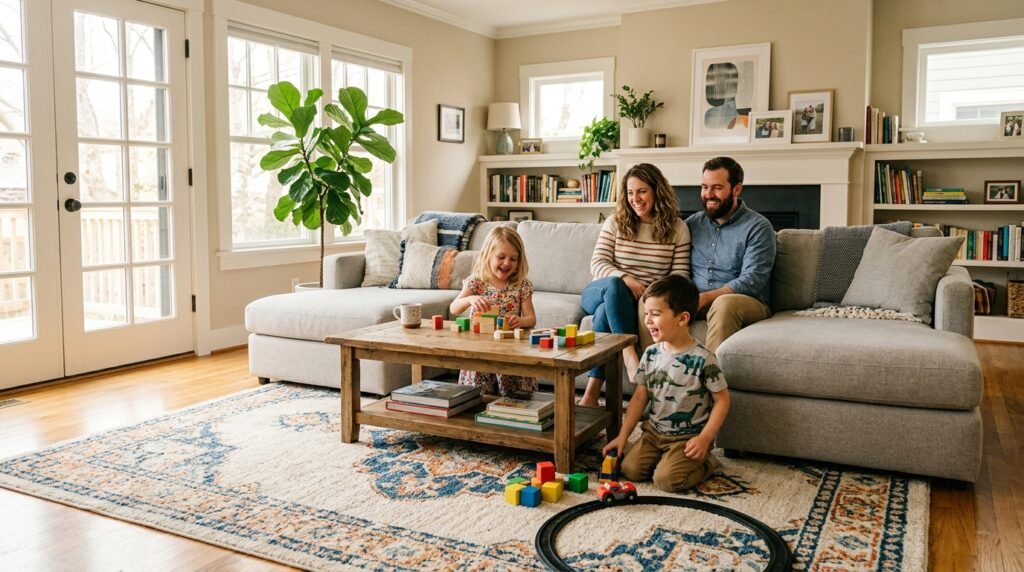
Rug placement in the living room is where most sizing mistakes happen. The general rule: front legs of your sofa and chairs should sit on the rug, with at least 6-12 inches of rug showing beyond the furniture on the sides you can see. For rug size for living room with a sectional, the rug should be large enough that the entire sectional’s front legs (and ideally the back legs too, for a large enough rug) rest on it — undersized rugs under sectionals are one of the most common living room layout mistakes.
Should rug go under couch? In most cases, yes — at minimum the front legs. A 5×7 rug in a living room often ends up too small for anything beyond a single loveseat and coffee table, which is why 8×10 rug living room layout has become the default recommendation for most standard-sized rooms. For rug placement with a TV, center the rug on the seating arrangement rather than the television, since the rug’s job is to anchor where people sit, not where they look.
Bedroom Rug Sizes
Bedroom rug placement depends heavily on bed size:
- 5×7 rug under a queen bed — positioned so it extends about 18-24 inches beyond each side of the bed
- 6×9 rug under a king bed — gives enough coverage on both sides and at the foot of the bed
- Rug size for a full-size bed — typically works well with a 5×8 or 6×9, similar to queen sizing but slightly adjusted
- Twin bed rug size — a 3×5 or 4×6 rug on either side works well for twin beds, especially in kids’ rooms
- What size rug for a nursery — a soft 4×6 or 5×7 rug near the crib and changing area is common, prioritizing a low-pile, easy-to-clean material
Bedside rugs — smaller runner-style rugs placed on each side of the bed rather than one large rug underneath — are a popular alternative in master bedroom rug placement, especially in rooms where a single large rug would be prohibitively expensive.
Dining Room Rug Sizes
Best rug size for a dining room table means adding at least 24 inches beyond the table’s edge on all sides, so chairs stay on the rug even when pulled out. A 72 inch round rug typically fits a round table seating 4-6, while a rectangular table usually needs an 8×10 or 9×12 depending on the table’s length.
Kitchen Rug Sizes
Kitchen rug size tends to be more functional than decorative — smaller runner-style rugs in front of the sink or stove, typically 2×3 or 2×4, handle the highest-traffic, highest-spill zones. Woven kitchen rugs in natural fibers or flat-weave cotton are popular for their durability and easy cleaning compared to plush styles.
Entryway and Hallway Rugs
Entryway rug ideas usually center around a durable 2×3 or 3×5 rug that can handle dirt, moisture, and heavy foot traffic. Best rug material for entryway use leans toward flat-weave, low-pile, or outdoor-rated materials, since entryways see far more wear than any other room in the house.
Outdoor Rug Sizes
Outdoor rug sizes follow similar conventions to indoor rugs, though 3×5 outdoor rugs are especially popular for smaller patios, porches, or in front of an exterior door, where a full-size indoor rug would be impractical.

Carpet Cost: How Much You’ll Actually Spend
How much does carpet cost per square foot varies by material and quality, but most residential carpet (installed) falls between $3 and $11 per square foot, including padding and labor. To put that in real terms:
- How much to carpet a 12×12 room: roughly $500-$1,600 depending on carpet quality, for about 144-165 square feet including waste factor
- How much carpet do I need for a 10×10 room: about 100-115 square feet including waste factor
- What size carpet do I need for a 12×12 room: the room itself is 144 square feet, but always order based on your waste-factor-adjusted total, not the bare room measurement

Choosing Carpet Material and Type
Different carpet and rug categories suit very different needs:
- Broadloom carpet — manufactured in wide rolls (the standard wall-to-wall option) versus carpet tiles, which are modular squares easier to replace individually if damaged
- Wool carpet — durable and naturally stain-resistant, though pricier than synthetic options
- Synthetic carpet (nylon, polyester, olefin) — generally more affordable and often specifically marketed as stain-resistant carpet or pet-friendly carpet
- Low-pile carpet — easier to clean and less prone to trapping allergens, often recommended for high-traffic areas
- High-pile carpet — plush and comfortable underfoot, but shows wear patterns and vacuum lines more visibly
- Area rug, runner rug, and accent rug — all non-fixed floor coverings versus wall-to-wall broadloom, offering flexibility to change rooms or take the piece with you when you move
If you’re outfitting a whole home and want your furniture layout to match your new rug or carpet properly, our furniture spacing guide is worth checking alongside your rug measurements, and our home renovation resources cover flooring alongside other bigger-picture project planning.

Carpet Cleaning Ideas You Can Do at Home
You don’t need professional equipment for most carpet and rug upkeep — a few simple habits go a long way between deeper cleans:
- Vacuum at least once a week, and twice a week in high-traffic areas or homes with pets, since grit ground into fibers is what actually wears carpet down over time, not foot traffic alone.
- Blot, don’t rub, fresh spills. Rubbing pushes liquid deeper into the fibers and spreads the stain; a clean cloth pressed straight down lifts far more of the spill out.
- Baking soda for odors. Sprinkle it generously over the carpet or rug, let it sit for 15-20 minutes (or overnight for stronger smells), then vacuum thoroughly. This works especially well for pet odors and musty rugs pulled out of storage.
- A vinegar and water solution (roughly equal parts) handles many everyday stains without harsh chemicals — spray lightly, blot, and repeat as needed. Always test an inconspicuous corner first, especially on wool or natural-fiber rugs.
- Club soda for fresh stains, particularly wine or coffee — the carbonation helps lift the stain to the surface before it sets, making it easier to blot away.
- Ice cubes for gum or wax. Freezing the spot makes the substance brittle enough to gently scrape off without smearing it further into the fibers.
- Rotate area rugs every 6-12 months so foot traffic and sun exposure wear evenly rather than fading or flattening one section faster than the rest.
- Rent or hire steam cleaning once or twice a year for wall-to-wall carpet, since regular vacuuming can’t remove everything embedded deep in the pile — this also helps carpet last significantly longer before replacement is needed.
For pet-friendly carpet and rug households specifically, an enzyme-based cleaner (rather than a standard stain remover) actually breaks down the organic compounds in pet accidents instead of just masking the smell, which matters if you want the odor to genuinely go away rather than return once humidity rises.
Rugs and runners are a bigger safety factor than most people think about while shopping for the “perfect” size and color. According to a CPSC report on hidden home hazards, falls are the leading cause of injury-related death for older adults in the home, and loose rugs and runners are a well-documented contributing factor. A separate CDC-backed study estimated that nearly 38,000 adults aged 65 and older are treated in US emergency rooms each year for falls specifically associated with carpets and rugs — a number worth keeping in mind, especially in hallways and at flooring transitions where most of these falls happen.
A few simple habits reduce the risk significantly: use rug pads or non-slip backing under every rug, avoid rugs that curl at the edges, and make sure runners in hallways are secured rather than free-floating. It’s a similar mindset to other overlooked home safety basics — working smoke alarms cut the risk of dying in a home fire by roughly 60%, according to NFPA research, yet plenty of homes have alarms that are missing or expired. Our smoke detector calculator is worth a quick check the same day you’re securing rugs and runners around the house.
FAQs: Carpet Size Guide – Standard Sizes
Guidelines on area rug placement, room square footage calculations, roll widths, and runner dimensions

Final Thoughts
Getting carpet and rug size right isn’t about guessing what “looks about right” — it’s about matching the size to your furniture, your room’s actual dimensions, and how the space gets used day to day. Measure first, check the charts above, and don’t be afraid to size up if you’re stuck between two options — an undersized rug is a much more common (and more noticeable) mistake than an oversized one.
Take these guidelines, measure your own space, and you’ll walk into your next rug or carpet purchase with real confidence instead of a guess.
