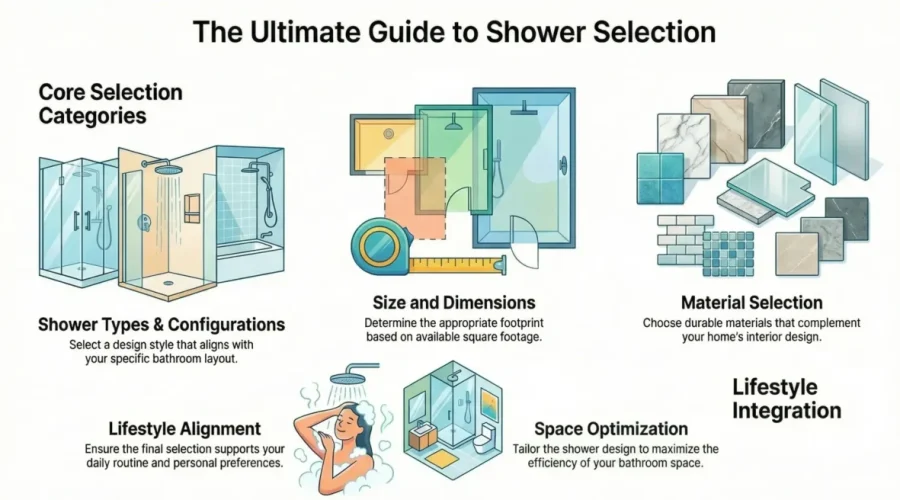
Best Bathroom Shower Selector | 25+ Shower Types • Comparison • Sizing • Installation Guide

🚿 #1 Best Shower – Smooth, Strong, Smart!

Stop wrestling with knobs. The #1 Shower Selector gives you instant, smooth switching between rainhead, handheld, or both. No drips. No drama. Just the perfect shower, every time.

25+ Bathroom Shower Types & Features
💧 STANDARD SHOWER TYPES (7)
1. Electric Shower
• Uses electricity to heat water instantly
• Does not need a hot water tank
• Perfect for homes without central heating
• Cost: $200–800
• Installation: Hardwired to electrical panel

2. Mixer Shower
• Mixes hot and cold water from plumbing pipes
• Provides steady temperature control
• Most common type in homes
• Requires hot water supply
• Cost: $150–500

3. Power Shower
• Has built-in pump to increase water pressure
• Best for homes with low water pressure
• Stronger spray, larger volume
• Needs electrical connection
• Cost: $400–1,200

4. Digital Shower
• Controlled with digital panel or smartphone
• Allows temperature presets
• Can control multiple shower heads
• Modern, high-tech option
• Cost: $1,000–3,500

5. Rainfall Shower
• Large overhead shower head (12"–24")
• Creates relaxing rain effect
• Usually wall-mounted or ceiling-mounted
• Requires higher water pressure
• Cost: $300–1,000

6. Handheld Shower
• Shower head attached to flexible hose
• Easy for cleaning and bathing children/pets
• Can be used as fixed or handheld
• Very versatile
• Cost: $150–600

7. Body Spray Shower
• Multiple water jets on shower walls
• Creates massage/spa effect
• Can be combined with rainfall head
• Professional installation recommended
• Cost: $500–2,000+
🧱 TILEABLE SHOWER TYPES (5)
1. Tileable Shower Pan
• Waterproof base designed for tile installation
• Allows custom tile design
• Options: acrylic, fiberglass, concrete
• Cost: $200–600
• Installation: Requires grout and sealing

2. Tileable Shower Tray
• Prefabricated tray that can be covered with tiles
• Built-in slope for drainage
• Popular in European designs
• Cost: $300–800

3. Linear Drain Tile Shower
• Uses long drain channel along wall or floor
• Creates modern, seamless look
• Excellent drainage
• Professional installation needed
• Cost: $500–1,500

4. Curbless Tile Shower
• Walk-in shower with no step or barrier
• Accessible for all ages/abilities
• Requires careful slope design
• Modern, luxury feel
• Cost: $600–2,000

5. Tileable Shower Niche
• Built-in wall storage area
• Can hold shampoo, soap, bottles
• Tiles over entire shelf
• Space-saving solution
• Cost: $100–400
Shower Type Water Source Power Needed Installation Cost Best For
Electric Cold water supply Yes (240V typical) Complex $200–800 No hot water tank
Mixer Hot + cold pipes No Moderate $150–500 Most homes
Power Hot + cold pipes Yes (pump) Moderate $400–1,200 Low pressure homes
Digital Hot + cold pipes Yes (control) Complex $1,000–3,500 Modern, tech-savvy
Rainfall Hot + cold pipes No Easy to moderate $300–1,000 Luxury feel
Handheld Hot + cold pipes No Easy $150–600 Versatile use
Body Spray Hot + cold pipes Usually no Complex $500–2,000+ Spa experience
Tileable Pan Hot + cold pipes No Moderate $200–600 Custom design
Linear Drain Hot + cold pipes No Complex $500–1,500 Modern look
Curbless Hot + cold pipes No Complex $600–2,000 Accessibility
Best Shower Finder - What's Right For You?
Shower Sizing & Bathroom Space Guide
Space Size Bathroom Square Feet Recommended Shower Type Typical Cost Shower Head Size
Tiny/Compact 25–50 sq ft Handheld or compact mixer $150–400 3–4 inches
Small 50–75 sq ft Mixer or electric shower $200–600 6–8 inches
Medium 75–100 sq ft Power, mixer, or rainfall $400–1,000 8–12 inches
Large 100–150 sq ft Rainfall, digital, or body spray $800–2,000 12–20 inches
Master Bath 150+ sq ft Luxury combo (rainfall + body spray) $1,500–5,000+ 20–24+ inches
📏 SHOWER ENCLOSURE DIMENSIONS
MINIMUM SPACE REQUIREMENTS:
• Walk-in shower: 36" × 36" minimum (3 sq ft)
• Standard enclosure: 36" × 48" (12 sq ft)
• Large enclosure: 48" × 60" (20 sq ft)
• Walk-in/wet room: 48" × 60"+ (20+ sq ft)

SHOWER HEAD HEIGHT:
• Standard ceiling height: 8 feet
• Rainfall head: Usually 8–10 feet
• Handheld on bracket: 5–7 feet
• Recessed overhead: Built into ceiling

WATER PRESSURE NEEDED:
• Most showers: 40–60 PSI
• Rainfall showers: 60–80 PSI (higher flow)
• Low-pressure showers: Can work at 20–40 PSI
• Power showers: Create pressure artificially
Shower Materials & Installation Guide
🏗️ SHOWER MATERIALS
SHOWER HEAD MATERIALS:
• Stainless Steel: Durable, corrosion-resistant ($80–300)
• Chrome: Affordable, shiny finish ($40–150)
• Brushed Nickel: Modern, doesn't show water spots ($60–200)
• Brass: Luxury feel, requires maintenance ($100–400)
• Plastic: Budget option, lighter ($20–60)

ENCLOSURE/TRAY MATERIALS:
• Porcelain/Ceramic: Durable, beautiful, expensive ($300–1,000)
• Acrylic: Lightweight, affordable, less durable ($200–600)
• Fiberglass: Flexible, affordable, can fade ($150–500)
• Tile: Custom, expensive, professional install ($500–2,000+)
• Stone/Slate: Luxury, requires sealing ($800–2,500)

VALVE/MIXER MATERIALS:
• Brass: Traditional, reliable, durable
• Stainless Steel: Modern, corrosion-resistant
• Plastic: Budget, can wear
• Digital: Modern, high-tech, expensive
🔧 INSTALLATION GUIDE
DIY vs PROFESSIONAL:
• Handheld retrofit: DIY possible, 30 min–1 hour
• Mixer/rainfall replacement: Professional recommended, 1–2 hours
• Power shower install: Professional required (electrical), 2–3 hours
• Digital shower: Professional required, 2–4 hours
• Tileable/curbless: Professional required, 1–2 days

PLUMBING REQUIREMENTS:
✓ Hot and cold water lines
✓ Proper slope for drainage
✓ Drain connection (minimum 2" pipe)
✓ Anti-scald valve (safety requirement)
✓ Mixing valve for steady temperature

ELECTRICAL REQUIREMENTS:
✓ Power showers: Usually 240V circuit
✓ Electric showers: 240V hardwired
✓ Digital showers: Low-voltage control system
✓ Must use qualified electrician

PERMITS & CODES:
✓ Check local building codes
✓ Permits may be required
✓ Professional installation often required
✓ Anti-scald requirements vary by area
⚙️ SHOWER SETUP CHECKLIST
BEFORE YOU BUY:
□ Measure bathroom dimensions
□ Check water pressure (PSI)
□ Verify hot water supply type
□ Measure pipe locations in walls
□ Check existing electrical capacity
□ Review local building codes
□ Determine budget (including installation)
□ Plan for ventilation/humidity control

INSTALLATION SETUP:
□ Turn off water supply
□ Remove old shower (if replacing)
□ Check/repair plumbing
□ Install new plumbing/valves
□ Install enclosure/tray
□ Install shower head/handles
□ Test for leaks
□ Install trim pieces
□ Caulk seams
□ Final testing (temperature, pressure)

ONGOING MAINTENANCE:
• Monthly: Clean glass/enclosure, check for leaks
• Quarterly: Clean fixtures, inspect caulking
• Annually: Professional inspection, reseal tiles
• As needed: Replace cartridges, fix leaks, recaulk

© 2026 Best Bathroom Shower Selector | 25+ Shower Types • Comparison • Sizing Guide • Installation

A woman savoring a tranquil moment under a gentle outdoor shower, side view.

Choose the Perfect Shower for Your Bathroom and Lifestyle

Your shower is more than just a place to get clean—it’s where you start your day, unwind after work, and maybe even do your best thinking. So, when it’s time to choose a new one, why do so many people pick one based on looks alone?

The right shower can transform your daily routine into a spa-like experience, all while saving you money on your water and energy bills. But the wrong one? It can mean weak water pressure, a shower that’s a nightmare to clean, or a design that clashes with your space.

Don’t worry, we’re here to help you find your perfect match. This guide will walk you through over 25 different types of showers, break down everything from sizes to materials, and give you expert tips on installation and maintenance. Let’s get started

Best Bathroom Shower

Best Bathroom Shower Complete Guide: Types, Sizes, Materials, and Selection

1. Electric Shower

  • How it works: Electricity heats water instantly as it passes through the unit
  • Water source: Cold water line only (no hot water tank needed)
  • Temperature control: Thermostat adjusts heating element power
  • Advantages: Instant hot water, no tank needed, energy efficient (heats only the water used), perfect for properties without a hot water system
  • Disadvantages: Lower flow rate than other showers, can strain the electrical system, takes time to reach temperature
  • Best for: Apartments, properties without central heating, supplement to existing heating, eco-conscious users
  • Cost range: $150-600
  • Installation: Moderate (electrical work required)
  • Flow rate: Typically 6-9 GPM (lower than other types)
  • Energy use: 3-7 kW during operation
Sleek modern shower with black and white tiles in a contemporary bathroom setting.

2. Mixer Shower

  • How it works: Mixes hot and cold water from existing plumbing
  • Water source: Both hot and cold water lines
  • Temperature control: Manual adjustment of hot/cold balance
  • Advantages: Most common type, affordable, reliable, good water pressure if the system supports it, and wide compatibility.
  • Disadvantages: Depends on existing hot water supply, can be affected by other water use, and requires manual temperature adjustment.
  • Best for: Most homes, standard bathrooms, budget-conscious, simple, reliable performance
  • Cost range: $100-400
  • Installation: Simple (uses existing plumbing)
  • Flow rate: 5-8 GPM typical
  • Temperature consistency: Moderate (affected by other usage)
Elegant chrome vintage faucet and shower head in a white bathtub.

3. Power Shower

  • How it works: Built-in pump increases water pressure from low-pressure systems
  • Water source: Hot and cold water lines with pump assist
  • Best for: Homes with low water pressure, gravity-fed systems, and multi-story homes where pressure drops upstairs
  • Advantages: Excellent pressure even in low-pressure systems, invigorating shower feel, works in older homes with poor pressure
  • Disadvantages: Higher cost, requires an electrical connection for the pump, adds noise, and can use more water
  • Cost range: $300-900
  • Installation: Moderate (electrical and plumbing work)
  • Flow rate: 8-12+ GPM (higher than standard mixer)
  • Power use: 1-2 kW (pump operation)
Luxurious modern shower with dark textured tiles and copper fixtures for a sophisticated bathroom design.

4. Digital Shower

  • How it works: Electronic controls manage temperature and flow electronically
  • Features: Digital display, temperature presets, smartphone control (some models), valve automation
  • Advantages: Precise temperature control, fast temperature adjustment, consistent performance regardless of other water use, preset comfort levels, modern aesthetic
  • Disadvantages: Higher cost, requires an electrical connection, more complex if repairs are needed, potential compatibility issues
  • Best for: Modern homes, tech-forward users, families wanting consistent temperature, accessible design
  • Cost range: $800-3,000+ (for premium units with smart features)
  • Installation: Professional installation recommended (electrical/plumbing)
  • Special features: Temperature memory, eco-mode to save water, smartphone app control (premium models)
  • Energy savings: 10-20% water savings through precise control
Close-up of a woman with red lips in a shower, feeling refreshed with closed eyes and water droplets.

5. Rainfall Shower

  • How it works: Large overhead shower head (typically 8-12 inches or larger) creates a rainfall effect
  • Water source: Hot and cold water lines
  • Benefits: Luxurious feel, even water distribution, spa-like experience
  • Disadvantages: Requires adequate water pressure, higher water consumption (8-12+ GPM), installation complexity, ceiling/wall reinforcement needed
  • Best for: Master bathrooms, spa-focused bathrooms, homeowners prioritizing experience over efficiency
  • Cost range: Shower head only $100-600, full installation $1,500-4,000+
  • Installation: Professional installation (plumbing routing above the ceiling)
  • Water pressure requirement: 30+ PSI minimum recommended
  • Water consumption: 8-12+ GPM (higher than standard)
A detailed view of a shower head outdoors with drops flowing and a blurred sunset background.

6. Handheld Shower

  • How it works: Shower head attached to a flexible hose, held by the user or mounted on the wall
  • Flexibility: Can mount on the wall, hold in the hand, or combine with an overhead shower
  • Advantages: Versatile, great for cleaning the bathroom, bathing children/pets, accessibility, and can angle spray
  • Disadvantages: Requires good water pressure for effective handheld use, the hose can develop kinks, and the mounting needs strengthening
  • Best for: Families with children, homes with mobility concerns, multi-use bathrooms, flexible showering needs
  • Cost range: $50-300
  • Installation: Simple (attaches to existing shower arm)
  • Combined with other types: Often used alongside a rain shower or body spray
  • Hose length options: 4-8 feet, typical
Handheld Shower

7. Body Spray Shower

  • How it works: Multiple water jets (typically 2-8) are  installed on shower walls at various heights
  • Installation: Requires in-wall plumbing and spray nozzle bodies
  • Advantages: Luxurious spa experience, hits multiple body areas simultaneously, modern aesthetic
  • Disadvantages: Very high water consumption (15-20+ GPM), requires strong water pressure, expensive installation, significant plumbing work
  • Best for: Luxury bathrooms, spa-like experience priority, homes with adequate water supply
  • Cost range: Body spray system $500-2,000, installation $2,000-5,000+
  • Installation: Complex (requires wall access during construction/remodel)
  • Water requirement: 40+ PSI minimum, strong pump needed
  • Water consumption: Very high (15-20+ GPM typical)
Person taking a shower, showcasing a tattoo on the arm and water flowing down.

5 Categories Of Tileable Shower

8. Tileable Shower Pan

  • Common Materials: High-density foam, fiberglass, or acrylic coated with a waterproof membrane.
  • Key Advantages: Provides a custom look without the high cost and complexity of a traditional mud bed. They simplify installation and ensure a durable, leak-proof foundation.
  • Installation Process: Secure the pan to the subfloor, connect the drain, then apply thin-set mortar and tiles directly to the surface.
  • Best Suited For: Homeowners who want a custom tile shower on a moderate budget, particularly for standard-sized showers.
  • Cost Breakdown: The pan itself costs $300-$800. The total project cost, including tiles and professional installation, is typically $1,000 to $3,000+.
  • Waterproofing: Features built-in waterproofing for reliable leak protection.
  • Customization Level: While the pan size is fixed, the choice of tile offers endless design possibilities.
Minimalist black tiled shower with hanging white towel and modern fixtures.

9. Tileable Shower Tray

  • What it is: Prefabricated tray that accepts tile covering
  • Similar to: Tileable shower pan, but often shallower and pre-sloped
  • Advantages: Slope already built in, consistent drainage, quicker installation
  • Disadvantages: Less flexibility than pan, standard sizes only
  • Installation: Place the tray, apply the tiles
  • Cost: Tray $200-600, tiling additional
  • Materials: Fiberglass, acrylic, concrete
  • Lifespan: 15-25 years, typical
Sleek modern shower with glass door in a contemporary bathroom setting, featuring elegant interior design.

10. Linear Drain Tile Shower

  • What it is: Long, narrow drain channel (usually along one wall or floor perimeter) rather than a center drain
  • Advantages: Modern aesthetic, versatile positioning, handles water flow from any direction
  • Installation: Channel installed in the floor/wall, tile covers it
  • Best for: Modern bathrooms, open shower designs, custom layouts
  • Cost: Drain system $300-800, installation and tiling $2,000-4,000+
  • Design flexibility: Allows creative tile patterns
  • Functionality: Excellent drainage, even water distribution
Luxurious marble bathroom featuring a modern bathtub and glass shower enclosure.

11. Curbless Tile Shower

  • What it is: Walk-in shower with no step or raised curb, floor level with bathroom
  • Waterproofing: Sealed sloped floor, careful details to prevent water escape
  • Advantages: Accessibility (no step to cross), modern aesthetic, aging-in-place friendly, clean look
  • Disadvantages: More complex waterproofing, higher installation cost, and must ensure slope for drainage
  • Installation: Professional installation essential (waterproofing critical)
  • Best for: Accessibility, modern design, aging-in-place bathrooms, luxury renovations
  • Cost: $3,000-8,000+, depending on size and finishes
  • Slope requirement: Minimum 1/4 inch per foot toward the drain
  • Waterproofing: Membrane-based, professional installation essential
Elegant bathroom featuring dual sinks and a glass shower enclosure in a minimalist design.

12. Tileable Shower Niche

  • What it is: Built-in storage alcove within the shower wall for shampoo, soap, and razors
  • Installation: Framed during wall construction, tiled over
  • Advantages: Storage without clutter, custom sizing, professional appearance
  • Disadvantages: Requires planning during construction, and waterproofing attention is needed
  • Types: Single shelf, multiple shelves, multiple niches
  • Cost: Small niche $200-500, larger multi-niche $500-1,500
  • Typical size: 12-24 inches wide, 12-48 inches tall
  • Material options: Tile matching shower, contrasting tile, stone
Stylish bathroom with a modern shower featuring a patterned tiled wall and black fixtures.

Additional Specialty Shower Types

13. What is a Walk-in Shower?

A standard walk-in shower is a fully enclosed showering space, typically with a glass door, and does not include a bathtub. This modern and popular design is a staple in many contemporary homes.

  • Pros: Walk-in showers are space-efficient, making them a great choice for smaller bathrooms. Their sleek, modern aesthetic can update any space. They are also generally easier to clean than traditional tub-shower combos and offer better accessibility for people with mobility issues.
  • Cons: The main disadvantage is that they require a certain amount of dedicated bathroom space to be installed correctly.
  • Average Cost: The cost to install a walk-in shower typically ranges from $2,000 to $6,000, depending on materials, size, and labor costs.
shower, shower head, water, waterdrop, run down, to bathe, hygiene, nature, to wash, personal hygiene, metal, silver, chrome, wet, splash, structure

14. Corner Shower Enclosure

  • A corner shower is a shower stall designed to fit into the corner of a bathroom.
  • Its main advantage is its space-efficient, compact design, making it an excellent choice for small bathrooms or fitting into awkward layouts.
  • There are several enclosure types available for corner showers, including framed, frameless, and sliding door options, allowing for customization to match your bathroom’s style.
  • The average cost to install a corner shower ranges from $1,500 to $4,000, depending on the materials and complexity of the installation.
  • For space requirements, you’ll need a minimum of 36 to 48 inches of wall space in each direction from the corner to properly accommodate the shower unit.
A clean, modern corner shower enclosure with glass doors in a tiled bathroom setting.

15. Steam Shower

  • Definition: A steam shower is an enclosed stall with a steam generator that creates a warm, humid environment, similar to a steam room.
  • Advantages: Provides a spa-like experience at home for relaxation. Benefits may include improved circulation, clearer skin, and congestion relief, adding a touch of luxury to your bathroom.
  • Disadvantages: The initial cost is high. It requires strong ventilation to prevent mould, and the complex plumbing and electrical work typically needs a professional.
  • Cost: Including installation, costs range from $5,000 to over $15,000, depending on the size, features, and materials.
  • Features: Standard features often include digital controls, built-in seating, and sometimes aromatherapy or light therapy systems.
  • Installation: Installation is complex, requiring specialized electrical wiring, dedicated plumbing, and proper ventilation to manage steam.
glass, water drops, shower, act, nature, wet, female, body, femininity, nude photography, sensual, eroticism, art, skin, temptation, back, tattoo, water, droplets

16. Sauna Shower

  • Definition: A combination sauna and shower is an integrated, all-in-one unit that allows you to enjoy both a steam sauna and a traditional shower within the same enclosure.
  • Advantages: This setup offers a luxurious, spa-like experience right in your home. The sauna component provides therapeutic benefits like muscle relaxation, stress relief, and improved circulation.
  • Disadvantages: These units are very expensive, making them a significant investment. They also require a substantial amount of space and involve a complex installation process that often requires professional help.
  • Cost: The total cost, including installation, typically ranges from $8,000 to over $25,000.
Senior man enjoying relaxation in a modern sauna, sitting shirtless and calm.

17. Outdoor Shower

  • Definition: An outdoor shower is a fixture installed outside, typically on a deck, patio, or near a pool.
  • Advantages: They’re great for rinsing off after swimming or gardening. Outdoor showers can also add a spa-like feel to your backyard and save space in smaller homes.
  • Disadvantages: They are exposed to weather-related wear and tear, and a reliable hot water supply can be complex and costly. Privacy is also a concern, often requiring screens or enclosures.
  • Installation: They can be mounted to a wall or fence (deck-mounted) or on a freestanding pillar (post-mounted).
  • Cost: The total cost typically ranges from $1,500 to $4,000, depending on plumbing, materials, and labor.
  • Materials: Durable, weather-resistant materials like stainless steel, brass, cedar, and teak are best for fixtures and enclosures.
Young man enjoying an outdoor shower surrounded by lush tropical plants.

18. Frameless Glass Shower Enclosure

  • Definition: A frameless glass shower enclosure uses sturdy tempered glass panels without significant metal framing. This design creates a clean, open, and seamless look.
  • Advantages: They offer a sleek, modern aesthetic that makes bathrooms feel larger and more open. Without bulky frames, they maximize light flow. The thick tempered glass is also highly durable.
  • Disadvantages: The initial cost is typically higher than framed shower doors. The clear glass shows water spots, soap scum, and fingerprints, requiring frequent cleaning.
  • Cost: The glass enclosure itself can range from $2,000 to $5,000+, depending on size and customization.
  • Glass type: Always made from tempered safety glass, which shatters into small, blunt pieces if broken, reducing injury risk.
  • Thickness: Common thicknesses are 3/8 inch for a standard feel, or a heavier 1/2 inch for a more premium look and greater stability.
Elegant bathroom featuring a glass shower and bathtub with natural light from large windows.

19. Framed Shower Enclosure

  • Definition: A framed shower consists of glass or acrylic panels supported by a metal frame. This frame typically encloses the entire shower, including the door.
  • Advantages: This is often the most budget-friendly shower option. It’s available in a wide variety of styles and finishes, and the sturdy frame makes it a very durable choice for any bathroom.
  • Disadvantages: The tracks and crevices in the frame can collect water and soap scum, requiring more frequent and detailed cleaning. Depending on the style, the prominent frame can sometimes look bulky or dated compared to frameless designs.
  • Cost: The average cost for a framed shower, including installation, typically ranges from $800 to $2,500.
  • Materials: Aluminum is the most common and cost-effective material used for the frames. For a more premium and durable option, stainless steel frames are also available.
Creative design of shower cabin with glass walls against washbasin under mirror at home

20. Sliding Door Shower

  • Definition: Sliding shower doors run on a track, gliding open horizontally instead of swinging out. This design is a feature of modern bathrooms.
  • Advantages: They are excellent space-savers because they don’t need room to swing open, making them ideal for smaller bathrooms. They also offer easy access and a sleek, contemporary look.
  • Disadvantages: The tracks can collect soap scum and water, so they need regular cleaning to stay in good working order. They may not seal as tightly as hinged doors, which can cause minor leaks if not installed correctly.
  • Cost: Including installation, sliding shower doors typically cost between $1,500 and $4,000, depending on the materials and design complexity.
  • Types: Common types include bypass doors, with two panels that slide past each other, and single slider doors, where one panel is fixed and the other moves.
Contemporary bathroom showcasing a sleek shower cabin and minimalist interior design.

21. Pivot Door Shower

  • Definition: A pivot door is a swinging door that rotates on a spindle instead of traditional side hinges. The hinges are mounted at the top and bottom of the door, creating a unique, modern entrance.
  • Advantages: These doors offer a better seal against weather and sound than traditional doors. Their minimalist, elegant look makes them a striking design feature. They also provide great accessibility for wide entryways.
  • Disadvantages: The main drawback is that they need significant clear floor space on both sides of the entryway to open.
  • Cost: The average cost for a pivot door ranges from $1,500 to $4,000, including materials and professional installation.
  • Installation: Installation is more complex than a standard door and requires enough clearance in the ceiling and floor for the pivot mechanism.
Spacious bathroom with elegant glass shower and white bathtub featuring arched window for natural light.

23. Acrylic Shower Unit

  • Definition: An acrylic shower unit is a prefabricated shower enclosure made from acrylic sheets, available as a single piece or multiple interlocking pieces.
  • Advantages: These units are a budget-friendly alternative to tile. Acrylic is durable and non-porous, making it resistant to mold, mildew, and stains. It’s easy to clean, and installation is faster than custom tile work.
  • Disadvantages: Acrylic can look less high-end than tile or stone. Lower-quality units may stain or discolor over time. They also have lower heat retention than materials like cast iron, so water may cool faster.
  • Cost: The unit typically costs between $500 and $2,000, excluding installation.
  • Lifespan: An acrylic shower can last 10 to 20 years with proper care.
  • Maintenance: Clean regularly with gentle, non-abrasive cleaners. Avoid harsh chemicals or scouring pads that can scratch the surface.
Luxurious modern bathroom featuring golden fixtures, a spacious shower, and a freestanding bathtub with an outdoor view.

24. Fiberglass Shower Unit

  • Definition: A prefabricated enclosure made from fiberglass-reinforced plastic. These units are molded into a complete shower stall, often with built-in shelves and seats.
  • Advantages: Fiberglass units are durable, lightweight, and easier to install than tile. They are also one of the most affordable shower options and provide good insulation to keep water warm.
  • Disadvantages: The surface is prone to staining and scratching. It can become brittle and crack from a heavy impact. Repairs can be difficult and often look patched.
  • Cost: A fiberglass shower unit typically costs between $400 and $1,500, excluding installation.
  • Lifespan: With proper care, a fiberglass shower can last 15 to 25 years.
  • Maintenance: Requires regular cleaning with non-abrasive products to prevent soap scum and stains. Avoid heavy impacts that could cause cracks.
Contemporary light bathroom with white toilet placed against sink with mirror near transparent shower cabin with modern washing machines at home

25. Stone/Natural Material Shower

  • Definition: Shower constructed from natural stone (granite, marble, slate, limestone)
  • Advantages: Luxurious appearance, extremely durable, unique
  • Disadvantages: Expensive, requires sealing/maintenance, slippery when wet
  • Cost: $8,000-30,000+
  • Materials: Granite, marble, slate, limestone, travertine
  • Maintenance: Regular sealing is essential; special cleaners are needed
  • Installation: Professional installation required
Charming rustic bathroom featuring brick walls, wood paneling, and modern amenities.

A Guide to Standard Shower Sizes and Dimensions

Choosing the right shower size is crucial for your bathroom’s comfort and function. Whether you’re renovating or building a new home, understanding standard shower dimensions will help you make the best choice. This guide covers common shower sizes, shower head placement, and different enclosure types.

Common Shower Dimensions

Shower dimensions range from compact corner units to large, spa-like walk-in showers. Here’s a breakdown of the most common sizes.

1. Small Corner Shower

  • Dimensions: Typically 32×32 inches or 36×36 inches.
  • Best for: Small bathrooms or guest baths where space is limited.
  • Details: These units fit neatly into a corner to maximize floor space, providing an efficient showering experience.

2. Standard Shower

  • Dimensions: Common sizes include 36×48 inches or 42×60 inches.
  • Best for: Most family bathrooms and master baths.
  • Details: This size offers a comfortable amount of room for one person and fits well in medium-sized bathrooms.

3. Large Walk-In Shower

  • Dimensions: Often 48×60 inches or larger.
  • Best for: Master bathrooms and luxury renovations.
  • Details: Walk-in showers provide a spacious feel and can accommodate built-in benches, multiple shower heads, or other custom features.

4. Master Bathroom or Spa Shower

  • Dimensions: Can be 60×72 inches or larger.
  • Best for: High-end, luxury master bathrooms.
  • Details: Designed for a spa-like experience, these showers can include features like body sprays, rain shower heads, steam functions, and seating.

Shower Head Height and Placement

Proper shower head placement is key to a comfortable shower.

Standard Shower Head Height

  • Recommended Height: The industry standard is 80 inches from the shower floor.
  • Adjustment: This is a comfortable height for most adults but can be adjusted to suit your family.

Rain Shower Head Height

  • Recommended Height: Typically installed between 84 and 96 inches from the floor.
  • Placement: Rain shower heads are mounted on the ceiling, centered over the shower for a downward, rainfall-like stream.

Handheld Shower Head Height

  • Mounting: The wall bracket is usually placed between 60 and 78 inches high.
  • Flexibility: Many are mounted on a sliding bar, allowing users to adjust the height easily. This makes them ideal for families or seated showering.

Body Spray Placement

  • Height: Body sprays are installed in sets at various heights (commonly 24 to 60 inches from the floor) to target different body parts.
  • Configuration: A common setup includes 2 to 6 nozzles, which require careful plumbing.

Shower Enclosure Types and Sizes

The shower enclosure defines your shower’s look and feel. Here are the most popular options.

Frameless Glass Enclosures

  • Glass Thickness: Usually 3/8-inch or 1/2-inch thick.
  • Dimensions: Custom-made to fit any size opening, with standard panel heights of 72 to 80 inches.
  • Style: Offers a modern, clean look that makes the bathroom feel larger.

Framed Glass Enclosures

  • Dimensions: Available in standard widths from 28 to 60 inches.
  • Materials: The frame is typically aluminum with various finishes.
  • Style: A more traditional and budget-friendly option.

Sliding Shower Doors

  • Width: Common widths range from 32 to 60 inches.
  • Style: Also known as bypass doors, these are a space-saving solution as they don’t swing open.

Corner Shower Enclosures

  • Common Sizes: Standard sizes include 36×36 inches, 38×38 inches, and 42×42 inches.
  • Design: Designed for corner stalls, often with a curved or neo-angle door to maximize space.

Choosing the Best Materials for Your Shower

When remodeling your bathroom, selecting the right materials for your shower is a critical decision. The materials for the shower pan (base) and walls will impact the look, durability, maintenance, and cost of your project.

This guide will walk you through the most popular shower materials, from budget-friendly fiberglass to luxurious natural stone, to help you make an informed choice.

Shower Pan and Base Materials

The shower pan is the floor of your shower. It must be waterproof, durable, and sloped correctly to guide water to the drain. Here are the most common options:

Fiberglass

A popular and affordable choice, fiberglass shower pans are made from fiberglass-reinforced plastic.

  • Cost: $200 – $600
  • Pros: Lightweight, easy to install, and budget-friendly.
  • Cons: Can stain and crack over time. Repairs are often difficult.
  • Lifespan: 15-20 years
  • Best for: Homeowners looking for a quick, low-cost installation.

Acrylic

Similar to fiberglass, acrylic pans are made from sheets of acrylic plastic, often reinforced for extra strength.

  • Cost: $300 – $800
  • Pros: Lightweight, affordable, and non-porous, making it resistant to stains and mildew. It also retains heat better than other materials.
  • Cons: Cheaper, thinner acrylic can be less durable and prone to cracking.
  • Lifespan: 10-20 years
  • Best for: Budget to mid-range renovations where quick installation is a priority.

Cultured Marble (Engineered Stone)

Cultured marble offers the look of natural stone without the high price tag. It’s made by mixing marble dust with polyester resin.

  • Cost: $400 – $1,000
  • Pros: Looks like real marble at a lower cost and is more durable than fiberglass or acrylic.
  • Cons: It’s not natural stone and can be chipped. It doesn’t add as much long-term value to a home.
  • Lifespan: 10-20 years
  • Best for: Homeowners who want a marble look on a tighter budget.

Tile (Ceramic & Porcelain)

A tiled shower floor offers endless design possibilities, allowing you to create a custom look that matches your bathroom’s style.

  • Cost:
    • Ceramic: $200 – $600 (materials only)
    • Porcelain: $400 – $1,200 (materials only)
  • Pros: Limitless design options and a durable surface. Porcelain is denser and more water-resistant than ceramic.
  • Cons: Grout lines require regular cleaning and sealing to prevent leaks and mildew. Can crack if not installed correctly.
  • Lifespan: 25-50+ years (grout needs maintenance)
  • Best for: Custom designs and homeowners wanting a specific look.

Natural Stone Shower Materials

Natural stone brings unparalleled beauty to a bathroom. While expensive, these materials are very durable and can last a lifetime with proper care.

Marble

Known for its elegant veining, marble is a classic luxury choice.

  • Cost: $800 – $2,500
  • Pros: Stunning, timeless look that adds significant value to your home.
  • Cons: Expensive and porous, so it stains easily and requires annual sealing. Can be slippery when wet.
  • Lifespan: 50+ years with proper care.
  • Best for: High-end, luxury bathrooms.

Granite

One of the hardest and most durable natural stones.

  • Cost: $1,000 – $3,000
  • Pros: Extremely durable, stain-resistant, and offers a beautiful, unique look.
  • Cons: Very expensive and can feel cold and slippery. Requires sealing every 1-2 years.
  • Lifespan: 50-100+ years
  • Best for: Luxury bathrooms where durability is the top priority.

Slate

Slate offers a natural, earthy look with a unique texture.

  • Cost: $1,200 – $3,500
  • Pros: Naturally slip-resistant texture, durable, and provides a rustic aesthetic.
  • Cons: Expensive and can flake if it’s a lower-quality product. It is porous and needs to be sealed.
  • Lifespan: 50+ years
  • Best for: Bathrooms aiming for a natural or spa-like feel.

Limestone

This soft stone provides an elegant and warm appearance.

  • Cost: $800 – $2,500
  • Pros: Has a soft, beautiful look that feels pleasant underfoot.
  • Cons: Very porous and soft, making it prone to staining and scratching. Needs frequent sealing and careful maintenance.
  • Lifespan: 30-50 years with diligent care.
  • Best for: High-end bathrooms with careful, adult use.

Natural Stone Tile

For a more affordable stone option, you can use tiles made from granite, slate, or marble.

  • Cost: $600 – $2,500+ (materials only)
  • Pros: Offers the beauty of natural stone at a lower price than a solid slab.
  • Cons: Installation is complex and best left to a professional. Grout lines require maintenance, and the stone needs regular sealing.
  • Lifespan: 30-50+ years with proper care.
  • Best for: Achieving an upscale design without the cost of a full stone slab.

Budget & Temporary Shower Solutions

Vinyl

Vinyl shower surrounds are a very low-cost option.

  • Cost: $50 – $200
  • Pros: Extremely affordable and easy to install.
  • Cons: Low durability, looks cheap, and is prone to mildew.
  • Lifespan: 5-10 years
  • Best for: Temporary solutions, rental properties, or tight budgets.

How to Choose a Shower for Your Bathroom

Choosing the right shower involves balancing style, functionality, and budget. This guide will walk you through the different types of showers available, helping you find the perfect fit for your home, whether you’re renovating a small apartment or creating a luxurious master bathroom.

Choosing a Shower Based on Your Bathroom Type

1. For Small Apartments & Compact Bathrooms If you’re working with limited space, a corner shower or a compact walk-in shower is your best bet.

  • Best Shower Type: Corner shower or compact walk-in.
  • Recommended Size: At least 3×3 feet.
  • Best Materials: Budget-friendly options like fiberglass, acrylic, or ceramic tile.
  • Key Features: Simple, standard fixtures without extra frills.
  • Estimated Cost: $1,500 – $3,500.

2. For High-Traffic Family Bathrooms A family bathroom needs a durable and versatile shower that can withstand frequent use.

  • Best Shower Type: Standard walk-in shower or a tub-shower combo with a handheld sprayer.
  • Recommended Size: 4×4 feet or larger.
  • Best Materials: Durable choices like porcelain tile, cultured marble, or high-quality acrylic.
  • Key Features: Multiple mounting points for the showerhead and excellent drainage.
  • Estimated Cost: $2,500 – $5,000.

3. For a Luxurious Main Bathroom Transform your main bathroom into a personal oasis with a high-end, spa-like shower.

  • Best Shower Type: Large walk-in shower with a rain shower head and body sprays.
  • Recommended Size: 5×6 feet or larger.
  • Best Materials: Premium materials like natural stone, marble, granite, or designer tile.
  • Key Features: Multiple water sources (rain head, handheld, body sprays), steam options, and built-in seating.
  • Estimated Cost: $6,000 – $20,000+.

4. For Accessibility & Aging in Place Safety and ease of use are the top priorities for an accessible shower.

  • Best Shower Type: Curbless, zero-entry walk-in shower.
  • Key Features: Non-slip flooring, a low-step or no-step entry, a built-in bench, and strategically placed grab bars.
  • Best Materials: Textured, non-slip porcelain tile.
  • Estimated Cost: $3,000 – $8,000.

5. For Budget-Friendly Renovations You can still get a great new shower without breaking the bank.

  • Best Shower Type: A standard framed shower enclosure with an acrylic or fiberglass base.
  • Best Materials: Acrylic or fiberglass shower pans are cost-effective.
  • Key Features: Standard fixtures and a simple, clean design.
  • Estimated Cost: $1,500 – $3,000.

6. For Water Conservation An eco-friendly shower helps you save water and lower your utility bills.

  • Best Shower Type: Any shower can be eco-friendly with the right fixtures.
  • Key Features: A low-flow shower head (1.5-2.0 GPM) and a thermostatic valve to reduce water waste.
  • Water Savings: Can reduce water usage by 40-60%.
  • Estimated Cost: Similar to a standard shower installation.

7. For the Ultimate Spa Experience Create a five-star retreat right in your home with a fully-loaded luxury shower.

  • Best Shower Type: A large, custom walk-in shower with all the extras.
  • Best Materials: Premium natural stone or high-end tile.
  • Key Features: Spa elements like a rain shower, body sprays, steam generator, heated floors, and built-in seating.
  • Estimated Cost: $8,000 – $30,000+.

Your Shower Planning Checklists

Ready to upgrade your shower? A new shower installation can transform your bathroom, but it’s a project that requires careful planning. These checklists will guide you through every step, from initial ideas to the final installation, ensuring your shower remodel goes smoothly.

Checklist 1: Planning Your New Shower

Before you start shopping for a new shower, use this pre-installation checklist to make sure you’ve covered all the important details.

Measure Your Bathroom: Carefully measure the exact dimensions of your bathroom, paying close attention to the area where the new shower will be installed.

Identify Existing Plumbing: Locate your current hot and cold water supply lines and the shower drain. Their position will heavily influence your new shower’s placement and design.

Test Your Water Pressure: Check your home’s water pressure (measured in PSI). Most modern shower heads need a pressure of 40-80 PSI to function correctly.

Set a Realistic Budget: Determine how much you are willing to spend on the entire shower replacement project, including materials, labor, and potential unexpected costs.

Consider Who Will Use It: Think about the primary users. Is this for a master bathroom, a family bathroom shared with kids, or a guest bathroom?

Plan for Accessibility: Consider both current and future accessibility needs. Features like a walk-in shower design, strategically placed grab bars, or a built-in shower bench can make it safer and more comfortable for everyone.

Decide on Maintenance Level: How much time are you willing to spend cleaning? Materials like large-format tiles have fewer grout lines and are easier to maintain than smaller mosaic tiles.

Choose Your Design Style: Find a style that matches your home’s aesthetic. Popular options include modern, traditional, rustic, or minimalist designs.

Think About Water Efficiency: To save on water bills and reduce your environmental impact, consider installing a low-flow, water-saving shower head.

DIY or Hire a Professional?: Be honest about your DIY skills. While you might save money upfront, a poorly installed shower can lead to costly water damage. If in doubt, hire a professional contractor.

Check Local Building Codes: Before starting any work, review your local building codes. You may need permits for major plumbing or construction, and there are specific requirements you’ll need to follow.

 The Installation Process

Once you’ve planned your shower and are ready to begin, this checklist will help you manage the installation and keep your project on track.

Choose a Qualified Contractor: If you’re hiring a pro, get multiple quotes. Select a licensed and insured contractor with positive reviews and solid references.

Finalize Your Materials: Make your final decisions on all materials, including wall tiles, floor tiles, fixtures (like the shower head, valve, and handle), and the glass shower door or enclosure.

Define the Scope of Work: Create a detailed contract or agreement that outlines all the planned plumbing, electrical, and construction work.

Establish a Project Timeline: Work with your contractor to set a clear start date and an estimated completion date for the project.

Agree on a Payment Schedule: Before work begins, establish clear payment milestones. Never pay for the entire project upfront.

Plan for Demolition and Disposal: Coordinate the demolition of the old shower and figure out how the debris will be properly removed and disposed of.

Confirm the Waterproofing Plan: A waterproof shower is critical. Discuss the specific waterproofing methods and materials your installer will use to prevent leaks and mold.

Order All Parts and Materials: Purchase all hardware, fixtures, and materials well in advance to prevent delays during installation.


Collect and File Warranties: Once the project is complete, gather all warranty documents for the products and the contractor’s labor. Keep them in a safe place.


Frequently Asked Questions 

Q: What is the best type of shower for a small bathroom?

A: A corner shower or a compact walk-in shower (at least 3×3 feet) is ideal. Using a glass enclosure can make the space feel larger. An acrylic or fiberglass base will help keep costs down.

Q: How much does a typical shower renovation cost?

A: A basic shower replacement can cost between $1,500 and $4,000. Budget-friendly projects are typically $1,500-$2,500, while a standard mid-range renovation costs $2,500-$5,000. Luxury showers can easily exceed $5,000.

Q: What shower material is the most durable?

A: Natural stone like granite or slate can last for over 50 years with proper sealing and care. Porcelain tile is also extremely durable, often lasting 30-50 years. Fiberglass and acrylic units typically last 15-20 years. Ultimately, proper installation and regular maintenance are key to longevity.

Q: Is a frameless shower door worth the extra cost?

A: Yes, if you prioritize a modern, open aesthetic and your budget allows for it (typically $2,000-$5,000). However, be prepared for more frequent cleaning to avoid water spots. If you’re on a tighter budget or want less maintenance, a framed or semi-frameless door is a better choice.

Q: What water pressure is needed for a rain shower head?

A: You need a minimum of 30 PSI, but 40-60 PSI is ideal for the best experience. Most modern homes have sufficient pressure, but it’s wise to test yours before investing in a rain shower head. If your pressure is low, you may need a pressure-boosting pump.

Q: Can I install a shower myself? A: If you’re simply replacing a shower head or a framed door, it can be a manageable DIY project for someone with basic tool skills. For a complete renovation that involves plumbing, tile work, and waterproofing, it is highly recommended to hire a professional to prevent leaks and costly damage.

Disclaimer

This guide is intended for educational purposes only. Shower installations, especially those involving plumbing, electrical work, or waterproofing, are complex and should be performed by a licensed and insured professional. Always ensure your project complies with local building codes. Consult with a qualified contractor before beginning any renovation.

Scroll to Top