Door Bottom Seals Selector | 6 Types • Complete Installation Guide

🚪 Door Bottom Seals Selector

6 Types • Complete Installation Guide • Sizing & Comparison

6 Types of Door Bottom Seals
1️⃣ RUBBER BULB GARAGE DOOR BOTTOM SEAL
Also Known As: Bulb seal, rubber gasket, rounded seal
Material: EPDM rubber or synthetic rubber
Shape: Rounded/bulbous profile

Specifications:
• Width: 2–2.5 inches
• Height: 1–1.5 inches (bulb extends downward)
• Standard lengths: 9ft, 10ft, 12ft, 16ft
• Compression rating: Good

Characteristics:
✓ Provides excellent seal on flat/even floors
✓ Self-adjusting bulb compresses with door
✓ Visible rubber seal
✓ Easy to replace
✓ Most common type

Cost: $30–$80 per seal
Durability: 3–5 years
Best For: Garage doors with flat, even floors
Brands: Clopay, Wayne Dalton, Overhead Door, LiftMaster
Installation Difficulty: Easy (DIY friendly)
2️⃣ RUBBER T-END GARAGE DOOR BOTTOM SEAL
Also Known As: T-shaped seal, T-profile seal
Material: EPDM rubber or vinyl
Shape: T-profile (stem extends downward from cross-bar)

Specifications:
• Width: 2–2.5 inches (cross-bar)
• Extension: 1–1.5 inches (downward stem)
• Standard lengths: 9ft, 10ft, 12ft, 16ft
• Compression rating: Excellent

Characteristics:
✓ Rigid cross-bar + flexible stem
✓ Better for uneven floors
✓ Provides extra protection
✓ Slightly harder to remove
✓ Superior weather sealing

Cost: $35–$90 per seal
Durability: 4–6 years
Best For: Uneven floors, severe weather
Installation Difficulty: Easy to moderate
3️⃣ VINYL/SILICONE SHOWER DOOR BOTTOM SEAL
Also Known As: Shower door gasket, sliding door seal, frameless door seal
Material: Clear vinyl, silicone, or PVC
Shape: U-channel or flat strip with adhesive

Specifications:
• Width: 0.75–1.25 inches
• Height: 0.5–1 inch
• Standard lengths: Pre-cut or bulk (sold by foot)
• Compression rating: Moderate

Characteristics:
✓ Transparent or frosted appearance
✓ Adhesive-backed (peel-and-stick)
✓ Flexible, easy to cut
✓ Prevents water splash
✓ Multiple profile options

Cost: $15–$45 per seal
Durability: 2–3 years (adhesive degrades)
Best For: Frameless/semi-frameless shower doors
Installation Difficulty: Very easy (peel-and-stick)
4️⃣ BRUSH/BRISTLE DOOR BOTTOM SEALS
Also Known As: Brush seal, bristle strip, sweep seal
Material: Nylon bristles on aluminum or PVC track
Shape: Linear with protruding bristles

Specifications:
• Width: 1–2 inches (track)
• Bristle length: 0.5–1 inch
• Standard lengths: 32–42 inches (adjustable)
• Compression rating: Low–Moderate

Characteristics:
✓ Flexible bristles adjust to floor irregularities
✓ Works on uneven floors
✓ Allows slight air passage (not airtight)
✓ Works for entry doors, sliding doors
✓ Can brush away debris

Cost: $20–$60 per seal
Durability: 3–5 years
Best For: Entry doors, uneven floors, high traffic
Installation Difficulty: Easy (screw-down or adhesive)
5️⃣ COMPRESSION FOAM DOOR BOTTOM SEALS
Also Known As: Foam gasket, foam strip, compression seal
Material: Foam core (closed-cell or open-cell) with adhesive backing
Shape: Flat, expandable foam strip

Specifications:
• Width: 1–2 inches
• Thickness: 0.25–0.75 inches
• Standard lengths: 32–42 inches or bulk
• Compression rating: Excellent

Characteristics:
✓ Expands slightly to fill gaps
✓ Adhesive backing (peel-and-stick)
✓ Compresses under door weight
✓ Works on slightly uneven floors
✓ Affordable and easy to replace

Cost: $10–$30 per seal
Durability: 1–2 years (compresses over time)
Best For: Entry doors, budget-conscious users
Installation Difficulty: Very easy (adhesive-backed)
6️⃣ AUTOMATIC/SELF-EXPANDING DOOR BOTTOM SEALS
Also Known As: Automatic sweep, rise-and-fall seal, smart seal
Material: Aluminum track with rubber/vinyl insert
Shape: Hinged mechanism (rises/falls based on door position)

Specifications:
• Width: 1.5–2.5 inches
• Height (raised): 1–1.5 inches below door
• Standard lengths: 32–42 inches
• Compression rating: Excellent

Characteristics:
✓ Rises when door opens (no drag)
✓ Drops when door closes (seals)
✓ Works on uneven floors
✓ Premium installation
✓ Most sophisticated option

Cost: $50–$150 per seal
Durability: 5–7 years
Best For: Entry doors, high-traffic areas, luxury doors
Installation Difficulty: Moderate to professional recommended
Find Your Perfect Door Bottom Seal
Room-by-Room Door Seal Applications
🚗 GARAGE DOORS
Best Seal Types: Bulb seal, T-end seal
Best For Even Floors: Bulb seal ($30–$80)
Best For Uneven Floors: T-end seal ($35–$90)

Measurement Guide:
• Measure door width (typically 8–18 feet)
• Standard sizes: 9ft, 10ft, 12ft, 16ft
• Check door type (sectional vs rollup)
• Note any floor slope or unevenness

Lifespan & Replacement:
• Replace every 3–5 years
• Signs: Cracking, shrinking, air leaks
• Installation: 30 minutes DIY

Major Brands:
• Clopay (premium quality)
• Wayne Dalton
• Overhead Door
• LiftMaster
• CHI (Chamberlain)
🚿 SHOWER DOORS (Frameless/Semi-Frameless)
Best Seal Types: Vinyl/silicone adhesive seals
Standard Option: Clear vinyl U-channel ($15–$30)
Premium Option: Silicone with better durability ($25–$45)

Measurement Guide:
• Measure opening width (typically 24–60 inches)
• Measure glass thickness (3/8" to 1/2")
• Check if frameless or semi-frameless
• Measure door length (top to bottom)

Installation:
• Clean existing sealant (use razor blade)
• Dry surface completely
• Peel and stick adhesive seal
• Time: 10–15 minutes

Replacement Frequency:
• Every 2–3 years
• Adhesive weakens with water exposure
• More frequent in hard water areas
🚪 ENTRY & FRONT DOORS
Best Seal Types: Brush seals, automatic sweeps, foam seals
For Even Floors: Automatic sweep ($50–$150) - Premium
For Uneven Floors: Brush seal ($20–$60) - Budget/Moderate
Budget Option: Foam adhesive strip ($10–$30)

Measurement Guide:
• Measure door width (typically 32–42 inches)
• Standard sizes: 32", 36", 42" (adjustable)
• Check existing door frame depth
• Determine floor condition

Benefits:
• Reduces drafts and air leaks
• Saves energy (~10% heating/cooling)
• Reduces noise from outside
• Prevents water intrusion

Replacement Frequency:
• Every 3–5 years (normal wear)
• More frequent in high-traffic areas
🪟 SLIDING DOORS (Patio, Interior)
Best Seal Types: Brush seals, compression foam
Bottom Track Seal: Brush seal ($20–$60)
Vertical Seals: Foam gasket strips ($15–$40)

Measurement Guide:
• Measure track width
• Measure track length (typically 48–96 inches)
• Check for debris in existing track
• Determine if patio or interior

Installation Tips:
• Clean existing track thoroughly
• Remove old seal completely
• Dry track completely
• Apply new seal adhesive
• Allow 24 hours cure time

Maintenance:
• Clean tracks monthly
• Vacuum debris regularly
• Lubricate track annually
🪟 SCREEN DOORS & STORM DOORS
Best Seal Types: Brush seals, foam compression strips
Typical Size: 32–36 inches (adjustable)
Cost: $15–$50

Key Features:
• Allow ventilation (not airtight)
• Prevent insect intrusion
• Reduce water splashing
• Easy seasonal replacement

Seasonal Use:
• Spring/summer: Tighter seal for bugs
• Fall/winter: Swap with weatherstripping
• Clean before installing
🍽️ DISHWASHER & APPLIANCE DOORS
Note: Specialized appliance seals (different from building doors)
Common Brand Seals:
• Frigidaire dishwasher seals
• LG appliance gaskets
• Samsung door seals

Key Differences:
• Specific model compatibility required
• Must prevent water leakage
• Different materials/dimensions
• Consult manufacturer specifications
Installation & Replacement Guide
📏 SIZING & MEASUREMENT GUIDE
GARAGE DOORS:
1. Measure door width (typically 8–18 feet)
2. Standard commercial sizes: 9', 10', 12', 16'
3. For custom width, add 2 inches for overlap
4. Measure floor gap (should be minimal)
5. Check for floor slope or unevenness

ENTRY DOORS:
1. Measure door width (typically 32–42 inches)
2. Standard adjustable sizes: 32", 36", 42"
3. Measure space below door to floor
4. Check door swing clearance
5. Verify trim/frame depth

SHOWER DOORS:
1. Measure opening width (exactly)
2. Measure glass thickness (3/8" or 1/2")
3. Measure door height (top to bottom of frame)
4. Check frame type (frameless vs semi-frameless)
5. Measure hinge side vs handle side

SLIDING DOORS:
1. Measure track width (typically 1.5–2.5")
2. Measure opening length (width of door)
3. Check track depth and profile
4. Measure gap between doors
🔧 STEP-BY-STEP INSTALLATION GUIDES
GARAGE DOOR BULB SEAL REPLACEMENT:
1. Open door fully and unplug opener
2. Remove fasteners holding old seal (typically 6-8 bolts)
3. Remove old gasket and retainer
4. Clean channel completely
5. Insert new seal into retainer track
6. Align and fasten bolts (hand-tight first)
7. Tighten uniformly across width
8. Test door operation
⏱️ Time: 30–45 minutes

SHOWER DOOR ADHESIVE SEAL INSTALLATION:
1. Remove old sealant with razor blade
2. Clean surface with glass cleaner
3. Dry completely with towel
4. Measure and mark position
5. Peel backing from adhesive seal
6. Press firmly along entire length
7. Allow 24 hours cure before use
8. Check seal at multiple points
⏱️ Time: 15–20 minutes

ENTRY DOOR BRUSH SWEEP INSTALLATION:
1. Remove fasteners holding old seal
2. Clean track/frame area
3. Position new sweep at bottom of door
4. Mark screw holes
5. Install fasteners (pre-drilled or self-tapping)
6. Ensure seal contacts floor evenly
7. Adjust bristle tension if needed
8. Test door operation
⏱️ Time: 20–30 minutes

FOAM ADHESIVE STRIP APPLICATION:
1. Measure and cut to length
2. Clean surface thoroughly
3. Dry completely
4. Peel backing 6 inches at a time
5. Press firmly as you apply
6. Maintain straight alignment
7. Allow adhesive to set (2 hours)
8. Test fit with door
⏱️ Time: 10–15 minutes
⚠️ COMMON MISTAKES TO AVOID
✗ Not cleaning surface thoroughly before application
✗ Measuring incorrect dimensions
✗ Not checking for debris in tracks
✗ Installing seal upside down
✗ Not allowing adequate cure time
✗ Forcing door with improper seal
✗ Using wrong seal type for floor condition
✗ Over-tightening fasteners (cracks seal)
✗ Not checking alignment after installation
✗ Reusing old fasteners (may be corroded)
🛠️ TOOLS & MATERIALS NEEDED
BASIC TOOLKIT:
• Measuring tape (25+ feet)
• Level (4–6 feet)
• Screwdriver set
• Socket wrench set (for garage doors)
• Utility knife or box cutter
• Cleaning supplies (brush, cloth)
• Degreaser or glass cleaner
• Caulk gun (for sealants)

SAFETY EQUIPMENT:
• Safety glasses
• Work gloves
• Ladder (if needed)
• Drop cloth (protect floors)

OPTIONAL TOOLS:
• Drill with bits
• Circular saw (for trim cutting)
• Pneumatic nailer (for brush seals)
• Thermal imaging (to find leaks)
Seal Type Cost DIY Difficulty Installation Time Lifespan Best For
Rubber Bulb $30–$80 Easy 30–45 min 3–5 yrs Flat garage floors
T-End Rubber $35–$90 Easy 30–45 min 4–6 yrs Uneven floors
Vinyl/Silicone (Shower) $15–$45 Very Easy 15–20 min 2–3 yrs Shower doors
Brush Seal $20–$60 Easy 20–30 min 3–5 yrs Entry/uneven
Foam Adhesive $10–$30 Very Easy 10–15 min 1–2 yrs Budget option
Auto Sweep $50–$150 Moderate 45–60 min 5–7 yrs Premium entry
📋 MAINTENANCE & TROUBLESHOOTING
REGULAR MAINTENANCE:
• Inspect seals quarterly
• Clean tracks monthly (vacuum/brush)
• Lubricate garage door hardware annually
• Replace foam seals yearly in high-use areas
• Clean adhesive residue after removal

SIGNS YOU NEED REPLACEMENT:
• Visible cracks or deterioration
• Loss of compression/seal contact
• Air leaks or drafts
• Water intrusion
• Adhesive failure (peeling)
• Brittle or hardened material

COMMON PROBLEMS:
• Door doesn't seal: Check for debris, floor unevenness
• Seal keeps coming loose: Clean adhesive residue, use primer
• Water leaks around seal: Wrong seal type, improper installation
• Door drags: Seal too thick, needs repositioning
• Adhesive won't stick: Surface not clean/dry, old adhesive

© 2026 Door Bottom Seals Selector | 6 Types • Complete Installation & Sizing Guide

Complete Garage Door Bottom Seals Selector Guide: 5 Types, Top Products, Installation & Selection

Protect Your Doors: Comprehensive Guide to Door Bottom Seals & Weather Stripping

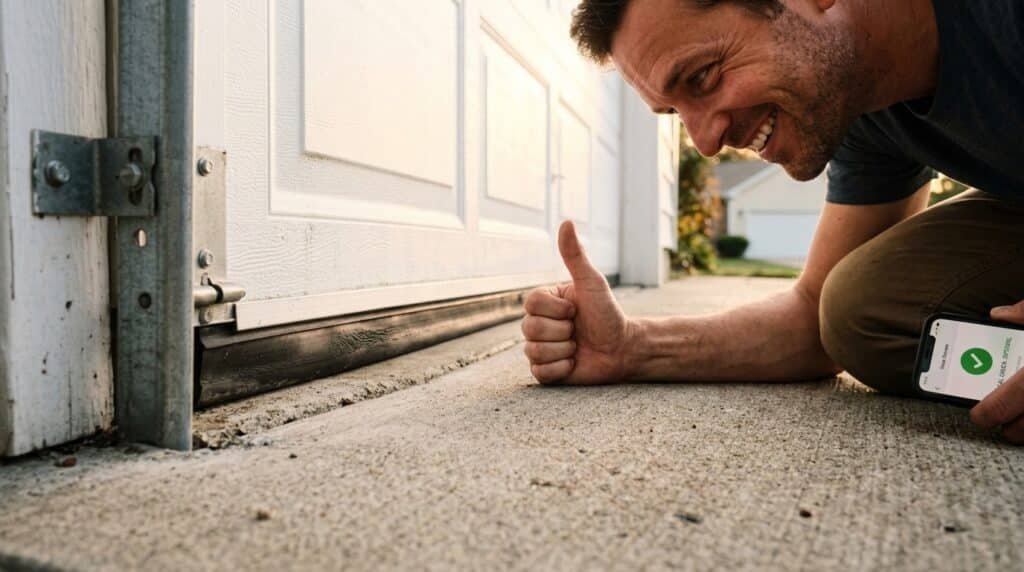
A garage door bottom seal, also known as a door sweep, astragal, or door bottom sealer, is a flexible strip of rubber, vinyl, or silicone attached to the bottom of the garage door to block out water, pests, and debris. Door bottom seals are essential weather-sealing systems for garage doors, preventing energy loss and protecting your garage interior. Whether you need a garage door seal, a shower door bottom seal, a bathroom door bottom seal, an exterior door bottom seal, or a front door bottom seal for weather protection, proper door sealing is critical for home comfort and efficiency.

Replacing a worn garage door bottom seal or other door bottom seals can improve insulation and reduce energy costs by up to 30%. This comprehensive guide covers garage door bottom seals, shower door bottom seals, entry door seals, screen door bottom seals, and other exterior door bottom seal solutions. You’ll learn how to install garage door bottom seals, understand garage door bottom seal replacement kits, and discover the best dodooreal bottom seal solutions for your specific needs.

Whether you need to seal the bottom of a door in your garage, entry, or bathroom—including sliding shower door bottom seals, framed shower door bottom seal strips, swinging shower door bottom seal solutions, or standard garage door seals for the bottom of your door- this guide helps you select and install the perfect door bottom seal solution for your property.


⚡ TL;DR – QUICK START (60 Seconds)

NEED A SEAL? ANSWER 3 QUESTIONS:

Q1: Floor smooth? YES→T-Style | NO→Bulb
Q2: Rodents? YES→RodentBLOCK | NO→Continue
Q3: Want insulation? YES→Duzzy Kit | NO→T-Style

💰 Cost: $40-160 (DIY saves labor)
⏱️ Time: 1-2 hours installation
📏 Measure: Width, gap height, track type

🎯 NEXT STEP: Find your situation in the Scenario Guide


⚡ 5-MINUTE DECISION TREE

QUESTION 1: Is your garage floor smooth and level?

YES → Go to Question 2
NO → Use BULB SEAL (Works on uneven floors)


QUESTION 2: Do you have rodent/pest problems?

YES → Use RODENTBLOCK SEAL (Xcluder protection)
NO → Go to Question 3


QUESTION 3: Is your garage door track intact?

YES → Use T-STYLE SEAL (Cheapest option)
NO → Use PROSEAL KIT (Complete replacement)


QUESTION 4 (Optional): Do you want insulation too?

YES → Use DUZZY KIT (Maximum performance)
NO → Use T-STYLE SEAL (Basic protection)


SPECIAL CASES:

🚿 Shower door leaking? → Use SHOWER DOOR SEAL
🚪 Front door drafts? → Use ENTRY DOOR SEAL
🐝 Bugs in the garage? → Use BRUSH SEAL (supplementary)


Finding Your Section:

🚪 Need Garage Door Seal? → Go to PART 1 (Seal Types) or PART 2 (Products)

🚿 Need Shower Door Seal? → Go to PART 1B (Shower Door Seals)

🏠 Need Entry/Exterior Door Seal? → Go to PART 1B (Entry & Exterior Doors)

🔧 How To Install/Replace? → Go to PART 4 (Installation Methods)

Common Questions? → Go to PART 5 (FAQs)

📏 Measure Your Door? → Go to PART 3 (Measurement Guide)

Need Product Recommendation? → Go to Checklist (Bottom of Guide)


📊 PRODUCT COMPARISON AT A GLANCE

PAPILLON SEAL
🏆 Best for: Multiple door types
💵 Price: $60-100
⭐ Rating: 5/5
🏃 Install: 1-2 hrs


PROSEAL KIT
🏆 Best for: Track replacement
💵 Price: $80-150
⭐ Rating: 5/5
🏃 Install: 2-4 hrs


RODENTBLOCK SEAL
🏆 Best for: Pest control
💵 Price: $100-180
⭐ Rating: 5/5
🏃 Install: 1-2 hrs


DUZZY KIT
🏆 Best for: Max insulation
💵 Price: $100-160
⭐ Rating: 5/5
🏃 Install: 2-4 hrs


BUDGET OPTION:
Generic T-Style Seal
💵 Price: $40-80
⭐ Rating: 4/5
🏃 Install: 1-2 hrs


BEST VALUE:
Papillon + DIY Install
💵 Price: $60-100
⭐ Rating: 5/5
🏃 Install: 1-2 hrs


1. T-STYLE SEAL

Material Composition: EPDM rubber, vinyl, or silicone in an inverted “T” shape profile for effective garage door bottom protection.

Physical Specifications:

Profile: Inverted “T” (capital T shape)
Installation: Slides into single or double-channel retainer track
Material: EPDM rubber, vinyl, or silicone
Width: 1.25″-2.5″ typical (top of T)
Height: 0.75″-1.5″ typical
Stem Width: 0.25″-0.5″ (fits into track)
Temperature Range: -40°F to 284°F (EPDM)
Flexibility: Moderate
Cost Per Foot: $1-3 per linear Foot
Standard Lengths: 12-20 feet (trimmed to size)

Characteristics:

  • Most common residential garage door seal choice
  • Slides into retainer track for secure fit
  • Easy installation (no tools often required)
  • Durable, long-lasting weather seal solution
  • Works best on smooth, level garage door bottoms
  • Professional appearance
  • Requires matching retainer track width

How It Works: The inverted T-shape stem slides into the horizontal channel track. As the garage door lowers, this weather seal compresses against the floor, creating a weathertight barrier that protects your garage interior—released when the door opens for smooth operation.

Best For:

  • Smooth garage floors and overhead garage door bottom seal applications
  • Level surfaces for any garage door bottom weather seal
  • Standard residential overhead doors
  • Most common garage door seal bottom applications
  • Professional appearance is a priority for the garage bottom door seal
  • Long-term durability for garage door bottom seal replacement
  • Entry doors with smooth thresholds require door bottom seal strips
  • Exterior doors need weather sealing at the bottom of the door thresholds
  • Screen doors with proper t end garage door bottom seal configuration

Installation Difficulty: Easy to Moderate (1-2 hours typical)

Installation Difficulty: Easy to Moderate (1-2 hours typical)

Typical Cost Range:

  • Material: $50-150 for a 16-20 ft seal
  • Installation: DIY (no cost) or professional $100-200
  • Total: $50-350

Advantages:

  • Most common (easiest to replace)
  • Professional appearance
  • Durable long-term
  • Easy installation (usually)
  • Effective weatherproofing
  • Compatible with most doors
  • Affordable option

Disadvantages:

  • Requires a smooth floor
  • Track type must match
  • Not ideal for uneven surfaces
  • The stem can become worn
  • Track cleaning necessary

Maintenance:

  • Annual inspection
  • Track cleaning (debris removal)
  • Replace every 5-10 years
  • Lubricate the track annually

Lifespan: 5-10 years


2. BULB (U-STYLE) SEAL

Material Composition: EPDM rubber or vinyl in a tubular or rounded U-shape for flexible garage door bottom sealing.

Physical Specifications:

Profile Shape: U-shaped or tubular (rounded)
Installation Method: Nailed or screwed directly to the garage door bottom
Material: EPDM rubber or vinyl
Width: 2.5″-4″ typical
Height: 1.5″-2.5″ typical
Flexibility: High (compresses easily)
Temperature Range: -40°F to 180°F typical
Cost Per Foot: $1-2 per linear Foot
Compression Resistance: Excellent (adapts to uneven surfaces)

Characteristics:

  • Tubular/rounded weather seal design
  • Nailed directly to the door bottom
  • Highly flexible for adaptation
  • Compresses when dodoorloses
  • Adapts to uneven garage door bottoms
  • Ideal for rough surfaces
  • Excellent gap adaptation capability

How It Works: The rounded bulb profile compresses when the garage door lowers against uneven floors. The flexibility of the rubber material allows full contact despite surface irregularities. This door bottom seal creates a barrier through compression rather than rigid track fitting, making it ideal for problem installations.

Best For:

  • Uneven or rough garage floors
  • Concrete with cracks
  • Sloped surfaces
  • Flexible weather seal adaptation needed
  • Doors that don’t seal perfectly
  • Maximum weather protection

Installation Difficulty: Easy (1-2 hours, requires nails/screws)

Installation Difficulty: Easy (1-2 hours, requires nails/screws)

Typical Cost Range:

  • Material: $40-120 for a 16-20 ft seal
  • Hardware (nails/screws): $5-15
  • Installation: DIY or professional $80-150
  • Total: $45-285

Advantages:

  • Highly flexible
  • Adapts to uneven floors
  • Excellent compression
  • Direct to door installation
  • Good for problem floors
  • Effective weatherproofing
  • Budget-friendly

Disadvantages:

  • Less professional appearance
  • Requires fastening (nails visible)
  • Less formal look
  • May collect debris in a bulb shape
  • Shorter lifespan than T-style
  • Requires nails/screws

Maintenance:

  • Annual inspection
  • Remove debris from the bulb
  • Tighten fasteners annually
  • Replace every 3-7 years
  • Check compression

Lifespan: 3-7 years


3. BEADED SEAL

Material Composition: EPDM rubber or vinyl with a rounded bead profile.

Physical Specifications:

Profile Shape: Rounded beads that snap into grooves
Installation Method: Snaps into circular groove retainer
Material: EPDM rubber or vinyl
Bead Diameter: 0.5″-0.75″ typical
Width: 1.5″-2.5″
Firmness: Firm (less flexible than bulb)
Temperature Range: -40°F to 180°F typical
Cost Per Foot: $1.50-3 per linear Foot
Retainer Type: Double-channel groove

Characteristics:

  • Beaded profile snaps into circular grooves
  • Used in a double-channel retainer seal rather than standard bulb types
  • Rounded bead design
  • Professional installation is often recommended
  • Requires matching groove width

How It Works: Rounded beads on the seal profile snap into circular grooves in the retainer track. Snapping action creates a positive mechanical connection. Beads compress slightly against the floor when the door closes, creating a watertight seal.

Best For:

  • Double-channel retainer doors
  • Ssealrigid seal desired
  • Professional installation
  • Standard residential doors
  • Balance between flexibility and firmness
  • Doors with circular groove retainers

Installation Difficulty: Moderate (requires proper tool, 1-3 hours)

Typical Cost Range:

  • Material: $60-180 for 16-20 ft seal
  • Installation: DIY or professional $100-250
  • Total: $60-430

Advantageseal

  • irmer seal than bulb
  • Positive mechanical connection
  • Professional appearance
  • Good flexibility balance
  • Works with double-channel retainers
  • Durable option

Disadvantages:

  • Requires matching groove width
  • Installation more complex
  • May need a special tool
  • Less common than T-style
  • More expensive
  • Replacement is harder if the original is worn

Maintenance: is 

  • Annual inspection
  • Keep grooves clean
  • Check snap connection
  • Replace every 5-8 years
  • Monitor for loosening

Lifespan: 5-8 years


4. J-TYPE SEAL

Material Composition: EPDM rubber or vinyl in a hook-shaped J profile.

Physical Specifications:

Profile Shape: Hook-shaped like the letter “J.”
Installation Method: Bolted to the door bottom
Material: Heavy-duty EPD or vinyl
Width: 3″-5″ typical
Height: 2″-3″ typical
Firmness: Very firm (rigid hook)
Temperature Range: -40°F to 284°F
Cost Per Foot: $3-6 per linear Foot
Applications: Commercial/industrial

Characteristics:

  • Hook-shaped profile
  • Heavy-duty industrial design
  • Bolted installation
  • seal firm seal
  • Large footprint
  • Commercial/industrial use
  • High-performance sealing

How It Works: The J-shaped hook profile creates a mechanical lock against the floor edge—heavy-duty rubber provides a firm, non-sealable seal. Hook design extends beyond the door, creating a comprehensive weather barrier. Bolted installation provides maximum security.

Best For:

  • Commercial garage doors
  • Industrial applications
  • Heavy-duty usage
  • Maximum weather protection
  • High-traffic facilities
  • Loading dock doors
  • Maximum protection required

Installation Difficulty: Moderate to Complex (requires bolting, 2-4 hours)

Typical Cost Range:

  • Material: $150-300 for a 16-20 ft seal
  • Installation: Professional recommended $200-400
  • Total: $350-700

Advantages:

  • Heavy-duty construction
  • seal firm seal
  • Commercial-grade
  • Excellent durability
  • Maximum weather protection
  • High-performance design

Disadvantages:

  • Very expensive
  • Overkill for residential
  • Professional installation needed
  • Not for standard residential doors
  • Rigid (not adaptable)
  • Limited suppliers

Maintenance:

  • Annual inspection
  • Bolt tightening check
  • Clean the seal regularly
  • Replace every 7-10 years
  • Professional service recommended

Lifespan: 7-10 years


5. BRUSH SEAL

Material Composition: Dense synthetic bristles attached to backing material.

Physical Specifications:

Profile Shape: Dense bristle brush
Installation Method: Nailed or screwed to the floor’s bottom
Material: Synthetic nylon or polypropylene bristles
Bristle Density: High (600-1,000+ bristles per sq inch)
Width: 2.5″-4″ typical
Height: 1.5″-2.5″ typical
Stiffness: Medium (bristles flex)
Temperature Range: -30°F to 150°F typical
Cost Per Foot: $1.50-3 per linear Foot
Dust/Debris Protection: Excellent

Characteristics:

  • Dense synthetic bristles
  • Excellent for irregular surfaces
  • Great for dust/insect control
  • Less effective against heavy rain
  • Nailed to the door bottom
  • Flexible bristle design
  • Visible installation

How It Works: Dense bristles flex to accommodate uneven surfaces. The gap between bristles allows air circulation while blocking dust, insects, and small debris. Heavy rain may push water past the bristles due to gaps. Best used with a supplementary water barrier.

Best For:

  • Dust and insect protection
  • Irregular or rough floors
  • Dry climates
  • Dust control priority
  • Pests (combined with other seals)
  • secondaryy seal with a water barrier
  • Noise reduction

Installation Difficulty: Easy (nailed to dodoor1-2 hours)

Typical Cost Range:

  • Material: $35-100 for 16-20 ft seal
  • Hardware: $5-10
  • Installation: DIY or professional $60-120
  • Total: $40-230

Advantages:

  • Excellent dust control
  • Great insect prevention
  • Adapts to uneven surfaces
  • Affordable option
  • Easy installation
  • Noise reduction
  • Flexibility

Disadvantages:

  • Poor rain protection (alone)
  • Not for heavy water exposure
  • Bristles can clog with debris
  • Less durable than rubber
  • Requires supplementary sealing
  • Visible installation
  • Temperature limited

Maintenance:

  • Frequent bristle cleaning
  • Remove accumulated debris
  • Inspect bristles regularly
  • Replace every 3-5 years
  • Supplement with a water barrier

Lifespan: 3-5 years


PART 1B: OTHER DOOR BOTTOM SEAL APPLICATIONS

SHOWER DOOR BOTTOM SEALS

Shower Door Bottom Seal Types: Shower door bottom seals prevent water leakage from shower enclosures. Options include:

Glass Shower Door Bottom Seals:

  • Framed shower door bottom seal strips
  • Frameless glass shower door bottom seals
  • Sliding shower door bottom seals
  • Swinging shower door bottom seasystemom seal for shower doors (magnetic types)

Shower Door Seal Bottom Specifications:

Material: Silicone, vinyl, or rubber for water resistance
Width: 1-2 inches typical
Temperature: Flexible -10°F to 150°F
Cost: $20-60 per strip
Installation: Adhesive or mechanical fastening

Shower Door Bottom Seal Installation: Shower door bottom seal replacement typically requires cleaning the glass, applying adhesive, and positioning the seal strip at the bottom of the shower door frame. Bottom seal strips for glass shower doors should be replaced every 2-3 years for optimal water containment.

Best For:

  • Preventing shower water leaks
  • Glass shower door enclosures
  • Frameless shower door systems
  • Sliding shower door applications
  • Swinging shower door configurations
  • Bathroom water damage prevention

ENTRY AND EXTERIOR DOOR BOTTOM SEALS

Entry Door Seals: Entry door bottom seals and front door bottom seals protect entryways from weather.

Exterior Door Bottom Seal Options:

  • Entry door bottom seal strips
  • Front door bottom seals with weather protection
  • Exterior door bottom seal replacement kits
  • Entry door bottom seal replacement options
  • Storm door bottom seal replacement
  • Screen door bottom seals

Exterior Door Specifications:

Material: EPDM rubber, vinyl, or silicone
Width: 1.5-3 inches for exterior applications
Weather Rating: Full weather protection (-40°F to 140°F typical)
Cost: $30-80 per entry door seal
Installation: Screw or nail fastening, adhesive backing options

Exterior Door Bottom Seal Application: Entry door seals and exterior door bottom seals provide weather protection at building entrances. Screen door bottom seals offer insect protection. Replacing the bottom seal on the front door improves heating/cooling efficiency and reduces drafts.

Best For:

  • Entry door weather protection
  • Exterior door sealing
  • Front door bottom seal applications
  • Screen door insect prevention
  • Storm door bottom seal replacement
  • Entrance door weatherization

SPECIALTY AND COMMERCIAL DOOR SEALS

Automatic and Sliding Door Seals:

  • Automatic door bottom seals
  • Sliding door bottom seals (for pocket doors, sliding glass)
  • Dishwasher bottom door seals (Frigidaire, other brands)
  • Commercial overhead door bottom seals

Specifications:

  • Various materials for specific applications
  • Pressure-activated or mechanical fastening
  • Diverse cost ranges based on application
  • The installation method varies significantly

Best For:

  • Sliding door applications
  • Automatic doors requiring sealing
  • Appliance sealing (dishwashers)
  • Commercial building applications

PART 2: TOP RECOMMENDED PRODUCTS

PAPILLON GARAGE DOOR BOTTOM SEAL STRIP

Specifications:

Material: High-quality EPDM rubber for garage door bottom weather protection
Temperature Range: -40°F to 284°F for reliable garage door seal bottom performance
Design Features: Universal threshold, anti-slip ridges for door bottom seal stability
Safety Feature: Yellow safety strip for visibility on the garage door seal’s bottom
Application: Watertight barrier on various garage door bottom seal thresholds
Standard Length: 16-20 feet (trimmed to size for garage door bottom seal replacement)
Width: 2.25″-2.5″ for standard garage door seal bottom installation
Cost: $60-100 for a complete garage door bottom seal kit
Seal Type: Universal garage door bottom seal for most door types

Characteristics:

  • Premium EPDM rubber garage door seal bottom material
  • Universal threshold compatibility for garage door seals
  • Anti-slip ridge design for garage door bottom sealer
  • Visible safety marking on the door seal bottom
  • Professional-grade door bottom seal solution
  • Wide temperature range for garage door seals for the bottom
  • Excellent durability for garage door bottom weather seal applications

Best For:

  • Multiple threshold types require a door seal at the bottom
  • Water protection is a priority for the garage door seal’s bottom
  • Premium durability is desired for garage door bottom seals
  • Temperature extremes affecting Dodooreals ‘ bottom
  • Professional appearance for garage door seals at the bottom
  • Long-term reliability for garage door bottom seal replacement

Installation Method: Universal garage door bottom seal slides into standard T-track retainer or can be nailed to the garage door for bottom seal installation

Effectiveness Rating: ⭐⭐⭐⭐⭐ (Excellent)


PROSEAL GARAGE DOOR BOTTOM SEAL KIT

Specifications:

Components: Complete seal kit with PVC tracks, seals, and mounting screws
Material: Durable PVC vinyl weather seal material
Flexibility: Remains flexible at extreme low temperatures
Design: Conforms to the floor shape automatically
Includes: Complete garage door seal kit for full replacement
Best For: Track and door bottom seal replacement
Cost: $80-150
Standard Length: 16-20 feet

Characteristics:

  • Complete seal kisolution (sealackck + seal)
  • PVC construction for durability
  • Low-temperature flexible weather seal
  • Self-conforming garage door bottom design
  • Professional installation possible
  • Includes all mounting hardware
  • Comprehensive garage door seal solution

Best For:

  • Complete seal kit replacement needed
  • Garage door track upgrade desired
  • Damaged retainer track requiring replacement
  • Professional appearance priority
  • Homeowners wanting a comprehensive seal kit solution
  • Multiple track and seal issues

Installation Method: Complete garage door bottom seal kit installation (2-4 hours)

Effectiveness Rating: ⭐⭐⭐⭐⭐ (Excellent)


RODENTBLOCK GARAGE DOOR SEALS (WITH XCLUDER)

Specifications:

Specialty Feature: Xcluder fill fabric (pest barrier)
Protection: Keeps out rats, mice, and pests
Material: Xcluder + rubsealvinyl seal
Best For: Commercial warehouses, pest-prone areas
Effectiveness: Highly recommended for pest control
Cost: $100-180
Coverage: 16-20 feet standard

Characteristics:

  • Specialized pest protection
  • Xcluder fill fabric technology
  • Combination seal + barrier
  • Commercial-grade design
  • Maximum pest prevention
  • Rodent/insect blocking
  • Proven effectiveness

Best For:

  • Commercial buildings
  • Warehouses with pest issues
  • Residential areas with rodent problems
  • Maximum pest protection
  • Storage facilities
  • Food processing areas
  • Persistent pest issues

Installation Method: Standard seal installation with reinforced fastening

Effectiveness Rating: ⭐⭐⭐⭐⭐ (Excellent for pest control)


DUZZY UNIVERSAL GARAGE DOOR SEALS KIT

Specifications:

Insulation Layers: 10 insulation round layers for maximum weather seal performance
Design: Upgrade seal kit design with brush strip integrated
Includes: Complete kit: aluminum T-tracks, brush strips, weatherstrip
Features: Dual protection seal kit (seal + brush combination)
Noise Reduction: Superior noise dampening for the garage door bottom
Thermal Insulation: Enhanced insulation properties for the garage door bottom
Material: Aluminum tracks + rubber/brush weather seal components
Cost: $100-160
Coverage: 16-20 feet

Characteristics:

  • Comprehensive seal kit (tracks + seal + brush)
  • Multi-layer insulation technology
  • Combination seal kit with integrated brush design
  • Advanced noise reduction features
  • Premium thermal weather seal performance
  • Professional seal kit installation
  • Complete garage door bottom sealing solution

Best For:

  • Maximum garage door bottom insulation needed
  • Noise control and weather seal priority
  • Complete system upgrade with seal kit
  • Thermal efficiency improvements
  • Dust and weather protection combined
  • Hybrid door bottsealeals (seal + brush solution)
  • Premium garage door bottom weather protection

Installation Method: Complete garage door bottom seal kit installation (3-4 hours)

Effectiveness Rating: ⭐⭐⭐⭐⭐ (Excellent for insulation & noise)


⭐ QUICK REFERENCE: SEAL TYPE COMPARISON

Choosing Your Seal Type – At a Glance:

T-STYLE SEAL Best for: Smooth, level garage floors
Cost: $1-3/ft ($50-150 total)
Installation: Easy (1-2 hrs)
Lifespan: 5-10 years
⭐⭐⭐⭐⭐ Overall

BULB/U-STYLE SEAL Best for: Uneven or rough floors
Cost: $1-2/ft ($40-120 total)
Installation: Easy (1-2 hrs)
Lifespan: 3-7 years
⭐⭐⭐⭐ Overall

BEADED SEAL Best for: Double-channel retainers
Cost: $1.50-3/ft ($60-180 total)
Installation: Moderate (1-3 hrs)
Lifespan: 5-8 years
⭐⭐⭐⭐ Overall

J-TYPE SEAL Best for: Commercial/heavy-duty
Cost: $3-6/ft ($150-300 total)
Installation: Complex (2-4 hrs)
Lifespan: 7-10 years
⭐⭐⭐⭐⭐ Overall (Heavy Duty)

BRUSH SEAL Best for: Dust/insect control
Cost: $1.50-3/ft ($35-100 total)
Installation: Easy (1-2 hrs)
Lifespan: 3-5 years
⭐⭐⭐ Overall (Dust only)


💰 COST COMPARISON SUMMARY

Budget Options (<$100 total):

  • Brush seal strips
  • Basic bulb seals
  • Brush + DIY installation

Mid-Range Options ($100-300 total):

  • T-style seals
  • Papillon premium seals
  • Bulb kit with hardware

Premium Options ($300-600+ total):

  • Complete seal kitssealack + seal)
  • Duzzy insulation systems
  • ProSeal complete kits
  • Professional installation

Cost Savings Tips:

  • DIY installation saves $100-400
  • T-style is cheaper than complete kits
  • Generic brands = name brands in quality
  • Buy exactly what you need (avoid oversizing)
  • Annual maintenance extends life 2-3 years

STEP 1: MEASURE DOOR WIDTH

Process:

  1. Measure the exact width from side to side of your garage door opening
  2. Record the measurement in inches
  3. Purchase a garage door seal 1-2 inches longer for trimming
  4. Account for existing side seals if present

Example: 16-foot wide garage door bottom = purchase 16-20-foot garage door seal

Standard Residential Garage Door Seal Sizes:

  • Single car: 9 feet (purchase 12-foot garage door seal)
  • Two-car: 16 feet (purchase 18-20 foot weather seal kit)
  • Large/custom: 18-20+ feet (purchase custom length seal kit)

STEP 2: CHECK GAP HEIGHT

Process:

  1. Measure the gap between the garage door bottom and the floor in several places
  2. Check the center and both sides of the garage door
  3. Record the largest measurement
  4. Account for any slope or unevenness in the garage door bottom area

Gap Height to Door Bottom Seal Width Recommendation:

0.5″-1″ gap: 2″-3″ width weather seal
1″-1.5″ gap: 3″-4″ width door-to-door seal
1.5″-2″ gap: 4″-5″ width garage door seal
2″-2.5″ gap: 5″-6″ width seal kit
2.5″+ gap: 6″+ width or bulb door bottom seal

Important:

  • Use the largest gap measurement found across the garage door bottom
  • Uneven garage door bottoms may require a bulb/flexible seal solution
  • Slope requires a higher rear measurement for a proper weather seal fit

STEP 3: IDENTIFY RETAINER TYPE

Process:

  1. Inspect the bottom of your garage door
  2. Determine if the seal kit slides into a track or nails to the garage door bottom
  3. If a track exists, measure the track width and depth
  4. Identify the profile type (T-shaped, U-shaped, beaded)

Retainer Profile Guide:

T-Style Track Measurement for Garage Door Seal:

  • Measure the width of the horizontal channel for the weather seal
  • Common sizes: 0.25″, 5/16″, 3/8″
  • Record depth of channel (usually 0.75″-1″) for seal kit fit

Bulb/Direct Installation for Garage Door Bottom:

  • No track present – garage door seal nails directly to the door bottom
  • The garage door bottom is flat or slightly angled
  • Flexibility is more important than track fit for the weather seal

Beaded/Groove for Door Bottom Seal Kit:

  • Identify circular grooves in the garage door’s bottom area
  • Measure groove diameter for proper seal kit fit
  • Count grooves (single or double) for the weather seal type

STEP 4: DETERMINE SEAL KIT NEEDS

Decision:

  • Seal Only: Replacing worn garage door seal in existing track ($50-150)
  • Seal Kit with Track: New track installation required for garage door bottom ($100-350)
  • Complete Seal Kit: Premium insulation sealack + seal for garage door ($100-200)

Questions to Consider:

  • Is the existing track damaged or worn (requiring a complete seal kit)?
  • Is the garage door seal sliding in the track or nailed to the bottom of the garage door?
  • What condition is your retainer track in?
  • Do you need an insulation upgrade with your seal kit, or just weather-seal protection?
  • What is your budget for the garage door seal solution?

🎯 WHAT SHOULD I BUY? SCENARIO GUIDE

Scenario 1: “My garage door seal is torn, door is smooth.”

Buy: T-Style Seal (Papillon or generic)
💰 Cost: $60-100
⏱️ Time: 1-2 hours DIY
📊 Success Rate: 95%

→ Purchase T-style, go to Installation Methods


Scenario 2: “I have an uneven/cracked garage floor.r”

Buy: Bulb/U-Style Seal Kit
💰 Cost: $40-120
⏱️ Time: 1-2 hours DIY
📊 Success Rate: 90%

→ Purchase a bulb seal, follow the installation guide


Scenario 3: “I want maximum insulation and noise reduction.”

Buy: Duzzy Universal Seal Kit (complete)
💰 Cost: $100-160
⏱️ Time: 2-4 hours or professional
📊 Success Rate: 98%

→ Order Duzzy kit, professional installation recommended


Scenario 4: “I have rodents/pests getting in.”

Buy: RodentBLOCK Seal with Xcluder
💰 Cost: $100-180
⏱️ Time: 1-2 hours DIY
📊 Success Rate: 99% (pest control)

→ Purchase RodentBLOCK, install following steps


Scenario 5: “My garage track is damaged/worn.”

Buy: ProSeal Complete Kitsealack + seal)
💰 Cost: $80-150
⏱️ Time: 2-4 hours or professional
📊 Success Rate: 100% (complete system)

→ Order ProSeal kit, professional installation advised


Scenario 6: “I need a shower door seal, not a garage.”

Buy: Glass Shower Door Seal Strip
💰 Cost: $20-60
⏱️ Time: 20-30 minutes DIY
📊 Success Rate: 95%

→ See SHOWER DOOR SEALS section for details


Scenario 7: “Entry/front door needs sealing.”

Buy: Entry Door Bottom Seal Kit
💰 Cost: $30-80
⏱️ Time: 30 minutes – 1 hour DIY
📊 Success Rate: 90%

→ See the ENTRY DOOR SEALS section for details


PART 4: INSTALLATION METHODS

T-STYLE SEAL INSTALLATION

Tools Required:

  • Measuring tape
  • Utility knife (trim seal)
  • Hand saw (if wood track)
  • Possibly a small hammer

Steps:

  1. Clean track completely (remove debris/rust)
  2. Measure and mark cusealne onseall
  3. Cut the seal to length with a utility knife
  4. Lubricate the track with silicone spray
  5. Slide the seal into the track starting at one side
  6. Work seal along the full length
  7. Trim any excess at the corner
  8. Verify seal compresses properly

Time Required: 1-2 hours


BULB SEAL INSTALLATION

Tools Required:

  • Measuring tape
  • Utility knife
  • Hammer or screw gun
  • Galvanized nails (2″) or screws
  • Level

Steps:

  1. Clean the door bottom thoroughly
  2. Measure and mark fastening points (every inch)
  3. Cut seal to exact length
  4. Align the seal with the door bottom
  5. Nail or screw through the backing every 6 inches
  6. Ensure even compression against the floor
  7. Verify the level of installation
  8. Test door movement

Time Required: 1-3 hours


PART 5: FREQUENTLY ASKED QUESTIONS

Q: How often should I replace garage door bottom seals?

A: T-style garage door seal bottom: 5-10 years. Bulb door bottom seals: 3-7 years. Brush seal strips: 3-5 years. Shower door bottom seal strips: 2-3 years. Depends on weather exposure and frequency of use. Door seal bottom replacement timing varies by application.


Q: How do I replace a garage door bottom seal?

A: For garage door bottom seal replacement: (1) Clean the track/door bottom thoroughly, (2) Measure and cut the new door seal bottom to size, (3) For T-style: slide into track; for bulb: nail to door (4) Test door movement. Replacing a garage door bottom seal typically takes 1-3 hours. Follow the manufacturer’s instructions for replacing a garage door bottom seal for specific installation details.


Q: How to install a garage door bottom seal?

A: How to install the garage door bottom seal depends on the seal type. For garage door seal bottom installation: measure the door width, identify the retainer type, clean the surface, and follow the installation method (sliding or fastening). How to install a garage door bottom seal kit depends on whether you’re replacing an existing seal or installing a complete kit. Refer to the installation guide for step-by-step instructions for installing the garage door bottom seal.


Q: How to install the shower door bottom seal?

A: How to install shower door bottom seal strip: (1) Clean glass thoroughly, (2) Dry completely, (3) Peel backing (if adhesive), (4) Apply shower door seal bottom firmly, (5) Press for full contact. For glass shower door seal bottom installation, ensure proper frame fit. Replacing the shower door bottom seal strip typically takes 20-30 minutes.


Q: Can I install a garage door seal myself?

A: Yes – T-style and bulb door bottom seals are DIY-friendly (1-3 hours). More complex systems (track replacement, complete seal kits) may benefit from professional installation of garage door seal bottoms. Installing a garage door bottom seal is typically a straightforward DIY project for most homeowners.


Q: What’s the Cost of professional garage door seal bottom replacement?

A: Professional garage door seal bottom replacement typically costs $100-400, depending on type and complexity. How to install a garage door bottom seal yourself saves this labor cost. Home Depot offers a garage door bottom seal, and other retailers offer seal kits.


Q: How much can a new door seal bottom save on energy costs?

A: Up to 30% reduction in heating/cooling loss from garage door seal bottom replacement, or door seals bottom upgrades—typical savings: $50-200 per year. Exterior door bottom seal and front door seal replacement provide similar energy savings.


Q: Which seal is best for the bottom of a door for uneven floors?

A: Bulb seal – flexible rubber adapts to floor irregularities better than rigid T-style seals. Ideal for garage door bottom seals in uneven-floor applications. If you need to seal the bottom of a door on an uneven surface, bulb seals are optimal.


Q: What if my garage door has no retainer track?

A: Use a bulb seal (nails directly to the door bottom) or install a new T-track system for the garage door seal ($300-600). For other doors without retainers, adhesive-backed bottom door seal strips work well.


Q: Can I use a brush seal alone for water protection?

A: No – brush seals (door seal strips) are better for dust/insects than water. Combine wita h rubber garage door se, al bott, om or other door bottom seal types. Bottom door seals should include solid rubber for water resistance.


Q: Should I seal the sides of the garage door too?

A: Yes – weather stripping on sides improves insulation by 10-20% additional. The bottom garage door seal, combined with side sealing, provides comprehensive bottom-door weather protection.


Q: How do I know which garadoortom seal retainer width I have?

A: Measure the horizontal channel at the garage door bottom. Common garage door seals bottom widths: 0.25″, 5/16″, 3/8″. This determines which bottom type of garage door seal fits your retainer track.


Q: Does temperature damage door bottom seals?

A: Yes – cheap vinyl fails in extreme cold. Quality EPDM rated -40°F to 284°F performs better. Door seat the ALS bottom needs appropriate temperature ratings for your climate.


Q: What’s best: Home Depot garage door bottom seal or specialty brands?

A: Both work well. Home Depot garage door bottom seal offers convenience. Specialty brands like Clopay and Wayne Dalton offer engineered garage door solutions. Compare garage door seals based on application requirements.


Q: How do I replace the bottom seal on a garage door with an overhead door system?

A: Overhead door bottom seal replacement follows the same process as standard garage doors. Check the specifications of your overhead garage door bottom seal before replacement.


Q: How to change the garage door bottom seal if it is bonded?

A: How to change the garage door bottom seal when bonded: (1) Use a heat gun to soften the adhesive, (2) Carefully peel off the old seal, (3) Clean the residue, (4) Install the new seal per instructions. Replacing the bottom door seal on bonded seals requires patience.


Q: How often should you replace the shower door’s bottom seal?

A: Every 2-3 years for shower door bottom seal strips. The bottom of the glass shower door seal is constantly exposed to moisture. Shower door bottom seal replacement strip is simpler than garage door systems.


Q: Can I repair a door bottom seal or must I replace?

A: Small damage to the bottom door seal strips: repair temporarily with caulk. Major damage requires complete bottom door seal replacement. Most door-bottom sealing requires a full replacement for optimal performance.


🛒 BEFORE YOU GO SHOPPING – PREPARATION CHECKLIST

Measurements to Collect:

  • ✅ Door width (inches)
  • ✅ Gap height at 3 points (left, center, right)
  • ✅ Largest gap measurement
  • ✅ Track width (if sliding into track)
  • ✅ Track type (T-style, beaded, U-style, none)

Photos to Take:

  • ✅ Photo of door bottom/threshold
  • ✅ Photo osealrrent seal (if replacing)
  • ✅ Photo of track (if applicable)
  • ✅ Photo showing gap size

To Know Before Shopping:

  • ✅ Your seal type needed (T, Bulb, Beaded, etc.)
  • ✅ Your door opening size
  • ✅ Your floor condition (smooth, uneven, cracked)
  • ✅ Any special needs (pests, insulation, noise)

Optional Research:

  • ✅ Check Home Depot/Amazon prices
  • ✅ Read product reviews (20+ reviews minimum)
  • ✅ Compare installation difficulty ratings
  • ✅ Check return policies

Tools You’ll Need:

  • ✅ Measuring tape
  • ✅ Utility knife (for cutting)
  • ✅ Nails/screwssealingng seal)
  • ✅ Silicone lubricant spray

Installation Supplies:

  • ✅ Cleanup rags
  • ✅ Rubbing alcohol (old adhesive removal)
  • ✅ Heat gun (optional, for stuck seals)
  • ✅ level (check for gaps)

BOTTOM LINE: COMPREHENSIVE DOOR SEAL SELECTION CHECKLIST

For Garage Door Weather Protection:

  • ✅ T-Style Garage Door Seal (smooth floor)
  • ✅ Papillon Weather Seal (any threshold type)
  • ✅ Clopay Garage Door Seal Bottom (branded option)
  • ✅ Wayne Dalton Garage Door Bottom Seal (overhead doors)

For Garage Door Uneven Floors:

  • ✅ Bulb/U-Style Door Bottom Seal
  • ✅ Duzzy Universal Seal Kit (inssealion + seal)
  • ✅ Garage Door Bottom Seal for Uneven Floor applications

For Pest Control with Weather Seal:

  • ✅ RodentBLOCK Garage Door Seal
  • ✅ Brush Seal Kit (supplementary protection)

For Maximum Garage Door Insulation:

  • ✅ Duzzy Universal Garage Door Seal Kit
  • ✅ ProSeal Complete Weather Seal Kit
  • ✅ Garage Door Seals for Bottom of Door (premium types)

For Shower Door Bottom Sealing:

  • ✅ Glass Shower Door Bottom Seal Strip
  • ✅ Framed Shower Door Bottom Seal Strip Replacement
  • ✅ Sliding Shower Door Bottom Seal
  • ✅ Swinging Shower Door Bottom Seal
  • ✅ Shower Door Seal Bottom (magnetic types)

For Entry & Exterior Door Sealing:

  • ✅ Entry Door Bottom Seal
  • ✅ Front Door Bottom Seal Replacement
  • ✅ Exterior Door Bottom Seal Kit
  • ✅ Screen Door Bottom Seal
  • ✅ Storm Door Bottom Seal Replacement

For Commercial/Heavy-Duty:

  • ✅ J-Type Garage Door Seal
  • ✅ Overhead Garage Door Bottom Seal
  • ✅ RodentBLOCK Seal Kit System
  • ✅ Automatic Door Bottom Seal

For Specialty Applications:

  • ✅ Dishwasher Bottom Door Seal (Frigidaire, etc.)
  • ✅ Sliding Door Bottom Seal
  • ✅ Entrance Door Seals

  •  

🔧 QUICK TROUBLESHOOTING GUIDE

Problem: The seal doesn’t fit the door opening

Solution: Recheck your gap measurement. Measure at 3 points (left, center, right). Order the seal size for your LARGEST gap measurement.


Problem: The door or window won’t close properly after seal installation

Solution: The seal is compressed too much. Reduce seal thickness or reposition. Test the door with slight resistance before securing.


Problem: Water still leaks under the seal

Solution: Check for gaps at corners. Use caulk on the other sides. Combine with side seals. Some leakage requires multiple seal layers.


Problem: The seal fell out of the track.

Solution: Track may be damaged. Clean track of debris. Relubricate with silicon spray. Ensure seal steel is fully inserted. Trim if too long.


Problem: Hard sealslidede seal into track.

Solution: Clean and track thoroughly. Apply silicone lubricant. Go slowly. Don’t force (msealamage seal). Start at one corner and work across.


Problem: Seal compressed but not sealing

Solution: The floor may be very uneven. Try a bulb seal instead of a T-style. Or add shims under the retainer track for level installation.


Proseal: Old seal stuck to the doorResolution: Apply heat with a heat gun. Peel slowly. Use a plastic scraper (not a metal one) to clean adhesive residue with rubbing alcohol.


Problem: Cost higher than expected

Solution: T-stylis is cheaper than kits. DIY saves labor. Check Home Depot and Lowe’s for sales. Generic brands work as well as name brands.


⏱️ PROJECT TIMELINE & PROGRESS TRACKER

TOTAL PROJECT TIME: 2-5 Hours (DIY)

Phase 1: Research & Decision (20-30 mins)

  • Read relevant sections
  • Measure your door/gap
  • Identify the seal type needed
  • Decide which product

Phase 2: Shopping (30-60 mins)

  • Visit the store or order online
  • Verify correct size/type
  • Purchase tools if needed
  • Grab installation supplies

Phase 3: Preparation (15-30 mins)

  • Clean area (door bottom, track)
  • Rseale old seal (if replacing)
  • Gather tools
  • Lay out materials

Phase 4: Installation (1-2 hours)

  • Follow the installation method
  • Test fit before securing
  • Make final adjustments
  • Clean up

Phase 5: Testing (10-15 mins)

  • Test door operation
  • Check seal compression
  • Verify no gaps
  • Document with photos

TIMELINE BY SEAL TYPE:

T-Style: 2-3 hours total
Bulb: 2-3 hours total
Beaded: 3-4 hours total
Complete Kit: 4-5 hours total
Professional Install: 1-2 hours + appointment


🗓️ MAINTENANCE SCHEDULE & CARE GUIDE

MONTHLY (Quick Check)

  • Visual inspection of the seal
  • Look for tears or damage
  • Check for water leaks
  • Clear debris from the track

QUARTERLY (3 Months)

  • Clean track thoroughly
  • Remove dust/debris buildup
  • Lubricate track (silicone spray)
  • Test door compression

SEMI-ANNUALLY (6 Months)

  • Dsealclean seal
  • Check retainer/fasteners
  • Inspect for wear patterns
  • Measure any new gaps

ANNUALLY (12 Months)

  • Full inspection
  • Replace if damaged
  • Lubricate the entire track
  • Document condition (photos)

EXTENDED MAINTENANCE BY SEAL TYPE:

T-Style Seals (Every 5-10 years)

  • Inspect the track annually
  • Replace the stem if worn
  • Clean track every 6 months

Bulb Seals (Every 3-7 years)

  • Check fasteners quarterly
  • Inspect compression monthly
  • Replace if compressed permanently

Brush Seals (Every 3-5 years)

  • Clean bristles monthly
  • Remove debris weekly
  • Replace sooner (high wear)

Complete Kits (Every 5-10 years)

  • Follow the manufacturer’s schedule
  • Professional inspection yearly
  • Replace components as needed

SIGNS YOUR SEAL NEEDS REPLACEMENT:

🚨 Replace Immediately:

  • Large tears or holes
  • Permanent compression
  • Water leaking steadily
  • Rodents/insects getting in
  • Extreme energy loss

⚠️ Replace Soon:

  • Minor cracks/deterioration
  • Slight compression loss
  • Small water seepage
  • Worn fasteners
  • Visible age/hardening

Still Good:

  • Minor surface cracks
  • Slight dust getting in
  • Flexible compression
  • Clean installation
  • Recently replaced

💾 MAINTENANCE CHECKLIST PRINTABLE

Print and Post on Your Garage Door:

Monthly Check (//___):

  • [ ] Visual inspection
  • [ ] debris cleared
  • [ ] No water leaks
  • [ ] Dodoorperates smoothly

Quarterly Check (//___):

  • [ ] tracclosedld
  • [ ] seal lubricated
  • [ ] Fasteners are tight
  • [ ] compression tested

Annual Check (//___):

  • [ ] Full inspection
  • [ ] condition documented
  • [ ] Photos taken
  • [ ] Repairs noted

Notes:


📖 GLOSSARY OF TERMS

Astragal – Another name for a garage door bottom seal

Beaded Seal – Seal with rounded beads that snap into grooves

Brush Seal – Dense bristles for dust/insect protection

Bulb Seal U-shaped sealable seal for uneven floors

Compression -seal much seal squeezes when dodoorloses

Door Sweep – Seal attached to the bottom of the doorPDMDM Rubber – Durable rubber (-40°F to 284°F)

Gap – Space between the door bottom and the floor

Insulation – Material preventing heat/cold transfer

J-Type Seal Hose-shaped seal for commercial use

Neoprene – Synthetic rubber material for seals

Retainer – Track or channel seal

Silicone: A flexible material used in premium seals

T-Style Seal – Inverted T-shaped seal

Threshold – Bottom part of a door opening

Vinyl – A plastic material used in many seals

Weatherstrip – Seal blocking weather/drafts

Xcluder – Pest-blocking fabric technology


RESOURCES

Official Garage Door & Seal Information

  • https://www.homedepot.com – Home Depot garage door seal selection, specifications, and installation guides

Manufacturer & Product Information

  • https://www.amazon.com – Amazon garage door seal products, reviews, and specifications

Installation & Maintenance Guides

  • https://www.diynetwork.com – DIY Network garage door maintenance and installation instructions

General Home Improvement

  • https://www.lowes.com – Lowe’s garage door seals, weather stripping, and installation support

🛡️ PRODUCT WARRANTIES & GUARANTEES

TYPICAL PRODUCT WARRANTIES:

Papillon Seals

  • Warranty: Usually 5-year limited
  • Coverage: Manufacturing defects
  • Claim: Contact the manufacturer with proof

Frost King Seals

  • Warranty: Usually 2-year limited
  • Coverage: Seal failure (not installation)
  • Claim: Retail store or manufacturer

Home Depot Generic Seals

  • Warranty: Usually 1-year limited
  • Return: 30-90 day return policy
  • Exchange: Store credit or replacement

Amazon Brands

  • Warranty: Varies by seller
  • Returns: Check seller return policy
  • A-to-Z Guarantee: 30 days typical

Commercial/Industrial Seals

  • Warranty: 5-10 years typical
  • Coverage: Comprehensive
  • Service: Professional support

WHAT’S NOT COVERED: ❌ Improper installation
❌ Natural wear and tear
❌ Failure to maintain
❌ Extreme weather damage
❌ Misuse or abuse

SAVE YOUR RECEIPT: Keep purchase proof for warranty claims


✅ FINAL ACTION PLAN – START HERE

Follow these steps in order:

STEP 1: IDENTIFY YOUR SITUATION (5 mins)

  • Take photos of the door/threshold
  • Note any current problems
  • Find the scenario in the Scenario Guide section

STEP 2: MEASURE YOUR DOOR (10 mins)

  • Measure door width
  • Measure the gap at 3 points
  • Identify track type
  • Go to Measurement Guide (see Part 3)

STEP 3: CHOOSE YOUR SEAL (5 mins)

  • Use Decision Tree or Scenario Guide
  • Select product type
  • Note size/length needed

STEP 4: GATHER SUPPLIES (30 mins)

  • Buy a seal kit from Home Depot/Amazon,/Lowes
  • Get tools if needed (tape, knife, nails)
  • Stock supplies (lubricant, cleaner)

STEP 5: PREPARE & INSTALL (1-2 hours)

  • Clear installation area
  • Follow Installation Methods (PART 4)
  • Test door operation
  • Take completion photos

STEP 6: MAINTAIN & MONITOR (ongoing)

  • Use Maintenance Checklist
  • Schedule quarterly inspections
  • Replace every 5-10 years

🎉 YOU’RE READY! START WITH:

Mobile Users: → Bookmark this page
→ Use Decision Tree (top of guide)
→ Go to Scenario Guide (middle of guide)

Ready to Install? → Go to Installation Methods (PART 4)

Have Questions? → Go to FAQs (PART 5)

Need Measurements? → Go to Measurement Guide (in navigation)

Want Product Details? → Go to PART 2: Top Recommended Products


Disclaimer:

This guide provides information on garage door bottom seals and installation. Always follow the manufacturer’s installation instructions. For complex installations (track replacement, structural issues), consult professional garage door technicians. Test seal operation before considering installation complete. Ensure proper garage door function and alignment before seal installation. Some installations may require professional assistance – do not force installation if uncertain. Always wear safety glasses during installation work.