🌿 Fertilizer Selector
Find the best fertilizer — with quantities, seasons & timings — for your plants and garden
Choose Your Plant Type
🥕Vegetables
🌸Flowers
🍎Fruit Plants
🪴Indoor / Fancy
🌵Succulents
🌾Lawn / Grass
🌳Trees / Shrubs
🪱Soil Health
6 Main Fertilizer Types
N
Nitrogen
Leaf & stem growth
P
Phosphorus
Root & flower growth
K
Potassium
Fruit & disease resist.
🌱 Organic Fertilizers
Natural and safe for long-term soil health.
Examples: Compost, Cow manure, Vermicompost, Bone meal, Neem cake
✓ Best for: All plants, soil building
⚗️ Chemical (Synthetic)
Fast-acting nutrients for rapid results.
Examples: Urea, DAP, NPK 20-20-20, Potash
✓ Best for: Vegetables, fruits, lawns
💧 Liquid Fertilizers
Mixed with water, absorbed quickly through roots or leaves.
Examples: Liquid seaweed, Liquid NPK, Fish emulsion
✓ Best for: Flowering, indoor, quick growth
🟤 Granular Fertilizers
Dry pellets sprinkled on soil and watered in.
Examples: Slow-release NPK, Organic granules
✓ Best for: Garden beds, fruit trees, lawns
⏱️ Slow-Release
Coated pellets release nutrients gradually over months.
Examples: Osmocote, Coated NPK pellets
✓ Best for: Potted plants, long-term feeding
🦠 Bio-Fertilizers
Beneficial microorganisms that fix nitrogen and improve soil.
Examples: Rhizobium, Azotobacter, Mycorrhiza
✓ Best for: Vegetables, soil improvement
Seasonal Fertilizer Calendar
🌱 Spring (Mar – May)
VegetablesStart with compost + NPK 10-10-10 before planting. Apply every 3 weeks.
FlowersApply bone meal at planting. Begin liquid seaweed every 2 weeks as buds form.
Fruit PlantsApply organic manure before flowering. Add NPK 10-20-20 at first bud.
Indoor PlantsResume feeding after winter rest. Start with half-strength liquid NPK monthly.
LawnFirst application of high-N fertilizer. Urea or slow-release lawn blend.
TreesApply granular NPK around drip line before new growth emerges.
☀️ Summer (Jun – Aug)
VegetablesContinue NPK 10-10-10 every 3 weeks. Add potash during fruiting stage.
FlowersPeak bloom feeding — liquid NPK 15-30-15 weekly. Morning application only.
Fruit PlantsSwitch to high-K (Potash) after fruit set. Avoid high-N mid-summer.
Indoor PlantsActive growth — feed every 2–3 weeks with balanced liquid fertilizer.
SucculentsFeed once mid-summer only. Use diluted liquid at ¼ strength.
LawnSlow-release application in early summer. Avoid feeding in heat stress.
🍂 Autumn (Sep – Nov)
VegetablesLast feed before harvest. Reduce nitrogen; use compost for overwintering.
FlowersReduce feeding frequency. Final bone meal application to strengthen roots.
Fruit PlantsApply organic manure after harvest to restore soil for next year.
Indoor PlantsReduce feeding to once a month as growth slows. Switch to low-N formula.
LawnAutumn lawn feed — high-K formula hardens grass for winter.
TreesMulch with compost around base. No chemical fertilizers after leaf-fall.
❄️ Winter (Dec – Feb)
VegetablesNo active feeding. Dig in compost to condition soil for spring.
FlowersNo feeding for dormant plants. Keep slow-release pellets active for evergreens.
Fruit PlantsApply aged manure around base (cold composting feeds roots slowly).
Indoor PlantsStop or dramatically reduce feeding. Plants rest and require little nutrition.
SucculentsNo fertilizer during dormancy. Resume in spring only.
LawnNo feeding. Aerate and top-dress with compost if drainage is poor.
Quantity & Timing Guide
| Fertilizer | Application Rate | Frequency | Best Time of Day | Best Seasons |
|---|---|---|---|---|
| Compost | 2–4 inches layer or 100–200g per plant | Once per season | Any time | Spring, Autumn |
| Vermicompost | 50–100g per pot / 500g per sq meter | Every 4–6 weeks | Any time | Spring, Summer |
| Cow Manure | 2–5 kg per sq meter (well composted) | Once or twice yearly | Any time | Autumn, Spring |
| Bone Meal | 150–200g per sq meter / 1 tbsp per pot | Once at planting + once mid-season | Any time | Spring, Autumn |
| Neem Cake | 100–200g per pot / 250g per sq meter | Every 6–8 weeks | Any time | Spring, Summer |
| Urea | 5–10g per sq meter (dilute thoroughly) | Every 4–6 weeks max | Morning or evening | Spring, Summer |
| DAP | 10–15g per sq meter at planting | Once at planting | Any time | Spring |
| NPK 10-10-10 | 15–20g per sq meter / 5g per pot | Every 3–4 weeks | Morning, water after | Spring, Summer |
| NPK 15-30-15 | 1 tsp per liter water (foliar/drench) | Weekly during bloom | Morning | Spring, Summer |
| NPK 10-20-20 | 20g per sq meter / 10g per pot | Every 4 weeks (fruiting) | Morning, water after | Summer |
| Potash (MOP) | 10g per sq meter / 5g per pot | Once at fruit set | Any time | Summer |
| Liquid Seaweed | 5–10ml per liter water | Every 1–2 weeks | Morning (foliar) | Spring, Summer |
| Fish Emulsion | 15–30ml per liter water | Every 2–3 weeks | Morning | Spring, Summer |
| Osmocote (Slow-Release) | 5g per liter of potting mix | Once every 3–6 months | Any time | Spring (set & forget) |
| Mycorrhiza | 1–5g per planting hole / root zone | Once at transplanting | Any time | Spring, Autumn |
| Rhizobium | Coat seeds before sowing | Once per crop cycle | Before sowing | Spring |
⏰ Time-of-Day Rules
• Morning (6–9 AM): Best for liquid and foliar sprays — plants absorb well and leaves dry before heat
• Evening (after 5 PM): Good for granular application — reduces evaporation before watering
• Avoid midday: Hot sun causes rapid evaporation and can burn leaves when wet
• After rain: Good time for dry granules — soil is moist for absorption
• Before rain: Avoid liquid fertilizer — will be washed away before absorption
Fertilizer Quick Reference
🌿 NPK Quick Guide
• High N (Nitrogen): Leafy growth — Urea, Ammonium Nitrate, Blood Meal
• High P (Phosphorus): Flowers & roots — Bone Meal, DAP, NPK 15-30-15
• High K (Potassium): Fruiting — Potash, NPK 10-20-20, Wood Ash
• Balanced NPK: All-round — NPK 10-10-10, Compost, Vermicompost
| Fertilizer | Type | NPK Ratio | Best For | Application |
|---|---|---|---|---|
| Compost | Organic | ~1-1-1 | All plants, soil health | Mix into soil |
| Vermicompost | Organic | ~2-1-1 | All plants, indoor | Top dress or mix |
| Cow Manure | Organic | ~1-1-1 | Vegetables, garden | Dig in before planting |
| Bone Meal | Organic | ~3-15-0 | Flowers, roots | Mix into soil |
| Neem Cake | Organic | ~5-1-1 | Vegetables, pest control | Mix into soil |
| Urea | Chemical | 46-0-0 | Lawns, leafy growth | Dilute; top dress |
| DAP | Chemical | 18-46-0 | Root crops, flowers | Basal application |
| NPK 10-10-10 | Chemical | 10-10-10 | Vegetables, general use | Broadcast or drip |
| NPK 15-30-15 | Chemical | 15-30-15 | Flowering plants | Dissolve in water |
| NPK 10-20-20 | Chemical | 10-20-20 | Fruit plants | Soil application |
| Potash (MOP) | Chemical | 0-0-60 | Fruiting, disease resist. | Mix into soil |
| Liquid Seaweed | Liquid/Organic | ~1-1-2 | Flowering, indoor | Foliar spray or drench |
| Fish Emulsion | Liquid/Organic | ~4-1-1 | Vegetables, leafy plants | Dilute and water |
| Osmocote | Slow-release | 14-14-14 | Potted plants, trees | Mix into potting soil |
| Mycorrhiza | Bio | N/A (fungi) | Root health, transplants | Apply at roots |
| Rhizobium | Bio | N/A (bacteria) | Legumes, N-fixing | Seed inoculation |
| Plant Type | Top Pick | NPK Focus | Frequency |
|---|---|---|---|
| 🥕 Vegetables | Compost + NPK 10-10-10 | Balanced | Every 2–3 weeks |
| 🌸 Flowers | NPK 15-30-15 + Bone meal | High P | Weekly (liquid) |
| 🍎 Fruit Plants | Organic manure + Potash | High K | Monthly |
| 🪴 Indoor Plants | Slow-release + Liquid NPK | Balanced (low dose) | Monthly |
| 🌵 Succulents | Diluted liquid (low N) | Low N, Low dose | Once per growing season |
| 🌾 Lawn | Urea + Slow-release lawn | High N | Every 6–8 weeks |
Resources & Application Tips
🌾 Agriculture & Soil
✓ USDA NRCS – Soil Fertility
✓ FAO – Global Soil Partnership
✓ University of Minnesota Extension – Soil Management
🌿 Organic Gardening
✓ Rodale Institute – Organic Farming Research
✓ USDA Organic Resources
✓ Royal Horticultural Society – Fertiliser Guide
📊 Scientific Resources
✓ ScienceDirect – Bio-Fertilizers Research
✓ IFA – International Fertilizer Association
📋 Application Best Practices
• Always water after applying granular or powder fertilizers
• Avoid over-fertilizing — more is not better; it burns roots
• Apply in the morning for liquid foliar sprays to prevent leaf scorch
• Test your soil before choosing fertilizer for best results
• Organic fertilizers improve soil long-term; chemical ones give quick fixes
• Rotate fertilizer types to avoid nutrient build-up or deficiency
• Succulents and cacti need very little — once per growing season is enough
• Bio-fertilizers work best combined with reduced chemical inputs
⚠️ Common Mistakes to Avoid
• Fertilizing dormant or stressed plants
• Using high-nitrogen fertilizers on flowering plants (delays blooming)
• Applying dry fertilizer directly to wet leaves
• Ignoring soil pH (ideal range 6.0–7.0 for most plants)
• Using lawn fertilizer on garden vegetables (too much N)
• Skipping organic matter in favor of only chemical fertilizers
Lorem ipsum dolor sit amet, consectetur adipiscing elit. Ut elit tellus, luctus nec ullamcorper mattis, pulvinar dapibus leo.
Benefits of Fertilizer: Why Your Plants Thrive With Proper Nutrition
Healthy Soil Creates Healthy Plants. Here’s Why That Matters.
Your tomato plants produce tiny, pale fruit. Your roses won’t bloom. Your lawn looks thin and patchy despite watering regularly. You’re doing everything right—except one thing: your plants are starving.
Most people think water and sunlight are enough. They’re not. Plants need food, just like you do. That food comes from fertilizer—one of gardening’s most underrated tools.
Understanding what fertilizer does and how to use it transforms your garden from struggling to thriving. Let’s explore why.
What Is Fertilizer, and Why Do Plants Actually Need It?
Fertilizer is plant food. It provides essential nutrients that soil either doesn’t have or depletes over time. Think of it like vitamins for your garden.
The Three Main Nutrients Plants Demand
Every plant package you see lists three numbers: NPK. These represent Nitrogen (N), Phosphorus (P), and Potassium (K)—the three nutrients plants consume most heavily.
Nitrogen drives leaf and stem growth. It’s why leafy vegetables and foliage plants respond so dramatically to nitrogen fertilizer. A nitrogen-deficient plant appears pale and weak. Feed it nitrogen, and suddenly it’s vibrant and robust.
Phosphorus powers flowering and root development. Plants starving for phosphorus won’t bloom. Their roots stay shallow. Feed them phosphorus, and suddenly flowers emerge. Roots deepen. Growth accelerates.
Potassium strengthens plant cells and improves disease resistance. It’s the nutrient that makes plants tougher. Without adequate potassium, plants struggle against stress. They wilt faster. They get sick more easily.
Secondary Nutrients Matter Too
Beyond NPK, plants need calcium, sulfur, iron, and boron—secondary nutrients that prevent specific deficiency symptoms. These matters are less frequent but profound when deficient.
The Game-Changing Benefits of Proper Fertilization
Here’s why fertilizer isn’t optional—it’s transformative.
Benefit #1: Dramatically Increased Yields
Feed your vegetable garden properly, and production multiplies. Tomatoes produce abundant fruit instead of sparse harvests. Beans yield heavily instead of producing a handful. Lettuce and spinach grow thick and lush instead of thin and bitter.
The difference between unfed vegetables and properly fertilized ones is stunning. It’s not subtle. Your zucchini, squash, eggplant, and kale respond immediately. Feed corn properly, and it towers. Neglect it, and it stays stunted.
This applies across the board—root vegetables like potatoes and sweet potatoes produce larger tubers. Garlic produces bigger bulbs. Okra yields prolifically rather than sporadically.
Benefit #2: More Flowers, More Fruit
A rose organic fertilizer changes everything about your roses. You get more blooms, larger blooms, and longer bloom times. The same applies to dahlias, hibiscus, bougainvillea, and every flowering plant.
Feed your fruit trees properly, and they transition from decorative plants to food producers. Mango trees produce abundant fruit. Lemon trees yield heavily. Avocado trees finally deliver. Citrus trees, fig trees, peach trees, plum trees, cherry trees—they all respond.
Smaller fruits benefit equally. Blueberries, strawberries, raspberries, and blackberries produce exponentially more when properly nourished. Grapes transform into heavy producers. Pineapple plants finally deliver their exotic fruit.
Benefit #3: Healthier, Stronger Plants
Properly fertilized plants fight disease better. They recover faster from stress. They survive pests more effectively. An orchid fertilizer doesn’t just make orchids bloom—it makes them healthier overall.
Your houseplants stay vibrant instead of gradually fading. Indoor plants actually thrive rather than merely survive. Your peace lily stops looking sad. Your cactus and succulent collections flourish. Your bonsai develops the strength to live for decades.
Benefit #4: Faster Growth
Plants fed properly grow visibly faster. A tree fertilizer application accelerates growth noticeably. Japanese maple trees reach maturity years earlier. Boxwoods reach full size faster. Hostas fill in densely and abundantly.
This matters for landscape timelines. Feed your arborvitae, and they screen unwanted views faster. Feed your palm trees, and they reach their majesty years sooner than neglected specimens.
Benefit #5: Better Color and Appearance
A high-nitrogen organic fertilizer makes foliage more vibrant. Leaves deepen in color. Variegation becomes more pronounced. Your evergreen trees stay rich green rather than fading to yellowish green.
Flowering plants produce richer, more saturated colors. An organic bloom fertilizer makes flowers more vivid. Annuals display richer tones. Clematis blooms more intensely.
Benefit #6: Cost Savings Long-Term
Properly fed plants rarely need replacement. You’re not replanting failed specimens yearly. Your fruit trees produce instead of dying quietly. Your lawn stays healthy, avoiding the need for resodding.
This makes fertilizer investment one of gardening’s best ROIs. You spend $20 on fertilizer and save $200 replacing dead plants. You feed your lawn and avoid the expense of sod installation.
Benefit #7: Customization for Specific Plants
Different vegetation needs different ratios. A 3-1-2 blend suits some species. Others require 10-10-10 formulations. Some thrive with 20-20-20 concentrations.
You can buy specialized products tailored to leafy growth patterns. Root crops have distinct ratios that support tuber development. Seedlings, garlic, beans—each has optimized nutrition formulations designed specifically for their needs.
This customization approach means you optimize every species. Your garden becomes a symphony instead of a guessing game.
Organic vs. Inorganic Fertilizer: The Real Difference
This question confuses most gardeners. The advantages of organic fertilizers are real, but inorganic fertilizers aren’t bad—they work differently.
What Makes True Organic Nutrition Different
Natural-source products come from bone meal, blood meal, alfalfa meal, animal manure, fish and kelp derivatives, seaweed, and kelp concentrates. These break down slowly. They feed beneficial soil organisms. They improve soil structure over time.
Complete blends from these sources provide balanced nutrition through natural processes. Bagged commercial versions maintain these principles while offering convenience. Bulk purchases provide identical benefits at reduced cost.
Vegan alternatives exclude animal products. These work differently—less immediately available but still effective. Plant-based manure products, compost blends, and bone alternatives represent this emerging category.
The Real Advantages of Organic Fertilizers
Organic fertilizers improve soil biology. They feed microorganisms that make other nutrients available. Over time, organically managed soil becomes richer and more productive.
They release nutrients slowly, preventing burning and reducing leaching. Your plants get steady nutrition rather than feast-or-famine cycles.
Organic fertilizers improve soil structure. They increase water retention in sandy soils and drainage in clay soils. This is huge—poor soil structure limits everything your plant can do.
They’re safer around pets. Is organic fertilizer safe for dogs? Mostly yes, compared to synthetic alternatives with harsh chemicals.
When Inorganic Fertilizer Makes Sense
Inorganic fertilizers work instantly. Nutrients are immediately available. This helps plants with acute deficiencies recover quickly.
They’re precise. You know exactly what ratio you’re providing. This matters when you need specific nutrient ratios.
They’re typically cheaper. Bulk organic fertilizer costs more than its inorganic equivalent.
The Smart Approach: Both
Many successful gardeners use both. They build soil over the years with organic amendments. Then they use targeted inorganic applications for specific nutrient needs or deficiencies. This hybrid approach gives you flexibility.
Fertilizer for Every Plant Type
Vegetable Gardening Success
Plant-based nutrition plans aren’t one-size-fits-all. Leafy varieties need different nutrition than root crops.
Nitrogen-rich feeding benefits greens: lettuce, spinach, and kale thrive with nitrogen emphasis. These respond with dense, nutritious foliage development.
Root vegetables demand different ratios emphasizing potassium and phosphorus. Potatoes, sweet potatoes, and garlic respond to distinct nutrient profiles.
Each vegetable variety benefits from customized nutrition. Corn stalks grow taller with optimized feeding. Sweet corn’s sweetness increases with proper ratios. Beans thrive with nitrogen-fixing bacterial support. Squash, zucchini, eggplant, okra, ginger, watermelon, and cauliflower each require slightly different nutrient emphasis.
Raised bed gardeners benefit from lighter formulations that prevent soil compaction. Seedling starters need gentler ratios to prevent root damage.
Fruit Trees Producing Abundantly
Proper nutrition transforms orchard productivity. Mango, lemon, avocado, citrus, fig, peach, plum, and cherry trees all respond dramatically to strategic feeding.
Established specimens don’t require constant nutrition, but strategic timing produces exponential results. Feed at key growth stages—spring for vegetative development, pre-bloom for flower initiation, post-harvest for recovery.
Berry crops respond similarly. Blueberries, strawberries, raspberries, blackberries, and grapes produce abundant harvests with optimized feeding. Pineapple plants finally produce their iconic fruit instead of remaining decorative.
Flowering Plants Blooming Like Crazy
Phosphorus-rich feeding emphasizes bloom production. Varieties specifically formulated for flowering trigger prolific blooming.
Dahlias, hibiscus, bougainvillea, clematis, and annuals transform with proper feeding. Roses produce show-quality blooms. Orchids maintain near-constant flowering with specialized nutrition.
Bulbs need distinct treatment—underground development benefits from pre-emergence feeding formulations.
Houseplants and Special Specimens
Specialized indoor nutrition keeps container specimens thriving. Peace lily, bonsai, cactus, and succulents all benefit from customized formulations.
Indoor-specific products are typically lighter than outdoor equivalents—indoor soil drains excess minerals differently than outdoor earth.
Trees and Shrubs
Strategic feeding helps young specimens establish quickly and maintain mature growth. Evergreen varieties stay vibrant green with proper nutrition. Specialized formulations address the unique requirements of arborvitae, Japanese maple, palm trees, boxwoods, and hostas.
Lawn Excellence
Proper turf nutrition is the foundation of beautiful yards. Liquid versions absorb quickly. Winter-specific formulations prepare grasses for cold-season dormancy.
Specific grass varieties require customized ratios. Bermuda, St. Augustine, zoysia, and new sod installations each have slightly different requirements.
How to Choose the Right Fertilizer
Understand NPK Ratios
A 3-1-2 ratio suits some species. A 4-4-4 formulation works for balanced needs. A 5-5-5 blend serves general purposes. Higher concentrations, such as 10-10-10, 10-20-10, and 20-20-20, provide intensive nutrition.
Look at your vegetation’s needs. Nitrogen-hungry varieties benefit from higher first numbers. Blooming specimens want higher second numbers. Root and disease-resistance needs get third-number priority.
NPK Ratio Guide for Different Plants
| Plant Type | Best NPK Ratio | Why This Ratio | Examples |
| Leafy Vegetables | 5-5-5 or 10-5-5 | Higher nitrogen for foliage growth | Lettuce, spinach, kale |
| Root Vegetables | 5-10-10 or 3-10-10 | Higher potassium & phosphorus for tuber development | Potatoes, carrots, garlic |
| Fruiting Vegetables | 5-10-5 or 10-20-10 | Balanced with phosphorus emphasis for fruit production | Tomatoes, peppers, beans |
| Flowering Plants | 3-10-10 or 5-10-5 | High phosphorus encourages blooms | Roses, dahlias, hibiscus |
| Lawns & Grasses | 20-5-10 or 16-4-8 | High nitrogen for leaf growth and density | Bermuda, St. Augustine, zoysia |
| Fruit Trees | 10-10-10 or 5-10-10 | Balanced nutrition with slight phosphorus emphasis | Mango, lemon, avocado |
| Houseplants | 5-5-5 or 3-3-3 | Lower ratios prevent salt buildup in indoor soil | Peace lily, orchids, succulents |
| Evergreens | 10-10-10 or 12-4-8 | Balanced or slight nitrogen emphasis for dense foliage | Arborvitae, boxwoods, junipers |
| New Seedlings | 3-1-2 or 2-1-1 | Very light feeding to prevent root burn | Vegetable starts, young flowers |
| General Purpose | 10-10-10 | Balanced nutrition for mixed plantings | Combination gardens, ornamentals |
Choose Your Format
Granular products offer controlled-release nutrition. Pelletized versions and concentrated forms provide similar benefits. Soluble formulations and water-based solutions work immediately.
Liquid options work perfectly for feeding. Botanical blends—vegetable-focused, tomato-specific versions—all deliver nutrients rapidly.
Specialty products like fish/kelp combinations, seaweed concentrates, kelp meals, and blood-based derivatives provide targeted micronutrients.
Consider Your Budget
Budget-friendly options exist without compromising quality. Bulk purchases cost less per unit than individual containers. Dry formulations cost less than liquid versions.
Large-scale production equipment might interest commercial operations. Industrial systems help scale farming operations. For home gardeners, purchasing what you need remains the practical approach.
Evaluate Brand Options
Quality brands include Doctor Earth, Down to Earth, EB Stone, Espoma, Holly Tone, Plant Tone, Milorganite, Microlife, Happy Frog, Jonathan Green, Lesco, Medina, Neptune, Sustane, Tru Organics, and Roots.
Each manufacturer has unique strengths. Research options matching your specific needs. Some excel with vegetable gardens. Others specialize in turf maintenance. Some focus on fruit trees or ornamental specimens.
Compare Organic vs. Inorganic
The difference between organic and inorganic fertilizers matters. Advantages of organic fertilizers include long-term improvements in soil, while inorganic fertilizers offer immediate results and precision.
Is urea an organic fertilizer? No—it’s synthetic nitrogen. It works fast but doesn’t build soil.
Application Guide: Using Fertilizer Correctly
Timing Matters
Feed plants during active growth. Spring is ideal for most plants. Summer feeding continues the momentum.
Fall feeding is strategic—it prepares plants for winter dormancy. Winter lawn fertilizer helps cool-season grasses thrive.
Seasonal Fertilizing Schedule
| Season | Vegetables | Fruit Trees | Flowers | Lawns | Houseplants |
Spring | Feed every 3-4 weeks at planting | Feed at bud break (light application) | Weekly feeding once blooms appear | Start feeding in early spring | Resume feeding monthly |
Early Summer | Continue every 3-4 weeks | Feed mid-summer if fruiting heavy | Every 2 weeks for continuous bloom | Feed every 3-4 weeks | Feed every 2 weeks |
Late Summer | Reduce frequency to every 4-6 weeks | Post-harvest recovery feeding | Scale back to every 3 weeks | Transition to fall fertilizer end of month | Feed every 3-4 weeks |
Fall | Stop feeding by mid-fall | Minimal/no feeding | Stop feeding to harden plants | Apply winter fertilizer in Sept-Oct | Reduce to monthly or stop |
Winter | No feeding (dormancy) | No feeding (dormancy) | No feeding (dormancy) | Cool-season grass feed only | Minimal/no feeding |
Application Methods
Granular products work for top-dressing around plantings. Water thoroughly to activate. Best for established specimens.
Liquid solutions work for immediate feeding. Apply every 2-4 weeks during the growing season. Ideal for containers and indoor varieties.
Pre-planting incorporation of dry formulations establishes baseline nutrition from the start.
Fertilizer Application Quantities by Plant Type
| Plant Type | Format | Amount Per Application | Frequency | Container Size |
Vegetables (In-Ground) | Granular 10-10-10 | 2-4 lbs per 100 sq ft | Every 3-4 weeks | N/A |
Vegetables (Container) | Liquid | 1 tbsp diluted per gallon | Every 2 weeks | 5-gallon pot |
Raised Beds | Dry organic | 1-2 inches worked in annually | Once per season | Standard bed |
Fruit Trees (Established) | Granular | 1-2 lbs per inch of trunk diameter | 2-3 times per year | N/A |
Young Fruit Trees | Granular | 0.25 lbs per month of growth | Monthly spring-summer | N/A |
Berry Plants | Liquid | 2 tbsp concentrate per gallon | Every 2 weeks | 2-gallon pot |
Flowering Perennials | Granular | 1-2 lbs per 100 sq ft | Every 4-6 weeks | N/A |
Houseplants (Indoor) | Liquid diluted | 1 tbsp per gallon, half strength | Every 2-4 weeks | 6-inch pot |
Large Houseplants | Liquid diluted | 2-3 tbsp per gallon, half strength | Every 3 weeks | 12+ inch pot |
Seedlings | Liquid diluted | 1 tbsp per quart, quarter strength | Every 3 weeks | Seed tray |
Lawns (Granular) | Granular | 2-5 lbs per 1000 sq ft | Every 4-6 weeks | N/A |
Lawns (Liquid) | Liquid concentrate | Follow label (typically 1 gallon covers 2,500 sq ft) | Every 3 weeks | N/A |
Roses | Granular | 1/2 cup per plant | Every 4 weeks during blooming | N/A |
Ornamental Shrubs | Granular | 1 lbs per foot of height | Twice per year (spring/early summer) | N/A |
Important Notes:
- Always follow package instructions—they account for product concentration.
- More is NOT better—excess causes root burn and salt buildup.
- Water deeply after granular applications
- Dilute liquid fertilizers to prevent burn on sensitive plants
- Container plants need more frequent feeding (soil depletes faster)
Monthly Fertilizing Calendar: What to Feed When
| Month | Vegetables | Fruit Trees | Flowers | Lawns | Houseplants |
January | None | None | None | Cool-season grass only | Minimal/none |
February | None | None | None | Begin spring lawn prep | Begin light feeding |
March | Feed at planting | Feed at bud break (diluted) | Begin monthly feeding | Apply spring fertilizer | Resume monthly feeding |
April | Continue monthly | Continue spring feeding | Feed every 2 weeks | Feed every 4 weeks | Feed every 2 weeks |
May | Feed every 3-4 weeks | Feed mid-season | Feed every 2 weeks | Feed every 3-4 weeks | Feed every 2 weeks |
June | Feed every 3-4 weeks | Continue feeding if fruiting | Feed every 2 weeks | Feed every 3-4 weeks | Feed every 2 weeks |
July | Feed every 3-4 weeks | Light post-harvest feeding | Feed every 2 weeks | Reduce frequency/use summer formula | Feed every 2 weeks |
August | Reduce to every 4-6 weeks | Post-harvest recovery | Reduce to every 3 weeks | Switch to fall formula | Feed every 3-4 weeks |
September | Stop feeding | Stop feeding | Stop feeding | Apply fall fertilizer | Reduce to monthly |
October | None | None | None | Fall fertilizer application | Reduce to monthly |
November | None | None | None | Fall cleanup (no feeding) | Stop feeding |
December | None | None | None | Winter prep complete | Minimal/none |
Container and Bed Size Fertilizer Guide
| Container/Bed Size | Granular Amount (10-10-10) | Liquid Concentrate | Frequency | Best For |
Small Pot (4-6 inches) | 1 tbsp | 1 tsp diluted in 1 quart | Every 3-4 weeks | Herbs, succulents, small houseplants |
Medium Pot (8-10 inches) | 2 tbsp | 1 tbsp diluted in 1 gallon | Every 2-3 weeks | Flowering plants, vegetables |
Large Pot (12+ inches) | 1/4 cup | 2 tbsp diluted in 1 gallon | Every 2-3 weeks | Tomatoes, roses, shrubs |
Raised Bed (4x8x12″) | 1-2 lbs worked in spring | 1 cup diluted per bed monthly | At planting, then monthly | Vegetable gardens |
Raised Bed (4x12x12″) | 1.5-3 lbs | 1.5 cups diluted per bed monthly | At planting, then monthly | Mixed vegetables/flowers |
Garden Row (100 sq ft) | 2-3 lbs top-dress | 2-3 cups concentrate per 100 sq ft | Every 3-4 weeks | Vegetables, berries |
Garden Row (500 sq ft) | 10-15 lbs | Full concentrate per label instructions | Every 3-4 weeks | Large-scale gardens |
Lawn Area (1000 sq ft) | 2-5 lbs granular | Full concentrate per label | Every 4-6 weeks | Cool/warm season grasses |
Young Tree (1-2 years) | 0.5-1 lb scattered around | 2 tbsp diluted per week | Monthly spring-summer | Fruit/shade trees |
Established Tree (5+ years) | 1-2 lbs per trunk inch diameter | Not typically used | 2-3 times per year | Mature landscape trees |
Quick Reference: When Deficiency Symptoms Appear
| Deficiency | Visual Sign | Fertilizer Type | Quick Fix |
| Nitrogen | Pale yellow leaves, slow growth | High-N formula (10-5-5) | Liquid feed every 2 weeks |
| Phosphorus | Poor flowering, weak roots | Bloom fertilizer (5-10-5) | Apply immediately, water in |
| Potassium | Brown leaf edges, weak stems | K-rich formula (10-10-20) | Feed twice, 2 weeks apart |
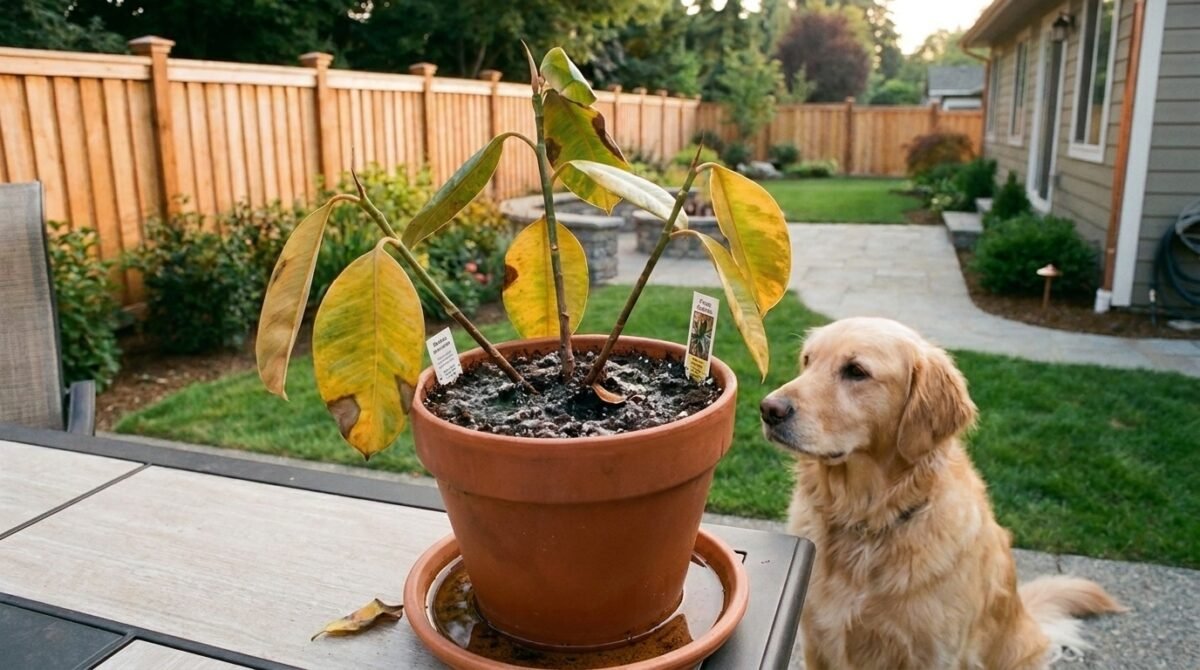
| Iron | Yellow leaves with green veins | Iron supplement chelated | Apply per label, usually liquid |
| General | Overall yellowing, stunted growth | Balanced 10-10-10 | Resume regular feeding schedule |
Creating Your Own Nutrient Source
How to make your own plant food?
Compost is the ultimate homemade nutrition source. Kitchen scraps, yard waste, and patience create black gold.
Combine nitrogen sources (grass clippings, kitchen scraps) with carbon sources (leaves, straw). Keep moist. Turn occasionally. After 3-6 months, you have finished compost.
Health & Safety: Protecting Humans and Pets
Fertilizer is safe when handled properly. But understanding risks and taking precautions prevents problems.
Health Considerations for Humans
Most fertilizers are generally non-toxic at normal application rates. However, concentrated products and improper handling create risks. Some people develop allergies or sensitivities to specific ingredients.
Organic fertilizers like bone meal, blood meal, alfalfa meal, and fish emulsion rarely cause serious problems but can irritate sensitive individuals. Synthetic fertilizers with chemical additives pose slightly higher risks if mishandled.
Common Allergies and Sensitivities
Some people experience allergic reactions to specific fertilizer ingredients:
Bone Meal Allergies: Rare but documented. Symptoms include itching, rash, or respiratory irritation when handling unprotected. Typically affects those with existing shellfish or bone sensitivities.
Fish Emulsion Sensitivity: The strong odor bothers many people. Some experience headaches or mild respiratory irritation from fumes. Wearing masks prevents most issues.
Blood Meal Reactions: Can trigger reactions in people with hemophilia concerns or those sensitive to animal products. Wear gloves and wash your hands immediately after handling.
Dust from Granular Fertilizers: Inhalation of fine dust particles can irritate lungs and sinuses. This is the most common issue, easily prevented with masks.
Urea and Synthetic Nitrogen: Can irritate skin in people with sensitive dermatitis. Gloves prevent contact problems.
Proper Handling Procedures for Humans
Personal Protective Equipment (PPE)
Always wear:
- Gloves: Nitrile or latex gloves protect hands from irritation and prevent skin absorption. Change immediately if torn.
- Mask/Respirator: N95 masks prevent inhalation of dust from granular fertilizers. Vital when handling dry products in enclosed spaces.
- Eye Protection: Safety glasses protect eyes from dust and splashes when applying liquid fertilizers.
- Long Sleeves and Pants: Minimize skin exposure, especially with sensitive individuals.
Storage Recommendations
- Store in cool, dry locations away from children and pets
- Keep in original labeled containers only.
- Store away from food, water sources, and animal feed.
- Ensure containers are tightly sealed after use.
- Keep in well-ventilated areas (not basements or enclosed sheds)
- Store separately from pesticides and cleaning chemicals.
- Check containers regularly for deterioration or leaks.
- Keep away from direct sunlight to prevent degradation.
Application Safety
- Apply only when children and pets are not present in the treatment area.
- Wear full PPE during application.
- Water thoroughly after applying granular fertilizer (washes into soil, reduces surface contact)
- Do not eat, drink, or smoke while handling fertilizer.
- Wash your hands and exposed skin thoroughly after application.
- Wash contaminated clothing separately before wearing it again.
- Apply in the early morning or late evening to minimize airborne dust.
- Avoid applying before rain (causes runoff into water systems)
Accidental Exposure: What to Do
Skin Contact:
- Remove contaminated clothing immediately.
- Rinse skin with large amounts of water for 15 minutes.
- Wash with mild soap and water.
- Do NOT use harsh scrubbing (damages skin barrier)
- If irritation persists beyond 2 hours, contact poison control or seek medical attention
- Bring the product container to the medical personnel.
Eye Contact:
- Rinse immediately with water for 15-20 minutes.
- Remove any visible particles carefully.
- Do NOT rub eyes (worsens irritation)
- Seek immediate medical attention.
- Bring the product container to the medical personnel.
Inhalation:
- Move to fresh air immediately.
- Sit or lie down with your head elevated.
- If coughing or breathing difficulty persists for more than 10 minutes, seek medical attention.
- Contact poison control if severe respiratory distress occurs
Accidental Ingestion by Humans:
If a person ingests fertilizer:
- DO NOT induce vomiting (can cause additional damage)
- Call Poison Control immediately: 1-800-222-1222 (US)
- Provide the following information:
- Product name and active ingredients
- Approximate amount ingested
- A person’s age and weight
- Time of ingestion
- Follow Poison Control instructions exactly.
- Bring the product container to the emergency room.
- Monitor for symptoms: nausea, vomiting, abdominal pain, diarrhea.
- Seek medical attention immediately if symptoms develop.
Risk Levels by Fertilizer Type
| Fertilizer Type | Toxicity Level | Primary Risk | Symptoms if Ingested | Action |
| Organic compost | Very low | Rare contamination | Usually none or mild GI upset | Monitor, seek care if persistent |
| Bone meal | Low | Allergic reaction in sensitive individuals | Choking hazard, GI upset | Call Poison Control for amounts >1 oz |
| Blood meal | Low | High iron can cause issues in large amounts | Nausea, vomiting, constipation | Call Poison Control |
| Alfalfa meal | Very low | Minimal toxicity | Mild GI upset possible | Monitor only |
| Fish emulsion | Low | Nausea from odor/taste | Nausea, vomiting, diarrhea | Call Poison Control |
| Synthetic NPK | Low-Medium | Chemical irritant in large amounts | GI irritation, potential electrolyte issues | Call Poison Control immediately |
| Urea | Low-Medium | Nitrogen absorption concerns | Nausea, vomiting, GI upset | Call Poison Control for amounts >2 tbsp |
| Ammonium nitrate | High | Serious chemical irritant | Severe GI damage, potential systemic effects | EMERGENCY: Call 911 + Poison Control |
| Potassium chloride | Medium | Electrolyte imbalance risk | GI upset, potential cardiac effects | Call Poison Control immediately |
| Chelated metals (Iron, etc.) | Low-Medium | Metal accumulation in large amounts | Nausea, vomiting, abdominal pain | Call Poison Control for large amounts |
Pet Safety: Dogs, Cats, and Other Animals
Is Organic Fertilizer Safe for Dogs?
Most organic fertilizers are relatively safe for dogs compared to synthetic alternatives. However, “safe” doesn’t mean risk-free. Dogs can get into trouble with any fertilizer product.
Dogs and Fertilizer Risks
Bone Meal: An attractive smell may draw dogs. Small amounts cause mild GI upset. Large amounts (>1 cup) can cause obstruction or pancreatitis—the biggest risk: choking on large pieces.
Blood Meal: Strong smell attracts dogs. Small amounts cause vomiting or diarrhea—larger amounts (>2 tbsp) risk iron toxicity. Symptoms include vomiting, dark stools, and abdominal pain.
Chicken/Animal Manure: Bacterial contamination (E. coli, Salmonella) causes severe GI upset. Dogs often develop diarrhea and vomiting 12-24 hours after ingestion.
Fish Emulsion: Smell may attract some dogs. Ingestion causes nausea, vomiting, and diarrhea. Generally resolves within 24 hours without intervention.
Synthetic Fertilizers: More dangerous than organic options. Urea and ammonium nitrate can cause serious toxicity. Potassium chloride risks an electrolyte imbalance.
Cats and Fertilizer Risks
Cats are generally safer around fertilizers because they’re more selective eaters. However, risks still exist:
- Bone meal: Not typically appealing to cats, but similar risks if ingested
- Granular products: Can stick to paws/fur; cats groom and ingest particles
- Fish emulsion: Some cats are attracted to the smell; it causes GI upset
- Dust inhalation: Causes respiratory irritation in sensitive cats
Safe Pet Practices
Before Application:
- Remove pets and pet toys from the treatment area.
- Cover pet food and water bowls.
- Clear the area of pet bedding.
- Check for pet access points (pet doors, low fences)
During Application:
- Keep pets indoors or in a separate fenced area.
- Apply when pets cannot access the treatment area.
- Use pet barriers if needed to prevent access to the area.
After Application:
- Allow granular fertilizer to dry completely (minimum 2-4 hours)
- Water the area thoroughly to move fertilizer into the soil.
- Keep pets away for at least 24 hours.
- Wash your pet’s paws if they walked through the treated area.
- Do NOT allow pets to eat grass or soil in the treated area for 48 hours.
Prevent Pet Ingestion
| Risk Scenario | Prevention Method |
| Dog eats fertilizer directly | Apply when pets inside, water immediately after application |
| Cat ingests particles from paws/fur | Wash paws after treatment area access, keep cats indoors 24 hours |
| Dog digs/roots in treated area | Use physical barriers (fencing), apply in areas pets cannot access |
| Pets drink from treated water | Cover water bowls before application, replace water after treatment |
| Fertilizer dust inhalation | Apply in ventilated areas, keep pets away during application |
| Paws tracking fertilizer indoors | Wash paws thoroughly before allowing indoors |
Remedial Actions: What to Do If Poisoning Occurs
Signs of Fertilizer Poisoning in Pets
Immediate symptoms (within 1-4 hours):
- Vomiting
- Diarrhea (may be bloody)
- Excessive drooling
- Abdominal pain (whining, restlessness)
- Lethargy or unusual behavior
- Loss of appetite
Delayed symptoms (4-24 hours):
- Continued vomiting/diarrhea
- Dehydration (dry gums, sunken eyes)
- Weakness or trembling
- Difficulty urinating
- Dark or discolored stools
- Respiratory distress
Severe symptoms (require emergency care):
- Seizures
- Collapse or inability to stand
- Severe bleeding
- Rapid/irregular heartbeat
- Difficulty breathing
- Unconsciousness
Emergency Protocol: If Pet Ingests Fertilizer
Immediate Actions (First 5 Minutes)
- Remove the source: Get the pet away from the fertilizer.
- Identify the product: Find the container or note the fertilizer type.
- Estimate amount: How much did the pet consume?
- Note the time: When did ingestion occur?
- Check the pet’s condition: Is the pet showing symptoms now?
Call for Professional Help (Within 5-15 Minutes)
Contact ONE of these immediately:
Pet Poison Hotline: 888-426-4435 (Available 24/7, $65 consultation fee)
ASPCA Poison Control: 888-426-4435 (24/7 availability)
Your Veterinarian: Call the emergency line if after hours.
Emergency Veterinary Clinic: Search “emergency vet near me” if vets are unavailable
Have ready:
- Pet’s weight and age
- Product name and ingredients
- Estimated amount ingested
- Time of ingestion
- Current symptoms
- Your location
What NOT to Do
- ❌ Do NOT induce vomiting without professional guidance
- ❌ Do NOT wait to see if symptoms develop (early intervention is critical)
- ❌ Do NOT give activated charcoal without veterinary instruction
- ❌ Do NOT assume “it’s just organic, it’s fine” (serious toxicity still possible)
- ❌ Do NOT delay calling if the pet seems fine now (some symptoms appear 12+ hours later)
Professional Treatment Options
Your veterinarian may recommend:
Decontamination:
- Induced vomiting (if appropriate)
- Stomach pumping/gastric lavage (if recent ingestion)
- Activated charcoal (binds toxins)
- Bowel evacuation (laxatives/enemas)
Supportive Care:
- IV fluids (combat dehydration/electrolyte loss)
- Anti-nausea medication
- Pain management
- Antibiotics (if bacterial contamination suspected)
- Liver/kidney support medications
Monitoring:
- Blood work (check organ function)
- Urinalysis (check kidney function)
- Observation period (typically 24-48 hours)
- Follow-up care as needed
Health Hazards for Humans: Detailed Summary
Occupational Exposure (Agricultural/Commercial Workers)
People applying fertilizer professionally or frequently may experience:
Respiratory Issues:
- Dust inhalation causes coughing and wheezing.
- Bronchitis from repeated exposure
- Allergic asthma in sensitive individuals
- Prevention: Always wear N95 masks, work in ventilated areas
Skin Conditions:
- Contact dermatitis from repeated exposure.
- Irritation or chemical burns with concentrated products
- Allergic reactions to specific ingredients
- Prevention: Wear gloves and protective clothing, and wash immediately after exposure
Gastrointestinal Issues:
- Accidental hand-to-mouth contamination causes GI upset.
- Prevention: Never eat/drink/smoke while handling, and wash hands thoroughly
Chemical Sensitivity:
- Some people develop sensitivities with repeated exposure.
- Symptoms worsen with each exposure.
- Prevention: Rotate different types of products, take breaks from application
Vulnerable Populations
Pregnant Women:
- Some fertilizer chemicals may pose risks to fetal development.
- Organic fertilizers are generally safer than synthetic ones.
- Recommendation: Minimize exposure, wear full PPE if must handle, consult OB/GYN
Children:
- More susceptible to toxicity than adults
- Smaller body size means larger relative doses.
- Keep all fertilizer products securely stored out of reach of children.
- Teach children never to touch or play with fertilizer.
Elderly Individuals:
- May have compromised skin barriers or respiratory systems
- More vulnerable to inhalation or skin exposure effects
- Increased risk from accidental ingestion due to possible memory issues
- Recommendation: Supervise handling, ensure proper storage
People with Respiratory Conditions:
- Asthma, COPD, and emphysema increase vulnerability.
- Inhalation of dust is more likely to trigger severe reactions.
- Always wear respiratory protection.
- Consider having someone else apply fertilizer.
People with Skin Conditions:
- Eczema, dermatitis, and psoriasis increase the risk of reaction.
- Chemical exposure worsens existing conditions.
- Always wear gloves, and consider wearing long sleeves.
- Wash immediately with gentle soap.
Safe Disposal of Unused Fertilizer
Granular/Dry Fertilizer Disposal
Small amounts (less than 1 lb):
- Mix with soil in the garden (safest option)
- Spread thinly over a large area to avoid concentration.
- Water thoroughly
Larger amounts (1-10 lbs):
- Contact local waste management for disposal guidelines.
- Many communities have hazardous waste collection days.
- Never throw in regular trash (contaminates landfills)
- Never pour down drains (pollutes water systems)
Large quantities (>10 lbs):
- Contact commercial hazardous waste disposal companies.
- Return to retailer if within return window.
- Contact the manufacturer for disposal recommendations.
Liquid Fertilizer Disposal
Small amounts (less than 1 quart):
- Dilute heavily with water (1:10 ratio)
- Pour into garden soil away from water sources.
- Cover with soil
Larger amounts (1-5 gallons):
- Contact the local hazardous waste facility.
- Many accept liquid chemical waste.
- Never pour down storm drains.
- Never pour into regular drains.
Expired or Contaminated Fertilizer
- Do not apply to food crops.
- Do not use if the product appears moldy or contaminated.
- Dispose of it through a hazardous waste facility.
- Contact poison control if ingested accidentally
First Aid Quick Reference Card
Keep this information accessible:
| Scenario | Action |
Skin Contact | Rinse 15 min with water, remove clothes, seek care if irritation >2 hrs |
Eye Contact | Rinse 15-20 min with water, seek immediate medical attention |
Inhalation | Move to fresh air, seek care if coughing >10 min |
Ingestion (Human) | Call Poison Control 1-800-222-1222, do NOT induce vomiting |
Ingestion (Pet) | Call Pet Poison Hotline 888-426-4435 immediately |
Severe Reaction | Call 911 for emergency services |
Storage | Keep sealed, labeled, away from children/pets, in cool dry place |
After Application | Wash hands/exposed skin, change contaminated clothes, wait 24-48 hrs before pet access |
Q: What’s the difference between organic and inorganic fertilizer?
A: Organic fertilizer comes from natural sources (bone meal, blood meal, compost, manure). It improves soil over time but releases nutrients slowly. Inorganic fertilizer is synthetically manufactured. It works instantly but doesn’t build soil. Both have value. Many gardeners use both strategically.
Q: Is organic fertilizer safe for dogs?
A: Mostly yes. Pure organic fertilizers, such as compost, are generally safe. Some products with added ingredients might irritate pets. Check labels carefully. When in doubt, keep pets away from freshly applied fertilizer until it’s watered in thoroughly.
Q: What NPK ratio should I use?
A: It depends on your plant. Vegetable gardens benefit from balanced ratios like 10-10-10 or slightly higher nitrogen ratios, such as 5-5-5. Blooming plants need higher phosphorus. Established lawns prefer something like 20-5-10. Read plant-specific recommendations, or start with a balanced 10-10-10 ratio.
Q: How often should I fertilize?
A: Growing season typically calls for monthly feeding. Some plants need more frequent liquid fertilizer applications—every 2-4 weeks. Fall and winter usually require no feeding or minimal feeding for dormant plants.
Q: Can I use the same fertilizer for all my plants?
A: You can, but specialized formulations work better. All-purpose 10-10-10 works for most plants, but bloom fertilizer produces better flowers. Root vegetable fertilizers emphasize different nutrients than leafy green fertilizers.
Q: What happens if I use too much fertilizer?
A: You’ll see burned roots, salt buildup in soil, and ironically, reduced plant growth. Excess fertilizer can kill plants. Follow package directions carefully. When in doubt, use less. You can always feed again.
Q: Is expensive fertilizer better than cheap organic fertilizer?
A: Not necessarily. Cheap organic fertilizer works fine if it contains appropriate nutrients. Budget brands often match expensive brands in effectiveness. Compare NPK ratios and ingredients, not just price.
Q: Can I make my own fertilizer?
A: Absolutely. Compost is the ultimate homemade organic fertilizer. Compost tea extracts nutrients from compost into liquid form. Many experienced gardeners supplement with kitchen scraps and grass clippings—free sources of nitrogen.
Q: Should I fertilize new plants immediately?
A: No. Most potting soil contains nutrients. Transplanted seedlings don’t need feeding for 4-6 weeks. Overfertilizing seedlings burns roots. Organic fertilizer for seedlings uses gentler, lower ratios if you do fertilize early.
Q: What’s the best organic fertilizer for vegetables?
A: It depends on what you’re growing. Leafy vegetables need nitrogen-rich organic fertilizer. Root crops want phosphorus and potassium-rich formulations. All-purpose organic fertilizer for vegetables with balanced ratios works as a general option.
Q: How do I know if my plant needs fertilizer?
A: Signs include pale or yellowing leaves, slow growth, small or few blooms, and weak stems. Different deficiencies show different symptoms. Nitrogen deficiency creates pale leaves. Phosphorus deficiency prevents blooming. Once you identify the deficiency, you can address it specifically.
Q: Can I use lawn fertilizer on vegetables?
A: It depends. Suppose the ratio is appropriate, yes. High-nitrogen lawn fertilizers produce foliage at the expense of flowers and fruit. Vegetable-specific formulations work better. Always check NPK ratios against vegetable needs.
Q: Is it better to fertilize more often with weak solutions or less often with strong solutions?
A: Frequent light feeding works best. It prevents nutrient surges that shock plants and reduces salt buildup. Organic liquid fertilizers work perfectly for this approach—weak solutions every 2 weeks beat strong solutions monthly.
Q: What water-soluble option works best?
A: Fish emulsion excels for vegetables. Kelp provides trace minerals and growth regulators. Compost tea offers balanced nutrition. Fish/kelp combinations provide comprehensive micronutrients. Choose based on your vegetation’s specific needs.
Q: Can an old product go bad?
A: Granular and dry formulations stay good for years if kept dry. Liquid versions can separate or degrade over time. Store in cool, dry places. Use the oldest stock first.
Q: Does the product expire?
A: Not really. It might lose potency, but it doesn’t become dangerous. Aged versions work—just maybe less effectively. When in doubt, use slightly more water and water thoroughly.
Q: What’s the most important nutrient?
A: Nitrogen drives visible growth. Phosphorus enables flowering and fruiting. Potassium builds plant strength—all three matter. Deficiency in any one limits overall performance.
Q: Can I overfeed a plant to promote better growth?
A: No. Excess fertilizer actually harms growth. The “more is better” approach backfires. Follow directions. Consistent moderate feeding beats occasional heavy feeding.
The Bottom Line: Plant Nutrition Is Investment, Not Expense
Your garden transforms when you realize that plants need nourishment. Proper feeding isn’t an optional luxury—it’s the foundation of productivity.
The difference between undernourished and well-fed plants is extraordinary. It’s not subtle. You’ll see it immediately in growth, vigor, blooming, and production.
Start with a balanced 10-10-10 formulation. Feed during the growing season. Observe what happens. Your garden will tell you what works.
That’s when you truly understand: nourishing your plants is the single best investment a gardener can make.
Resources
For comprehensive information about fertilizer selection, application, and plant-specific feeding guides:
University of Maryland Extension: Fertilizers and Their Uses
Science-based information on NPK ratios, nutrient deficiency symptoms, organic vs. synthetic fertilizers, and application methods for vegetables, lawns, and ornamental plants.
The Spruce: Best Fertilizers for Every Plant
Detailed reviews of top fertilizer brands, specific recommendations for fruit trees, vegetables, flowers, houseplants, and lawns, with NPK ratio guidance for different plant types.
Disclaimer
Purpose: This article is educational and informational only. It is not professional agricultural, horticultural, or product endorsement advice.
Content Source: Information is based on publicly available horticultural science, fertilizer product information, and documented plant care best practices.
Plant-Specific Guidance: Recommended NPK ratios and fertilizer types represent general best practices. Specific plant needs vary by variety, soil type, climate, and growing conditions. Research your specific plants for customized guidance.
Safety Information: Is organic fertilizer safe for dogs?
Most pure organic products are safer than synthetic fertilizers, but product-specific ingredients vary. Always check labels and keep pets away from freshly applied fertilizer until watered in. For concerns about poisoning, contact poison control or veterinary professionals.
Individual Results Vary: Plant response to fertilizer depends on multiple factors, including soil quality, pH, watering practices, light, temperature, plant age, and nutrient deficiencies. Results shown in articles represent typical outcomes, not guaranteed results.
Product Mentions: References to brands and products are informational only. Mention does not constitute endorsement. Research products independently before purchase.
Environmental Considerations: Proper fertilizer application prevents pollution. Avoid runoff into waterways. Follow local regulations. Over-application harms ecosystems. Responsible use is essential.
Professional Consultation: For persistent plant problems, suspected nutrient deficiencies, or before making major fertilizing decisions on valuable plants or large properties, consult local nursery professionals, master gardeners, or your regional agricultural extension office.
This article is purely informative and designed to educate readers about fertilizer benefits and help them make informed decisions about feeding their plants responsibly.