Asphalt Driveway Cost: What You’ll Really Pay (And How Recycled Material Cuts the Bill)
Standing over a crumbling, weed-choked slab is enough to make anyone want answers fast. How much is a new driveway actually going to cost? Is asphalt even the right call, or should you look at concrete, gravel, or pavers instead? And is there a way to get a smooth, long-lasting surface without draining your savings?
Here’s the good news: asphalt is one of the most budget-friendly driveway materials you can choose, and recycled asphalt can shrink that price tag even further while keeping your project kinder to the planet. In this guide, we’ll walk through real 2026 pricing, what actually pushes your quote up or down, how thick your driveway needs to be, and how to squeeze the most years out of every dollar you spend. Grab a coffee, and let’s get into it.
💡 Quick AnswerTypical cost: $4–$13 per square foot installed, depending on region, thickness, and asphalt type. A standard 600 sq ft two-car driveway usually runs $3,000–$7,800. Recycled asphalt (RAP) is commonly 20%–30% cheaper than brand-new hot mix asphalt. A well-maintained asphalt driveway lasts 15–30 years; without sealcoating, plan on closer to 8–12. Most driveways can handle foot traffic within 24–48 hours, but stay off with vehicles for at least 3–7 days. |
Want numbers based on your exact driveway, not a national average? Plug your dimensions into our free asphalt driveway cost calculator for an instant, personalized estimate.

Asphalt Driveway Cost Calculator
Enter your driveway's size, thickness, and asphalt type below to get an instant, personalized cost estimate, including how much a recycled asphalt (RAP) mix could save you.
Your Driveway Details
Total area: 600 sq ft
Most residential driveways use 3 inches over a compacted gravel base.
$0 – $0
Estimated total installed cost
Cost Breakdown
| Item | Estimate |
|---|---|
| Driveway area | – |
| Asphalt type | – |
| Cost per sq ft | – |
| Old driveway removal | – |
| Estimated asphalt needed | – |
How This Calculator Works
This estimate covers materials, standard labor, and a typical compacted gravel base for the asphalt type you select. It does not include grading for severe slope issues, drainage system installation, or permit fees, which vary too much by property to estimate generically.
We use a standard hot mix asphalt density of about 145 pounds per cubic foot. Tonnage = area (sq ft) × thickness (inches ÷ 12) × 145 ÷ 2,000. It's a solid planning number, but always confirm exact tonnage with your paving contractor.
Recycled asphalt pavement (RAP) reuses milled, reprocessed asphalt instead of all-virgin aggregate and binder. Industry cost guides generally put the savings at 20% to 30% on materials, though it can need a bit more early regrading depending on the RAP percentage used.
Want the full picture on pricing, materials, and maintenance? Read our complete asphalt driveway cost guide.

What Is an Asphalt Driveway, and Why Do So Many Homeowners Choose One?
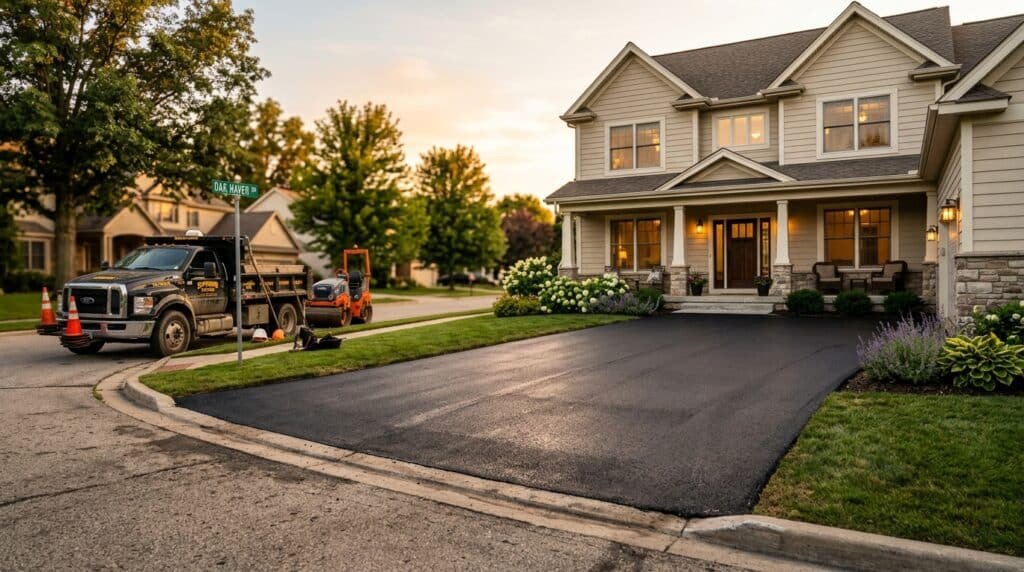
An asphalt driveway is a paved surface made from a mix of crushed stone, sand, and gravel (the aggregate) bound together with bitumen, a sticky petroleum-based binder. That combination is heated, laid down hot, and rolled flat to create the smooth black surface you’re picturing right now.
Homeowners gravitate toward asphalt for a few simple reasons: it’s cheaper than concrete or pavers, it installs fast (most residential jobs wrap up in a day or two), and it flexes slightly instead of cracking outright in freeze-thaw climates. Hot mix asphalt (HMA) is the version used on the vast majority of residential driveways, prized for its durability and relatively quick installation.

Asphalt Driveway Cost Breakdown
🏗️ Installation & Resurfacing Pricing Breakdown:
• New Installation: Typically ranges from $4 to $13 per square foot, depending on regional rates, asphalt thickness, and lot preparation requirements[cite: 1].
• Full Replacement: Includes tearing out and hauling away the old surface, adding approximately $1 to $2 per square foot on top of new installation costs[cite: 1].
• Resurfacing / Overlay: If the existing base layer is structural, resurfacing runs between $3 and $7 per square foot[cite: 1].
• Included Services: Listed figures cover materials, labor, and standard base prep[cite: 1]. Additional grading, drainage adjustments, or extensive demolition will increase overall project pricing[cite: 1].

What Actually Drives Your Final Price Up or Down
- Thickness and base depth: a thicker surface course and deeper compacted gravel base cost more upfront but pay off in longevity.
- Old driveway removal: demolition and haul-away typically adds $1–$2 per square foot.
- Grading and drainage: uneven lots or poor drainage need extra excavation before a single scoop of asphalt goes down.
- Asphalt type: standard hot mix, warm mix, porous, and recycled asphalt all carry different price points.
- Region and labor rates: local material and crew costs vary significantly from state to state.
- Design extras: paver borders, stamped patterns, and custom colors add to both materials and labor time.

Types of Asphalt You Can Choose From
Hot Mix Asphalt (HMA)
The default choice for most driveways. It’s mixed and laid at high temperatures, compacts into a dense, durable surface, and typically lasts 15 to 30 years when properly maintained.
Warm Mix Asphalt
Produced and laid at lower temperatures than HMA, which trims energy use during manufacturing and gives crews a slightly wider working window in cooler weather.
Porous (Permeable) Asphalt
Designed to let water drain straight through the surface instead of running off into the street. It costs more upfront, generally $7 to $15 per square foot, because it needs a deeper stone reservoir base, but it can help homeowners meet local stormwater rules.
Recycled Asphalt Pavement (RAP)
Made from milled, reprocessed asphalt instead of all-virgin materials. It’s the budget and environmental favorite, which we’ll dig into next.
Stamped and Colored Asphalt
For homeowners who want personality along with practicality, stamped patterns and tinted asphalt mixes bring texture and color options that plain blacktop can’t match, at a modest premium.

Recycled Asphalt: The Budget-and-Planet-Friendly Option
Recycled asphalt pavement, often just called RAP, is old asphalt that’s been milled up and reprocessed into new paving material. Industry data from the National Asphalt Pavement Association shows that mixtures using recycled content are common practice nationwide and deliver real per-ton savings compared to all-virgin material, which is part of why asphalt is considered one of the most recycled materials in construction.
For homeowners, that generally translates into roughly 20% to 30% lower material costs compared with a fully virgin hot mix asphalt driveway, according to industry cost guides. The trade-off is that a RAP driveway may need a bit more regrading and upkeep in its early years, especially on higher-recycled-content mixes, so it tends to suit budget-conscious homeowners and longer rural driveways better than a showroom-perfect front entrance.
Beyond the savings, recycling old pavement keeps material out of landfills and cuts down on how much fresh aggregate and binder need to be mined and transported, which is a genuine win for your project’s environmental footprint.
Curious what recycled material could save on your specific driveway? Run your numbers through our asphalt driveway cost calculator and compare a standard mix against a recycled one side by side.

Asphalt vs. Concrete vs. Gravel vs. Pavers
💡 Material Selection Insights:
• Asphalt vs. Concrete: Asphalt generally comes in noticeably cheaper than concrete, largely thanks to faster installation and lower material costs.
• Paver Installation: Pavers sit at the top of the price range because of the labor-intensive, piece-by-piece installation process.
• Gravel Trade-Offs: Gravel is the cheapest option by far, but it requires regular regrading and doesn't offer the same curb appeal or smooth ride as paved options.

How Asphalt Driveways Are Installed (And How Thick They Need to Be)
A properly built driveway is really several layers working together, not just a slab of black material poured on dirt.
- Subgrade: the compacted native soil the whole driveway rests on.
- Gravel base: typically 4 to 6 inches of compacted crushed stone for drainage and stability.
- Binder course: a coarser asphalt layer that adds structural strength.
- Surface course: the smooth top layer you actually see and drive on.
For most residential driveways, aim for at least 3 inches of compacted asphalt over a solid gravel base; going thinner is a common corner-cutting move that shows up as cracking within a few years. Once your crew rolls and compacts the final layer, most driveways can take light foot traffic within a day, but it’s smart to keep vehicles off for at least 3 to 7 days while the surface firms up, and to avoid parking in the exact same spot for the first few months so it doesn’t leave permanent tire impressions.

Maintenance, Sealcoating, and Getting the Most Years Out of Your Investment
Asphalt is low-maintenance compared to most driveway materials, but it isn’t zero-maintenance. Sealcoating every two to three years helps block water and UV damage, and it’s a relatively small expense compared to the cost of an early replacement.
- Seal your new driveway after it’s fully cured, typically 6 to 12 months after installation, not immediately.
- Fill small cracks as soon as you spot them, before water gets underneath and turns them into potholes.
- Clean oil and fluid stains quickly with a degreaser made for asphalt to avoid softening the surface.
- Avoid parking heavy vehicles or RVs in the same spot for extended periods, especially in hot weather.
Stay on top of these habits and a hot mix asphalt driveway can realistically last 15 to 30 years. Skip maintenance altogether and that number can drop to closer to 8 to 12 years, which usually ends up costing far more over time than a little routine care would have.

Design Touches: Borders, Colors, and Curb Appeal
Plain blacktop doesn’t have to stay plain. Brick or paver borders dress up the edges without the cost of a full paver driveway, and stamped or tinted asphalt mixes add texture for homeowners who want something with more personality.
If you’re planning edging or a border alongside your new driveway, it’s worth checking layout ahead of time, whether that’s a wood garden gate sized to match your entryway, a fence with properly spaced pickets along the property line, or classic landscape timbers to frame the planting beds beside the pavement.
A temporary silt fence can help keep loose soil and runoff under control while the paving crew is working on your lot.

While You’re Upgrading: A Quick Home Safety Check
Big home projects like a new driveway are a natural moment to walk through the rest of your home’s basics too. According to the National Fire Protection Association, working smoke alarms cut the risk of dying in a home fire by more than half, yet most home fire deaths still happen in properties with no smoke alarm or one that isn’t working.
It only takes a few minutes to test what you already have, or use our smoke detector coverage calculator to check whether every level and sleeping area of your home is properly covered.

Financing and Other Upgrades Worth Planning Alongside Your Driveway
A driveway is rarely the only project on the list. If you’re financing bigger work alongside it, it helps to line everything up before you sign a contract.
Compare options with a construction loan or a standard home loan and mortgage calculator before committing to a bundle of projects. If a detached garden room or garden room addition is also on your list, price it out alongside the driveway so the budgets don’t collide.
Planning an electric vehicle? A new driveway is the ideal time to plan EV charger installation and check whether you’ll also need to look into upgrading your home’s electrical panel to support it, plus ways to trim your overall home energy costs.
Finally, a major exterior upgrade is a good excuse to review your policy; a few home insurance tips can help make sure your new driveway and any related work are properly covered.
FAQs: Asphalt Driveway
Everything you need to know about costs, installation, thickness, and maintenance

Final Thoughts
A new asphalt driveway doesn’t have to be a budget-buster or a mystery. Once you know the real cost ranges, the factors that move your quote, and where recycled material can genuinely save you money, you’re in a strong position to talk to contractors with confidence instead of just hoping for the best.
Take a few minutes to measure your space, decide whether new asphalt, an overlay, or a recycled mix fits your budget and traffic needs, and get a couple of local quotes to compare. Your driveway is one of the first things people see when they pull up to your home, and getting it right pays off every single day you park on it.