Why Does My Wood Floor Make Noise? 7+ Reasons Behind the Snap, Crackle, Pop
It’s 11 p.m., the house is finally quiet, and then, out of nowhere, your hardwood floor lets out a loud pop. No one’s walking on it. Nothing fell. It just… cracked. If you’ve ever laid awake wondering whether your floor is falling apart underneath you, take a breath. Wood floor popping is one of the most common flooring complaints out there, and in the vast majority of cases, it’s not a structural emergency.
Whether you’re hearing pops, cracks, snaps, or a straight-up squeak every time you cross the living room, this guide walks through exactly why wood floors make noise, why it often gets worse at night or in winter, and what you can actually do about it. We’ll cover the harmless causes, the ones worth watching, and when it’s genuinely time to call a professional. Let’s get into it.
💡 Quick AnswerMost wood floor popping comes down to humidity swings, tongue-and-groove friction, or a subfloor that isn’t perfectly flat. New floors often ‘snap, crackle, and pop’ for months while boards settle in — this is normal. Noise that’s louder at night usually tracks a temperature and humidity drop as the house cools down. Talcum powder, humidity control, and targeted screws fix most DIY-level noise. Loud popping paired with visible gaps, cupping, or a soft/spongy feel underfoot points to subfloor moisture damage and needs a professional look. |

The ‘Snap, Crackle, Pop’ Effect: Is This Normal?
Here’s something flooring installers hear constantly: a brand-new hardwood floor making popping noises within the first few weeks. In the flooring industry, this is actually nicknamed the ‘snap, crackle, pop’ effect, and it’s considered completely normal.
No subfloor is perfectly level, so when new boards go down, their edges need time to settle against each other. As they rub together, the edges smooth out and the wood keeps adjusting toward its equilibrium moisture content, meaning the point where the wood’s internal moisture matches the humidity in your home. That settling-in period can last anywhere from a few weeks to over a year, depending on foot traffic and how stable your indoor climate is.

7+ Reasons Your Wood Floor Is Popping, Cracking, or Snapping
1. Humidity Swings and Seasonal Expansion
Wood is constantly absorbing and releasing moisture from the air, and that makes it expand and contract throughout the year. In summer, higher humidity causes boards to swell and press against each other. In winter, dry indoor air pulls moisture back out, causing boards to shrink and separate. Both directions can create popping as the wood moves.
Most flooring professionals recommend keeping indoor humidity in roughly the 30% to 50% range to keep this movement in check. Drop much below that in winter and you’ll likely hear more popping, cracking, and visible gaps between boards.
2. Tongue-and-Groove Friction in New Floors
This is the classic ‘new floor’ noise. Every board is milled with a tongue that slots into the groove of its neighbor, and on a freshly installed floor those joints haven’t smoothed out yet. Walking across them causes friction, which is exactly what you’re hearing when a brand-new floor pops.
3. Uneven or Unlevel Subfloor
Industry flatness standards call for subfloors to stay within about 1/4 inch of level across any 10-foot span for a nail-down installation. When a subfloor falls outside that tolerance, it creates small voids under the flooring, and those voids let boards flex up and down slightly with every step, which produces a hollow popping sound.
4. Not Enough Fasteners, or Fasteners That Have Loosened
If nails or staples were spaced too far apart during installation, or if a fastener has simply worked loose over the years, the board above it gains just enough wiggle room to rub against the nail or the subfloor every time weight shifts onto it.
5. Missing or Closed-Up Expansion Gap
Every solid or engineered wood floor needs a small expansion gap around the room’s perimeter, hidden under the baseboard, so the whole floor has somewhere to expand into during humid months. If that gap was skipped during installation, or if something (like new trim or cabinetry) closed it off, the floor has nowhere to go but into itself, and the resulting pressure shows up as popping and, in bad cases, buckling.
6. Floating Floor Glue Joints Under Pressure
Floating engineered floors rely on glued or locked seams instead of nails into the subfloor. When those glue joints flex under foot traffic, or when the floor is under more compression than it should be, you’ll hear a distinct popping sound, often described as louder and sharper than typical nail-down floor noise.
7. Subfloor Moisture Damage or Settling
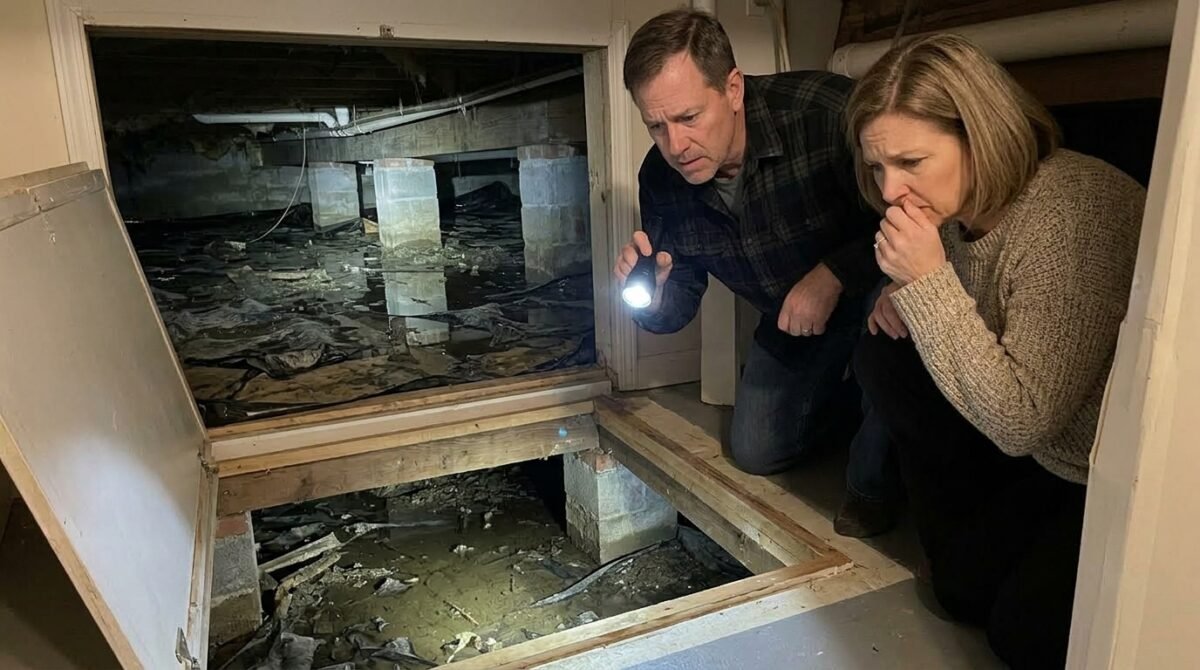
If your subfloor absorbed moisture at some point, whether from a slow plumbing leak, a humid crawl space, or improper acclimation before installation, it can warp, soften, or shift slightly over time. That movement transmits straight up into the wood floor as popping, and it’s one of the few causes on this list that’s worth having inspected sooner rather than later.
8. Finish Separating From the Wood
Sometimes the noise isn’t the wood itself, it’s the finish. As boards contract in cooler weather, the hard top coat can’t always keep up, and it separates slightly from the surface underneath. Walking over that spot produces a thinner, crackling sound rather than a deep pop, and it’s most noticeable right at the board joints.

Why Does It Happen More at Night?
If your floor seems to save its loudest pops for right after you’ve gone to bed, there’s a simple explanation: temperature and humidity drop as the house cools overnight, and the wood reacts to that shift in real time. Add in the fact that the rest of the house has gone quiet, and a perfectly normal pop suddenly sounds like a gunshot.
This kind of spontaneous, no-one-walking-on-it cracking is almost always tied to that day-to-night temperature swing rather than anything structural. It tends to be most noticeable during seasonal transitions, especially the first cold snap of autumn or the first humid stretch of summer.

Floating and Engineered Wood Floors: A Different Kind of Pop
You’d think engineered wood, built in layers specifically for extra stability, would be quieter than solid hardwood. In practice, popping in engineered and floating floors is one of the most common complaints flooring associations hear about, often tracing back to the same subfloor flatness issue mentioned earlier.
On concrete slabs especially, a floating engineered floor can pop if the underlayment wasn’t installed evenly, if the locking joints are under too much pressure, or if the perimeter expansion space was left too tight. If you’re hearing popping specifically when you walk across certain spots, and it’s a floating floor, check that the perimeter gap along the walls hasn’t been blocked by furniture, trim, or built-in cabinetry.

How to Find Exactly Where the Noise Is Coming From
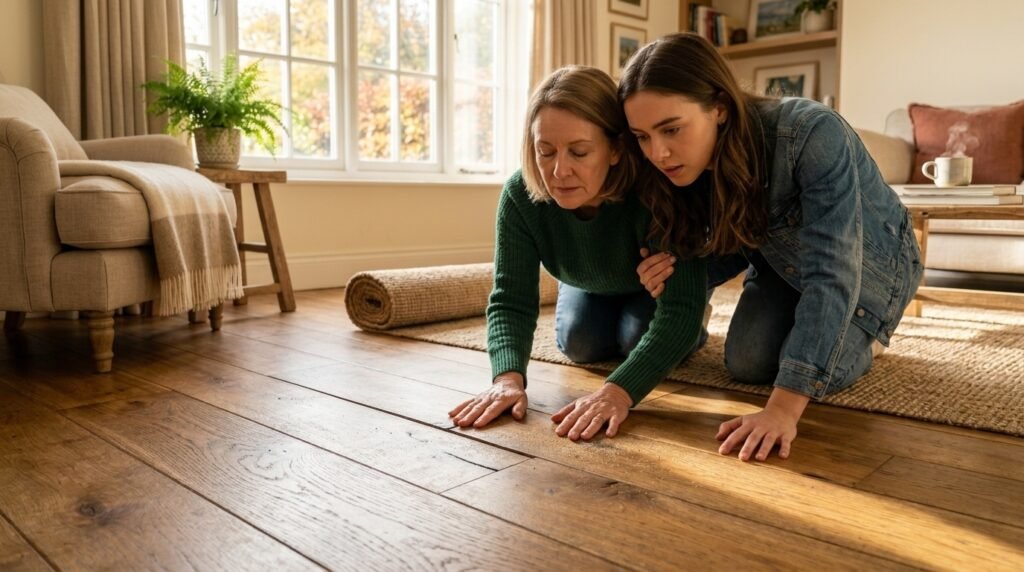
Before you fix anything, you need to know precisely which board (or boards) are the problem. A simple walk test does the trick.
- Walk slowly across the room in your socks, applying steady weight with each step.
- The moment you hear a pop or creak, stop and mark that exact spot with a small piece of painter’s tape.
- Keep going until you’ve mapped every noisy spot in the room.
- Look for a pattern: is it one isolated board, a whole row, or scattered spots near exterior walls (a sign of humidity-driven movement)?
This mapping step matters because a single loose board takes a five-minute fix, while noise scattered across the whole room usually points to a humidity or subfloor issue that needs a broader solution.

DIY Fixes You Can Try This Weekend
Talcum Powder or Baby Powder
This old-school trick genuinely works for friction-based popping. Sprinkle a generous line of talcum powder or baby powder directly into the gap between the noisy boards, work it in with a soft brush, then walk over the area several times to distribute it. The fine powder acts as a dry lubricant so the boards slide past each other quietly instead of grinding. Wipe away the excess when you’re done. It’s not a permanent structural fix, but for surface friction noise, it’s cheap, safe, and surprisingly effective.
Powdered Graphite
If powder alone doesn’t fully quiet things down, powdered graphite is a slightly more heavy-duty lubricant that works the same way and tends to last a bit longer between applications.
Face-Nailing or Screwing Down Loose Boards
For a board that’s clearly loose, driving a trim screw at a slight angle through the board and into the subfloor (then filling the hole with matching wood filler) secures it for good. If you have access from below, driving screws up through the subfloor into the board avoids any visible repair on top entirely.
Squeak-Fixing Kits
Purpose-built kits, sold under names like Squeek-No-More, use a specialized screw with a breakaway head that snaps off below the surface, letting you secure a squeaky board without leaving a visible screw head or needing to countersink and plug it yourself.
Managing Humidity
Run a humidifier during dry winter months and a dehumidifier during humid summer stretches to keep your home closer to that 30% to 50% sweet spot. This single habit resolves a surprising amount of seasonal popping without touching a single board.

When to Call a Professional
Some situations are worth handing to a pro rather than tackling yourself:
- Popping is paired with visible cupping, crowning, or boards that feel soft or spongy underfoot.
- You suspect water damage from a leak, appliance, or humid crawl space.
- Noise is spreading across a large area rather than staying isolated to one or two boards.
- The floor is still under manufacturer or installer warranty (DIY repairs can void it).
A hardwood floor repair specialist can run a proper moisture reading on both the flooring and the subfloor, which is really the only reliable way to confirm whether you’re dealing with normal seasonal movement or genuine water damage. Minor repairs (screws, board replacement, spot-gluing) typically run a modest per-board cost, while subfloor releveling or water-damaged section replacement costs considerably more, since it often means pulling up flooring to access the subfloor underneath.

Wood Floor Preventing Popping Before It Starts
- Let new flooring acclimate in the room for the manufacturer’s recommended time before installation, so the wood adjusts to your home’s actual humidity first.
- Keep whole-home humidity in the 30% to 50% range year-round.
- Make sure installers leave a proper expansion gap around the entire perimeter, and don’t let renovations (new trim, cabinetry) close it off later.
- Confirm the subfloor was properly leveled and fastened before flooring went down.
- Keep attic and crawl space ventilation in good shape, since poor ventilation contributes to the temperature and moisture swings that drive floor movement.

A Quick Aside: While You’re Checking Under the Floors
If a flooring pro is already pulling up boards or poking around your subfloor for a noise diagnosis, it’s a convenient moment to double-check the rest of your home’s safety basics too. According to the National Fire Protection Association, working smoke alarms cut the risk of dying in a home fire by more than half, yet most home fire deaths still happen in properties with no smoke alarm or one that isn’t working.
Use our smoke detector coverage calculator to confirm every level and sleeping area of your home is properly covered.
Maintenance That Keeps Popping (and Other Problems) Away
Beyond humidity control, ongoing care keeps your floor’s joints tight and your finish intact for longer.
- Sweep or vacuum regularly so grit doesn’t work its way into the seams and accelerate wear.
- Mop with a barely-damp mop and a wood-safe cleaner, never a soaking-wet one.
- Re-wax or re-polish worn finish before bare wood is exposed, not after.
- Keep pets’ nails trimmed; dogs on hardwood floors are one of the fastest ways to put fine scratches into a finish over time.
For a full cleaning routine, see our guide to eco-friendly wood floor cleaning.

Solid vs. Engineered vs. Refinished: Knowing What You’re Working With
Not sure exactly what’s under your feet? Solid hardwood is milled from a single piece of wood all the way through, commonly 3/4 inch thick, and can be sanded and refinished many times over its life. Engineered hardwood has a real wood veneer layered over a plywood core, which makes it more dimensionally stable but limits how many times it can be resanded.
If your floor’s finish has dulled but the wood underneath is still solid, spot refinishing can address worn traffic patterns without redoing the entire room. Full resurfacing, sanding the floor down to bare wood and reapplying finish, is the deeper fix for floors with deeper scratches, discoloration, or years of wear, and pricing depends heavily on square footage and wood type.
If you’re comparing costs for a full replacement instead of a repair, our flooring cost calculator and wood flooring size guide can help you plan the numbers before you call a contractor.
And if the popping traces back to a damp crawl space or basement, pairing your flooring fix with a proper vapor barrier installation helps stop the moisture problem at the source instead of just treating the symptom.
If water damage turns out to be the culprit, it’s also worth a quick look at your policy; a few home insurance tips can clarify whether flooring repairs from a covered leak are included.
FAQs: Wood Floor Make Noise And Popping
Solutions and answers for popping sounds, humidity shifts, floating floors, and squeaks

Final Thoughts: Perfect wood floors
A popping wood floor sounds alarming, but most of the time it’s just wood being wood: expanding, contracting, and settling in response to the air around it. Run through the causes here, do a quick walk test to map the noise, and try the simple fixes before assuming the worst.
If the noise sticks around, spreads, or comes with signs of real damage, don’t wait it out. A quick call to a flooring professional now is a lot cheaper than a full subfloor repair later. Either way, you now know exactly what your floor is trying to tell you.