Electric Vehicle Charger: The Complete Home Charging Guide
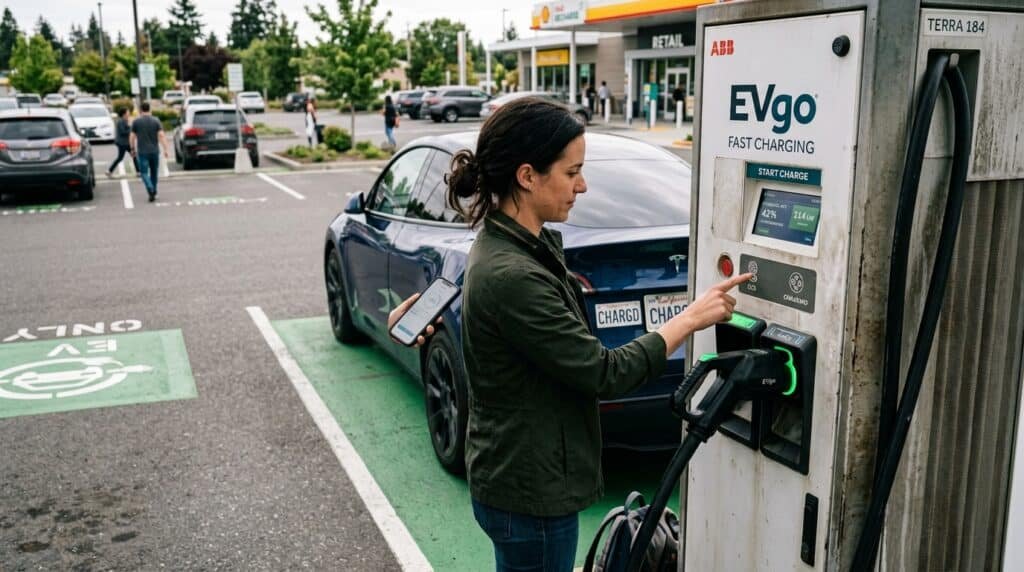
There’s a specific kind of annoyance that comes with owning an EV and not having a charger at home. You’re mapping out your errands around a public charging station. You’re waiting behind another car. You’re watching a screen crawl from 40% to 80% while your coffee goes cold.
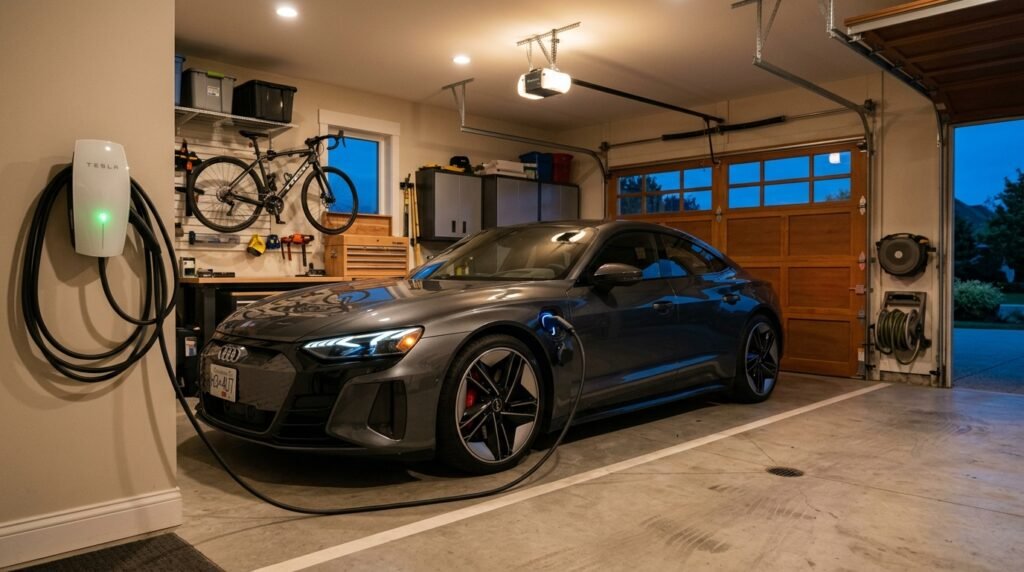
A home EV charger fixes all of that. Plug in overnight, wake up to a full battery, and never think about it again. That’s the whole pitch — but choosing the right electric vehicle charger, understanding what it costs to install, and knowing which incentives still apply in 2026 is where most people get stuck.
This guide covers it all: charger types, real installation costs, connector compatibility, and exactly where the tax credit situation stands right now.
What Is an EV Charger, Really?
Technically, the box on your wall isn’t a “charger” at all — the charger is inside the car. What you’re installing is EVSE, or electric vehicle supply equipment: the hardware that safely delivers power from your home’s electrical system to the vehicle’s onboard charger.
That distinction matters less in everyday conversation, so this guide uses “EV charger” and “EV charging station” the way most people search for them — but it’s worth knowing if you ever read a spec sheet or an electrician’s quote.

EV Charger Types: Level 1, Level 2, and DC Fast Charging
Nearly every question about EV charger types comes down to three categories.
Level 1 Charger
A Level 1 EV charger plugs into a standard 120V household outlet — no special wiring required. It’s the cordset that usually comes free with your car. The catch: it only adds around 3 to 5 miles of range per hour, which works for light daily drivers but not much else.
Level 2 Charger
This is where most home charging happens. A Level 2 EV charger runs on 240V and adds anywhere from 10 to 60 miles per hour of range, depending on the charger’s power output and your vehicle’s onboard charger capacity. It’s the sweet spot for home EV charger setups.
DC Fast Charging (Level 3)
DC fast charging, sometimes called a Level 3 EV charger or DC fast charger, skips the car’s onboard charger entirely and feeds power straight to the battery. This is the technology behind public fast-charging corridors, adding 100+ miles in about 20 minutes. It requires industrial-grade equipment and three-phase power, which is why you won’t find it in most homes.
For a research-backed breakdown of these categories straight from a federal source, the U.S. Department of Energy’s Alternative Fuels Data Center is a solid reference to bookmark.

⚡ EV Charger Installation Cost Calculator
Estimate equipment, labor, electrical upgrades, and wiring distance costs for home Level 2 charging setups.
💡 Pro Tip: Federal, state, and local utility incentives may offset 30% or more of your total charger equipment and installation costs. Always obtain quotes from licensed electricians for exact electrical load calculations.

Home EV Charger Options: 240V, 7kW, 11kW, and 22kW Explained
If you’re shopping for a Level 2 home charger, you’ll run into a wall of numbers — here’s what they actually mean.
- 240V EV charger: The standard household voltage for Level 2 charging in North America, roughly double a normal wall outlet.
- 7kW EV charger: A common entry point, usually paired with a 30-32 amp circuit. Adds roughly 20-25 miles per hour for most EVs.
- 11kW EV charger: A mid-tier option requiring a higher-amperage circuit, adding closer to 30-40 miles per hour.
- 22kW EV charger: The upper end for home use, though most vehicles sold in North America can’t actually accept the full 22kW — your car’s onboard charger is usually the real bottleneck, not the wall unit.
Hardwired vs. Plug-In EV Chargers
A hardwired EV charger is wired directly into your electrical panel with no outlet in between — generally more reliable and often required for higher-amperage units. A plug-in EV charger connects to a dedicated outlet (commonly a NEMA 14-50), which makes it easier to move, upgrade, or take with you if you relocate. Neither option is “better” across the board — it depends on whether you value flexibility or a slightly more permanent, streamlined install.
Smart, Wall-Mounted, and Bidirectional Chargers
A smart EV charger connects to Wi-Fi or Bluetooth and lets you schedule charging for off-peak electricity rates, track energy use, and get notified when charging finishes. Compare that to a standard EV charger, which just delivers power with no app or scheduling — cheaper, but less flexible.
Most home units today are also wall-mounted EV chargers, bolted to a garage wall or exterior surface for a clean, permanent setup.
The newest category worth knowing is the bidirectional EV charger, also called a V2H charger (vehicle-to-home). These let your EV’s battery send power back into your house during an outage — essentially turning your car into a backup generator. It’s still a premium feature, but adoption is growing fast as more EV models support it.

EV Charger Installation: What the Process Actually Looks Like
EV charger installation typically follows the same six steps, whether you’re installing a budget unit or a premium smart charger.
- Electrical load assessment. An electrician checks whether your panel has room for a new dedicated circuit without overloading your home’s total capacity.
- Panel evaluation. If your panel is maxed out, you may need a panel upgrade — this is the single biggest cost variable in the entire project.
- Permit application. Most municipalities require a permit before any 240V circuit work begins.
- Wiring and circuit installation. The electrician runs a dedicated circuit sized to your charger’s amperage, using appropriate wiring gauge for the distance and load.
- Charger mounting and connection. The unit is mounted, wired, and connected — either hardwired or to a 240V outlet like a NEMA 14-50.
- Inspection. A local inspector confirms the installation meets code before you can safely use it.
If you’re weighing whether your existing panel can handle the extra load, our guide on the benefits of upgrading electrical panels walks through when an upgrade is worth it versus when your current setup is already sufficient. And if you’d rather see the whole project mapped out step by step, our dedicated piece on EV charger installation made easy goes deeper into the electrician’s side of the job.
What Changed Under NEC 2026 (Article 625)
The 2026 edition of the National Electrical Code introduced real changes to Article 625, the section that governs EV charging equipment. The two most relevant updates for homeowners:
- Permanently installed, hardwired EV charger setups now generally require installation by a qualified, licensed electrician — DIY hardwired installs are far riskier to get signed off at inspection.
- Updated GFCI protection requirements now apply more broadly across EV charging circuits.
State and local jurisdictions adopt new NEC cycles on different timelines, so disconnect requirements, commercial EVSE rules, and inspection specifics can vary by location. Always confirm current requirements with your electrician or local building department before starting work.

EV Charger Cost: What You’ll Actually Pay
EV charger cost breaks down into two separate line items — and mixing them up is the most common mistake people make when budgeting.
Hardware Cost
- Basic Level 1 cords: often included with the vehicle
- Level 2 home chargers: roughly $300 to $700 for most reputable brands
- Premium smart or bidirectional units: $700 to $2,000+
Labor and Installation Cost
EV charger installation cost depends heavily on your home’s existing wiring:
- Simple installs with an existing nearby circuit: a few hundred dollars in labor cost
- Standard installs requiring a new dedicated circuit: commonly runs into the low-to-mid four figures
- Installs requiring a full electrical panel upgrade: this is where panel upgrade cost can add several thousand dollars on top of the base installation
Add in permit cost and inspection fees, which vary by city but are typically a modest fraction of the total project.
Ongoing Costs and ROI
Charging at home is almost always cheaper than public charging or gasoline, especially if you take advantage of off-peak rates many utilities offer for overnight charging. Over several years, the ROI on a home charger usually comes from a combination of time saved and lower per-mile fuel cost. Our energy savings calculator is a useful tool for estimating how those savings add up in your specific home.

EV Charger Tax Credits and Rebates in 2026 — What’s Actually Still Available
This is the part where a lot of outdated articles get people into trouble, so here’s the accurate, current picture.
The federal Section 30C tax credit — officially the Alternative Fuel Vehicle Refueling Property Credit — covered 30% of home charger installation costs, up to $1,000, for homeowners in eligible census tracts. That federal credit expired on June 30, 2026, and no extension has been passed. If your charger was installed and placed in service on or before that date, you may still be able to claim it using IRS Form 8911 on your return. If you’re installing a charger now, this specific federal credit is no longer on the table.
That doesn’t mean all incentives are gone. State EV charger incentives, utility rebate programs, and local charger rebate offers vary widely and change often — some utilities still offer rebates for installing a smart EV charger that supports load balancing or off-peak scheduling, since it helps them manage grid demand. The most reliable way to check what’s currently available in your state is the DSIRE database, a free, regularly updated clearinghouse for renewable energy and EV incentives maintained by the N.C. Clean Energy Technology Center.
A quick note on low-income EV charger credit programs specifically: several state and utility programs still target lower-income households and non-urban areas with deeper rebates, separate from the now-expired federal credit — worth checking even if you assume you don’t qualify for anything.

Connector Types: J1772, NACS, CCS1, and CHAdeMO
Connector confusion trips up a lot of new EV owners, so here’s the difference in plain terms.
- J1772 charger / J1772 connector: The long-standing standard for Level 1 and Level 2 charging across almost every non-Tesla EV in North America.
- NACS charger / NACS connector: Originally the proprietary Tesla connector, now adopted industry-wide as the new standard for both Level 2 and DC fast charging on most new EV models.
- CCS1: The traditional DC fast charging standard used by many non-Tesla EVs, especially older models.
- CHAdeMO: An older DC fast charging standard, mostly associated with older Nissan Leaf models and increasingly phased out.
If your car uses one standard and a charger uses another, an adapter can usually bridge the gap for home Level 2 charging, though DC fast charging adapters are more limited. Always check your specific vehicle’s supported EV charger connector types and EV charger cable length needs before buying — a cord that’s too short for your garage layout is a common and easily avoidable mistake.

Best EV Charger Brands and Features to Look For
A handful of names come up again and again when people ask about the best EV charger: Tesla Wall Connector, ChargePoint Home Flex, Wallbox Pulsar, Emporia Pro, Grizzl-E, Zappi, and Ohme. Each has its own strengths — some prioritize app polish, others focus on rugged simplicity or advanced load balancing for homes with multiple high-draw appliances.
When comparing options, look for:
- Wi-Fi enabled or Bluetooth EV charger connectivity if you want remote scheduling
- App-controlled features like energy monitoring and charge scheduling
- EV charger load balancing, which automatically reduces charging speed if your home’s total electrical demand spikes
- A genuinely weatherproof EV charger rating if it’s mounted outdoors
- UL certified EV charger listing — this isn’t optional; it’s a basic safety requirement
If you’re setting up a garage specifically for EV charging alongside other equipment, our smart ways to save energy at your home guide pairs well with a scheduled, off-peak charging routine.
FAQ: Electric Vehicle Charger
Essential answers regarding costs, sizing, electrical panels, and installation requirements

Final Thoughts
A home EV charger isn’t a luxury add-on anymore — it’s quickly become as standard as a water heater or a washer-dryer hookup. The right choice for your home comes down to three questions: how fast do you actually need to charge, what will your electrical panel support without a costly upgrade, and which rebates or incentives are realistically still available where you live.
Get those three answers right, and the rest — the brand, the connector, the app features — is just personal preference. Plug in tonight, wake up charged, and never think about a public charging line again.
⚡Electrical Safety Warning And Disclaimer⚡
High-voltage electrical work carries severe risks of electric shock, electrocution, arc flash, and property damage or fire. All electrical installations, service panel upgrades, and dedicated circuit wiring for EV charging equipment must be performed by a qualified, licensed electrician in accordance with the National Electrical Code (NEC) and all local building regulations. Do not attempt electrical wiring modifications yourself unless properly certified and trained.